
Operator playbooks for cross-border payments, tax, and compliance execution.
Step-by-step guidance for finance, product, and ops teams to launch faster, reduce payout friction, and keep reconciliation clean across borders.
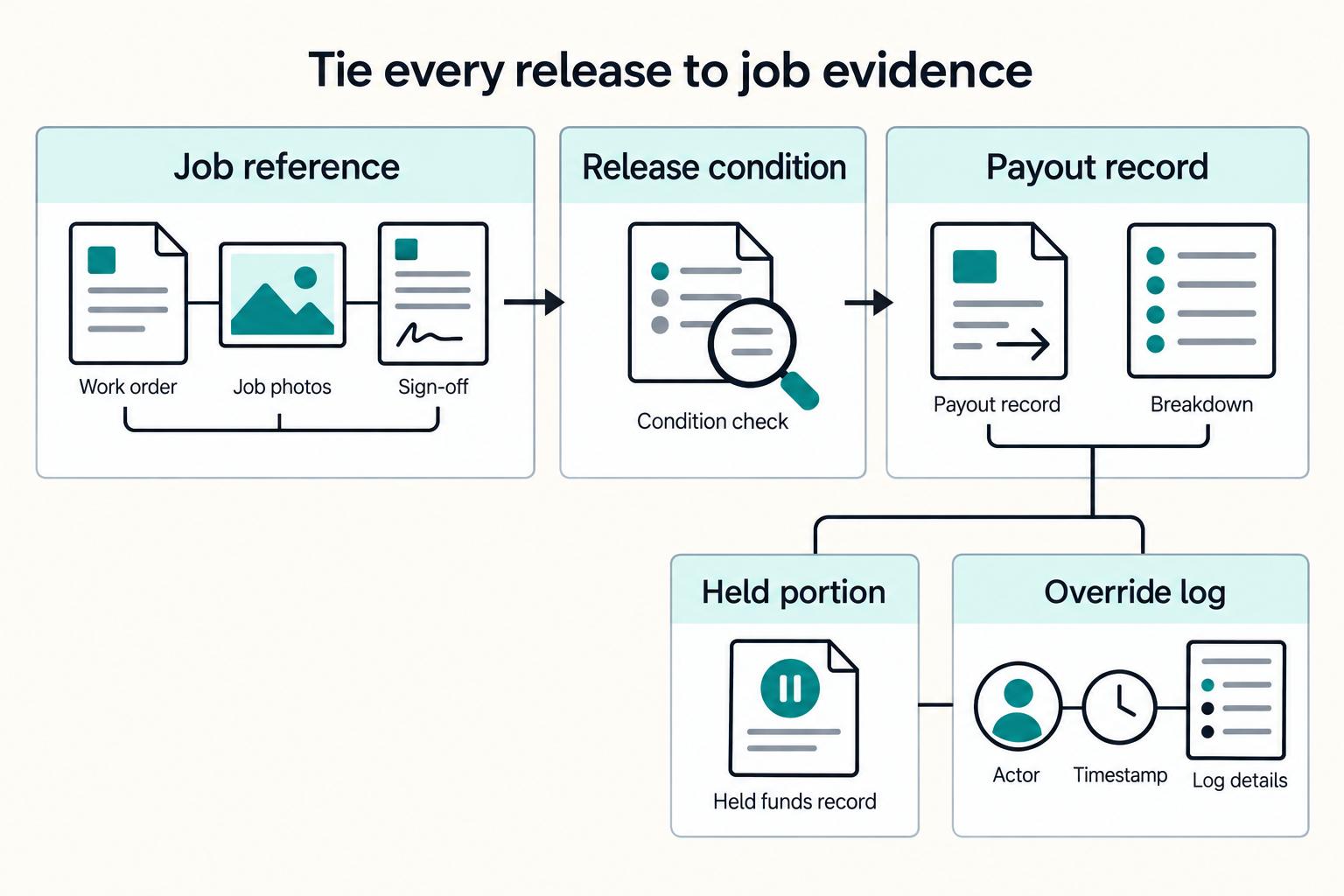
PropTech Contractor Payments for Tradespeople and Property Managers
Contractor payouts in PropTech often break during expansion when teams push speed ahead of control. In a sector often described as conservative, weak control points show up quickly once you add markets, payee types, and payout rails.
Read more →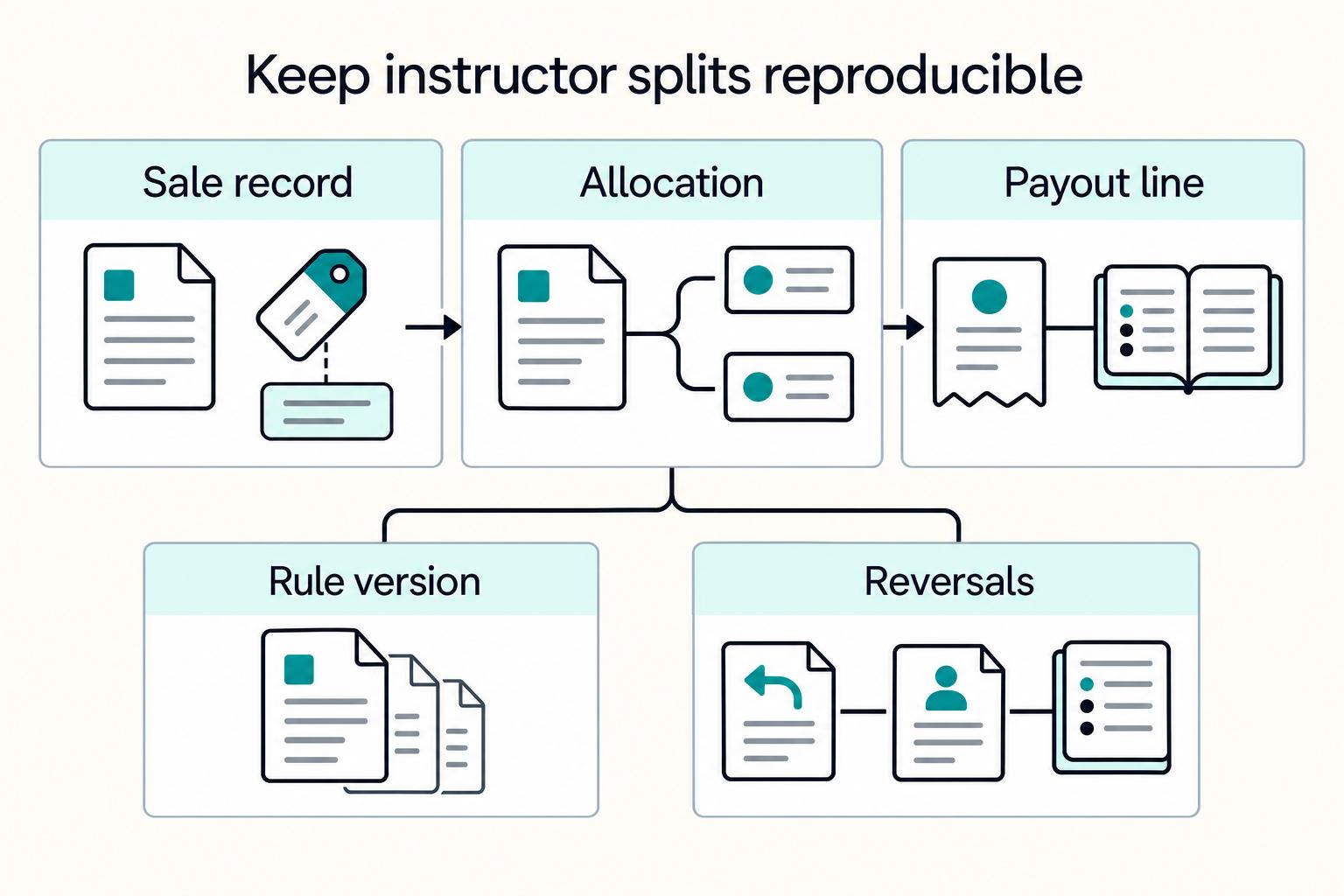
How Online Course Marketplaces Handle Instructor Revenue Splits and Tax Reporting
Most advice on **online course marketplace payouts** skips the part operators actually have to run: who owns the money movement, who owns payout risk, and who owns tax-facing work when exceptions happen. The real decisions usually start with who gets paid, how payouts are routed, and who handles reporting when the simple path breaks.
Read more →
Payment Processing Fee Comparison Tool: Stripe vs PayPal vs Gruv vs Adyen
If you run platform finance or payments ops, headline rates are only the first input. The choice that holds up is the one you can still defend when volume grows, payment mix shifts, and month-end close gets more complex.
Read more →
How to Receive International Payments in Ukraine: SWIFT Banks and Wartime Compliance
Treat **receive international payments Ukraine** as a routing-and-risk decision, not a provider-signup task. The key question is which rail you can verify, reconcile, and defend if a transfer fails or a compliance review asks why it was approved.
Read more →
Crypto Payout Compliance for Platforms: AML, KYC, Travel Rule
Crypto payout compliance is a product and operations decision, not a post-launch checklist. It affects payout speed, exception handling, audit readiness, and your exposure when regulators or banking partners ask how your controls work in practice.
Read more →
Best Banks for Freelancers in Canada: Business Accounts for Self-Employed
If you are choosing the best bank for freelancers in Canada, start with your payment pattern, not a generic ranking. The right setup depends on whether your flow is domestic or cross-border, low-volume or high-frequency, and simple or exception-heavy.
Read more →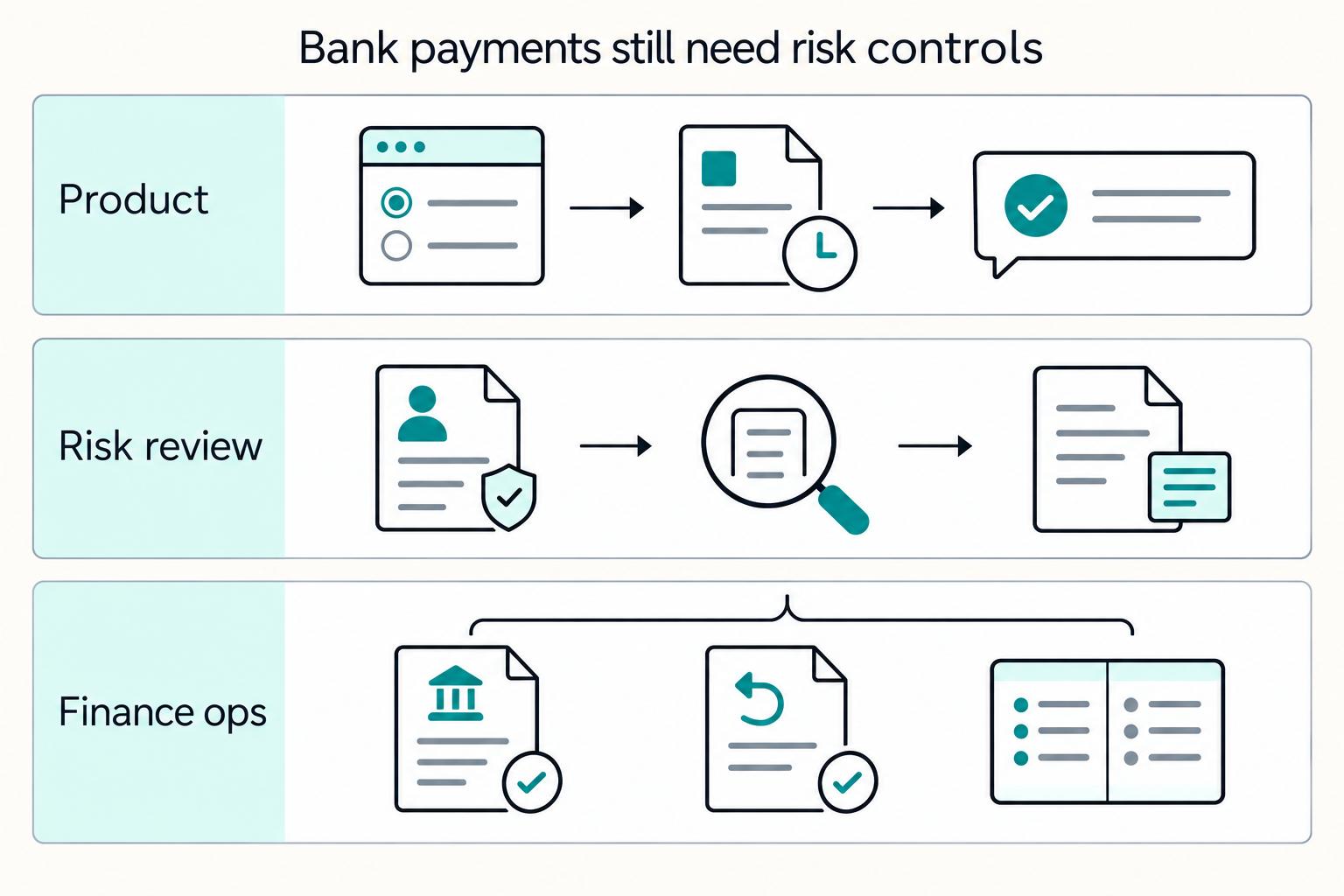
Where A2A Beats Cards for Platform Operators in Open Banking
Open Banking and Account-to-Account (A2A) payments can lower payment costs and change dispute exposure. That only happens if you choose the right rail for each flow and run it with the right controls.
Read more →
Platform Payment Fee Benchmarks for Marketplaces
Compare payment costs using the same transaction mix, billing country and fee scope. A processing rate, a marketplace commission and a payout fee measure different things. Keep them separate in the model, then show the combined cost for an actual order.
Read more →
Cross-Border Compliance Annual Update 2026 for Payout Launch Decisions
Treat 2026 as a split compliance environment, not a single global trend. Requirements can differ across markets, so launch readiness has to be judged market by market. The practical question is simple: where are your controls already strong enough for first payout, and where are they not?
Read more →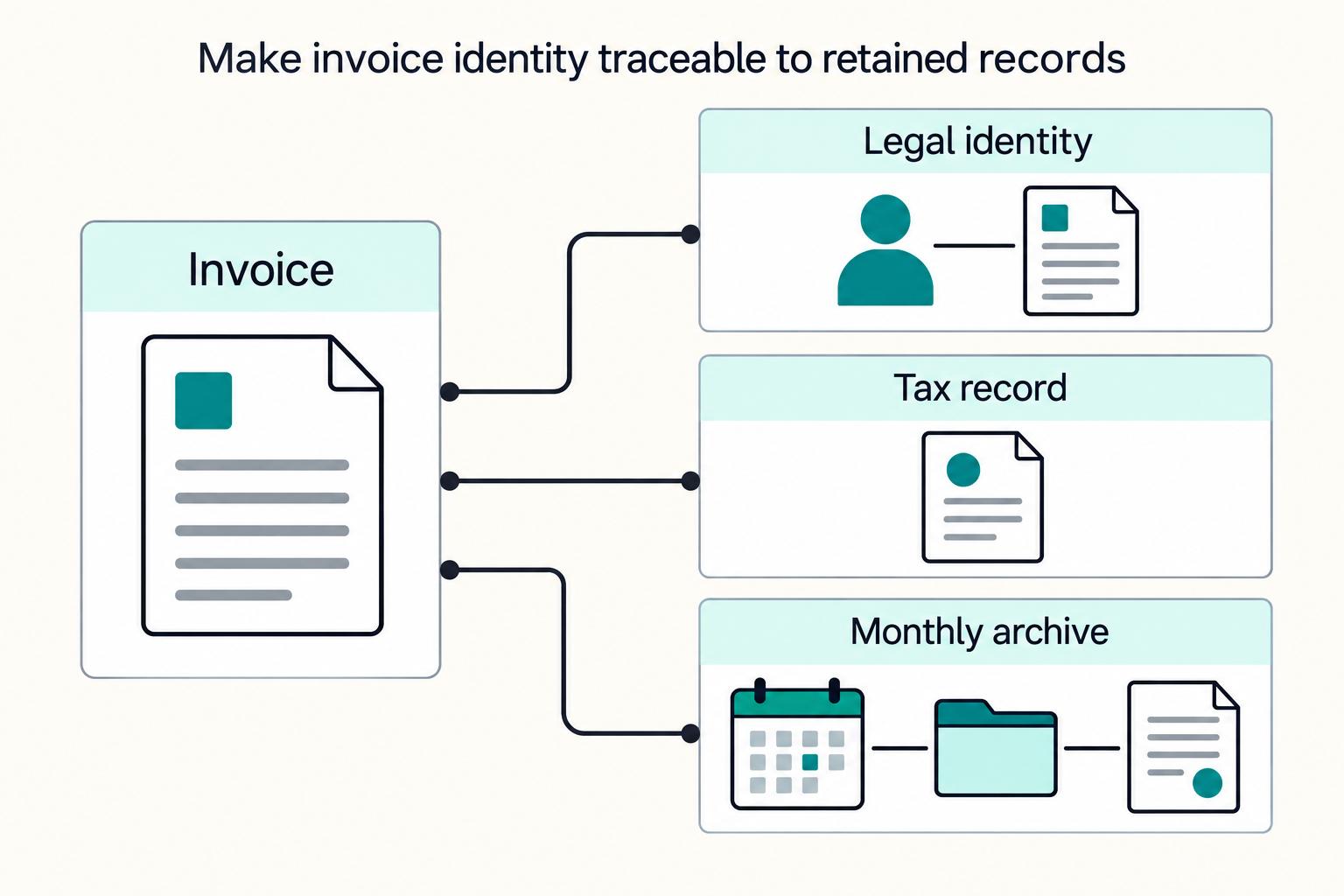
Freelance Ireland Self-Employed Registration in 2026
An Irish freelance setup involves separate decisions about legal structure, Revenue registration, VAT, PRSI and immigration permission. Keeping these decisions separate helps you identify which registrations apply to the work you plan to do.
Read more →
Machine-to-Machine Billing for Autonomous AI Agents
Machine-to-machine billing records services consumed by software and charges the customer responsible for that software. For an autonomous AI agent, the useful question is what the customer agreed to buy: tokens processed, a tool call, a completed research task or another measurable result. The agent can request work, but the service still needs an identifiable customer, agreed prices and a way to explain the bill.
Read more →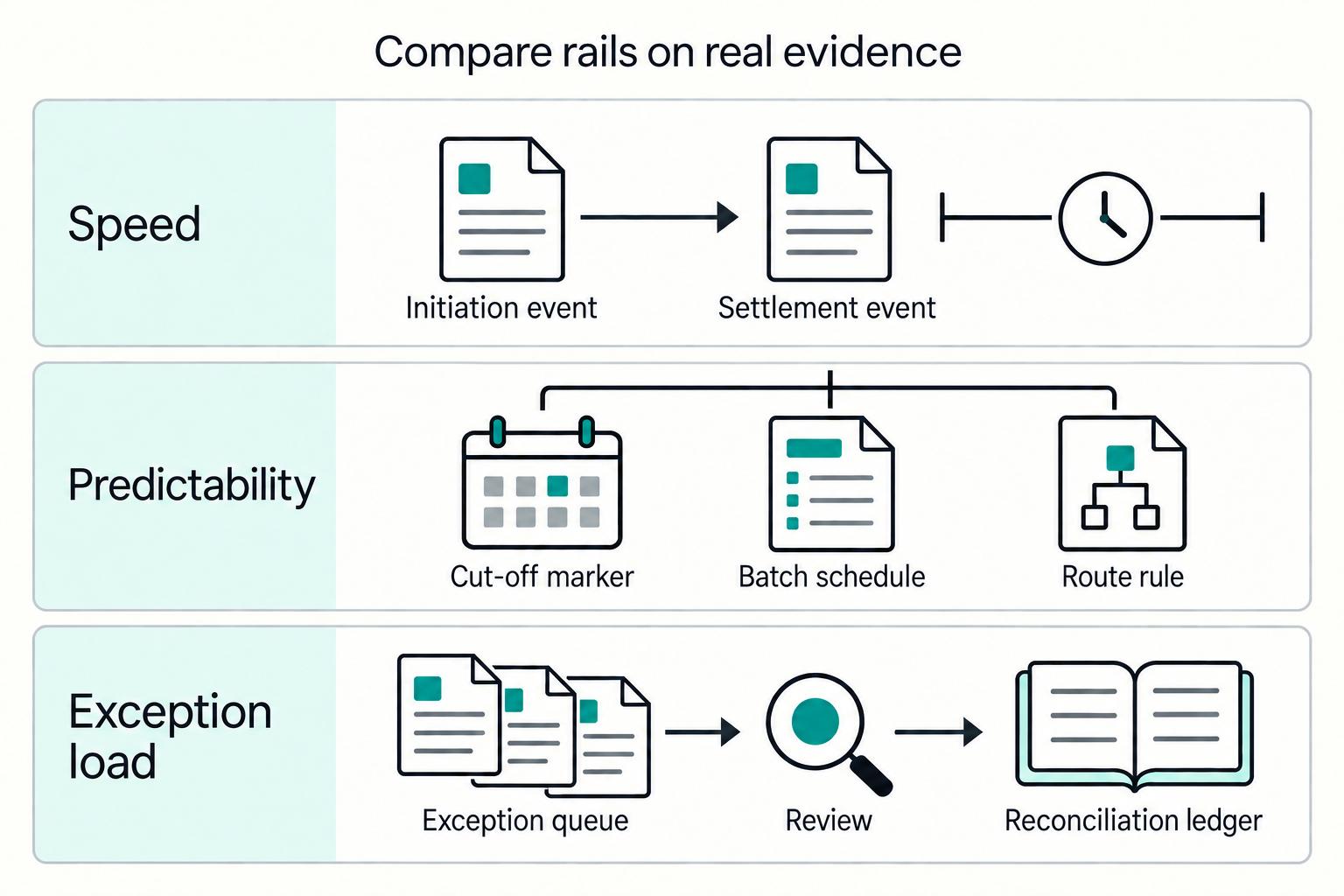
What Are Payment Rails? ACH Wire SEPA and Real-Time Networks Compared
For platform operators, rail choice is an operating decision, not just a glossary term. It affects payout speed, exception handling, and how much cleanup your support and finance teams inherit.
Read more →
Cross-Border VAT Routing for Digital Platforms Under OSS and IOSS
If you run an EU-facing platform, cross-border VAT is now an operating decision, not a glossary exercise. Since 1 July 2021, your practical job has been to route each flow to the right treatment: Union OSS, non-Union OSS, the import scheme, or a domestic VAT process outside those special schemes.
Read more →
France Payment Platform Compliance for ACPR Scope and Control Design
Decide your France regulatory perimeter early, then implement only the controls you can defend with evidence. The bigger risk is usually not that you start too small. It is scaling on the wrong assumption, then discovering later that your product, tax, or reporting position does not hold.
Read more →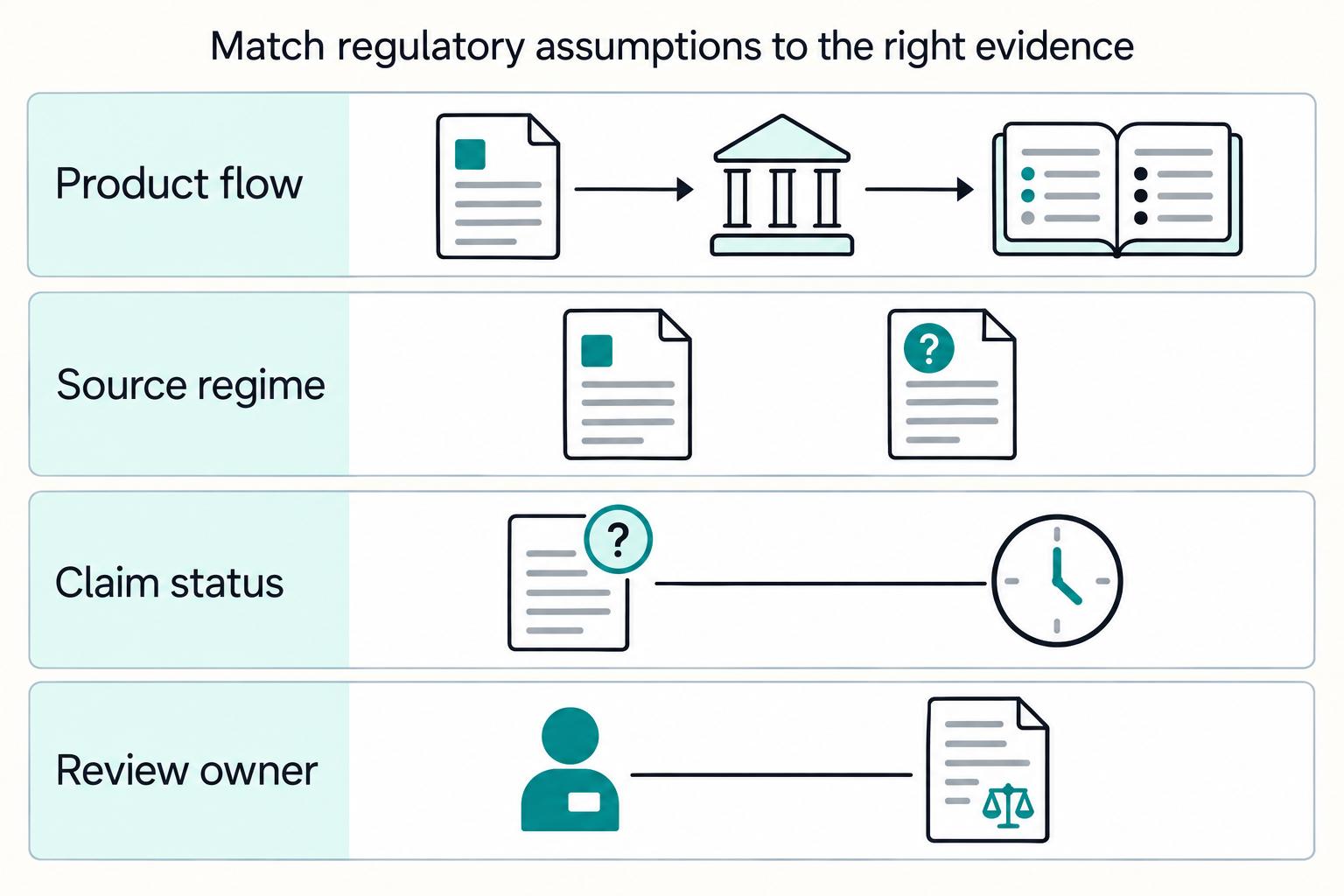
When Your Platform Needs a UK FCA Payment Services License
Use this article as a scope guard first. If you are working a UK payment-services licensing question, separate those issues before you design controls or make launch decisions.
Read more →
Choosing DAC7 Compliance Platforms Without Overbuilding
Start with operating reality, not feature grids. This section is for compliance, legal, finance, and risk owners who need a defensible decision, not a generic explainer. The goal is practical: make a faster scope call, choose an approach that fits your entity and data setup, and get through reporting with fewer surprises.
Read more →
API Versioning Strategies for Payment Infrastructure
API versioning lets a payment service evolve while preserving the contract used by existing clients. The contract includes more than JSON field names: amount units, currency, status meanings, errors, pagination, authorization, retry behavior and event delivery can all affect financial correctness. A response can still parse while the client silently records the wrong amount or sends a second payment.
Read more →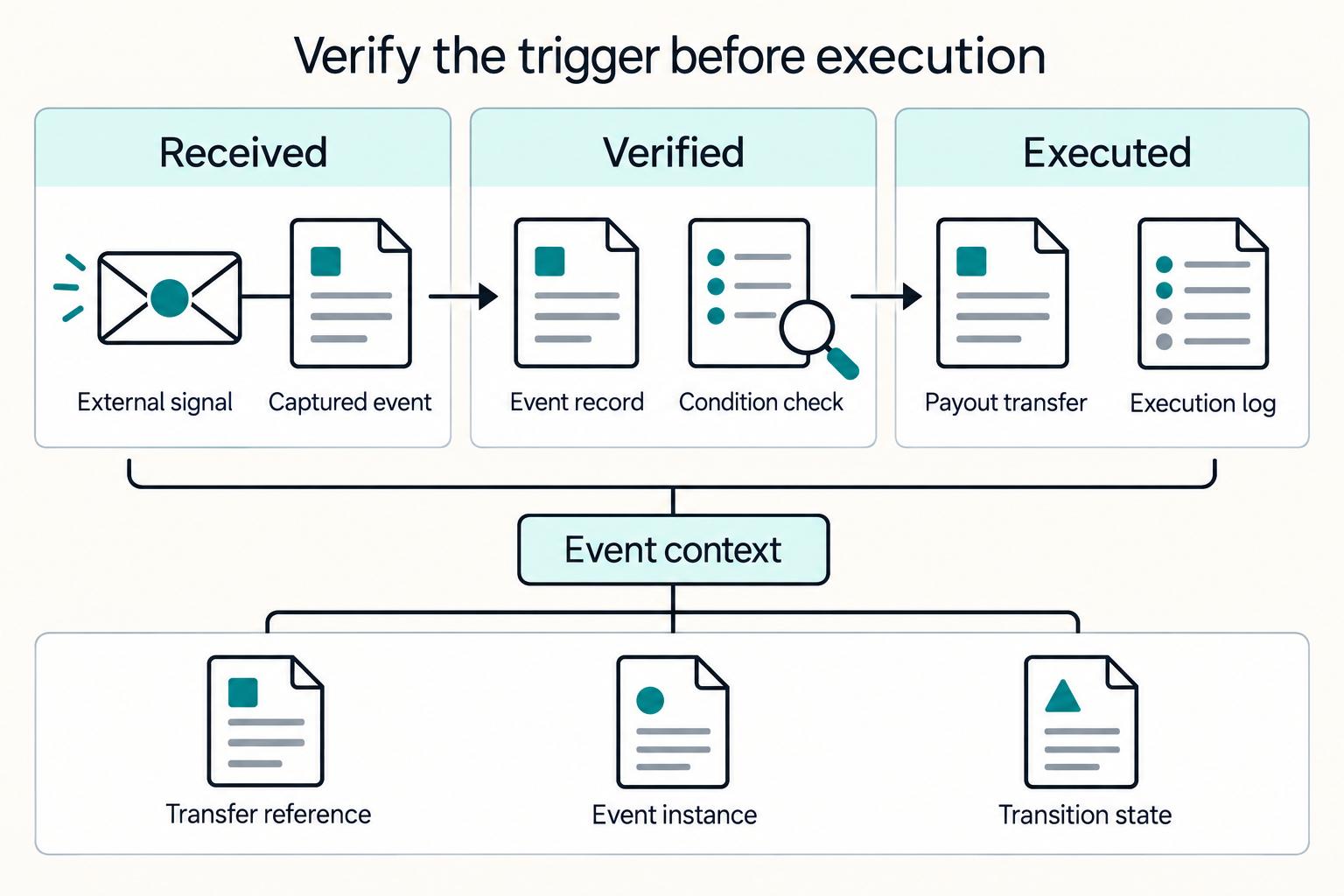
Payment Event Modeling: Designing an Event-Driven Payout Architecture
Payment event modeling describes the commands, recorded facts and read views that explain a payment over time. For a payout, it should show who approved the obligation, what was submitted, which provider outcome was verified, how money was recorded and what an operator sees when something goes wrong. A message broker can distribute those facts; it cannot supply their business meaning.
Read more →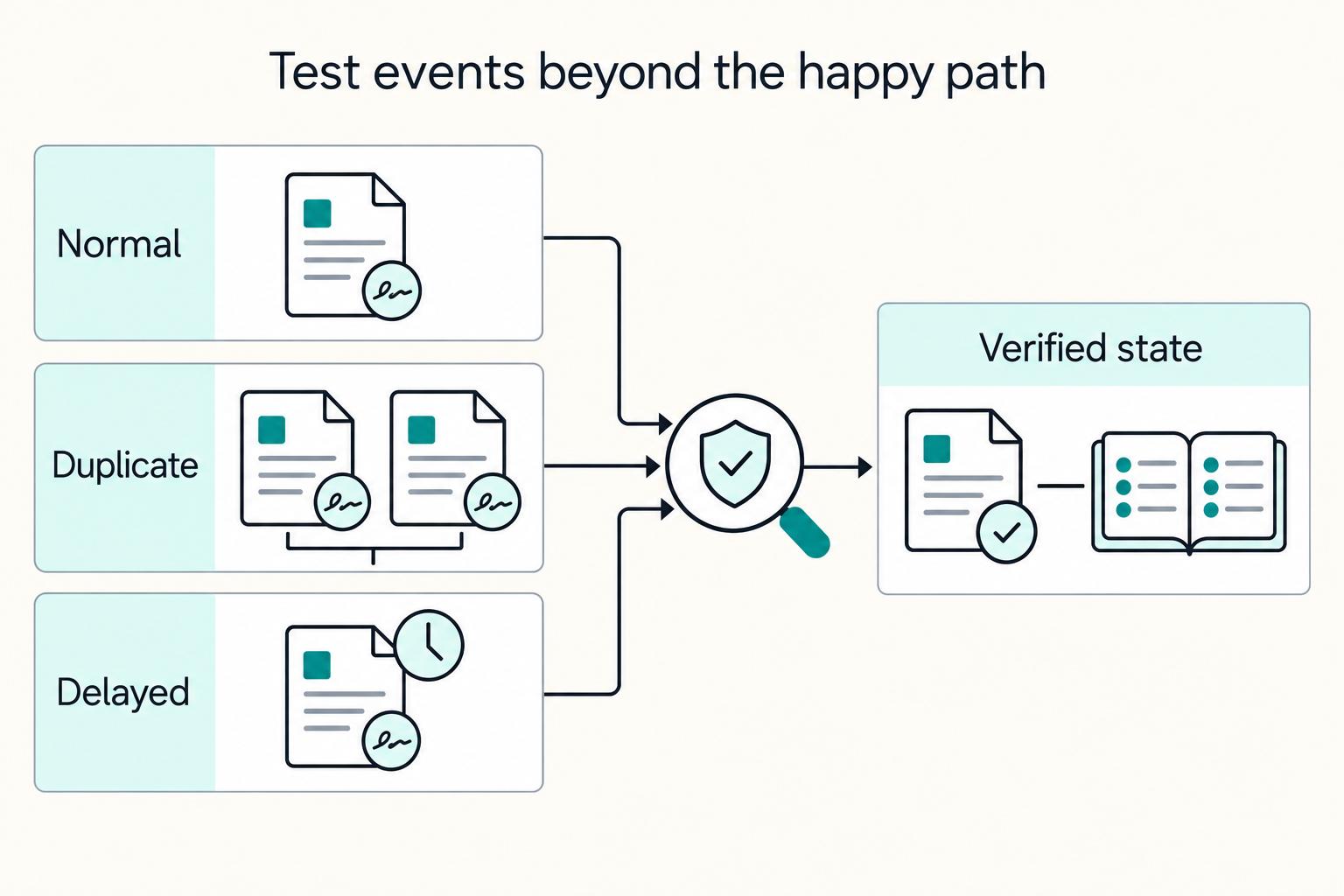
Testing Payment Flows in Sandbox: A Developer's Checklist
This is a release-grade **payment sandbox testing checklist** for engineering leads, not a generic QA list. It keeps sandbox validation focused on your PSP connection and related payment flows before controlled live validation.
Read more →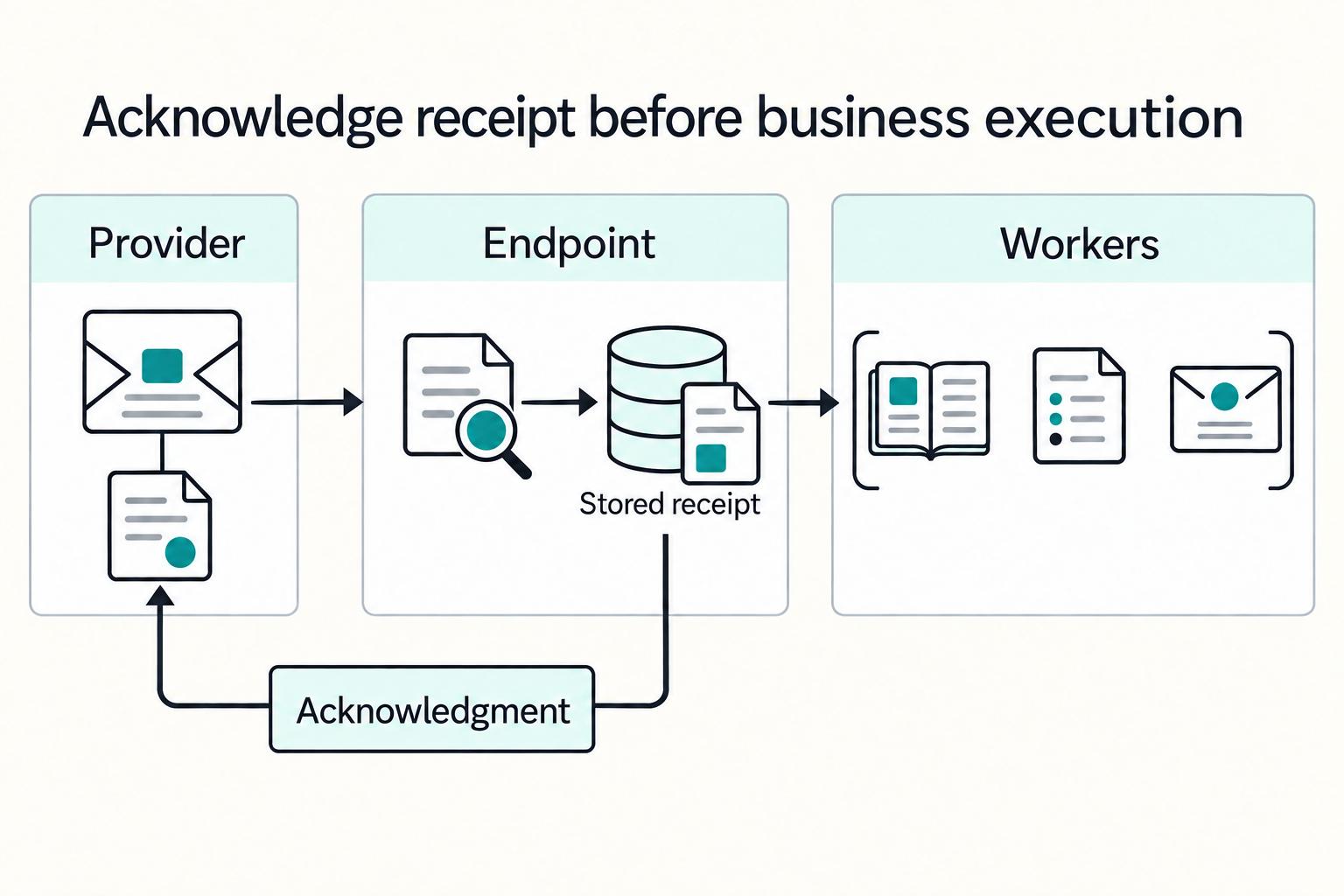
Implementing Webhook Retry Logic for Payment Notifications
Webhook failures can arise at the acknowledgment boundary or during downstream processing. A valid event may arrive twice, late or out of order. If receipt, progress and financial effects are not stored durably, a retry can lose work or apply it twice.
Read more →