
Operator playbooks for cross-border payments, tax, and compliance execution.
Step-by-step guidance for finance, product, and ops teams to launch faster, reduce payout friction, and keep reconciliation clean across borders.

The Best Ways to Overcome Loneliness as a Digital Nomad
If you run a business of one while moving city to city, treat connection as an operating issue, not a personality verdict. You do not need to become louder, more social, or permanently available. You need a repeatable way to move from unknown faces to familiar ones.
Read more →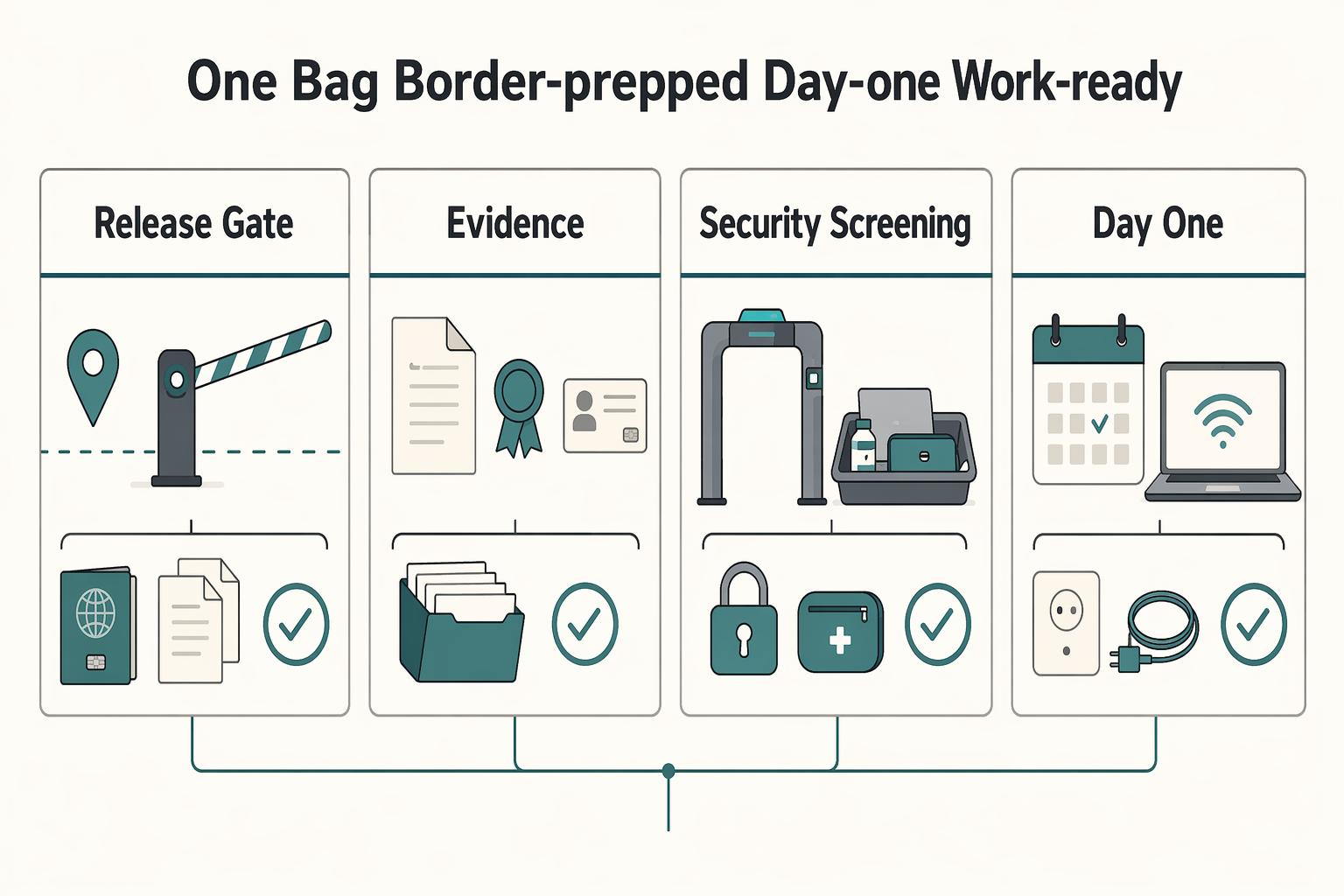
How to Pack Light for Long-Term Travel Without Work Disruptions
The rule is simple: pack light only if losing your main bag would not break identity, payments, health essentials, or your first work session. If those four still work from your personal item, you can travel much lighter without turning arrival day into a recovery exercise.
Read more →
What is an EIN and Does Your Freelance Business Need One?
**An EIN (Employer Identification Number) is a nine-digit number the IRS assigns to business entities for tax identification and reporting, functioning essentially as a Social Security Number for your business.**
Read more →
How to Manage Your Time Effectively as a Freelancer
Most freelancers struggle not because they work too few hours, but because they misallocate the hours they have—treating time as an infinite resource rather than a finite business asset with a real cost per unit. The solution is a three-layer operating system: a Time Budget Framework that commits hours to four categories before any client work is booked, a Weekly Operating Template that assigns those categories to specific calendar windows, and a monthly Admin Audit Checklist that reconciles invoicing, bookkeeping, and compliance records. Multi-client orchestration requires a WIP limit, dedicated client windows, and a capacity decision rule run before accepting new engagements. Together, these systems replace reactive decision-making with a repeatable structure that keeps delivery quality consistent, records audit-ready, and the freelance practice operationally durable.
Read more →
The Best Calendar and Scheduling Apps for Freelancers
Your scheduler is an operations layer, not just a booking link. It determines whether clients can self-book, whether buffers actually protect your day, and whether confirmed meetings land cleanly in Google Calendar or Outlook instead of creating cleanup work later.
Read more →
How to Create a Freelance Client Welcome Packet That Actually Protects You
**A welcome packet is one of the first repeatable documents that shows a client you run this like a real business, and it starts doing that work before the kickoff call even happens.**
Read more →
The Best Ways to Diversify Your Freelance Income: A Risk-First Framework
Most freelancers add new revenue lines reactively: a course after a slow month, an affiliate link because someone else said it works, a consulting offer because one client asked for it once. The result is usually the same: more moving parts, unclear priorities, and no real protection when one major client or platform wobbles.
Read more →
How to Create a Professional Freelance Email Signature
Treat your signature like a working document, not a decorative footer. If you want clearer client verification and fewer avoidable questions, your email block needs to make your identity, your role, and the next action clear at a glance.
Read more →
How to Create a Business Budget for Your Freelance Business
Most freelance budgets fail before the math starts. They assume freelance income behaves like a paycheck.
Read more →
A Freelancer's Guide to Content Licensing and Syndication
**Content licensing is one of the most important IP decisions most freelancers make. Most of us still make it by accident.**
Read more →
The Best Password Managers for Freelancers and Teams
A client asks for an urgent file, you open their portal, and the login fails. Ten minutes later your invoicing app wants a reset too. That is why your password setup is a business risk, not just a nuisance. Weak credential habits can turn one mistake into wider account access problems, then into delivery delays and cleanup work.
Read more →
The 'Profit First' Method Part 2: Setting Up Your Bank Accounts
Most freelancers who try Profit First open a few extra bank accounts and call it done. That's the wrong move.
Read more →
The S-Corp Election vs. C-Corp: A Tax Comparison for US-Based Agencies
**Start with this rule: choose the structure you can qualify for, operate cleanly, and defend under review.**
Read more →
The Pros and Cons of Accepting Cryptocurrency Payments
**Accepting crypto payments works when you set the terms before you send the invoice: how payment is received, which asset is sent, and your settlement policy.** If those terms are vague, you are taking on avoidable cash-flow and tax risk.
Read more →
The Best Bank Accounts for US LLCs Owned by Non-Residents
**You can bank in the US without a US passport, Green Card, or flight. The real requirement is an operating setup that passes review on day one and stays clean months later.**
Read more →
How to Choose the Right Business Structure for Your Freelance Business
Most freelancers end up in a business structure by default rather than by design, but that accidental choice shapes taxes, personal liability, and payment operations in ways that compound over time. This guide walks independent professionals through four entity types — Sole Proprietorship, Single-Member LLC, S-Corp election, and Corporation — covering the tax treatment, liability exposure, and operational overhead of each. Rather than prescribing a single best answer, it provides a trigger-based framework: start with the structure that fits today, then upgrade when specific signals — indemnification clauses, enterprise KYB requirements, a first hire, or material net profit — make the switch worthwhile. The result is a deliberate, revisable foundation that keeps records clean, reduces onboarding friction, and avoids the expensive mismatches that come from letting structure lag behind business growth.
Read more →
The Self-Employment Tax Trap: How Totalization Agreements Can Save US Expats Thousands
Most US expat freelancers will spend weeks researching income tax in a new country, then spend zero minutes on the one tax that can still follow them even when their US income tax bill is low or zero.
Read more →
Automating Your Freelance Finances: A Zapier Workflow for Connecting Stripe, QuickBooks, and Wise
Cleaner books and fewer month-end fire drills come from sequence, not software. Run this in the right order: structure, compliance, accounting architecture, then automation.
Read more →
Tax Incentives for Digital Nomads in Greece
If you searched **greece tax incentives nomads**, take that search as a warning, not a plan. Your real job is to choose a tax position you can explain with evidence, then run your operations so that position stays consistent. The goal is not to find one attractive rule. It is to avoid a year-end scramble where your days, contracts, and filings all point in different directions.
Read more →
Are You an Employee or a Contractor? A Self-Assessment Checklist
Forget the label. Classification turns on the relationship you actually run, not the title you typed into the contract. It is also much easier to fix before you sign.
Read more →