
Operator playbooks for cross-border payments, tax, and compliance execution.
Step-by-step guidance for finance, product, and ops teams to launch faster, reduce payout friction, and keep reconciliation clean across borders.

The Best Project Management Tools for Freelance Designers
Start with [operating rules](https://www.asyncagile.org/blog/project-management-not-just-for-project-managers), then pick the interface. If scope, ownership, approval rights, and timeline checkpoints are vague, even a clean board becomes a status mirror instead of a delivery engine.
Read more →
Right-to-Disconnect Rules for Freelancers in Cross-Border Contracts
If right-to-disconnect rules do not clearly cover your status, your contract has to carry the weight. For freelancers, off-hours boundaries are deal terms, not assumptions.
Read more →
Italy Regime Forfettario for Freelancers: Eligibility, Red Flags, and Monthly Checks
Start with a simple go-or-no-go call. If your facts fit the eligibility rules, `Regime Forfettario` can be a simpler way to manage freelance compliance in Italy. Then protect that decision with regular checks so your setup stays aligned as your facts change.
Read more →
Spain Autonomo System for Freelancers Who Want Compliance Control
Low-stress compliance comes from predictable execution, not tax-shortcut bets. Keep filings clean, document decisions, and set escalation triggers before deadlines.
Read more →
The Best Bank Accounts for Freelancers in Italy
Choose for payout reliability and predictable operating cost first. Base fees matter, but they do not help if onboarding or transfer routes fail when invoices are due. In one sitting, narrow to two candidates, score them with the same gates, and validate both with live transactions in your first month.
Read more →
Freelancer Bank Accounts in Spain: Choosing a Primary and Backup Setup
Choose your setup as a risk decision, not a brand ranking. Pick one primary account for daily inflows and keep one backup account active in the same planning session.
Read more →
How to Get a SIREN/SIRET Number as a Freelancer in France
If your goal is to get a SIREN and SIRET in France as a freelancer, treat this as an execution sequence, not a theory piece. The finish line is simple: submit clean data, receive the identifiers that apply to your case, and verify the public record before you use them in business documents.
Read more →
How to Write a Legally Compliant Invoice in Germany
The goal is simple: send a Rechnung that meets German requirements and is easy to review and pay. Use the same order every time: legal minimum fields first, payment terms second, pre-send risk checks third. Treat it as a defensive sequence, not a design template or a complete legal checklist for every case.
Read more →
How Freelancers Can Decide on France’s Micro-Entrepreneur Regime
Low-stress compliance starts with one question: does the Micro-entrepreneur regime match your real setup right now? It is often presented as a simplified option for lower-revenue activity, so use it as a fit test, not a shortcut.
Read more →The Best Bank Accounts for Freelancers in France
When you compare freelancer bank options in France, monthly price is easy to overweight, but cashflow risk can be the bigger decision factor. A safer choice is the account that still works when onboarding drags, paperwork expands, or fee and FX terms start hurting after money moves.
Read more →
How to Get a German Tax ID as a Freelancer Without Mix-Ups
Define the task before you open any form. In Germany, mix-ups usually start when a request goes out for the wrong number type or to the wrong office.
Read more →
Should Freelancers Choose Germany’s Kleinunternehmerregelung?
Kleinunternehmerregelung is a VAT decision with operational consequences. For eligible low-turnover businesses, it can remove VAT collection on invoices and reduce recurring filing effort. That benefit is usually strongest when your setup, client mix, and invoice language stay consistent.
Read more →
Freiberufler vs Gewerbetreibender for German Freelancers
**Classify first, then file and invoice from the same description.** The safer path is the one that matches your real services, not the one that looks easier on admin.
Read more →
The Best Bank Accounts for Freelancers in Germany
Pick the account that protects cashflow and keeps records clean when client behavior gets messy, not the one with the nicest app.
Read more →
RRSP vs TFSA for Canadian Freelancers With Uneven Income
Start with cash stability, then optimize taxes. Freelance income can fluctuate year to year, profits are often reinvested, and many self-employed people do not receive employer pension contributions. That makes this a cash decision first and a tax decision second.
Read more →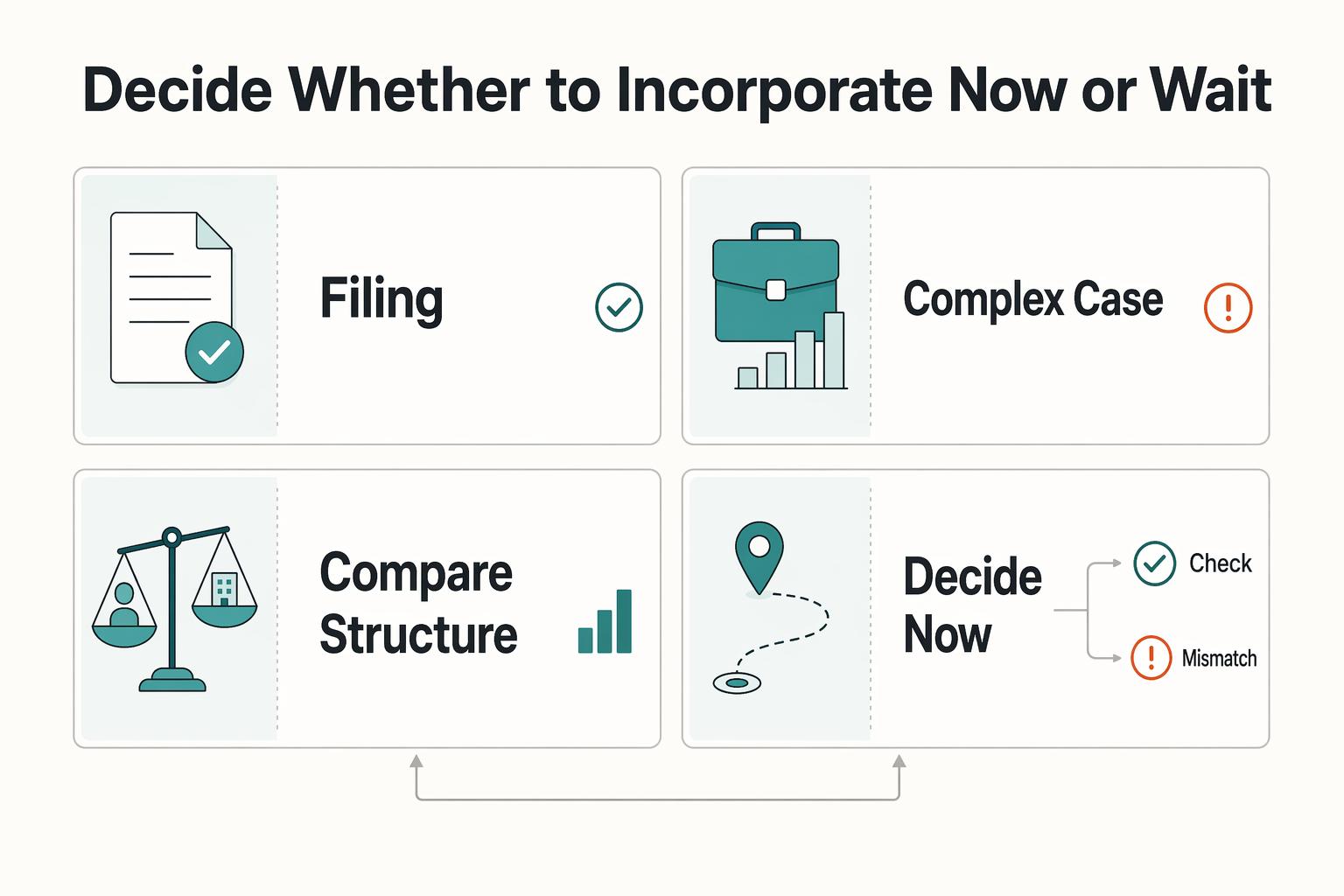
How to Incorporate a Business in Canada as a Freelancer
If you are deciding whether to incorporate in Canada as a freelancer, make one call first: stay a **Sole proprietorship** for now or move to a **Corporation** now. Decide that before you file anything. It helps keep your tax setup, entity records, and filing steps aligned and reduces rework once contracts and invoicing start.
Read more →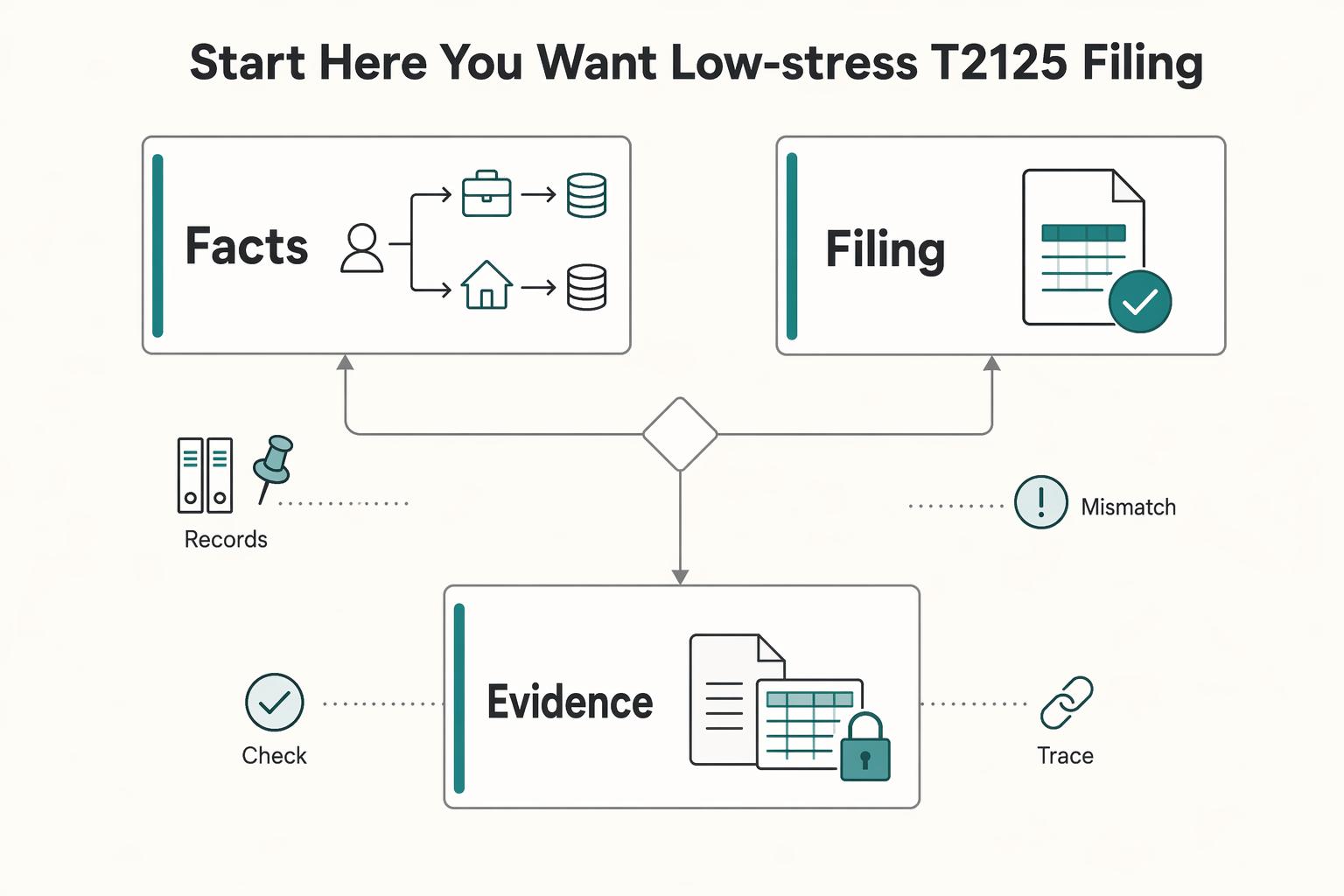
Form T2125 for Canadian Freelancers: How to File With Clear Records
Low-stress T2125 filing comes from sequence, not speed. Start by separating employment income from self-employment income, then take positions you can support from records rather than memory. If you earned self-employment income, you will usually need to file a tax return, and many freelancers report that business or professional income using Form T2125 as part of a personal return. Conservative choices here do more than keep the file tidy. They make final review faster and reduce the chance of avoidable corrections later.
Read more →
Canada GST/HST for Freelancers Who Want Fewer Filing Surprises
For globally mobile freelancers, GST/HST gets easier when you decide a few key points early: when registration is required, what to charge, which GST/HST treatment applies, how often to file, and when to escalate unclear facts.
Read more →
How Canadians Can Set Up a US LLC Without Tax Surprises
If you are considering a U.S. LLC as a Canadian, decide structure before you form anything. That one sequencing choice keeps tax and compliance decisions deliberate instead of reactive.
Read more →
Tax Implications of a Canadian Owning a US LLC
A U.S. Limited Liability Company (LLC) can look simple for a Canadian freelancer, but the tax treatment is usually not simple. Canadians, including individuals and corporations, can face U.S. tax liability if they carry on a U.S. trade or business.
Read more →