

Quick Answer
Use a risk-first shortlist: for the best bank account for freelancers italy, score each option on access, transfer-route fit, cost clarity, support escalation, and issue resolution, then validate with two live tests in your first week. There is no confirmed universal winner; FinecoBank, Unicredit, Revolut, N26, Banca Etica, and Wise remain conditional until written terms and statement lines match observed behavior.
Start Here and Pick an Account in One Sitting#
Choose for payout reliability and predictable operating cost first. Base fees matter, but they do not help if onboarding or transfer routes fail when invoices are due. In one sitting, narrow to two candidates, score them with the same gates, and validate both with live transactions in your first month.
| Path | Grounded detail | Operational note |
|---|---|---|
| Digital-first business account (N26 Business Standard) | Italian IBAN; online signup without paperwork; 3 free Eurozone cash withdrawals per month, then EUR 2 per withdrawal; EUR 10 one-off fee for a physical Mastercard | Online signup; ATM fee rules can be tested immediately |
| Traditional Italian current account | Opening is usually free; Italy had around 200 banks and nearly 24,000 branches as of 2020; some banks may still request physical documentation after relocation | Branch fallback when remote onboarding stalls |
| Hybrid local-plus-international setup | Keep a local account for domestic payments and separate non-European transfer needs; Italian banks can charge high fees for transfers outside Europe; overseas withdrawals may include transaction and FX charges | Separates domestic payments from non-European transfer needs |
Use this article in one pass. Pick one primary path for daily receipts and one backup rail you can activate fast. Keep both under written terms from day one. That keeps your decision grounded in what you can verify, not what sounds cheapest in a headline.
- Digital-first business account (N26 Business Standard): A digital business account for freelancers with an Italian IBAN and online signup without paperwork. The same offer states
3free Eurozone cash withdrawals per month, thenEUR 2per withdrawal, plus a one-offEUR 10fee for a physical Mastercard. Key differentiator: online signup with ATM fee rules you can test immediately. - Traditional Italian current account: Opening is usually free, and Italy had around
200banks and nearly24,000branches as of 2020, which can help when you need in-person escalation. The tradeoff is onboarding friction, since some banks may still request physical documentation after relocation. Key differentiator: branch fallback when remote onboarding stalls. - Hybrid local-plus-international setup: Keep a local account for domestic payments and separate non-European transfer needs so one expensive corridor does not distort total cost. Italian banks can charge high fees for transfers outside Europe, and overseas withdrawals may include transaction and FX charges. Key differentiator: better control of cross-border fee drift.
Use this scorecard before comparing perks.
| Decision gate | What to verify now | Why it decides cashflow risk | Weight |
|---|---|---|---|
| Eligibility and documents | Can you complete onboarding with typical requirements such as photo ID, Italian tax number, and residence documents, including physical copies if requested? | Failed onboarding delays payouts before you start | 30% |
| Payment rails | Local Italian IBAN support plus clear terms for non-European transfers | Reduces failed receipts and transfer leakage | 30% |
| Fee predictability | Cash withdrawal limits, post-limit fees, card delivery fees, and non-European transfer charges | Prevents margin erosion from unexpected line items | 25% |
| Support fallback | Online support path versus branch escalation path | Shortens downtime during payment issues | 15% |
When two candidates score close, break the tie with evidence quality. Pick the option with clearer written terms, clearer fee wording, and clearer escalation contacts. A slightly higher expected fee is often the better decision if it removes uncertainty on access, transfer handling, and support response.
First-30-days verification checklist:
- Run two live tests in week 1: one inbound client payment and one outbound transfer on your most common route.
- Save an evidence pack with onboarding approval, a fee schedule snapshot, and both transfer confirmations.
- Match advertised versus posted charges on the first statement, including withdrawal and transfer lines.
- If you chose N26, confirm the fourth Eurozone withdrawal posts the
EUR 2fee. - Log time to resolution for one support request so you know real escalation speed.
- Set a red-flag rule: if a fee or delay cannot be explained by account terms, keep your backup route active and reroute the next payout.
How We Score Accounts for Freelance Cashflow Risk#
Use hard gates first, then score survivors from 0 to 5. If access is unclear, exclude the option until verified. This keeps your shortlist focused on payout continuity, not headline pricing.
We apply the same five factors to every option:
- Eligibility in Italy: Confirm legal access first. If accepted applicant profiles are unclear in provider terms, score
0/5. - Transfer rails (
SEPAand extra-European Union): Score against real invoice routes, not only domestic use. Track non-EU corridors separately. - Fee predictability: Score on whether monthly transfer and cash-access costs are clearly published. If exceptions are unclear, cap at
2/5until tested. - Support quality: Score using one real support interaction and escalation path, not marketing copy. If escalation is weak, cap at
2/5. - Failure handling: Score clarity on rejects, reversals, and dispute steps. Missing timelines or document requirements should lower the score.
The scoring logic is defensive by design. It avoids the common mistake of giving high marks for a smooth app experience while unknown transfer terms and unknown dispute steps remain in the background. If a provider cannot pass legal access and written-term clarity, that provider should not stay in the final comparison set.
Separate personal paths from conto corrente business paths where provider terms distinguish them. Treat resident account versus non-resident account access as operational gates, because those checks can determine whether the account is usable for your case.
After bank scoring, run a VAT fit check for cross-border work. OSS has applied since 1 July 2021, and some cross-border B2C supplies reference an EU-wide EUR 10 000 threshold. The cross-border SME route uses a Union turnover cap of EUR 100 000, requires one prior notification, and then an EX number from the Member State of establishment. These are compliance filters, not bank-quality scores.
If VAT treatment is unclear for complex cross-border transactions across two or more participating EU countries, taxable persons can request a VAT Cross-border Ruling in the participating country where they are VAT-registered. Italy is listed as a participating country. The public CBR notice date is 19 APRIL 2024.
Keep a compact evidence pack while scoring:
- Provider terms snapshot for eligibility gates, with capture date.
- One transfer test log for each critical rail.
- One support escalation transcript with response timestamps.
- Current VAT position note, including OSS or EX status if relevant.
Keep this pack current while you evaluate. A stale screenshot and a fresh support response can conflict, and that is exactly where bad decisions start. When terms and observed behavior diverge, trust observed behavior, record the mismatch, and lower the score until the provider gives a clear written correction.
Treat Reddit and Facebook claims as unverified unless they match provider terms or your own tests. Decision rule: if you invoice cross-border monthly, prioritize transfer reliability and failure handling over free-account headlines. For implementation help, see Automating Your Freelance Finances: A Zapier Workflow for Connecting Stripe. If you need a fast first document while validating routes, Try the free invoice generator.
Setup Constraints That Decide Winners Early#
Do setup gates before perks. One failed gate is enough to remove a provider from your shortlist.
| Gate | What to verify | Grounded detail |
|---|---|---|
| Identity and onboarding route | Whether onboarding is online, branch-led, or mixed, and which identity methods are accepted | Capture the onboarding path and required-document screen before submission |
| Tax status and account-type fit | VAT registration status and whether the activity belongs on a personal route or a business-account route | MOSS started on 1 January 2015 and expanded into OSS on 1 July 2021 |
| Threshold and registration reality | Your EU billing plan against VAT gates | Certain intra-EU distance sales and TBE cases reference EUR 10 000; the cross-border SME route uses a EUR 100 000 Union turnover ceiling, one prior notification, and then an EX number |
| Payment-rail split before perks | Separate local and cross-border payment needs before opening an account | If VAT treatment remains unclear across participating countries, request a VAT Cross-border Ruling in the participating EU country where you are VAT-registered |
| Resident versus non-resident access | Whether resident account versus non-resident account eligibility is a hard gate | Get written confirmation; if you plan to use the cross-border SME route, account for up to 35 working days after prior notification |
- Identity and onboarding route
Confirm whether your onboarding is online, branch-led, or mixed, and which identity methods are accepted in your flow. Capture the onboarding path and required-document screen before submission.
- Tax status and account-type fit
Check VAT registration status early and confirm whether your activity belongs on a personal route or a business-account route. Keep the VAT context straight: MOSS started on 1 January 2015 and expanded into OSS on 1 July 2021.
- Threshold and registration reality
If you bill across the European Union, validate your plan against VAT gates. Certain intra-EU distance sales and TBE cases reference an EU-wide EUR 10 000 threshold, while the cross-border SME route uses a EUR 100 000 Union turnover ceiling, one prior notification, and then an EX number from your Member State of establishment.
- Payment-rail split before perks
Separate local and cross-border payment needs before opening an account. If VAT treatment remains unclear across participating countries, request a VAT Cross-border Ruling in the participating EU country where you are VAT-registered.
- Resident versus non-resident access
If a provider distinguishes resident account versus non-resident account eligibility, treat that as a hard gate and get written confirmation. If you plan to use the cross-border SME route, account for a process target of up to 35 working days after prior notification.
If a gate remains unclear after one escalation, pause that option. Keep one evidence bundle per candidate: onboarding-path capture, written eligibility reply, VAT status note, and any OSS or EX references.
A useful discipline here is to timestamp every gate decision. If your shortlist changes later, you can see whether the change came from better evidence or from drift in assumptions. That record also helps when you revisit the same providers after relocation, client-mix changes, or account-type changes.
Quick Comparison Table for Freelancers in Italy#
On this evidence pack alone, none of these five options should be shortlisted because core provider terms are still unverified.
Use the table as a verification tracker, not a winner picker. Third-party summaries can suggest leads, but only captured provider terms should move a row forward.
| Provider | Best for (use-case assumption) | Eligibility (resident account / non-resident account) | SEPA and extra-European Union transfers | Monthly fees | Inbound/outbound transfer fees | Support channel | Verification confidence | Cashflow risk flag |
|---|---|---|---|---|---|---|---|---|
| FinecoBank | Same freelance billing baseline as all rows | Resident: verify in provider terms; Non-resident: verify in provider terms | Not verified in current pack | Not verified | Not verified | Not verified | Low: provider evidence not captured; third-party inputs are directional only | High until eligibility, transfer terms, and support process are documented |
| Unicredit | Same freelance billing baseline as all rows | Resident: verify in provider terms; Non-resident: verify in provider terms | Not verified in current pack | Not verified | Not verified | Not verified | Low: provider evidence not captured; third-party inputs are directional only | High until eligibility, transfer terms, and support process are documented |
| Revolut | Same freelance billing baseline as all rows | Resident: verify in provider terms; Non-resident: verify in provider terms | Not verified in current pack | Not verified | Not verified | Not verified | Low: provider evidence not captured; third-party inputs are directional only | High until eligibility, transfer terms, and support process are documented |
| N26 | Same freelance billing baseline as all rows | Resident: verify in provider terms; Non-resident: verify in provider terms | Not verified in current pack | Not verified | Not verified | Not verified | Low: provider evidence not captured; third-party inputs are directional only | High until eligibility, transfer terms, and support process are documented |
| Banca Etica | Same freelance billing baseline as all rows | Resident: verify in provider terms; Non-resident: verify in provider terms | Not verified in current pack | Not verified | Not verified | Not verified | Low: provider evidence not captured; third-party inputs are directional only | High until eligibility, transfer terms, and support process are documented |
Promote a row from candidate to shortlist only after these checks are complete:
- Verify cross-border client VAT status in VIES and save a timestamped result.
- Tag each revenue stream as B2B or final consumer, because VAT obligations vary by geography and transaction type.
- If using OSS, confirm your flow is documented as one registration, one return, and one payment through a single EU portal.
- If using the cross-border SME route, confirm Union turnover across the 27 EU Member States stays within
EUR 100 000, and plan for up to35 working daysafter prior notification.
Update this table after every verification action, not only at the end. Mark the exact item that changed, then decide whether the cashflow risk flag should stay high or move lower. That prevents broad optimism from hiding one unresolved blocker like unclear eligibility terms or missing dispute instructions.
Decision rule: if eligibility, transfer terms, or support process is still unclear, remove that provider before comparing perks. If VAT treatment remains ambiguous across EU countries for a complex transaction, request a VAT Cross-border Ruling, then re-score the table. If you want a deeper dive, read The Best Cookie Consent Tools for GDPR Compliance.
FinecoBank for Digital Banking Plus Investing#
Keep FinecoBank as a conditional pick, not an automatic winner. One expat-focused third-party ranking places it as a leading option, but freelancer-specific and cross-border terms still need direct confirmation.
Current positive signals come mainly from third-party summaries, including that expat-oriented ranking. That is useful for shortlist direction only. It is not proof of provider-level fees, limits, or escalation terms.
Cost fit also depends on route mix. One grounded point says opening an Italian current account is usually free, while another says Italian banks can become expensive for transfers outside Europe. If your client base shifts beyond Europe, reassess quickly before the account becomes your default payout rail.
Before you shortlist it, capture eligibility terms, pricing detail, and onboarding requirements in writing, then store them with your transfer test logs. If the first outbound international transfer is unclear or unexpectedly expensive, pause and move to the next candidate.
If you keep Fineco on the list, define what would disqualify it early. Examples include unresolved wording on cross-border fees, unclear escalation responsibility, or onboarding exceptions that appear only after submission. Defining those stop conditions upfront makes the final decision faster and less emotional.
Unicredit for Complex Cross-Border Transfers#
Unicredit may be a verify-first option for cross-border complexity, but treat it as a best choice only after confirming VAT path and bank terms are both documented. Keep it on the shortlist only after VAT path and bank terms are both documented.
Start with VAT routing before bank routing. For qualifying cross-border B2C flows, OSS allows one registration in one Member State and has applied in expanded form since 1 July 2021. The same EU package references an EUR 10 000 threshold for certain cross-border supplies.
If you plan to use the cross-border SME scheme, Union turnover must not exceed EUR 100 000, and the registration process should not take longer than 35 working days. This helps avoid misreading VAT registration timing as a transfer problem.
Use CBR when VAT treatment is still unclear. Taxable persons can request VAT Cross-border Rulings in the participating EU country where they are VAT-registered. Italy is listed as participating, with a public notice date of 19 APRIL 2024.
Confirm Unicredit-specific claims on fees, FX handling, branch dependency, and transfer reliability directly in writing before relying on the account for invoice-critical flows. Treat anecdotal commentary as a lead only, then confirm terms in writing before relying on the account for invoice-critical flows.
The practical red flag is mixed certainty: clear VAT path but unclear bank terms, or clear bank terms but unclear VAT handling. Either case can create payment delays when a client, supplier, or internal check needs immediate proof. Keep both tracks documented before you route meaningful volume.
Revolut for Low-Friction Transfer Operations#
Revolut can fit freelancers who prioritize low-friction transfers, but only if confirmed usage stays inside your plan limits. The decision is less about headline subscription price and more about transfer, funding, and FX behavior in heavy months.
The cited international-transfer guide is explicitly US-focused, so do not treat those terms as Italy defaults. If you use it as a reference point, log recency before modeling costs: Personal Standard updated November 18, 2025 and Business Scale updated June 17, 2025.
| Pricing lever | Grounded detail | Practical implication |
|---|---|---|
| Personal Standard | Subscription listed as No fee | Zero monthly fee does not mean zero transfer or funding cost |
| Transfer charging | Some international transfers may incur fees depending on plan and method; Revolut-to-Revolut transfers are described as no extra transfer cost, with exchange fees potentially still applying | Route and method can change final cost |
| Add-money cost | Domestic personal debit card up to 1%; domestic personal credit card up to 3% | Funding method can erase headline savings |
| Fair usage | Fees may apply after $10,000 within a 30 day period | Heavy months need pre-modeling |
| Business Scale | $180 per month, 25 included international transfers, then $5.00 per additional transfer; no-fee FX allowance up to $80,000 with 0.6% markup above that | High-volume users need threshold tracking |
Do not assume Italy-specific personal-versus-business boundaries or support-escalation quality are established. For invoice-critical flows, get those points in writing before making Revolut your primary route. If activity regularly exceeds your tested limits, re-price the plan before monthly leakage becomes normal.
Before final selection, run a one-month model with your own transfer pattern. Use your recent invoices, map expected route and funding method, and compare which fee line would actually trigger first. The model does not need new assumptions. It only needs your existing volume mix against already listed thresholds. You might also find this useful: How to Get High-Quality Backlinks to Your Freelance Website.
N26 for Mobile-First Freelancers in Italy#
N26 can be a strong option if you want clear business plan tiers for freelancers and straightforward daily banking features, but Italy eligibility and onboarding still need written confirmation before you use it as a primary route.
| Plan | Grounded features | Best-fit signal |
|---|---|---|
Business Standard (Free) | Free virtual debit card, 0.1% cashback on card payments, 2 free ATM withdrawals in euros | Baseline start when you want to test usage before adding monthly fees |
Business Smart (€4.90/month) | Includes up to 10 Spaces sub-accounts | Useful when bucket-based money management matters |
Business Go (€9.90/month) | Free ATM withdrawals outside the eurozone, travel insurance, 1% cashback while traveling | Better fit for travel-heavy patterns |
Keep the scope limits explicit. Confirm Italy waitlist status, residency eligibility, personal-account terms, SEPA transfer pricing, speed, limits, and final onboarding outcomes directly with N26 before treating any of these as settled. Treat those as verify-first items and capture written confirmation before routing invoice-critical cashflow through N26.
A clean way to decide between tiers is to start from your current behavior, not projected behavior. If you do not currently need travel-heavy benefits or extra account organization, begin with the baseline. Upgrade only when your statements show repeated pressure on the current tier.
Banca Etica for Non-Resident Access and Wise for Multi-Currency Bridge#
Use Wise as an interim cross-border rail where eligible, and keep Banca Etica in verify-first status until terms are in writing. That split lets you move money now without assuming local-account eligibility too early.
- Use Wise for immediate movement while you relocate. Wise presents pay-for-usage pricing by feature, says it uses live mid-market rates, and advertises send and convert pricing from
0.57%. This makes early transfer-cost checks easier while local onboarding is still in progress. - Model receiving and card costs before routing core cashflow. Wise states receiving into a Wise Account is free, while also listing a fixed
6.11 USDfee for USD wire and Swift receipts. The Multi-Currency Card is listed at9 USD, and ATM pricing is shown as monthly and threshold-based (for example,100 USDper month and1.5 USDper withdrawal after the free allowance in the US pricing view). - Check volume and jurisdiction limits early. Wise states discounts can apply after
25,000 USDin monthly sends or equivalent. The cited pricing excerpts are US-localized, so confirm the Italy pricing view before treating those numbers as your baseline. - Keep Banca Etica in shortlist status until terms are in writing. Verify Banca Etica non-resident eligibility, onboarding requirements, and pricing directly with the bank. Use it as a possible local-account path only after you receive written terms that match your situation.
Practical use-case: use Wise for interim client receipts and transfers during relocation. Move primary invoicing to a local account path only after Banca Etica terms are confirmed.
The handoff point matters. Do not switch all invoices at once. Keep the interim rail live until the local account has passed the same inbound and outbound checks you used elsewhere. Then confirm fee lines match the written terms stored in your evidence pack.
First 30 Days After Opening to Reduce Payment Risk#
In the first month, prove your setup with real transactions before you trust it with full cashflow. This step turns marketing promises into observed behavior.
| Step | What to do | Grounded detail |
|---|---|---|
| Run two live test flows first | Complete one real inbound client payment and one outbound payment | Log sent time, credited time, quoted fee, final fee, and transfer reference for both |
| Reconcile on a fixed weekly cadence | Match each movement across invoice reference, bank statement line, and bookkeeping records | Resolve mismatches in reference, amount, fee, or duplicates before the next cycle |
| Set escalation rules before anything fails | Define when you contact support, such as stalled status, unexpected fee, or returned transfer | Prepare transfer ID, timestamps, statement line, invoice, and beneficiary confirmation |
| Keep a backup rail active with small live traffic | Use a second path, such as one bank plus Wise, and run low-value transactions | Check pricing by feature each time; confirm the Italy view before using US figures as baseline |
| Use growth to trigger tooling decisions | Reassess when payout corridors expand or you approach the 25,000 USD equivalent monthly send level where Wise says discounts can begin | Add payout and reconciliation tooling when exception handling starts taking meaningful weekly time |
- Run two live test flows first.
Complete one real inbound client payment, then one outbound payment. Log sent time, credited time, quoted fee, final fee, and transfer reference for both.
- Reconcile on a fixed weekly cadence.
Match each movement across invoice reference, bank statement line, and your bookkeeping records. Treat this as an operating control, not a legal requirement, and resolve mismatches in reference, amount, fee, or duplicates before the next cycle.
- Set escalation rules before anything fails.
Define when you contact support, such as stalled status, unexpected fee, or returned transfer. Prepare the same evidence set each time: transfer ID, timestamps, statement line, invoice, and beneficiary confirmation. If a case does not move within your internal wait window, consider routing the next payment through your backup rail.
- Keep a backup rail active with small live traffic.
Use a second path, such as one bank plus Wise, and run low-value transactions so access and beneficiary details stay current. For Wise, check pricing by feature each time: receiving into a Wise Account is listed as free, some routes use a fixed fee per payment, and US pricing shows 6.11 USD for USD wire and SWIFT receipts. Card withdrawal pricing is per account per month, with conditions including 2 or less withdrawals, a 100 USD threshold, and 1.5 USD + 2% of amount over 100 USD; confirm the Italy view before using US figures as baseline.
- Use growth to trigger tooling decisions.
If payout corridors expand or you approach the 25,000 USD equivalent monthly send level where Wise says discounts can begin, reassess whether manual matching is still reliable. Add payout and reconciliation tooling when exception handling starts taking meaningful weekly time.
Keep your first-month logs clean and searchable. When a delay or mismatch appears, the fastest path to resolution is a single thread that combines transfer reference, timestamps, statement line, invoice reference, and support messages. Keeping records consolidated in one thread can make escalation easier.
For these 30 days, optimize for predictability first. Scale only after inbound, outbound, reconciliation, and escalation checks stay stable under normal volume.
Choose for Reliability First and Price Second#
No defensible single winner exists. Choose for reliability first, then use price as a second filter after terms and behavior are verified.
- Exclude off-topic sources before comparing accounts. An academic catalog or course listing is noise for account decisions.
- Down-rank promotion-led pages. A
5%discount code such asMYESIMNOW5is marketing, not evidence of operational reliability. - Treat social proof as background only. A
Trustpilot Custom Widget,2.6Kreviews, and a self-reportedover 25 yearsclaim can indicate visibility, but they do not prove payment performance.
Use that filter to build a shortlist with one primary account and one backup route, then validate both with live transactions early. Keep the evidence pack updated after major checks so your decision stays tied to verified behavior.
If your setup starts to resemble cross-border payment operations, treat headline price as secondary and tighten reconciliation and payout controls. The strongest long-term position is not the cheapest page today. It is the option you can explain, verify, and defend when cashflow pressure appears.
Frequently Asked Questions
What is the best bank account for freelancers in Italy in 2026?
There is no evidence-based single winner in this section, so avoid choosing by brand alone. For cross-border work, prioritize a setup that keeps VAT reporting consistent with OSS, where a taxable person registers in one Member State of identification and the expanded OSS framework has applied since 1 July 2021. Use reliability evidence as the tie-breaker. If two options look similar on price, pick the one with clearer written terms, cleaner transfer records, and a tested escalation path.
Can I open an Italian freelancer account as a non-resident?
Treat non-resident onboarding rules for specific banks as unconfirmed. What is confirmed is that VAT Cross-border Rulings are requested in the participating EU country where you are VAT-registered, and Italy is listed among participating countries. Treat non-resident access as a written-terms question. Keep every eligibility reply in your records before you depend on that account for invoices.
Should I choose a personal account or a `conto corrente business` account with `Partita IVA`?
Do not assume there is a legal rule that decides personal versus conto corrente business for Partita IVA. What is clear is that the cross-border SME scheme relies on one prior notification in your Member State of establishment and uses Union turnover eligibility, including the EUR 100 000 cap. In practice, choose the path that keeps your records clear for reconciliation and VAT checks. If terms are unclear, pause and request written clarification before onboarding.
What should I compare first between `SEPA` and extra-`European Union` transfers?
Compare VAT treatment and transfer mechanics separately, because they solve different risks. For certain TBE services and intra-EU distance sales, the EU-wide threshold is EUR 10 000, and OSS can centralize declaration and payment in one Member State when relevant. Then compare route-specific fee wording and escalation clarity. A cheap route that cannot be explained under pressure is not low risk.
Is a fintech option like `Revolut` or `N26` better than a traditional bank like `Unicredit`?
This section does not include bank-level evidence to rank Revolut, N26, or Unicredit on price or reliability. A practical tie-breaker is whether statements and references are clear enough to support cross-border VAT filing without manual reconstruction, especially since OSS is presented as reducing red tape by up to 95%. Use the same checklist for all provider types. If one option cannot provide clear written terms and clear handling steps, it should not be your primary route.
Which documents and checks should I prepare before applying, including `SPID` and residency proof?
SPID and residency-proof requirements are not established, so confirm those directly with each provider. From the VAT side, prepare VAT registration details, Union turnover calculation, and data for the prior notification in your Member State of establishment; if accepted, the process includes EX number confirmation and should not take longer than 35 working days after receipt. Prepare these records before you submit applications so you can answer follow-up requests quickly.
Try a related tool
Researched and edited by the Gruv editorial team. Gruv builds cross-border billing, payouts, and finance-operations software for global businesses.
Sources
- europa.eu/youreurope/business/taxation/vat/cross-borde...trusted
- sme-vat-rules.ec.europa.eu/sme-scheme/cross-border-sme-scheme_entrusted
- taxation-customs.ec.europa.eu/archives/taxable-persons/vat-cross-border-ru...trusted
- vat-one-stop-shop.ec.europa.eu/one-stop-shop_entrusted
- vat-one-stop-shop.ec.europa.eu/index_entrusted
Educational content only. Not legal, tax, or financial advice.
Related Posts

The Best Cookie Consent Tools for GDPR Compliance
Choosing among cookie consent tools is a compliance control decision, not just a design choice. You are deciding how consent is collected, managed, and documented while client work keeps moving.
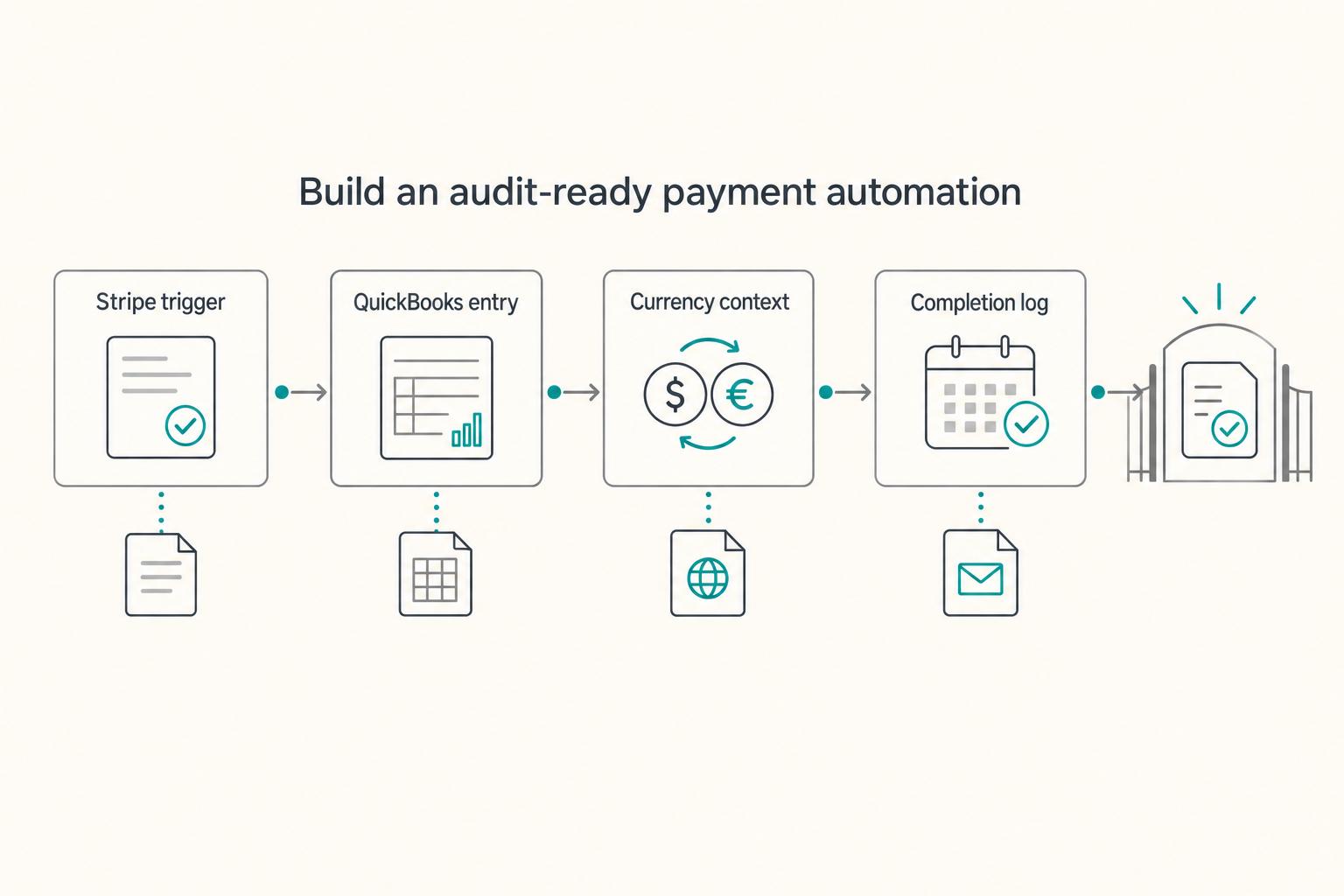
Automating Your Freelance Finances: A Zapier Workflow for Connecting Stripe, QuickBooks, and Wise
Cleaner books and fewer month-end fire drills come from sequence, not software. Run this in the right order: structure, compliance, accounting architecture, then automation.

How to Get High-Quality Backlinks to Your Freelance Website
For experienced professionals, the usual client acquisition model stops paying off. It becomes a loop of constant outreach, proposal writing, and networking, all driven by the pressure to keep the pipeline full. That churn eats your best time and leaves less room for the deep work that actually shows your value.