
Quick Answer
For an ordinary German VAT invoice, check §14(4) fields, transaction-specific VAT wording and the correct format. Add clear payment terms, reconcile net, tax and gross amounts, then retain the issued record. Domestic B2B e-invoice transitions and exceptions depend on transaction scope; numbering gaps do not automatically require cancellation.
Send a German invoice that is compliant and payment-safe on the first try#
The goal is simple: send a Rechnung that meets German requirements and is easy to review and pay. Use the same order every time: legal minimum fields first, payment terms second, pre-send risk checks third. Treat it as a defensive sequence, not a design template or a complete legal checklist for every case.
First identify the invoicing rules for the transaction. German VAT invoicing requirements depend on the supply, supplier establishment and special rules; a German customer does not make every foreign supplier follow an identical template. For a standard invoice governed by German rules, use the statutory field list below.
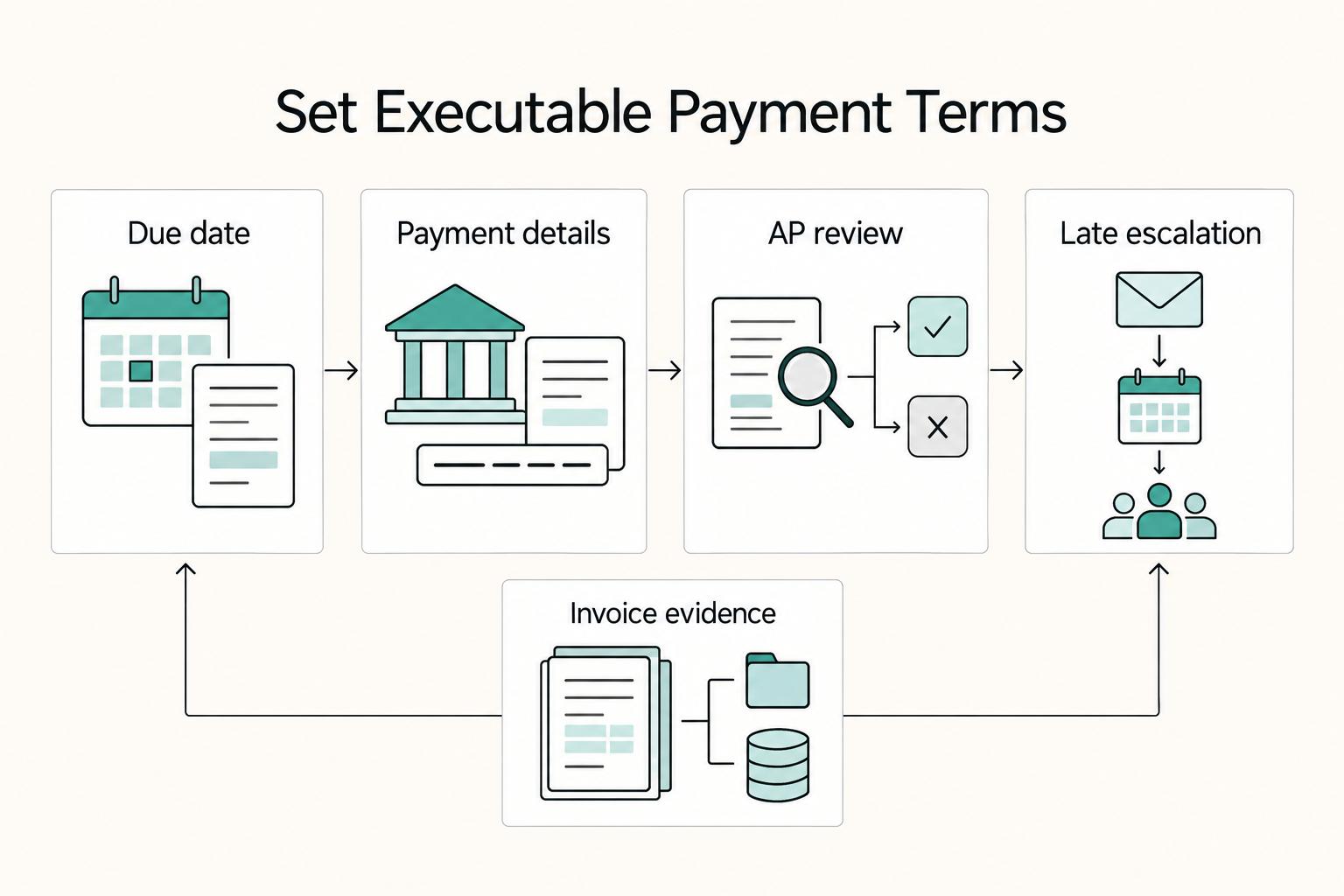
State due date, payment terms, and payment instructions in plain language.
Before sending, verify completeness and consistency across the invoice. Confirm the document is both compliant and operationally clear, then keep support records tied to the same invoice number.
The domestic B2B e-invoice transition is explained below. Public-sector invoicing has separate federal and state requirements; check the contracting authority’s instructions rather than applying one nationwide B2G start date.
This guide focuses on ordinary invoices governed by German VAT invoicing rules. Small-amount invoices, Kleinunternehmer supplies, self-billing and cross-border cases can have different requirements. Determine the correct case before copying a prior invoice.
Before you draft the first line item, gather the contract, any purchase order instructions, and your prior accepted invoice for the same client when available. That quick comparison often catches naming drift, account-detail drift, and date-label drift before they turn into revision work.
Put your full legal name, business address, and relevant tax/VAT identifiers in one source note. Keep this block consistent with your contract and prior accepted invoices. If details changed recently, update your source note first and only then start drafting.
Collect the recipient’s legal name and billing address. Add a purchase order reference when the client requires one. Check identity against the contract and resolve mismatches before issue.
Gather scope notes, agreed rates and the billing milestone. For completed or progress work, retain delivery evidence; for an agreed advance or deposit, retain the contract and payment schedule and describe the prospective supply.
Set a controlled numbering method with one or more number series, each invoice identified uniquely. Keep a register explaining cancellations and unused numbers. Do not renumber issued invoices merely to remove a gap.
Required fields for an ordinary German VAT invoice#
Under §14(4) UStG, check these fields. Special cases may add or simplify requirements.
| Field | What to include |
|---|---|
| Parties | Full names and addresses of supplier and recipient |
| Supplier tax identifier | Steuernummer or USt-IdNr |
| Issue date | Date the invoice is issued |
| Invoice number | Unique identifier in one or more consecutive series |
| Supply description | Quantity and type of goods, or scope and type of service |
| Supply timing | Delivery/service date; applicable advance receipt date where different |
| Consideration | Amounts split by tax rate/exemption and agreed reductions not already included |
| VAT | Applicable rate and tax amount, or exemption notice |
| Conditional retention notice | Recipient retention notice where §14b(1) sentence5 applies |
| Self-billing | The designation Gutschrift where recipient-issued billing applies |
For a simple taxable consulting example, 10 hours at EUR 100 yields EUR 1,000 net. At an assumed applicable 19% VAT rate, tax is EUR 190 and gross is EUR 1,190. State the actual service month and invoice date. This arithmetic does not decide whether your particular supply is taxable.
Step 1 Lock party identities and tax identifiers#
Lock legal names, addresses, and the tax identifier you plan to use before you draft amounts. That alone can reduce avoidable review issues.
- Use exact legal names and addresses for both parties.
Use your registered business details for the sender and contract counterparty details for the recipient. Do not replace legal entity names with team names, nicknames, or brand labels.
- Use the tax identifier you have confirmed for this invoice case, and keep that choice consistent.
For an ordinary invoice, use the supplier’s Steuernummer or USt-IdNr. A W-IdNr is not a general substitute for either under §14(4). Recipient VAT IDs and special wording may also be needed for a cross-border or reverse-charge case.
- Run a pre-send AP checkpoint.
Confirm the recipient legal entity, billing address format, and any purchase order reference in the client instructions are consistent with the contract and billing details.
- Treat entity mismatch as a high-risk issue.
If the invoice recipient does not match the contract counterparty, correct it before sending so processing is less likely to be delayed.
A practical check is to read the sender and recipient blocks out loud against the contract header and billing instructions. If either one sounds different, stop and fix it. Identity mismatches are usually easier to correct before send than after routing starts.
Step 2 Define service scope and date logic so disputes fail early#
Disputes often start with unclear timing or vague scope. Make the service date or service period and line-item scope explicit so reviewers can confirm what was delivered and when.
- Separate dates and label them clearly.
Show the issue date and delivery or service timing separately, even if they coincide. The calendar month of performance can identify the supply timing under §31(4) UStDV. Advance-payment invoices have their own receipt-date condition.
- Use one clear service period for bundled monthly work.
If work is billed monthly, state one period and keep line items consistent with it. Tie each line item to a deliverable or workstream so scope is easy to validate.
- Prefer specific line-item descriptions over vague labels.
Replace broad text like consulting services with concrete descriptions of work delivered. This is especially helpful when cross-border reviews involve multiple entities with separate tax, banking, and vendor operations.
- Run a traceability check before issuing.
For each line item, confirm the contractual billing basis. Link completed or progress work to delivery evidence, and an advance to its agreed deposit or prepayment milestone. Rewrite unclear descriptions before sending.
For one-off work, a single service date can be enough. For bundled work, a service period is often clearer. Use whichever makes the delivery window obvious to someone who did not work on the project, then keep that wording consistent across the invoice.
Step 3 Build amounts that reconcile on first review#
If totals cannot be reproduced from line items, approval can slow down. Build the math so a reviewer can recalculate it in one pass.
- Structure each line item so it can be recalculated.
Show quantity or scope unit, unit basis, and line subtotal. For fixed-fee work, label the basis in plain language so reviewers can map it to agreed terms.
- Make the totals block mirror the line math.
Present net amount, VAT amount, and gross amount in one summary block. Run this control before issuing: line-item subtotals = net amount, and net amount + VAT amount = gross amount.
- State VAT treatment explicitly.
Separate net amounts by VAT rate or exemption, and show the applicable rate and tax amount or the exemption statement. Reverse charge needs the required wording for that case; a blank VAT field is insufficient.
- Run a reconciliation check before sending.
Where commercial records exist, compare what you bill to what was ordered, received, and paid so you catch mismatches early. In self-billing cases, keep VAT details explicit because the customer issues the invoice on behalf of the supplier.
If totals are correct but labels are unclear, review can still stall. Keep line labels and totals labels aligned so the reviewer can map each subtotal to the summary block without guessing.
Step 4 Set payment terms that protect cash flow without slowing approval#
Set payment terms so AP can execute quickly, then define late-payment follow-up in advance.
- State terms, due date, and payment details together in plain language.
Use consistent labels such as due date, account holder, and payment reference so payment can be executed with less back-and-forth.
- Match wording strength to approval risk.
Use clear, neutral language that matches your agreement so AP can review and process the invoice without extra interpretation.
- Add one clear escalation clause for late payment.
Document the sequence: reminder, request for remittance date, and escalation to the agreed finance contact.
- Keep execution records tied to the invoice number.
If you use payment links, keep them clearly tied to the invoice and keep confirmation records mapped to the exact invoice number. If self-billing applies, confirm a written agreement and current tax details, and update the agreement if VAT numbers change.
Payment wording should be easy to execute, not dramatic. Keeping due date, account data, and payment reference in one place can reduce avoidable delays.
A structured payload and its readable view should show the same amounts and payment reference. Validate the structured data as well as the copy AP reads.
What changes when you invoice a cross-border client#
For cross-border invoices, confirm the applicable invoicing and place-of-supply rules before selecting VAT treatment. Then align recipient identity, service timing and payment references.
A common risk in international cases is small differences across the contract, invoice, PO, and remittance details. Those gaps can trigger manual checks, so tighten the joins before you send.
Step 1 Lock the commercial reference set before issue#
Before sending, lock the commercial reference set: purchase order when required, payment terms, and bank account details. Keep these details consistent across contract, invoice, and remittance instructions so the client can route payment with less rework.
If a purchase order is required, make sure the PO on the invoice matches the client legal entity and billing record. Use agreed payment-term wording and a stable bank-detail format for that entity.
If the client has multiple legal entities, confirm the exact billed entity each cycle instead of assuming it is unchanged from the last invoice. That check can reduce rejected invoices with otherwise correct amounts.
Step 2 Adapt VAT and e-invoice handling by transaction case#
Use EU VAT invoicing rules as the baseline, then tailor by transaction context. VAT obligations can differ by where you sell and whether the transaction is for goods or services, so avoid copying wording from another client without checking fit.
A foreign customer or foreign supplier does not automatically fall within Germany’s domestic B2B e-invoice mandate. Check establishment and transaction scope. If another country or a public contracting authority requires a particular format or portal, meet that requirement separately.
Keep your VAT statement, totals block, and any structured payload aligned. If those versions conflict, AP may pause payment while tax details are rechecked.
Step 3 Run a pre-send international checkpoint#
Use a short pre-send check for international cases:
- Confirm the recipient legal entity matches the contracting party and billing record.
- State a clear service period.
- Keep tax identifier usage consistent for the case (tax ID or VAT registration number as required).
- Verify PO, payment terms, and bank account details match across invoice and payment instructions.
- Confirm the recipient accepts the electronic format you plan to send.
If legal entity or tax identifier details conflict, pause and correct before issuing.
A simple decision rule helps: if two documents disagree on entity, tax identifier, or payment details, the invoice is not ready. Fix the mismatch first, then send once.
Contract terms your invoice should align with before you send#
Before sending, run one consistency check: the invoice should match the signed agreement and your support records so approval is not delayed by avoidable mismatches.
This section is about defensibility, not legal theory. When the invoice text and your support records point in the same direction, disputes are easier to contain and faster to resolve.
Step 1 Align timing and handoff details#
For progress invoicing, make sure each billed line item uses a clear service date or service period. Keep invoice issue date separate from service timing so reviewers can verify what was delivered, when, and when it was billed.
When handoff spans multiple dates, keep the billing period wording consistent across related line items. Mixed date language in the same invoice creates avoidable questions.
Step 2 Keep scope wording factual#
Keep invoice descriptions focused on delivered work and avoid broad promises. Short, factual line items are easier to approve and harder to misread.
Use descriptions that reflect the billing event. Describe completed work factually; label an advance for future services as an advance rather than implying the work has already been delivered.
Step 3 Verify reimbursables with proof#
For reimbursable or third-party costs, retain the agreed approval and underlying records. If billing a prospective cost advance, label it and retain its contractual basis rather than presenting it as an already incurred expense.
If a reimbursable line is challenged, you should be able to produce the approval evidence and underlying document quickly. Slow evidence retrieval can delay payment even when the charge is valid.
Step 4 Keep dispute-ready records and valid format#
Keep the invoice, service support and delivery record linked. For a structured e-invoice, preserve the original structured data, not only a PDF view. The format section below explains when the domestic mandate applies.
A dispute-ready package should be easy for a third party to read without extra explanation. That is the standard that keeps follow-up predictable when a payment is questioned.
Step 5 Run a pre-send compliance and risk check#
Use a two-pass review before sending: legal completeness first, payment operability second. If either pass fails, pause and fix it before release.
| Check | Focus | Confirm |
|---|---|---|
| Required fields check | Legal completeness | Check the statutory field list above and any special-case requirements; validate both visible content and structured data. |
| Payment execution check | Operability | Due date, payment terms, bank account details, and purchase order alignment |
| Evidence check | Defensibility | Link each line to delivered-work evidence or an agreed advance/deposit milestone; archive the issued invoice and any structured payload. |
| Control check | Records and totals | Confirm unique numbering and explain gaps or cancellations; reconcile line items through gross amount. |
-
Required fields check. Check every applicable row in the statutory field table and the special rules for your transaction.
-
Payment execution check (operability). Confirm due date, payment terms, bank account details, and purchase order alignment. Make sure these details do not conflict across sections.
-
Evidence check. Link completed/progress work to delivery support and advances to their agreed billing milestone. Retain that evidence with the issued invoice and structured data.
-
Records and totals. Verify unique invoice identification and reconcile totals before sending.
Run legal completeness and payment operability as separate passes on purpose. The first pass asks whether the invoice meets your current invoicing requirements. The second asks whether AP can execute payment without clarification. Combining both into one quick read often misses one side.
Do not let a format validator replace a tax and commercial review. An XML file can parse correctly while naming the wrong customer or applying the wrong VAT treatment.
Common invoice failures and how to recover without creating a bigger mess#
When an invoice fails, recover in a controlled, traceable way: fix the specific error, link the correction to the original, and keep both records clean. Move quickly, but do not send partial fixes.
| Issue | Fix | Keep with record |
|---|---|---|
| Duplicate invoice number | Correct the duplicate with an explicit original reference | Retain both records and explain the numbering error |
| Wrong invoice recipient | Issue a linked correction where appropriate; cancel and reissue if the actual customer or transaction is wrong | Retain the original and identify the corrected information for AP |
| Issue-date and service-period confusion | State invoice issue date and service period separately and clearly; update line-item notes | Use the corrected service-period language consistently across affected lines |
| Wrong VAT treatment | Correct the VAT field and include a plain reason statement on the revised invoice | In the AP note, identify the original invoice number, corrected invoice number, and exact field corrected |
A correction should tell AP which invoice it affects and which information changed. Avoid sending two payable documents that appear to represent two separate sales.
Treat recovery as a single correction cycle, not a stream of edits. Multiple partial resends can create version confusion and leave AP unsure which document is current.
Step 1 Repair a broken invoice number sequence#
A numbering gap alone does not require a replacement invoice. Investigate a duplicate or incorrect identifier, then issue a traceable correction where needed. Keep the register and original record intact.
Identify the original invoice unambiguously in the correction note. A new number is not required for every correction document; the linkage must make the affected invoice clear.
Step 2 Reissue for a wrong invoice recipient#
For an incorrect recipient name or address, assess the actual transaction and issue a specific correction linked to the invoice. If the underlying customer or transaction is wrong, finance may need a cancellation and new invoice instead.
Do not combine this fix with unrelated rewrites. Correct the recipient data, keep the rest stable, and resend one clean version.
Step 3 Resolve issue-date and service-period confusion#
If date fields are unclear, state invoice issue date and service period separately and clearly. Update line-item notes so they match corrected service-period language.
Date corrections should read the same way across all affected lines. Mixed wording after correction can trigger another review loop.
Step 4 Correct VAT treatment and send a concise AP note#
For wrong VAT treatment, determine the correct treatment before issuing the correction. Record the affected invoice, changed tax fields and any amount adjustment; assess whether a separate credit or cancellation is needed for the case.
Use this resend check before release:
- corrected invoice linked to the original record
- invoice number and issue date verified in your register
- service period wording aligned with line items
- recipient legal details rechecked
- VAT treatment and reason statement visible and consistent
Retain the original, correction and AP communication together. §31(5) UStDV permits a document correcting missing or incorrect information with a specific, unambiguous reference; cancellation and reissue are not mandatory for every error.
Copy and paste final invoice checklist#
Use this as your final pre-send gate: if one item fails, fix it and rerun the full list before sending. Run it in two quick passes: first legal and tax completeness, then payment operability and evidence readiness.
| Period or case | Domestic B2B format rule |
|---|---|
| From 1 January 2025 | Domestic businesses need to receive structured e-invoices, including Kleinunternehmer. |
| Through 31 December 2026 | Issuers can use paper; unstructured electronic invoices such as PDF require recipient consent. |
| During 2027 | The general extension applies where issuer prior-year turnover is at most EUR 800,000; qualifying EDI has a separate transition. |
| From 2028 | Structured issuance applies to in-scope supplies after transitions; exemptions remain. |
| Exceptions | Small amounts up to EUR 250 gross, qualifying tickets and Kleinunternehmer supplies are among exceptions. |
Confirm supplier and customer legal names and full addresses, and include your Steuernummer or USt-IdNr. as applicable.
Check the appropriate invoice type first. Use the small-amount simplification only for a qualifying invoice up to EUR 250 gross; it is not an alternative for any small freelance business.
Recalculate totals and apply the correct VAT treatment. A VAT registration does not mean every supply is taxable. Missing mandatory information can affect input-tax deduction and may require correction.
Make due date and bank details visible in one block, and confirm they are consistent across the final invoice version.
Use the transition table for format scope. Retain invoices for the generally applicable eight-year period, subject to legal extensions; for an e-invoice keep the structured original.
Final takeaway#
For every Rechnung, keep the order strict: complete the legal core, make payment handling clear, then run a final pre-send check. That sequence keeps the invoice usable as both a payment request and a tax record while reducing correction risk.
- Preserve the correction trail. Retain issued records and link corrections clearly. Decide whether a correction, credit or cancellation is appropriate for the actual error.
Before sending, verify both the legal content and the client’s payment instructions. Keep the issued version and any structured data linked to the supporting records.
Frequently Asked Questions
What must be included on a legally compliant German invoice?
For a standard invoice, use the statutory field table in this guide and check special rules for the transaction. Payment terms help AP execute but do not replace required tax information.
Do I need both an invoice issue date and a service date?
For an ordinary invoice, include the issue date and supply timing. They may be the same date, and the month of performance can be sufficient for the supply date. Advance and simplified invoices have special rules.
When should I use a service period instead of a single service date?
Use a service period that identifies when performance occurred; the calendar month is permitted under §31(4) UStDV. For work spanning periods, ensure the description and dates reflect the actual supply.
What VAT information should appear on a Rechnung?
Show the applicable tax rate and amount, or the relevant exemption or reverse-charge wording. Kleinunternehmer invoices follow their specific requirements; do not add VAT merely because the customer expects a totals field.
What happens if my invoice number is not sequential?
Use a unique identifier within a controlled consecutive number series. A gap is not by itself a reason to cancel an invoice. Explain unused or cancelled numbers in the register and correct actual duplicates.
Which payment terms reduce late payment risk without hurting approval speed?
At minimum, make the invoice a clear payment request by stating what is owed and the payment terms in one visible place. Keep the wording clear and unambiguous so processing is straightforward.
What should I fix first if I already sent an invoice with an error?
Identify the specific error, determine the correct treatment and issue a correction linked to the original. §31(5) UStDV allows missing or incorrect information to be corrected without automatically cancelling the entire invoice.
Watch
How to Write a German Invoice That Gets Paid
Try a related tool
Researched and edited by the Gruv editorial team. Gruv builds cross-border billing, payouts, and finance-operations software for global businesses.
Sources
Includes 3 external sources outside the trusted-domain allowlist.
Educational content only. Not legal, tax, or financial advice.
Related Posts

Germany Freelance Visa Application Path for Freiberufler and Gewerbe
Choose your track before you collect documents. That first decision determines what your file needs to prove and which label should appear everywhere: `Freiberufler` for liberal-profession services, or `Selbständiger/Gewerbetreibender` for business and trade activity.
Germany Freelance Tax Decisions for Globally Mobile Consultants
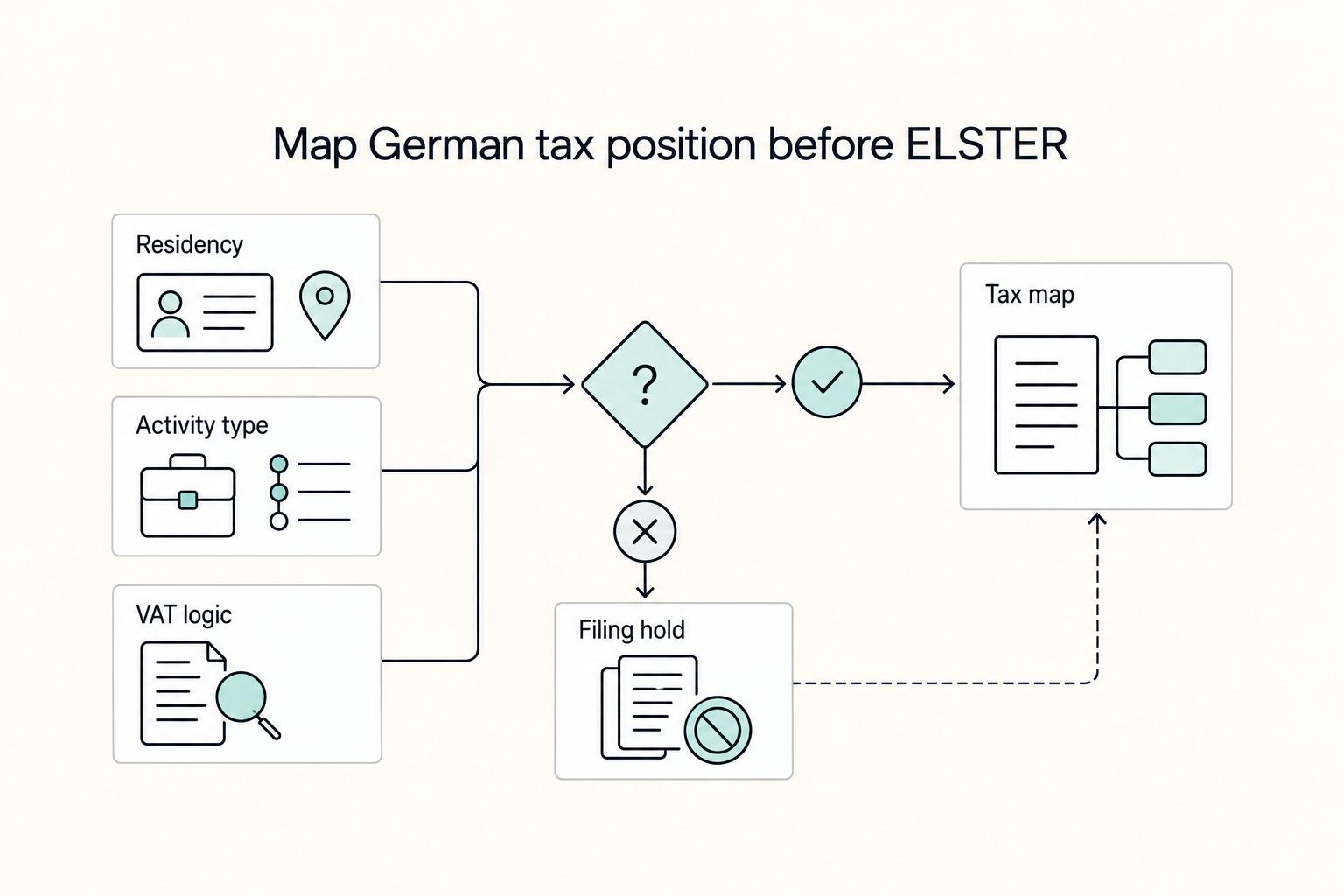
Set your German tax position first, then register and file. If you are a globally mobile consultant, a lower-risk approach is a clear decision order, not a tax shortcut.

The Freelance Payment Penalty: A Modeled Audit of Platform Fees, FX Spreads, and Payout Delays
The money rarely disappears through a single, easy-to-spot fee. The real loss is stacked. A marketplace takes its commission, a processor adds a charge for international cards, a bank or payment company converts the currency at a spread, a platform holds the funds before release, and a wire sheds a little to intermediaries on the way in. Each layer looks defensible on its own, but the worker feels the combined result as a smaller deposit and a later payday.