
Quick Answer
Choose Kleinunternehmerregelung only after documenting your activity, client locations, and verified rule wording. Under §19 UStG, eligible businesses can invoice without showing VAT, but they must monitor turnover and be ready to switch treatment when limits are crossed. Since the article shows conflicting threshold references across summaries, confirm the applicable figures with Finanzamt before live billing. Then lock your invoice template set, keep a dated decision note, and review status on a fixed monthly cadence.
How to Decide Whether the Kleinunternehmerregelung Fits Your Freelance Business#
Kleinunternehmerregelung is a VAT decision with operational consequences. For eligible low-turnover businesses, it can remove VAT collection on invoices and reduce recurring filing effort. That benefit is usually strongest when your setup, client mix, and invoice language stay consistent.
Make one clear call before live billing:
- Choose now when your business activity is clear, your expected turnover supports eligibility, and your invoice wording can stay stable from day one.
- Defer when key facts are still moving and your invoicing assumptions are not stable yet.
- Avoid for now when your model is changing quickly and a VAT status switch is likely soon.
Put that call into a one-page decision note before you send production invoices. Keep it practical:
- Your business activity in plain language.
- Where clients are located right now.
- Your expected billing pattern for the current year.
- The rule wording and the date you verified it.
- One invoice example including the Section 19 wording: In accordance with §19 UStG, no sales tax is shown.
Keep this note in the same folder as your registration and invoice templates. When facts change later, you update one page instead of rethinking everything from scratch.
Use the rest of this article as a decision and execution pack:
- A checkpoint to decide now, defer, or avoid.
- A first-30-day setup sequence.
- Clear stop signals for when professional advice should happen before the next invoice.
If any core fact is uncertain, pause and verify before billing. That is usually easier than correcting sent invoices and follow-up filings later. For deeper tax context, read A Deep Dive into Germany's Tax System for Freelancers.
Build the right mental model before you decide#
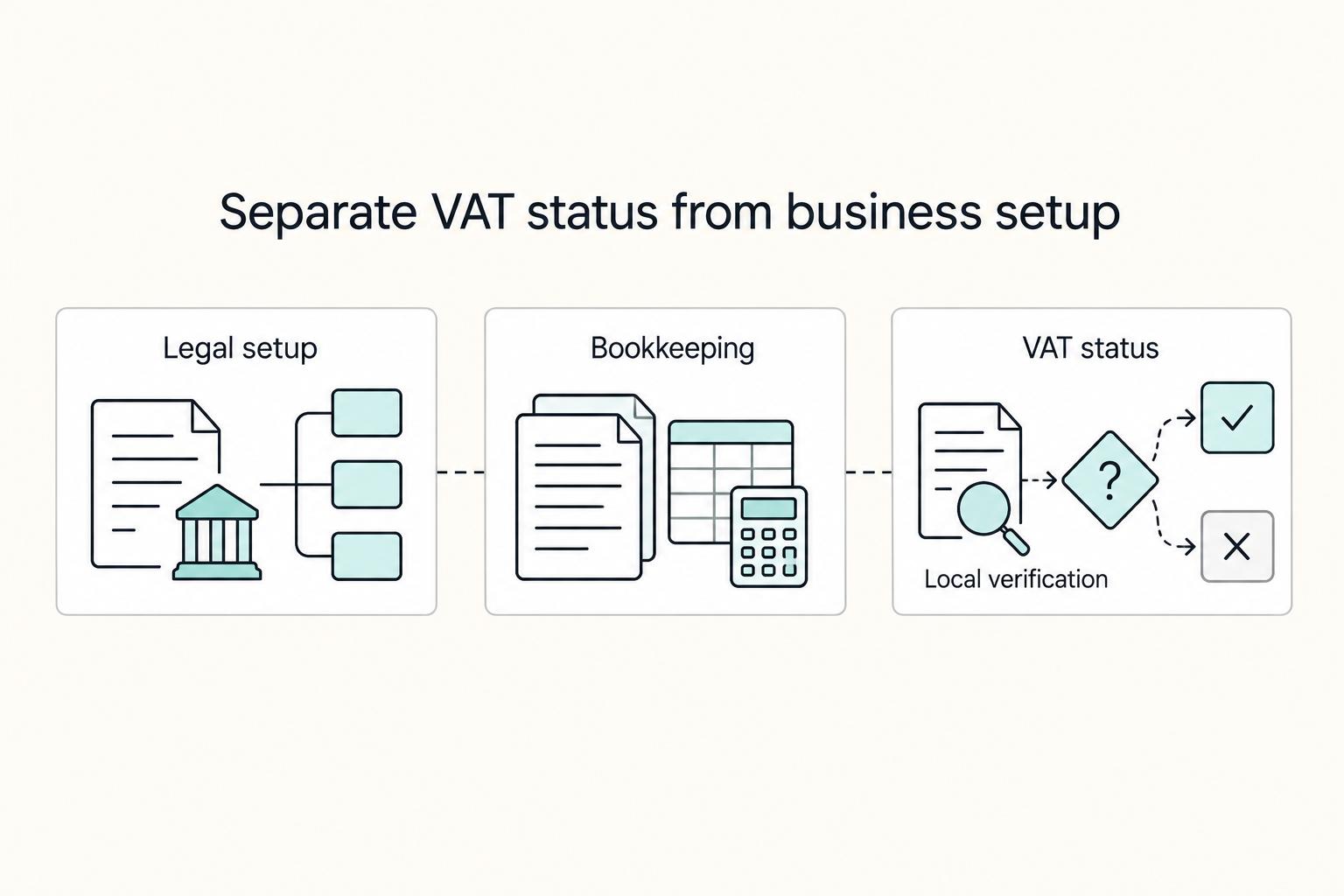
Separate three decisions that are often mixed together: legal setup, bookkeeping regime, and VAT status. If you are evaluating a small-business VAT option such as Germany's Kleinunternehmerregelung, treat it as a VAT-status decision first, then confirm local implementation details separately.
| Decision area | Working question | Keep separate from |
|---|---|---|
| Legal setup | Which legal form and business classification fits your case? | VAT treatment choices |
| Bookkeeping regime | How will you record and report activity? | Whether you charge VAT |
| VAT status | Will you use a VAT exemption or standard VAT treatment? | Legal-form and registration choices |
A practical definition helps avoid confusion:
- EU SME scheme: an optional special VAT regime available from 1 January 2025.
- VAT exemption (SME scheme): qualifying small enterprises can sell without charging VAT to customers, but they lose the right to deduct VAT on inputs used for exempt supplies.
- Result: EU-level rules set context, while application depends on national implementation.
When these lanes get mixed, mistakes show up in templates, filing assumptions, and advisor conversations. Keep your notes lane-specific so each decision can be checked quickly.
EU context is useful background, but it does not replace the country-specific rule set you apply in invoices and filings. From 1 January 2025, the EU SME scheme is optional, applies only where a Member State has implemented it, and references a EUR 100,000 total annual turnover cap across Member States. Use that as context for questions, then confirm the national treatment you will follow.
Create a dated two-column note with EU context for broad relevance and national decision for what you will apply now. That split makes later reviews easier. You can update one side without rewriting your full decision basis, and you reduce the chance of carrying a general EU statement into a filing choice.
Map your business type to eligibility lanes#
Classify first, elect second. Treat the business label you are using now as provisional until you verify it with reliable Germany-specific registration guidance.
If a source is a discussion thread or an access-verification page, use it for context only, not for filing decisions.
Apply the same three-lane model directly to your documents:
- Lane 1: legal setup records.
- Lane 2: bookkeeping and filing cadence notes.
- Lane 3: tax-status election and invoice wording.
If these lanes point to different assumptions, stop and resolve the conflict before making any election. Waiting is often safer than repairing invoices and corrections later.
Run a one-page lane check before you elect anything:
- Working label: the label you currently use. Mark it as provisional.
- Registration status: what has already been filed and which references you hold.
- Tax ID status: issued, pending, or unknown.
- Authority log: office contacted, date, and exact written confirmation of your next step.
Keep each item evidence-based. If a field is uncertain, mark it uncertain rather than guessing. That forces a verification step before invoicing.
If your setup touches more than one jurisdiction, pause election decisions until your next required step is confirmed in writing. Store short dated notes for each confirmation: what was said, by whom, and when. These notes are often more useful than long summaries because they are easier to cross-check when circumstances change. For a separate growth lens, see A Freelancer's Guide to A/B Testing Your Website and Emails.
Compare the VAT tradeoff in real operating terms#
Choose Kleinunternehmer treatment when VAT-free invoicing and lighter VAT administration matter most. Move earlier to standard VAT when your growth profile makes a near-term switch likely.
Under § 19 UStG, a Kleinunternehmer can issue invoices without charging Umsatzsteuer and may skip VAT returns. That can save real time in lean service setups. The balance shifts when turnover approaches the ceiling, because if the running total exceeds 100,000 EUR, standard VAT applies from the next invoice.
| Operating pattern | Usually favors | Main tradeoff |
|---|---|---|
| Stable turnover below limits | Kleinunternehmer treatment | Less VAT administration now, but ongoing turnover tracking |
| Turnover likely to exceed 100,000 EUR | Standard VAT readiness | More recurring VAT administration sooner |
| Fast growth near limits | Standard VAT | Higher administration from day one |
Use the thresholds as working assumptions until they are officially confirmed for your case.
- One guide uses under 25,000 EUR prior-year net turnover and expected under 100,000 EUR current-year net turnover.
- The same material presents these as net-turnover thresholds from 1 January 2025, replacing an older 22,000 EUR and 50,000 EUR gross pair.
- Only sales that would normally carry German VAT count toward the threshold in that source.
- If the running total exceeds 100,000 EUR, standard VAT applies from the next invoice.
Do not treat those numbers as self-validating if other summaries conflict. Verify current official guidance with Finanzamt or BZSt before filing or billing.
Translate the tradeoff into operating terms rather than abstract tax language:
- How many invoice and template edits will this choice create if pricing changes soon?
- How often will you review your running net-turnover total during the year?
- How close are you to a status switch if revenue lands above plan?
- Are your billing workflows ready to apply standard VAT from the next invoice after a threshold breach?
Then set two controls before you send your first invoice: a monthly net-turnover tracker and a ready switch template for the first invoice that must follow standard VAT. Those controls reduce panic decisions when turnover rises faster than expected.
Use a client-mix checkpoint to choose now or defer#
Choose now only when pricing, contracts, and billing behavior are likely to stay stable in the near term. If those inputs are still changing, defer and document your assumptions before locking the VAT path.
Do not assume every client will react the same way to VAT presentation. Use your own recent deals and note where friction appears at proposal stage, contract stage, or invoice stage. Decide from observed friction, not convenience.
| Checkpoint question | What to test now | If result is unclear |
|---|---|---|
| Is your current offer format easy to keep consistent across proposals and invoices? | Compare recent proposals and invoice drafts for avoidable edits. | Defer until you complete one clean billing cycle with notes. |
| Are contract or pricing changes likely soon? | List planned offer, scope, or rate updates already in your pipeline. | Prefer the path that avoids repeated contract and invoice resets. |
| Is your decision based on evidence or convenience? | Write assumptions and the trigger that forces a re-check. | Escalate early to a tax adviser before locking in pricing. |
A simple test helps: review your last few commercial interactions and mark every point where you had to clarify tax wording, totals, or contract language. If those clarifications are frequent, your current setup is not stable enough for a long-lived default.
Model the switch cost before you commit#
Build two short snapshots for the same planning period:
- Snapshot A with Kleinunternehmer invoicing.
- Snapshot B with VAT-active invoicing.
Include rework time, not just revenue assumptions:
- Quote revisions.
- Contract edits.
- Template changes.
- Client communication.
- Internal checks before sending.
Switch cost is not theoretical. If your offer changes often, those edits can consume more time than the VAT administration you tried to avoid. A short side-by-side estimate makes that visible before you commit.
Keep both snapshots simple and comparable by using the same period, expected volume, and client set, then changing only VAT handling. When one scenario clearly creates less rework and fewer exceptions, the choice becomes easier to defend and easier to execute.
Tie the decision to filing timing and evidence#
For almost every sole trader or small partnership that sells goods or services, Gewerbeanmeldung applies and should be filed before, or immediately after, the first invoice. After acceptance, you receive a Gewerbeschein, and registration triggers notifications to the tax office, the chamber of commerce, and the relevant accident-insurance body. Some activities are exempt, including liberal professions and activities limited to pure asset management or agriculture, so category confirmation comes first.
Store a compact evidence pack from day one:
- One-page memo with date, assumptions, and chosen path.
- Proposal and invoice templates aligned to that path.
- First-invoice date log and registration confirmation.
- Monthly note on pricing friction and client objections.
- One explicit trigger for re-evaluation.
Make each item short and dated. You are not trying to create paperwork volume. You are building a defensible trail that shows what you knew and why you acted that way at the time.
Verify current limits safely before filing anything#
Verify current limits with the Finanzamt before filing anything. Published summaries are useful for orientation, but not final confirmation for your case. The choice affects invoice VAT handling and can change which VAT filings apply later.
This article cites secondary summaries that should be treated as non-authoritative:
- One guide cites 25,000 EUR prior year and 100,000 EUR current-year expectation.
- Another guide flags changes around the 2024 tax year and January 2025 updates.
When summaries differ, do not pick the number you prefer and move on. Pause and resolve the conflict directly.
Run a short verification check before opting in, then repeat it at year-end forecasting:
- Confirm current turnover limits and which turnover base applies.
- Confirm which VAT filings apply in your case, for example Umsatzsteuer-Voranmeldungen and/or an Umsatzsteuererklärung.
- Confirm the effective date if your forecast crosses a limit.
Record the result the same day in a dated tax-folder note with five fields:
- Verification date.
- Office contacted.
- Rule wording or version received.
- Your turnover assumptions.
- Filing consequence you will follow.
This note prevents memory drift and reduces accidental rule mixing when you revisit the decision months later.
Decision rule:
- If secondary summaries conflict or your forecast sits near a limit, pause election until you get current Finanzamt guidance.
- If guidance is clear, proceed and record the exact rule basis you relied on.
Execute the first-30-day setup in the right order#
In the first 30 days, use one sequence: complete registration, lock templates, set the filing calendar, then archive decisions. The order matters because each step reduces rework in the next one.
| Order | Step | Key action |
|---|---|---|
| 1 | Complete registration before live invoicing | Handle the Fragebogen zur steuerlichen Erfassung through ELSTER, save the submission trail, and record the Steuernummer once issued. |
| 2 | Lock invoice templates to your current VAT treatment | Avoid generic setup files that mix statuses and keep one active template plus one prepared fallback template. |
| 3 | Build a filing calendar tied to your Finanzamt process | Preliminary VAT returns can follow monthly or quarterly cadence; add one recurring cadence check and one annual deadline review. |
| 4 | Create one audit folder before day 30 | Store registration confirmations, template versions, filing reminders, and dated decision notes in one place. |
- Complete registration before live invoicing.
For freelancer registration, the Fragebogen zur steuerlichen Erfassung is handled online through ELSTER. Where possible, do not start production invoicing until after registration. Save the submission trail and record your Steuernummer once issued. If timing slips, hold non-urgent billing until the setup is clear.
- Lock invoice templates to your current VAT treatment.
Use templates that match your active Umsatzsteuer handling. Avoid generic setup files that mix statuses. Keep one active template and one prepared fallback template so a status change does not force rushed edits under deadline pressure.
- Build a filing calendar tied to your Finanzamt process.
Preliminary VAT returns can follow monthly or quarterly cadence. Add one recurring cadence check and one annual deadline review. Year-specific timing matters, so review the calendar each year rather than copying it forward unchanged.
- Create one audit folder before day 30.
Store registration confirmations, template versions, filing reminders, and dated decision notes in one place. If your setup is questioned later, this folder shows what you decided, when you decided it, and how your invoices matched that decision.
Keep this setup lightweight so retrieval stays fast and execution stays consistent.
Configure invoices so growth does not break compliance#
Controlled templates help you scale billing without introducing avoidable Umsatzsteuer inconsistencies. Tie each template to your current VAT status and switch templates deliberately when status changes. Keep a clear split between domestic and non-domestic work, then freeze core fields in each template.
| Template | When to use | Fields to keep fixed |
|---|---|---|
| Domestic standard invoice | Domestic clients under your current VAT treatment | Legal name, Steuernummer, service date (Leistungszeitpunkt), issue date, VAT status line, total format |
| Cross-border invoice | Non-domestic clients where B2B and B2C handling can differ | Legal name, client country, tax identifier slot, service date, issue date, VAT status line |
| Simplified invoice format | Invoices that fall under Kleinbetragsrechnung rules, such as the €250 simplified-invoice limit | Legal name, date, service description, total, status line, internal reference |
Treat identifiers and dates as hard checks:
- Steuernummer, USt-IdNr, and W-IdNr should be treated as distinct identifiers.
- Service date and issue date should both appear.
- VAT wording should match current status on the send date.
Run the same pre-send check each time:
- Legal name matches registration records.
- Tax identifier is in the correct field.
- Service date and issue date are both present.
- VAT wording matches active status.
- Rate logic and totals are coherent when VAT applies.
Use versioned template names and log effective dates of wording changes, for example invoice_domestic_2026-03_status-A and invoice_domestic_2026-09_status-B. Freeze old versions and send only from the active set.
This control matters more as volume rises. It can also help you adapt to the 2025-2028 e-invoicing timeline, because wording and field logic are managed by version rather than by ad hoc edits.
When you work with a team, assign one owner for template approvals. Multiple people editing the same base file without ownership can create inconsistent status wording and avoidable credit-note chains.
Run a monthly control routine that catches drift early#
Run the same monthly routine each time, and keep turnover tracking current between check-ins. If current-year turnover crosses 100,000 EUR, Kleinunternehmer treatment ends immediately, and the crossing transaction is already subject to regular Umsatzsteuer.
| Review item | What to check |
|---|---|
| Cumulative turnover | Update cumulative turnover and compare against the 25,000 EUR prior-year and 100,000 EUR current-year limits. |
| Issued invoices | Reconcile issued invoices against the VAT treatment allowed by current status. |
| Exemption wording | Under Kleinunternehmer treatment, do not show VAT separately and include the exemption reference under § 19 Abs. 1 UStG. |
| Exceptions | Log corrected invoices, credit notes, and unusual one-off sales immediately. |
| Upcoming invoices | Review upcoming invoices for transactions that could trigger a near-term status switch. |
This is where template control and status control meet. Since recast rules apply from 1 January 2025, each control note should state which rule set you are applying.
In practice, run these checks at each review:
- Update cumulative turnover and compare it against the 25,000 EUR prior-year and 100,000 EUR current-year limits.
- Reconcile issued invoices against the VAT treatment allowed by your current status.
- Under Kleinunternehmer treatment, do not show VAT separately and include the exemption reference under § 19 Abs. 1 UStG.
- Log exceptions immediately, including corrected invoices, credit notes, and unusual one-off sales.
- Review upcoming invoices for transactions that could trigger a near-term status switch.
Keep a ready-if-asked pack in one place:
- Turnover tracker with cumulative totals.
- Invoice register with send date and VAT treatment used.
- Status decision notes with verification dates.
- Relevant correspondence with the Finanzamt.
Add one operational rule: record exceptions on the day they occur, not at month-end. Delayed exception logging can lead to missed status changes.
If status changes mid-cycle, switch from monitoring to filing readiness immediately:
- Prepare for Umsatzsteuer-Voranmeldung and Umsatzsteuer-Jahreserklärung obligations.
- UStVA is submitted electronically by the 10th day after each filing period.
- Filing frequency can change based on tax amounts, including monthly filing when prior-year VAT exceeds 7,500 EUR.
A short routine is enough when it is consistent. Compliance drift usually starts when those checks are skipped or delayed.
Plan the transition before you actually outgrow the status#
Plan the transition before you cross the limit so your first VAT invoice is correct. If you cross the relevant turnover limit(s), the change is immediate: register for VAT, add 19 percent to invoices from that point forward, and begin required monthly or quarterly advance returns.
Write the transition as an operational sequence, not an emergency response. If the trigger is clear, the first affected invoice and filing cycle are much easier to execute correctly.
Define the switch event in writing#
Set one sentence your team can apply without interpretation. Store it with your turnover tracker and invoice register.
Include non-cash compensation where relevant. Gifted products or services count as business income at market value and can move switch timing forward.
If a planned transaction is likely to trigger the switch:
- Stop using the old template before that billing date.
- Activate the VAT-ready template from that invoice onward.
- Confirm that customer communication and totals reflect the new treatment.
Keep one control note in the same file. VAT can be skipped only if revenue stayed at or below 25,000 EUR in the previous year or year of launch. Current legal thresholds should be verified with the Finanzamt before filing.
Pre-map pricing, contracts, and invoice formatting#
Decide VAT pricing treatment before the first affected invoice. Then update contracts and invoice formatting at the same time. Splitting these updates creates mixed messages and avoidable disputes.
Use a transition checklist:
- Confirm effective switch date and customer notice text.
- Update contract language for VAT treatment where required.
- Prepare invoice templates that include VAT.
- Update bookkeeping rules for VAT-tagged sales.
- Assign one owner to review first affected invoices before sending.
Run one dry contract review against one draft invoice:
- Check whether contract totals and invoice totals follow the same VAT logic.
- Check whether wording in contract and invoice uses the same status language.
- Check whether the effective date is consistent across both documents.
That quick check can catch mismatches before they reach clients.
Prepare filing steps before live billing#
Before the first affected cycle, run a dry pass through bookkeeping and confirm that invoice totals map cleanly to your advance-return process. Do not wait for the first real filing period to discover mapping gaps.
Keep transition evidence in one place:
- Trigger note.
- Template changes.
- First VAT invoices.
- Dry-run output.
If registration timing is still open, keep the stated deadline visible. File the Questionnaire for tax registration within four weeks of the first paid or gifted collaboration so your tax number is ready before invoicing. Keep digital records and receipts for ten years.
The transition is smoother when evidence is prepared in parallel with billing changes. That way, if questions arise, you can show both the commercial change and the filing logic behind it. If you want a related overview, read Digital Nomad Taxes in 2026 With a Defensible Filing Plan.
Know the red flags that require professional support#
Get professional support before the next invoice when any core VAT or status input is unclear. The main stop signals are threshold conflict, cross-border complexity, business-structure changes, and missing records.
| Red flag | Why it matters | Next step |
|---|---|---|
| Threshold conflict | This article cites 25,000 EUR and 100,000 EUR while older 22,000 EUR and 50,000 EUR figures still appear in legacy material. | Confirm the applicable rule with the Finanzamt or your advisor and record the version and date relied on. |
| Cross-border work | Treatment depends on Kleinunternehmer status, B2B versus B2C classification, and place of supply. | Get review before billing if your client mix spans multiple countries or combines B2B and B2C. |
| Business-structure changes | Status handling, invoicing approach, and filing expectations should be clear before the change goes live. | Involve a qualified advisor at the transition point. |
| Missing records | If you cannot show status election timing, Steuernummer issuance, or the reason invoices were sent with or without VAT, missing records slow down corrections. | Escalate immediately and bring the compact evidence pack. |
Treat these as action triggers, not discussion topics. When one appears, pause new assumptions and confirm the next step with qualified support.
Treat threshold conflict as a stop signal#
If sources disagree on thresholds, do not guess. This article cites 25,000 EUR and 100,000 EUR while older 22,000 EUR and 50,000 EUR figures still appear in legacy material.
Confirm the applicable rule with the Finanzamt or your advisor and record the version and date you relied on. If you exceed thresholds or opt out, VAT registration and returns are required.
Use a simple escalation script:
- State your current turnover position.
- State the threshold set you have seen.
- Ask for the currently applicable wording and effective treatment date.
- Record the answer in your tax folder the same day.
This avoids selective interpretation and keeps later filings aligned with the guidance you actually received.
Escalate early on cross-border work#
Cross-border VAT is not a copy-paste extension of domestic examples. Treatment depends on Kleinunternehmer status, B2B versus B2C classification, and place of supply.
Use these patterns as starting points, not universal rules:
- EU B2B with a valid VAT ID is typically reverse charge.
- Non-EU B2B is generally outside German VAT scope.
If your client mix spans multiple countries or combines B2B and B2C, get review before billing. Waiting until invoices are sent can lead to correction cycles that are harder to unwind.
For each cross-border client, keep minimum classification fields:
- Country.
- B2B or B2C label.
- VAT ID status where relevant.
- Planned invoice template.
That short classification table can be enough to show where specialist review is needed.
Ask for support during business-structure changes#
If your setup is changing, involve a qualified advisor at the transition point. Status handling, invoicing approach, and filing expectations should be clear before the change goes live.
Do not treat setup changes as paperwork only. They may affect how your VAT status assumptions are applied in invoices and filings.
A practical handoff to an advisor includes:
- Current status election note.
- Planned structure-change date.
- Current invoice template set.
- Next expected billing dates.
That gives enough context to identify conflicts before they become production issues.
Treat missing records as a hard red flag#
If you cannot show status election timing, Steuernummer issuance, or the reason invoices were sent with or without VAT, escalate immediately. Receiving a Steuernummer is a core prerequisite before regular invoicing.
Bring a compact evidence pack:
- Status election note with date and applied threshold set.
- Turnover tracker showing when threshold risk first appeared.
- Sample invoices before and after VAT treatment changes.
- Steuernummer confirmation and first invoice date.
- Cross-border client list with B2B or B2C label and VAT ID status where relevant.
Missing records also slow down corrections because you cannot prove which treatment decision was active at the send date.
Conclusion#
Choose a VAT path you can explain, execute, and keep stable as revenue and client mix evolve. Kleinunternehmerregelung can fit well when simplification is real for your business, but it works best as a deliberate choice backed by dated notes and regular checks.
Start with one written checkpoint and keep it current:
- Why you chose or declined Kleinunternehmer treatment.
- Which threshold wording and date you verified.
- Which invoice template set is active today.
Keep a small control set in place:
- A turnover tracker that includes all income sources and review dates.
- Invoice checks that match active Umsatzsteuer treatment.
- A short record of exceptions and corrections.
Review on a fixed cadence so growth does not outpace compliance. Focus each review on the inputs that actually move the decision: turnover trend, invoice handling, and any threshold assumptions you are relying on.
If threshold data is unclear, pause and verify before filing or sending the next invoice. This article itself shows conflicting threshold references, including EUR 22,000 and EUR 50,000 versus EUR 25,000 and EUR 100,000. Treat that conflict as a stop signal, not a tie-breaker prompt.
Escalate early when threshold interpretation or timing is unclear. Bring your decision note, turnover log, and recent invoices. Even under this status, you are not entirely tax-free, and some self-employed people can still be asked to file an annual VAT declaration. If you need country-specific confirmation, Talk to Gruv.
Frequently Asked Questions
What is the Kleinunternehmerregelung in one sentence?
Kleinunternehmerregelung is a German VAT relief for eligible low-turnover businesses that allows invoices without collected VAT under the applicable conditions. It can reduce administration around VAT handling. It does not remove income tax duties or other tax obligations, so it should be treated as a VAT status choice, not a tax exemption from everything.
Is Kleinunternehmer the same thing as Kleingewerbe?
Treat them as separate terms unless official guidance for your case says otherwise. There is no basis for treating them as equivalent. If classification is unclear, confirm legal setup and VAT treatment with the Finanzamt or a qualified advisor before you issue invoices or lock pricing language.
Do Kleinunternehmer charge Umsatzsteuer on invoices?
Under Kleinunternehmer treatment, invoices generally do not show or charge Umsatzsteuer. That is one of the main simplifications. It remains valid only while eligibility conditions are met and your turnover stays within the applicable limits. Keep invoice wording aligned with status and monitor turnover regularly.
What is the main downside of choosing this status?
The main downside is limited input VAT recovery on business expenses. In practice, if you do not charge VAT, you usually also do not claim VAT back on purchases. This can matter more when tools, hardware, or subcontractor spending is a larger share of your delivery costs.
Who usually benefits more from this status, B2C freelancers or B2B consultants?
B2C freelancers often feel the pricing effect more directly because a VAT-free total can appear lower to private clients. Many business clients can deduct VAT, so headline invoice VAT may matter less to them. The right choice still depends on your client mix, expense profile, and expected growth pace.
What changes operationally when you exceed the turnover limit?
When eligibility ends, you need to move out of the small-business VAT exemption and into regular VAT handling. Operationally, this usually means updating invoice templates and preparing for VAT reporting. If timing is uncertain, verify the effective date before sending the next invoice.
Which turnover figure should I trust right now if sources disagree?
Treat conflicting figures as a warning signal. Confirm current rules through official guidance or direct Finanzamt confirmation before relying on any single figure.
Watch
Should Freelancers Use Kleinunternehmerregelung?
Try a related tool
Researched and edited by the Gruv editorial team. Gruv builds cross-border billing, payouts, and finance-operations software for global businesses.
Sources
Includes 4 external sources outside the trusted-domain allowlist.
- sme-vat-rules.ec.europa.eu/index_entrusted
- blog.fordeercommerce.io/vat-invoice-requirements-in-germany-shopify-...external
- clevver.io/the-kleinunternehmer-a-guide-to-germanys-sma...external
- firma.de/en/accountancy/kleinunternehmerregelung-what...external
- redtapetranslation.com/all-about-being-a-kleinunternehmer-small-bus...external
Educational content only. Not legal, tax, or financial advice.
Related Posts

Digital Nomad Taxes in 2026 With a Defensible Filing Plan
With digital nomad taxes, the first move is not optimization. It is figuring out where you may be taxable, where filings may be required, and what proof supports that position.
Germany Freelance Tax Decisions for Globally Mobile Consultants
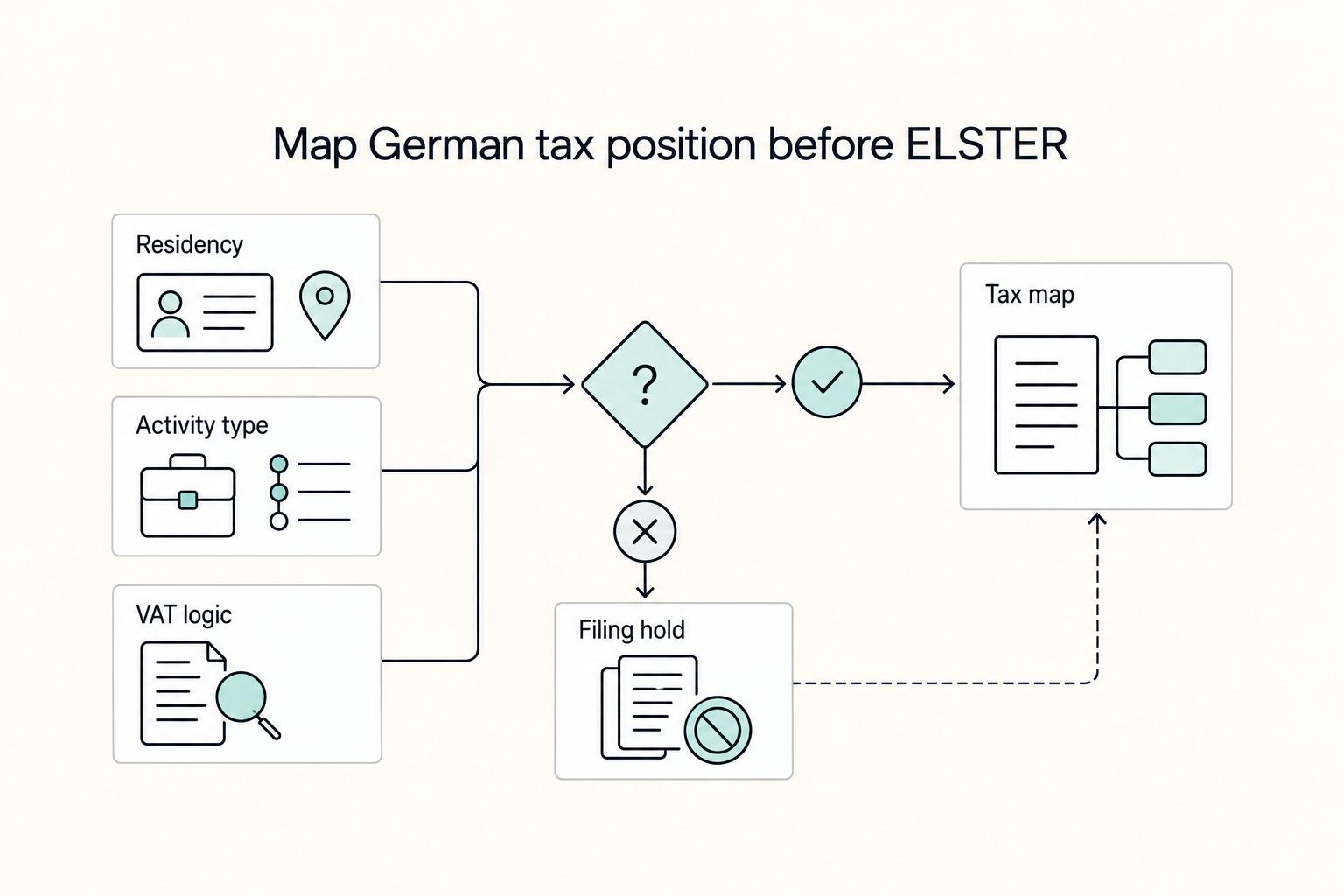
Set your German tax position first, then register and file. If you are a globally mobile consultant, a lower-risk approach is a clear decision order, not a tax shortcut.
A Freelancer's Guide to A/B Testing Your Website and Emails
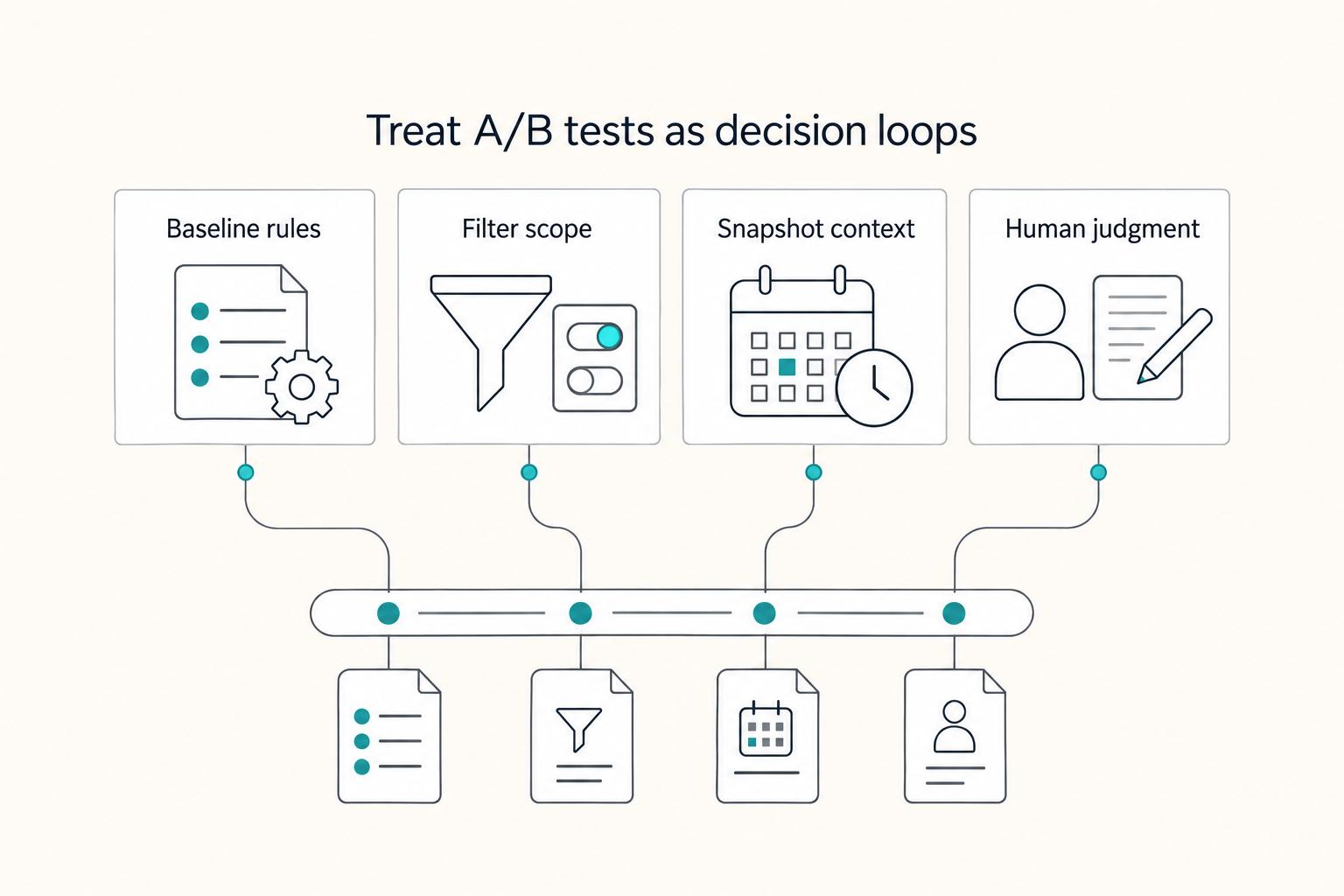
**A/B testing can help only when your process is explicit.** If **a/b testing for freelancers** is going to help your business, it needs boring rules. The useful version is not "test more ideas." It is knowing when to launch, when to pause, and when to close a test so you can make one clean decision.