
Quick Answer
Start by proving one narrow wedge can clear real work before scaling either side. In two-sided marketplace client contractor acquisition, track the flow from signup to qualified, eligible to match, matched, completed, and repeat, then expand only if that flow stays healthy. Keep client and contractor CAC assumptions side by side, and hold demand when zero-match requests or slower matching rise. Do not widen channels until payout operations remain stable across processing, posted, failed, returned, and canceled cases.
Why balance matters in a two-sided marketplace#
Balance is an operating discipline, not a traffic goal. In a two-sided marketplace, growth breaks when one side shows up faster than the other side can respond in a useful way. More client demand is not progress if qualified contractors cannot be found or trusted. More contractor signups are not progress if clients cannot find the right fit and close real work.
That imbalance usually comes from ordinary problems, not mysterious ones. A two-sided market exists when two groups meet through an intermediary, and each side's participation changes the other side's outcome. Once you have that structure, coordination problems and search frictions get expensive fast.
If buyers and sellers struggle to find each other, or if strangers do not have enough trust signals to transact, the platform can post growth headlines while trade value weakens underneath. A practical test is whether there is enough real activity in a specific niche or geography for people to find counterparties and complete work without constant friction.
The useful checkpoint is not total membership on each side. It is whether one side is active in a way the other side can actually use. That distinction matters because one side may care about who is signed up, while the other cares more about who is actually using the platform.
If your dashboard celebrates new client volume while unfilled requests rise, slower matches pile up, or contractor activity thins out in the same category, you do not have balanced growth. You have coordination failure wearing a growth label.
So the first job in client and contractor acquisition for a two-sided marketplace is to make the economics visible at the point where transactions either happen or stall. Signups alone do not create value. Trade value improves when qualified users match and complete transactions.
Before you increase spend, build a small evidence pack for one wedge: active clients, active contractors, matched versus stalled requests, and signs of repeat usage. If demand formation is still your weak spot, How to Find Your First Freelance Client is a useful companion. For the supply-demand interaction behind payout decisions, see Two-Sided Marketplace Dynamics: How Platform Supply and Demand Affect Payout Strategy.
This guide turns that discipline into operating decisions: the metrics that force action, how to choose the right launch wedge, how to stage demand and supply acquisition, and which gates need to hold before you expand.
For a fuller breakdown, read How a Talent Marketplace Shortened Contractor Onboarding with Gruv.
What to prepare before you scale either side#
Before you scale either side, make sure you can see where liquidity breaks across onboarding validation, transaction coordination, and disbursement execution.
| Step | What to prepare | Why it matters |
|---|---|---|
| Define one narrow wedge | One specific buyer problem and the contractor capability that solves it | Keeps participation useful on both sides instead of broad but low-quality signup growth |
| Build a side-by-side evidence pack | Client CAC assumptions, contractor CAC assumptions, CAC payback period, and first-match assumptions | Makes the dependency clear: client recovery usually depends on reliable first matches |
| Instrument matching and funnel events before expansion | Track signup or lead, qualified, eligible to match, matched, completed, and repeat | Shows where supply and demand stop converting into real transactions |
| Assign single-threaded owners | Clear accountable owners for client acquisition and contractor acquisition | Forces a decision when metrics conflict instead of scaling both sides by default |
Step 1. Define one narrow wedge. Start with one specific buyer problem and the contractor capability that solves it. If your positioning still sounds like "for anyone who needs help with X," it is too broad. A usable wedge should let you state, in one sentence, who is buying and which contractor profile can fulfill reliably.
Step 2. Build a side-by-side evidence pack. Put client and contractor CAC assumptions next to each other, then add your CAC payback period and first-match assumptions. Spell out what has to happen before recovery begins. This keeps you focused on liquidity, not raw volume.
Step 3. Instrument matching and funnel events before expansion. Your event data should show exactly where matching fails. Track the full sequence from signup or lead through qualified, eligible to match, matched, completed, and repeat. If stage drop-off is invisible, channel growth can hide a weak core transaction flow.
Step 4. Assign single-threaded owners. Give client acquisition and contractor acquisition clear accountable owners, and define how product, revenue, and finance feed each decision. The main risk is shared responsibility with no final call. One owner per side makes tradeoffs explicit when volume, quality, and payback pull in different directions.
For a broader operating playbook, see Building a Two-Sided B2B Marketplace to Reach $100M GMV.
Define balance with metrics that force real decisions#
Treat balance as matching reliability under growth, not as two rising topline curves.
Step 1. Track cross-side participation and matching outcomes, not vanity totals. Your core view should show whether demand and supply are actually meeting. Review matching outcomes by wedge, not only marketplace-wide, so weak pockets do not hide inside blended averages.
Step 2. Make low CAC insufficient by rule. Read CAC alongside clearing and fulfillment signals, not in isolation. If acquisition gets cheaper while matching quality weakens, treat that as a warning that growth may be creating activity that does not convert into reliable fulfillment.
Step 3. Gate expansion on demand-capacity fit at the wedge level. Expand only when demand and your qualified fulfillment capacity stay in balance in the current wedge. If repeat successful matching softens on either side, pause and fix qualification, matching logic, or fulfillment quality before adding spend.
Step 4. Add a demand freeze trigger before imbalance compounds. Set one non-negotiable rule: if demand outpaces qualified capacity, cap client-side expansion until matching stabilizes. This protects user outcomes and unit economics when cross-side effects turn negative.
For a deeper breakdown, read How to Build a SaaS Marketplace That Manages Subscriptions and Contractor Payouts.
Pick the launch wedge with an if then rule#
Use one launch rule: if your first wedge is not liquid yet, do not add a second wedge. Build supply first, then bring in demand, and treat expansion as a result of liquidity, not a substitute for it.
| If | Then |
|---|---|
| The first wedge is still thin and matching is inconsistent | Keep the wedge narrow and build supply first |
| The first wedge is liquid and matching is stable | Add the next geography or specialty carefully |
Step 1. Pick one wedge you can diagnose. Keep the launch scope tight enough that matching behavior is visible and fixable. A practical starting shape is often one city plus one vertical.
Step 2. Solve the chicken-or-egg problem by sequencing supply first. Start by ensuring enough qualified supply in that wedge, then activate demand against that supply.
Step 3. Optimize for liquidity, not raw volume. Early growth should prove that transactions can clear inside the wedge, not just that signups are increasing.
Step 4. Gate expansion with a hold rule. Add a second wedge only after the first is stable. If stability weakens, pause expansion and validate the current wedge before widening.
Sequence client and contractor acquisition by stage#
After you pick a narrow wedge, sequence acquisition in three stages: build usable contractor supply, activate matched client demand, then increase spend. Early balance is about liquidity and match quality, not raw volume.
Build constrained contractor supply first#
Start with a constrained contractor cohort in one wedge, and prioritize usability over profile count. The practical check is simple: can this supply reliably take incoming requests in that wedge based on fit, availability, and responsiveness? If not, hold expansion and fix onboarding or qualification first.
Turn on client acquisition after supply is usable#
Activate client acquisition once supply is reliably usable for matching. Then review outcomes together across both sides: match quality, zero-match requests, time to first match, and early repeat behavior. If a new channel adds demand but weakens matching, pause that channel and repair intake before scaling.
Increase spend only when repeat behavior holds#
Increase spend only when repeat behavior is holding and the current wedge stays stable. Treat expansion as a gate, not a default: add a new geography or specialty only after the current wedge remains stable on matching quality, repeat behavior, and operating economics. If those weaken as spend rises, freeze expansion and fix the wedge first.
| Stage | Enter when | Red flags | Hold or advance rule | Category expansion gate |
|---|---|---|---|---|
| Stage 1: Constrained contractor build | One clear wedge is defined and recruiting is active | Rising profiles but weak fit, availability, or responsiveness | Hold until supply is usable for real matching, not just onboarded | No category expansion |
| Stage 2: Matched client activation | Usable qualified supply is in place | More demand produces more zero matches or slower matching | Hold until match quality is consistently acceptable in wedge-level reporting | No expansion until qualification and onboarding stop degrading outcomes |
| Stage 3: Spend increase with stability check | Repeat behavior is holding in the current wedge | First transactions happen, but repeat or matching stability slips | Increase spend gradually; freeze if matching, repeat behavior, or operating economics worsen | Test expansion only after the current wedge stays stable |
Related: Subscription Billing and Contractor Payouts on One Two-Sided System.
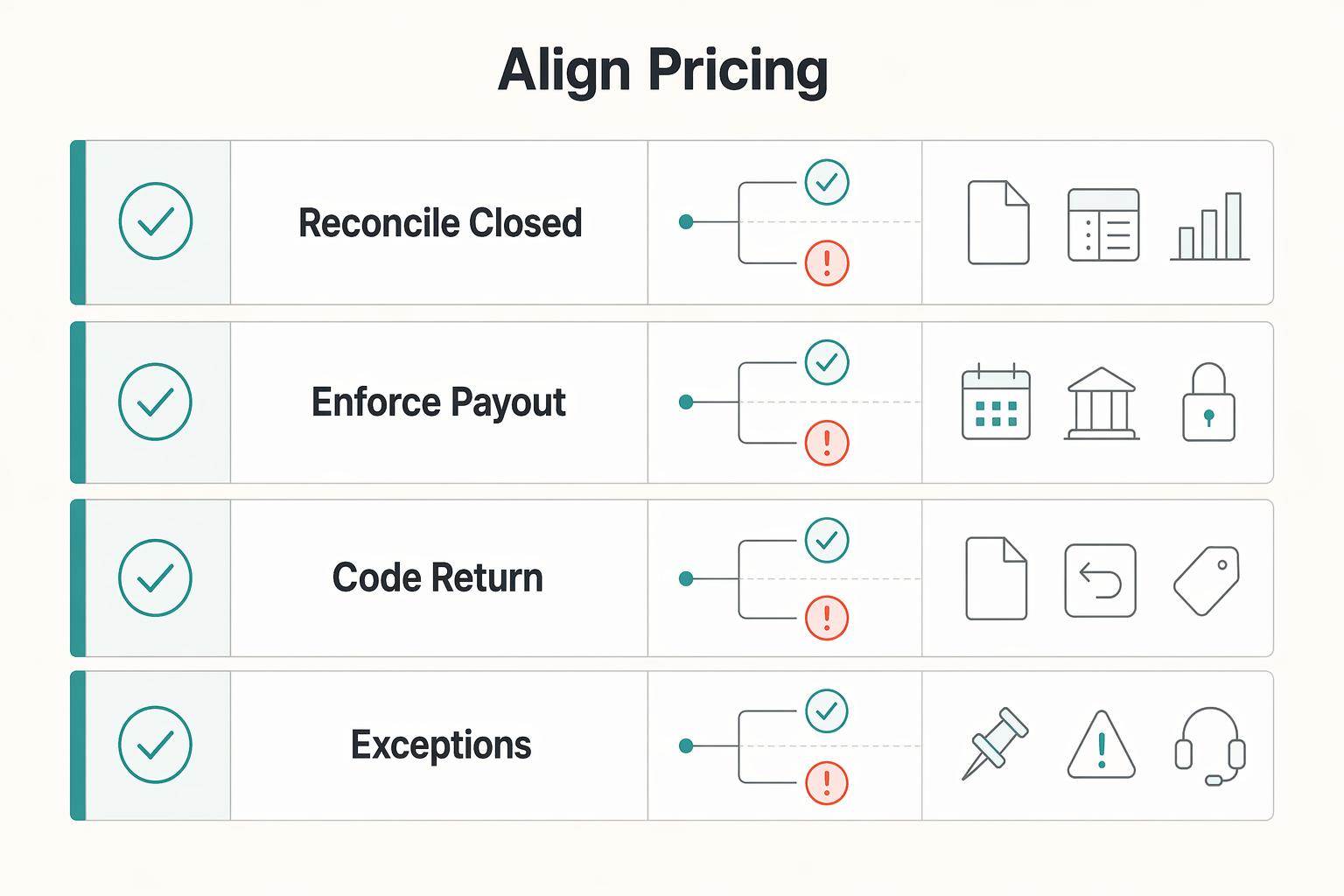
Align pricing, payouts, and ops controls before channel expansion#
Do not expand channels until pricing, payout promises, and exception handling still hold under higher volume. If a lower-cost client channel creates weaker fulfillment, slower payout handling, or more support load, pause and fix the design before adding spend.
Use one decision check across four outcomes: conversion, contractor retention, payout reliability, and payback. If one improves by degrading another, treat that as a hold signal.
| Control to run | Verify before more spend | Pause expansion when | Accountable owner |
|---|---|---|---|
| Reconcile closed payout batches | Settlement records match payout batches and completed transactions | Same-day variance cannot be explained | Finance or payments lead |
| Enforce payout status definitions | Each payout is traceable in one shared status model | Teams disagree on status meaning or status is stale or missing | Payments ops lead |
| Code return reasons and correction path | Returned payouts have a reason code and a documented fix path | The same destination-data issue repeats without a fix | Support lead + payments ops |
| Track exception resolution time | Exceptions close within your approved service target | Exception backlog ages out or needs repeated manual rescue | Operations manager |
| Assign one escalation contact | One named owner handles partner or provider follow-up | Issues bounce between teams with no single owner | Ops lead or founder |
Step 1: Map the tradeoff on both sides before changing acquisition spend. Review the full client offer and contractor offer together, then compare those changes to current wedge outcomes. If conversion improves while matching reliability weakens, hold expansion and correct the offer design first. For broader supply-demand interaction context, see Two-Sided Marketplace Dynamics: How Platform Supply and Demand Affect Payout Strategy.
Step 2: Run payout speed as a bounded test, not a permanent promise. State a clear hypothesis, test one narrow cohort, set a fixed review window, and define success and rollback before launch. Keep success criteria tied to contribution logic, matching reliability, and payout exception stability, using only thresholds your team has verified for that cohort. If payout exceptions rise, manual rescue grows, or economics no longer hold, roll back and rework the offer. For supply retention context, see Bad Payouts Are Costing You Supply: How Payout Quality Drives Contractor Retention.
Step 3: Tighten ops controls and term scope before adding volume. Use one shared operating vocabulary. When teams use the same words differently, you get avoidable failures. Require an evidence pack for exceptions and partner reviews, including supporting documentation where relevant and one named point of contact with current details. Also treat "approved" or "eligible" as conditional states, not guarantees that a specific payout path or service is available.
Step 4: Recalculate payback after the pilot and before expansion. Recompute payback with post-change contribution assumptions, not pre-change blended assumptions. If results depend on ongoing manual rescue or exceed your approved payback range for the pilot, pause expansion and reprice, narrow scope, or revert the payout promise.
Use this gate checklist before channel expansion:
- Conversion improved without reducing matching reliability in the current wedge.
- Contractor responsiveness and retention remained stable after the pricing or payout change.
- Payout reliability held, with clear ownership for failed, returned, and canceled cases.
- Updated payback logic still works on real post-change contribution.
Use expansion gates and freeze rules for categories and geographies#
Expand only when your current wedge works repeatedly for both sides; if either side starts to disengage, freeze and fix before adding categories or locations. These are operating decisions, not just marketing decisions.
Prove fit in one wedge before expanding#
Keep category and geography expansion tied to repeated, current-wedge performance, not isolated wins. If match quality or repeat behavior softens as volume rises, treat that as a failed gate and hold expansion.
Gate geography on balance and fulfillment health#
Open a new location only when your current location still clears demand with dependable fulfillment in the same category and usage window. If you see growing fulfillment gaps, rising exceptions, or clear side imbalance, freeze geography expansion and correct the mismatch first.
Use explicit pass/fail gates and enforce the freeze#
Use a short gate document with a named owner and evidence for each check:
- Match quality in the current wedge
- Repeat behavior on both sides
- Liquidity (the likelihood a transaction actually happens)
- Category-definition clarity so teams classify work consistently, with room to add, remove, or rework categories when needed
If any gate fails, pause growth and fix onboarding, qualification, or matching reliability before restarting.
Related reading: How to Build a Client Acquisition System for Your Agency.
For a step-by-step walkthrough, see How to Handle Auto-Reminders and Dunning for a Contractor Marketplace.
Common failure modes and recovery steps#
When an expansion gate fails, recover by shrinking scope first, not by adding spend. Use the same playbook each time: trigger signal, immediate containment, recovery action, and a strict restart condition.
| Failure mode | Trigger signal | Immediate containment | Resume growth when |
|---|---|---|---|
| Broad launch hides weak fit | Match quality drops, completion reliability slips, or repeat behavior splits by segment while top-line activity still looks busy | Stop adding segments or geographies, and cut the weakest wedge first | Match quality, completion reliability, and repeat behavior meet the verified internal benchmark for the active wedge |
| Demand outruns fulfillment | Client-side growth increases leads, but completion reliability worsens, contractor availability drops in the same niche, or repeat behavior weakens because buyers cannot get served | Slow client acquisition in the affected wedge and redirect effort to contractor qualification, availability, and scheduling coverage; if supply is ahead of demand, do the reverse | Completion reliability and repeat behavior meet the verified internal benchmark for that wedge |
| Channel volume damages matching | A new channel lowers apparent CAC, but match quality, completion reliability, or repeat behavior gets worse | Pause or cap that channel immediately | The paused channel performs at or above the verified baseline for the wedge |
| Economics weaken after pricing, payout, or fee changes | Contribution margin weakens after pricing, payout, or fee changes, even if acquisition volume looks healthy | Freeze category or geography expansion until finance and ops review the active wedge together | Contribution margin, match quality, completion reliability, and repeat behavior meet their verified internal benchmarks |
- Step 1: Narrow back to one wedge when broad launch hides weak fit
- Trigger signal: Match quality drops, completion reliability slips, or repeat behavior splits by segment while top-line activity still looks busy.
- Immediate containment action: Stop adding segments or geographies, and cut the weakest wedge first.
- Recovery action: Rebuild density in the wedge where clients and contractors already match and complete work reliably. Review by location, category, and time window, not only in aggregate. Track unfilled demand, canceled jobs, completed jobs, and repeat usage on both sides.
- Resume growth only when: Match quality, completion reliability, and repeat behavior meet the verified internal benchmark for the active wedge.
- Step 2: Rebalance acquisition when demand outruns fulfillment
- Trigger signal: Client-side growth increases leads, but completion reliability worsens, contractor availability drops in the same niche, or repeat behavior weakens because buyers cannot get served.
- Immediate containment action: Slow client acquisition in the affected wedge and redirect effort to contractor qualification, availability, and scheduling coverage. If supply is ahead of demand, do the reverse.
- Recovery action: Verify the wedge has enough qualified fulfillment at the moments users need it. If you need to rebuild demand carefully, revisit How to Build a Client Acquisition System for Your Agency. If contractor-side onboarding is the bottleneck, tighten early-stage sourcing and qualification using How to Find Your First Freelance Client.
- Resume growth only when: Completion reliability and repeat behavior meet the verified internal benchmark for that wedge.
- Step 3: Freeze channels that buy volume but damage matching
- Trigger signal: A new channel lowers apparent CAC, but match quality, completion reliability, or repeat behavior gets worse.
- Immediate containment action: Pause or cap that channel immediately. Do not let cheaper traffic hide weaker fulfillment.
- Recovery action: Compare channel cohorts on the same four terms: match quality, completion reliability, repeat behavior, and contribution margin. Keep only sources that clear into real transactions. If trust issues, disputes, or off-platform contact are part of the failure, pair this with How to Build a Trust and Safety Program for Your Contractor Marketplace.
- Resume growth only when: The paused channel performs at or above the verified baseline for the wedge.
- Step 4: Require an economics review before any restart
-
Trigger signal: Contribution margin weakens after pricing, payout, or fee changes, even if acquisition volume looks healthy.
-
Immediate containment action: Freeze category or geography expansion until finance and ops review the active wedge together.
-
Recovery action: Document these checks in one place:
-
CAC versus LTV in the active wedge - Match quality and completion reliability by wedge - Repeat behavior on both sides - Contribution margin after support costs, payment costs, and exceptions
Also inspect for leakage (off-platform transactions) and disintermediation after fee changes. In one study context, introducing a fee increased detected offline transactions (by nearly four percentage points) and was associated with higher cancellation rates. Treat this as a warning to audit your own data, not as a universal benchmark.
- Resume growth only when: Contribution margin, match quality, completion reliability, and repeat behavior meet their verified internal benchmarks.
| Failure mode | Owner | Primary metric to watch | Escalation path |
|---|---|---|---|
| Broad launch across too many segments | GM or market owner | Match quality | Growth lead -> exec owner |
| Demand-heavy scaling with weak fulfillment | Supply ops lead | Completion reliability | Supply ops lead -> growth lead |
| Channel wins with poor match outcomes | Growth lead | Repeat behavior | Growth lead -> GM |
| Expansion without economics proof | Finance or GM | Contribution margin | Finance -> exec owner |
This also pairs well with Contractor NPS and Payout Reliability: What Moves Loyalty.
Conclusion#
The durable answer is disciplined sequencing: choose a narrow wedge, prove it can clear real transactions, then scale with stage gates. Channel momentum is not the goal. Reducing coordination and discovery frictions while maintaining trust is.
- Define one wedge and assign clear ownership.
Pick one buyer problem and one contractor capability that can repeat in the same context, and keep scope tight early. You do not need a universal org chart, but you do need clear ownership so decisions do not drift. Verification point: both sides are being built for the same transaction, not for adjacent use cases that only look related on a slide.
- Set a baseline scorecard before you scale spend.
Measure client-side and contractor-side progress separately, then review them together as one interdependent market. Decisions on one side affect outcomes on the other side. A practical checkpoint is simple: if top-line activity rises while successful matching or completion worsens, pause channel expansion and fix the matching issue first.
- Move stage by stage with explicit hold and advance criteria.
The two sides often do not grow at the same pace, so intentional sequencing and ongoing calibration matter. Increase spend only when coordination and discovery still work in the current stage. A common failure mode is mistaking channel volume for real progress when trade frictions are getting worse underneath.
- Check every channel and pricing decision for cross-side effects.
One-sided gains can hide real damage. A change that helps one side can still weaken outcomes for the other side. Your evidence pack should show whether coordination, discovery, and transaction completion improved after the experiment, not just whether activity increased.
- Expand only when category and geography gates pass objectively.
As you expand, keep a short gate review showing the current wedge stands on its own and the new segment does not dilute matching quality. Confirm that trust mechanisms, for example reputation and feedback signals, remain strong as you add segments. If that proof is weak, waiting is the right move.
If you want a copy-and-paste rule set, it is this: define one wedge, baseline the right signals, sequence growth in stages, and only advance when coordination, discovery, and trust hold. That is less exciting than chasing volume, but it is how you build a marketplace that actually clears.
For a step-by-step walkthrough, see How to Calculate LTV in a Two-Sided Marketplace for Buyer, Seller, and Platform Decisions.
To confirm what's supported for your specific country or program, Talk to Gruv.
Related reading: Platform-to-Platform Payments: How to Build B2B Settlement Between Two Marketplace Operators.
Frequently Asked Questions
What does balancing client and contractor acquisition actually mean?
This guide does not define a private marketplace balance formula. It does support an outcomes-first approach: if activity rises but tangible results do not, treat the system as not yet balanced and adjust your strategy. For a deeper look at that supply-demand relationship, see Two-Sided Marketplace Dynamics: How Platform Supply and Demand Affect Payout Strategy.
Should I start with geography or specialty?
This guide does not prescribe geography versus specialty for private marketplaces. Start with the dimension that removes the biggest coordination constraint in your context, then adjust as new information and user feedback emerge.
How narrow should the first wedge be?
This guide does not set a fixed wedge width. Keep the initial scope narrow enough that outcomes are clear to evaluate, and avoid treating scope decisions as a rigid checklist.
When is it actually safe to add a new category or geography?
Use a versioned internal gate focused on tangible results, and update it as new information comes in. The acquisition guidance supports adapting strategy over time and explicitly warns against rigid checklist thinking.
What should I do if I do not have reliable external benchmarks?
Use your own baseline first and compare every new wedge to the current one on the same measures. The acquisition materials support adjusting strategy as user feedback and new information emerge, but they do not provide private marketplace thresholds for CAC, liquidity, or payout performance. Federal tools like Product and Service Codes and the Federal Procurement Data System help classify what was bought in public contract actions, not tell you when your marketplace is ready to expand.
What should trigger recovery mode instead of more spend?
This guide does not provide numeric recovery triggers for private marketplaces. A practical, source-consistent approach is to treat weakening outcomes during expansion as a signal to narrow scope, rebalance constraints, and reassess before adding spend.
Are lower CAC channels enough reason to expand?
No. This guide does not offer a CAC benchmark, and it emphasizes outcomes over process optics. Use channel cost as one input, not a standalone expansion trigger.
How do payout operations affect channel expansion decisions?
Treat payout-readiness guidance as an internal decision area that requires your own evidence before scaling channels. For the next step on that side, read Bad Payouts Are Costing You Supply: How Payout Quality Drives Contractor Retention.
Try a related tool
Where Gruv fits
Researched and edited by the Gruv editorial team. Gruv builds cross-border billing, payouts, and finance-operations software for global businesses.
Sources
- acquisition.gov/sites/default/files/page_file_uploads/catego...trusted
- acquisition.gov/far/part-2trusted
- ag-dashboard.acquisitiongateway.gov/system/files/ptai/2023-12/A003%20CBP%20TASPD...trusted
- energy.gov/documents/nrelsectionl07go97036pdf-0trusted
- faculty.haas.berkeley.edu/stadelis/Tadelis_TwoSided_20150407_Final.pdftrusted
- federalregister.gov/documents/2024/11/13/2024-23817/department-o...trusted
- ferc.gov/sites/default/files/2020-08/AD16-18-000-Tran...trusted
- files.floridados.gov/media/31397/module5.pdftrusted
Educational content only. Not legal, tax, or financial advice.
Related Posts

How to Find Your First Freelance Client
For your first client, the goal is not visibility, momentum, or a full pipeline. The goal is one paid project with scope and payment timing clarified in writing. A testimonial is useful, but it is not the win. Paid work with clear terms is the win.
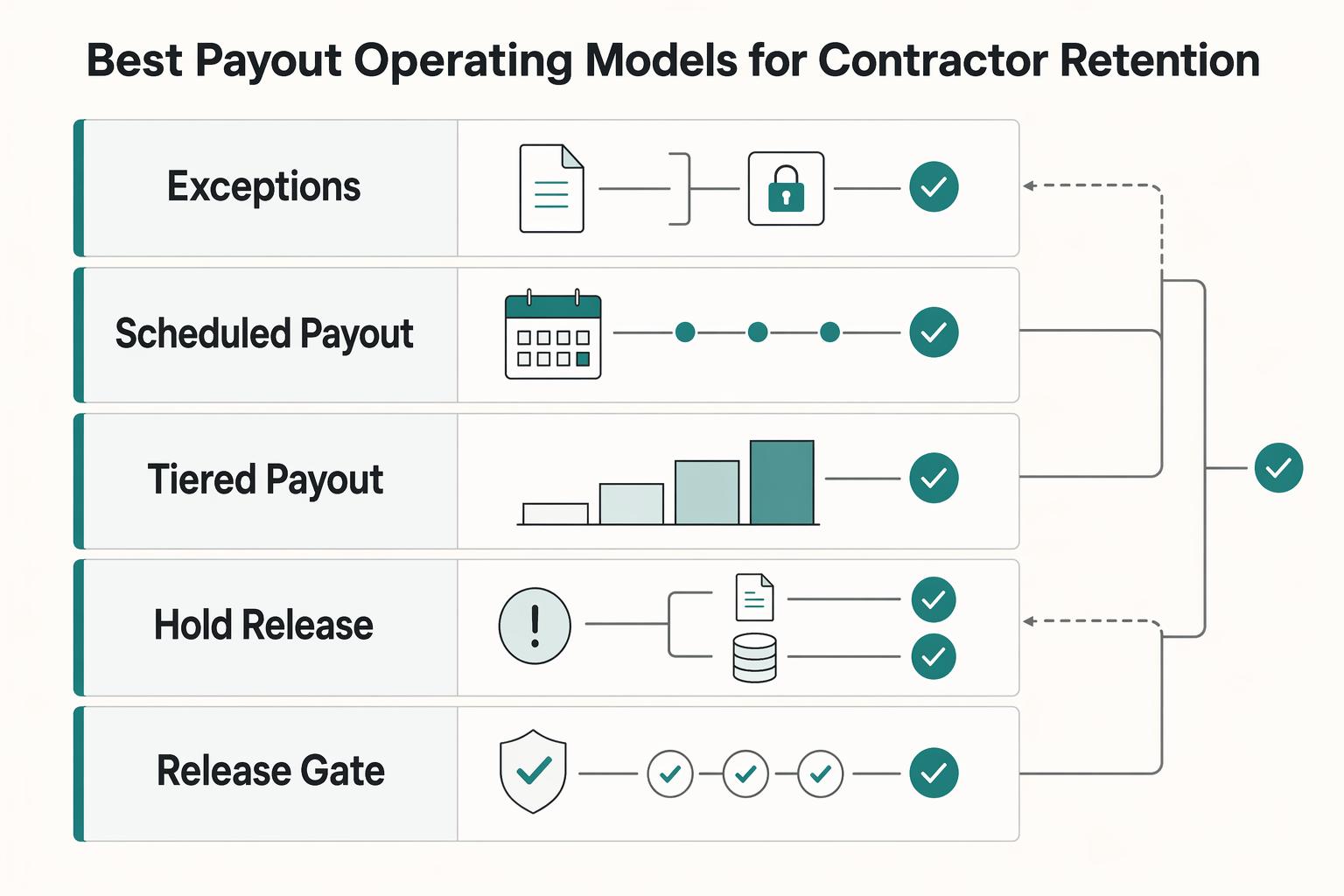
Bad Payouts Are Costing Your Supply in Two-Sided Platforms
Payout issues are not just an accounts payable cleanup task if you run a two-sided marketplace. They shape supply-side trust, repeat participation, and fill reliability. They can also blur the revenue and margin signals teams rely on.
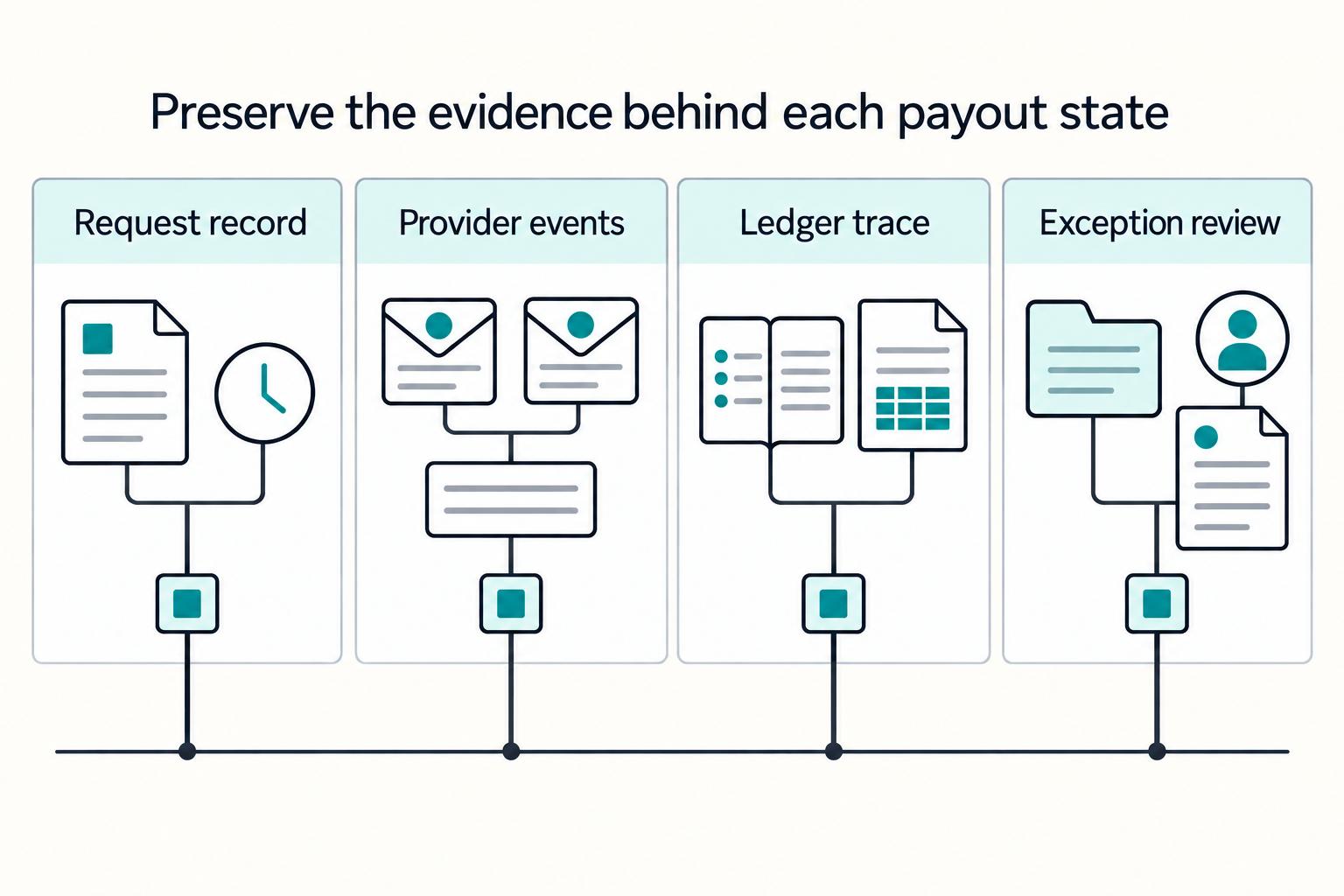
How Supply and Demand Dynamics Should Set Your Marketplace Payout Strategy
In a two-sided marketplace, payout strategy is not back-office plumbing. It can shape whether sellers stay active, whether transactions complete reliably, and whether buyers can find supply that is ready to transact.