
Quick Answer
Keep three linked records: customer billing, seller cash receipts and contractor payables. If AWS Marketplace is your sales channel, use its current SaaS integration and offer rules for billing, then select a supported payout route separately. Launch only when eligibility, authorized funding, retries and reconciliation have been tested for each country.
Separate customer billing from contractor payouts#
Design customer billing and contractor payouts separately. This guide uses AWS Marketplace as a billing-channel example; if you sell directly or through another marketplace, map its own charge and seller-receipt rules. Contractor payouts still need their own eligibility, funding and recovery controls. If you choose subscription mechanics before deciding how money reaches contractors, country expansion can leave you with bills you can collect and obligations you cannot yet settle.
Start with the marketplace boundary#
Plan around what the marketplace actually does well. It is a channel where customers can find, buy, deploy, and manage software offers, and for SaaS subscriptions AWS bills customers based on the metering records you provide. If you plan to support negotiated commercial terms, private offers matter because they can adjust payment schedules and contract terms.
That gives you a clear billing layer even when payout is not yet clear. You can define usage charging, contract structure, and offer packaging through AWS capabilities, but that still does not answer how your platform will route money to multiple contractors or enforce contractor eligibility rules. Keep that boundary explicit from the first planning doc.
Use this checkpoint early: confirm that Product and Finance can point to the exact billing evidence you will rely on, usually metering records for usage and the applicable private offer terms for negotiated contracts. If those artifacts are not identifiable now, stop. You are not ready to talk about market expansion.
Name the payout gap early#
The real tension is simple: revenue can scale through one path while payouts break on another. The marketplace has seller disbursement settings, including currency, bank account, and schedule preferences, but those seller settings are not the same thing as multi-party payout orchestration for contractors across markets.
That distinction is where many launches go wrong. A billing design can look complete because customer charges reconcile cleanly, while the payout side still has open questions on who gets paid, by which rail, under what compliance checks, and how failures are handled. If your model involves multiple parties, assume you need separate payout orchestration rather than assuming the marketplace layer covers it.
The failure mode to watch is false completeness. Sales can sell a subscription offer, metering can bill it, and Finance can still be unable to explain how contractor disbursements will be executed or traced market by market.
Use a go or no-go test#
Use three questions to decide whether a country is ready for launch. Subscription pricing alone cannot answer whether contractors can receive and reconcile their money:
- Can we bill the customer through the offer model we want?
- Can we move funds to contractors through a supportable multi-party payout path?
- Can Finance and Ops reconcile the billing event, payout instruction, and settlement outcome with evidence?
If any answer is still "unknown," treat that country as deferred, not "probably fine." That stance keeps billing scope separate from the payout design you still need to verify and own.
For broader GTM context, see How to Build a 'Glocal' Marketing Strategy for Your SaaS Product.
What to prepare before you design anything#
Before Product designs flows, lock four inputs: payout routes, billing evidence, offer model scope, and compliance ownership. If any of these is still unclear, treat it as a launch blocker, not a later cleanup task.
-
Define your first country cohort and payout paths. Choose a small set of target countries, then document the contractor mix in each (individuals, businesses, or both) and the expected cross-border payout route. Requirements vary by country, and cross-border payouts can apply even where your platform does not locally acquire. Your check is simple: for each country, can you clearly answer who gets paid, in which country, and through which route?
-
Collect the billing artifacts you already depend on. Pull the exact metering records Product uses for usage charging, and have Finance document invoicing and subscription reconciliation logic. AWS bills customers based on the metering records you provide, so incomplete or non-reviewable metering is a stop signal. This is where teams often find that billing works, but payout matching does not.
-
Lock offer models before discussing contractor economics. Confirm whether your first release supports usage-based SaaS subscriptions, private offers for SaaS contracts, upfront billing, or scheduled payments. Keep scope precise: installment plans (flexible payment schedules) are available for private offers only on certain product and pricing types. Also account for the AWS integration deadline: starting June 1, 2026, new SaaS products must support updated integration requirements.
-
Assign a single owner map for KYC, KYB, and AML decisions. Put Product, Payments Ops, and Finance on one responsibility map for onboarding checks, exceptions, and hold/release approvals. KYC is required before connected accounts can send payouts, and KYC responsibility can shift by integration model. Treat this as explicit operating ownership, not shared intent.
Related: Bad Payouts Are Costing You Supply: How Payout Quality Drives Contractor Retention.
Separate subscription billing from payout execution on day one#
Treat AWS Marketplace billing and contractor payouts as two linked but separate systems from the start. Billing determines what the customer owes; payout execution determines whether a contractor can be paid, how, and when.
Document two flows, not one#
Map these flows separately:
- Customer charge flow in AWS Marketplace: subscription or private offer accepted, AWS bills/collects based on offer type, then disburses seller proceeds (minus listing fees).
- Internal contractor disbursement flow: contractor eligibility, payout rail, release conditions, and settlement status.
For AWS Marketplace Private Offers, keep scope tight: they cover seller-specific pricing and EULA terms, and AWS acts as billing/collection on behalf of the seller. That is not contractor payout execution.
Use AWS Marketplace for the billing work it explicitly supports#
For usage-based SaaS subscriptions, AWS bills customers from your metering records, and usage must be reported every hour. If metering is incomplete, delayed, or not reviewable by Finance, fix that before you design payout timing.
For SaaS contracts, AWS supports billing in advance or a flexible payment schedule, and Private Offers handle negotiated pricing and terms. Document the offer model per product and who owns metering or contract-schedule accuracy.
AWS disbursement settings (currency, bank account, schedule, including daily disbursements when funds are available) are seller-level cash receipt controls, not contractor payout orchestration.
Decouple payout orchestration when routes or countries vary#
If revenue arrives through one billing path but payouts require multiple rails or countries, keep subscription logic and payout orchestration decoupled. AWS Marketplace documentation here does not provide contractor payout rail selection by country, off-platform contractor eligibility enforcement, or end-to-end contractor payout timing control.
Operationally, track separate statuses: customer billed, seller proceeds available, contractor approved, and contractor settled.
You might also find this useful: Manage SaaS Subscriptions Without Cashflow Surprises.
Choose payout rails and country rollout in the right order#
Sequence countries by payout certainty first, then expand feature breadth. Launch first in markets where rail availability, onboarding rules, and exception handling are clear, and defer high-friction markets until your failure handling is proven.
Build a country matrix before you commit launch dates#
Use a country matrix as a launch gate, not a reporting artifact. For each country, require these columns: allowed payout rails, onboarding requirements, expected exceptions, and jurisdiction-specific payment constraints.
Each row should resolve the core questions up front: which rails are actually available, whether recipients need a local bank account or an eligible external account, whether cross-border payouts are self-serve, and which local compliance rules affect onboarding. Payment programs are explicitly tied to local regulations and compliance rules, so unknowns here should block launch readiness.
Keep a strict evidence rule: every non-empty cell should map to provider documentation, an enabled dashboard capability, or written provider confirmation. For example, Stripe Instant Payouts depend on an eligible external account (bank account or debit card) and supported-country coverage for both platform and connected account. Stripe also states self-serve cross-border payouts are region-limited, so mark these rows as "where supported," not global.
Compare rails by contractor experience and operator burden#
Compare rails as a country-by-country decision, not a global default. Use bank-transfer routes where support is clear, and treat debit card payouts as selective where eligibility and country coverage are confirmed.
| Payout route | What to validate | Timing and failure control |
|---|---|---|
| Local bank transfer | Destination currency, account format, provider country support and cutoff | Use the provider estimate for the actual route; track returns separately from submission. |
| International wire | Currency, beneficiary/intermediary details and fee allocation | Track the bank reference and investigate missing or returned funds before resending. |
| Wallet payout | Recipient country, account eligibility and withdrawal options | Confirm receipt and withdrawal costs; a wallet credit is different from a bank deposit. |
| Debit card payout | Eligible card or external account and enabled country coverage | Use the selected provider capability and arrival estimate; do not assume every card can receive. |
Price the exact provider route, including payout charges, FX conversion, intermediary deductions, and failed-payment fees. Stripe Connect cross-border fees depend on the recipient location; use the current tariff for that route rather than a single global percentage.
Launch countries with validated payout routes first#
Start with countries where at least one bank-based route is clearly available, onboarding requirements are stable, and common payout exceptions are supportable without custom handling. Defer markets that rely on narrow method coverage, region-limited cross-border support, or unclear compliance interpretation.
For each launch country, keep a compact evidence pack: completed matrix row, proof of rail availability, onboarding checklist, and a short failure-path note for delayed or failed payouts. Expansion usually breaks on exception handling, not on the happy path.
Pick your subscription offer model with explicit tradeoffs#
Pick the offer model based on how cash arrives versus when you must pay contractors, not just what is easiest to sell.
Match the offer model to revenue certainty and buyer behavior#
Use SaaS usage-based subscriptions when consumption-based pricing fits your product and you can operate with variable revenue. In AWS Marketplace, buyers are billed for hourly usage, and your software must report usage every hour. If metering transmission or receipt fails, AWS says it cannot bill that usage.
Use SaaS contract private offers when a buyer needs negotiated terms, defined entitlements, or a formal contract path. AWS describes private offers as negotiated pricing and terms for specific buyers, and SaaS contracts as an upfront agreement.
| Offer model | Best fit | What to verify before launch | Payout-planning concern |
|---|---|---|---|
| Usage-based subscription | Consumption-led pricing, variable spend acceptance | Hourly metering is complete and reliable | Revenue timing can vary while payout obligations may not |
| SaaS contract with upfront purchase | Committed spend and clearer term structure | Contract term and entitlement mapping are clear | Less timing variability, but less flexibility mid-term |
| SaaS contract private offer with scheduled payments | Negotiated terms and staged buyer payments | Payment schedule and invoice ownership are documented | More invoice checkpoints to monitor |
For contract offers, confirm whether you are using AWS standard durations (monthly, 1 year, 2 years, 3 years) or a private-offer custom duration.
Choose upfront purchases or scheduled payments based on cash timing#
For SaaS contracts, AWS Marketplace can bill customers upfront or by the payment schedule that you define. Upfront billing usually gives you cleaner cash timing if contractor payouts begin early or remain hard to forecast.
Scheduled payments are available through Flexible Payment Scheduler (FPS) installment plans on eligible private offers. AWS currently allows up to 86 payments. Record the accepted offer duration, invoice dates and amounts; the schedule cannot be edited after the buyer subscribes, so a schedule change requires a new offer.
The key timing constraint is explicit: AWS says you receive each installment payment only after AWS Marketplace receives payment from the buyer.
Protect the payout side from cadence mismatch#
If contractor costs are volatile, do not make long scheduled contracts your default. Use them where buyer procurement requires them and where your team can absorb installment-timing variability.
A practical rule:
- Favor upfront SaaS contracts when payout obligations start quickly or are hard to predict.
- Use scheduled private offers with FPS when staged payments are required and timing risk is acceptable.
- Use usage-based subscriptions when metering reliability is proven and payout timing can flex with revenue variability.
Need the full breakdown? Read How to Create a Service Agreement for a SaaS Product.
Define compliance and tax gates before first payout#
Set payout eligibility only after verification, tax readiness, and written data-handling controls are in place. Finishing onboarding or signing a contract is not enough.
| Source | Requirement | Timing or effect |
|---|---|---|
| Stripe connected accounts | Collect the requirements for the account country, business type and requested capabilities | Release only when the relevant capability is enabled and your internal checks are clear. |
| Marketplace seller setup | Complete the seller payout-account and tax setup for the chosen marketplace | This governs seller proceeds; it does not establish contractor eligibility. |
| Contractor tax documentation | Determine the payer/payee and reporting or withholding obligations | Request the form required for those facts; do not impose W-8/W-9 globally. |
| GDPR Article 30 | Where applicable, keep processing records for controller/processor activities | Include purposes, data categories, recipients, transfers and security measures; assess the limited under-250-person exception. |
Set the gating order#
Use a release sequence: collect required onboarding data, complete provider verification and your jurisdiction-specific checks, then confirm the relevant payout capability is enabled. Continue fraud monitoring after verification; a verified profile alone does not establish payout readiness.
Treat the gate as provider payout capability, not profile creation. A practical status model is: onboarded, under review, payout-enabled, payout-held.
Make tax and GDPR prerequisites, not cleanup tasks#
Complete the marketplace seller payout-account and tax setup before launch, then separately determine contractor reporting and withholding obligations. Record the payer, recipient status, source of income and applicable jurisdiction so the correct form request follows the actual relationship.
Define when required contractor tax documents are requested, where they are stored, and which missing or invalid statuses block release under your policy. Provider account restrictions and tax-document review can have different resolution times; use the current account requirements and confirmed status before promising a payout date.
Assess GDPR Article 30 processing-record duties for your role, including purposes, data categories, recipients, international transfers and security measures. The exemption for organizations with fewer than 250 people is limited and does not cover every processing activity. Document the applicable duties and handling of contractor data before rollout. See GDPR for Marketplace Platforms for implementation detail.
Define holds, releases, and audit logging#
Write hold-and-release rules before first payout. For each provider or market, define who can release a hold, what evidence is required, and what must be logged.
At minimum, log hold reason, provider status or reason code, reviewed documents, reviewer, decision time, and eligibility state changes. No market should go live without named ownership for compliance exceptions and written escalation SLAs by provider and jurisdiction.
Related reading: How to use Paddle to handle sales tax and VAT for a SaaS product sold globally.
Build reconciliation and evidence packs that survive audits#
Traceability is the control that makes expansion defensible. If you cannot follow one payment from subscription event to settlement status, your setup is not audit-ready, especially when billing and contractor payouts run in different systems.
Map a traceable chain for every payment#
Use one record path that Finance and Ops can both verify. For AWS SaaS subscriptions, customer billing is based on the metering records you submit, so your chain should start at the product event, not at the invoice.
At minimum, connect these records with stable IDs:
- subscription or usage event
- metering request or contract charge
- customer invoice and ledger posting
- seller cash receipt, fees and funding allocation
- approved contractor payable
- payout instruction
- provider reference
- settlement or return status
Your test is simple: pick any payout and confirm every linked record is retrievable without manual reconstruction.
Standardize a monthly evidence pack#
Run one monthly evidence pack that Finance and Ops review together. Reconciliation starts with collecting records, then matching them and reviewing exceptions.
Include, at minimum:
- invoice records
- payout outcomes
- exception log
- subscription revenue reconciliation summary
Store native marketplace billing and seller-disbursement reports alongside your bank deposit records. Match those seller receipts separately from contractor payables and payout results, then explain fees, FX differences, partial receipts and timing gaps. A seller receipt is funding evidence, not proof that any contractor was paid.
Add idempotency and retry controls#
For example, suppose customer invoices total $10,000 and approved contractor payables total $6,000, but seller proceeds have not yet reached your bank. The payable remains $6,000; its funding status is separate. Pay only from authorized available cash, or record an approved platform-funded advance and who bears collection risk. When $9,700 arrives after $300 in fees, reconcile the gross charge, fees and receipt without reducing contractor pay merely to force the records to match. These amounts are illustrative.
For AWS BatchMeterUsage, preserve identical usage records on retry and inspect per-record results and UnprocessedRecords. Requests allow up to 25 records and must stay below 1 MB. The current API rejects usage 24 hours or more after the event, with a separate month-end cutoff at 06:00 UTC on the first day of the next month. Queue metering promptly and alert before either deadline.
For contractor disbursements, assign a stable operation ID to each intended payment and keep it through retries and worker restarts. After a timeout, query the provider or reconcile its reference before deciding to resend. A terminal failure does not automatically authorize a new payment: distinguish rejected-before-send from returned, reversed or partially completed funds, and record the replacement authorization.
Review mismatches before you expand markets#
Do not expand markets while mismatch handling is ad hoc. Require these checkpoints in release sign-off:
- unresolved mismatch queue
- stale status review
- explicit expansion sign-off
The mismatch queue should capture breaks between invoice, ledger, and payout records. The stale status review should flag items stuck in sent, open, or equivalent states long enough for human review. Final sign-off should confirm the monthly pack is complete, failed disbursements were reviewed, and each sampled payment trail is explainable end to end.
Common rollout mistakes and how to recover fast#
Most failures share one root issue: teams treat customer billing as if it also solves payout operations, country readiness, and compliance controls.
- Mistake: treating AWS Marketplace billing as a contractor payout system.
Recovery: separate billing and contractor payout architecture from day one. AWS Marketplace is the billing and collection layer for the seller and disburses to the seller account (minus listing fees), so contractor payout controls need their own ownership, records, and exception handling.
- Mistake: launching countries before validating local payout readiness.
Recovery: pause onboarding in that country until readiness is complete. Country support and onboarding requirements vary by jurisdiction, so confirm required fields, exception handling, and supported payout paths before activating contractors.
- Mistake: weak KYC/KYB/AML and tax exception controls.
Recovery: enforce release gates and backfill missing artifacts before payout. Keep a complete exception trail (what is missing, who approved, and current document status), including required tax forms where applicable (such as W-8/W-9 in marketplace payout contexts).
- Mistake: no operating plan for delayed cross-border payouts.
Recovery: assume timing variance and prepare fallback handling in advance. Customer payment terms can shift payout timing (for example, Net 45 or Net 60), so define failure queues, contractor communications, and internal SLA targets tied to payout status changes.
If you want a deeper dive, read Invisible Payouts: How to Remove Payment Friction for Contractors Without Sacrificing Compliance.
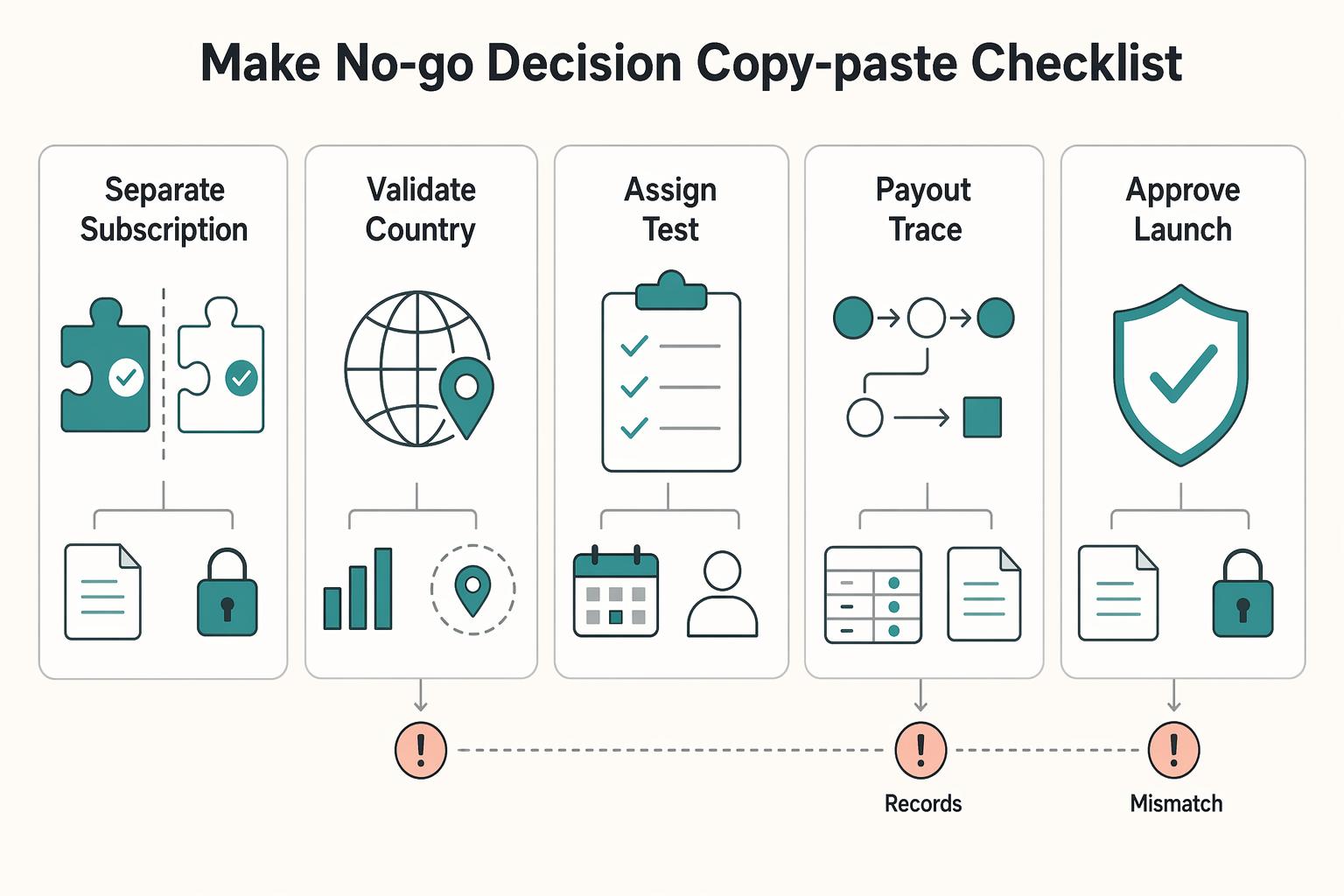
Make the go or no-go decision with a copy-paste checklist#
Use this as a hard gate: if any item is unowned, untested, or only verbal, treat the market as no-go until it is closed.
- Separate subscription design from payout design.
Keep two written specs: one for AWS Marketplace SaaS subscription integration, and one for payout execution. For new SaaS products from June 1, 2026, the concurrent-agreement integration uses CustomerAWSAccountId and LicenseArn. Keep legacy and license-based metering paths separate during migration to prevent duplicate billing. No-go trigger: marketplace billing is treated as the payout engine.
- Validate country readiness before GTM spend.
For each launch country, confirm payout-country support, settlement-currency support, and whether cross-border payouts are available for your platform setup. Verification point: maintain a country matrix with payout rail, settlement currency, onboarding requirements, expected exceptions, and owner. No-go trigger: billing is live, but contractors cannot receive funds on the promised rail or currency.
- Assign and test compliance ownership.
Name the owner for verification collection, review, escalation and payout eligibility, with separate tax and data-handling responsibilities. Run one onboarding-to-payout-approval test using the required fields and reviewer handoffs for that account and market. Block release when a relevant capability or required internal check is unresolved; do not use a single charge-volume threshold for every account.
- Prove end-to-end money traceability.
Maintain a reviewable chain from subscription event to disbursement: metering or contract charge reference, ledger posting, payable record, payout instruction ID, provider reference, and settlement status. Verification point: use CloudTrail to validate metering records over time and confirm BatchMeterUsage retries are idempotent. No-go trigger: AWS-side evidence exists, but payout-side evidence cannot explain holds, retries, or manual releases.
- Approve launch discipline in writing.
Lock the first market cohort, fallback paths for failed or delayed payouts, and checkpoint dates before broader rollout. Verification point: the checkpoint pack covers mismatch queues, stale payout statuses, unresolved compliance exceptions, and Finance/Payments Ops sign-off. No-go trigger: no documented fallback for a failed contractor disbursement flow on day one.
Frequently Asked Questions
Can SaaS usage-based subscriptions alone manage contractor payouts?
No. Usage-based SaaS billing in AWS Marketplace charges customers from the metering records your application sends, but that billing path does not become your payout engine for contractors. Treat metering, invoicing, and contractor disbursement as linked records, and design payout operations separately from marketplace billing events.
What should we validate first for a new country: billing setup, payout rail availability, or KYC/KYB/AML requirements?
Start with payout rail availability and compliance onboarding, not billing. If you can sell into a country but cannot support the required KYC or KYB collection there, you have a launch blocker no pricing model will fix. A practical checkpoint is whether your onboarding flow can collect the required identity and business data and pass it to your payments provider before the first payout is approved.
When should we use upfront purchases instead of scheduled payments with FPS?
Use upfront purchases when you want simpler reconciliation and lower mismatch risk between customer cash collection and contractor obligations. Use scheduled payments only when the commercial need is real and you have confirmed the offer is eligible, because installment plans through Flexible Payment Scheduler apply to certain private offers, not every product and pricing type. If your contractor costs are volatile or front-loaded, upfront billing is usually the safer choice.
What data is required to reconcile customer subscription charges with each contractor disbursement?
At minimum, keep a traceable chain from the subscription charge to each payout, with references for the customer charge, your internal payable record, the payout instruction, the provider reference, and final settlement status. Track exception states such as holds, retries, and manual release decisions so reconciliation remains auditable.
How do we reduce payout delays without weakening compliance controls?
Remove avoidable waits before funds are ready to move, not after. Collect KYC, KYB, tax status, and any supporting documents during onboarding, then route only clean accounts into payout release so operations is not chasing missing data on payday. Do not promise faster timing than your provider can support, because payout schedules have hard constraints and cannot always be accelerated below your own schedule.
What are the minimum controls to stay audit-ready for tax compliance and GDPR?
Determine the tax-document duties for your payer and recipient relationship, and keep required form status and reporting evidence explicit. For GDPR, assess Article 30 duties and its limited small-organization exception, then retain the applicable processing records. Keep onboarding results, payout outcomes and the exception log that explains manual decisions.
Try a related tool
Researched and edited by the Gruv editorial team. Gruv builds cross-border billing, payouts, and finance-operations software for global businesses.
Sources
Includes 4 external sources outside the trusted-domain allowlist.
- docs.stripe.com/connect/cross-border-payoutstrusted
- docs.stripe.com/financial-accounts/connect/examples/onboardi...trusted
- eur-lex.europa.eu/eli/reg/2016/679/oj/engtrusted
- support.stripe.com/questions/financial-crimes-risk-appetite-pol...trusted
- d1.awsstatic.com/awsmp/solutions/mk-sol-files/private-offers/...external
- docs.aws.amazon.com/marketplace/latest/userguide/saas-integrate-...external
- docs.aws.amazon.com/marketplace/latest/userguide/saas-pricing-mo...external
- gdpr-info.eu/art-30-gdprexternal
Educational content only. Not legal, tax, or financial advice.
Related Posts
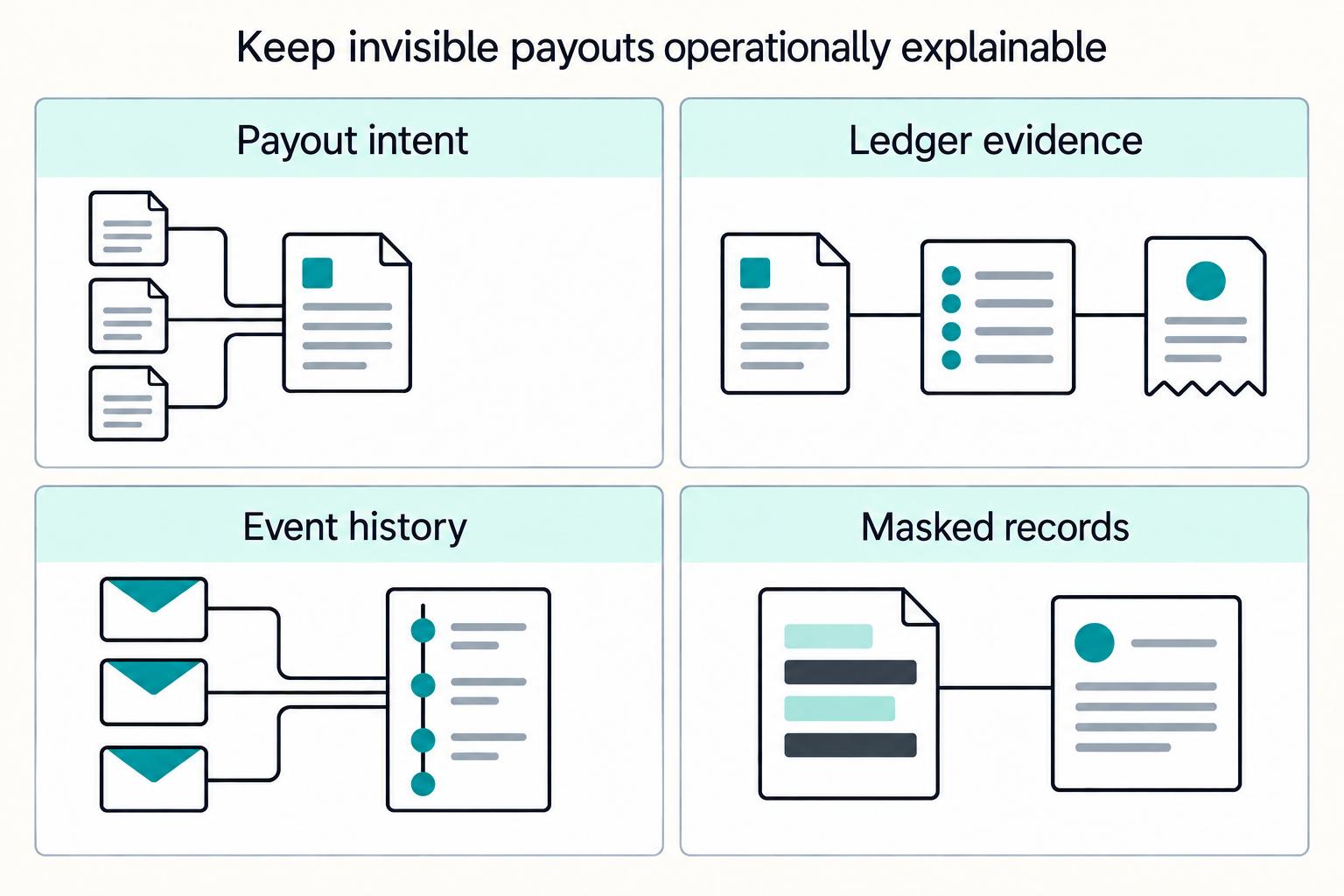
Invisible Payouts: How to Remove Payment Friction for Contractors Without Sacrificing Compliance
Invisible payouts should make life easier for contractors without hiding the controls your team needs. Contractors should get a predictable, low-friction flow, while internal teams can still enforce and document payout decisions when needed. If you run contractor payouts at scale, you need both outcomes at once. We recommend treating every easy payout as a controlled release path your team can replay later.
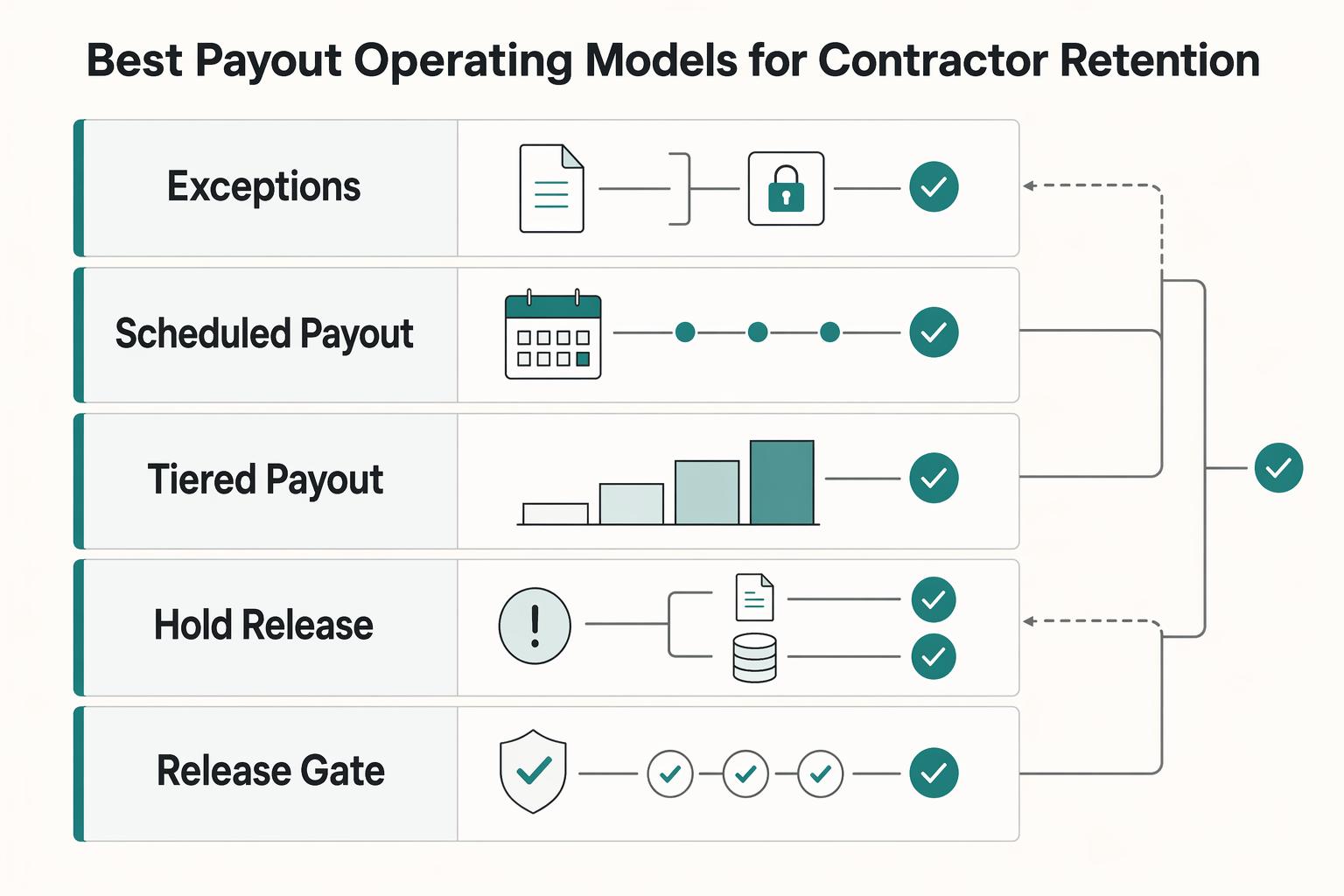
Bad Payouts Are Costing Your Supply in Two-Sided Platforms
Payout issues are not just an accounts payable cleanup task if you run a two-sided marketplace. They shape supply-side trust, repeat participation, and fill reliability. They can also blur the revenue and margin signals teams rely on.

GDPR for Marketplace Platforms: How to Handle Contractor and Seller Personal Data Compliantly
Treat this as an operating decision, not a policy exercise. If you own compliance, legal, finance, or risk for a platform, your job is to decide who owns each GDPR duty. You also need to define what evidence must exist, what your team reviews on a recurring basis, and which issues need escalation before a launch or vendor change goes live.