

Quick Answer
Define success as one paid project with confirmed deliverables and payment timing, then run a 30-day plan with two lanes: warm referrals and one proactive channel. Keep one narrow offer, one starter deliverable, and a compact proof set so buyers can evaluate fit quickly. Use a finite follow-up sequence, qualify before proposal work, and start only after scope, revision rounds, timeline, and invoice terms are documented.
Start Here and Set a Realistic First Client Goal#
For your first client, the goal is not visibility, momentum, or a full pipeline. The goal is one paid project with scope and payment timing clarified in writing. A testimonial is useful, but it is not the win. Paid work with clear terms is the win.
Treat the next 30 days as an execution sprint, not a preparation marathon. That framing matters because early freelance work is full of false positives. You can spend a week polishing profile copy, taking friendly calls, and swapping messages with interested people, then realize nothing is actually close to starting. Busy does not count. Revenue with defined deliverables does.
Before broad outreach, put together a minimum credibility pack you can send quickly: a concise, work-led profile, relevant samples, and a short scope-and-terms draft. You do not need a polished brand for this. You need enough clarity that a prospect can understand your offer fast and enough structure that you can move from interest to a real project without improvising every step. A 200 to 300 word profile is enough if it makes your offer easy to understand.
- Define what counts as a first win.
A first client should mean paid work with clear deliverables and payment timing in writing. That standard protects you from counting vague interest, unpaid trial work, or a call that felt promising as progress.
- Run two lanes in parallel for 30 days.
A practical setup is one warm lane and one outbound lane. Keep it to one or two strategies so execution stays clean and repeatable. If you use a marketplace like Upwork, treat it as one channel and filter hard.
- Start outreach before everything is perfect.
Do not wait for polished assets if your offer and boundaries are already clear. Asset cleanup and outreach can happen together.
Define a Narrow Offer Before You Contact Anyone#
If someone cannot repeat what you do in one sentence, the offer is too broad for first-client outreach. Narrowing it is not about limiting your future business. It is about making the first sale easier to understand, easier to refer, and easier to price.
For this stage, you need a short reusable offer document, not a long services page. Include one-line positioning, one starter package, and clear fit boundaries. Keep it short enough that you can paste parts of it into outreach, proposal intros, and discovery follow-ups without rewriting the whole thing every time.
- Write a one-line positioning statement using role, problem, and outcome.
Choose one specific problem you solve rather than a menu of services. The clearer the problem, the easier it is for someone else to understand who should hire you.
Use a plain-language test before you send anything. If a former colleague can read your line once and explain it back accurately, it is likely clear enough. If their summary turns fuzzy, tighten the problem and the outcome.
- Package one primary service with one starter deliverable.
Start with a bounded deliverable you can price and complete reliably. For example, a writer might offer a homepage rewrite with one discovery call, one draft and one revision round, excluding design and additional pages. Set the fee from your costs and the buyer discussion; a short turnaround is useful only if you can meet it.
- Add two scenario statements to qualify fit fast.
Draft them before outreach: If you need X, I deliver Y in Z timeline and If you need A, I am not the right fit. These lines help you filter out low-paying or high-friction work before it pulls you into long back-and-forth.
- Choose speed-to-proof over breadth.
Use relevant samples you can substantiate. A self-initiated practice project can show your approach before you have clients, but label it clearly and do not invent a client result or testimonial. Obtain permission before publishing client material.
Build Your Minimum Credibility Kit Before Outreach#
Before you scale outreach, make it easy for a prospect to verify you. Most buyers will check more than one touchpoint, and a thin or inconsistent profile can kill replies even when your work is strong.
The standard is not polished branding. It is consistency, speed, and enough proof to support the claim you are making. When someone asks for more detail, you should be able to send the right materials immediately, without scrambling to assemble them.
- Step 1: Keep every asset aligned with the same offer.
Your bio, service description, and samples should all point to the same buyer problem and outcome. Ask a simple question: would a prospect understand what you do, for whom, and why they should trust you?
- Step 2: Use a short outreach brief and adapt it by channel.
A warm note might say: “Hi Maya, I enjoyed working with you on the launch last year. I’m now taking on homepage writing for small software teams: one page, one discovery call and one revision round. Here is a clearly labelled practice sample. If a team you know needs that help, would you be comfortable forwarding this?” Adapt the relationship and service; avoid implying work or results you have not done.
- Step 3: Show professional follow-through early.
When a prospect asks for details, reply with clear next steps and realistic expectations you can actually meet. Credibility is not just expertise on paper. It also shows up in how you handle the first few exchanges.
- Step 4: Have one trust artifact ready to send fast.
Use a concise sample showing the problem, your approach and the resulting deliverable. Add measured client results or a quote only when you can substantiate them and have permission to publish. For a practice project, describe your design choices rather than claim a business impact.
Choose Your First Channel With Clear Decision Rules#
Month one is the wrong time to be everywhere. Pick one primary channel and, at most, one secondary channel for a focused block such as 30 days. Focus gives you usable signal. Constant switching gives you noise.
Use clear decision rules before you start. That way, you are not changing direction based on mood, a slow day, or one unhelpful response.
- Step 1: Start with people you already know.
Begin with warm outreach and direct referral asks inside your network. Referrals can be highly valuable, but they rarely happen on their own.
Warm contacts do not need a long story. They need a clear update and a clear way to help. If your ask is specific, they can forward it without rewriting it for you.
- Step 2: Add targeted outreach if warm leads are thin.
Reach out to specific decision-makers with personalized messages. Keep it focused prospecting, not mass messaging.
- Step 3: If you use a marketplace, go deep on one.
Test one marketplace at a time so the signals are easier to read. Splitting effort across several platforms too early makes it hard to learn what is actually working.
- Step 4: Review weekly with a fixed checkpoint.
Use the same checkpoint each week to decide whether to keep, refine, or replace a channel. Judge channels by qualified replies and conversation quality, not raw activity.
A useful weekly review asks the same questions every time: did this channel generate qualified replies, did conversations move to discovery, did prospects match the offer, did follow-ups create movement, did proposals lead to real decisions, and did this lane justify the time spent?
Activate Your Warm Network in the First 7 Days#
Warm outreach is usually your fastest trust transfer, but only if it sounds like a genuine update from someone they know. It fails when it reads like a generic campaign sent to everyone in your contacts list.
Week one should be about reopening real relationships, not forcing fast wins. The point is not to ask every acquaintance for work. It is to reconnect with people who can realistically understand your offer, refer you, or hire you directly.
- Lead with real context.
Reach out for a genuine reason to reconnect. If what you want to share is not clearly relevant to that person, skip it.
A useful note might reference prior work together, a recent shift in your focus, or a project type you are now taking on. If you cannot explain the context in one sentence, the message probably is not ready.
- Make the message personal and specific.
A short professional update works best when tied to prior collaboration. Even after a long gap, a strong former manager relationship may still be open to reconnecting.
Personal does not mean long. It means they can tell the note is for them. Mention shared work, give a concise update on what you are doing now, and make the ask simple enough to answer quickly. If they offer to refer you, send a forwardable summary the same day so the handoff does not stall.
- Match their communication style.
Some contacts prefer lunch, others prefer email. Match their preference to keep the interaction low-friction.
- Keep the relationship warm with a light cadence.
If the timing is off, switch to occasional check-ins instead of repeated pushes. For many relationships, once or twice a year is enough.
When someone says now is not the right time, keep the door open and move on. A low-pressure follow-up later often works better than multiple nudges in the same week. Warm outreach can produce quick movement, but it should not be your only lane. You still need a way to reach buyers who are not already in your circle.
Run Targeted Outbound From Open Roles That Are Stuck#
Outbound works best when you treat it as a focused experiment, not a volume contest. For this campaign, prioritize conversation quality over send volume.
Open roles that have not moved can be useful because they may signal a team with a defined need and delayed execution. That is not proof of demand by itself. It is just a testable place to start, especially if you can offer practical support while hiring continues.
- Filter roles before you pitch.
Keep only roles that match a service you already deliver. If a listing is too vague to summarize clearly, skip it. A long-open role is a hypothesis, not evidence that the buyer will engage.
- Write a concise, role-aligned message.
Mirror the role language and, where relevant, offer practical execution support while hiring continues. The buyer should be able to assess fit quickly.
- Track replies and protect your time.
Log role, send date, channel, response, and next action. Set a follow-up cap for this campaign, such as one or two follow-ups, then move on.
Tracking gives you something better than memory. If one role type never replies, adjust targeting. If one message angle consistently gets discovery calls, reuse it.
- Change channels when results stall.
Direct effort is usually required early. If Upwork is flat, shift time to LinkedIn, job sites, freelance opportunity newsletters, or social media instead of over-investing in browsing one freelancing platform.
Use Marketplaces Without Becoming a Commodity#
Marketplaces can help you get initial proof, but they work best as a launch channel, not as your entire client base. Used well, they can produce early wins, testimonials, and case material you can reuse elsewhere. Used poorly, they can trap you in low-fit bidding and constant price comparison.
Marketplace fees vary by platform and contract. Upwork states a freelancer service fee of 0% to 15% per contract, displayed before you accept the work. Check the actual platform terms and include any proposal, withdrawal and currency-conversion costs when estimating your net earnings. Do not assume one fee range applies to every marketplace.
The safest approach is to make your marketplace presence look like the same professional prospects would find anywhere else. Align your profile with one clear offer, one starter deliverable, and specialist language that matches your LinkedIn positioning. When your marketplace profile and your direct outreach sound like the same person, trust transfers more easily.
Use this quick decision table as a heuristic when triaging opportunities:
| Brief signal | Decision |
|---|---|
| Clear deliverable, clear business problem, responsive buyer | Apply with a focused proposal |
| Partly clear scope, but missing one key detail | Ask one clarifying question, then decide |
| Vague scope and no clear next step | Proceed cautiously or decline |
- Choose one platform and set a review point.
Start with one marketplace, not several at once. Track profile views, replies, and proposal-to-call conversion.
- Position around outcomes and process.
Lead with the problem you solve, the result you target, and how you deliver. Broad I do everything messaging usually pushes you into price comparisons.
- Apply to concrete briefs and triage vague posts quickly.
Prioritize posts with clear deliverables and a clear business problem. If key details stay unclear after one direct question, treat that as a warning signal.
- Set a floor for fit and communication quality.
Define minimum standards for project type, responsiveness, and feedback clarity. If a lead misses both fit and communication quality, decline early.
- Turn wins into proof you can reuse elsewhere.
Ask permission to publish a testimonial or case example from completed work. Keep confidential material private and follow the marketplace’s rules on contact and payments; building a portfolio does not authorize moving a platform client off-platform.
Run a Follow-Up Cadence That Creates Replies#
Most freelancers do not need more ideas about follow-up. They need a sequence they will actually use. Thoughtful follow-up cuts through inbox noise, but only when each touch gives the buyer a reason to re-engage.
Timing depends on context. Too soon can annoy people, and too late can waste intent. A simple rule keeps this clean: every follow-up should either add value, reduce decision effort, or close the loop professionally.
Build a small template bank, personalize it for each prospect, and track movement through contacted, replied, discovery scheduled, proposal sent, and won/lost. That gives you a live picture of where things stall instead of relying on memory or mood.
A useful cadence has a distinct job at each step:
| Touch | Intent |
|---|---|
| Initial note | Confirm fit and open a conversation |
| Value-add follow-up | Reduce decision effort with one useful detail |
| Close-the-loop note | End the thread professionally if no movement |
- Set a three-touch sequence as a starting point.
For this test, use an initial message, one follow-up after about a week and a final close-the-loop note if there is no response. These are chosen planning intervals, not measured conversion benchmarks. Stop sooner after a refusal or an opt-out.
- Keep the tone balanced.
Stay visible without sounding demanding. The best follow-ups feel easy to answer because the pressure stays low.
- Add new value in each follow-up.
Share a useful clarification, next step, or decision aid instead of repeating the same reminder.
That might mean narrowing the scope, clarifying the starter deliverable, or pointing to one relevant proof asset. Good follow-ups make the decision simpler, not louder.
- Review funnel movement weekly before changing your offer.
Use stage data to locate the actual drop-off. A pattern like 30 cold emails, 5 conversations, and 1 paying client is an example, not a target.
- Use a stop rule and close threads cleanly.
Decide when a lead is inactive, send a brief close-the-loop note, and move on.
Qualify Prospects Before You Spend Time on Proposals#
Strong qualification protects your best hours. The goal is not to gatekeep. It is to stop spending proposal time on leads that are unlikely to close, unlikely to fit, or likely to become messy after kickoff.
- Limit channel spread first.
Choose one or two acquisition strategies you can execute consistently. Channel speed does not establish project value: assess fit, likely effort, fees and buyer responsiveness for each opportunity.
- Use one consistent fit screen across channels.
Keep the screen lightweight and repeatable. Review movement from replied to discovery scheduled to proposal sent before changing proposal format.
A strong screen checks the same basics every time: does the problem match your offer, does the buyer seem clear enough to work with, and is there enough commitment to justify your time?
- Treat weak commitment signals as a pause point.
If an opportunity keeps consuming effort without clear progress, step back and re-check fit.
Common examples are repeated requests for more detail without a next step, vague scope after multiple explanations, or constant delay around basic decision questions. A pause is often better than one more unpaid draft.
Track proposal time as well as outcomes. If ten proposals take ten hours and none reaches a qualified conversation, review targeting and the opening message before committing another ten hours. This is an illustrative review rule, not a conversion benchmark.
Keep time concentrated on buyers with a defined need, a decision path and a plausible budget. Once a lead clears that screen, use written terms to turn interest into an agreed project.
Close the First Deal With Professional Guardrails#
Once a lead passes your fit screen, stop selling and start documenting. This is where a lot of first deals go sideways. Interest feels like momentum, so freelancers rush into delivery before the practical details are locked down. That usually creates avoidable disputes.
Professional guardrails are not just about looking polished. They protect scope, cash flow, and your ability to reconstruct what happened later if something goes wrong. They also make taxes and recordkeeping easier because you are saving the right documents while the details are still fresh.
Before kickoff, prepare one scope document, one invoice template, and one client folder so records stay traceable. That small setup does two jobs at once: it reduces project confusion now, and it makes later compliance work much easier.
- Step 1: Lock scope, deliverables, revisions, and timeline in writing.
Define inclusions, exclusions, definition of done, revision rounds, and delivery date. If work is requested before terms are documented, pause and confirm first.
- Step 2: Set payment terms and invoicing mechanics before kickoff.
Agree on invoice timing, payment milestones, payment method, currency, and payment window. Keep these terms with scope as one source of truth.
Payment confusion can damage an otherwise solid project very quickly. Put the mechanics in writing early so there is no ambiguity about when invoices are issued, how payment is made, and what happens if approvals are delayed.
- Step 3: Create records from day one for future tax decisions.
Store signed terms, invoices, payment confirmations and account statements by client and month. Record the agreed fee, invoice date, due date, receipts and unresolved differences. Check the registration and tax obligations that apply to your business and work location rather than using a U.S. cross-border tax test as a general first-client requirement.
Agree scope and payment terms before kickoff, then use the Free Invoice Generator when the contract’s billing event occurs. If a deposit is a start condition, confirm it has cleared before beginning the work.
Common Mistakes and How to Recover Fast#
Early mistakes are normal. What matters is how quickly you identify the failure mode and correct it before it spreads through the rest of your pipeline.
- Trying to be everything to everyone
When your positioning is too broad, prospects struggle to place you, referrals get fuzzy, and your outreach starts sounding interchangeable. Buyers should not have to work hard to understand the problem you solve.
Fast recovery: Pause weaker lanes, keep one primary lane active, and track views, responses, and conversions until you see which lane produces stronger qualified replies. Then tighten the offer around that signal instead of expanding it further.
- Sending generic outreach
Generic messages are easy to ignore because they ask the buyer to do the work of figuring out fit. Rewrite the opener so it points to the buyer problem and the outcome you can deliver.
Fast recovery: Rewrite the first lines, send a new batch to better-fit prospects, and compare reply quality instead of send volume. The point is not more activity. It is cleaner relevance.
- Saying yes to bad-fit work
Stretching outside your offer to rescue a weak deal usually creates more problems than it solves. If a bad-fit project is already slipping, address it directly instead of hoping effort alone will save it.
Fast recovery: Document what changed, offer a scoped adjustment, and reset expectations in writing so the project can either stabilize or close cleanly. A candid reset is usually cheaper than continuing with hidden misalignment.
- Skipping documentation
Use written terms even for a small starter project. Identify the contracting parties, authorized approver, deliverables, revision limits, acceptance deadline and billing event. Where permitted by the agreement, deposits or progress payments can limit the amount of unpaid work.
If a project is already underway, follow its notice and suspension terms before stopping work. Resolve missing approvals and payment checkpoints in writing so both parties know what must happen next.
- Waiting for inbound only
Inbound is useful when it exists, but it is a poor first plan on its own. Keep one direct outreach lane active so your pipeline does not depend on luck or timing.
Fast recovery: Restart outreach with a fixed weekly target, use proof assets in your messages, and review outcomes at the same time each week so the lane stays active and comparable.
Copy and Paste This 30-Day First Client Checklist#
Use this checklist as an execution tool, not a promise of outcomes. The point is steady, measurable action for 30 days, not a perfect setup and not endless planning.
- Step 1: Define your offer in one line by Day 1 to Day 3.
Lock one narrow service, one starter deliverable, and one clear non-fit statement. If your pitch still sounds like I can help with anything, tighten it before you do more outreach.
Done looks like this: a one-line offer you can paste into outreach without editing and two non-fit examples you can use in discovery.
- Step 2: Publish minimum credibility assets by Day 4 to Day 7.
Publish a clear positioning statement on your primary professional profile and one portfolio or website page. Point every outreach message to one proof asset.
Done looks like this: your profile, proof page, and outreach copy all describe the same problem and outcome in similar language.
- Step 3: Activate warm outreach during the first week.
Send direct referral asks to people who already know your work and track replies. If someone asks for a forwardable summary, send it the same day.
Done looks like this: each contact gets a personal note, a clear ask, and an easy-to-forward blurb tied to your current offer.
- Step 4: Run one early lane from Day 13 to Day 20.
Pick one lane and keep it active for the full block. Expect non-responses and stay consistent instead of changing tactics every few days.
Done looks like this: every prospect is logged with next action, follow-up date, and current stage so you can review signal instead of relying on memory.
- Step 5: Review weekly performance and change one variable only.
Review messages sent, qualified replies, discovery bookings, proposal movement and time spent. Use your own stage counts to locate the bottleneck; there is no universal number of pitches that produces a first client.
Done looks like this: one concrete adjustment each week, such as tighter targeting or clearer first-line positioning, while the rest of your approach stays stable.
- Step 6: Qualify in discovery before writing full proposals.
Use discovery to confirm the business problem before scoping delivery. Do not send a full proposal until the problem statement and first milestone are clear.
Done looks like this: discovery notes capture scope boundaries, decision owner, timeline, and payment expectations before proposal drafting starts.
- Step 7: Close with written terms, milestones, and payment guardrails by Day 21 to Day 30.
Confirm scope, revision boundaries, milestone sequence and payment timing in writing before work starts. Negotiate any deposit according to project risk and the buyer’s process rather than using a universal percentage. Keep signed terms, invoices and payment records together.
Done looks like this: kickoff starts only after written terms are approved, invoice mechanics are clear, and project files are organized for delivery and recordkeeping.
Use your own tracker as the scorecard. These checkpoints help you decide what to change; they are not externally measured targets.
| Checkpoint | Record | Decision |
|---|---|---|
| Qualified conversations | Buyer problem, decision owner, budget discussion and next step | Tighten targeting if replies do not become suitable opportunities |
| Follow-up | Last contact, next date and stop status | Close an inactive thread after your finite sequence |
| Proposal decisions | Sent date, buyer response and reason for loss or delay | Clarify scope or decision path before drafting more proposals |
| Commercial readiness | Approved terms, billing event and any required cleared deposit | Start only when the agreed start conditions are met |
Run the plan for 30 days, then review qualified conversations, proposal decisions and time spent. If no project closes, change the weakest stage rather than assume you need more channels. Keep delivering on any existing commitments while prospecting.
Frequently Asked Questions
What is the fastest way to get a first freelance client?
No channel guarantees the fastest result. Start with contacts who know your work if you have them, then test targeted outreach or one marketplace against the same clear offer. Make the starter deliverable and relevant proof easy to assess.
Should beginners use Upwork and Fiverr or avoid them?
There is no universal yes or no. A marketplace is useful only if it supports a focused client-acquisition plan and does not pull time away from a better lane.
How do I get clients if I have no audience or personal brand yet?
You do not need an audience to land a first client. Direct outreach can still work when your offer is clear, your samples are relevant, and your message is specific to one problem.
What should I prepare before sending my first outreach message?
Get the basics in place before you start: a clear offer, relevant samples, and scope boundaries. You should also have a short summary you can forward quickly and a few clarifying questions ready about fit, scope, and the decision path.
How many follow-ups are reasonable before I move on?
No single count fits every buyer or channel, but a finite sequence is better than improvising every time. A practical starting point is three touches: the initial message, one value-add follow-up, and one close-the-loop note.
How do I move from one-off projects to a consistent client pipeline?
Consistency comes from repeating a focused process, not from opening more channels. Keep one or two strategies active, qualify early, and turn each completed project into proof that helps the next sale.
What basic compliance and recordkeeping habits should I set up from day one?
Keep accurate books from day one by recording transactions completely and correctly. Track invoice status so sent, paid, and open items are visible, and use full or partial upfront payment when appropriate to reduce delay and non-payment risk.
Try a related tool
Researched and edited by the Gruv editorial team. Gruv builds cross-border billing, payouts, and finance-operations software for global businesses.
Sources
Includes 1 external source outside the trusted-domain allowlist.
Educational content only. Not legal, tax, or financial advice.
Related Posts

Build a Freelance Content Calendar That Survives Client Work
If your publishing keeps slipping, the problem is often not a lack of ideas. It is that the plan breaks the moment client work shifts. A **freelance content calendar** should give you a usable schedule for what you plan to write, produce, and publish, plus enough structure to decide what moves when the week gets crowded.
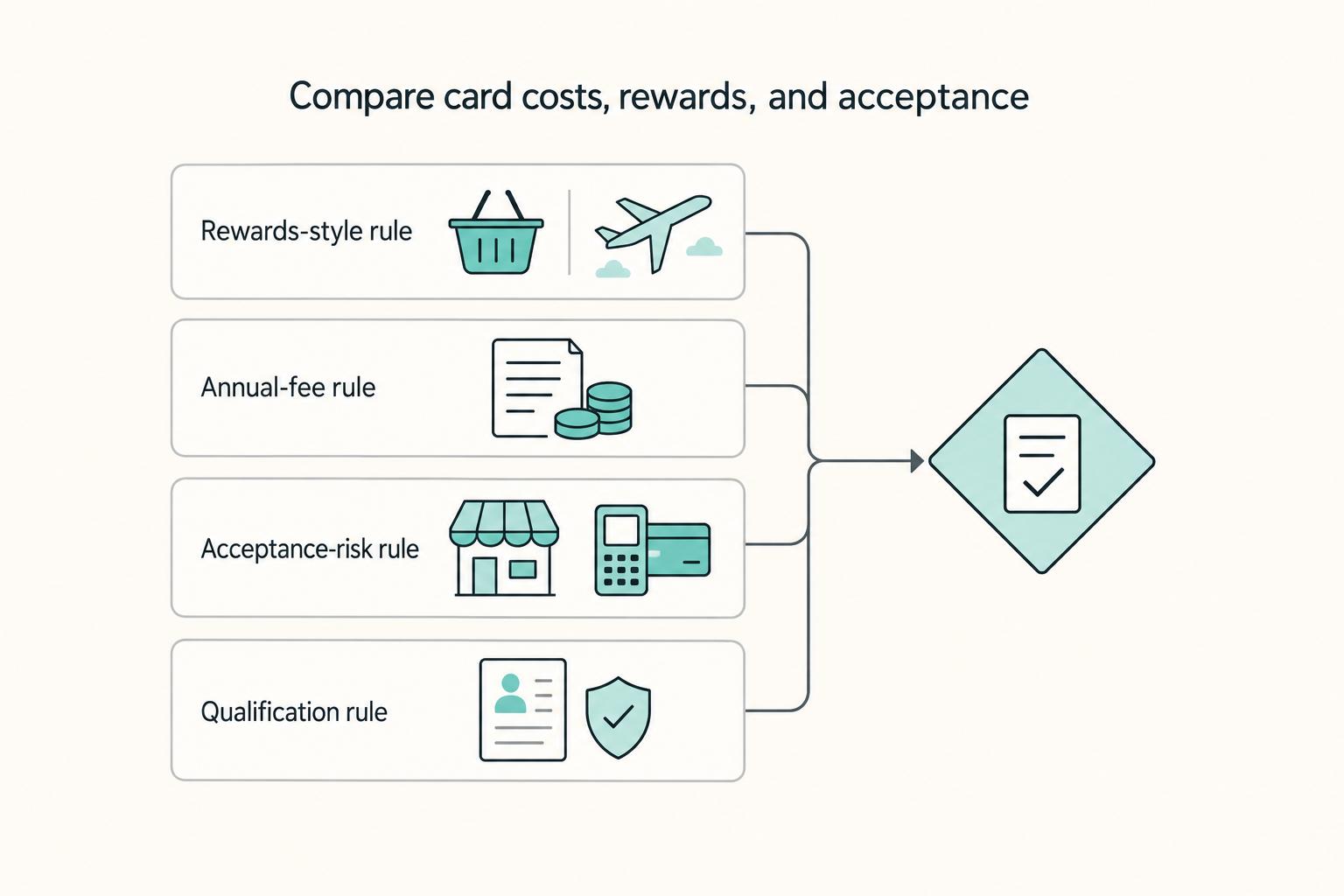
The Best Business Credit Cards for Freelancers
Pick for reliability first. For a freelancer, the right business card is usually the one that keeps recurring bills moving, keeps records clean, and avoids extra costs when income swings from month to month. Rewards still matter, but they sit on top of those basics. They do not replace them.
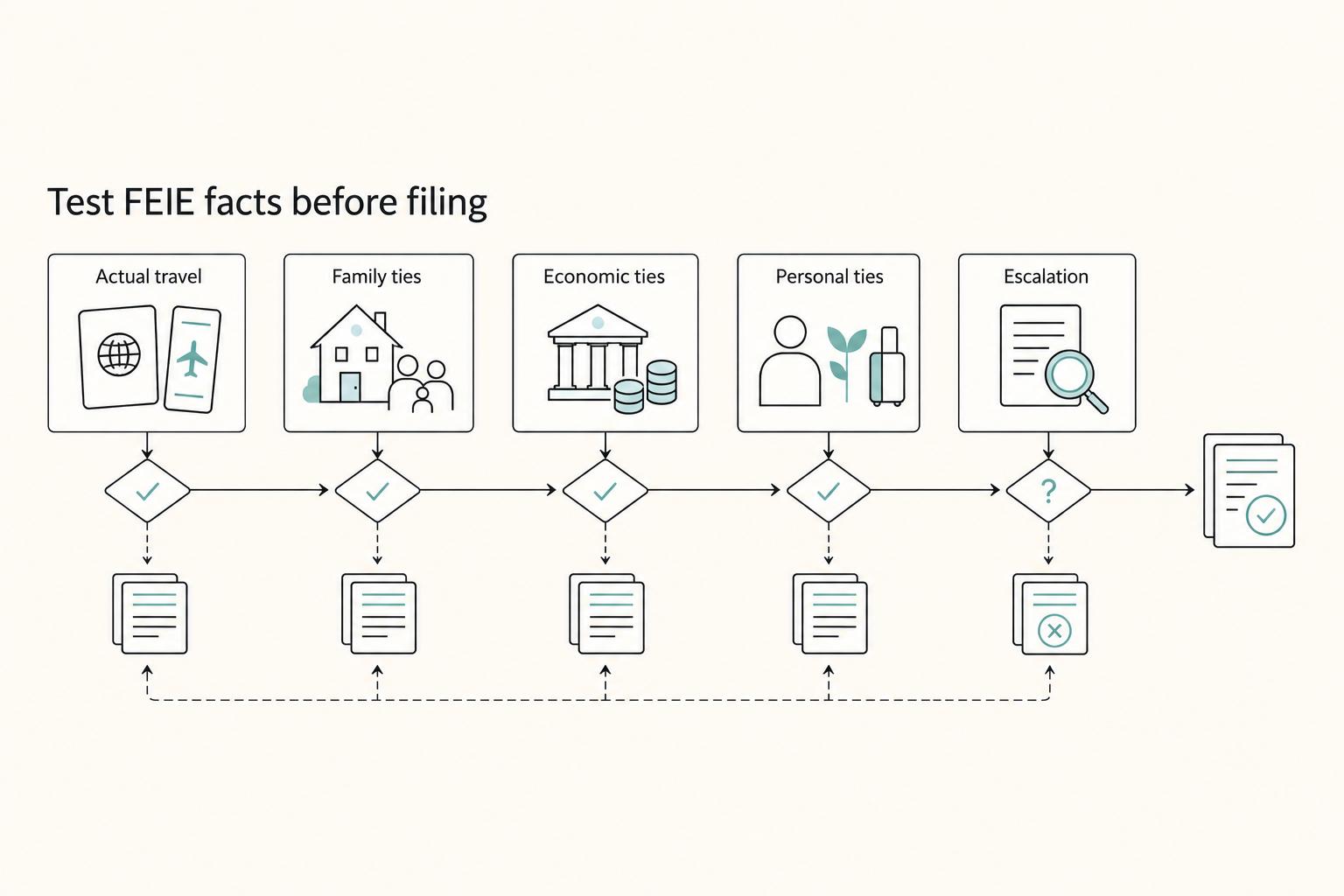
Tax Home vs. Abode: A Critical Distinction for the FEIE
**If you earn across borders, FEIE only works when your facts support a [foreign tax home](https://www.irs.gov/individuals/international-taxpayers/foreign-earned-income-exclusion-tax-home-in-foreign-country) and no U.S. abode for the period you claim on Form 2555.**