
Quick Answer
Model fee ownership and frequency before promising speed. Add provider fees/minimums, funding, support, losses and operations, subtract collected recipient fees, and compare with scheduled payouts. Keep employee EWA separate from contractor settlement. Verify destination/balance eligibility and resolve pending outcomes before any replacement payout.
Where instant payout costs actually show up#
Fast access can improve worker experience, but speed is not the core decision. The real question is whether you can move money earlier without losing margin discipline, record clarity, or control over exceptions. Instant payouts are an economics and controls choice first, and a UX feature second.
-
Separate faster settlement from earned wage access. EWA concerns access to already-earned employee wages before scheduled payday. An instant contractor or marketplace payout accelerates an existing payable or available balance and need not be a payroll product. Record the payment obligation, approved amount and funding source before choosing the rail.
-
Connect early wage access to payroll where applicable. Time capture, approved earnings, deductions, prior access and payroll reconciliation determine the available amount. Trace a sample request through earning event, approval, provider result and payroll adjustment. For contractor payouts, use the approved payable and ledger instead; a card payout alone does not establish an EWA arrangement.
-
Choose cost ownership with failure handling. Verify provider fees, minimums, funding cost and support effort. Decide what the recipient pays, what the platform absorbs and whether fees are refunded for failure. Keep the approved amount, request time, provider reference and final payroll or payable treatment on the same record.
That is the lens for the rest of this piece: not "can we offer same-day and on-demand pay," but "can we offer it with records, pricing, and fallback behavior that still hold up at volume?" If you want the settlement-speed cost view, start with Same-Day vs. Next-Day vs. T+2 Payouts: What Settlement Speed Actually Costs Your Platform. If your use case sits in publisher or marketplace payouts, What Is a Demand-Side Platform (DSP)? How Programmatic Ad Platforms Manage Publisher Payouts is a useful parallel.
How to choose the right instant payout model for your platform#
Choose in this order: decide who pays acceleration costs, confirm you can reconcile early releases to earned work, then set a speed promise your rails can consistently support. Starting with an "instant" marketing claim before those checks usually creates avoidable subsidy and support risk.
Use this decision table before you pick a model#
| Decision area | What to verify before launch | What it tells you |
|---|---|---|
| Unit economics | Fee inputs remain unresolved until you verify them with your payment processor, payout provider, and available card/ACH routing options. Confirm who pays in each path: worker, platform, or shared. | This is your first filter. If margins depend on low cash-out usage, avoid broad subsidy at launch. |
| Payout frequency behavior | Estimate cash-out frequency from observed behavior when the option is visible after each earning event, not just stated preference. Review by cohort. | A workable weekly pattern can become expensive when users cash out after every task or shift. |
| Failure-state operations | Confirm you can trace request time, earning event, approval status, rail used, provider response, final release amount, and payroll or ledger treatment for every payout. | If this trace breaks, support load rises and finance confidence drops. |
| Pricing control tradeoff | Decide whether the provider handles more routing/pricing logic or your team owns subsidy rules, eligibility, and fallback behavior. | More control can improve tuning, but it also increases internal operating load and policy risk. |
Four checkpoints that should drive the choice#
- Unit economics first
Build a contribution view for each cohort: recipient fees collected plus attributable incremental contribution, less provider/rail fees, funding, losses, support and allocated operations. Compare that with scheduled-payout costs; do not treat the payout principal itself as a fee expense.
Worked example: frequency, fee minimums and funding#
Illustrative assumptions, not a provider quote: 1,000 users each withdraw $400 per month, for $400,000 monthly volume. Assume an acceleration fee of 1% with a $0.50 minimum, plus $0.25 per payout for other variable operations. One $400 withdrawal per user costs $4,000 in acceleration fees plus $250 operations, or $4,250. Eight $50 withdrawals per user keep acceleration fees at $4,000 but raise operations to $2,000, totaling $6,000. Twenty $20 withdrawals per user hit the minimum: $10,000 fees plus $5,000 operations, totaling $15,000. This isolates frequency; support, loss, FX and funding are additional.
| Monthly pattern | Payout count | Acceleration fees | Other variable operations | Modeled total |
|---|---|---|---|---|
| 1 × $400 per user | 1,000 | $4,000 | $250 | $4,250 |
| 8 × $50 per user | 8,000 | $4,000 | $2,000 | $6,000 |
| 20 × $20 per user | 20,000 | $10,000 | $5,000 | $15,000 |
If the platform must fund the $400,000 volume three days earlier at an assumed 12% annual cost, simple funding cost is $400,000 × 12% × 3/365 ≈ $395 per month. Add required liquidity reserves separately; this estimate assumes uniform three-day acceleration and excludes compounding. For the eight-withdrawal case, a $0.75 recipient fee collects $6,000 and offsets the modeled $6,000 variable cost, leaving funding and other costs uncovered. A growth test must measure incremental contribution against that remaining cost.
Check your contracted schedule rather than importing these assumptions. Stripe’s US Connect pricing page checked on 4 October 2026 lists Instant Payouts at 1% of payout volume; separate payout/account charges depend on who handles pricing. Stripe Dashboard business pricing can differ. Model the actual fee base, minimums, account charges and failed-payment treatment for your integration.
- Payout frequency behavior is the hidden multiplier
Faster pay is a usage pattern, not a one-time event. Workers may multi-home across apps, and payout experience is judged on speed, flexibility, transparency, and reliability, not speed alone. For a settlement-speed comparison by rail, see Same-Day vs. Next-Day vs. T+2 Payouts: What Settlement Speed Actually Costs Your Platform.
- Failure-state operations determine whether the model is supportable
Proof’s March 2026 rollout requires an eligible Visa debit card and retains scheduled ACH. That is a platform-specific example. Stripe Connect also supports eligible debit cards and some bank accounts depending on country; check available payout methods, account eligibility and instantly available balance. When a request is delayed or its outcome unknown, investigate before starting a second payment.
- Pricing control changes your operating load
More pricing and routing control can improve targeting, but your team then owns more policy edges, messaging, and reconciliation review. If payout quality is inconsistent, fix clarity before adding complexity. Slow or unclear payout experiences can reduce active worker participation; for the retention impact, see Bad Payouts Are Costing You Supply: How Payout Quality Drives Contractor Retention.
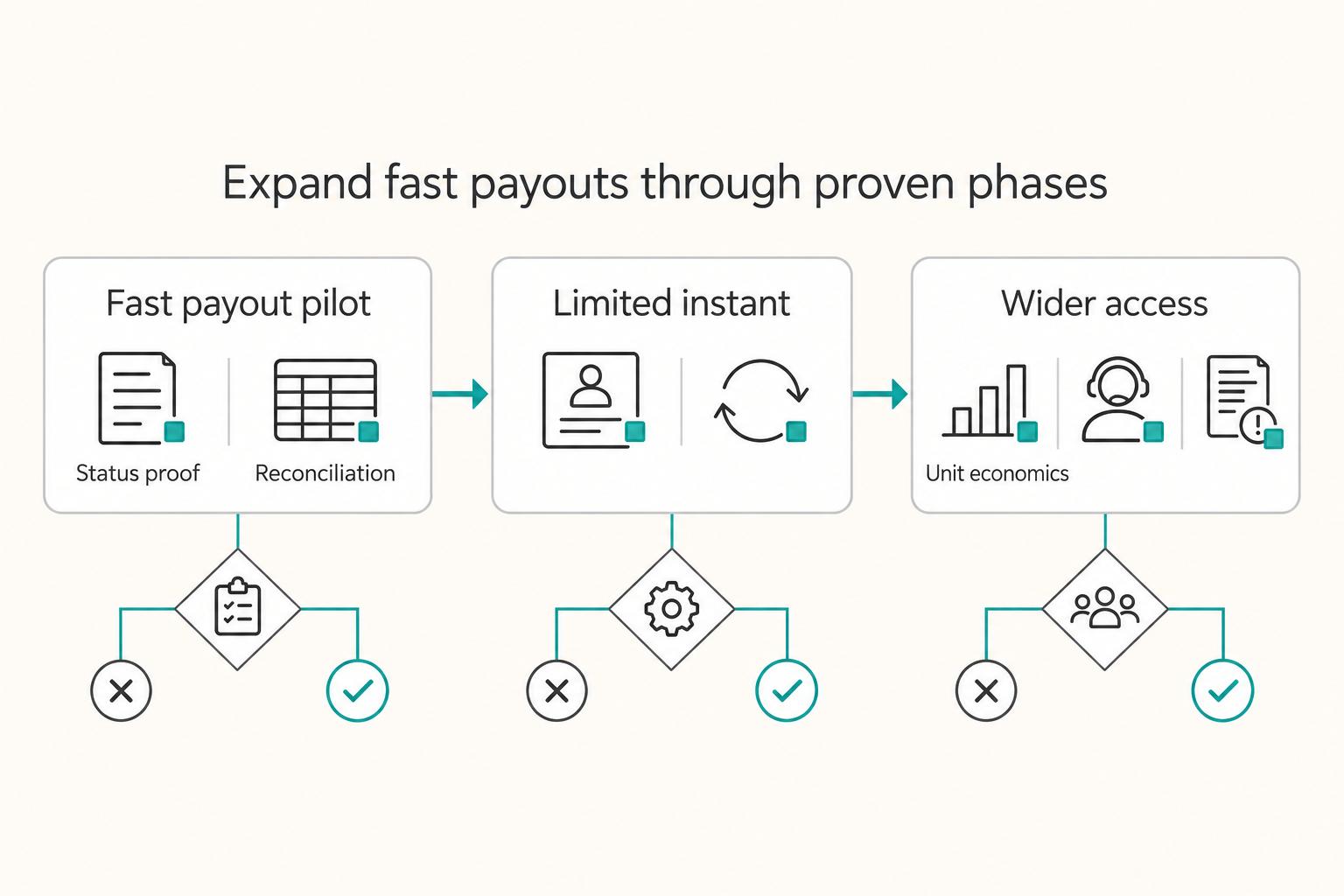
After choosing a model, run a weekly review cadence in early rollout. Track reconciliation exceptions, payout-related support contacts, fallback usage, and repeat cash-out behavior by cohort. If reconciliation quality is unstable or support signals remain noisy, pause expansion and fix failure paths first; if those signals stay stable over repeated reviews, expand rails, regions, or segments.
If you want a deeper dive, read How Platforms Can Offer Instant Payouts as a Premium Feature Without Margin Surprises.
Worker-paid cash-out can reduce platform subsidy#
An optional recipient fee can offset acceleration costs where legally and contractually permitted. It does not remove funding, support, failed-fee recovery or loss exposure. Maintain the normal payment route and show the charge and net amount before consent.
This approach is most practical when you need tighter cost control, when payout behavior varies by user, or when payout operations are still maturing. Keep the standard payout path available, and make faster access a clear opt-in.
Where worker-paid cash-out usually works best#
This model can fit a cost-control goal if the fee covers incremental cost and users retain a usable standard route.
| Scenario | Why it fits |
|---|---|
| Thin-margin books | Charging only for the faster path creates a clearer cost boundary than subsidizing every accelerated payout. |
| Mixed urgency across users | Some users need same-day access, while others can use scheduled payouts. Optional paid speed supports both without forcing one cost profile. |
| Early-stage payout operations | A narrower launch reduces exposure while status tracking, reconciliation, and payroll or payable tie-outs are still being hardened. |
What to verify before you offer it#
Treat this as an operating model decision, not just a fee setting. Before launch, confirm you can trace each early payout from the approved obligation to its payroll adjustment for employee EWA or payable/ledger treatment for contractor payouts:
- what was earned
- what was requested
- what was released
- how payroll or the payable/ledger reflected it
- what fallback path appears when speed is unavailable
If that chain is incomplete, pricing policy will not prevent cleanup work later.
Where this model starts to break#
A paid speed option can conflict with recruitment or retention goals, and employee wage access can have additional jurisdiction-specific fee and payroll restrictions. Measure actual impact; do not assume access improves retention or that a user fee is always permitted.
That is usually the point to move from pure margin protection toward a targeted subsidy or hybrid policy.
Need the full breakdown? Read What Is Reverse Factoring? How Supply Chain Finance Lets Platforms Pay Contractors Early at Low Cost.
Related: Same-Day ACH for Platforms: How to Speed Up Contractor Payments Without Wire Transfer Fees.
Platform-paid speed needs a measured growth case#
Platform-paid instant payouts are most defensible when your goal is growth and you are willing to absorb speed costs for specific cohorts. This model prioritizes faster access to earnings over short-term margin protection.
The March 14, 2024 Uber flexible-pay working paper reports 2.4% increases in daily work minutes and earnings from the offer of Instant Pay. Its treatment-on-the-treated work-time estimates are 17.6% or 36.9%, depending on how take-up is measured. These are study estimates of on-platform activity, not a guaranteed retention lift or the effect of making cash-out free. The paper notes possible substitution from other work. Use the result to motivate a test; measure your own incremental contribution before approving subsidy.
Where platform-paid payouts earn their keep#
Subsidy is strongest when tied to a measurable growth outcome, not treated as a universal perk.
- Recruiting message
"Get paid right after work" is concrete. In this context, flexible pay is the option to be paid immediately after work, and Instant Pay is an on-demand, within-day withdrawal.
- Cohort-specific growth tests
Use subsidized speed for cohorts where faster pay is part of the activation or reactivation bet, then measure outcomes against a comparable non-subsidized group.
- Cleaner user experience
Free instant payout removes a fee decision at the moment workers want funds. The tradeoff is direct: each subsidized payout adds cost.
How to keep the subsidy from spreading#
Do not launch this universally on day one. Start with explicit eligibility rules, for example new activations, reactivation campaigns, or categories with persistent unfilled demand, and keep those rules auditable.
Track repeat activity, active days, and support contacts by cohort. Two common failure modes are over-subsidy, paying for behavior that would have happened anyway, and operational drag, such as manual reconciliation, multi-currency handling, or settlement delays that weaken the "instant" promise. Also plan for reliability gaps: some "instant" transfers can still be delayed because of bank or card issues.
Before launch, keep a clear evidence pack for each subsidized cohort: eligibility rules, ledger posting status, and KYC/AML status where required.
Related: Bad Payouts Are Costing You Supply: How Payout Quality Drives Contractor Retention.
For a step-by-step walkthrough, see USDC Contractor Payouts for Platforms and Stablecoin Rollout Decisions.
Hybrid pricing can cap subsidy by cohort#
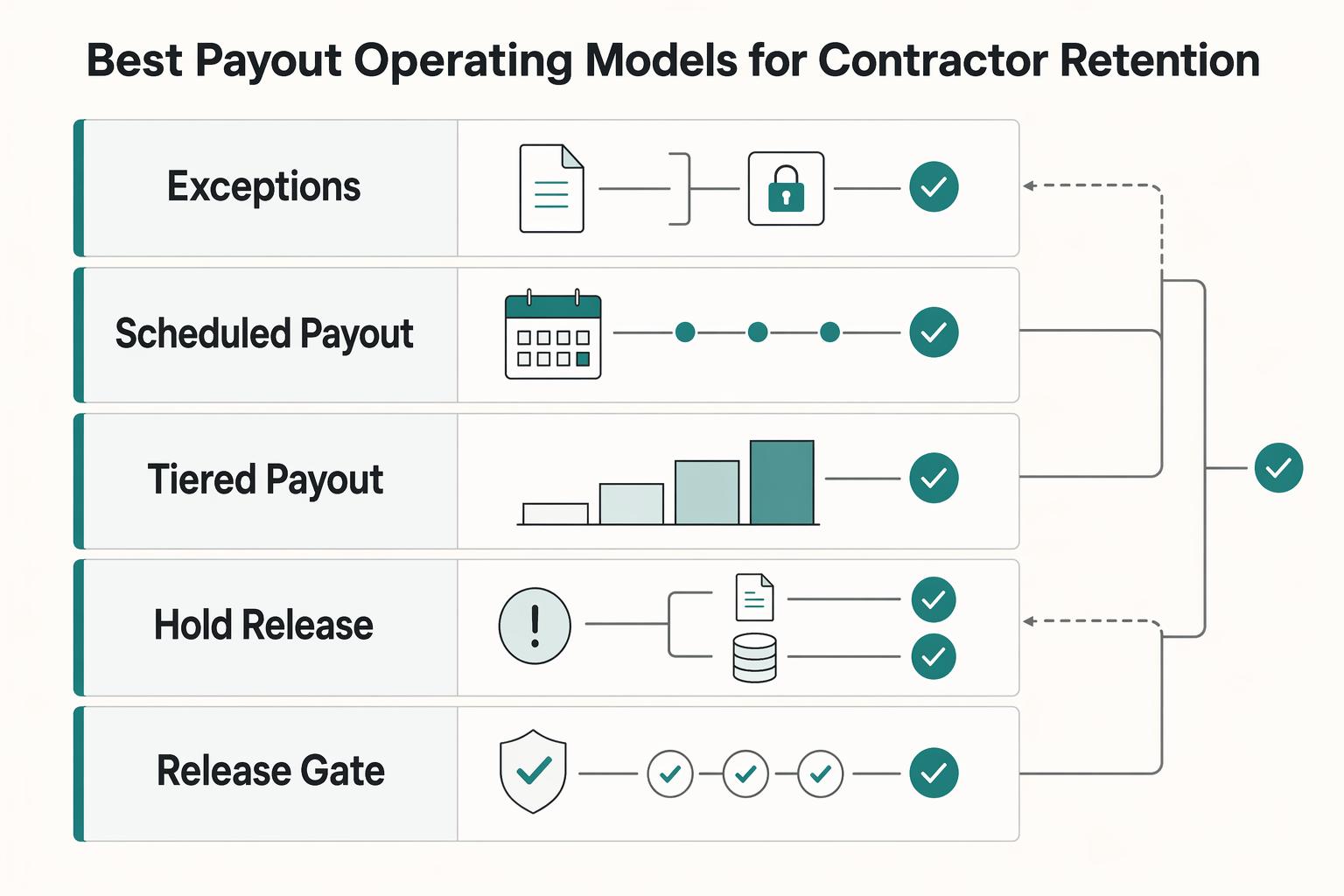
Hybrid pricing with tiered eligibility is often the most practical way to scale when you need growth and cost control at the same time. It keeps Same-Day Pay attractive for priority cohorts while limiting where subsidy applies.
Use a policy table with fee payer, subsidy cap, eligibility duration and standard-route terms for each cohort. Review actual billed cost against those rules; a policy label alone does not enforce a cap.
The tiered model that usually holds up#
One option is platform-paid access for a defined promotion, optional recipient-paid access elsewhere where permitted, and scheduled payments for eligible obligations outside the fast route. Review or fraud holds remain holds until cleared.
| Model type | Best-for scenario | Fee bearer | Eligibility gates | Expected ops load | Failure-handling complexity |
|---|---|---|---|---|---|
| Platform-paid instant payouts | Priority cohorts where speed is strategically important | Platform | Cohort and policy eligibility checks | Medium to high | Medium |
| Worker-paid instant cash-out | Broad user base where margin control matters | Worker | Account and policy eligibility checks | Medium | Medium |
| Scheduled payout route | Ineligible fast destinations or confirmed failed instant attempts | As defined for the standard route | Valid destination, available funds and cleared release checks | Depends on actual exception volume | Do not resubmit unknown/in-flight payments. |
If you cannot explain in one sentence why a user sees one option and not another, the policy is already too complex for scale.
Where hybrid pricing earns its keep#
Hybrid pricing lets you test who values acceleration while limiting funded promotions. Track recipient fee revenue, platform subsidy and repeat cash-out separately so a profitable segment does not conceal another segment’s losses.
It also gives finance cleaner control: you can cap subsidy exposure by cohort while preserving a clear speed promise where it matters most.
A simple decision rule keeps execution clear:
- If a user meets a funded promotion and release checks, offer the disclosed platform-paid option.
- Otherwise offer optional recipient-paid speed where permitted and an appropriate standard route.
- For a review hold, keep funds held. For an unknown instant result, retrieve status. Use a replacement standard payout only after confirming the original cannot still pay.
The real risks are policy drift and exception confusion#
Hybrid models break when policy is not auditable in production. Run regular eligibility audits and confirm each subsidized payout has the required cohort, policy, provider, and ledger status fields before expanding access.
Exception handling is the other common failure point. If users request instant payout but are silently rerouted, support volume will look like missing payments. Treat fallback statuses as first-class product and support states, not a generic failure bucket.
For settlement-speed tradeoffs, see same-day versus slower settlement. This section also pairs with What Is Accrual Accounting? Why Payment Platforms Must Match Revenue and Payout Costs in the Same Period.
Hidden costs most teams miss beyond transfer fees#
Transfer fees are only one part of instant payout cost. The bigger hidden costs usually come from running two payout paths at once, handling eligibility and fallback states, and keeping payout status clear when timing varies.
- Dual-rail operations, not just one fast rail
Instant payouts are typically added alongside scheduled ACH, not as a full replacement. That means your team must support both paths at the same time and keep routing logic clear when a user is not on the instant path.
- Eligibility and support overhead
Eligibility can involve country, local currency, account permissions, destination support, instantly available balance and limits. Stripe’s instant method is not universally restricted to Visa cards. Show the standard option before submission when fast payout is unavailable.
- Timing expectations and exception handling
Stripe Connect documentation says funds typically settle within 30 minutes and the feature is available on weekends/holidays. Typical timing is not a universal arrival guarantee. Display current status and the expected route-specific timing; do not call an unknown outcome failed.
- Program-level economics beyond fee math
On-demand access is often positioned as a workforce experience lever, including recruiting, retention, and engagement goals. If you use that framing, you still need operational tracking to separate true program impact from simple fee spend growth.
| Cost category | Owner | Trigger | Leading indicator | Mitigation checkpoint |
|---|---|---|---|---|
| Transfer fees | Finance | Each instant payout | Fee spend by payout cohort | Review fee trend against cohort usage |
| Dual-rail operations | Ops | Instant unavailable or ineligible | Growth in fallback cases to scheduled payouts | Weekly audit of routing and status reasons |
| Eligibility support load | Ops and support | Card-linking or eligibility failures | "Why can't I cash out now?" tickets | In-product checks for eligibility before request |
| Timing and exceptions | Ops and product | Delayed or rerouted payouts | Pending/exception queue growth | Trace each payout from request to final status |
Once you price this full stack, the core question is not only "what is the transfer fee." It is whether your operations and payout-state design can support faster access without creating avoidable support and reconciliation work.
Related reading: Crypto Payouts for Contractors: USDC vs. USDT - What Platforms Must Know.
Related reading: How Beauty and Wellness Platforms Pay Stylists and Therapists in Chair Rental and Employee Models.
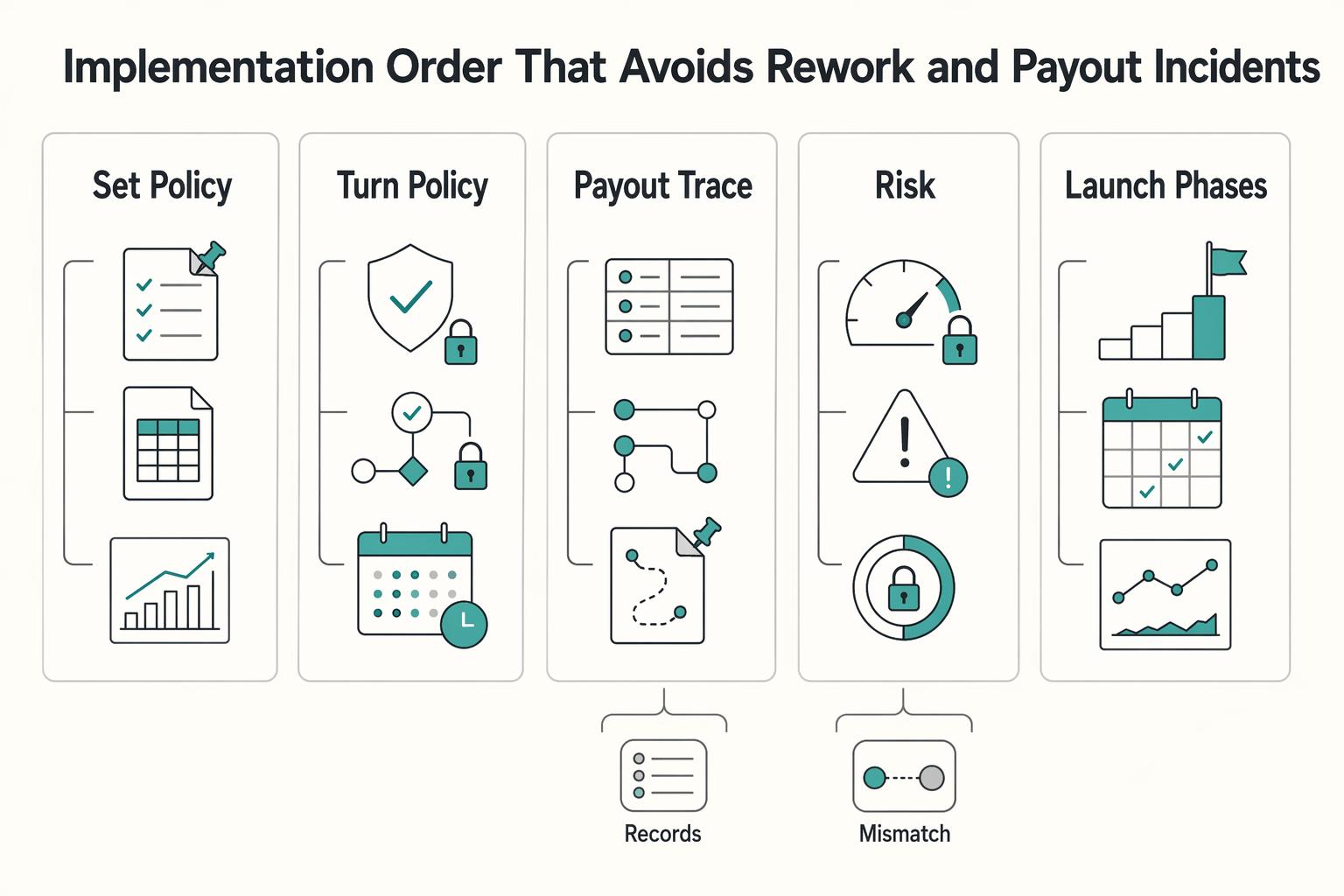
Implementation order that avoids rework and payout incidents#
Build the controls path before the speed path: set economics, eligibility, and traceability first, then expand payout speed.
Separate rail availability from your own product’s operating hours, release checks, balance availability and destination eligibility. A 24/7 rail does not make every request eligible or settle every request immediately.
| Step | Focus | What to lock before widening rollout |
|---|---|---|
| 1 | Set policy | Define who pays for speed, which cohorts get instant access, and what fallback promise applies when instant is unavailable. |
| 2 | Eligibility rules | Make eligibility machine-readable so product, ops, and finance return the same decision for the same account. |
| 3 | Traceability | Require one auditable path from payout request to provider outcome to internal record/export output. |
| 4 | Settlement model | Decide settlement approach early and align funding, reconciliation, and reporting to it before launch. |
| 5 | Failure testing | Validate retries, delays, and state changes so failures update one authoritative record instead of creating duplicate outcomes. |
| 6 | Phased launch | Expand in stages with explicit fallback states and consistent status language for users and support. |
- Set policy before wiring payout rails. Fast-payment programs can require meaningful infrastructure investment, so lock cost ownership and release policy before implementation work scales.
- Turn policy into explicit eligibility rules. If a user is not eligible for instant access, show the scheduled path before request submission.
- Treat traceability as a launch gate. If teams cannot follow the lifecycle cleanly from request through final recorded outcome, incident handling will degrade as volume rises.
- Handle settlement-model decisions early. Settlement implications are a core implementation decision, not a post-launch cleanup task.
- Test risk and failure paths before live rollout. Risk mitigation mechanisms and supporting controls are part of readiness, not an optional hardening phase.
- Test recovery before launch. Deduplicate create operations, retrieve unknown outcomes and confirm return/cancellation before replacement. A hold or pending payment must not trigger a second rail automatically.
This implementation discipline aligns with the fast-payments lifecycle approach and reduces expensive rework later.
Red flags that mean your instant payout economics are off track#
If these patterns show up, treat them as economics and control issues, not normal launch noise.
| Red flag | What to check | Key point |
|---|---|---|
| High use, weak business case | Recheck who pays for faster payout, who qualifies, and when users should default to Same-Day Pay or scheduled payout. | This is a policy and eligibility problem first, not a routing problem. |
| "Missing payout" tickets that are really promise gaps | Confirm whether the payout used the fast path or a fallback path, and whether your UX promised more than that route can deliver. | Payout speed is context-dependent, so promise language must match actual routing behavior. |
| Status without traceability | Pause expansion until payout request ID, provider reference, ledger posting ID, and export package are consistently linked. | Traceability is a launch gate, not a cleanup task. |
- High use, weak business case
High adoption is not a win if you cannot justify who gets subsidized speed and why. Recheck payer policy, eligibility, and fallback defaults so teams are not treating cost leakage as growth.
- "Missing payout" tickets that are really promise gaps
When delays are reported, first verify the route used and the status language shown to the user. Also treat review-site complaints as signals that need corroboration, since review platforms can show verified interactions without fact-checking every claim.
- Status without traceability
If finance and ops cannot connect one payout across request, provider, ledger, and export records, pause rollout. Without that chain, teams can hold conflicting statuses and still lack an auditable answer.
If you want a deeper dive, read Instant Payouts: The Economics Behind Same-Day Contractor Payments.
You might also find this useful: Unit Economics for Payment Platforms: How to Calculate True Cost Per Payout.
Conclusion#
Set fee ownership, eligibility and a realistic timing promise before rollout. Expand when the measured contribution and payment records support the next cohort.
- Lock the payer policy before you optimize anything else
Write the payer policy into the offer and accounting records: fee rate/minimum, promotion cap, net amount and failure-refund policy. Confirm finance, product and support use the same rules. Compare costs with the scheduled route before approving a subsidy.
- Treat reliability and fallback clarity as part of the product
Show status, request time, expected arrival and the actual route. A delayed instant request requires status investigation; it is not permission to pay again. Distinguish ineligibility before submission, review hold, pending, confirmed failure and completed payment in product and support language.
- Scale only when traceability survives new rails, geographies, and cohorts
Trace request, obligation, eligibility, provider reference, fee, notification and final settlement as you add regions or cohorts. Keep the original operation key for uncertain retries and authorize replacement only after verifying the original cannot still pay. Review reconciliation and cohort economics before widening access.
Execution checklist: define payer policy, enforce eligibility logic, and require end-to-end traceability before expanding access.
Frequently Asked Questions
What does same-day or on-demand pay actually cost a platform?
Calculate provider/rail fees, funding, support, losses and allocated operations, then subtract recipient fees collected. For incremental economics, compare with the standard route and add only measured incremental contribution. Use the fee minimum and the actual number of cash-outs; the worked example above shows why frequency matters.
Who should pay the faster-payout fee?
Choose by product goals, measured contribution, recipient needs and applicable fee rules. Platform-paid access funds a subsidy; recipient-paid access offsets some costs; hybrid limits funded cohorts. Disclose charges, net amount, timing and failed-payment fee treatment before consent.
What is the practical difference between Same-Day Pay and on-demand pay?
Same-day describes a delivery window; on-demand describes when the recipient can request access. Either may concern a contractor payable or employee earned wages. EWA adds payroll and earned-amount controls. Use wording that matches the actual route and obligation.
How is earned wage access different from a payout advance?
EWA refers to already-earned wages before scheduled payday, while an advance can concern a different funding or future-payment arrangement. Do not determine legal treatment from the label alone. Verify approved earnings, prior access, payroll adjustment and the program’s repayment/recourse and fee terms.
What hidden costs matter most after launch besides transfer fees?
Include funding days, liquidity buffers, losses/returns, FX where applicable, failed attempts, recipient support and reconciliation work. Model those costs by cash-out frequency and cohort; transfer pricing alone does not establish profitability.
What should be in a minimum viable launch checklist for faster payouts?
Make a few items non-negotiable: policy ownership, a clear earned-pay definition, payment-status tracking, and clear user messaging when payout timing changes. You do not need a perfect program on day one, but you do need to verify what counts as earned pay, how payment status is tracked, and what users will see if the fast route is unavailable. The common failure mode is launching the payout button before those records and messages are dependable.
Try a related tool
Researched and edited by the Gruv editorial team. Gruv builds cross-border billing, payouts, and finance-operations software for global businesses.
Sources
Includes 1 external source outside the trusted-domain allowlist.
Educational content only. Not legal, tax, or financial advice.
Related Posts
Scheduled, Same-Day, and On-Demand Instant Contractor Payouts: Economics, Rails, and Rollout
Treat payout speed as a product and margin decision, not a feature race. This guide helps platform teams choose between scheduled payouts, same-day payouts, and on-demand instant payouts for contractor and creator programs based on economics, controls, and rollout order.

Same-Day, Next-Day or T+2 Payouts: Calculate the Real Cost
Use a scheduled next-day or T+2 route for obligations it can deliver on time. Add same-day or instant payments for eligible recipients when the shorter wait is worth the incremental fee, liquidity requirement and operating cost. The decision starts with the recipient’s required receipt date, then works backward through approval, funding, provider cutoff and bank availability.
Bad Payouts Are Costing Your Supply in Two-Sided Platforms
Payout issues are not just an accounts payable cleanup task if you run a two-sided marketplace. They shape supply-side trust, repeat participation, and fill reliability. They can also blur the revenue and margin signals teams rely on.