

Quick Answer
Define the offer first: instant payout should be a bounded Premium feature, not a blanket delivery promise. Set eligibility and exclusions in one policy, separate “request accepted” from “delivered,” and make fee impact visible before submission. Then choose structure before price point (per-withdrawal, subscription, hybrid, or pilot) and test it by cohort. Finally, tie every visible status to API webhooks and Ledger journals, and expand only through staged rollout gates with prewritten rollback triggers.
Why Instant Payouts Wins and Where Teams Get Burned#
Treat instant payouts as a paid acceleration option, not a blanket promise that money always arrives immediately. Teams tend to get better results when they package it as a Premium feature with clear scope limits, then make those limits visible before pricing, copy, or rollout decisions harden.
An instant offer should describe expected funds availability through the supported payout rail, not merely fast request acceptance. State eligible destinations, currencies, amount limits and timing conditions before the customer chooses it.
If you want a deeper dive, read How to Offer Instant Payouts as a Platform Feature Without Taking on Float Risk.
What to Prepare Before You Price or Build#
Before you debate fees or copy, lock the commercial structure first: who each plan is for, how tiers scale, and how the paywall explains value.
Segment users before you segment price. Use clear buyer personas so product, finance, and ops are designing for the same customer types. If the team cannot explain which persona each plan serves, pricing decisions will drift and UX copy will become inconsistent.
Define the paywall job as value communication, not access blocking. Your paywall should make the upgrade benefit obvious at the decision moment. If it only gates access without clarifying value, you should expect more abandonment.
For a step-by-step walkthrough, see Reserve Policy Design for Platforms with Rolling Holds and Release Controls.
Define the Offer So Legal, Ops, and UX Say the Same Thing#
Define the instant-payout promise in one shared policy before pricing it: if legal, ops, and product cannot describe the same eligibility and status path in the same words, the offer is not ready.
| State | Meaning | Evidence |
|---|---|---|
| Requested | Unique instruction and balance reservation recorded | Local business record; not a receipt |
| Processing / unknown | Provider outcome not final | Provider reference and investigation history |
| Provider completed | Provider reports completion | Authoritative provider status; credit separately if observable |
| Failed | Original will not complete | Definitive failure/cancellation before replacement |
| Returned | Funds reversed after prior completion | Linked return and distinct ledger effect |
Check the actual provider eligibility. For Stripe Connect, supported platform/account locations, local payout currency and an eligible external account matter. Available funds depend on funding source; bank-debit funds must settle first. Fee-aware integrations use the destination’s expanded instant_available.net_available, and the platform daily limit can prevent additional instant payouts.
Separately map applicable identity, business and tax requirements to the program and entity roles. Distinguish a legally required hold or withholding from an internal review. VAT-number validity alone does not establish payout eligibility.
Request acceptance confirms an instruction entered processing. Track the provider’s completion status and any available recipient-credit evidence separately; a local journal entry does not prove arrival in the customer’s bank.
Show unsupported destination, insufficient eligible balance, amount limit or required review before confirmation. Explain the available next step when lawful; some screening details cannot be disclosed. An upgrade purchase cannot override an eligibility failure.
Use one internal status dictionary. Set a single dictionary and enforce it across support macros, product copy, engineering enums, webhook handlers, and Ledger journals: eligible, requested, accepted, under_review, credited, failed. Put longer explanations in one evidence pack, not scattered documents.
Need the full breakdown? Read Xero Multi-Currency for Payment Platforms: How to Reconcile Foreign Currency Payouts.
Choose a Pricing Model That Matches Margin and Risk#
Choose the model before the price point: your structure will shape adoption, support load, and how predictable the feature is to operate.
Map the model first#
Use three lenses when you evaluate your Premium feature: cost-based, competitor-based, and value-based. Cost tells you what is viable, competitor patterns can guide packaging style, and value helps you decide what each cohort is likely to accept.
| Model | When it fits | Primary upside | Primary tradeoff |
|---|---|---|---|
| Per-withdrawal fee | Usage is uneven or you need tighter cost recovery per request | Charge stays tied to usage | Frequent users may resist per-use friction |
| Subscription tier | You want a cleaner upgrade path and more predictable recurring revenue | Simpler plan story | Weak caps can create margin pressure |
| Hybrid | You want an upgrade narrative plus guardrails on heavy usage | Balances recurring and usage-based monetization | Rules can feel complex if not explicit |
| Platform-subsidized pilot | You need real demand and support data before long-term packaging | Fast learning cycle | Pilot scope can drift without clear stop rules |
For invented inputs, a user requests $500 from an eligible balance. A disclosed $5 acceleration fee leaves $495 to deliver. Assume $3 rail cost, $0.50 expected loss/funding cost and $0.50 support cost: the platform contributes $1 per completed payout. The $500 principal is a liability transfer, not platform fee revenue. Test real contracted costs at small and large payout sizes.
Set decision rules before internal debate#
If usage is high and economics are tight, keep pricing closer to usage. If retention and plan expansion are the priority, test bundled packaging with explicit limits and explicit over-cap behavior.
For an invented bundle, charge $20/month including four instant payouts, with $5 for each additional completed payout. At two uses, costs of $4 each leave $12 contribution; at eight uses, $40 fee revenue and $32 costs leave $8. A per-use $5 fee leaves $2 and $8 respectively. Add incremental subscription servicing and acquisition costs to compare whole-plan economics. Set a pilot subsidy budget and stop new subsidized offers before it is exceeded.
Segment the logic, not just the label#
Do not default every cohort to identical fee logic. New users, high-usage sellers, and enterprise accounts can justify different packaging, but the product promise still needs one consistent language for eligibility, limits, and fallback behavior.
Specify when the acceleration fee is earned and charged. In an illustrative policy, a definitively failed instant payout earns no acceleration fee and any collected fee is refunded; a delayed payout follows the disclosed service/refund terms. A customer-approved switch to standard uses the agreed standard fee. Reconcile refunds as linked adjustments, not deletion of the original instruction.
This also connects with Invoice Settlement for Platforms That Match Payouts and Close Disputes.
Design the Payout UX So Users Trust the Fee and the Timeline#
Show a meaningful comparison before confirmation: eligible amount, instant fee, net delivery, expected window and the free or paid standard alternative. Give the user a request reference and honest status after submission.
| Stage | What users see | Key details |
|---|---|---|
| Option selection | Standard and instant options side by side | fee, expected timing window, and current availability |
| Pre-submit review | Review card | gross amount, fee impact, net amount, and any policy caveats that can still affect completion |
| After submit | Status updates | map to real internal processing states in plain language |
| Failure state | Next action | Query unknown originals; replace only after definitive failure/cancellation and consent to changed terms. |
If your product, support, and operations teams use different wording for the same state, users will see one promise while your team works from another. Keep those labels aligned across UI, support replies, and internal tooling.
Related: Embedded Wallet Design Patterns: How Platforms Build In-App Balance and Spend Features.
Build Compliance and Tax Gates Without Breaking Conversion#
Check known eligibility before confirmation and recheck before execution where required. Explain missing customer action early. Separate operational review from legal restrictions and tax withholding; internal policy cannot authorize prohibited release.
| Gate | Check |
|---|---|
| Rail eligibility | Supported destination, currency, eligible balance and amount/program limits |
| Role-specific obligations | Applicable onboarding, screening and tax requirements |
| Communication | Lawful reason and next action; restricted sensitive records |
If required data is missing, show what is missing before confirmation and keep standard payout separate when your policy allows it. Avoid the failure mode where users select a premium option that was never actually available.
Collect required tax documentation for the actual payer, recipient status and income type. In a U.S. workflow, W-9 generally identifies a U.S. person, W-8BEN a foreign individual and W-8BEN-E a foreign entity; other forms may apply. Restrict sensitive forms and record required withholding separately from payout fees.
After an unknown or timed-out request, query the original provider record. Do not retry or switch to standard while the first attempt can still pay. Only create a replacement after definitive failure or confirmed cancellation prevents late completion, with customer consent to any changed timing or fee.
Implement in Order and Verify Each Layer Before Rollout#
Roll this out from the money path outward, then expose it in the UI after each lower layer is verified.
Implement eligible balance and fee calculation, payout orchestration, event handling and reconciliation before exposing the offer. Validate with delayed outcomes and adverse cases as well as ordinary completion.
Reserve the balance and record the unique business payout atomically before submission. Keep the business obligation separate from attempt IDs. Use provider idempotency keys within their documented scope and retention window alongside durable local deduplication. Persist webhook receipt and its local effect atomically, reject duplicate effects and prevent older events from regressing state. Treat returns as linked reversals.
Add integration checkpoints for adjacent modules before expanding scope. If Virtual Accounts are part of funding, confirm which balance state is used for eligibility and payout decisions. If Merchant of Record is enabled for some flows, document in-scope and out-of-scope paths so product, finance, and ops are aligned before broader rollout.
Use a limited cohort with a named incident owner and written stop conditions. Rollback stops new offers; it preserves investigation and settlement of in-flight instructions, earned obligations and fee adjustments. It must not erase history or resend unknown payouts.
We covered this in detail in Account Reconciliation for Payment Platforms: How to Automate the Match Between Payouts and GL Entries.
Common Launch Mistakes and How to Recover Fast#
When economics worsen, identify whether the cause is fee design, size mix, provider cost, losses or support workload. A clearer paywall alone cannot fix a loss-making payout.
Mistake 1: Pricing copied from SaaS seat plans. Recover fast: Rebuild pricing on payout-unit economics. Use one margin table by payout size band, expected usage, support touch rate, and subsidy cap so finance can validate margin by segment, not just tier names. If you need a reset, start with unit economics.
Mistake 2: Speed promises that hide processing dependencies. Recover fast: Make statuses explicit in both UX copy and internal operations: "request accepted," "processing," and "completed." Each label should map to a real event your team can explain.
Mistake 3: Compliance checks too late in the flow. Recover fast: Move KYC/AML gating earlier and make the unblock path explicit before final submission. Show the hold reason, what the user needs to provide, and what happens next.
Mistake 4: Weak exception operations. Recover fast: Run a daily review queue for failed payout runs and unresolved event deliveries, with an owner, aging, and a required next action for every case. This is where "minimize errors" and "remove friction" become real operating practice.
You might also find this useful: How Platforms Should Design Loyalty Reward Payouts for Margin and Control.
Rollout Checklist You Can Copy Into Your Launch Doc#
Use this as a go/no-go gate, not launch admin: if any line has no owner, no evidence, or still needs major edits, pause rollout.
Confirm the offer definition. Lock eligibility, exclusions, timing language, and market caveats in one shared source. Make sure product copy, support language, and status labels stay aligned.
Confirm the economics. Select the pricing model and document the margin logic by segment before launch. Keep subsidy limits explicit so rollout decisions are tied to cost reality, not packaging clarity.
Confirm the UX in staging. Verify fee transparency, net amount visibility, timing expectations, and status tracking in the live flow. Test failure paths so users get a clear next action instead of a dead-end state.
Confirm controls with evidence. Collect staging evidence for compliance, tax, idempotency, and reconciliation checks based on your market/program requirements. Include test outputs and exception handling references your ops team will use.
Confirm go-live and rollback criteria. Run a phased release (internal, limited cohort, broader rollout), define alerting and on-call ownership, and set rollback triggers in advance. Ask one readiness question before each phase: can you go live now without major edits or manual patches?
Run a limited cohort review before expanding. Use week one as an early decision checkpoint, not proof of long-term stability. Expand only if margin, trust, and operations metrics remain inside target.
Related reading: ACH Payment Processing Platforms for U.S. Collections and Payouts.
Frequently Asked Questions
How should a platform price instant payouts as a premium feature?
Price from complete payout-unit costs and expected usage. The worked example separates user principal, acceleration fee, net delivery and platform contribution. Test small amounts and high withdrawal frequency before choosing a bundle or per-use fee.
What must users see before they choose instant payout?
Show eligible gross amount, fee, net delivery, expected timing, limitations and the standard option before consent. After submission, distinguish processing or unknown status from completion and any observable recipient credit.
When should instant payouts be unavailable or delayed?
Make instant unavailable for unsupported destinations or currencies, insufficient eligible balance, exhausted program limits or applicable review/legal restrictions. Explain the permitted next action, and preserve access to standard payout only when that flow is eligible too.
What are the minimum controls needed before launch?
Validate eligibility and balance reservation, durable business-action deduplication, scoped provider keys, safe event effects, unknown-outcome investigation and gross-to-net reconciliation. Keep an owner for pending cases and fee refunds.
Should we bundle instant payouts into a subscription or charge per use?
Use per-use pricing when costs scale with withdrawals. A subscription needs explicit included counts, overage rules and viable heavy-use economics; the invented two-use/eight-use comparison shows why count matters. Do not sell an unlimited promise without an upper-volume cost model.
How do we reduce support tickets when an instant payout fails?
Give users an accurate status, reference and lawful next action. Resolve the original before a replacement and obtain consent for changed fees or timing. Publish the acceleration-fee refund policy and reconcile each adjustment.
Which metrics tell us the feature is working without harming margin?
Track uptake among eligible users, completed business payouts divided by all valid requests in a mature observation cohort, and pending, unknown, failed and returned counts separately. Report net fee contribution, subsidy spend and support contacts per valid business payout; retries do not create extra successes.
Try a related tool
Researched and edited by the Gruv editorial team. Gruv builds cross-border billing, payouts, and finance-operations software for global businesses.
Sources
Educational content only. Not legal, tax, or financial advice.
Related Posts
Offer Instant Payouts Without Taking on Float Risk
The hard part is not moving money fast. It is being honest about the risk you take on when you do. You can market Instant Payouts in a headline, but the speed promise only holds up when liquidity, routing, liability, and controls line up in the same sequence.
What Instant Payouts Really Cost Platforms for Same-Day and On-Demand Pay
Fast access can improve worker experience, but speed is not the core decision. The real question is whether you can move money earlier without losing margin discipline, record clarity, or control over exceptions. Instant payouts are an economics and controls choice first, and a UX feature second.
Embedded Wallet Design Patterns for In-App Balance and Spend Features
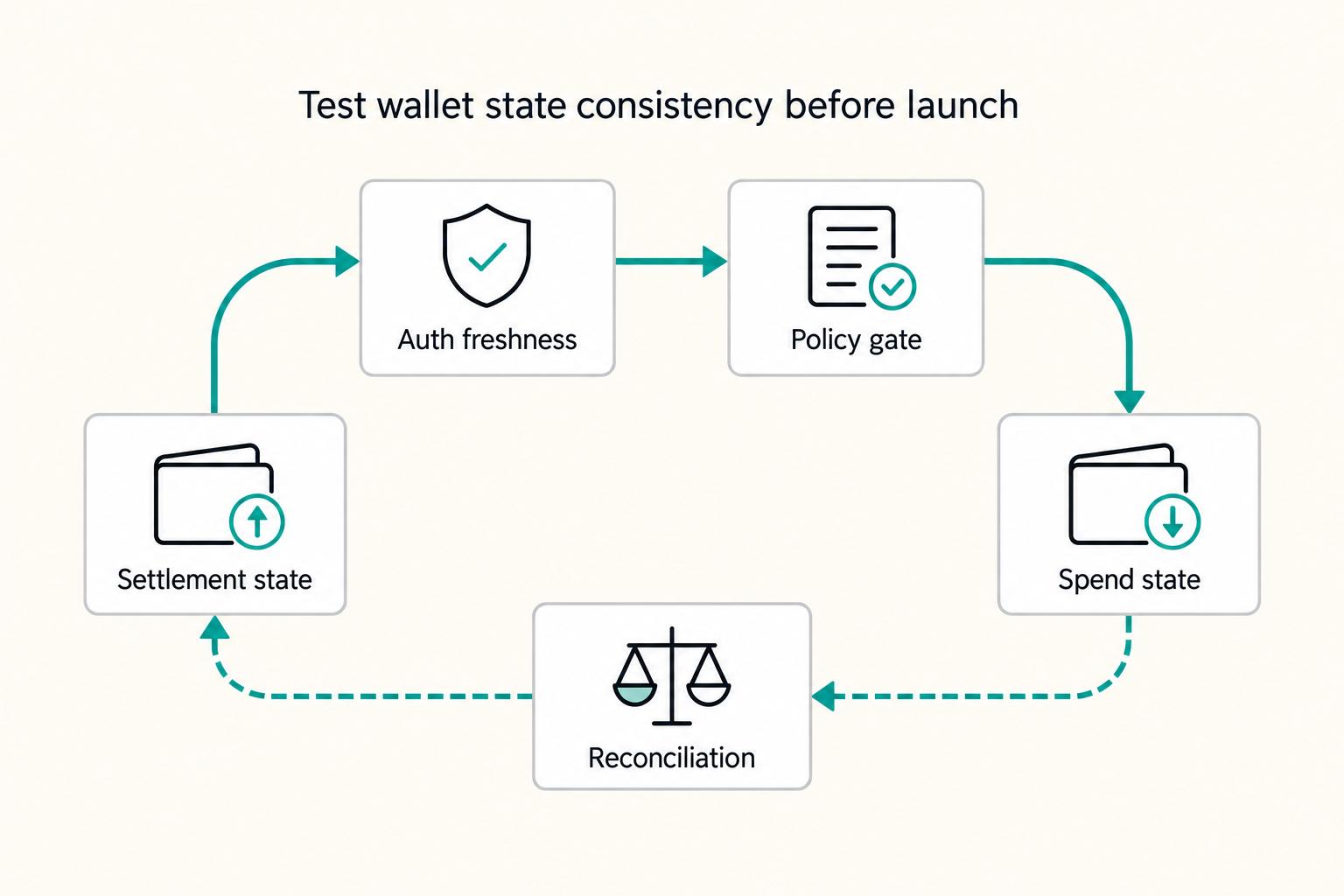
Choosing an embedded wallet is not just a UX call. It is an operating model choice. The moment you keep wallet actions inside your product instead of sending users to a separate interface, you are also deciding how compliance handling, balance accuracy, and payout timing will work when a spend succeeds in one place and fails in another.