
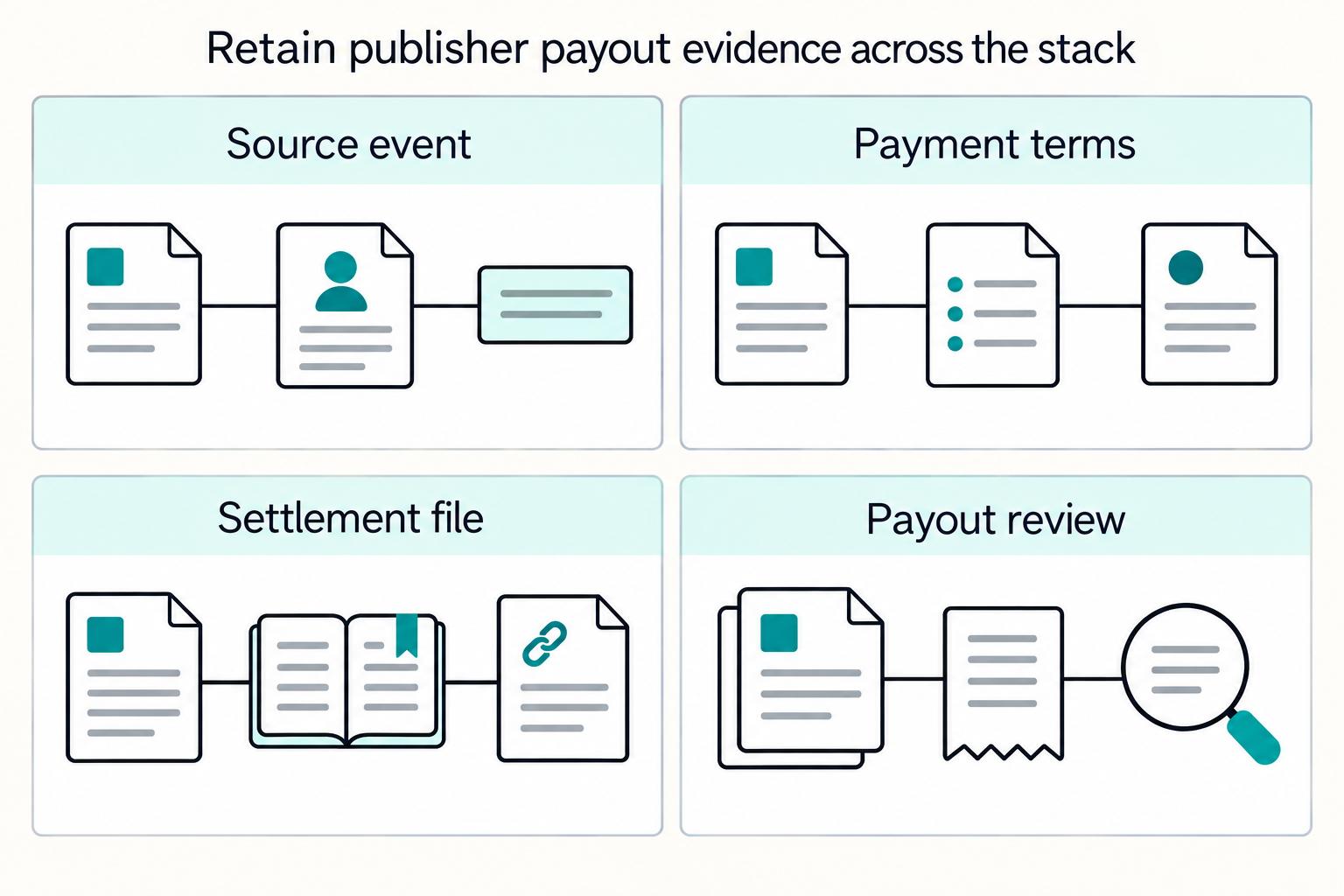
Quick Answer
No. A DSP is for advertiser-side buying, while publisher payouts are usually owned on the sell side or in a separate payout layer. Treat Google AdSense’s monthly cycle with payments between the 21st and 26th as a clear example that payout timing can sit outside buying tools. Your decision checkpoint is ownership: who reconciles ad exchange records to payable amounts, who approves holds, and who can explain delayed or failed disbursements without spreadsheet stitching.
How DSPs Work and Where Publisher Payouts Fit#
Do not use a DSP as a stand-in for payout infrastructure. If you are expanding a programmatic business, the first decision is not which buying tool looks strongest. It is where buying ends, where settlement begins, and who actually owns publisher payment outcomes.
- DSPs buy inventory, not automatically pay publishers
A Demand Side Platform is advertiser-side software for automated ad buying across exchanges. Amazon's definition is straightforward: a DSP lets advertisers buy digital ad inventory across multiple exchanges in real time. That matters because the core job is bidding and spend allocation, not end-to-end publisher disbursement. If your question is campaign execution, a DSP is central. If your question is who calculates, approves, and releases publisher funds, you are already past the DSP boundary.
- Publisher payouts are often handled on the sell side or in a separate payments layer
Programmatic advertising is not one platform role. The sell side has its own technology layer too. An SSP helps facilitate the sale of ad space, and an ad exchange connects buyers with publishers looking to sell inventory. In practice, payout timing and payout ownership often sit outside the buying stack. Google AdSense is a useful example: it runs on a monthly payment cycle and issues payment between the 21st and 26th of the month when its conditions are met. Treat that as proof that monetization and payout schedules can be separate from ad buying tools, not as a universal rule for every publisher program.
- Your launch risk sits in the settlement workflow, not in DSP feature checklists
It is easy to read DSP content that goes deep on targeting, bidding, and optimization, then assume payout operations will get handled later. That is the expensive mistake. The real issue in market expansion is ownership. Who reconciles exchange and publisher-level records? Who sets payment terms? Who places holds? Who can explain a failed or delayed payout without stitching together spreadsheets? A practical checkpoint is simple: ask each vendor or internal team to show the traceable path from ad impressions or exchange records to the final payable amount and payout status. If nobody owns that lineage, treat it as a red flag before launch.
That is why this guide compares operating models instead of product categories. The useful answer is not just what a DSP does. It is how publisher payouts are split across the DSP, the SSP, the ad exchange, and the settlement process you will actually have to run.
For a step-by-step walkthrough, see How Platform Operators Recover Failed Payouts Without Duplicate Risk.
Who This List Is For and How to Score Your Options#
Use this list if you are deciding DSP/SSP boundaries and publisher payout ownership before entering a new digital marketplace. The practical order is to score operating models first, then compare vendors, so campaign-buying features do not hide settlement risk.
| Criterion | What to check | Decision note |
|---|---|---|
| Reconciliation workflow | Whether one owner can match transaction records from ad inventory or exchange activity to the final payable amount | Prioritize clear, traceable lineage over interface polish |
| Payment terms | Rules for how, when, and by what method payment is made, with publisher-level clarity on holds, release decisions, and exception approvals | "Monthly payouts" is incomplete if ownership of adjustments is unclear |
| Real-time bidding failure handling | Timeout and error behavior, backend error paths, and default "no bid" behavior | Increasing timeouts can contribute to bidder throttling |
| Cross-border readiness | Country-by-country constraints tied to local payment methods and regulations | Do not accept a generic "global coverage" claim without market-level confirmation |
| Speed to launch | Ownership for ad inventory records, settlement data, and payout exceptions | Treat speed as a tie-breaker after operating ownership is clear |
For this comparison, score options on five criteria and weight them to your main exposure. If campaign performance is the core risk, weight demand-side platform fit higher. If publisher monetization reliability is the core risk, weight payout operating design higher.
- Reconciliation workflow
Check whether one owner can match transaction records from ad inventory or exchange activity to the final payable amount. Ask for one sample settlement file, one payout status view, and the exact handoff point between the DSP, SSP, and finance. Prioritize clear, traceable lineage over interface polish.
- Payment terms
Confirm the rules for how, when, and by what method payment is made. Require publisher-level clarity on holds, release decisions, and exception approvals. Treat "monthly payouts" as incomplete if ownership of adjustments is unclear.
- Real-time bidding failure handling
Make timeout and error behavior explicit in your evaluation. In RTB flows, increasing timeouts can contribute to bidder throttling, so verify backend error paths and default "no bid" behavior before launch.
- Cross-border readiness
Validate country-by-country constraints tied to local payment methods and regulations. Do not accept a generic "global coverage" claim without market-level confirmation for both auction flow and payout/compliance steps.
- Speed to launch
Treat speed as a tie-breaker after operating ownership is clear. Before you shortlist, map ownership for ad inventory records, settlement data, and payout exceptions.
Comparison Table of the Three Operating Models#
After you score ownership and risk, compare where payout control and reconciliation actually sit. Treat any model that cannot show a traceable path from RTB impression events to final payable amount and payout status as high risk at scale.
| Model | Who owns Publisher Payouts | Where Ad Exchange data is reconciled | Who sets Payment Terms | Operational visibility | Expansion constraints by market | Red flag |
|---|---|---|---|---|---|---|
| DSP-centric stack | Usually outside the DSP, often handled by an SSP, exchange, finance team, or separate payout provider | Mostly downstream from the buying platform, since a DSP is built for advertiser media buying across sources | Often split across publisher agreements and downstream settlement partners | Strong on spend and bidding visibility, weaker on publisher payout-state visibility | Buying-side launch may be fast, but payout readiness can lag when local payout methods or compliance checks are owned elsewhere | Hidden fee layers, unclear payout status lineage, weak exception ownership after the auction |
| SSP-native settlement stack | Typically closer to the publisher side, since an SSP facilitates selling publisher impressions | Reconciled closer to sell-side auction and monetization records | More likely in publisher-facing monetization terms, though not always in one place | Better visibility into impression sales and sell-side revenue, but payout exceptions can still depend on separate payment processes | Expansion depends on publisher onboarding, payment-method support, and revenue-validation controls in each market | Monthly payout views without event-level traceability, or manual adjustments without a clear audit trail |
| Hybrid stack with dedicated payout infrastructure | Dedicated payout layer owns disbursement, payout states, and exception handling while DSP/SSP stay in buying/selling roles | Ad Exchange and settlement data are reconciled into the payout layer before disbursement | Usually defined at publisher level in payout operations, with DSP/SSP inputs feeding calculation | Strong visibility when auction data, payable calculation, and payout status are separate but linked records | More up-front integration work, and each market still requires explicit payment-method and compliance coverage checks | Missing audit trail between impression-level revenue records and the final payout file, or duplicate state across systems |
The table matters because DSP and SSP roles are structurally different: DSPs support advertiser buying, and SSPs support publisher-side selling. That split is why payout ownership often becomes vague in DSP-led setups, where buy-side spend records are not the same as publisher-ready payable records.
If you choose a DSP-centric route, require one concrete handoff artifact: the file or API record linking RTB-won impressions to downstream payable amounts by publisher. If the process depends on spreadsheet export plus manual finance adjustment, treat that as a scaling risk.
An SSP-native setup can give cleaner visibility into publisher monetization because it sits closer to impression sales. But do not treat a monthly payment status view as full settlement lineage. Monthly-cycle payment updates and end-of-month revenue validation are control points, not full traceability from impression event to payout outcome.
The hybrid model usually requires more implementation work, but it can create clearer accountability across systems. A practical check is whether SupplyChain traceability for bid-request sellers/resellers can be tied directly to payout calculations and final disbursement states.
Decision rule: ask for an impression-level sample, a settlement file, and a payout-status lifecycle finance can follow independently. The better model is the one that makes reconciliation straightforward and repeatable.
Related: Two-Sided Marketplace Dynamics: How Platform Supply and Demand Affect Payout Strategy.
Option 1: DSP-Centric Buying Stack#
Use this model when your priority is advertiser-side campaign execution in one buying interface, not end-to-end publisher payout ownership. A DSP-centric stack is strong for targeting, bidding, and spend optimization, but publisher settlement and payout accountability are often handled outside the DSP.
A demand-side platform is built for buy-side programmatic advertising across owned and third-party supply. That fits teams measured on campaign ROI, ROAS, and media efficiency. Yahoo positions Yahoo DSP as a complete DSP with campaign planning and management in a single-platform workflow, which can simplify buy-side operations for traders and account teams.
The tradeoff is on the publisher side. SSPs facilitate impression sales for publishers, so settlement and payout controls may sit closer to SSP or downstream partner workflows than inside the DSP itself. Yahoo's 2023 statement that it focused on DSP and divested SSP reinforces that buy-side boundary. This does not mean downstream settlement links are impossible, but you should treat payout ownership as external until records prove otherwise.
Before launch, confirm:
- the handoff record from won impression or spend data to publisher-level payable records
- who sets publisher payment terms and who owns payout exceptions
- whether finance can reconcile buy-side spend to supply-side settlement without manual-only bridging
A practical use case is an agency running campaign execution in Yahoo DSP while relying on separate supply-side partners for settlement and publisher payouts. Microsoft Monetize's Yahoo buying context reflects this split between buyer workflow and publisher-side operations.
For a deeper look at DSP and SSP settlement workflows, read Programmatic Advertising Payouts: How to Automate DSP and SSP Settlements.
Option 2: SSP-Native Monetization and Settlement Stack#
If your business is publisher-heavy, this is usually the better starting point than a buy-side stack. Core monetization controls sit on the sell side. A supply-side platform is publisher-side software used to sell ad impressions, so fill outcomes, auction pressure, and inventory monetization are managed closer to where revenue is created.
Why this model fits publisher-led operations#
This model is strongest when your team is measured on sell-side performance, not buyer workflow consolidation. You operate from inventory outward, with direct control over auction-floor setup and related delivery behavior. In Google Ad Manager terms, fill rate is the share of ad requests filled by Ad Exchange, so configuration quality can quickly affect monetization outcomes.
Pricing rules are a clear example. Google describes them as centralized auction-floor controls for non-guaranteed demand, and it also warns that misconfigured rules can cause delivery issues such as low fill rates. The tradeoff is straightforward: better control when configured well, lower fill when configured poorly.
Where settlement still gets messy#
SSP-native does not automatically mean settlement is unified. With multiple SSP relationships, payment setup and reconciliation can fragment because activation and operational terms can vary by SSP.
Open Bidding Direct Pay illustrates that boundary. Where available, it lets publishers control how they receive payment for inventory sold through third-party SSPs in Open Bidding. But payment terms are still set between the publisher and the SSP that pays them, so remittance formats, timelines, and exception handling can still differ by partner.
Publisher ad-ops teams describe this as a visibility problem, not an auction problem. In a June 03, 2025 AdMonsters discussion, recurring comments included "We Still Don't Have a Single Source of Truth." and "Reconciliation takes weeks."
What to verify before you scale this model#
For a publisher network, this stack is a practical fit when revenue operations are SSP-led first, then settlement controls are added as payout complexity grows. Before you scale, verify:
- the link between impression or auction records, pricing rule settings, and each SSP settlement statement
- who sets payment terms for each SSP relationship, especially if Open Bidding Direct Pay is involved
- how payout exceptions are tracked when SSP partners differ on timing, adjustments, or identifier quality
A key red flag is clean monetization reporting without consistent payable lineage by publisher. If ad ops can explain auction outcomes but finance cannot reproduce amounts owed without manual stitching across partner files, you have SSP-led monetization but not complete settlement control.
Option 3: Hybrid Stack with Dedicated Payout Infrastructure#
For multi-country growth, a hybrid model is usually the stronger choice when payout reliability and compliance are strategic, even though implementation is heavier than a DSP-only setup. Keep DSP/SSP/RTB focused on auction execution, and run settlement and publisher payouts in a dedicated payout layer.
A DSP buys media across sources, an SSP sells publisher impressions, and RTB runs impression-level auctions in real time. That stack does not, by itself, give you payout traceability, retry safety, or market-specific payout controls.
Why the split works#
The benefit is a clear operating boundary:
| Function | Auction stack (DSP/SSP/RTB) | Dedicated payout layer |
|---|---|---|
| Core job | Buying/selling impressions and monetization | Settlement workflow and disbursement operations |
| Control focus | Bid behavior, inventory sale, auction outcomes | Verification gates, payout execution, failed payout visibility, reconciliation reporting |
| Finance/ops value | Revenue outcomes | Explainable paid/held/failed outcomes tied to payout batches |
That separation becomes important when publisher economics differ by market, payout rails vary, or onboarding and verification requirements can block funds movement.
Where the heavier work shows up#
Integration effort is real and has to be designed end to end:
- map RTB or impression events to payable calculations
- map payable calculations to payout status changes
- keep one lineage chain so finance and ops are not reconciling two separate truths
Retry behavior is a key control point. Idempotency keys are designed to return the same result for repeated requests with the same key (including 500 responses), and keys can be pruned after they are at least 24 hours old. Without that safeguard, transient failures can create duplicate or ambiguous payout activity.
Compliance is the other hard edge. Connected accounts must meet KYC requirements before they can accept payments and send payouts, so verification states and holds cannot be treated as secondary implementation details.
A practical fit for multi-country growth#
A common pattern is routing impressions through DSP/SSP partners while running centralized publisher payouts in a separate payouts system. In that design, auction infrastructure determines revenue events; payout infrastructure calculates amounts owed, applies verification checks, executes disbursements, handles retries safely, and exports reconciliation-ready records.
Cross-border rollout reinforces why this split matters operationally. One cited cross-border guide includes a 0.25% per cross-border payout fee and notes support limits by listed regions. Coverage can also shift over time; for example, a 2026-01-28 changelog notes 15 additional countries for recipients in one product. The practical takeaway is to verify country support, fee impact, and regulatory setup market by market before launch.
Before scaling this model, verify:
- each payable can be reproduced from impression or settlement records
- failed payouts and retries are visible in a dedicated status surface
- verification status and reconciliation exports map cleanly from publisher ID to settlement batch to bank payout
If you can show that chain end to end, this is typically the stronger model for operators expanding across countries who do not want payouts treated as an afterthought. Related reading: How Platform Operators Pay Creators Globally Across YouTube, Twitch, and Substack.
Country and Compliance Checkpoints Before You Launch#
Do not launch a country until market requirements, payout-method support, and compliance ownership are explicit in your workflow.
| Checkpoint | What to confirm | Why it matters |
|---|---|---|
| Validate market constraints before launch dates | Country, entity type, and payout capability, including what must be collected before charges and payouts are enabled | KYC/KYB requirements depend on legal entity type and operating country or region |
| Confirm payout-method reality, not just onboarding status | Supported payout methods by country and currency, including local payout availability where relevant | A publisher can be onboarded and still be non-payable in practice |
| Assign compliance and policy gates in the settlement workflow | Who enforces verification gates, who places payout holds, who handles returns, and who can release funds after remediation | If ownership is ambiguous, you should expect held funds, returned payouts, or payable balances that cannot be disbursed on time |
| Require market evidence before go-live | Supported rails, exception handling expectations, and reconciliation artifacts that map publisher statements to payout outcomes | Finance should be able to trace one publisher from settlement batch to payout status to bank movement without manual stitching |
- Validate market constraints before launch dates
Start with country, entity type, and payout capability. What you must collect before charges and payouts are enabled varies by market context, and KYC/KYB requirements depend on legal entity type and operating country or region. Treat provider onboarding as one input, not your full legal control set.
- Confirm payout-method reality, not just onboarding status
A publisher can be onboarded and still be non-payable in practice. Verify supported payout methods by country and currency, including local payout availability where relevant. If you rely on cross-border movement, account for added AML/CFT and operational steps before calling the market launch-ready.
- Assign compliance and policy gates in the settlement workflow
Define who enforces verification gates, who places payout holds, who handles returns, and who can release funds after remediation. Keep this ownership explicit between SSP and payout provider. If ownership is ambiguous, you should expect held funds, returned payouts, or payable balances that cannot be disbursed on time.
- Require market evidence before go-live
For each country, require an evidence pack that includes supported rails, exception handling expectations, and reconciliation artifacts that map publisher statements to payout outcomes. Finance should be able to trace one publisher from settlement batch to payout status to bank movement without manual stitching. As of October 2025, FATF Recommendations remain a current AML/CFT baseline for framing cross-border readiness.
If you are mapping payout operations by rail, see Beneficiary Data Requirements by Rail for Platform Payouts.
Execution Sequence and Go/No-Go Checks#
Set the sequence before integrations: map traceability first, then design controls. If you cannot trace money and records from auction event to publisher disbursement, treat launch readiness as incomplete.
| Step | Focus | Required evidence or rule |
|---|---|---|
| Map money flow and ownership first | Document every handoff across the DSP, SSP, and payout layer and assign an owner for each record and decision point | Use the map to confirm who creates settlement records and who triggers payout actions |
| Define payment terms, then build reconciliation and exception handling | Lock payable trigger, timing, hold conditions, and dispute treatment before workflow design | Build a minimum evidence pack with sample settlement files, a payout status lifecycle, a dispute path, and an audit trail from auction event to disbursement |
| Pilot one market and verify three checkpoints | Check payout accuracy, reconciliation completeness, and operational response time to failed payouts | Use event-driven monitoring so payment events outside normal synchronous flows still enter a tracked queue |
| Apply a strict go/no-go rule for this rollout | Proceed only when finance and ops can independently reproduce payable totals from source records without manual spreadsheet stitching | Require payout-level reconciliation that ties payout batches to included transactions, with clear lineage from source event to disbursement |
- Map money flow and ownership first
Document every handoff across the DSP, SSP, and payout layer, and assign an owner for each record and decision point. Include every selling or reselling entity in the bid path; the SupplyChain object is meant to expose all parties involved in selling or reselling inventory. Use that map to confirm who creates settlement records and who triggers payout actions.
- Define payment terms, then build reconciliation and exception handling
Lock Payment Terms before workflow design: payable trigger, timing, hold conditions, and dispute treatment. Then design the Reconciliation Workflow and exception queues. Build a minimum evidence pack with sample settlement files, a payout status lifecycle, a dispute path, and an audit trail from auction event to disbursement. Use transaction-level settlement artifacts such as a Settlement details report to verify what was settled and paid out, and be explicit about reconciliation ownership if payouts are created manually.
- Pilot one market and verify three checkpoints
Run a controlled pilot in one market and check payout accuracy, reconciliation completeness, and operational response time to failed payouts. Use event-driven monitoring so payment events outside normal synchronous flows still enter a tracked queue. Confirm dispute operations can consistently decide and record whether to accept or defend.
- Apply a strict go/no-go rule for this rollout
Proceed only when finance and ops can independently reproduce payable totals from source records without manual spreadsheet stitching. Require payout-level reconciliation that ties payout batches to included transactions, with clear lineage from source event to disbursement. If reconciliation depends on ad hoc cleanup, hold launch until lineage is fixed.
Conclusion#
This decision is not really about picking a DSP. It is about choosing an operating model that makes ownership clear from ad exchange activity to publisher payouts. If that ownership is blurry, strong buying tools will not, by themselves, protect you from settlement disputes or country launch delays.
- Choose the boundary first
A demand-side platform is buy-side technology that automates ad purchases across publishers, SSPs, and exchanges. An SSP sits closer to the publisher-side sale of impressions. That split matters because it tells you where optimization ends and where payable logic, exceptions, and disbursement work must begin. If a vendor cannot show who owns publisher totals after the auction, treat that as a structural gap, not a documentation issue.
- Keep RTB logic separate from payout ownership
OpenRTB is useful for the auction layer. It supports real-time bidding, and the OpenRTB 2.5 specification makes clear that billing details such as delivery or viewability policies can sit beyond the scope of the spec. That is the tradeoff: auction interoperability does not give you settlement clarity for free. Your checkpoint is simple and practical: finance and ops should both be able to reproduce publisher payable totals from source records without spreadsheet cleanup. If they cannot, the failure mode is predictable. Disputes take longer, exception handling becomes manual, and no one trusts the final number.
- Shortlist vendors only after your evidence pack is complete
The next step is to build a role-boundary map and comparison table before you evaluate product demos. For each candidate model, collect the same minimum evidence: sample settlement files, payout status lifecycle, dispute path, who can place or release holds, and the audit trail from impression activity to disbursement. This is where teams usually find hidden constraints that a polished DSP pitch will not surface.
Keep a few operator details front and center. Payment timing is not always flexible, and some payout programs run on fixed schedules. Payout method availability is also country-dependent, so a method that appears in one market may not be offered in another. If your expansion plan depends on a specific rail or timing assumption, verify that in the target country before launch, not after contract signature.
The strongest teams separate buy-side performance decisions from payout operations because those are different jobs with different failure costs. Use the DSP for buying quality, use the SSP for sell-side monetization context, and make payout ownership explicit in its own layer or contract boundary. That is how you avoid hidden settlement risk while still moving quickly into new markets.
Frequently Asked Questions
Does a DSP pay publishers directly?
Not by definition. A demand-side platform is buy-side software that automates ad purchasing across publishers, SSPs, and exchanges, so its core job is media buying, not publisher disbursement. If a vendor says it also handles payout, ask to see sample settlement files and a payout status lifecycle so you can confirm whether payment execution is native or passed to a partner.
What is the practical difference between a DSP and an SSP in payout operations?
The DSP helps advertisers buy media, while the SSP facilitates the sale of advertising impressions for publishers. In payout terms, the SSP sits on the sell side and may provide records that inform what is payable, but that still does not define who owns holds, disputes, retries, or the final transfer. Your check is simple: identify who can reproduce publisher totals from source records without spreadsheet cleanup.
Where do publisher payouts sit in the programmatic stack?
They are not defined by DSP/SSP role labels alone; they have to be assigned in settlement, reconciliation, and payment execution operations. OpenRTB 2.5 is useful for auction data, but exchange billing policy is explicitly beyond the scope of the spec, so payout ownership still has to be assigned operationally. If that assignment is vague, teams can end up with conflicting payable numbers.
Why do DSP guides often skip payout mechanics?
DSP material usually focuses on buy-side media purchasing, which matches the product’s core scope. Payout mechanics depend on sell-side contracts, payment terms, country rules, and payment infrastructure, and exchange billing policy is outside standard OpenRTB scope. The red flag is assuming that strong RTB documentation also means strong settlement coverage.
What should founders verify before expanding programmatic payouts into a new country?
Verify three things before launch: whether the payout method is actually available in that country, what information must be collected and verified before payouts can be enabled, and who owns release or hold decisions when checks fail. Payment method availability is country-dependent, and connected-account verification requirements vary by country and capabilities. There is no single checklist that works everywhere, so your evidence pack should include local required fields, supported rails, and exception handling for failed payouts.
How should teams split ownership across DSP, SSP, and payout infrastructure?
Give the DSP the buy-side decisioning and spend records, the SSP the sell-side impression and monetization records, and the payout layer the payee verification, payout method enablement, disbursement status, and failure handling. Keep payment terms and dispute rules explicit across all three, and make ownership clear in contracts and audit trails.
Try a related tool
Researched and edited by the Gruv editorial team. Gruv builds cross-border billing, payouts, and finance-operations software for global businesses.
Sources
Includes 3 external sources outside the trusted-domain allowlist.
- bis.org/publ/othp86.pdftrusted
- docs.stripe.com/reports/payout-reconciliationtrusted
- docs.stripe.com/connect/identity-verificationtrusted
- stripe.com/resources/more/payment-reconciliation-101trusted
- support.stripe.com/questions/stripe-feature-availability-by-cou...trusted
- admanager.google.com/home/resources/how_authorized_buyers_work_wi...external
- admonsters.com/why-publishers-are-done-with-the-order-to-ca...external
- advertising.amazon.com/library/guides/dsp-ssp-dmp-differenceexternal
Educational content only. Not legal, tax, or financial advice.
Related Posts
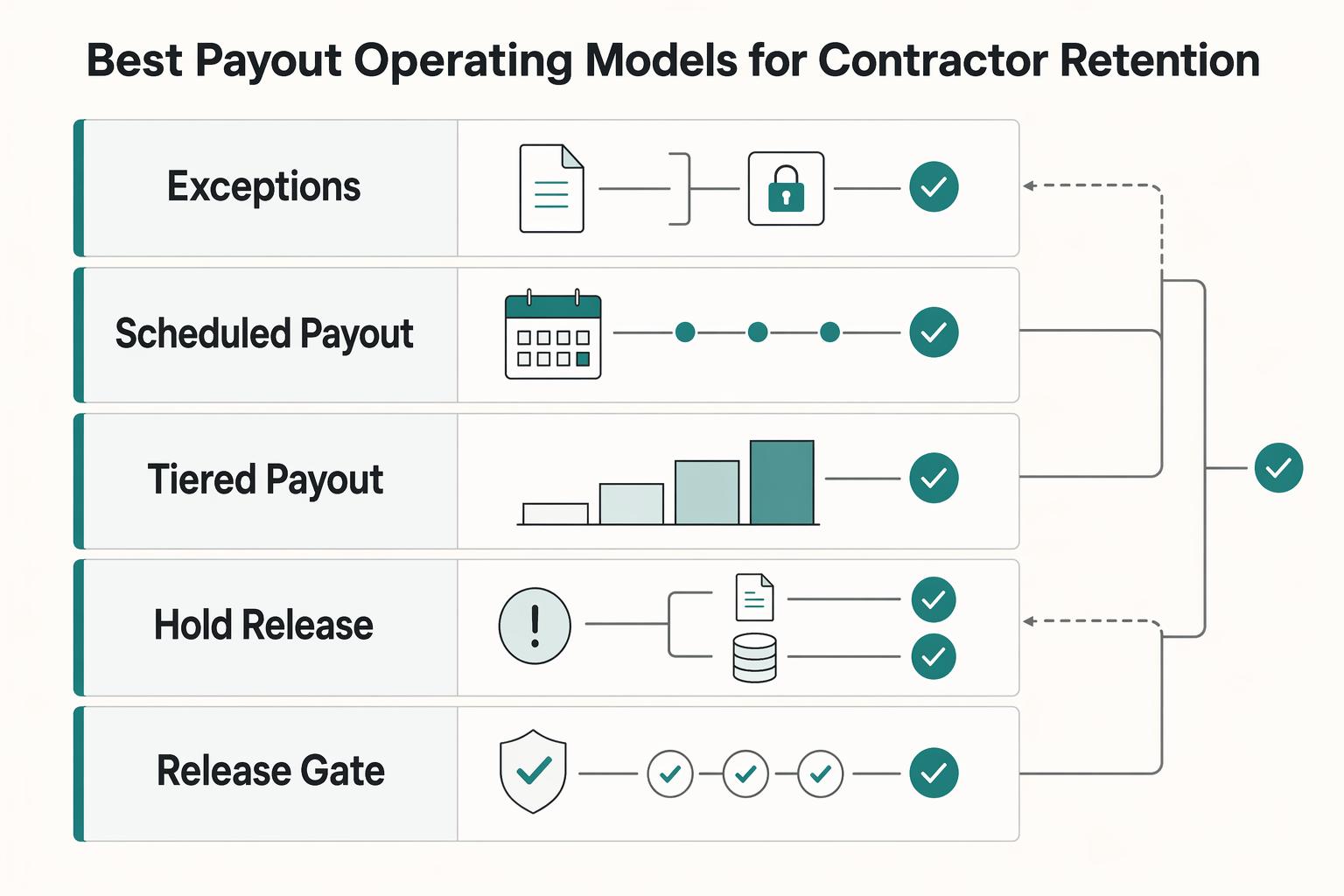
Bad Payouts Are Costing Your Supply in Two-Sided Platforms
Payout issues are not just an accounts payable cleanup task if you run a two-sided marketplace. They shape supply-side trust, repeat participation, and fill reliability. They can also blur the revenue and margin signals teams rely on.
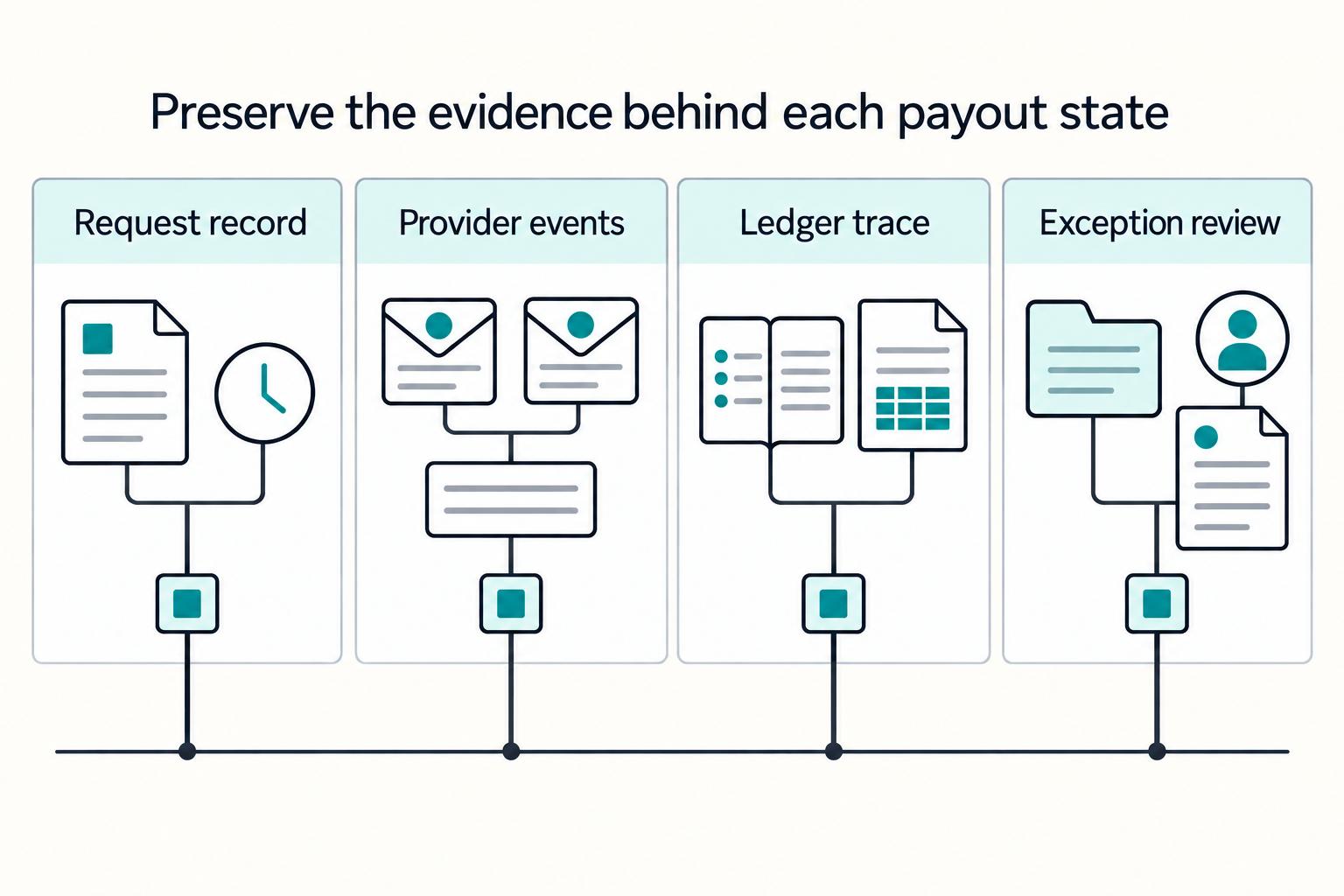
How Supply and Demand Dynamics Should Set Your Marketplace Payout Strategy
In a two-sided marketplace, payout strategy is not back-office plumbing. It can shape whether sellers stay active, whether transactions complete reliably, and whether buyers can find supply that is ready to transact.
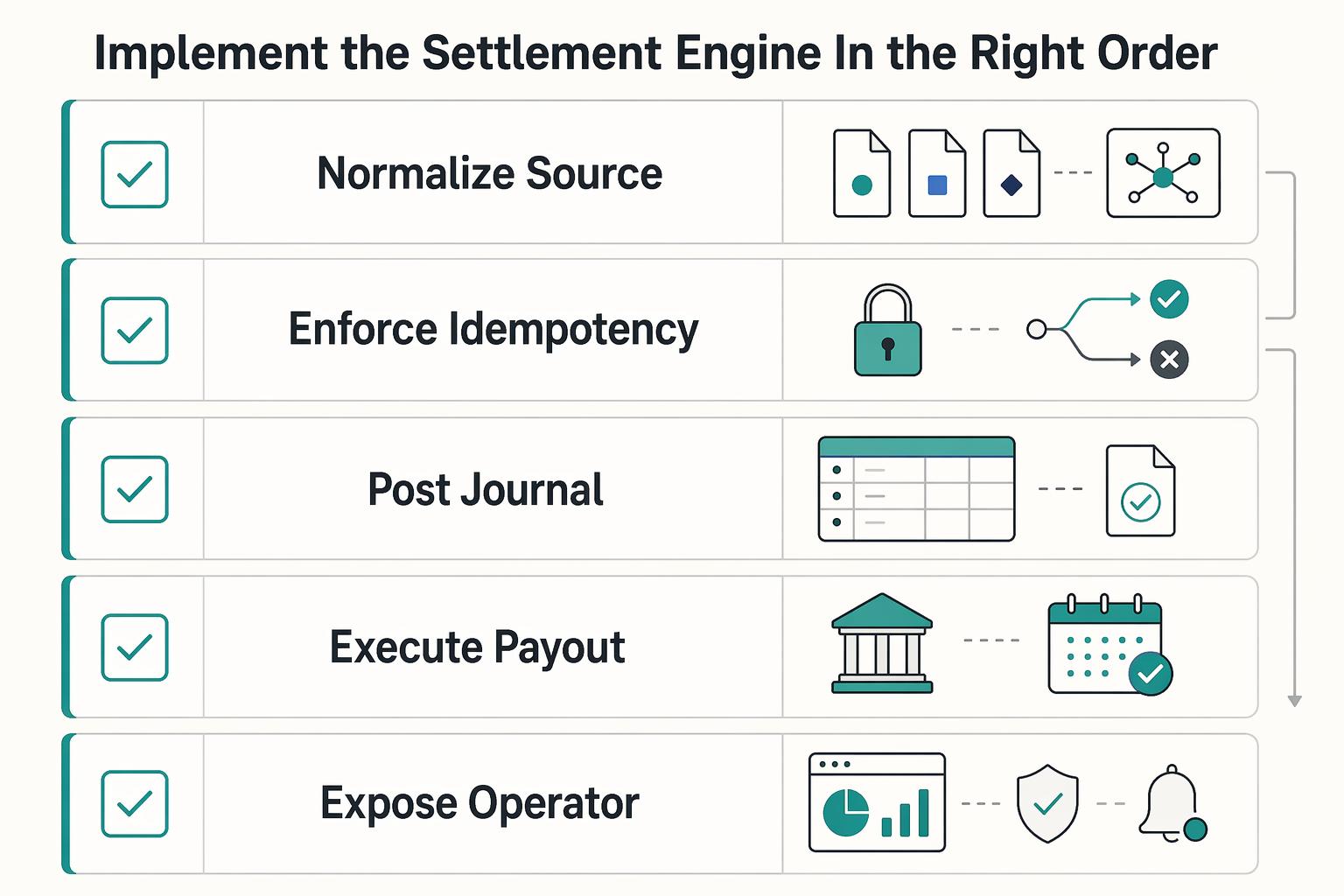
Automating DSP and SSP Settlements for Programmatic Advertising Payouts
In programmatic advertising DSP/SSP settlement flows, the hard part starts after the bid win. **Real-Time Bidding (RTB) sets impression pricing in milliseconds, but settlement determines whether finance, ops, and engineering can trust the money movement from buyer to publisher.**