
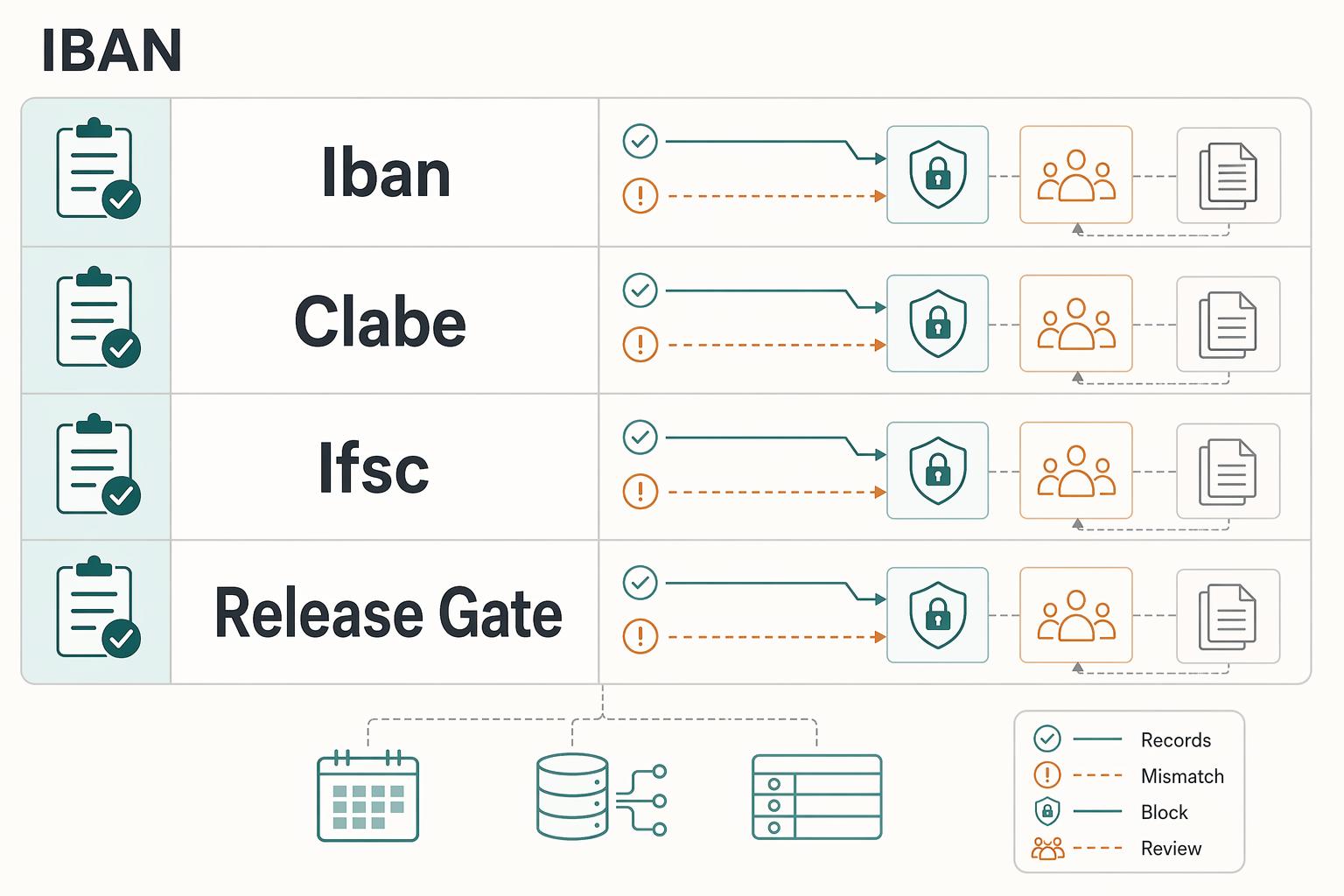
Quick Answer
Beneficiary data requirements by rail are the minimum recipient fields needed to route a payout correctly for a specific corridor, provider program, and payout moment. In practice, that usually means the beneficiary legal name plus the rail identifier such as IBAN, CLABE, IFSC, or, on some Brazil routes, CPF when mandated. Collect durable fields at onboarding, fetch transaction-specific requirements before payout, and block invalid structures before submission.
Beneficiary data requirements vary by payout rail#
beneficiary data requirements by rail refers to the recipient fields needed to route a payout correctly. If you searched that phrase, you may also have seen results about Railroad Medicare and other healthcare records. That is a different topic. Here, beneficiary data is about moving money across borders, not Medicare identifiers such as the Medicare Beneficiary Identifier, which CMS says must be protected and shared only for Medicare-related business.
- Start with the right meaning of beneficiary data
For a payout team, beneficiary data is the recipient information your provider or bank needs to make a payment land. In practice, that means the rail-specific beneficiary and account details required for the payment. The distinction matters because this article is about moving funds, while Railroad Medicare content is about healthcare administration for railroad workers and their families, not platform disbursements.
- Collect what the payout needs, not what might be useful later
You do not need a bigger form. You need the minimum field set that matches the rail, the market, and the payout moment. That matters because both GDPR Article 5(1)(c) and current CCPA guidance tie data minimisation to what is relevant and necessary for the stated purpose. If a rail does not require a field, do not ask for it just because it may help someday.
- Design around decision points, not just field storage
The practical question is not only what to collect, but when to collect it and who owns the check. Product should define the corridor-specific field set. Engineering should enforce validation and event logging. Payments ops should handle exceptions when a provider rejects a payout for beneficiary-data quality. Some fields belong at onboarding when they are stable across payouts. Others should be requested right before payout because they are corridor-specific or transaction-specific.
One useful anchor for the rest of this guide is the 2026 Global Wires Payments Formatting Requirements Guide. It frames beneficiary formatting as a way to help teams make timely and accurate payments around the world. Use that as the operating standard. If a field does not improve routing accuracy, compliance readiness, or exception resolution, treat it as a warning sign for over-collection.
What follows is a decision-oriented path through rail-specific field depth, validation rules, onboarding versus payout-time collection, and fallback choices when data quality breaks a transfer. Keep one working checkpoint in mind from the start: maintain a field inventory that maps each beneficiary field to its rail, purpose, collection step, and owner. That document reduces both payout returns from missing data and privacy exposure from collecting too much. If you want a deeper dive, read Cross-Border Payment Compliance: GDPR CCPA and Data Localization Requirements.
How to choose rails and data depth for your platform#
Choose the rail and data depth that improves payout reliability first, then limit collection to what that rail actually needs. For contractor, creator, marketplace, and embedded-payout teams, this usually means mapping each route to its required beneficiary identifiers and adding fields only when exception data shows a clear need.
- Map rail-specific identifiers before you design forms
Start with the addressing and eligibility fields tied to the route: IBAN, Mexico's 18-digit CLABE, India's IFSC (used in NEFT), and, in some Brazil flows, CPF. Treat these as payout-routing or jurisdiction fields, not general profile data.
- Set selection criteria before comparing rails
Use a scorecard that includes payout-failure impact, onboarding friction, GDPR/CCPA exposure, and support burden. Also weigh technical requirements, counterparties, acceptance, fraud concerns, and cost. A rail with fewer fields is not automatically better if it creates more rejects and manual work.
- Keep healthcare eligibility workflows out of this decision
If your workflow is about ASC X12 270/271 Medicare eligibility transactions, you are in a different lane from payout routing. This section is only about beneficiary data needed to move funds.
- Move fields earlier only when return reasons justify it
If repeated rejects, returns, recalls, or RFRO events trace back to missing beneficiary fields, shift those fields from payout-time collection to onboarding. Use your own return reasons, support tickets, and submission errors to decide when to deepen data collection.
If you are tightening policy and handling around these fields, see How to Structure a Platform Privacy Policy for Payment Data: GDPR CCPA and Global Requirements.
The 5 rail data profiles most platforms should implement first#
Start with five operational profiles that map payout rails to the minimum beneficiary data needed for reliable routing: IBAN, CLABE, IFSC, CPF-gated Brazil routes, and a wallet/stablecoin fallback where supported.
| Profile | Best for | Minimum fields to collect | Pros | Cons | Concrete use case |
|---|---|---|---|---|---|
| IBAN markets | SEPA and other IBAN-addressed bank payouts | Beneficiary legal name, IBAN, purpose/reference fields where required by corridor or provider program | Predictable routing when country and IBAN format align; one core identifier can keep forms shorter | Coverage and required fields still vary by provider and market; some programs also require details such as BIC or address data | Marketplace batch payouts to sellers across European IBAN markets |
| CLABE markets | Mexico bank payouts | Beneficiary legal name, CLABE | Strong pre-validation surface because CLABE is 18 digits and includes a 1-digit control digit | Strict numeric checks can block users early; support varies by provider and payout method | Contractor monthly payouts to Mexico-based suppliers |
| IFSC markets | India bank payouts, commonly NEFT-linked beneficiary setup | Beneficiary legal name, beneficiary bank branch name, IFSC, account number, account type | Predictable failure handling because baseline beneficiary details are collected before transfer initiation | More onboarding friction than single-identifier flows | Monthly contractor payouts to India when you want fewer payout-time data requests |
| CPF-gated rails using CPF | Brazil routes where provider program or rail requires tax-ID-linked conformity checks, including some Pix-related flows | Beneficiary legal name, selected rail credentials, CPF when mandated, purpose/declaration fields where required | Useful when tax-ID conformity is part of eligibility or name matching | Higher privacy and support sensitivity; CPF is not a blanket requirement for every Brazil path | Creator withdrawals in Brazil on a program that requires CPF-backed beneficiary checks |
| Wallet or stablecoin fallback | Urgent fallback disbursements where supported | Beneficiary legal name plus either bank account data or crypto wallet information, depending on payout type; purpose fields where required | Useful when the primary bank route is unsupported or repeatedly failing; some provider programs support stablecoins in more than 100 countries | Not universal; jurisdiction and provider rules vary sharply from bank rails | Urgent fallback disbursement when a bank-route retry would miss payroll or creator cash-out timing |
| Caveat | All five profiles | Coverage and required fields vary by market, provider program, and routing rules | Country-level credential specs help confirm required fields and validations | One provider spec is not a universal rulebook | Validate each corridor before launch |
Use the identifier strength to decide how early to collect fields. CLABE enables strong front-end validation because format and control-digit checks are explicit. IFSC setups are often operationally predictable, but they usually require more beneficiary details up front.
For SEPA-oriented routes, keep IBAN as the anchor and make extra fields conditional on your provider program. For Pix-related CPF/CNPJ conformity flows, check route requirements before payout creation and log the validation result. That keeps eligibility checks where they are required without over-collecting sensitive data.
Before enabling any new country corridor, snapshot your provider's country-level payout credential spec in the launch ticket so product, ops, and support share one current field and validation baseline.
IBAN, CLABE, IFSC, and CPF rules your forms must enforce#
Enforce identifier integrity as a hard gate, and reserve review for borderline conformity risk. Invalid structure should block immediately; potential name or conformity issues should go to review instead of creating a payout and waiting for a return.
| Identifier family | Hard-fail rules | Review path | Country/rail gate |
|---|---|---|---|
| IBAN | Require a two-letter country code, two check digits, and a BBAN component (up to 30 alphanumeric characters). Fail checksum = block. | If structure passes but beneficiary data looks inconsistent, send to review. | If the selected country/rail/provider spec does not support an IBAN route, block even when format is valid. |
| CLABE | Require exactly 18 numeric digits and a valid algorithmic control digit. Any failure = block. | Use review for surrounding beneficiary-data risk, not CLABE syntax. | If corridor/program expects different bank credentials, block CLABE submission for that route. |
| IFSC | Enforce the grounded positional rule: 5th character must be 0. If not, block. | If IFSC passes but beneficiary/account context is questionable, route to review. | Confirm the selected rail is NEFT-linked or otherwise compatible before allowing continuation. |
| CPF on CPF-gated Brazil rails | If the chosen rail requires CPF/Pix-key conformity, block payout creation until verification succeeds. | After required verification passes, possible name-match issues can go to review. | Do not require CPF for every Brazil payout path; enforce only where the selected rail/program requires it. |
For auditability, log the same evidence for every validation event: what field was checked, which rule was applied, selected country and rail, timestamp, service/provider endpoint, and the outcome (pass, block, or review). If a payout is later returned, append the provider return reason and timeline state changes so the decision trail is defensible across ops, support, and compliance.
What to collect at onboarding vs right before payout#
Use staged collection: capture durable beneficiary data at onboarding, then collect corridor- and transfer-specific fields at payout initiation.
- Durable profile fields at onboarding
Collect data that should persist across payouts: beneficiary legal name, beneficiary country, and the core rail identifier for corridors you support (for example IBAN, CLABE, or account details used with IFSC). Validate account number and account name early, and resolve required creation fields by corridor instead of relying on a hardcoded global form. beneficiaryRequiredFields is corridor-aware (bank_country, currency, beneficiary_country), so your onboarding schema should be too.
- Transaction-scoped fields at payout initiation
Collect transfer-purpose and country-specific execution details at payout time, not at signup. Provider requirements can vary by region, transfer method, and corridor, and some mandatory details are only known at transfer request time. Your payout preflight should fetch the current required-field set before submission.
- Recommended order of operations
Create or verify the beneficiary first, then initiate the transfer. That sequence reduces avoidable execution failures and matches common provider flow requirements. Also plan for timing: beneficiary approval can take up to 5 minutes before transfer creation can proceed.
- When to re-verify
Re-verify when beneficiary profile data changes, when you see repeated beneficiary-data-related returns, when policy changes affect required data, or when internal risk flags are raised. Treat bank-detail edits as a hard trigger: if details change during approval, block payment until re-validation completes. This is the tradeoff in practice: full upfront collection can reduce payout-time surprises but adds onboarding friction; staged collection protects activation, but only with strict preflight checks and clear validation logs.
Failure modes and fallback decisions that keep payouts moving#
Keep payouts moving by classifying failures up front and assigning one decision path to each: block and correct, review, hold and escalate, or use a pre-approved fallback route.
| Failure class | What to check | Decision |
|---|---|---|
Invalid rail identifier (IBAN/IFSC/CLABE/account details) | Bank-account data quality before submit; for IBAN, validate against country-specific format rules from the SWIFT registry authority | If format fails, block payout and prompt correction |
| Beneficiary-name mismatch | Name-account verification result | If mismatch or low confidence, send to review or request legal account-name confirmation |
Missing tax ID or compliance-critical field (CPF/CNPJ, purpose details where required) | Corridor-required compliance fields | If required data is missing, hold and escalate instead of retrying |
| Unsupported route at execution time | Provider return reason and route support for country/currency/program | If an approved fallback rail exists, use it; otherwise stop and collect corrected instructions |
Retry behavior must be idempotent. Repeating the same request with the same idempotency key should return the same result rather than create a duplicate disbursement, and keys should be retained long enough for reconciliation (at least 24 hours). Also separate async uncertainty from confirmed returns: a timeout or 500 means retry the same request; a returned payout means read the return reason, correct recipient details if needed, then create a new payout. Returned payouts are often visible within 2-3 business days.
For every off-happy-path payout, require one exception pack: original payload, pre-submit validation results, provider return reason (including ACH Return Reason Code where applicable), and a named next-action owner.
Privacy, retention, and access controls for beneficiary data#
Treat privacy controls as part of payout reliability: collect only what each rail and corridor actually requires, protect it at the ops touchpoints, and delete it when its purpose ends.
- Collect by corridor, not by fear
Under GDPR Article 5 and CCPA section 1798.100, only collect fields that are reasonably necessary for the rail, corridor, and disclosed purpose. Required beneficiary details vary by payout corridor, so avoid one giant form that captures everything "just in case." What matters: each field in your schema should map to a documented reason: corridor, payout purpose, and whether it is required at onboarding or only at payout time.
- Protect the data where ops actually touches it
Make masked display in internal tools, encryption for sensitive fields, and role-based edit/export permissions launch blockers. GDPR Article 32 explicitly includes encryption and pseudonymisation as security measures, and RBAC keeps access aligned to defined job functions. What matters: verify controls in the ops UI and in export paths, not only in storage.
- Retain by data class, then delete on purpose
Do not apply one blanket retention timer across all beneficiary data. Beneficiary identifiers, verification artifacts, and audit logs serve different purposes, so they need separate retention rules and deletion triggers. What matters: assign an owner per data class and define clear deletion or anonymisation triggers so personal data is not kept longer than necessary.
- Require pre-launch legal and security sign-off
Before a corridor goes live, run a joint review of the field inventory, transfer paths, and every vendor or subprocessor handling beneficiary data. Under GDPR Article 28, processors need prior controller authorization before engaging another processor. What matters: if legal cannot verify subprocessor authorization or security cannot verify transfer paths and access/export controls, do not launch.
This pairs well with our guide on When Freelancers Need a Data Processing Agreement and What to Redline First.
Implementation checklist for product, engineering, and finance ops#
To reduce payout surprises, assign clear owners and lock these controls before launch.
- Product
Make corridor mapping your first gate: required payment-account details vary by payout corridor, so collection UX should be corridor-specific, not one generic form. Define where each field is collected (IBAN, Mexico CLABE, India IFSC, Brazil CPF) and validate known formats where applicable (CLABE 18 digits, IFSC 11-digit format). What matters: only require a field in a corridor where the rail or process actually needs it.
- Engineering
Ship schema governance and replay safety early: version every schema and enforce compatibility checks before adding corridors or fields. Use idempotency keys on create/update requests so retries do not execute the same operation twice, and make webhook consumers deduplicate events because duplicate delivery can occur. What matters: keep replay and audit data tied to the request path so retries and status handling are traceable.
- Finance and ops
Define approval thresholds, exception queues, and reconciliation exports before the first live batch. Assign ownership for failed or returned payouts so missing beneficiary data, validation failures, and provider return reasons have a clear next action. Build reconciliation from payout reports or transaction logs used for compliance and troubleshooting. What matters: treat asynchronous status changes as expected operating behavior, not exceptions.
- Cross-functional
Run one corridor end to end before broad rollout, including create, reviewed-stage handling, status updates, failure handling, and reconciliation. In batch flows, an accepted request is not the same as a settled payout, so test the full lifecycle and document rollback criteria in advance. What matters: predefine rollback triggers for repeat duplicate-event processing, unresolved return-code handling, or reconciliation gaps.
Conclusion#
-
Collect the minimum that makes the rail executable. The right answer is not a giant beneficiary form. It is a corridor-aware field set that asks for the beneficiary data required for that route, plus any truly required local data only when that route needs it. For
IBAN, that means respecting the two-letter country code, two check digits, and BBAN structure. For Mexico,CLABEis 18 digits. For India,IFSCis an 11-character bank-branch code. For Brazil,CPFis 11 digits. Precision helps reduce avoidable format and completeness rejects while limiting privacy risk from collecting data just in case. -
Treat validation and privacy controls as part of payout reliability, not separate compliance work. A form that accepts anything and relies on downstream provider rejection often pushes avoidable work into ops. If the selected rail requires beneficiary account data before submission, enforce that before the payout is created. If a route has pre-registration rules, capture those fields early enough that you are not discovering the delay at disbursement time. Pair that with
GDPRandCCPAdiscipline: collect only what is necessary for the stated purpose, and make collection, use, retention, and sharing reasonably necessary and proportionate. Sensitive beneficiary fields should be masked where possible, and view/edit access should be limited through role-based access control rather than broadly exposed across payout operations. -
Build the decision artifacts before you scale corridor count. A practical next move is to create two working docs: a rail comparison table and a validation decision matrix. In the comparison table, list each corridor or provider route, the required beneficiary fields, when those fields are collected, and whether pre-registration or fallback options exist. In the decision matrix, separate hard blocks from review cases: malformed
CLABE, wrong-lengthCPF, or anIFSCthat fails structure should stop immediately; an unsupported route at execution time may justify an approved fallback only if the alternate rail's required fields are already present and validated. Once those docs exist, you can roll out corridor by corridor and check whether return reasons are shifting from missing data to something else.
If you keep one rule from this guide, make it this: design for the rail, not for an abstract beneficiary profile. That turns this from a vague compliance topic into a manageable product and operations decision.
Frequently Asked Questions
What beneficiary fields are mandatory by payment rail?
There is no universal field list for every payout flow. Mandatory fields depend on the payment rail, corridor, provider rules, and sometimes counterparty type. In practice, a common minimum is beneficiary legal name plus the rail identifier, with local fields such as CPF only when that route requires them.
How do `IBAN`, `CLABE`, `IFSC`, and `CPF` differ in collection and validation?
These identifiers do different jobs, so they should not share one validation rule set. IBAN uses a country code, check digits, and BBAN structure; CLABE is 18 digits; IFSC is an 11-character bank-branch code with 0 in the fifth position; CPF is an 11-digit Brazilian taxpayer identifier. Log whether the failure was wrong length, wrong character class, or rail-country mismatch.
Should we collect beneficiary data at onboarding or only at payout time?
Use staged collection. Capture durable fields such as beneficiary legal name, beneficiary country, and the core rail identifier at onboarding, then collect transfer-purpose and other corridor-specific execution details at payout initiation. If repeated returns trace to one missing field, move that field earlier.
What causes the most payout failures tied to beneficiary data quality?
Frequent failures come from incorrect routing or beneficiary information. Missing tax ID or other compliance-critical fields can also stop execution for corridors that require them. Keep one validation record per attempt so ops can see whether the problem started in your form or on the downstream route.
When should we hard-block a payout versus route it to manual review?
Hard-block structural failures and missing fields that the selected route requires. Examples in the guide include an invalid CLABE, an IFSC that fails its structural rule, or a required CPF that is missing for the chosen rail. Route cases to review when structure passes but risk remains, such as a beneficiary-name mismatch or an unclear provider return.
How should we design fallback rails when the primary route rejects beneficiary data?
Use a fallback rail only when its required fields are already collected and validated. If the primary route failed because the identifier itself is malformed, do not auto-retry on another rail with the same bad data. Keep the original payload, validation result, provider return reason, and next-action owner attached to the payout record.
Why do some search results mention `Railroad Medicare` and `Medicare Beneficiary Identifier` when our use case is platform payouts?
Because beneficiary is also a Medicare term, search results often skew toward healthcare content. In that context, MBI means Medicare Beneficiary Identifier, and CMS says it must be used for Medicare-related business. That is separate from platform payout beneficiary data.
Try a related tool
Researched and edited by the Gruv editorial team. Gruv builds cross-border billing, payouts, and finance-operations software for global businesses.
Sources
Includes 1 external source outside the trusted-domain allowlist.
- cms.gov/training-education/partner-outreach-resource...trusted
- cppa.ca.gov/regulations/pdf/ccpa_statute.pdftrusted
- csrc.nist.gov/glossary/term/role_based_access_controltrusted
- eba.europa.eu/sites/default/files/2024-05/612f03de-965a-41...trusted
- legislation.gov.uk/eur/2016/679/article/5trusted
- rrb.gov/Benefits/Medicare/GeneralInfoMedicare/RB20trusted
- jpmorgan.com/content/dam/jpm/cib/complex/content/treasury...external
Educational content only. Not legal, tax, or financial advice.
Related Posts
Cross-Border Payment Compliance: GDPR CCPA and Data Localization Requirements
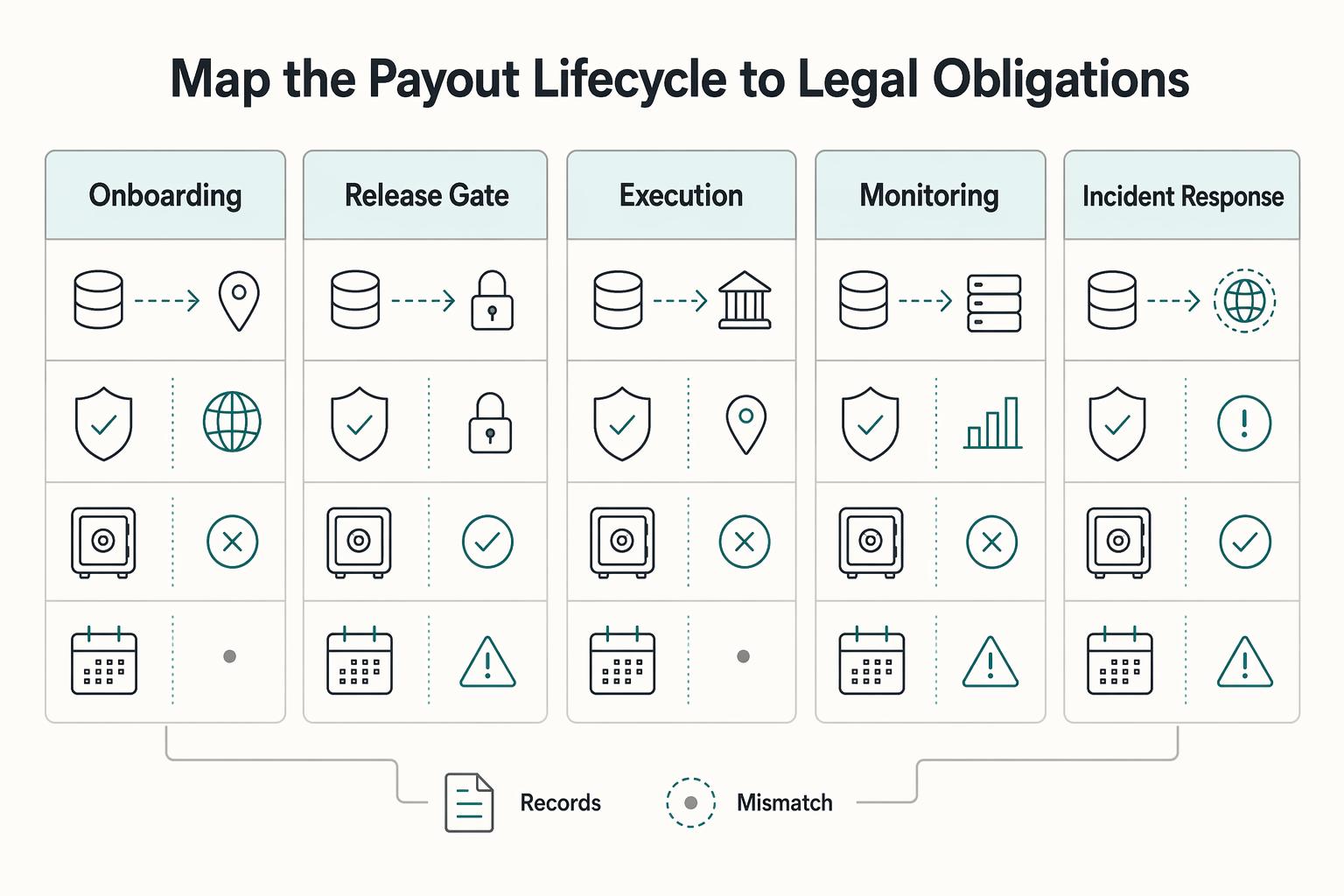
Cross-border payment compliance is two linked jobs, not one checklist: privacy-transfer compliance and payment-control compliance. In the same payout flow, you may need to manage cross-border personal data transfer obligations under GDPR and separate privacy obligations under CCPA. You may also need to run KYC and AML controls that can affect onboarding, payment release, holds, and escalation.
Vendor Portal Requirements Checklist for Platform Payment Ops
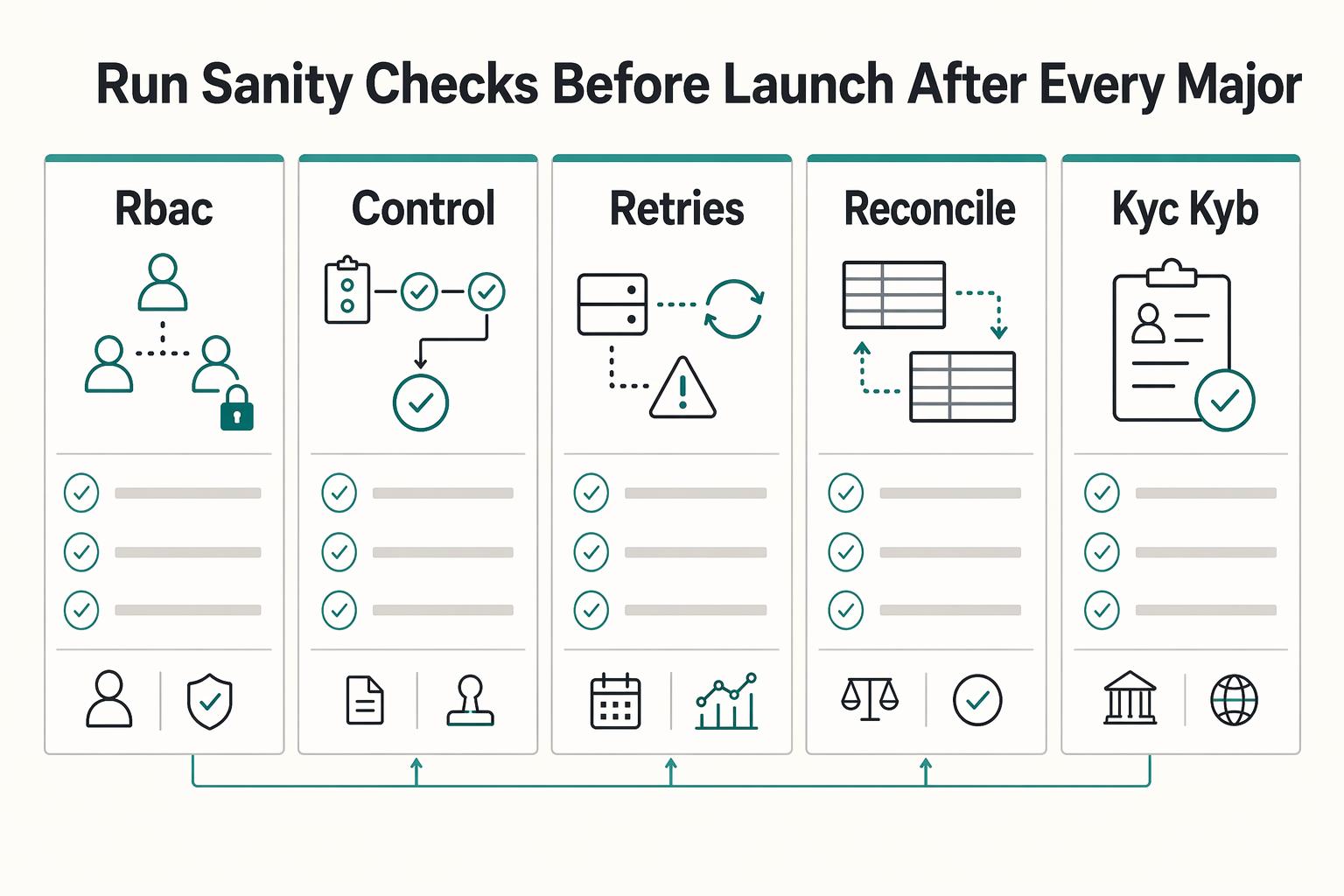
A useful **vendor portal requirements checklist** starts with money movement, not screen mockups. Define which actions can create an obligation, release funds, or only capture data. Then set the control, evidence, and reconciliation rules before finance, ops, and product start building inside the same boundary.
Structuring a Platform Privacy Policy for Payment Data Across GDPR and CCPA/CPRA
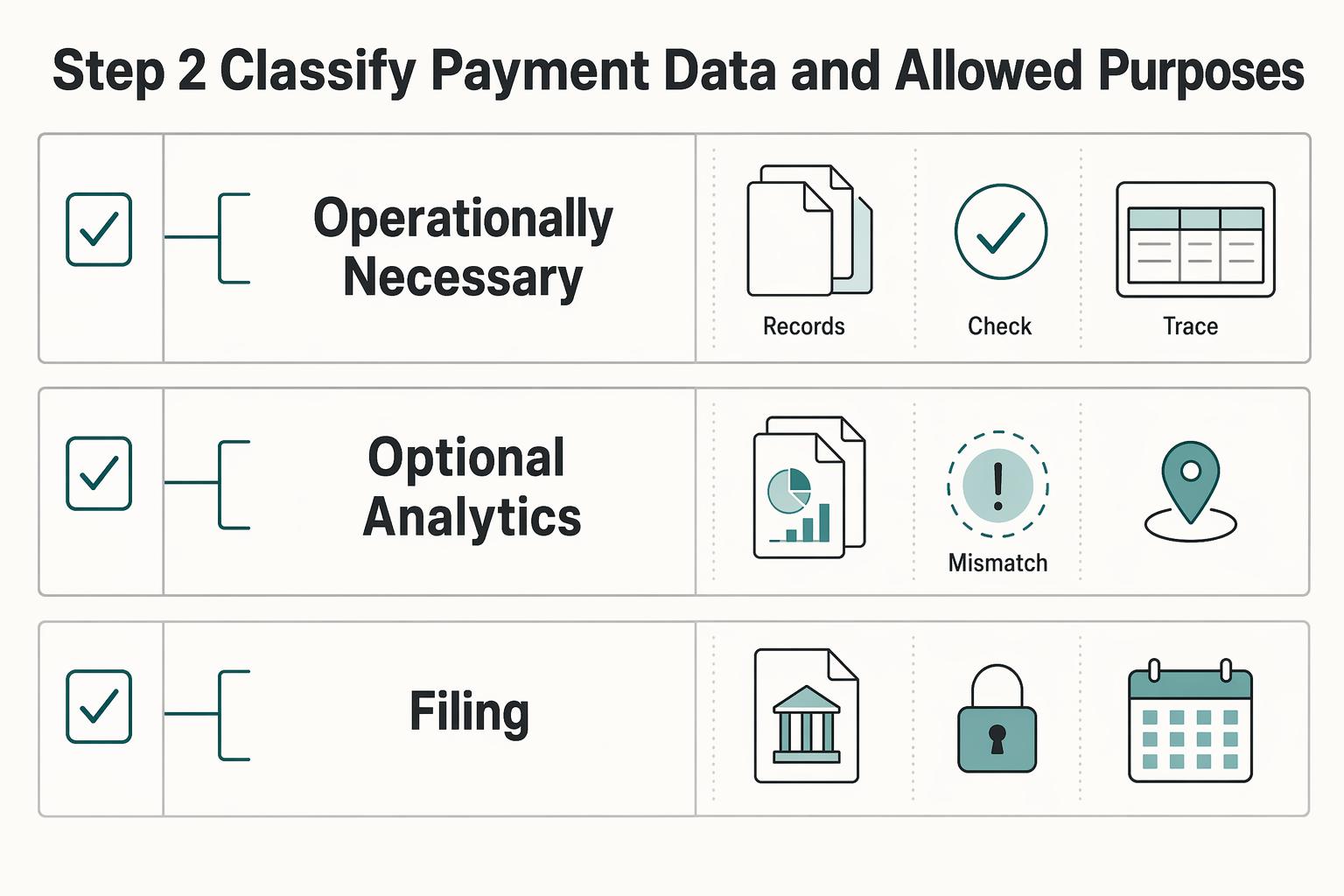
**Some teams keep GDPR and California's CCPA/CPRA payment-data disclosures in one policy framework, but that alone does not guarantee compliance; the policy still has to match how your teams actually process data and handle rights in practice.** Treat the policy as an operating document, not a legal summary.