
Quick Answer
Choose a fee structure by first mapping net economics from checkout to payout, then assigning fees to the side that can absorb friction without breaking liquidity. For platform fee structures price marketplace decisions, compare seller-paid, buyer-paid, and split models against buyer conversion, contractor retention, and trust cost. Approve only after transaction-level reconciliation ties fee math to ledger exports and payout statements, and launch with staged cohorts plus rollback triggers.
What a Sustainable Marketplace Fee Model Needs to Do#
Pricing a marketplace is a tradeoff, not a lookup exercise. If you only compare Seller Fees, Buyer Fees, and Payment Processing Fees as labels, you can protect your headline commission and still miss impacts on contractor retention, checkout conversion, or your real Platform Take Rate after refunds, disputes, payouts, and processor costs.
Before you start#
Use public fee examples as context, not targets. Sources like CS-Cart, Fleexy, and Memberstack are useful because they show common fee shapes and tradeoffs, but they do not give you a universal benchmark for what your marketplace should charge. For example, one public Fleexy guide cites a directional 10 to 30% commission range, and CS-Cart notes rough Stripe and PayPal processing costs around 2 to 3.5% plus a fixed fee. Those are pattern signals, not a number to paste into your pricing page.
- Start from effective take rate, not contract commission.
A seller-side rate is only one part of the money flow. CS-Cart gets the starting point right: effective take rate is net platform revenue after processing, payouts, refunds, disputes, and compliance, not just the rate written into seller terms. Your first checkpoint is simple: the math should match what actually lands in your ledger and payout statements, not just what appears in a dashboard.
- Choose the fee payer based on risk, not habit.
There is no fee structure that always wins. Seller-paid fees, buyer-side Service Fees or Buyer Protection Fees, and split models all have real upsides and real downsides. The useful rule is to identify which side of your marketplace is more fragile before you change pricing. If contractors are already payout-sensitive, a pure seller-side increase may be the wrong first move. If buyer conversion is weak, visible buyer fees may create more resistance than they solve.
- Treat fee changes as an operating change, not a pricing tweak.
This is not only a finance decision. Fee choices spill into checkout copy, invoicing, support, reconciliation, and payout operations. One risk is rolling out a new charge without aligning labels across buyer and contractor touchpoints, which can make the amount feel hidden or inconsistent. Make one fee decision at a time, verify it against real transaction behavior, and watch the response before you scale it.
That is the lens for the rest of this guide. The question is not "what do marketplaces usually charge," but "which fee structure can your marketplace explain clearly, operate cleanly, and defend in net economics."
For a step-by-step walkthrough, see How to Handle VAT on Platform Fees Across the EU: A Marketplace Operator's Guide.
Gather the inputs before you change pricing#
Start by locking your baseline inputs before you debate fee design. Without that baseline, teams optimize the headline commission and miss drag from processor mix, refunds, disputes, and payout behavior.
| Public fee example | Published rate | Context |
|---|---|---|
| Stripe domestic card transaction | 2.9% + 30¢ | Per successful domestic card transaction |
| PayPal Checkout | 3.49% + fixed fee | Published as a separate line |
| Standard credit/debit card payments | 2.99% + fixed fee | Published as a separate line |
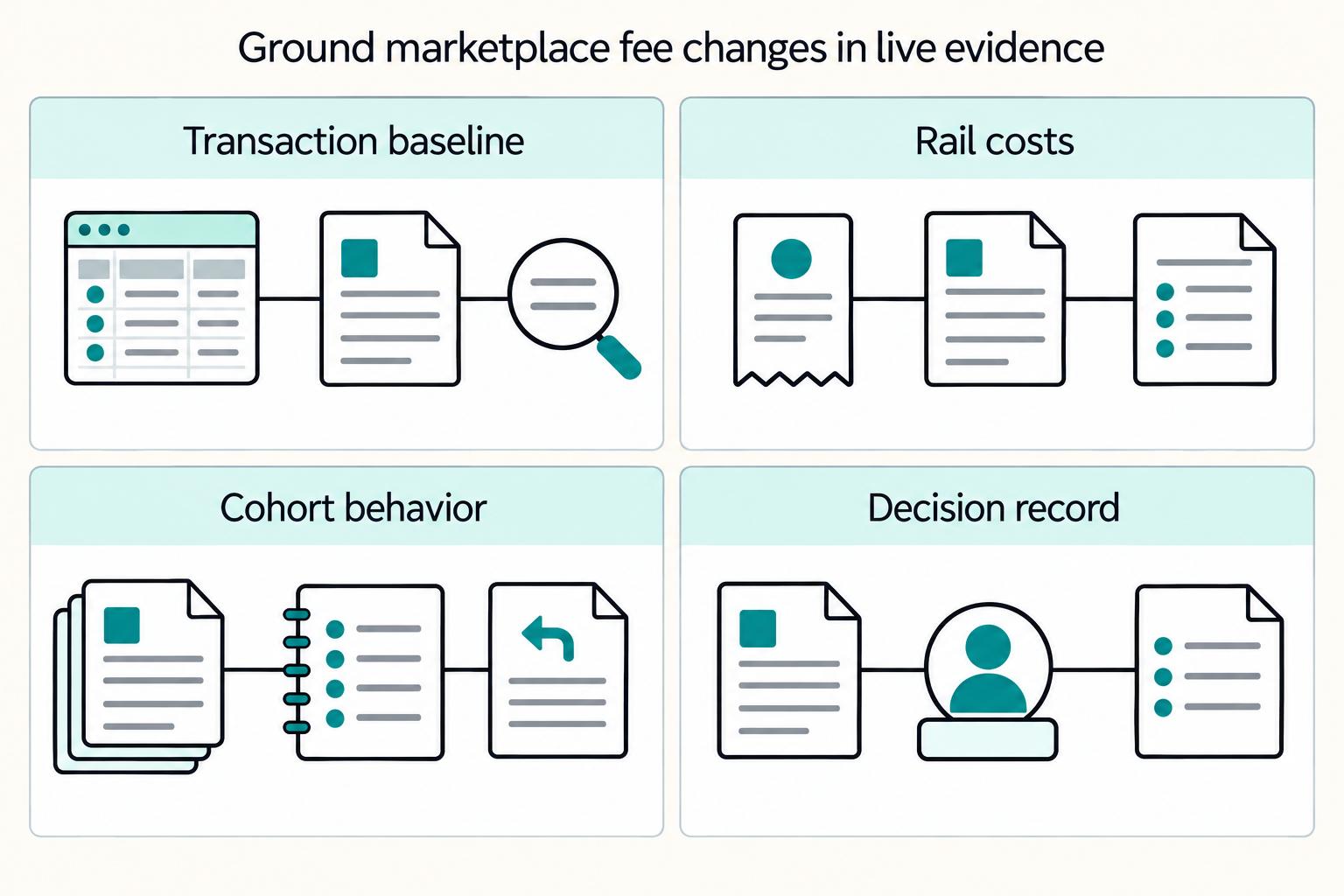
- Build a one-page evidence pack from live transaction data.
Include: current GMV, current Platform Take Rate, current commission logic, and Payment Processing Fees by rail. Keep GMV separate from retained platform revenue. Model Stripe, PayPal, and bank transfer separately where supported instead of using one blended assumption. As public baselines, Stripe lists 2.9% + 30¢ per successful domestic card transaction, and PayPal publishes separate lines such as 3.49% + fixed fee (PayPal Checkout) and 2.99% + fixed fee (standard credit/debit card payments).
Validate your model against real exports, not just dashboard summaries. If you use Stripe, use payout reconciliation reporting to confirm the modeled amounts match settled amounts.
- Segment buyers and contractors by behavior before changing fees.
Do not treat the marketplace as one average user. Build cohorts for repeat usage, checkout completion, payout frequency, and dispute/refund incidence. Cohort analysis gives you a clearer view of who is most likely to react to each fee change.
Blended averages hide risk. A cohort with low checkout completion may be less tolerant of visible Service Fees, while a cohort with frequent payouts may be more sensitive to seller-side deductions.
- Pull tax and policy constraints upfront, especially if Canada is in scope.
If you charge Service Fees or Marketplace Service Charges in Canada, review GST/HST treatment before publishing pricing language. Canada's digital-economy rules introduced obligations effective July 1, 2021, including cases where businesses need to register for a GST/HST account and charge, collect, and remit GST/HST. Fee treatment is not determined by label alone, so complete jurisdiction review early and keep that memo with the pricing pack. For a deeper breakdown, see Canada GST/HST for Platform Fees: What Marketplaces Need to Charge Track and Report.
- Set decision ownership before checkout copy changes.
Define approval flow across product, finance, and ops before rollout. At minimum, set clear ownership for the pricing decision, a reconciliation checkpoint, and a support-readiness checkpoint so fee labels, invoices, and payout communication stay aligned.
With these inputs in place, you can compare fee structures on evidence instead of preference. Related: Building Tiered Commission Structures for Marketplace Performance-Based Fees.
Compare fee structures with a decision matrix#
Compare the three models on one sheet before you touch pricing. The model that looks strongest in margin can still fail on conversion, retention, or trust in execution.
Step 1 Build a matrix around the decision drivers#
Use these columns: margin capture, buyer conversion risk, contractor retention risk, implementation complexity, and trust cost. Keep trust cost separate, because a fee can improve economics and still create backlash if it feels hidden, late, or inconsistent across records.
Use public examples as pattern signals, not templates. eBay documents a seller-paid final value fee when an item sells. Mercari documents buyer-paid charges, including a service fee and, from January 6, 2025, a 3.6% Buyer Protection fee on item price plus buyer-paid shipping. Swappa documents split fees at 3% buyer and 3% seller. Eneba describes a service fee as a service charge, and Kinguin states service fees are charged at purchase and shown at checkout.
| Model | Public pattern signal | Margin capture | Buyer conversion risk | Contractor retention risk | Implementation complexity | Trust cost |
|---|---|---|---|---|---|---|
| Seller-paid fee | eBay final value fee when item sells | Medium to high | Low to medium | High if seller payout is already tight | Low to medium | Usually low when disclosed clearly in seller terms and payout records |
| Buyer-paid fees | Mercari buyer fees; Kinguin checkout service fee; Eneba service-fee language | High | Medium to high, especially if shown late | Low | Medium | High when the charge feels like a surprise |
| Marketplace fee splitting | Swappa 3% seller fee + 3% buyer fee | Medium | Medium | Medium | High | Medium when both sides see clear fee labels early |
Step 2 Score complexity and trust from the real transaction flow#
Score the model from the full path, not a mock: listing price, checkout total, invoice, refund, payout, and support explanation. Split models can be commercially balanced, but they are harder operationally because both sides see charges and both sides need clear, consistent wording.
Run one real or test transaction per model and verify the fee naming is consistent across checkout, invoice, and ledger-facing outputs. If labels drift between surfaces, trust cost is high even when margin improves.
Late disclosure is the main risk to watch. Buyer-side fees often protect seller payouts, but they can trigger the strongest pushback when they appear at the end of checkout. A 1stDibs earnings-call excerpt captures the mechanism: "By presenting a single, transparent, fully landed cost earlier in the funnel, we will remove the primary hurdle to conversion."
In March 2026, the FTC said advertised prices must include all mandatory fees in the total shown. That does not choose your fee model, but it is a strong signal against fee presentation that feels detached from the displayed total.
Step 3 Use the matrix to eliminate weak-fit models#
If seller retention is your fragile point, do not default to pure seller-paid just because it is easier to run. If buyer conversion is already weak, treat visible buyer-side charges with caution, especially when they are introduced late.
If models score close, split fees are worth serious consideration because they distribute the burden across both sides. Swappa's explicit 3%/3% structure is a clear reference. The tradeoff is execution: checkout, invoices, refunds, and payout statements must stay aligned or the structure stops feeling fair.
If someone cites Facebook Marketplace or G2A during planning, treat it as a prompt to pull current first-party fee documentation before scoring. Unsupported comparisons create false confidence.
The matrix should narrow your options. Next, decide who should carry the fee in your context. This pairs with Country Rules for Late Fee Automation in Marketplace Invoices.
Choose who pays with explicit if-then rules#
After the matrix, make the payer-side decision directly. In a two-sided market, you are choosing a price structure, not just a total price, so charge the side that can absorb friction without breaking liquidity.
| Condition | Article guidance | Specific check |
|---|---|---|
| Contractor churn is your main risk | Bias toward buyer-paid charges or Marketplace Fee Splitting | Model before-and-after net payouts for your most price-sensitive cohort |
| Buyer conversion is already weak | Test controlled seller-side recovery first | Do not stack visible Buyer Fees and Buyer Protection Fees at checkout |
| Low-ticket transactions make processor drag hurt | Test splitting instead of pushing the full burden to one side | Model at least three real basket sizes across your processor mix |
| Before launch | Set maximum perceived fee shock for buyers and maximum payout haircut for contractors | Require every pricing proposal to show those values with one sample checkout and one sample payout statement |
Step 1 Protect supply first when contractor churn is the binding risk#
If contractor churn is your main risk, avoid leading with a pure seller-side increase. Bias toward buyer-paid charges or Marketplace Fee Splitting so you do not concentrate all recovery in contractor payouts.
Use a simple check before approval: model before-and-after net payouts for your most price-sensitive cohort. If the new deduction makes low-margin work unattractive, treat that as a red flag even when blended margin improves. A split model can still create pressure, but it distributes the burden across both sides; Swappa is a clear pattern signal because it explicitly splits fees between buyers and sellers.
Step 2 Keep buyer-side fees out of a weak checkout#
If your buyer conversion is already weak, do not stack visible Buyer Fees and Buyer Protection Fees at checkout. Extra costs are a documented abandonment driver, and one cited summary reports that 48% of US adults abandoned carts because extra costs (shipping, tax, fees) were too high.
In that scenario, test controlled seller-side recovery first, such as Final Value Fee or Flat Selling Fee adjustments, before you add a late buyer surcharge. If you do charge buyers, disclose the fee early and keep one stable fee label across listing, cart, invoice, and receipt so support and reconciliation stay aligned.
Step 3 Split fees when low-ticket orders make processor drag hurt#
For low-ticket transactions, split fees are often the safer default because processor pricing includes fixed components. Stripe lists 2.9% + 30¢ per successful domestic card transaction, and PayPal lists rates such as 3.49% + fixed fee and 2.99% + fixed fee, so effective burden rises as order value falls.
Model at least three real basket sizes across your processor mix and calculate effective processor rate by order value. If fixed-fee drag takes too much of small orders, test splitting instead of pushing the full burden to one side. If needed, use Marketplace Fee Splitting: How to Automatically Deduct Platform Commission Before Paying Sellers.
Step 4 Lock one guardrail per side before launch#
Before launch, set two non-negotiable guardrails: maximum perceived fee shock for buyers and maximum payout haircut for contractors. Define both in advance, then require every pricing proposal to show those values with one sample checkout and one sample payout statement.
This prevents spreadsheet-only decisions. If the buyer total feels surprising or contractors cannot reconcile deductions in payouts, the payer-side choice is wrong for your current stage.
Once payer side is set, validate that economics still hold through checkout, invoicing, refunds, and payouts. Related reading: How to Calculate LTV in a Two-Sided Marketplace for Buyer, Seller, and Platform Decisions.
Model true economics from checkout to payout#
Your pricing is only trustworthy if it reconciles from checkout through payout and reversals, not just in a dashboard. Keep Platform Take Rate, processor costs, and reversal impact as separate lines, then require transaction-level reconciliation before launch.
Step 1 Report economics in layers, not one blended metric. For each cohort or pilot segment, show these outputs side by side:
- Gross marketplace fee charged
- Net revenue after Payment Processing Fees
- Net revenue after refunds, disputes, and other reversals
This keeps pass-through processor costs from being mistaken for retained revenue. For cross-border flows, model currency conversion explicitly: Stripe notes FX occurs when the starting and destination currencies differ, and PayPal documents a conversion spread plus possible international commercial fees.
Step 2 Reconcile by lifecycle event, not month-end averages. Trace one order through the full sequence: invoice created, payment captured, fee recognized, payout executed, and any later reversal.
Use processor source records as the baseline. Stripe recommends balance transactions for reporting balance activity and creates them for every flow into or out of the Stripe balance. On Adyen, use the Settlement details report for transaction-level reconciliation, and include the Monthly invoice for full monthly reconciliation.
Step 3 Pressure-test edge cases before sign-off. Do not approve economics based only on clean, successful payments. Test with real samples for:
- Partial refunds, including multiple refunds on one charge (without exceeding the original charge amount)
- Delayed-notification methods that remain pending before success or failure
- Failed or returned payout paths
- Cross-border flows where capture, settlement, and payout timing differ
This catches margin drift that appears after capture because settlement timing and reversals change what is actually available.
Step 4 Make finance sign-off evidence-based. Approve only when fee math ties to ledger exports, processor reports, and the seller-facing payout statement. If you cannot trace one transaction end to end - charge, fee booking, processor deduction, payout, and any refund or reversal - pause the rollout.
Once the economics hold at transaction level, rollout order matters more than most teams expect.
Roll out pricing changes in the right order#
Do not switch new pricing on for everyone at once. The safer sequence is staged exposure with a fast rollback path: internal dry run, limited pilot, monitored expansion, then full launch.
Step 1 Dry run behind a flag before customer exposure. Use feature flags to expose the change to internal users first, then a very small cohort, then wider groups. This matches documented staged exposure patterns and gives you a quick off-switch if something breaks. Before pilot, verify one test transaction shows the same fee composition across checkout, receipt, seller statement, and payout preview, with consistent labels such as Service Fees, Buyer Protection Fees, and Commission.
Step 2 Pilot on a limited cohort, not the full market. Use a canary-style rollout so only a subset is affected first. Keep an unchanged control group so you can compare conversion, contractor acceptance, and support volume against baseline. Choose a cohort you can isolate cleanly; if the test is too small, signal is noisy, and if it is too broad, you are effectively doing a public launch.
Step 3 Update fee surfaces and communication at the same time. Ship pricing logic and customer-facing language together across checkout, help content, invoices, dashboards, and notices. Where upfront-pricing rules apply, include known mandatory fees that can be calculated upfront in the total price shown upfront. Publish a plain-language change notice with a before/after charge breakdown and the effective date.
Step 4 Expand only with explicit rollback triggers. Define stop conditions before expansion, then ramp traffic while monitoring for regressions. If trigger conditions are hit, roll back immediately using the preplanned switch. Operators have had to reverse fee changes after backlash or weak outcomes, which is exactly why rollback should be pre-committed rather than improvised.
A rollout is only as strong as the signals you monitor after real users see the new pricing. Related reading: How Platform Teams Use Promotional Pricing Without Eroding LTV.
Track the signals that tell you if pricing is working#
Pricing is working only if margin improves without weakening conversion, contractor activity, or trust. If net Platform Take Rate rises while those signals fall, you are probably trading short-term fee capture for future volume.
| Signal set | Metrics | Article note |
|---|---|---|
| Weekly core set | buyer checkout conversion; active contractor count; repeat transaction rate; net Platform Take Rate | Practical baseline scorecard |
| Operational set | payout failure rate; support ticket volume; dispute/refund trend right after the fee change | Failed payouts return funds; refunds and disputes plus related fees are debited from platform balance |
| Trust set | contacts about Marketplace Service Charges, Service Fees, or Buyer Protection Fees; complaints about fee clarity versus total cost | Unexpected checkout costs are a known abandonment driver |
Track three signal sets together:
- Weekly core set: buyer checkout conversion, active contractor count, repeat transaction rate, and net Platform Take Rate. Stripe includes take rate, active users, conversion rate, and repeat purchase ratio as key marketplace metrics, so this is a practical baseline scorecard.
- Operational set: payout failure rate, support ticket volume, and dispute/refund trend right after the fee change. A failed payout means the bank could not receive the payout and funds are returned, and refunds/disputes plus related fees are debited from platform balance while card networks monitor dispute rates.
- Trust set: contacts about Marketplace Service Charges, Service Fees, or Buyer Protection Fees, plus complaints about fee clarity versus total cost. Unexpected checkout costs are a known abandonment driver; one 2024 survey cited by EMARKETER reported 48% of US adults abandoned carts when extra costs were too high.
Use a 30/60/90-day review rhythm to separate launch noise from structural deterioration, and tighten that cadence if your volume is high or the change is material. If complaints center on clarity, fix labeling and disclosure first; if they center on total cost, revisit the economics.
If you are still deciding which operating model fits your platform, Which of the 5 Marketplace Archetypes Fits Your Platform is a useful companion to fee-structure decisions.
Avoid the common pricing mistakes and recover fast#
When a fee change underperforms, the fastest recovery is usually to fix inputs, accounting, and communication before you change the headline price again.
Mistake 1: Copying external benchmark ranges without marketplace context. Fleexy's 10-30% commission range is a directional signal, not a target. CS-Cart's framing is the practical one: model the full cost stack, not only processor rates. Recovery: Rebase pricing to your own buyer and contractor cohorts, plus refund and payout behavior, before you expand.
Mistake 2: Treating payment processing as product margin. Do not fold Payment Processing Fees into retained platform economics by default. CS-Cart separates gross commission from downstream payment-lifecycle deductions, and Stripe notes processing fees are generally treated as a business expense. Recovery: Report gross platform revenue and net revenue after processing, payouts, refunds, and disputes so you can track effective take rate clearly.
Mistake 3: Updating only one side of the marketplace narrative. If buyers see a fee change but contractors do not get a matching explanation, trust drops quickly. Recovery: Align checkout, invoices, help docs, and contractor earnings views before rollout so Service Fees, Buyer Protection Fees, or Marketplace Service Charges are described consistently.
Mistake 4: Publishing fees before tax treatment is validated. For Canada, CRA states digital-economy GST/HST measures took effect on July 1, 2021, and certain platform operators must charge and collect GST/HST. Recovery: Validate role-specific treatment before launch, especially where you control essential transaction elements, and use Canada GST/HST for Platform Fees: What Marketplaces Need to Charge Track and Report as the deeper check.
For a deeper pricing model pass, see Platform Take Rate Optimization: How to Set Marketplace Fees Without Losing Liquidity.
Conclusion#
Do not ship a pricing change because the fee model looks familiar in another marketplace. The better move is to choose the structure you can explain clearly, operate cleanly, and defend with transaction-level evidence when complaints, refunds, or payout questions arrive.
A copy-paste launch checklist#
- Confirm baseline economics.
Freeze a pre-change snapshot of GMV, gross revenue from seller-side fees, net platform margin, refund rate, dispute rate, and your processor mix. Keep processor costs separate from retained revenue. Stripe publicly lists 2.9% + 30¢ for successful domestic card transactions, with added percentages for manually entered, international, and currency conversion cases, while PayPal's U.S. merchant schedule separates domestic treatment from an added 1.50% for international commercial transactions. If you cannot state your current margin before and after payment processing fees, you are not ready to compare outcomes.
- Approve fee labels across every user surface.
Pick the exact terms you will use, such as Seller Fees, Buyer Fees, and Marketplace Service Charges, then keep them identical in checkout, pricing pages, receipts, invoices, help content, and seller payout views. A good checkpoint is simple: a buyer or contractor should see the same fee name and the same total logic everywhere, with mandatory charges shown up front rather than buried late. Fees that feel hidden can erode trust and may show up later as churn.
- Run a staged rollout, not a full switch.
Start with an internal dry run, then a limited cohort, then percentage expansion if the signals hold. Google Play's staged rollout guidance is a useful operating pattern here: release to a percentage first, then increase exposure over time, and halt if issues appear. Your rollback thresholds do not need to match anyone else's, but they do need to exist before launch approval. If support tickets about fee clarity spike or contractor acceptance drops, stop expansion first and debate root cause second.
- Monitor the right signals during the pilot.
Watch buyer checkout conversion, active contractor count, repeat transaction behavior, and net take rate weekly, not just at launch plus 30 days. Add two operator checks: support contacts mentioning Marketplace Service Charges, and payout failure or delay trends after the pricing change. One failure mode to watch for is calling the test a success because revenue per order rose while ignoring lower completion or higher contractor frustration.
- Reconcile outcomes to payouts before declaring success.
Dashboard summaries are not enough for finance sign-off. Stripe's payout reconciliation guidance is blunt on the core task: reconcile each payout with the batch of transactions it settles, and if you create manual payouts, you are responsible for matching them against transaction history yourself. Your final verification pack should tie fee charged, payment captured, refund or dispute adjustments, and payout executed back to the same underlying records. If that chain breaks, your pricing result is not proven yet.
Frequently Asked Questions
What are the main marketplace fee structures?
The three core options are seller-paid, buyer-paid, and split models where both sides share the charge. In practice, that usually means a seller-side fee, a buyer-side service fee at checkout, or Marketplace Fee Splitting that allocates amounts separately. Start with the side that has more pricing room, then check whether checkout clarity and payout math still hold.
Should buyers or sellers pay marketplace fees?
It depends on which side is harder to retain and what your conversion data shows. If contractor churn is your main risk, test buyer-side or split models alongside seller commission instead of assuming one fee side will fit every case. If buyer conversion is already soft, visible checkout fees may backfire, so keep seller fees doing more of the work.
What is the difference between Commission and Payment Processing Fees?
A seller fee is marketplace revenue tied to the sale, while Payment Processing Fees are charges from the payment rail and should be treated separately. Etsy is a useful pattern here because it documents listing fees, transaction fees, and payment processing fees as different fee lines, not one blended take. Your finance check is simple: the ledger should show gross seller revenue first, then net after processor charges and other adjustments.
When should a marketplace use Marketplace Fee Splitting?
Use it when you need clean allocation between sale amount, your fee, processor fees, and the provider payout. Adyen describes split payments as separately booking the sale amount, marketplace commission, transaction fees, and any leftover after currency conversion, which is exactly why split logic matters operationally. If you cannot reconcile the split to payout statements, do not scale it yet.
Are processor costs from Stripe or PayPal included in Platform Take Rate?
There is no universal rule, so define it explicitly in your reporting. A good operating view shows gross take rate before processor costs and net take rate after them. Otherwise teams end up debating margin with different math. For example, Stripe publicly lists 2.9% + 30¢ per successful domestic card transaction, which is real cost, but not necessarily retained platform revenue.
Do digital marketplaces like G2A, Eneba, and Kinguin charge buyers more often than traditional marketplaces?
They are fair examples of buyer-fee patterns. One comparison source lists G2A, Eneba, and Kinguin as marketplaces where service or buyer protection fees are often added during checkout. That does not mean all digital marketplaces work this way, or that traditional marketplaces never do. eBay is a clear counterpattern on the seller side, with final value fees ranging from 2.5% to 15.3% by category plus a per-order fee.
Can hybrid models combining Commission, subscriptions, and listing fees reduce contractor churn risk?
They can in some marketplaces, but outcomes depend on seller behavior and volume. Hybrid pricing simply means combining multiple pricing structures into one, and Etsy shows how separate fixed and variable fee lines can coexist, including its $0.20 USD listing fee. The red flag is charging fixed fees to low-activity sellers before they see enough value, which can increase churn rather than reduce it.
Try a related tool
Researched and edited by the Gruv editorial team. Gruv builds cross-border billing, payouts, and finance-operations software for global businesses.
Sources
Includes 2 external sources outside the trusted-domain allowlist.
- docs.stripe.com/payouts/reconciliationtrusted
- docs.stripe.com/reports/balance-transaction-typestrusted
- ftc.gov/news-events/news/press-releases/2024/12/fede...trusted
- ftc.gov/business-guidance/resources/rule-unfair-or-d...trusted
- paypal.com/us/business/paypal-business-feestrusted
- stripe.com/pricingtrusted
- canada.ca/en/revenue-agency/services/tax/businesses/to...external
- cs-cart.com/blog/marketplace-paymentsexternal
Educational content only. Not legal, tax, or financial advice.
Related Posts

Canada GST/HST for Platform Fees: How Marketplaces Decide What to Charge, Track, and Report
You can make defensible calls on **canada gst hst platform fees** without building a large tax operations function, but only if your controls are explicit and documented. The core questions are straightforward: who is making the supply, what is being charged, which rate applies, and what evidence supports that treatment.
Deduct Platform Commission Before Seller Payouts in Marketplaces
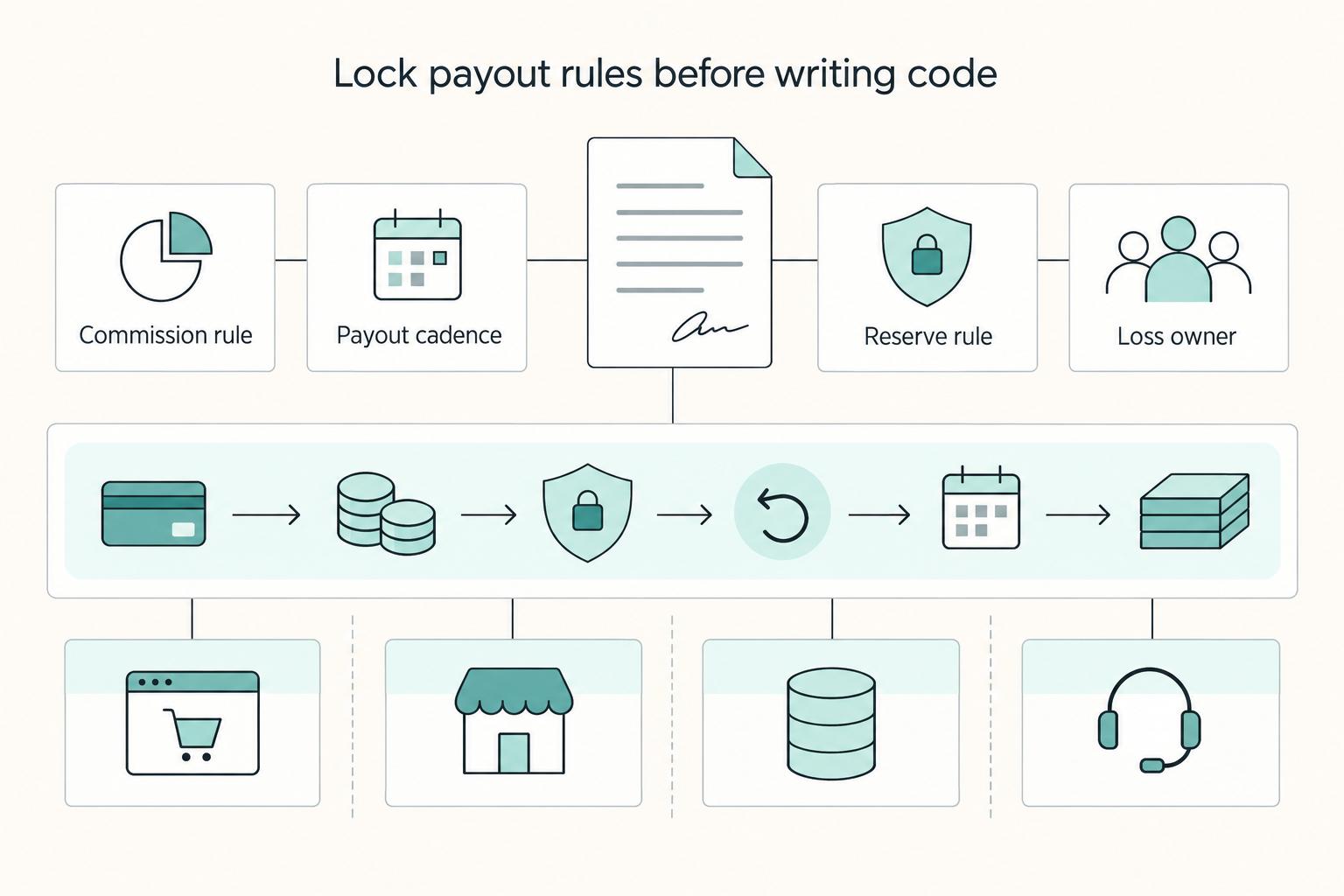
Yes, a platform can deduct **Platform commission** before **Seller payout**. The hard part is not the math. It gets harder when product promises one fee story, finance books another, and engineering implements a third. The practical win is to lock one operating model early so every order follows the same gross-to-net payout logic from completed sale through payout release.
Platform Take Rate Optimization: How to Set Marketplace Fees Without Losing Liquidity
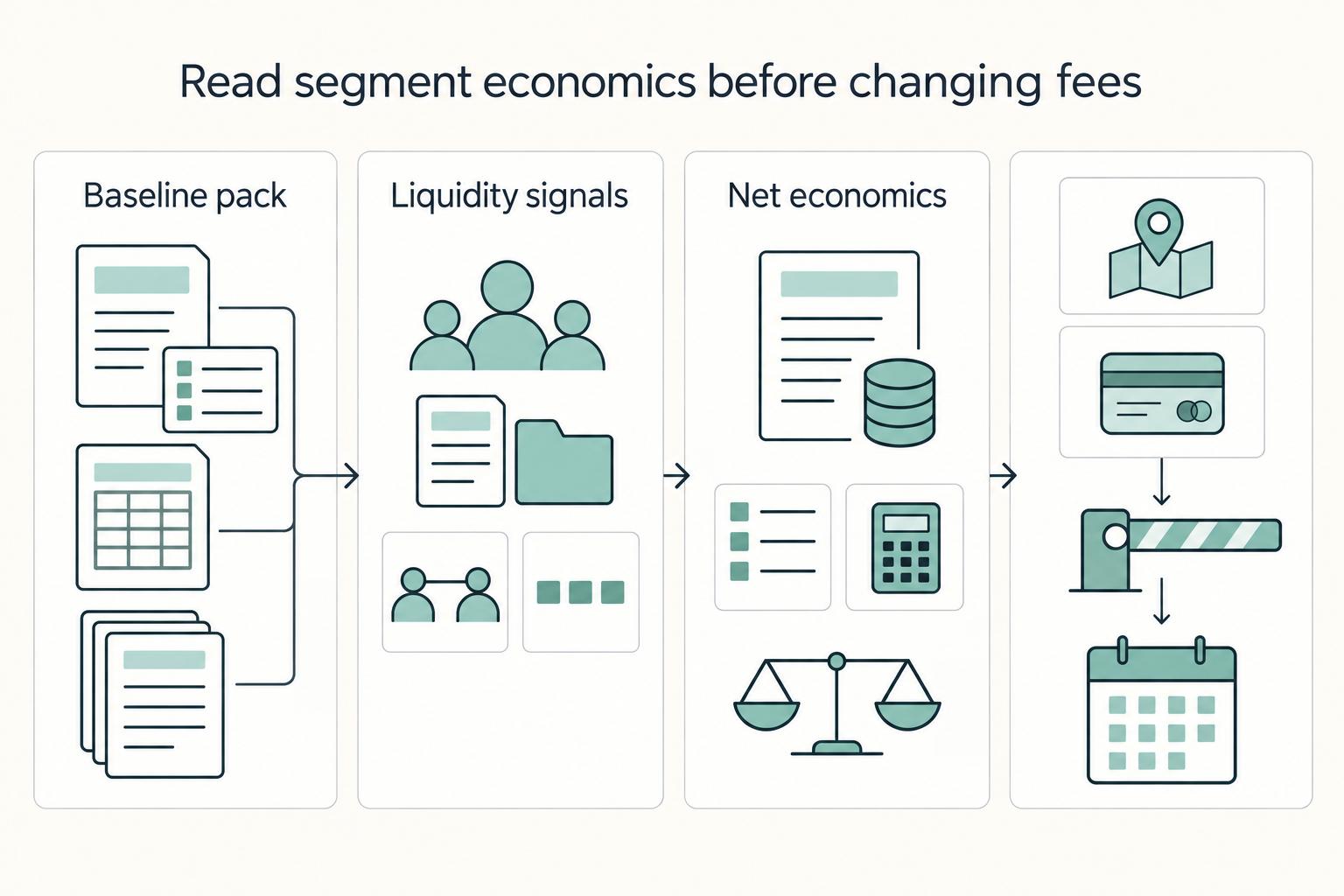
Fee changes in a two-sided marketplace are network decisions, not just pricing decisions. They can change participation on both sides and determine whether your economics improve or quietly get worse.