
Quick Answer
Set promotions as controlled tests, not default pricing. Define segment eligibility first, enforce coupon expiry and redemption caps, and pause campaigns when margin floor or CAC payback fails. Then validate impact with a treatment-versus-control holdout, and reconcile redemption events to invoice changes, payout batches, and ledger records. Scale only when repeat purchase behavior and post-trial retention improve alongside conversion.
Promotional pricing should increase LTV not just spike signups#
Step 1. Define promotions as a temporary pricing lever, not a growth shortcut. Promotional pricing should earn its place by improving Customer Lifetime Value, not by making a dashboard look better for a week. Treat coupons, free trials, and discounts as temporary, time-bound interventions, not quiet permanent repricing.
That changes the test. A signup lift matters, but it is not the main outcome. The real question is whether the offer brings in customers who stay, renew, and generate total net profit over the relationship. If you cannot explain how a first-purchase discount or trial design should improve retention, you are probably buying volume, not building value.
Verification point: before launch, write down the single LTV-related result you expect, such as better retention after trial or stronger repeat purchase behavior after an acquisition discount. If the only expected win is more new accounts, the offer is too weak to scale.
Step 2. Make the core tension explicit across founders, product, and finance. Teams usually feel this pull from both sides. Growth pressure pushes promotions up, while margin discipline and retention risk pull the other way. A discount can raise conversion in the short term but still hurt long-term profit if retention economics do not hold.
This is where teams get sloppy. Product may optimize for activation, growth may optimize for conversion, and finance may only see the margin hit after the fact. You need one shared rule: promotions are acceptable only when they support retention economics without undermining profit margin. Offers are not the problem. Offers with no job beyond "get more signups" are the problem.
Failure mode to watch: judging success on conversion alone. A free trial that converts quickly but produces weak post-trial retention is not a win. The same goes for a coupon that raises volume while shrinking contribution margin.
Step 3. Scope the work to auditable platform operations. If you run a subscription billing platform with recurring billing, reconciliation, and invoice collection, and you also manage cross-border payouts to recipients in local currencies across countries, promotions touch far more than pricing. They affect billing logic, collections, reconciliation, and payout handling.
That makes auditability non-negotiable. You should be able to trace a promotion from the offer itself to invoice events and, where relevant, into payout reconciliation line items that audit the underlying transactions. If your team cannot follow that chain cleanly, do not expand the offer yet. The risk is not just messy reporting. It is broken reconciliation and control gaps you discover too late.
That is the standard for the rest of this guide. If an offer cannot be measured against LTV and verified in billing and payout records, it is not ready.
For a step-by-step walkthrough, see How to Use Performance-Based Pricing for Your Freelance Services.
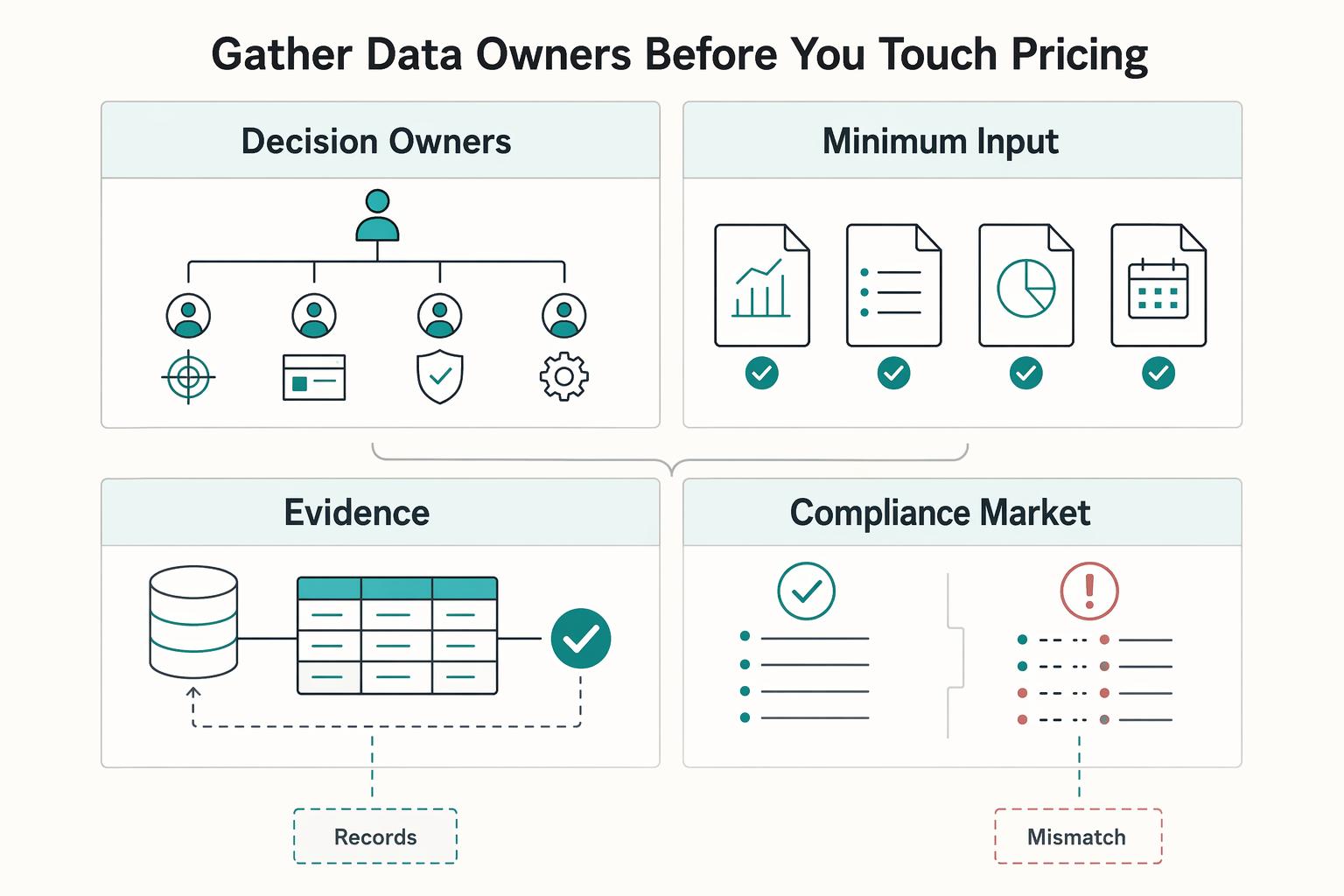
Gather the data and owners before you touch pricing#
Do not change pricing until clear owners and system-backed evidence are in place; otherwise, you end up optimizing against conflicting numbers.
| Area | What to prepare | Verification |
|---|---|---|
| Decision owners | Revenue targets, offer UX, margin policy, and execution in the subscription billing platform | Decision rights are clear; if finance cannot approve margin boundaries or ops cannot confirm billing setup, pause launch |
| Minimum input set | LTV, CAC, AOV, churn by cohort analysis, and promo redemption history | Redemption history comes from actual promotion-code usage, not campaign assumptions |
| Money-settling records | Invoice events, payout outcomes, ledger-backed exports from your Merchant of Record (MoR), and payout reconciliation reports for payout batches | Finance can tie transactions to payouts and reconcile invoice changes to the ledger |
| Compliance by market | For each affected country, confirm whether KYC, KYB, AML controls, and VAT validation apply; use VIES for EU cross-border VAT checks | Make these checks a prerequisite before launch; UK (GB) VAT numbers stopped validating in VIES on 01/01/2021 |
Step 1. Assign decision owners. Set explicit owners for revenue targets, offer UX, margin policy, and execution in the subscription billing platform. The org chart can vary, but decision rights must be clear. If finance cannot approve margin boundaries or ops cannot confirm billing setup, pause launch.
Step 2. Build the minimum input set. Pull Customer Lifetime Value (LTV), Customer Acquisition Cost (CAC), Average Order Value (AOV), churn by cohort analysis, and promo redemption history before you model any discount. AOV is total revenue divided by total number of orders. Cohort analysis separates users by start time, so you can see whether a trial or coupon changed retention quality instead of blending everyone into one average.
Verification point: redemption history should come from actual promotion-code usage, not campaign assumptions. If you cannot trace who redeemed what, you cannot judge incremental value.
Step 3. Pull records from systems that settle money. Use invoice events, payout outcomes, and ledger-backed exports from your Merchant of Record (MoR), the legal selling entity responsible for the sale. Include payout reconciliation reports for payout batches. If conversions look good in a slide deck but finance cannot tie transactions to payouts or reconcile invoice changes to the ledger, treat that as a launch blocker.
Step 4. Scope compliance by market before launch. For each affected country, confirm whether KYC for account holders, KYB for businesses, AML controls, and VAT validation apply. For EU cross-border VAT checks, VIES can confirm registration status. UK (GB) VAT numbers stopped validating there on 01/01/2021. Make these checks a prerequisite, not cleanup work after launch.
For benchmarks on churn, trials, payment declines, and LTV, see Subscription Benchmark Report for Platform Operators: Churn Trials Payment Declines and LTV.
Set non-negotiable guardrails before campaign ideas#
Set hard guardrails before ideation: if margin drops below your approved floor or CAC payback moves past the finance-approved target, pause acquisition and first-purchase discount campaigns.
Step 1. Put stop conditions in policy and platform controls. Write campaign stop rules in the launch brief and enforce them in billing configuration. Use coupon expiry and redemption caps to limit exposure while decisions are being made. Your cutoff is a business choice, but it must be explicit before launch, not debated after signup volume spikes.
Step 2. Protect high-intent and high-LTV demand from blanket discounts. Do not default valuable segments to broad % off offers. Route them to VIP early access, loyalty perks, or points multipliers so you preserve margin and avoid training strong buyers to wait for codes. If you cannot show suppression logic before launch, the campaign is not actually targeted.
Step 3. Tighten approval chains for cross-border exceptions. Exception offers touching Merchant of Record (MoR) or Virtual Account flows need separate approvers and reconcilers. The MoR carries payment and compliance responsibility, including KYC and AML handling, so they are not marketing-only changes. Keep segregation of duties in place, and have ops confirm Virtual Accounts remain mapped to the correct legal entity or vendor to preserve audit trail integrity.
Step 4. Require one evidence checkpoint before every launch. Do not launch without both signoffs:
- Finance: CAC payback logic, assumptions, and stop condition are documented.
- Ops: redemption events map cleanly to invoice impact, reconciliation still works, and audit trail integrity holds across payouts and Virtual Accounts.
If either signoff is missing, hold launch. A redeemable promotion that cannot be traced to reconciled money movement is an execution failure, not a growth win.
Segment customers by value and intent before assigning any offer#
With guardrails set, decide incentives by segment, not by campaign convenience. Use LTV and recent behavior to map offers, and treat broad discounts as the exception.
Build tiers from LTV and recent behavior#
Start with LTV as your value signal and cohort analysis as your intent and retention signal. LTV reflects total expected revenue across the relationship, while cohorts show whether similar users are retaining, repeating, or fading over time. If available, use RFM (recency, frequency, monetary) scores on a 1 to 5 scale to draft tiers, then sanity-check them against cohort retention.
- Champions: high LTV, recent activity, frequent buying
- Steady repeat buyers: healthy repeat pattern, but not top-value users
- Growth-potential users: recent activity or early repeat signs, lower realized LTV
- At-risk users: previously active, now quiet or slipping in retention cohorts
Checkpoint: sample each tier and confirm the underlying signals match the label. If a "champion" has not purchased recently, or an at-risk user bought yesterday, your logic is drifting.
Match each tier to the lowest-cost offer that can move behavior#
For high-LTV, high-intent users, do not start with broad percentage-off discounts. Use VIP early access or non-price loyalty benefits first to protect margin and avoid training strong buyers to wait for a code.
| Segment | What to look for | Default offer |
|---|---|---|
| Champions | High LTV plus recent, frequent purchase behavior | VIP early access or loyalty program perks |
| Steady repeat buyers | Consistent repeat behavior, stable cohorts | Bundle discount or cross-sell to grow basket and AOV |
| Growth-potential users | Recent engagement, lower current LTV, not yet habitual | Controlled bundle or limited acquisition discount |
| At-risk users | Inactive or fading after 30, 60, or 90 days | Behavior-triggered win-back offer |
Red flag: one-size-fits-all treatment. A win-back offer should target inactive or churn-risk users, and bundle discounts are better for basket-growth goals than retention or activation problems.
Refresh segments on a fixed cadence and log every rule change#
Refresh segments on a documented cadence that matches how quickly behavior shifts in your business. Do not let static audiences sit for months in the subscription billing platform while customer value and intent change.
At minimum, log the segment name, scoring inputs, inactivity window, mapped offer, effective date, and owner for every eligibility change. Otherwise, reactivated users keep receiving win-back incentives, and newly valuable customers keep outdated discounts because no one updated audience rules.
Match coupons trials and credits to the right scenario#
Pick incentives by the behavior you need to move. Then assign one primary KPI and one guardrail KPI so fast conversion does not hide weak LTV outcomes.
Choose the incentive by barrier, not by habit#
Use a free trial when buyers need to experience value before committing; this is often true in evaluation-heavy motions, including many B2B journeys. Track trial-to-paid conversion as the primary KPI, and activation rate as the guardrail so you can spot low-quality trial volume early.
Use a first-purchase discount when immediate price resistance is the main blocker. It can lift conversion quickly, but it can also train customers to wait for a code. Set a redeem-by date, apply redemption limits where your billing setup supports them, and exclude high-intent or high-LTV cohorts that are likely to convert without a discount.
Use store credit or points multipliers when the goal is repeat behavior, not just the first order. Store credit is closed-loop value for future use, so it aligns with repeat purchase and LTV/CAC tracking. Points multipliers can support loyalty, but treat performance as something to test rather than assume.
Use bundle discounts for basket growth and AOV, and keep win-back offers focused on lapsed customers instead of broad blasts.
| Offer type | Best-fit scenario | Conversion speed | Margin risk | Retention impact | Primary KPI | Guardrail KPI | When not to use |
|---|---|---|---|---|---|---|---|
| Free trial | Evaluation-heavy buying motion | Medium | Medium | Can be strong when activation is strong | Trial-to-paid conversion | Activation rate | When high-intent buyers already convert without an evaluation period |
| First-purchase discount | New-user price resistance | Fast | High | Often weak unless repeat behavior follows | First purchase conversion | CAC payback or margin floor | On high-intent traffic or high-LTV cohorts likely to buy anyway |
| Store credit | Drive the next purchase in closed-loop commerce | Medium | Medium | Often aligned to repeat behavior | Repeat purchase rate | LTV/CAC | When return behavior is weak or credit operations are not well controlled |
| Points multiplier | Loyalty push for engaged users | Slower | Variable | Depends on whether points are valued | Repeat purchase rate | Reward cost per active customer | As a blanket fix for weak acquisition conversion |
| Bundle discount | Increase basket size and AOV | Medium | Medium | Neutral to positive when bundle fit is strong | AOV | Gross margin per order | When activation or retention is the real issue |
| Win-back offer | Lapsed-customer targeting | Medium | Medium to high | Useful when churn is reversible | Reactivation rate | 30/60/90-day retention after return | For active customers or untargeted list-wide campaigns |
Add restrictions and verification before launch#
Restriction logic matters more than creative. If a cohort already has high intent, recent activity, and strong LTV, start with non-price value before you apply coupons.
Before launch, verify that audience rules are current, coupon constraints such as expiry or redemption limits are configured where needed, and KPI ownership is explicit. For trials, review sign-ups and activation weekly so quality issues surface quickly.
The usual failure is not one bad offer choice; it is leaving the wrong offer running too long. If first-order discounts keep lifting conversion but repeat behavior stalls, reduce exposure and test store credit or loyalty mechanics. As one subscription operator puts it, "Store credit increases customer lifetime value 2-3X more than discounts because it locks future purchases to your store." Treat that as a hypothesis to A/B test in your own data, not a universal rule.
Design trial and first-order offers that do not train discount dependency#
Design the offer so the next step is clear: try, convert at the stated price, or leave. If users learn to wait for a better deal, you may lift short-term conversion while weakening Customer Lifetime Value (LTV).
Define trial entry, value, and exit before you launch#
A trial should qualify the right users, show real product value, and convert on terms the user already understands. Set eligibility rules by segment, traffic source, or account status, and make trial scope explicit: features, limits, and support.
Make the exit explicit too. Trial flows can auto-convert to paid pricing at trial end, so users should be able to see renewal price, first charge date, and cancellation path before signup and inside the account. If people miss cancellation timing, they will likely be charged.
Before you scale traffic, run an end-to-end test account and confirm a user can find:
- Current trial status
- Exact paid price after trial
- First billing date
- How to cancel
Constrain first-order discounts and make the trial earn conversion#
For first-order discounts, control matters more than generosity. Use expiration, redemption caps such as first 50 uses, and customer-level restrictions so the offer does not become an open-ended habit.
Scope offers to defined cohorts with clear end dates. A paid-acquisition new visitor may qualify; a high-intent repeat buyer often should not. This is where coupon controls in a subscription billing platform matter more than copy.
During the trial, emphasize product progress over price. Use onboarding milestones, activation checkpoints, and usage nudges tied to retention signals in your cohort analysis so conversion follows realized value, not a last-minute code.
Build a targeted recovery path and keep compliance gates intact#
When trial users do not convert, do not default to an immediate deeper percentage-off offer. Use selective recovery, such as win-back offers for lapsed subscribers, and test store credit only where repeat behavior is realistic. Apple's win-back model is designed for lapsed subscribers, with up to 350 win-back offers per subscription and up to 5 concurrent offers per storefront.
Promotions also cannot bypass compliance controls. For regulated payouts or collections, connected accounts may need KYC completion before accepting payments or sending payouts, and onboarding may include KYC/KYB checks tied to anti-money-laundering and fraud screening. If VAT handling is enabled, confirm checkout still captures Company VAT number where supported and does not skip VAT validation for eligible cross-border orders.
Launch evidence should include eligibility logic, checkout screenshots, renewal terms, and test proof that KYC, KYB, AML, and VAT checks still trigger when a promotion is applied.
Related: How to Offer Free Trials That Convert: Design Rules for B2B Platform Operators.
Instrument experiments so results are audit-ready not anecdotal#
Once your offer design is disciplined, prove the result causally and keep records you can audit later. Do not rely on before-and-after charts. Run a holdout, predeclare metrics, and connect outcomes to billing and funds-movement evidence.
| Experiment step | What to set up | Why it matters |
|---|---|---|
| Holdout | Split the eligible audience into 2 groups: treatment sees the promotion, control does not | Estimate incremental lift instead of relying on directional trend reads |
| Metrics | Pick one primary metric and guardrails such as repeat purchase rate, retention by cohort, LTV, and CAC payback | If the primary metric improves but guardrails degrade, treat it as a tradeoff, not a clean win |
| Source of truth | Capture redemption events, related invoice or subscription state changes, and the ledger export or journal trace finance will reconcile against | Balance transactions are a useful reconciliation anchor when growth and finance reporting diverge |
| Duplicate handling | Reconcile promo redemptions to invoice discounts and cash movement; webhook endpoints can receive the same event more than once, and undelivered events can be retried for up to three days | Use idempotency for retry-safe API requests and review payout batches separately for repeated postings or adjustments |
Create a true holdout before launch#
Split the eligible audience into 2 groups: treatment sees the promotion, control does not. That is how you estimate incremental lift instead of relying on directional trend reads.
Use cohort-based readouts, not a single campaign snapshot. Short-term signup lift can look strong while repeat behavior weakens later. If you cannot maintain an untouched control, treat results as directional and avoid scaling based on them alone.
Before launch, verify the control group is excluded across all customer paths: checkout, account pricing, and triggered emails.
Declare one primary metric and a small set of guardrails#
Pick one primary metric tied to the decision. For a trial, that can be trial-to-paid conversion. For a first-order offer, it can be paid conversion or redemption-adjusted revenue per eligible user.
Then set guardrails to catch harm: repeat purchase rate, retention by cohort, Customer Lifetime Value (LTV), and Customer Acquisition Cost (CAC) payback. If the primary metric improves but guardrails degrade, treat it as a tradeoff, not a clean win.
A practical early check is to review conversion and repeat behavior side by side after week one. If lift is concentrated in low-activation users, you may be pulling forward weak demand.
Lock attribution and source of truth rules in advance#
Agree on source-of-truth records before data starts moving. Event objects created from resource state changes support event-level attribution logs. For subscription promotions, capture redemption events, related invoice or subscription state changes, and downstream financial records.
For funds movement, name the exact system finance will reconcile against. If you use a Merchant of Record (MoR), define the ledger export or journal trace to use. Balance transactions are a useful reconciliation anchor when growth and finance reporting diverge.
Reconcile after launch and test duplicate handling#
After launch, reconcile promo redemptions to financial outcomes. Confirm redeemed codes produced expected invoice discounts, cash movement matches billing outcomes, and repeated processing did not inflate counts.
This is operationally critical because webhook endpoints can receive the same event more than once, and undelivered events can be retried for up to three days. Use idempotency for retry-safe API requests, and ensure event consumers do not create duplicate side effects from repeated deliveries. Review payout batches separately for repeated postings or adjustments. A campaign is not truly profitable if duplicate processing created the lift.
Related reading: How to Compare Xolo Pricing by Product Track, Region, and Scope.
Fix the mistakes that quietly erode LTV#
Most LTV erosion comes from four avoidable mistakes: teams optimize the visible conversion moment, then discover that retention, operations, or compliance broke underneath it.
- Blanket discounts for all eligible traffic
Treat this as a segmentation problem, not a universal pricing rule. If a cohort already shows high intent or strong LTV, do not default it into auto-discount paths; test non-price value first, such as VIP-style access or loyalty value, and reserve price cuts for segments that need conversion help. In your subscription billing platform, confirm eligibility rules are consistent across checkout, lifecycle messaging, and auto-applied promo logic.
- Calling trial conversion a win too early
Trial performance should be judged by what happens after conversion. Read conversion alongside renewals, churn, and cohort retention so you can separate durable subscriber growth from short-lived lift. If early gains are concentrated in users who do not persist, adjust eligibility or onboarding before you scale.
- Promo logic that fails under retries and event delays
Operational controls matter as much as offer design. Use idempotent request handling to prevent duplicate write effects, and design webhook consumers for repeated deliveries. Since undelivered events can be retried for up to three days, reconcile redemptions against invoices and payout records so duplicate processing does not inflate campaign performance.
- Compliance checks added after launch
For promotions tied to payments, payouts, or cross-border trade, move compliance into launch prerequisites. Identity verification may be required before payment processing and payouts are enabled, AML programs can require risk-based ongoing customer due diligence, and EU VAT registration checks can be validated through VIES. Launching first and cleaning up later is how campaigns get stuck in manual remediation.
Use promotions as a controlled monetization lever#
Treat promotions as pricing decisions with controls, not campaign tactics. If you cannot name the LTV goal, CAC guardrail, stop condition, and verification method, do not launch.
| Launch step | Requirement | Key detail |
|---|---|---|
| Segment rules | Build segments from LTV and cohort behavior, not channel labels alone | Explain segment membership with recent purchase or retention signals |
| Primary offer per segment | Map each segment to one main offer and write when not to use it | Use hard constraints such as redemption limits and expiration dates to prevent overlap |
| Guardrails | Document thresholds for margin, payback, and stop conditions before launch | Set one success KPI and one guardrail KPI for each offer |
| Holdout | Set holdout assignment before launch and keep that group untouched | A practical benchmark is 1 to 3 months so you can observe more than the first conversion event |
| Verification before scaling | Reconcile redemption data with invoice outcomes, payout outcomes, and ledger records; confirm KYC/CIP is embedded in AML controls, KYB verifies the business entity, and EU VAT status is validated through VIES where relevant | That is what makes promotion decisions auditable instead of speculative |
Use this launch checklist:
- Define segment rules with value and behavior.
Build segments from Customer Lifetime Value (LTV) and cohort behavior, not channel labels alone. You should be able to explain segment membership with recent purchase or retention signals. If segment logic is stale or undocumented, refresh it before launch.
- Assign one primary offer per segment and write when not to use it.
For this launch, map each segment to one main offer so results stay readable. Write the negative rule next to it: for example, no blanket percentage discount for high-intent or high-LTV users; win-back offers for at-risk users; first-purchase discount or trial only when post-offer retention is measurable. Prevent overlap with hard constraints such as redemption limits and expiration dates.
- Approve guardrails before creative goes live.
Document thresholds for margin, payback, and stop conditions before launch. For each offer, set one success KPI and one guardrail KPI, then define the trigger that forces review if the guardrail breaks. Promotions should run for a defined period, not drift into permanent price erosion.
- Launch with a holdout and keep it long enough to matter.
Set holdout assignment before launch and keep that group untouched so you can measure effectiveness over time. A practical benchmark is 1 to 3 months so you can observe more than the first conversion event. If control definition, assignment rule, or KPI ownership is unclear, postpone.
- Verify ledger-backed outcomes and compliance gates before scaling.
Reconcile redemption data with invoice outcomes, payout outcomes, and ledger records, then check whether the economics moved in the right direction. Before expanding into regulated or cross-border flows, confirm KYC/CIP is embedded in AML controls, KYB verifies the business entity, and EU VAT status is validated through VIES where relevant. That is what makes promotion decisions auditable instead of speculative.
Frequently Asked Questions
Do discounts increase Customer Lifetime Value (LTV) or mostly short-term conversion?
Sometimes they improve LTV, and sometimes they mainly pull demand forward. Short-term coupon response does not guarantee long-term loyalty, so you need cohort analysis over a meaningful horizon before calling a campaign a success. If conversion rises but repeat behavior weakens, treat that offer as a short-term acquisition tactic until longer-horizon cohorts show durable value.
When should high-LTV customers get no discount at all?
There is no universal rule that high-LTV customers should always get no discount. Treat it as a testable hypothesis: use cohort analysis and a holdout/control comparison for high-LTV segments, and keep no-discount targeting only when those users sustain outcomes without price help.
How do first-purchase discount campaigns affect long-term retention cohorts?
They can materially affect long-term customer value. They may help if they accelerate activation into repeat behavior, but short-term response still may not translate into long-term loyalty. Watch for a second risk too: exclusive new-customer discounts can create perceived unfairness among existing customers, which can trigger pressure for match offers and hurt repeat behavior.
What usually works better for repeat behavior: store credit, loyalty program perks, or percentage discounts?
There is no universal winner, and you should be skeptical of anyone claiming one. The better choice depends on the habit you are trying to create, your margin room, and whether repeat behavior comes from frequency, basket size, or retention. A practical rule is to test the option that preserves margin and points users back into your product experience first, then compare repeat purchase and cohort retention against a clean control.
How often should LTV segments and promo eligibility rules be refreshed?
There is no single correct weekly, monthly, or quarterly cadence for every platform. Refresh based on how fast customer behavior, pricing, and acquisition mix move, and review sooner if stale segments keep receiving offers they no longer need. One useful checkpoint is a change log: if no one can tell you when eligibility logic last changed, assume drift has already started.
What is the minimum holdout test setup a platform needs before scaling a campaign?
At minimum, keep an untouched holdout group, set it before launch, and measure results against that control rather than a before-and-after snapshot. A practical holdout size is 1% to 10% of traffic, and guidance for duration is often 1 to 3 months, which is enough to observe more than the first conversion event. For operator confidence, keep the evidence pack simple but real: holdout assignment rules and cohort retention results that show whether the promo changed business performance, not just surface activity.
Try a related tool
Researched and edited by the Gruv editorial team. Gruv builds cross-border billing, payouts, and finance-operations software for global businesses.
Sources
- consumer.ftc.gov/node/77481trusted
- docs.stripe.com/billing/subscriptions/couponstrusted
- docs.stripe.com/billing/subscriptions/trialstrusted
- ec.europa.eu/taxation_customs/viestrusted
- ecfr.gov/current/title-31/subtitle-B/chapter-X/part-1...trusted
- europa.eu/youreurope/business/taxation/vat/check-vat-n...trusted
- financeandbusiness.ucdavis.edu/finance/controls-accountability/int-controls...trusted
- stripe.com/resources/more/what-is-the-cac-payback-periodtrusted
Educational content only. Not legal, tax, or financial advice.
Related Posts
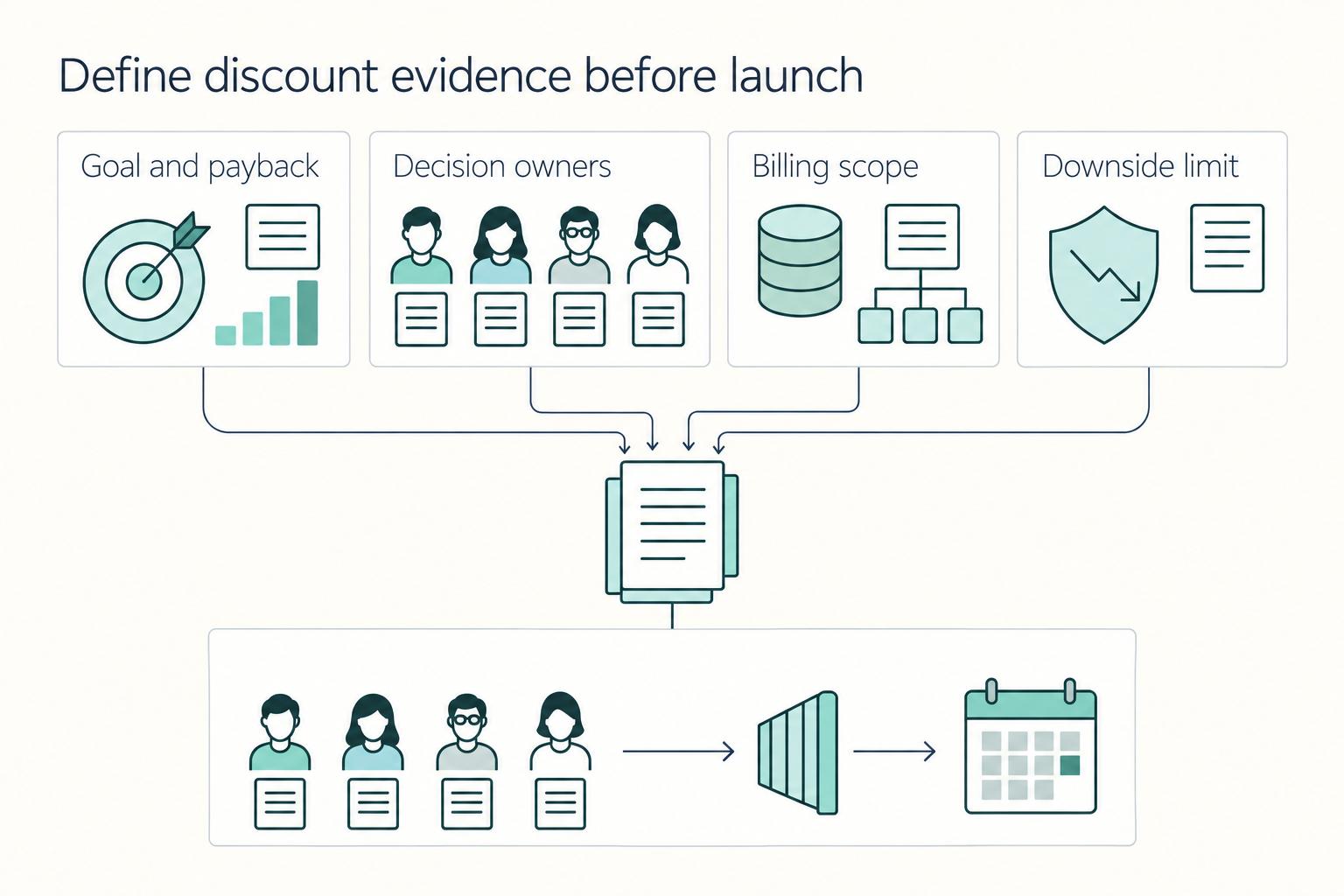
Use Coupons and Discounts in Subscription Billing Without Cannibalizing Revenue
Coupons can influence acquisition quickly, but in a subscription business they do more than change conversion. They also affect how revenue shows up in your operating metrics, especially Monthly Recurring Revenue (MRR). Many teams use MRR to track predictable income and plan growth, even though it is not a GAAP or IFRS accounting metric.
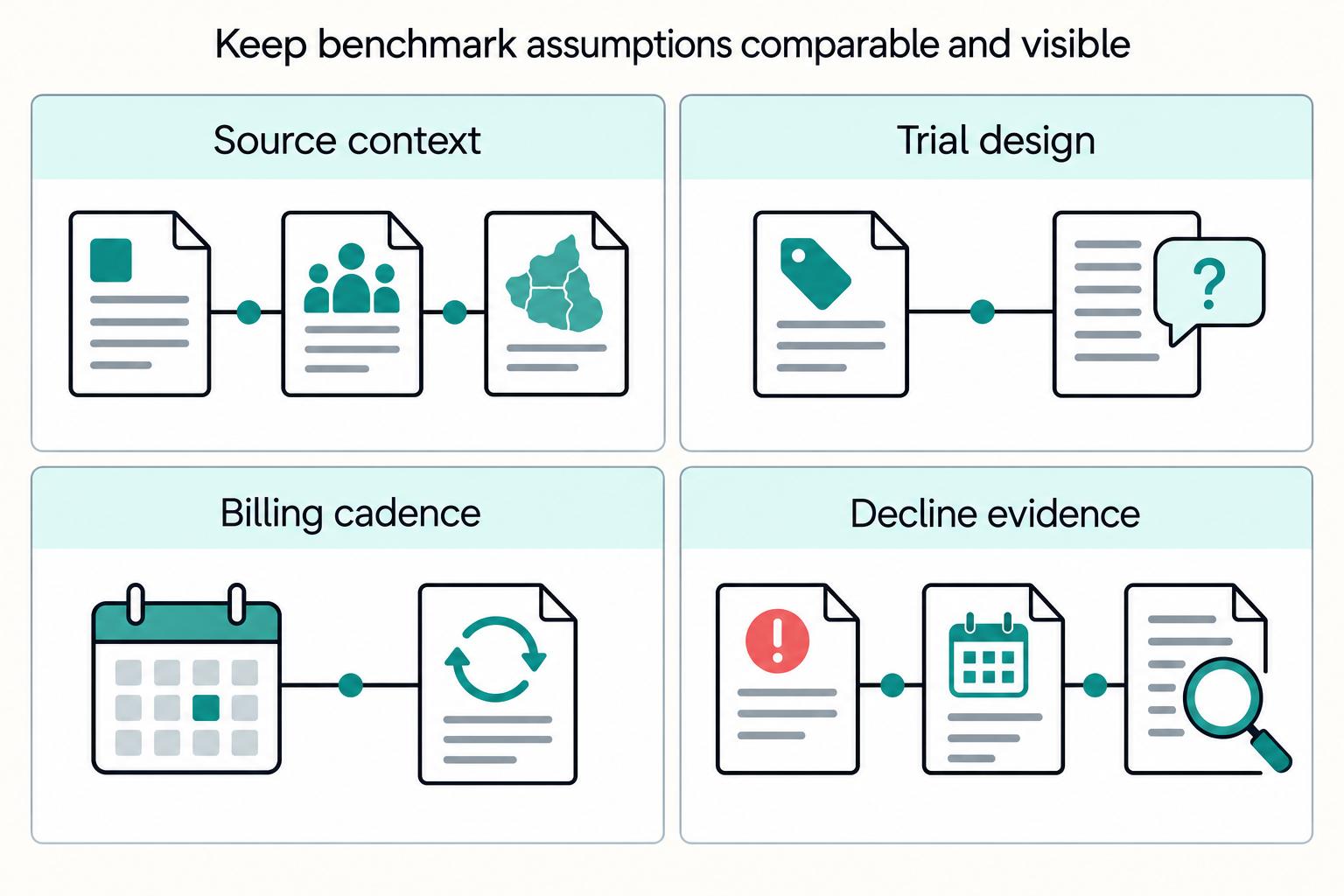
Subscription Benchmark Report for Platform Operators: Churn Trials Payment Declines and LTV
Use benchmark data as a filter, not a launch order. The real decision is not which market shows the highest headline LTV. It is which market can support your trial design, absorb payment friction, and clear compliance checks without turning early churn into noise.
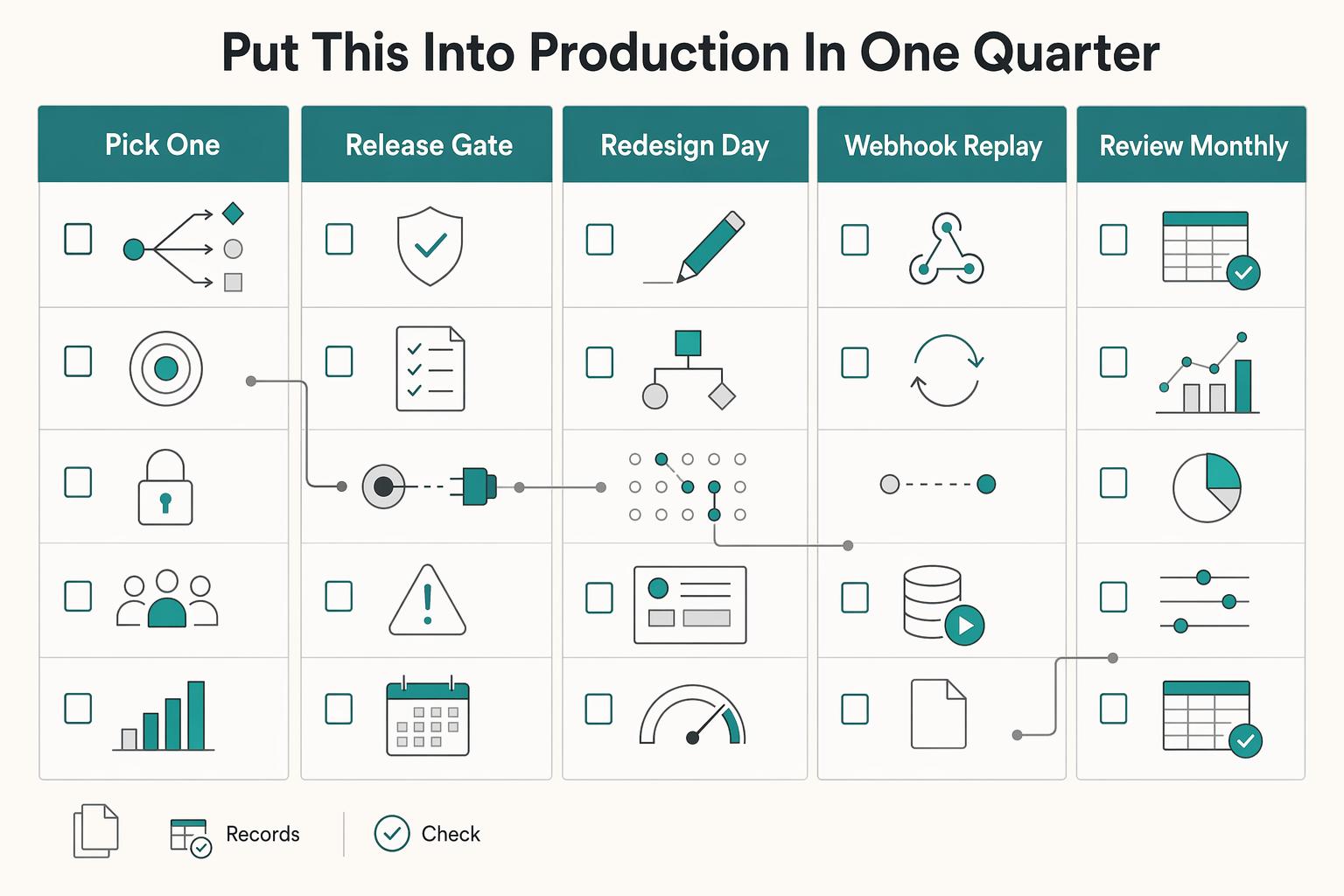
How B2B Platform Operators Design Free Trials That Convert Profitably
The main mistake is simple: teams often optimize for more starts when they should optimize for more profitable paid customers. In B2B SaaS, **trial-to-paid conversion rate** is the share of trial users that become active paying customers in a defined period. That number only matters if the customers who convert are the right ones for your business.