
Quick Answer
Yes - treat each discount as a controlled pricing decision, not a campaign toggle. Start with one-time discounts, and require finance approval for permanent recurring discounts before launch. Then verify a test subscription across first invoice, renewal invoice, and Stripe Billing reporting so MRR and ARR interpretation matches internal reporting. If those views diverge, pause and fix setup first. This keeps acquisition offers active without quietly weakening recurring revenue quality.
Set discount controls before offers scale#
Coupons can influence acquisition quickly, but in a subscription business they do more than change conversion. They also affect how revenue shows up in your operating metrics, especially Monthly Recurring Revenue (MRR). Many teams use MRR to track predictable income and plan growth, even though it is not a GAAP or IFRS accounting metric.
This guide is meant to prevent exactly that mistake. If your team treats a discount like a campaign toggle instead of a pricing decision, you can end up with weaker margins and less clear recurring-revenue signals. Stripe notes that coupons can shape pricing strategy, influence customer behavior, and affect when and how revenue shows up. Used poorly, they can also train customers to wait for discounts and compress margins.
The practical stance is simple: treat discounts as controlled pricing inputs tied to recurring revenue quality, not as isolated promotions. That matters more in a recurring business because one-time and recurring discounts can affect revenue timing and margin differently over time.
Before you start#
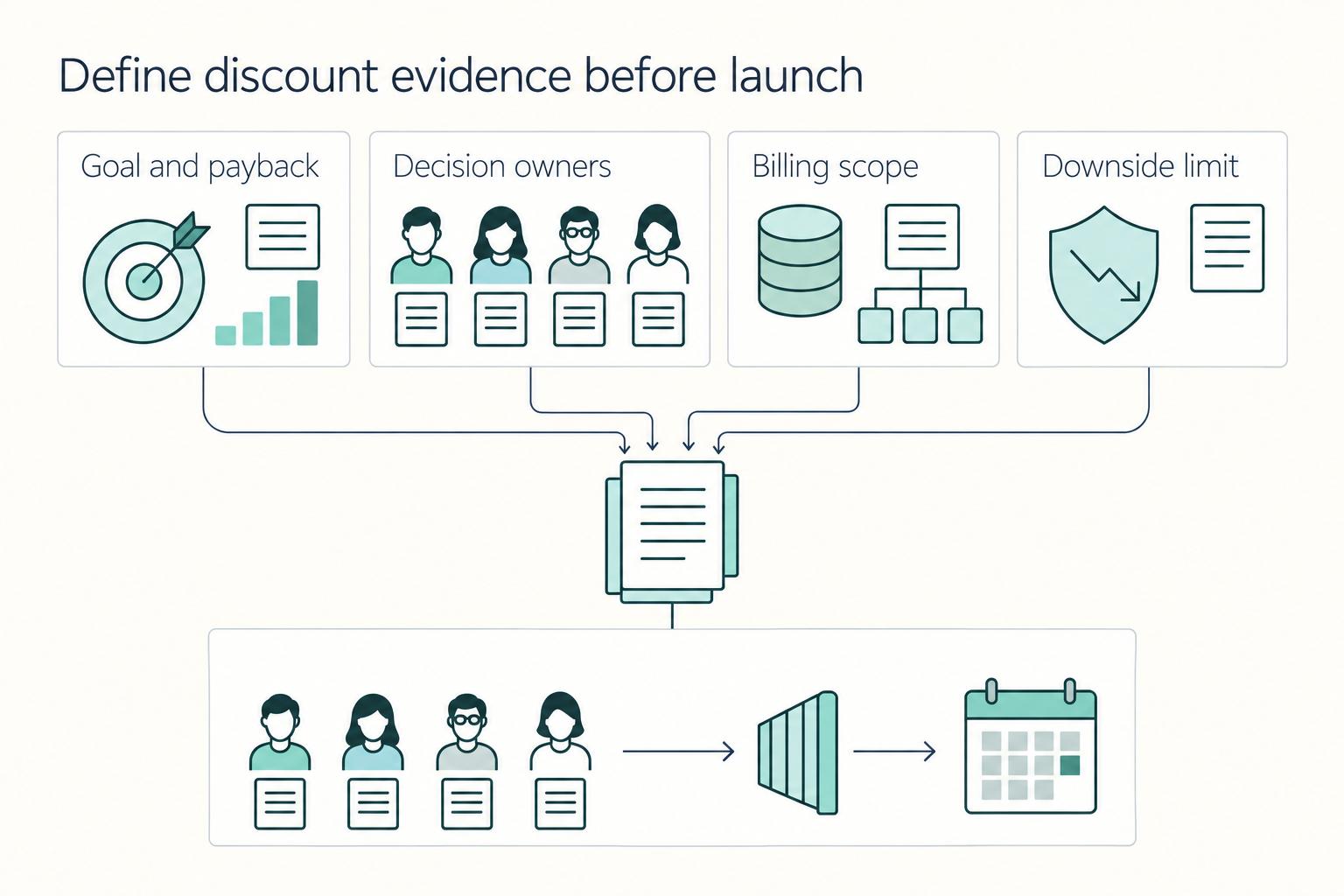
Before you touch coupon settings, check one thing teams often assume away: how your business defines and reviews MRR today. If finance, growth, and product are not looking at the same recurring-revenue view, coupon performance will be argued from different numbers before anyone even gets to the margin question. A fast check is to compare one recent discounted subscription against the MRR shown in your billing dashboard and the number used in internal reporting. Also write down the commercial intent. Keep it brief, but make it explicit:
- Name the goal
Acquisition push, win-back, expansion, annual prepay conversion, or something else.
- Name the discount behavior
One-time, recurring for a fixed term, or open-ended recurring.
- Name the downside limit
The margin hit, renewal risk, or MRR drag that would make you stop.
That small evidence pack keeps the rest of the article practical instead of theoretical. It gives you a way to test whether a discount created healthy recurring revenue or just bought short-term volume.
By the end, you should have concrete decision rules, implementation steps, failure checks, and a copy-and-paste checklist you can use before launch. If you are working through coupon and discount decisions across product, finance, and billing, the goal is not fewer offers. It is better-controlled offers, with clearer scope, cleaner reporting, and less room for revenue cannibalization.
For another workflow example, read How Freelance Developers Use Linear to Control Scope and Billing.
Anchor the economics before you touch coupon settings#
Step 1 Separate subscription growth from recurring revenue quality#
Start with one clear distinction: a subscription model explains how you charge, while a recurring revenue model shows how durable and profitable that revenue is. More signups are not automatically better revenue. Pricing mistakes can erode profitability even when top-line revenue grows, so treat discount decisions as economics decisions, not just campaign settings.
A practical check is to follow one discounted customer from checkout to first renewal. If conversion rises but MRR quality or renewal strength drops, classify the discount as acquisition spend, not recurring revenue improvement.
Step 2 Define the metrics that decide launch or stop#
Decide the scoreboard before launch: MRR, ARR, and redemption-driven margin impact. Put those in the launch note so growth, product, and finance are using the same decision frame.
- Name the owner for MRR, ARR, and margin review.
- State the expected impact of the discount on each metric.
- Set the review window for first invoice, renewal behavior, and gross margin movement.
Without this, teams often celebrate early lift and only later discover they disagree on revenue quality.
Step 3 Require finance sign-off for MRR-shaping discounts#
Use one operating rule: if a discount can materially change MRR optics, finance signs off before launch. This matters most for recurring discounts because the revenue effect can outlast the campaign period.
Default to one-time discounts for experiments. Move to recurring discounts only when the case is stronger than acquisition lift, and document renewal logic, margin tolerance, and customer disclosure clearly. If a promo can roll into future charges unless the customer cancels, tighten disclosure and cancellation language to reduce consumer risk.
This pairs well with our guide on The Best Tools for Managing Subscription Billing.
Prepare the inputs and owners before launch#
Before anyone creates a coupon, lock the evidence pack and decision owners first. If you skip this, launch week becomes a debate about intent, reporting, and whether recurring revenue changed in ways nobody approved.
Step 1: Build a minimum evidence pack that is decision-ready. Include the campaign goal, target segment, payback logic, and your downside limit if the discount continues past the first invoice. For annual plans, keep the accounting reality explicit: subscription revenue is recognized over the contract term, so a discounted annual deal affects how value is earned across 12 months, not just checkout day.
Use one quick check: a non-growth reviewer should be able to answer three questions from the note alone. What behavior are you trying to change? How does the discount pay back? What recurring revenue drag is acceptable if renewals underperform?
Step 2: Assign owners by decision type. Product owns what the pricing object is meant to do. Growth owns audience, redemption volume, and campaign intent. Finance owns how discount impact is read in reporting, including the billing dashboard your team uses to monitor MRR and ARR.
Also name one Pricing & Rating decision-maker. Without that owner, teams often report different truths from different definitions.
Step 3: Document which controls are actually in scope in your billing stack. Capture whether subscription-level coupons, line-item coupons, stacked coupons, validity windows, and redemption caps are available, unavailable, or untested. Do not assume the platform supports every requested pattern.
Then test each in a sample subscription and verify invoice output matches expected pricing behavior. Recurring billing operations extend beyond invoice creation, so settings that look correct at checkout can still break in proration, invoice adjustments, or reconciliation.
Step 4: Add a separate approval gate for permanent recurring discounts. One-time promotions are bounded acquisition spend. Permanent recurring discounts can reshape recurring revenue for the life of the account.
If an offer changes ongoing charges, require finance sign-off before launch and store that approval with the evidence pack. Avoid leaving it in chat threads or spreadsheet comments; manual tracking risk grows as subscription operations scale.
You might also find this useful: Building Subscription Revenue on a Marketplace Without Billing Gaps.
Build a coupon policy matrix your teams can execute#
Build the matrix before launch so every discount request is judged the same way: by use case, downside risk, reporting treatment, scope limits, and a clear stop condition.
Step 1 Set the default policy by discount type#
Use this as your operating default, then tighten by segment or plan family as needed.
| Discount type | Default use case | Revenue risk | What to document in Stripe Billing | Default scope rule | Stop condition |
|---|---|---|---|---|---|
| One-time discount | Trial conversion, first-invoice acquisition push, win-back test | Bounded to early charges | After test invoicing, document invoice output and how finance reads it in reporting | Broad only on pre-mapped products or bundles | Pause if redemption spreads beyond target segment or leakage rises without matching acquisition lift |
| Recurring discount | Time-boxed ramp offers, controlled retention saves, partner channels with known renewal behavior | Can compound across billing cycles | Document repeated invoice behavior and finance treatment of recurring value | Restrict to named plans, packages, or cohorts | Pause if discount depth is high and renewal value is uncertain, or leakage keeps rising across review periods |
| Permanent recurring discount | Contracted exceptions, strategic accounts, approved long-term pricing policy | Highest ongoing drag risk | Document long-term treatment and store finance approval with pricing record | No self-serve use; named owner required | Pause new issuance when leakage worsens or margin limits are breached |
Decision rule: if discount depth is high and renewal value is uncertain, do not start with recurring discounts. Start one-time, then require requalification before any extension.
Step 2 Add hard constraints tied to catalog design#
Tie each matrix row to real Product Catalog objects and Packages & Bundles objects, not campaign language. If the target object is unclear, the request is not launch-ready.
| Control | Use only when | Default note |
|---|---|---|
| Stacked coupons | Margin is already modeled | Default-prohibit on core subscription plans |
| Line-item coupons | On defined add-ons, bundle components, or low-risk SKUs with tested invoice behavior | Default-prohibit on base recurring subscriptions unless product and finance approve |
| Subscription-wide discounts | The business case is for the full subscription | Not a single component |
Run a mechanical check before launch: test the exact object, confirm invoice output, and confirm renewal behavior for that object.
Step 3 Anchor time-boxing and stop rules to unit economics#
Put validity windows and redemption caps in the matrix row itself, mapped to the same plan, package, or bundle named in scope. Avoid ad hoc launch-note rules.
| Fee basis | Amount | Context |
|---|---|---|
| Domestic cards | 2.9% + 30¢ | Stripe Standard pricing |
| Manually entered cards | 0.5% | Additional fee |
| International cards | 1.5% | Additional fee |
| Currency conversion | 1% | Additional fee |
| Monthly active account | $2 | Connect ("you handle pricing") |
| Payout | 0.25% + 25¢ | Connect ("you handle pricing") |
| Successful transaction | 3.5% | Managed Payments, on top of standard processing fees |
Model discount depth after fees, not before fees. Stripe Standard pricing includes 2.9% + 30¢ for domestic cards, with additional 0.5% for manually entered cards, 1.5% for international cards, and 1% for currency conversion. If you run Connect with "you handle pricing," Stripe lists $2 per monthly active account and 0.25% + 25¢ per payout. Managed Payments adds 3.5% per successful transaction on top of standard processing fees.
Make the stop-conditions column explicit: pause when Revenue Leakage Summary trends deteriorate, when redemption escapes the approved segment, or when post-fee margin misses the evidence-pack threshold.
If you want a deeper dive, read How to Migrate Your Subscription Billing to a New Platform Without Losing Revenue.
Configure platform controls in the right order#
Use one configuration sequence and enforce it before any campaign launches. In practice, that means finalizing what you sell, then how it is priced, and only then how discounts are applied, so you are not testing offers on a moving setup.
Step 1 Configure the billable setup before discount behavior#
Start in your Product Catalog and lock the exact plan, add-on, bundle, or package the offer can touch. Then finalize your Pricing & Rating logic, and only after that add coupon behavior.
Your checkpoint is operational, not cosmetic: generate a test invoice from the finalized setup and confirm the undiscounted charge matches finance expectations before applying any discount. Keep that invoice output in the implementation record.
Step 2 Test discount scopes separately before combined scenarios#
Run isolated tests first for each scope you plan to support, then run combination tests. If you start with combinations, failures are harder to trace and remediation is slower.
For each isolated test, keep a compact evidence pack: test customer, target product, expected invoice result, actual invoice result, and billing output capture. If your stack spans billing plus internal analytics, keep discount taxonomy identical across systems so reporting stays aligned.
Step 3 Confirm reporting alignment before launch#
Before go-live, run a finance checkpoint on the reporting view your team actually uses in Stripe Billing. The goal is to verify your internal MRR/ARR definitions and dashboard configuration are aligned with your tested subscription outcomes.
Treat this as a launch gate: definition reviewed, configuration reviewed, test results reconciled. If those do not line up, pause the campaign and fix configuration first.
We covered this in detail in Retainer Subscription Billing for Talent Platforms That Protects ARR Margin.
Wire discount execution to ledger and audit reality#
Treat discount execution as payment-control work, not just campaign setup: map the full transaction flow, manage operational risk, and keep an audit-ready record for each campaign.
Step 1 Map the discount through the full transaction flow#
Start by documenting the end-to-end flow your team will operate, because payment systems are controlled through transaction-and-settlement flows, not isolated screens. For each campaign, define how the discount moves from customer-facing decision points into invoicing, payment records, and reconciliation outputs.
Use one consistent identifier set across each handoff so finance, product, and operations can trace the same event chain without manual reconstruction. The goal is simple: when totals change, your team can explain exactly what changed and where.
Step 2 Build controls around execution risk before launch#
Before launch, treat discount handling as a risk-management problem and confirm your controls are explicit. Operational risk sits alongside fraud, strategic, credit, liquidity, and compliance risk in payment-system oversight, so your discount process should include clear control checks, risk assessment, and reporting ownership.
For practical execution, define what gets checked, who reviews exceptions, and how unresolved mismatches are escalated. This keeps discount behavior visible in management reporting and reduces cleanup during audit reviews.
Step 3 Keep one campaign artifact that is audit-ready#
Create one dated artifact per campaign with three parts:
- Configuration snapshot of the final discount setup and scope.
- Approval record for commercial and reporting treatment.
- Post-launch variance review comparing expected and observed outcomes.
This mirrors the core control structure used in payment governance: internal controls, risk assessment, management reporting, and internal audit. It also gives one source of truth when teams need to validate decisions later.
For a step-by-step walkthrough, see Choosing Between Subscription and Transaction Fees for Your Revenue Model.
Monitor leakage and decide when to roll forward or roll back#
Use the campaign artifact to make rollback decisions based on evidence, not momentum. Once a coupon family is live, separate planned discount cost from unplanned revenue leakage, then decide whether to continue, modify, or stop.
Step 1 Reconcile leakage signals with recurring revenue movement#
Start with the reporting signal that surfaces loss or drift, such as Revenue Leakage Summary, and reconcile it to MRR and ARR movement for the same offer window. Treat leakage signals as directional until they tie to real discounted subscriptions, invoices, and outcomes.
For one active offer, pull redemptions, invoice totals, MRR change, and renewal or cancellation counts for the same dates. If something looks off, confirm it is not reporting lag, an invoice revision already corrected by finance, or another billing-event artifact before you change policy.
Step 2 Split expected promo impact from unexpected erosion#
Break results by cohort, coupon type, and stacking usage so you can see where economics hold and where they break. The core question is simple: did the promo perform as modeled, or did margin erosion show up in segments you did not intend to subsidize?
Keep one compact evidence cut per segment: cohort definition, coupon family or ID, redemptions, pre- and post-discount revenue, renewal outcome, and stacking flag. If you cannot produce that view cleanly, do not extend the campaign yet.
Step 3 Roll back when renewal quality weakens#
If recurring discounts improve acquisition but weaken renewal quality, roll back to one-time discounts and tighten redemption limits. Churn removes future revenue, and replacement can cost materially more than retention, so delaying action usually raises the recovery cost.
Do not let strong top-of-funnel conversion hide declining cohort quality in later ARR. Also avoid leaving a broad recurring coupon in place after stacking or edge-case redemptions start distorting the original business case.
Step 4 Run a fixed approval cadence#
Set a recurring finance-plus-product review for every active coupon family, and require an explicit decision each time: continue unchanged, modify scope or limits, or shut down. Unified reporting only helps plug leakage when the team converts those signals into decisions.
Bring the same artifact to every review: current settings, redemption trend, leakage indicators, MRR/ARR effect, cohort retention view, and proposed action. If the evidence is mixed, shorten the validity window instead of letting a recurring discount become a default price.
Related reading: How Solo SaaS Operators Use RevOps to Stabilize Revenue.
Common mistakes that cannibalize revenue and how to recover#
Treat these as leakage-risk controls, not cleanup tasks: coupon effects can be unclear in both the short and long run, so you need clear rules and repeatable checks.
- Mistake: Broad coupon stacking without limits.
Recovery: Start by identifying where leakage is most likely, then prioritize those leak points first. If you allow stacking, keep it narrow and test representative invoice scenarios so discounted totals still match your intended offer.
- Mistake: No clear order between line-item and subscription-level discounts.
Recovery: Define one internal precedence rule for overlapping discounts, then retest the same scenario across signup, renewal, and change events so results stay consistent.
- Mistake: "Temporary" recurring discounts with no real end state.
Recovery: Review active recurring discounts, separate truly time-boxed offers from open-ended ones, and move eligible cases to explicit end dates where customer terms allow.
- Mistake: Treating dashboard output as self-explanatory.
Recovery: Align reporting definitions with a finance-owned policy so growth, billing, and finance are reading the same discount story before deciding to continue or roll back an offer.
If you only fix one area this week, fix stacked-coupon scope and discount-precedence documentation first. Those usually hide leakage fastest.
Related: Consumer Financial Services Subscription Billing: How Fintech Platforms Manage Recurring Revenue.
Conclusion#
The practical move is not more discounting. It is tighter control over how an offer is scoped, how long it runs, and how it affects recognized revenue once the customer is live.
Coupons can absolutely help at checkout. They can also complicate your revenue view if the team treats them like a marketing switch instead of a pricing decision inside a recurring model. Revenue is recognized over the life of the contract, not just when cash lands. That is why the practical question is never just "Will this convert?" It is "What will the invoice, renewal, and recurring-revenue view look like after this goes live?"
Here is the copy-and-paste launch checklist I would actually use:
- Define the metric policy clearly.
Write down how discounts should appear in recurring-revenue reporting before anyone builds the offer. If you cannot explain in one paragraph whether the discount changes recurring revenue or only the first bill, stop there and resolve it first. Your verification point is simple: people reviewing the same test invoice should describe the same revenue outcome.
- Choose duration deliberately.
Decide whether the discount is one-time or continues into renewals, and document the tradeoff. In a recurring model, ongoing discounts can keep affecting recognized revenue as service is delivered month by month.
- Set scope and expiry rules in writing.
Decide what the offer applies to and what it does not. The red flag is any offer where two people on the team would predict different invoice outcomes from the same customer path. Add a hard end date, validity window, or redemption cap so "temporary" does not become indefinite by accident.
- Run pre-launch tests that mirror real billing behavior.
Test checkout, the first invoice, the renewal invoice, and the recurring-revenue view together. If you sell annual plans, check how the discounted amount is reflected across the 12 months of service rather than only on day one. Keep screenshots or exports of expected invoice results so you have a clean reference when support or finance reviews edge cases later.
- Launch with monitoring and a dated review decision.
Watch for two things right away: whether the coupon is helping checkout completion and whether revenue is drifting in a way you did not intend. Missing offers can hurt conversion, and poorly defined offers can create unexpected revenue outcomes. Put a calendar date on the decision to continue, tighten, or remove the discount.
Frequently Asked Questions
Do coupons reduce MRR in subscription billing?
They can. Coupons and discounts can affect billing accuracy and MRR or ARR reporting, so you should confirm how your platform and finance policy treat recurring discounts before launch. A good check is to apply the discount to a test subscription, then verify the invoice amount, renewal amount, and reported MRR all tell the same story.
Do discounts count against ARR as well?
They can, depending on how your finance policy treats recurring discounts. Coupons and discounts can materially affect MRR/ARR reporting quality, so ARR treatment should stay consistent with your recurring-revenue policy.
Should we allow stacked coupons?
This guide does not define stacking rules or precedence logic. If your team cannot predict the combined invoice result and explain how it should appear at renewal and in reporting, keep stacking restricted or turned off.
Are one-time discounts safer than recurring discounts?
Not automatically. The grounded point is that discounts should be time-bound, with clear expiration rules, to avoid deals renewing longer than intended. Use explicit end dates and review checkpoints for any discount type.
How long should a subscription coupon last?
Use an explicit end date or expiration rule instead of leaving it open-ended. The practical point is straightforward: flat-rate discounts should be time-bound and configured at the catalog level with expiration rules. That helps prevent "one-time" deals from renewing indefinitely and gives you a clean checkpoint to decide whether the offer still makes sense.
What coupon controls should a billing platform support?
Prioritize controls that reduce reporting ambiguity: explicit expiration behavior and catalog-level discount configuration, plus clear visibility into recurring-revenue reporting impact. If a platform makes it hard to see how a discount changes invoices and MRR or ARR views, expect manual cleanup later and review Subscription Billing for Platforms: How to Manage Plans Add-Ons Coupons and Dunning before you scale the offer.
Try a related tool
Researched and edited by the Gruv editorial team. Gruv builds cross-border billing, payouts, and finance-operations software for global businesses.
Sources
- docs.stripe.com/global-payouts/pricingtrusted
- federalregister.gov/documents/2026/03/27/2026-05960/regulatory-c...trusted
- ftc.gov/sites/default/files/documents/reports/negati...trusted
- law.cornell.edu/cfr/text/18/part-101trusted
- occ.gov/publications-and-resources/publications/comp...trusted
- pages.stern.nyu.edu/~adamodar/New_Home_Page/valquestions/distres...trusted
- patreasury.gov/transparency/e-library/ContractFiles/588822_...trusted
- stripe.com/connect/pricingtrusted
Educational content only. Not legal, tax, or financial advice.
Related Posts
How to Migrate Your Subscription Billing to a New Platform Without Losing Revenue
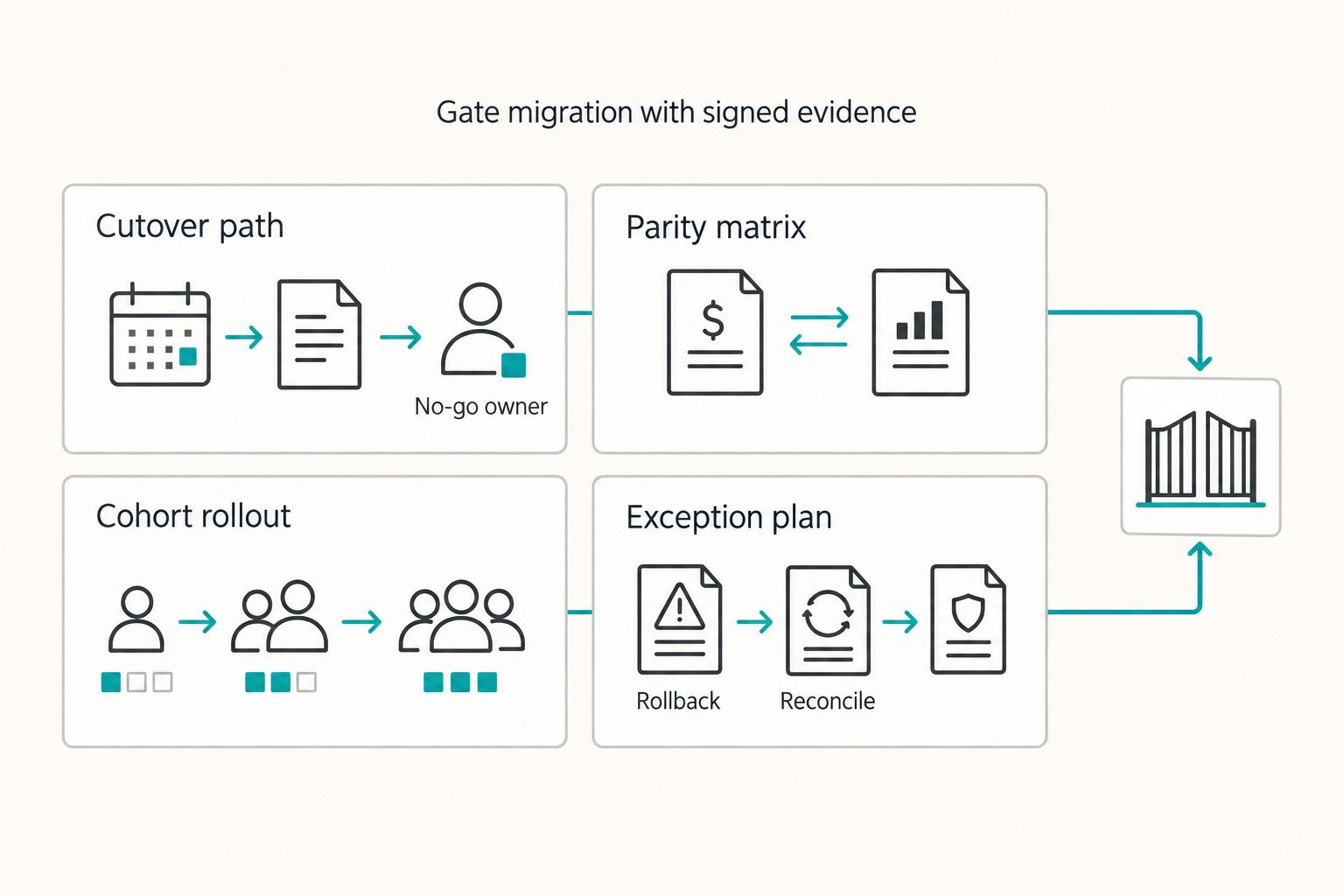
If you need to **migrate subscription billing platform without losing revenue**, treat it as a revenue operations change, not a simple software swap. Billing migrations sit close to renewals, revenue reporting, and payment credentials, so mistakes rarely stay technical. They can show up as duplicate records, inaccurate revenue reporting, failed renewals, or customer-facing downtime.
Subscription Billing Platforms for Plans, Add-Ons, Coupons, and Dunning
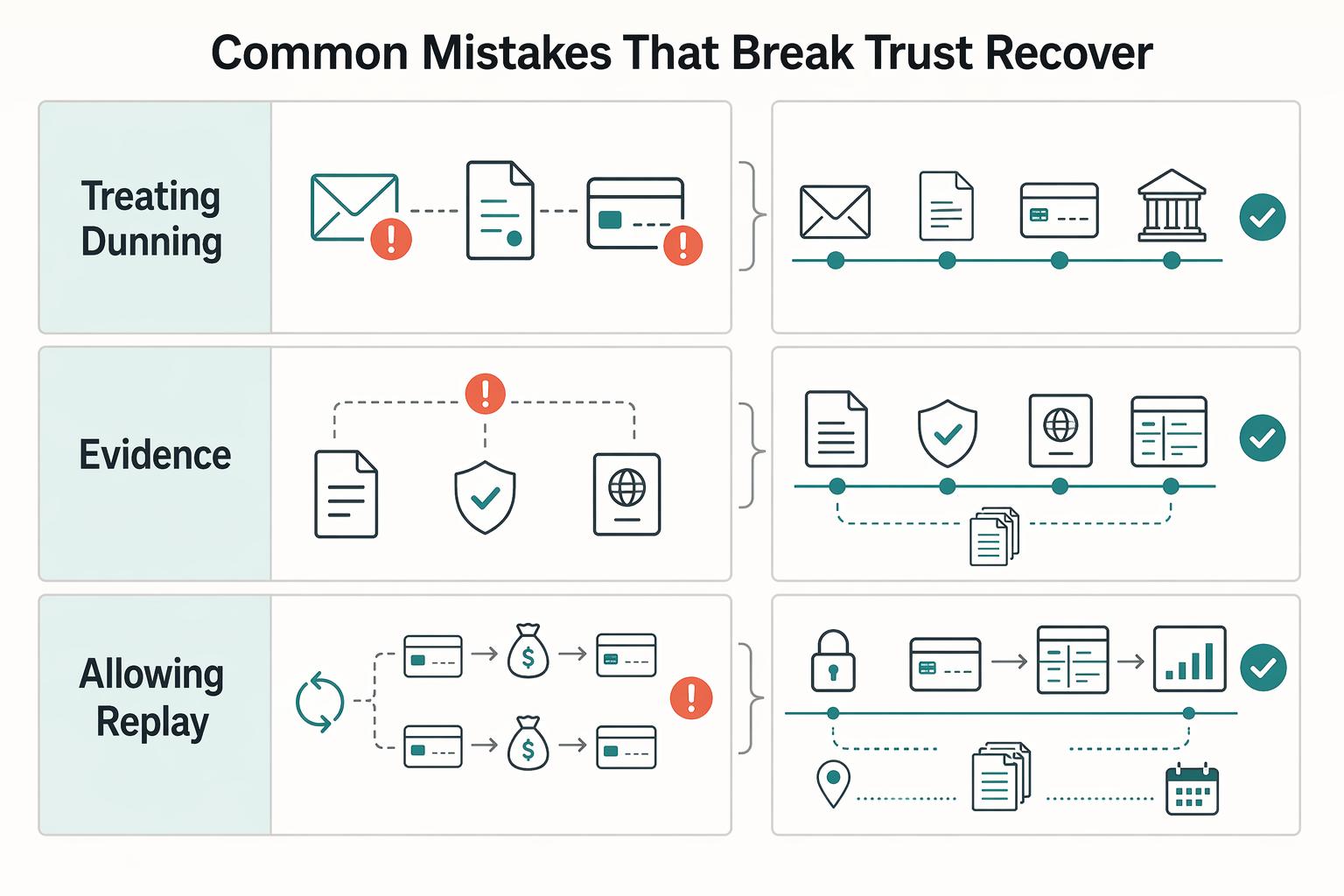
**Treat subscription billing as an operating discipline, not just a pricing setup.** A subscription is the billing object used to charge a customer for a selected plan. Every choice around Plans, Add-ons, and Coupons has downstream effects once renewal time arrives.
Choosing a Fintech Platform for Consumer Subscription Billing and Recurring Revenue
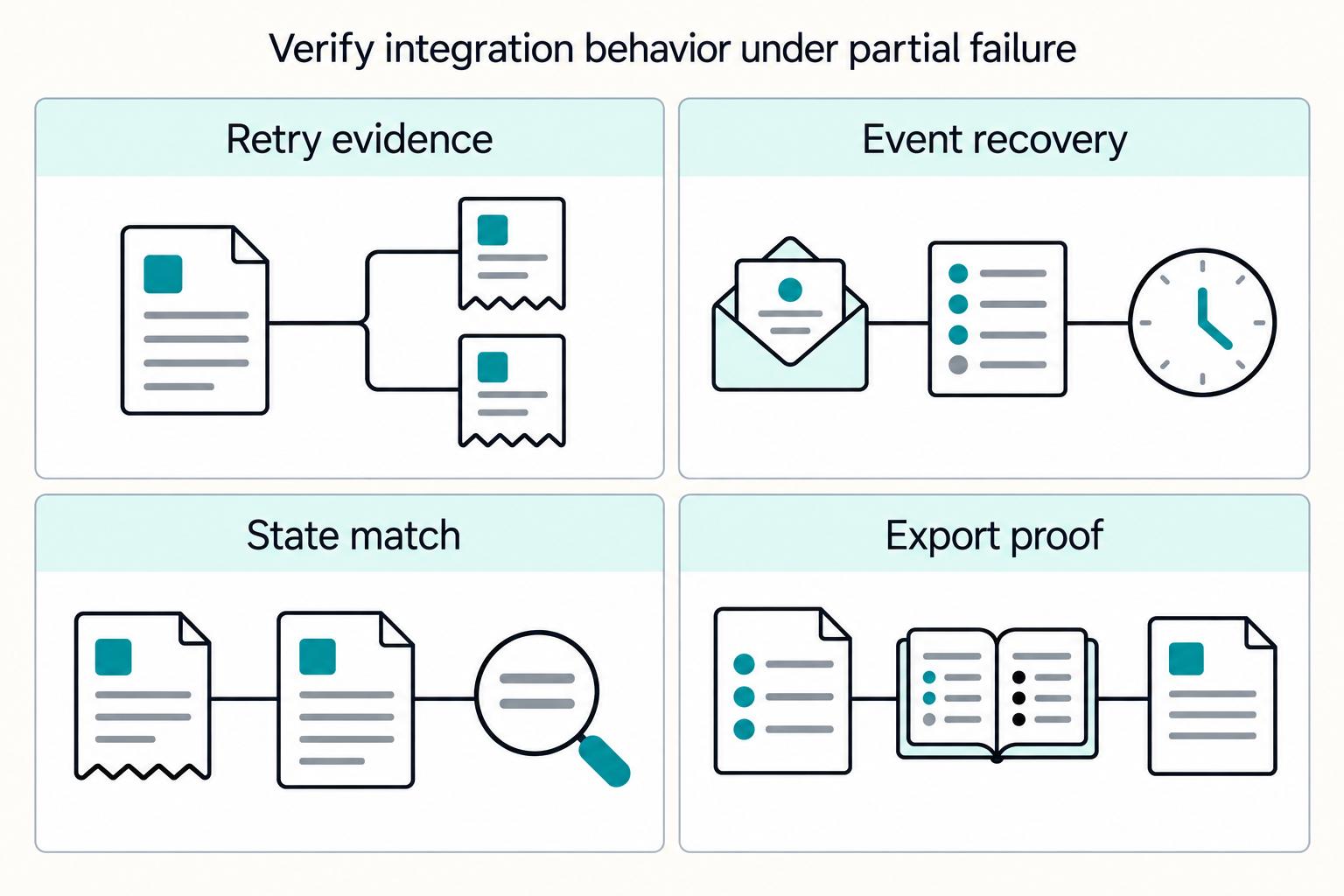
Choosing a consumer financial services subscription billing fintech platform is first an operations decision, not a feature-list exercise. Recurring revenue can improve forecasting, but it also creates a continuous billing and engagement cycle your team has to run cleanly.