
Quick Answer
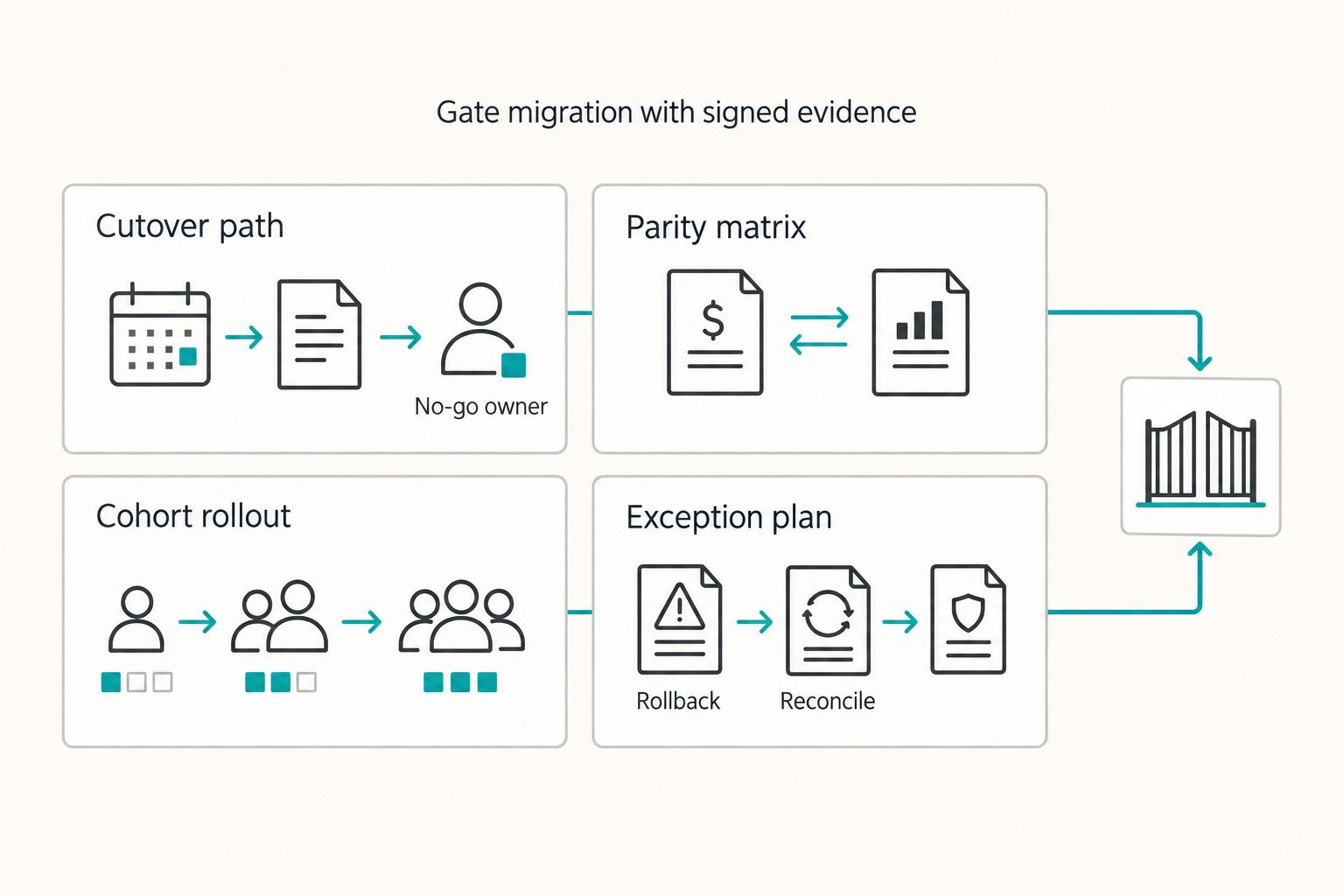
Migrate in cohorts after verifying usable payment credentials, billing parity, retry and webhook handling, and finance reconciliation. Keep one renewal owner for each subscriber and billing period. Stage target schedules before disabling legacy renewals, with dates that prevent either a gap or an immediate extra invoice. If the processor or merchant identity changes, monitor authorization performance. Contain unresolved charges before any rollback or replacement billing.
Start with a revenue-protection plan#
If you need to migrate subscription billing platform without losing revenue, treat it as a revenue operations change, not a simple software swap. Billing migrations sit close to renewals, revenue reporting, and payment credentials, so mistakes rarely stay technical. They can show up as duplicate records, inaccurate revenue reporting, failed renewals, or customer-facing downtime.
That risk is not theoretical. Stripe supports importing subscriptions from third-party billing systems, Shopify documents how to migrate existing subscription contracts while keeping recurring charging continuity, and Ordergroove offers a migration tool to import subscriber data. Those tools help, but they do not remove the need for controls. A workable migration still depends on planning and correct subscriber and payment-token mapping before live subscriptions move.
Check subscriber identity and payment-credential continuity separately. A subscription export does not make processor tokens portable. Confirm the approved processor-to-processor credential transfer, then map imported methods to the correct customers and defaults. Where credentials or mandates cannot transfer, plan secure customer reauthorization and communication before scheduling renewals.
This guide is for platform teams moving from Stripe, Recharge, Ordergroove, Shopify subscription contracts, or a similar setup into a more scalable billing setup. The focus is not feature scoring. It is the set of decisions you need before build starts, the evidence you should collect before touching live billing, and the rollback logic you need when real transactions do not behave like test data.
You should expect three things from the sections that follow. First, a clear migration approach matched to revenue risk and team capacity. Second, specific verification points such as token and customer mapping checks and reconciliation dry runs. Third, explicit stop conditions so you do not keep rolling forward while renewal or reporting quality starts drifting.
One recommendation up front: do not let this become an engineering-only project. You want finance, product, engineering, and payments ops involved before any data moves, because billing continuity and revenue reporting are shared responsibilities. Skip that setup and you may still launch, but you will be debugging revenue after the fact instead of controlling it before cutover.
For a step-by-step walkthrough, see Building Subscription Revenue on a Marketplace Without Billing Gaps.
Choose the migration path your risk profile can survive#
Default to a phased rollout, and use a constrained big-bang cutover only when an immovable date forces it. Make that call early with finance, product, engineering, and payments ops aligned on downside, not preference.
Step 1: Choose the path by downside. Big-bang is one concentrated cutover. Phased migration moves in waves, which is why payments teams often prefer it to reduce cutover risk and validate each wave before broader exposure.
| Decision criterion | Phased rollout | Big-bang cutover |
|---|---|---|
| MRR concentration risk | Safer when a few cohorts drive revenue or have fragile renewal timing | Riskier because one defect can hit high-value renewals at once |
| Engineering bandwidth | Better when your team can run repeated validation and wave monitoring | Viable only if you can staff concentrated cutover and rapid incident response |
| Provider coordination risk | Better when vendor and payment-owner sequencing is complex | Harder when source and target responsibilities are split and timing slips |
| Customer communication complexity across billing and Shopify estates | Better when cohorts need different messaging, portal links, or support instructions | Simpler only if charging ownership and customer experience are truly uniform |
If top cohorts carry a large share of MRR or renewal timing is fragile, phase first. If you are forced into one date, constrain scope and pre-agree rollback authority.
Step 2: Lock go/no-go gates before build starts. Write, assign, and sign off these gates before scheduling any live cohort:
- Billing parity signed off: product and finance approve mapped behavior for pricing, discounts, trials, proration, retries, and reporting outputs.
- Retry safety validated: persist operation outcomes; retry unchanged Stripe requests with the same key within its retention window, and reconcile unknown results before any new attempt.
- Webhook replay tested: Stripe can automatically resend undelivered events for up to three days (and in sandbox retries happen three times over a few hours); test the manual catch-up path and confirm handlers avoid double-processing during retries.
- Ledger reconciliation dry run passed: finance can reconcile processor activity and balances to the ledger, including transaction-to-payout linkage for automatic payouts.
Passing parity alone is not enough if retries, replay, and payout matching are unproven.
Step 3: Define rollback triggers on revenue signals, not only technical errors.
- Duplicate charge events: one case can trigger investigation; a pattern should pause the wave.
- Failed renewals clustering: compare against baseline by cohort, processor, and renewal timing.
- Unexplained ARPU or LTV movement: if finance cannot tie movement to planned pricing or mix changes, treat it as migration risk.
- Broken reconciliation: unexplained processor-to-ledger balance or activity differences, or missing transaction linkage for automatic payouts, prevent finance from validating outcomes.
Tie each trigger to a named owner, a monitoring view, and a specific action. If pause authority is unclear, you are not ready for phased or big-bang execution.
Set ownership and the evidence pack before any migration work#
If ownership and evidence are unclear, pause before build starts. Migration failures usually come from unclear accountability and weak sign-off records, not missing features.
Step 1: Assign clear owners for each function, and define cutover coverage. Name the accountable owner for product, engineering, finance, and payments ops, and document who covers decisions during cutover. Every migration gate, exception queue, and go or no-go decision should map to a person, not a team label. If finance owns reconciliation but engineering owns the extract, record both in the approval trail.
Step 2: Build the evidence pack around billing behavior, not just object exports. Your evidence pack should include current catalog rules and operational billing logic: discounts, trials, taxes, billing anchors, backdating, and known exception paths. The subscription import guidance explicitly calls out common behaviors like quantity, taxes, billing anchor, discounts, trials, and backdating, which is a useful scope check.
Record the tax settings that affect customer invoices: location evidence, tax IDs, rates, exemptions, and inclusive or exclusive pricing. If connected-account payouts are also migrating, keep their certification and reporting responsibilities as a separate program-specific workstream.
Step 3: Define compliance checkpoints before they can stop money movement. Map where verification and compliance gates can block activation, charges, renewals, or payouts. Stripe requires specific information to enable charges and payouts and can temporarily pause charges or payouts when required information is missing or unverified.
If connected-account payouts are in scope, test an incomplete-verification case and assign owners for any certification and reporting changes. These controls belong to that payout program; they are not universal prerequisites for migrating a customer subscription.
Step 4: Keep one operational record and downloadable finance exports. Store approved mappings, sign-offs, exception logs, and cohort status together. Demonstrate processor-activity and balance reconciliation to the ledger. For automatic payouts, include their underlying transaction batches; for manual or instant payouts, use balance and transaction-history reconciliation.
Rebuild billing parity before touching live subscriptions#
Treat billing parity as a hard gate if you want to avoid revenue leakage during the move. If the new stack cannot reproduce known billing behavior before cutover, keep live cohorts locked.
Step 1. Recreate commercial objects, then map legacy objects one by one. Build products, recurring prices, coupons, trial settings, billing anchors, and proration behavior first. When you map old plan levels, map each one to the correct recurring target price, not a near match.
Step 2. Test lifecycle behavior end to end and verify customer outcomes and reporting outcomes together.
| Scenario | Verify | Red flag |
|---|---|---|
| Trial to paid | First invoice, payment outcome, subscription status, and access follow the intended policy; test failed collection as well as success | Status changes, but revenue timing drifts |
| Upgrade or downgrade | Prorated charges or credits match legacy behavior and invoice lines stay explainable | Totals look close, but line-level logic diverges |
| Failed payment | invoice.payment_failed handling and retry behavior match your intended policy | Retry cadence changes churn timing unexpectedly |
| Pause or cancellation | Pause and cancel timing match previous behavior | Cancellation state changes, but access or billing timing does not |
If Stripe is the target, select and test the actual retry and end-of-dunning settings for your account. Smart Retries timing and the final action are configurable; do not treat a suggested retry schedule as a universal auto-cancellation rule.
Step 3. Validate tax and document paths as part of parity. If Stripe Tax is in scope, confirm readiness before cutover. For connected-account flows, test W-8/W-9 collection where enabled and generate sample 1099 outputs where 1099 reporting is enabled.
Step 4. Test failure mechanics before production does. Send idempotency keys on retriable write calls, then test retries to confirm one business outcome. For webhooks, test delay and replay handling; Stripe can resend undelivered events for up to three days, so duplicate-processing protection is required.
Step 5. Keep an internal parity matrix and require sign-off before unlocking cohorts. Track pass/fail status, evidence, and owner approval for revenue-sensitive rows. Treat partial matches as explicit acceptance decisions, not implicit yes.
Related: How to Use Coupons and Discounts in a Subscription Billing Platform Without Cannibalizing Revenue.
Roll out cohorts in an order that protects authorization rates#
Start with a small, representative canary after parity sign-off. If the migration changes the processor, acquirer, or Merchant ID (MID), monitor authorization performance with the payment provider. A billing-software change alone does not necessarily change the MID or require warming.
| Wave control | What to do | Grounded detail |
|---|---|---|
| Merchant identity | Confirm whether MID or acquirer changes | Use provider-agreed ramp and monitoring if it does |
| Control comparison | Compare the canary to a legacy cohort or pre-migration baseline | Acceptance pivots can help read payment success and authorization trends by cohort criteria instead of one blended metric |
| One fixed dimension | Keep one cohort dimension fixed per wave | If wave one tests geography, avoid changing card-quality mix and merchant segment in the same wave |
| Advancement gate | Keep the next cohort locked until renewal success is stable, duplicate billing incidents are resolved, and reconciliation is clean | Enforce the advancement criteria at wave close |
| Pause condition | Pause expansion when failures or churn risk increase | Investigate migrated-cohort payment failures before adding exposure |
Step 1. Confirm whether merchant identity changes. If a new MID or acquirer is involved, agree a ramp with the provider and compare authorization outcomes against a similar legacy cohort. Otherwise, focus cohort sequencing on renewal timing, credential compatibility, and exception risk.
Use a like-for-like control before advancing. Compare the canary to a legacy cohort or pre-migration baseline so you can see whether performance is actually improving. If you use Stripe, Acceptance pivots can help you read payment success and authorization trends by cohort criteria instead of one blended metric.
Step 2. Keep one cohort dimension fixed per wave. If wave one tests geography, avoid changing card-quality mix and merchant segment in the same wave, or you lose a readable signal when performance moves.
Step 3. Define advancement criteria before launch, then enforce them at wave close. Keep the next cohort locked until renewal success is stable versus your baseline, duplicate billing incidents are resolved, and Ledger-to-processor reconciliation is clean for the migrated cohort.
Step 4. Pause expansion when migrated-cohort failures rise beyond your agreed baseline. Investigate credential mapping, issuer responses, retry behavior, and any processor or merchant-identity changes before adding higher-risk cohorts.
Execute cutover day with controls that prevent double billing#
On cutover day, prevent drift and duplicate charges by freezing change, running a final delta sync, and making sure only one system can create billing side effects.
Freeze high-risk changes and run the final delta sync#
Freeze both source and target before the final delta so live updates do not land in one system and miss the other. After the freeze, run a short exception check across active subscriptions, next billing dates, paused or canceled states, and default payment methods. If you are using a migration CSV, keep start_date at least 24 hours in the future, and shift near-cycle subscriptions so the final legacy invoice stays on the old platform when timing is too tight.
Enforce single-writer behavior before you activate renewals#
Keep one charging owner per subscriber and billing period. Stage future target schedules and verify their dates, amounts, and credentials before disabling legacy renewal. Creating a target subscription can issue an invoice immediately depending on parameters, so test the sequence rather than assuming create-then-cancel is safe. Record completed and in-flight legacy invoices before activation.
Watch the live panels that show failure early#
During activation, monitor the signals that tend to break first: API error classes, webhook backlog, renewal outcomes, and any payout side effects visible in your Payout Batches view. If you use Stripe, keep invoice.payment_failed in view to catch failing renewals and retry buildup early. Also track delivery lag, because undelivered Stripe webhook events can be retried for up to three days.
Keep a live incident channel open with pre-approved actions#
Keep a live incident channel open with pre-approved actions so response is fast when alerts fire. Decide in advance who can pause expansion, disable renewal jobs, send customer messaging, and run manual correction for duplicate or missed invoices. If renewal anomalies and reconciliation exceptions appear together, pause and contain the cohort before adding more volume.
Run a first-30-days control loop to catch hidden leakage#
Hidden leakage can emerge right after cutover, so run this as a daily control loop for the first 30 days, not a weekly finance review.
| Control lane | What to review | Key detail |
|---|---|---|
| Daily reconciliation | Reconcile processor activity to Ledger journals and finance exports every day | Choose explicit timezone and period boundaries; distinguish automatic payout batches from manual/instant balance reconciliation |
| Leading indicators | Review renewal success, involuntary churn, MRR, ARPU, and support-ticket themes together | If renewal success drops while decline or expired-card ticket themes rise and MRR or ARPU shifts, investigate payment friction first |
| Asynchronous rails | Audit Virtual Bank Account credits, returns, and status updates separately when enabled | Monitor webhooks for speed, but keep formal reconciliation as the source of truth and make handlers idempotent |
| Partial rollback | Keep cohort-level rollback options ready for containment | Use a short evidence pack of subscriptions, journal entries, payout references, and customer-facing fixes |
Reconcile daily from processor activity to Ledger to finance exports#
Reconcile processor activity, fees, refunds, balances, and bank deposits to ledger journals each day during the initial monitoring period. Automatic payouts can be matched to their underlying balance transactions; manual and instant payouts need balance and transaction-history reconciliation. Use the same timezone and explicit start/end boundaries in every report.
Review leading indicators together#
Read renewal success, involuntary churn, MRR, ARPU, and support-ticket themes together instead of in separate dashboards. If renewal success drops while decline or expired-card ticket themes rise and MRR or ARPU also shifts, treat it as a payment-friction investigation first. Use ticket themes as directional signals, not standalone proof.
Audit asynchronous rails separately when they are enabled#
When asynchronous rails are enabled, audit them as a separate control lane. Virtual Bank Accounts (VBAs) can emit credit, return, and status updates through Webhooks after the initiating customer action. Monitor webhooks for speed, but keep formal reconciliation as your source of truth, and make handlers idempotent so duplicate events do not post duplicate Ledger entries.
Keep partial rollback options ready for cohort-level containment#
Contain the affected cohort by stopping new billing side effects and preserving completed and in-flight transactions. Resume legacy charging only after confirming target attempts, invoices, refunds, and entitlement changes, with one owner for the next billing period. Configuration rollback does not undo an actual charge; any refund or corrective invoice needs its own auditable action.
If you want a deeper dive, read Revenue Leakage in Subscription Platforms: 7 Places You're Losing Money Without Knowing It.
Fix the failure patterns competitors gloss over#
Most post-cutover leakage comes from a small set of repeatable failures. Treat these as launch blockers, not cleanup work.
| Failure pattern | What to check | Required control |
|---|---|---|
| Duplicate charges | Retried requests for the same operation reuse the same idempotency key and only one scheduling path can trigger renewal logic | Persist business-operation outcomes, use unchanged Stripe requests/keys within retention, and assign one charging owner per period |
| Invoice parity drift | Line-item previews match for discounts and proration | Build a line-item parity report and isolate rows where parent.subscription_item_details.proration is true |
| Missed webhooks | Replay only failed deliveries and track processing state | Filter failed delivery candidates from the last 30 days, then check this handler’s processing state before replay |
| Compliance gating | Open account requirements are surfaced before cutover | Include KYC/KYB/AML readiness in pre-cutover checks and monitor requirements.current_deadline |
Enforce retry safety and single event ownership#
Preserve retry safety beyond a provider’s key window. For the same Stripe operation, retry unchanged parameters with the same key. Stripe may prune keys after at least 24 hours, so retain your own durable operation and outcome record. A timeout or cached 500 is not proof that no side effect occurred. Reconcile the provider state before creating a new attempt or switching systems.
Validate this before launch: retried requests for the same operation should reuse the same key. If both old and new scheduling paths can still trigger renewal logic, treat that as a blocker.
Prove line-item parity before blaming churn#
Check invoice parity first, especially around discounts and proration. Proration depends on the subscription's current pricing and discounting state, so catalog mismatches can change totals without obvious errors.
Build a line-item parity report from invoice previews and isolate rows where parent.subscription_item_details.proration is true. If old and new previews differ at line level, hold that cohort until parity is restored.
Recover webhook failures with targeted replay#
Recover missed events with duplicate protection. Stripe’s API returns events from the last 30 days, and delivery_success=false includes failure at any endpoint. Check whether your handler already processed each event before replaying it. For older gaps, retrieve current objects and reconcile the missing business outcomes from durable records.
Replay only the missed events, track processing state to prevent duplicates, and reprocess downstream postings in a fixed order your system can reproduce. Without that discipline, dropped or delayed events can turn into reconciliation drift.
Surface compliance gates before launch#
Compliance gating must be visible before cutover. Open KYC requirements can restrict an account's ability to accept payments or send payouts, and requirements.current_deadline is a concrete field to monitor.
Include KYC/KYB/AML readiness in pre-cutover checks with a named owner and exception list. If an account has unresolved requirements, keep it out of the migrated cohort until cleared.
Final checklist and next step#
Use one signed checklist before go-live so path, ownership, and reconciliation are clear before any live move.
- Confirm the path and date.
Document phased rollout vs. big bang, who can call no-go, and rollback triggers. Include a migration plan and timeline, and set a hard cutover date when payment data moves after onboarding. Verification point: cutover date is scheduled, owners are named, and any production Basic CSV import start date is at least 24 hours in the future. Red flag: fixed launch date, but rollback conditions are still unresolved.
- Sign the parity matrix.
Sign off on pass/fail and owner for pricing, coupons, taxes, trials, billing anchor, backdating, retries, and reporting outputs. Run cases in sandbox first, then compare invoices, renewal behavior, and finance outputs line by line.
- Approve cohort order and any merchant-identity ramp.
Roll out in batches with one stable comparison dimension per wave. If the processor, MID, or acquirer changes, approve the provider-agreed ramp and authorization monitoring. If those stay the same, prioritize renewal and credential compatibility. Mixing too many variables makes drift harder to explain.
- Lock cutover-day incident ownership.
Assign primary and backup owners for integration issues, failed renewals, support messaging, reconciliation, and rollback approval. Include incomplete, invalid, and duplicate data tests in final readiness. Verification point: each incident class has an owner, backup, and pre-approved action (pause, replay, or rollback).
- Run first-30-days reconciliation with daily exception review.
Review processor activity, balances, and bank deposits daily during initial monitoring. For automatic payouts, retrieve payout-linked balance transactions and match them to the ledger. For manual or instant payouts, reconcile balance changes and transaction history. Contain clustered exceptions before expanding the cohort.
Next step: align product, engineering, and finance on this checklist, mark each line signed or blocked, then schedule a controlled canary cohort before full rollout.
Want to confirm country/program support? Talk to Gruv.
Frequently Asked Questions
How do we migrate subscription billing without double billing customers?
Give each subscriber and billing period one charging owner. Stage and verify future target schedules, then disable legacy renewal before its next charge. Record completed and in-flight invoices so activation or rollback cannot charge the same period twice. Retain durable operation outcomes and reuse the same Stripe key and parameters within the key-retention window.
What should we rebuild manually versus transfer from the old platform?
Export customer and subscription data and map it to target objects; avoid retyping. Transfer payment credentials only through an approved processor handoff, then verify usable defaults and required mandates or consent. Rebuild and test commercial rules separately. If credentials cannot transfer, arrange secure reauthorization before the affected renewal.
How long should a migration take when provider cooperation is slow?
Do not promise a fixed calendar when the old provider controls export access or timing. A better planning rule is to split work into what your team can complete now versus what depends on provider cooperation, such as data export or processor handoff. If a date is contractually fixed, set a hard cutover date after the blocked dependency path is confirmed, and consider starting with a smaller cohort.
When should we choose phased migration instead of a single cutover?
Choose phased rollout when you need tighter risk control during migration. The documented recommendation to import accounts in batches maps well to subscription migrations because it lets you validate outcomes cohort by cohort instead of shifting the whole book at once. A single cutover is better suited to cases where a hard cutover date is required.
What tests are mandatory before moving any live subscriptions?
At minimum, test duplicate requests, because the go-live guidance specifically calls for retrying the same request to see what happens. Also validate renewal and subscription-change scenarios, and confirm your webhook consumer handles duplicate delivery because webhook endpoints might occasionally receive the same event more than once. One good release blocker is a dry run showing old-system cancellation timing and new-system activation match the expected invoice outcome.
Which metrics tell us to pause rollout to protect MRR?
Compare renewal success, duplicate charges, involuntary churn, MRR, and ARPU against equivalent cohorts and your agreed baseline. Use raw invoices and payment outcomes to explain dashboard changes; aggregate analytics can lag and cohort mix can shift. Pause expansion when unexplained changes cluster in migrated subscriptions.
How do we reconcile Stripe events, webhooks, and Ledger entries after cutover?
Treat webhooks as the trigger to fetch and reconcile. Stripe documents a best practice of retrieving payouts automatically when payout.paid or payout.reconciliation_completed arrives, then using the balance transaction endpoint with the payout parameter to list the transactions included in that automatic payout. From there, match events to balance transactions and then to your Ledger entries. If counts or amounts diverge, investigate missing events and rerun reconciliation in a fixed order rather than patching records by hand.
Try a related tool
Researched and edited by the Gruv editorial team. Gruv builds cross-border billing, payouts, and finance-operations software for global businesses.
Sources
Includes 4 external sources outside the trusted-domain allowlist.
- docs.stripe.com/billing/subscriptions/migrate-subscriptionstrusted
- docs.stripe.com/webhooks/process-undelivered-eventstrusted
- irs.gov/forms-pubs/about-form-w-9trusted
- irs.gov/instructions/i1099mectrusted
- ariasystems.com/resources/how-to-migrate-billing-without-rev...external
- chargebee.com/blog/best-practices-for-a-seamless-billing-s...external
- getrecharge.com/blog/the-definitive-guide-to-migrating-to-a-...external
- help.ordergroove.com/hc/en-us/articles/42087029479827-Migrating-y...external
Educational content only. Not legal, tax, or financial advice.
Related Posts
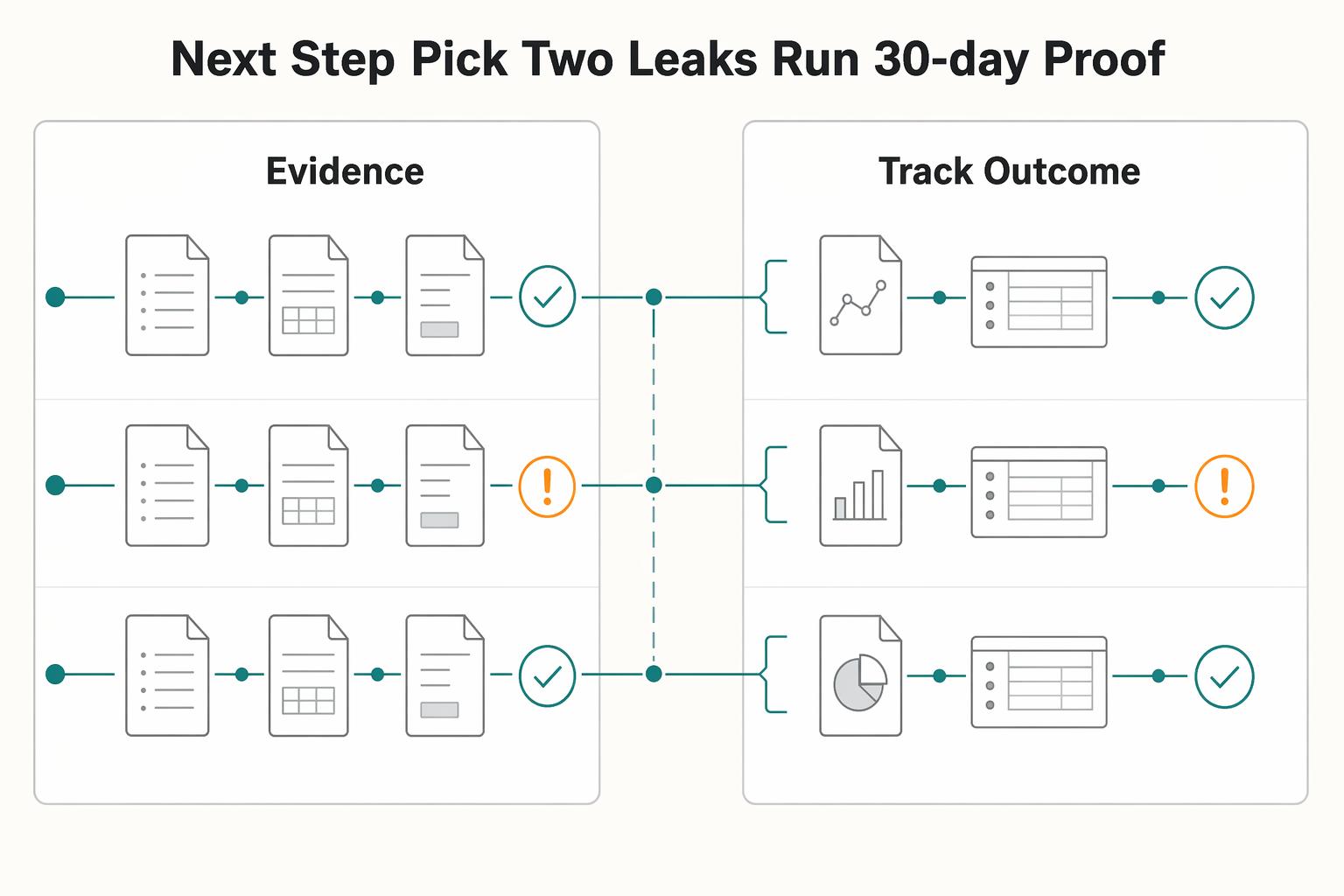
7 Revenue Leak Points in Subscription Platforms You Can Verify in 30 Days
Subscription exceptions can arise when signed terms do not reach billing, billable usage is missed, collections fail or records disagree. Investigate the exception before calling it lost revenue: an approved discount, a grace period or a payout still in transit may explain the difference.
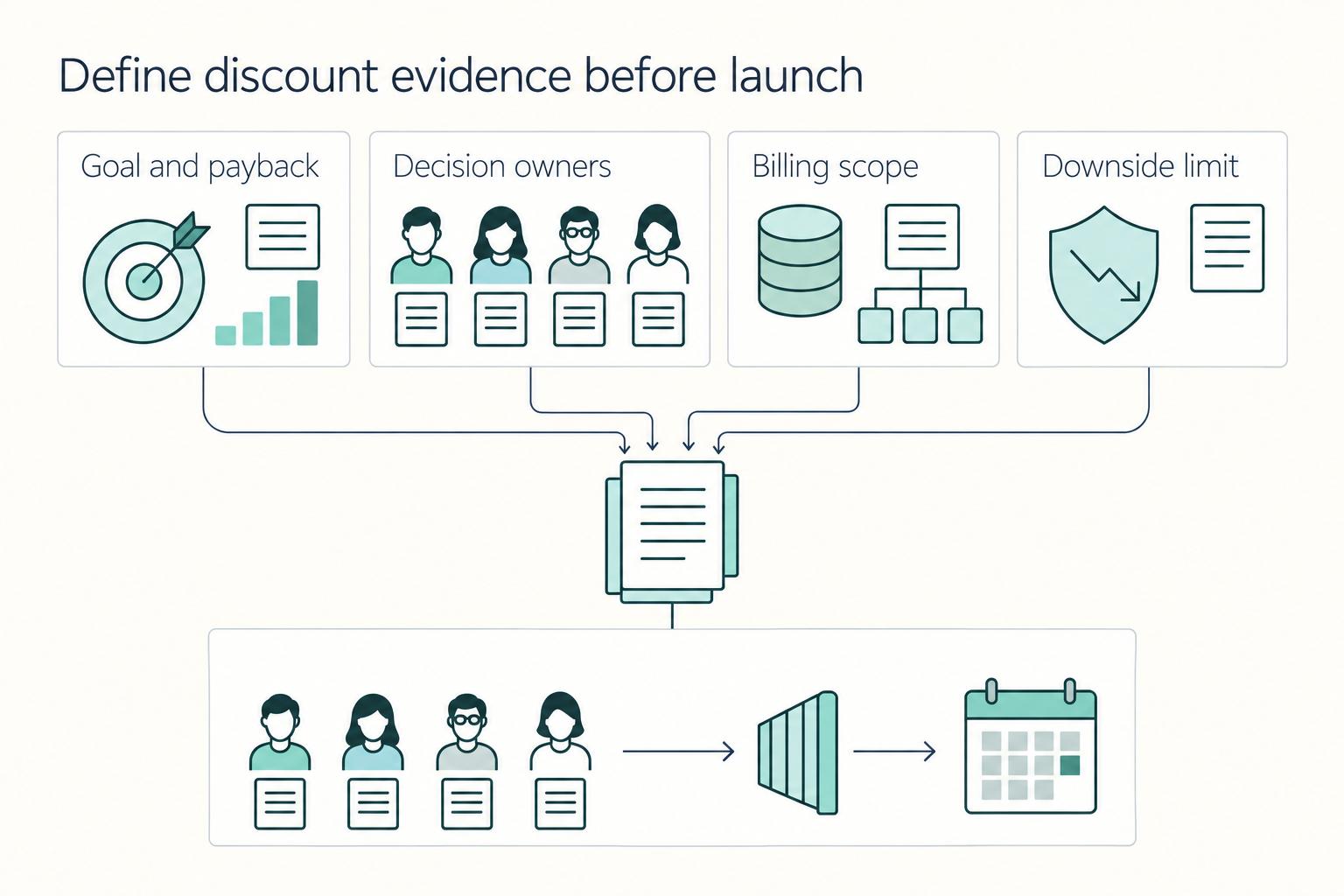
Use Coupons and Discounts in Subscription Billing Without Cannibalizing Revenue
Coupons can influence acquisition quickly, but in a subscription business they do more than change conversion. They also affect how revenue shows up in your operating metrics, especially Monthly Recurring Revenue (MRR). Many teams use MRR to track predictable income and plan growth, even though it is not a GAAP or IFRS accounting metric.
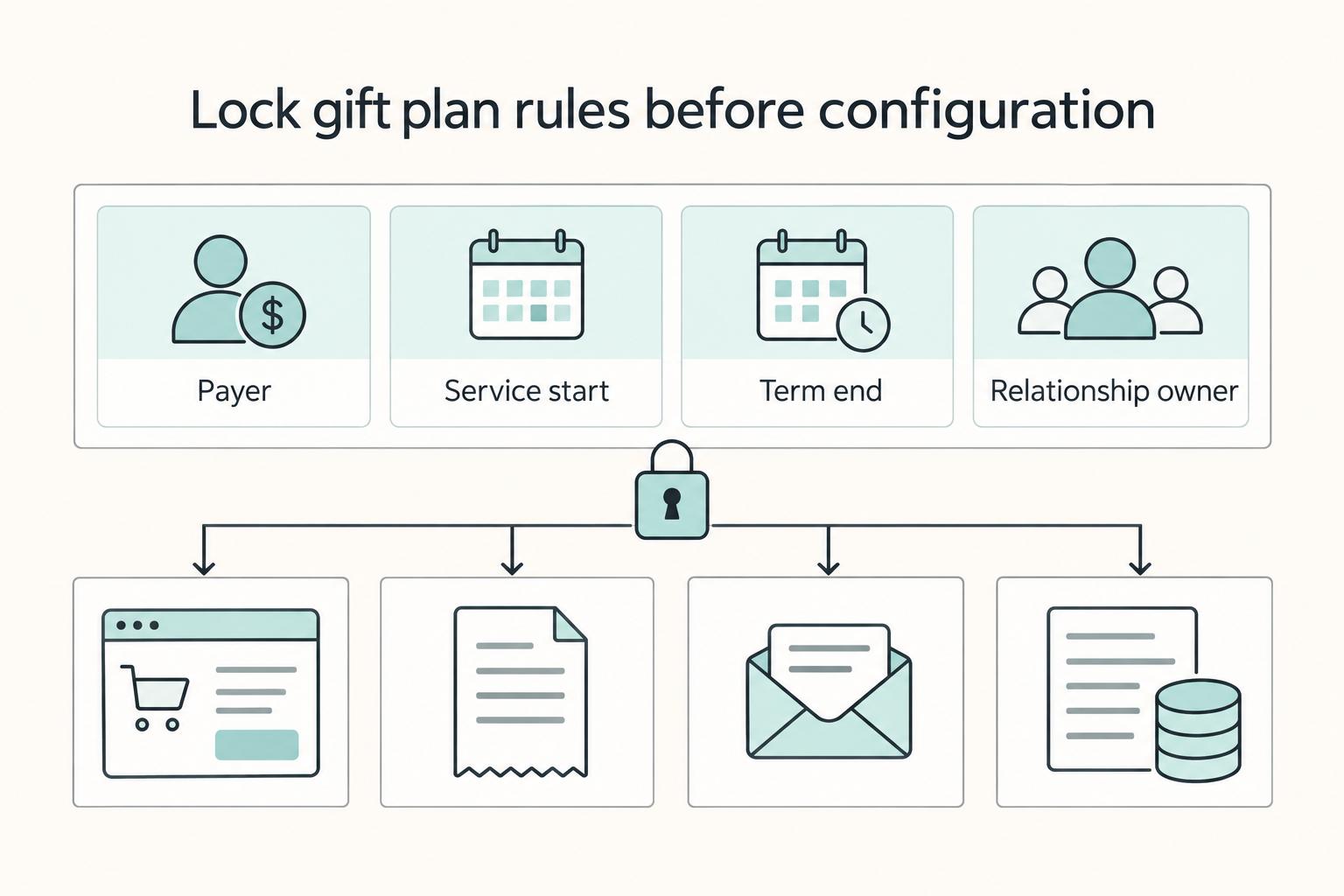
Gift Subscriptions and Prepaid Plans for Platform Billing Without Cleanup Chaos
Gift offers look simple on the storefront, but the billing choice underneath them affects cash flow, customer clarity, and how much cleanup lands on Support and Finance. Prepaid subscriptions can work well because the customer pays the full subscription cost upfront, often with a discount. The catch is that gifting breaks the normal pattern of scheduled recurring transactions on a fixed billing cycle, so small design mistakes can show up later as preventable tickets, refunds, and reconciliation noise.