
Quick Answer
Start by selecting the retainer model before setting price: simple retainer for stable delivery, hours-based retainer for frequent change. Then finalize the retainer agreement, including service period boundaries, acceptance rules, and retainer credit treatment. Only after those rules are testable should you launch recurring invoicing and reminders. For retainer subscription billing talent platforms, this sequence is what turns project revenue into ARR without hiding margin leakage.
Turn Project Revenue into ARR Only After Terms Are Enforceable#
If you want to turn project revenue into something closer to ARR, do not start by copying an agency monthly fee and calling it a subscription. Start by deciding whether the work is stable enough for a retainer. Then lock the commercial rules into a retainer agreement, and automate recurring billing only after the edge cases are visible.
That order matters. A fixed monthly fee can make planning easier on both sides and can move you away from uneven project income toward more predictable revenue. But the same setup can leak margin when scope is loose or core terms are ambiguous.
For operators moving to retainer billing, the usual mistake is not the goal of recurring revenue. It is getting the sequence wrong. Teams often launch billing before they clearly define what is included in the covered period, when work counts as accepted, or whether advance payment covers work defined later. A retainer can include advance payment for professional work defined later, but only if the contract clearly shows how that future work is bounded and approved.
- Decide the model before pricing it.
You need a view on delivery predictability, scope volatility, and how much over or under-utilization you can tolerate. Skip that step, and you end up selling certainty to the client while keeping all the variance on your side.
- Write the rules before you automate them.
The retainer agreement matters most because it turns a sales promise into operating instructions. Your first checkpoint is simple: can finance, ops, and the delivery lead each explain the same scope boundaries and renewal cadence without interpreting them differently?
- Instrument billing before you scale it.
Recurring invoices should reflect a contract you can actually administer, not just a payment schedule. Before launch, check whether your invoice templates, payment reminders, and billing logic produce one clear customer balance instead of several competing versions of what is owed.
One red flag matters from day one: if your offer depends on vague "ongoing support" language, you are already drifting toward unpriced work. Clear scope boundaries are what keep a retainer from turning into an unprofitable all-you-can-eat service arrangement. This guide stays at that operating layer: what to decide first, what to set up before launch, and what to verify before you expand into more segments or service lines. For a step-by-step walkthrough, see The Best Tools for Managing Subscription Billing.
What to prepare before you change pricing#
Before you change pricing, align your baseline data and contract language. If you cannot explain the last completed service period in both operating and contract terms, pause the rollout.
- Build a baseline pack from the last completed service period.
Include project mix, delivery variance, current invoice timing, and project profitability by segment. Use this to spot where delivery and cash collection are creating risk before you reprice.
- Standardize the draft retainer agreement before sales uses it.
Lock scope boundaries, acceptance criteria, the change-order rule, and renewal cadence in one controlled document. Keep clarifications in agreement artifacts, not scattered notes, so teams apply the same terms.
- Run one pilot cohort with one accountable owner.
Start with a narrow cohort inside your talent-platform motion, not your full customer base. Assign one owner across finance, ops, and product so exceptions and tradeoffs have clear accountability.
- Verify billing operations before publishing terms.
Test recurring invoicing, invoice templates, and late payment reminders against pilot scenarios, including a failed payment and a mid-cycle scope change. Launch only when invoice, reminder, and balance outputs stay consistent without manual correction.
You might also find this useful: Subscription Billing for Platforms: How to Manage Plans Add-Ons Coupons and Dunning.
Should you use simple retainer or hours-based retainer first#
Start with the work shape, not sales preference: use a simple retainer when delivery is consistently predictable, and use an hours-based retainer when scope changes frequently. A simple retainer works like fixed cost payment: the price is agreed in advance and does not change with hours, so it is safest when the work pattern is stable.
| Input | What to check in recent cycles | Start with |
|---|---|---|
| Delivery predictability | Similar work, similar effort, similar approval flow each cycle | Simple retainer |
| Client scope volatility | Frequent mid-cycle changes, reprioritization, or added requests | Hours-based retainer |
| Tolerance for over/under-utilization | How much variance you can absorb during the pilot | Low tolerance: hours-based retainer. Higher tolerance with steady work: simple retainer |
If these signals conflict, prioritize scope volatility. It is usually easier to tighten an hours-based model after patterns are clear than to unwind a flat monthly promise once expectations are set.
Match the promise to the service period#
For a simple retainer, define clear boundaries for the service period in the agreement: what is included, what completion means, and what moves to the next cycle. For an hours-based retainer, keep the commercial conversation tied to time consumed or reserved so changes in scope stay visible.
Retainer structures are often preferred by both sides, but that only holds when the terms are explicit enough that sales, delivery, and finance are working from the same definition of what the customer bought.
Put tradeoffs and review rules in writing#
Document the customer-facing tradeoff directly in the retainer agreement: simple retainer emphasizes price certainty, while hours-based retainer emphasizes flexibility. Also state your unused-time policy clearly, including whether rollover is allowed, so it is not handled ad hoc later.
Set a contract review trigger for repeated scope drift, but define that trigger as your own policy rather than treating any single threshold as universal. We covered a related operating discipline in Curated Marketplaces vs Open Platforms for Sourcing Talent.
Set contract terms that stop margin leakage#
After you choose simple or hours-based retainer, reduce ambiguity in the agreement so scope creep and unbilled work do not quietly erode margin. Leakage usually starts when scope, credits, and exceptions are interpreted differently by sales, delivery, and finance.
| Contract area | What to define | Why it matters |
|---|---|---|
| Service period and scope | What is included, what is excluded, and what event makes a request out of scope | A retainer is recurring payment for a defined scope |
| Renewal cadence and outputs | Measurable deliverables or completion markers, not effort-only language | Clear output makes invoice disputes less likely |
| Retainer credit rules | Where credits apply, what cannot be credited, and how expiry works | Finance can apply the rule consistently at renewal and during exceptions |
| Approval checkpoints for exceptions | Named approvals for off-cycle concessions, credit extensions, free extra work, or temporary scope expansion | Helps prevent ad hoc promises from becoming permanent margin leakage |
Step 1. Define the service period with explicit scope and out-of-scope triggers.
A retainer is recurring payment for a defined scope, so define that scope in operating terms. For each cycle, state what is included, what is excluded, and what event makes a request out of scope.
Use the pay-for-work vs. pay-for-access split clearly. If it is pay-for-work, tie the cycle to specific deliverables and acceptance checkpoints. If it is pay-for-access, define the access promise precisely, for example response handling, availability windows, or reserved capacity.
Step 2. Tie each renewal cadence to measurable outputs.
Write each cycle around measurable deliverables or completion markers, not effort-only language. Phrases like "support as needed" make invoice disputes more likely because the output is unclear.
This is the core leakage mechanism: unbilled hours and scope creep are hard to invoice when the contract does not define what was bought. If a request changes the agreed output, route it through a change decision before absorbing it into the current cycle.
Step 3. Set enforceable retainer credit rules.
If you offer retainer credits, define in writing where credits apply, what cannot be credited, and how expiry works. Keep the rule simple enough that finance can apply it consistently at renewal and during exceptions.
Step 4. Require approval checkpoints for exceptions.
Set named approvals for off-cycle concessions, credit extensions, free extra work, or temporary scope expansion. Requiring delivery and finance sign-off before invoice or credit changes helps prevent ad hoc promises from becoming permanent margin leakage.
Related: Build vs. Buy Subscription Billing: Why Most Platforms Eventually Regret Building Their Own.
Build the billing engine before you promise ARR#
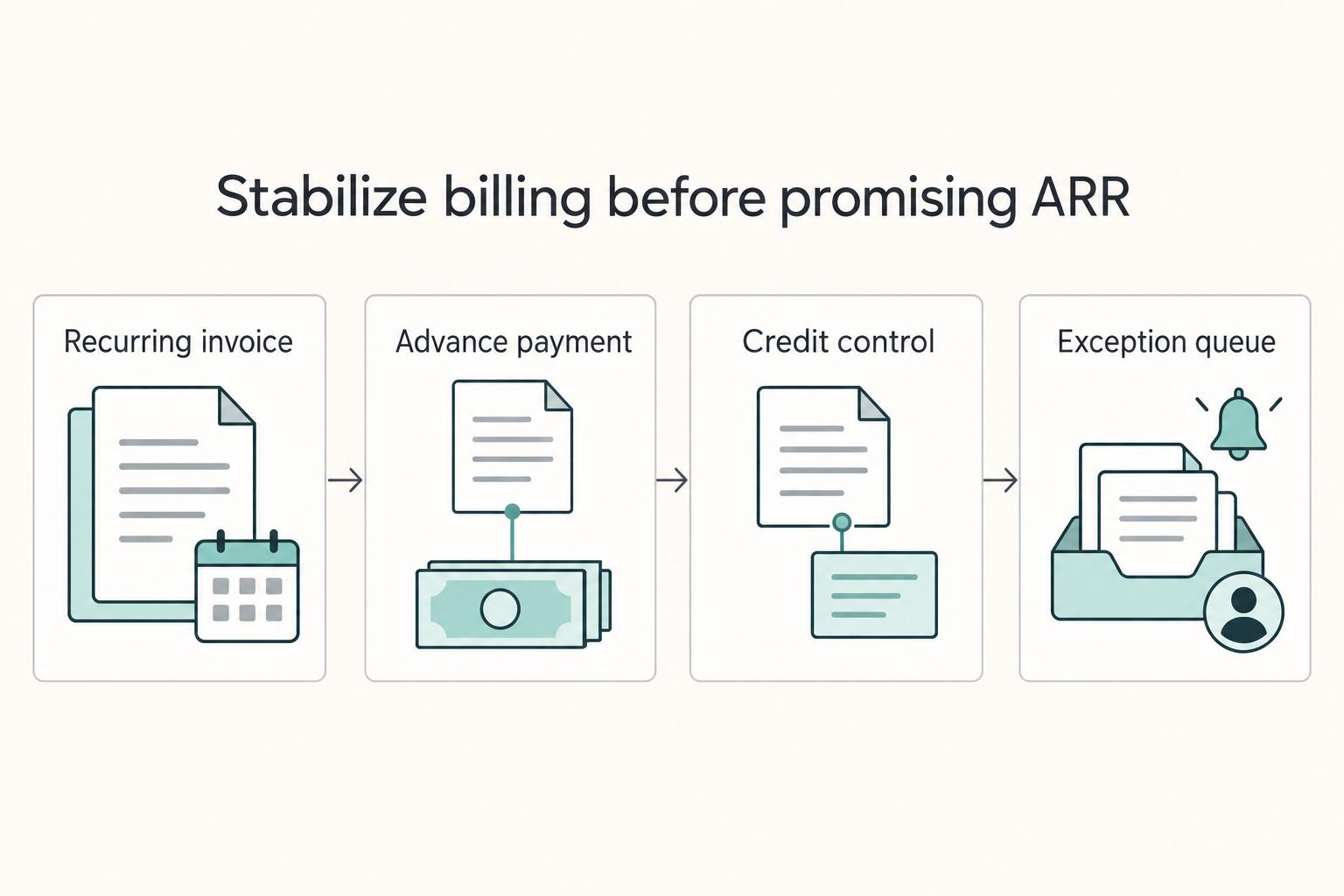
Do not treat ARR as reliable until recurring billing, payment handling, and credit controls are stable in your system. A useful rollout is: make recurring invoicing reliable, add advance collection rules, then apply retainer credit through controlled workflows.
| Billing step | What to set up | Control to verify |
|---|---|---|
| Recurring invoicing | Tie each recurring invoice to the covered period and renewal cadence; use distinct templates for simple retainer and hours-based retainer | Rerun the same customer/period case in test and confirm the same invoice outcome, not a duplicate obligation |
| Advance payment collection | Link payment to a defined invoice or period obligation and set one clear rule for when service starts in prepaid cases | Keep payment events separate from revenue-recognition logic |
| Templates and credit application | Lock line-item structure by plan type, keep credit entries explicit, and require traceability back to the underlying invoice or approved adjustment | Apply retainer credit through evidence-based rules, not ad hoc negative lines |
| Reminders and exception handling | Set late-payment reminders by default and route failed collections, disputed credits, missing required fields, and issuance failures into an owned queue | Define idempotent retry behavior so replays do not create duplicate invoices, credits, or collection attempts |
Step 1. Configure recurring invoicing as the source of truth. Tie each recurring invoice to the covered period and renewal cadence already defined in your contract terms. Keep required fields consistent by plan type so finance can post invoices the same way every cycle. For simple retainer and hours-based retainer, use distinct templates instead of operator-specific variations. Then rerun the same customer/period case in test and confirm you get the same invoice outcome, not a duplicate obligation.
Manual spreadsheet tracking is a warning sign here: it slows operations and increases error risk, which can hide unstable recurring logic.
Step 2. Layer advance payment collection without breaking invoice integrity. If you collect before delivery, link the payment to a defined invoice or period obligation so cash does not get reconciled later as an exception. Set one clear rule for when service starts in prepaid cases, and apply it consistently.
Keep payment events separate from revenue-recognition logic. Finance workflows may need to support more complex treatment, including ASC 606, so "payment received" should not be your only accounting trigger.
Step 3. Standardize templates and control credit application. Template discipline prevents plan-by-plan drift as volume grows. Lock line-item structure by plan type, keep credit entries explicit, and require traceability back to the underlying invoice or approved adjustment.
Apply retainer credit through evidence-based rules, not ad hoc negative lines. If two operators would resolve the same case differently, your template or approval policy is still too ambiguous.
Step 4. Add reminders, exception queues, and idempotent retries from day one. A subscription label does not create subscription outcomes by itself. The operational gains come from automation and clear exception handling.
Set late-payment reminders by default, and route failed collections, disputed credits, missing required fields, and issuance failures into an owned queue with next actions. Define idempotent retry behavior for invoice and payment-status events so replays do not create duplicate invoices, credits, or collection attempts.
If you want a deeper dive, read Streaming Media Subscription Billing: How OTT Platforms Handle Billing Trials and Churn.
Tie ARR growth to profitability and budget controls#
Signed retainers are not automatically healthy ARR. Treat recurring revenue as healthy only when an account stays within its period budget and remains profitable, not just when fees are billed on schedule.
Step 1. Set and track a period budget at the account level. Define the cycle budget before delivery starts, then track budget burndown during the active period. For simple retainers, tie it to the fixed delivery allocation; for hours-based retainers, tie it to expected time drawdown. You should be able to see contracted value, consumed effort, remaining budget, and current cycle dates in one view.
Step 2. Tie delivery records directly to billing records. Calculate project profitability from linked evidence, not invoice totals alone. Connect time entries, milestone completion, or KPI-based delivery proof to the same invoice or period record so deliverables stay tied to quantifiable outcomes rather than vague output language.
Step 3. Review margin weekly and intervene before renewal. Compare burndown trend with delivery velocity each week. If budget burn and delivered outcomes drift out of alignment, trigger scope correction or repricing review before the next renewal cycle.
Step 4. Report booked ARR separately from healthy ARR. Keep booked ARR as contracted recurring value, but use healthy ARR as the internal operating metric. Include only accounts with current delivery evidence, active burndown monitoring, and no reliance on ad hoc credits or unpaid over-service.
Related reading: How to Dispute Billing Errors Under the Fair Credit Billing Act.
Roll out by market constraints and payment rails#
Sequence expansion by market constraints and rail reliability, not sales pull alone. After you prove profitability, launch only where you can trace the full money path from collection to payout.
Step 1. Choose launch markets by payout complexity first. Start with countries where collection, payout routing, and verification states are already visible in one operating flow. In B2B payments, manual complexity is still common, and a single-provider setup can limit local payment-method adoption and create a global checkout failure point. If a market adds extra payout hops or manual exception handling, defer it until controls are cleaner.
A practical checkpoint: trace one test transaction end to end and confirm you can see collection status, ledger reference, conversion event (if any), and final payout status without cross-team reconstruction.
Step 2. Verify compliance gating before publishing terms. Before launch, confirm which checks gate money movement in that market and whether your operating record captures them end to end. Where required, that includes KYC/KYB status, payout-policy checks, and an audit trail that explains who was charged, who was paid, and when statuses changed.
Keep the evidence pack complete and operational: onboarding/verification status, transaction IDs, ledger references, payout status history, and any manual-review notes.
Step 3. Match the billing model to money movement reality. Use an advance payment structure when payout timing is less predictable, and use retainer credit only when credit creation, application, and reconciliation are fully supportable in local operations. If payout operations are fragile, tighten credit rules or delay launch instead of masking risk with loose rollover terms.
Step 4. Keep the path traceable in Gruv where supported. Where supported, use Gruv modules to keep collection, ledger posting, conversion (when needed), and payout tracking in one traceable chain. The go/no-go test is simple: can finance and ops answer, from the same record set, what happened to this payment and what payout state it produced?
Without that traceability, expansion mostly adds harder-to-audit exceptions. This pairs well with Best Merch Platforms for Creators Who Want Control and Compliance.
Common mistakes and how to recover fast#
Most post-launch damage comes from ambiguity left live for too long. When one of these breaks, pause new selling, standardize the fix, and verify from records, not assumptions.
| Mistake | Recovery | What to verify |
|---|---|---|
| Selling a retainer subscription before contract terms are clear | Freeze new deals on that version and issue one standard addendum across active accounts | Every live account has the same active terms and matching invoice language for scope, payment timing, and late-payment consequences |
| Allowing unlimited rollover in an hours-based retainer | Add rollover caps and a reset rule at the next renewal cadence, then communicate the change before renewal closes | Account-level records show unused-hour balances, renewal dates, and how rollover is handled under the updated policy |
| Tracking revenue without tracking project profitability | Run a weekly budget-burndown review and send mismatches to exception triage | Each account has one view that ties delivery or time records to billed amounts and remaining budget |
| Treating vendor claims as proof your constraints are covered | Run a controlled pilot for tools like Workamajig, Avaza, Scoro, or Accelo, and validate unknowns directly in your own flow | Handoff points under time pressure, exception logs, and whether collection/reconciliation works without fragile manual workarounds |
1. Mistake: selling a retainer subscription before contract terms are clear Recovery: freeze new deals on that version and issue one standard addendum across active accounts. Missing payment terms can normalize delays and shift financing burden onto you. What to verify: every live account has the same active terms and matching invoice language for scope, payment timing, and late-payment consequences.
2. Mistake: allowing unlimited rollover in an hours-based retainer Recovery: add rollover caps and a reset rule at the next renewal cadence, then communicate the change before renewal closes. What to verify: account-level records show unused-hour balances, renewal dates, and how rollover is handled under the updated policy.
3. Mistake: tracking revenue without tracking project profitability Recovery: run a weekly budget-burndown review and send mismatches to exception triage. Revenue alone can hide leakage from unbilled scope creep and missed failed payments, especially when manual billing is involved. What to verify: each account has one view that ties delivery or time records to billed amounts and remaining budget.
4. Mistake: treating vendor claims as proof your constraints are covered Recovery: run a controlled pilot for tools like Workamajig, Avaza, Scoro, or Accelo, and validate unknowns directly in your own flow. What to verify: handoff points under time pressure, exception logs, and whether collection/reconciliation works without fragile manual workarounds.
Conclusion#
Do not add recurring invoices and hope the economics work later. For teams using retainer billing, the durable path is to choose the right retainer shape, write terms that hold under pressure, and verify profitability before you scale the offer.
Step 1. Choose the commercial model that matches the work. Start with the delivery pattern, not the revenue target. If the work is stable and repeatable, a simple retainer can make sense because clients are buying ongoing access to service over a defined cycle, with a predetermined fee that supports more predictable budgeting. If the work has clearer boundaries and simpler budgeting as a one-off package, keep it as fixed-fee. If the price is agreed in advance and will not change regardless of hours spent, treat it as fixed cost and plan delivery carefully.
Step 2. Lock the agreement before you sell the plan. Your retainer agreement should make the commercial promise legible. It should show what is included, what is not, and how work is judged. The practical red flag is trying to use a monthly fee to hide constant scope change. Once that happens, predictable customer cost can turn into less predictable delivery cost.
Step 3. Pilot the offer and verify transparency, not just collections. Use one pilot cohort first. The test is not whether invoices go out on time. The real checkpoint is whether you can trace each billed cycle to the underlying hours, costs, and delivered output, and then assess project profitability from those records. If you cannot show finance and operations the same account story from one evidence trail, you are not ready to expand.
Step 4. Expand only after the constraints are visible. Retainers are attractive because they can create predictable recurring revenue and make budgeting easier for customers, but those benefits hold only when the operating constraints are known up front. Before broader rollout, confirm that your billing records and operating model support the same story. If a market or customer segment breaks transparency, keep the rollout narrow until you fix that gap.
Copy and paste this into your launch doc:
- Pick a retainer shape using delivery pattern and scope stability
- Decide whether any work should stay fixed-fee or fixed cost instead of being wrapped into a recurring plan
- Finalize the retainer agreement, core contract terms, and service boundaries
- Configure recurring billing and record tracking before launch
- Stand up budgeting and project profitability checks for the pilot cohort
- Expand only after the pilot proves transparent records for billing, costs, hours, and output
Frequently Asked Questions
What is the practical difference between a retainer and a subscription for talent platforms?
A retainer agreement is a long-term work-for-hire arrangement for ongoing services with stable payments. In practice, the retainer defines the service relationship, while the subscription is the recurring billing pattern around it. In this framing, clients may pay in advance for professional work to be determined later, so billing mechanics should stay aligned with the service terms.
When should we choose a simple retainer instead of an hours-based retainer?
Choose based on how you define value and capacity. One guidance point is to price retainers by value delivered, not only hours worked. Use an hours-based retainer when you need a set number of service hours tied to the monthly fee. Keep scope boundaries explicit so the retainer does not expand into unprofitable delivery.
How should retainer credit be applied so finance and customers see the same balance?
This guide does not define a standard rule set for how retainer credits must be applied. The safest approach is to define one clear policy in the retainer agreement and keep customer-facing billing records consistent with it.
What controls matter most to prevent margin loss in recurring service contracts?
The biggest control is clear scope boundaries, because unclear scope is how a stable monthly fee can turn into unpriced delivery. Pair that with pricing discipline based on delivered value rather than hours alone. Some agency guidance cites 15% to 30% target margins as a benchmark, not a universal standard.
What must be decided before moving project customers to ARR pricing?
Decide the retainer model and scope boundaries first. Confirm whether the plan is value-based, hours-based with a set service-hour allocation, or another clear retainer structure, and ensure recurring advance billing can run consistently. This guide supports retainers as a way to improve revenue stability, but it does not prescribe a single ARR migration checklist.
How should we handle retainer credit expiry without damaging renewal rates?
If you use retainer credit expiry, do not assume there is a standard rule to fall back on here. This guide does not define credit application order, expiry windows, or rollover formulas. Set the policy explicitly in your agreement and billing communication so customers and finance are operating from the same terms.
Try a related tool
Researched and edited by the Gruv editorial team. Gruv builds cross-border billing, payouts, and finance-operations software for global businesses.
Sources
- claremontca.gov/Hometrusted
- comptroller.texas.gov/purchasing/docs/96-1809-4.0-print.pdftrusted
- congress.gov/bill/119th-congress/house-bill/3838/texttrusted
- congress.gov/115/statute/STATUTE-132/STATUTE-132-Pg1636.pdftrusted
- lapc.edu/sites/lapc.edu/files/2023-11/2004-05pierceca...trusted
- open.defense.gov/Regulatory-Program/Active-Guidance-Documenttrusted
- pmc.ncbi.nlm.nih.gov/articles/PMC12083830trusted
- revenue.wi.gov/documents/wpam18.pdftrusted
Educational content only. Not legal, tax, or financial advice.
Related Posts
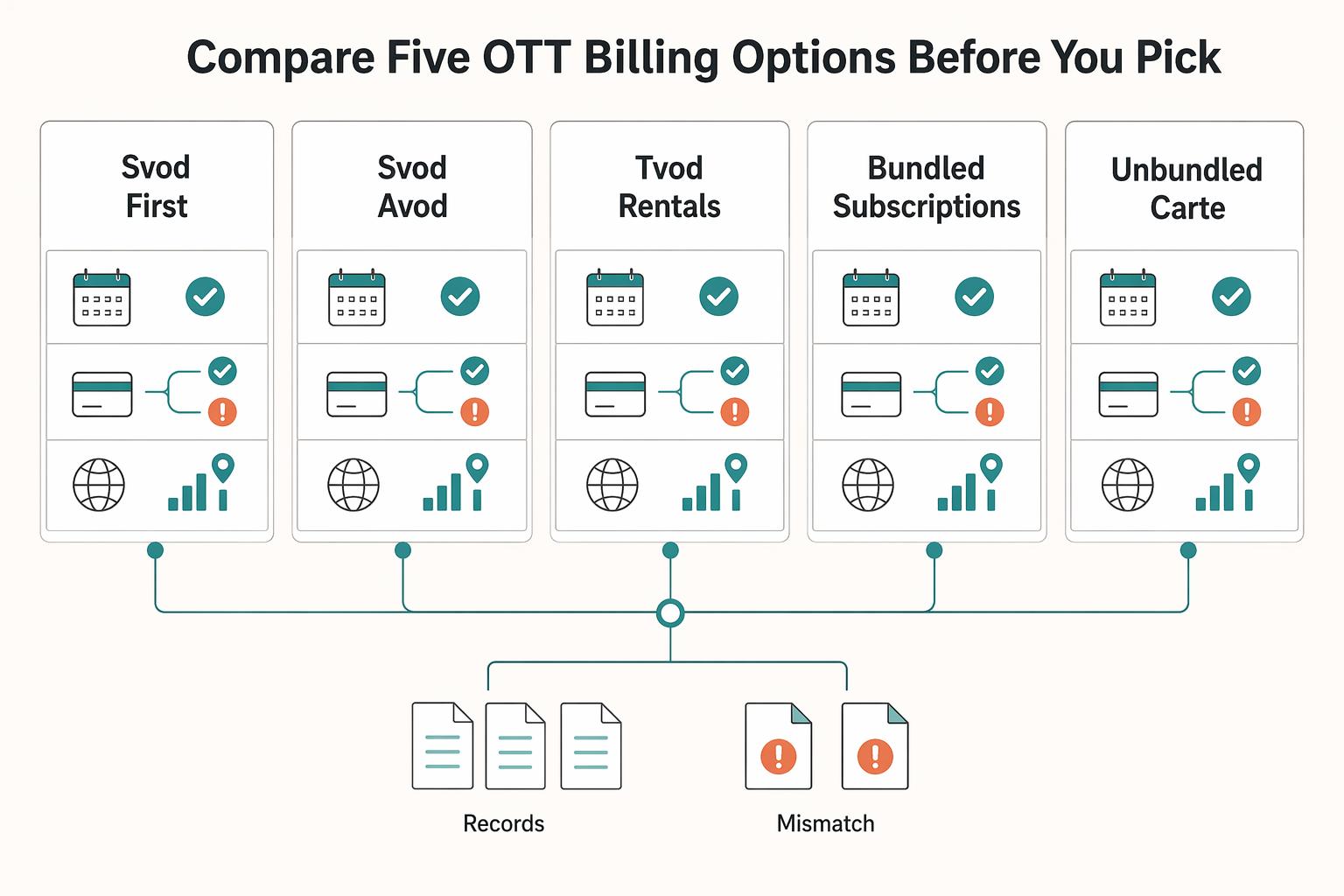
How OTT Platforms Handle Billing Trials and Churn in Streaming Subscriptions
Start with the monetization model. Choose your monetization path before a product demo starts steering the decision. For a streaming offer, the real question is not which vendor can show subscriptions on a checkout page. It is whether your business is built around recurring access, ad-supported reach, one-off transactions, or a direct-to-consumer mix that may vary by market.
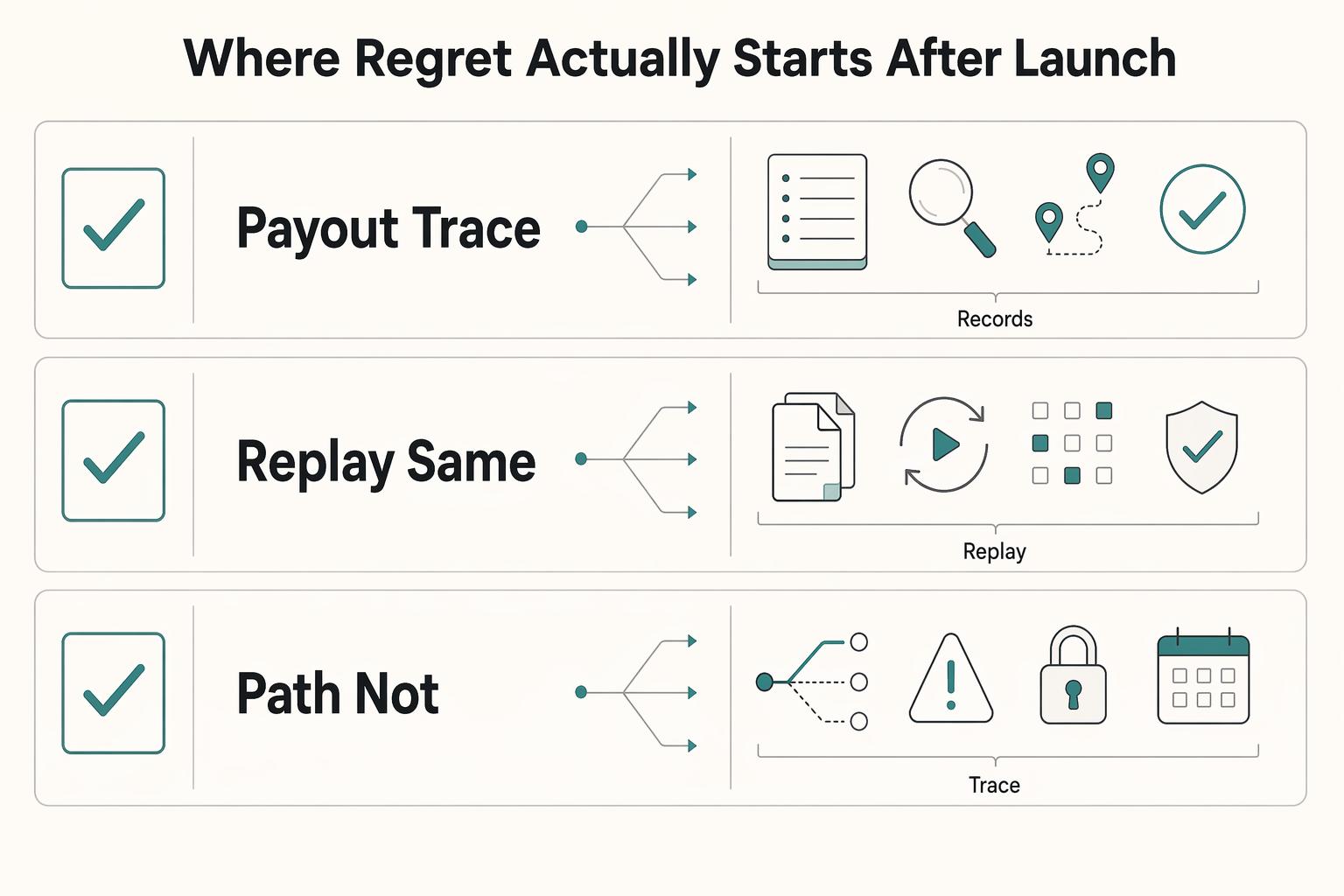
Why Platforms Regret Building Their Own Subscription Billing
Regret in a build-versus-buy billing decision can start with a sensible instinct. You want product control now, so building can feel faster than waiting on a vendor model that does not quite fit your plans. The part you can see at launch is not always the part that costs you later, so it helps to separate short-term speed from long-term ownership.
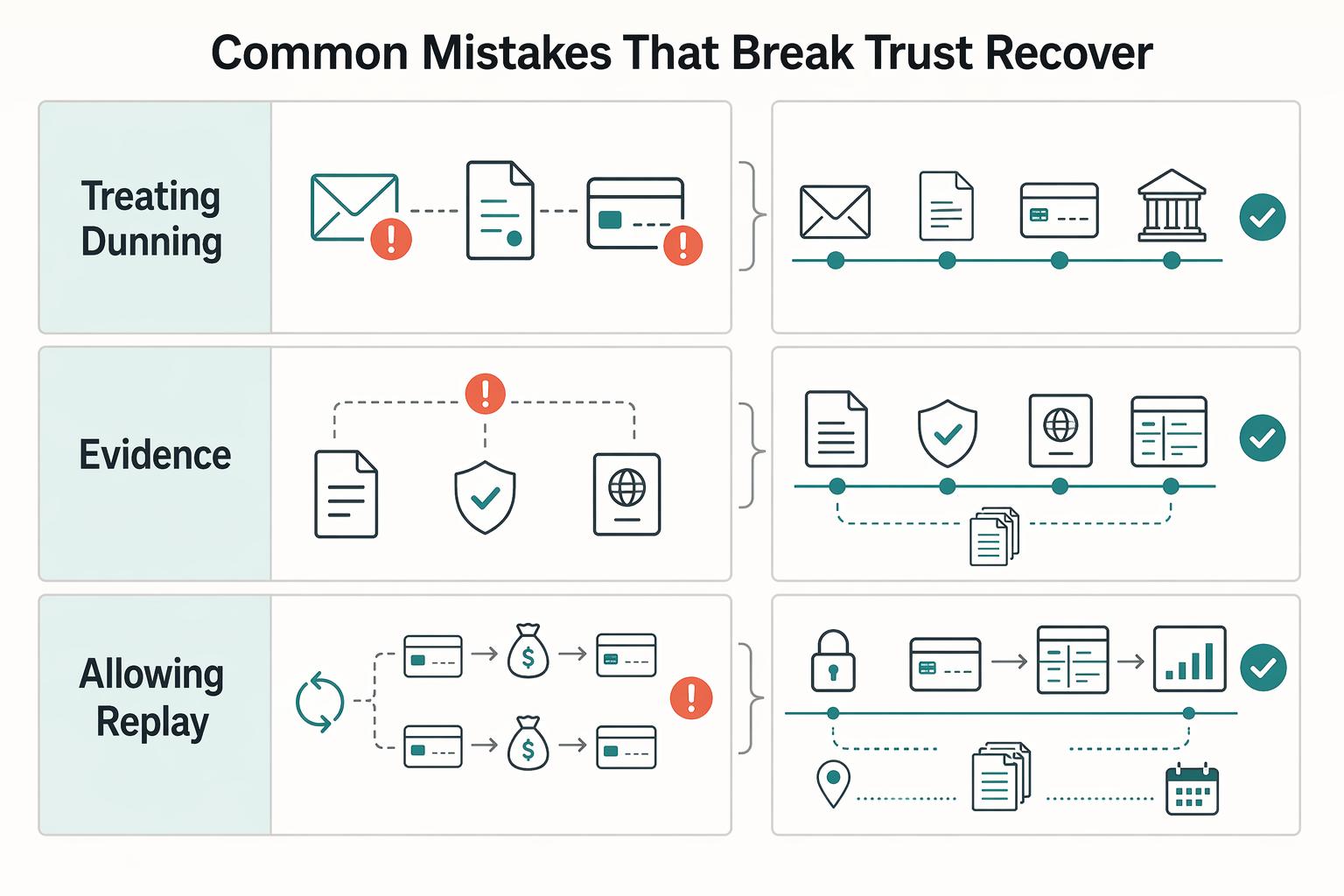
Subscription Billing Platforms for Plans, Add-Ons, Coupons, and Dunning
**Treat subscription billing as an operating discipline, not just a pricing setup.** A subscription is the billing object used to charge a customer for a selected plan. Every choice around Plans, Add-ons, and Coupons has downstream effects once renewal time arrives.