
Quick Answer
Yes - most teams should buy first and build selectively later. For build vs buy subscription billing platform regret, the safer default is to keep product-specific entitlement logic close to product while leaving invoice lifecycle, retries, and state handling on a proven system until constraints are repeated and measurable. Move custom scope forward only after you can trace real changes from API request to webhook event to invoice result and journal output without manual reconstruction.
Why this decision creates regret later#
Regret in a build-versus-buy billing decision can start with a sensible instinct. You want product control now, so building can feel faster than waiting on a vendor model that does not quite fit your plans. The part you can see at launch is not always the part that costs you later, so it helps to separate short-term speed from long-term ownership.
That pattern is not unique to billing. Consumer research on post-purchase dissonance describes regret as dissatisfaction caused by unmet expectations, and related work suggests that instant-gratification decisions can reduce deliberation. Even consumer anecdotes describe regret showing up almost immediately after impulse buys. That is still not proof of billing outcomes, and it should not be treated as such. It is a directional warning sign.
| What looks attractive early | What to pressure-test before committing |
|---|---|
| Full control over plans and packaging | Which edge cases you are prepared to own in billing behavior |
| Fast custom API fit for your product | How you will handle retries, idempotency, and event consistency if you own them |
| Entitlements tightly wired into product logic | How you will keep pricing policy separate from invoice behavior over time |
| No vendor constraints on day one | Who owns ongoing maintenance across finance, ops, and compliance |
The comparison to keep in mind is simple. Building can buy local control. Buying can buy proven handling for repetitive, failure-prone work when vendor fit is strong. If your team treats those as the same thing, you can overbuild the wrong layer. A useful early heuristic is to keep product-specific entitlement logic close to product, and be cautious about taking on core orchestration before ownership of exceptions, retries, and reconciliation is explicit.
That is the approach this article follows. It is not a binary argument. A practical path is often staged: buy first where mistakes are expensive, keep the product-specific policy layer you actually need, then switch only when you hit measured constraints. The checkpoints matter more than the slogan. If a bought platform is blocking pricing experiments or forcing repeated entitlement workarounds, that is a signal to build selectively. If your pain is mostly incident handling around APIs and webhooks, replacing the platform may just move similar problems into your own codebase.
Carry one verification detail through the rest of the article. Before you decide to build, ask for an evidence pack, not opinions. You should be able to point to concrete pain in your own system, such as recurring proration exceptions, invoice state mismatches, or repeated manual fixes between events and internal records. If the case for building depends on "we just want more control," treat that as a red flag, not a threshold.
One final limit up front. Examples from Reddit or Hacker News can help with pattern spotting, but they are not a benchmark. The recommendations here stay anchored to operator-grade criteria you can check in your own stack, team, and ownership model. For adjacent reading, see FMLA for Freelancers: Why It Doesn't Apply and How to Build Your Own Leave Plan. If you want a quick next step for "build vs buy subscription billing platform regret," try the free invoice generator.
Build vs buy subscription billing at a glance#
Use a split decision, not a purity test: buy for commodity billing operations, and build where billing behavior is a real product differentiator.
| Criteria | Buy first | Build selectively | Risk visibility |
|---|---|---|---|
| Implementation speed | Faster launch because core subscription mechanics are already in place | Slower start because you own core billing behavior from day one | Fails loudly when launch slips; fails quietly when early shortcuts lock in assumptions you later have to unwind |
| API and webhook fit | You adapt to vendor API and event models | You design contracts and events around your product | Quiet risk when retries are not handled safely; loud risk when downstream systems cannot use events reliably |
| Proration complexity | Common proration paths are usually available, with less policy flexibility | You control upgrade, downgrade, pause, and credit behavior | Loud when invoice outcomes surprise customers; quiet when exceptions are patched manually instead of fixed at root |
| Idempotency requirements | Platform support helps, but your integration still must handle repeats and replays | You own duplicate prevention and retry/replay behavior end to end | Mostly quiet when wrong: duplicate actions or missed updates can sit unnoticed |
| Ledger and journal traceability | Faster path to stable invoice/payment records | Works if you are ready to design traceable journals and reconciliation flows | Loud when invoice state and finance records diverge; quiet when close depends on spreadsheet correction |
| Ongoing maintenance load | Lower on core billing mechanics, while integration exceptions remain yours | Higher because every edge case, patch, and regression stays with your team | Quiet when roadmap time is gradually consumed; loud when incidents begin pulling teams after hours |
Decision rule: if your roadmap depends on custom entitlement logic across multiple plans now, build that layer selectively. If your bottleneck is launch speed and billing reliability, buy first and keep custom code away from core invoice, retry, and state-management flows.
This is a strategic and TCO decision, not just a technical one. The cost you miss is usually opportunity cost and recurring maintenance: time spent on billing plumbing is time not spent on product differentiation, and that burden tends to recur after launch.
Before choosing, run one trace test: take a real subscription change and follow it from API request to webhook event to invoice result to journal entry. If that path is not clear without manual interpretation, you are choosing future cleanup work more than architecture.
If you want a deeper dive, read How to Build a Subscription Billing Engine for Your B2B Platform: Architecture and Trade-Offs.
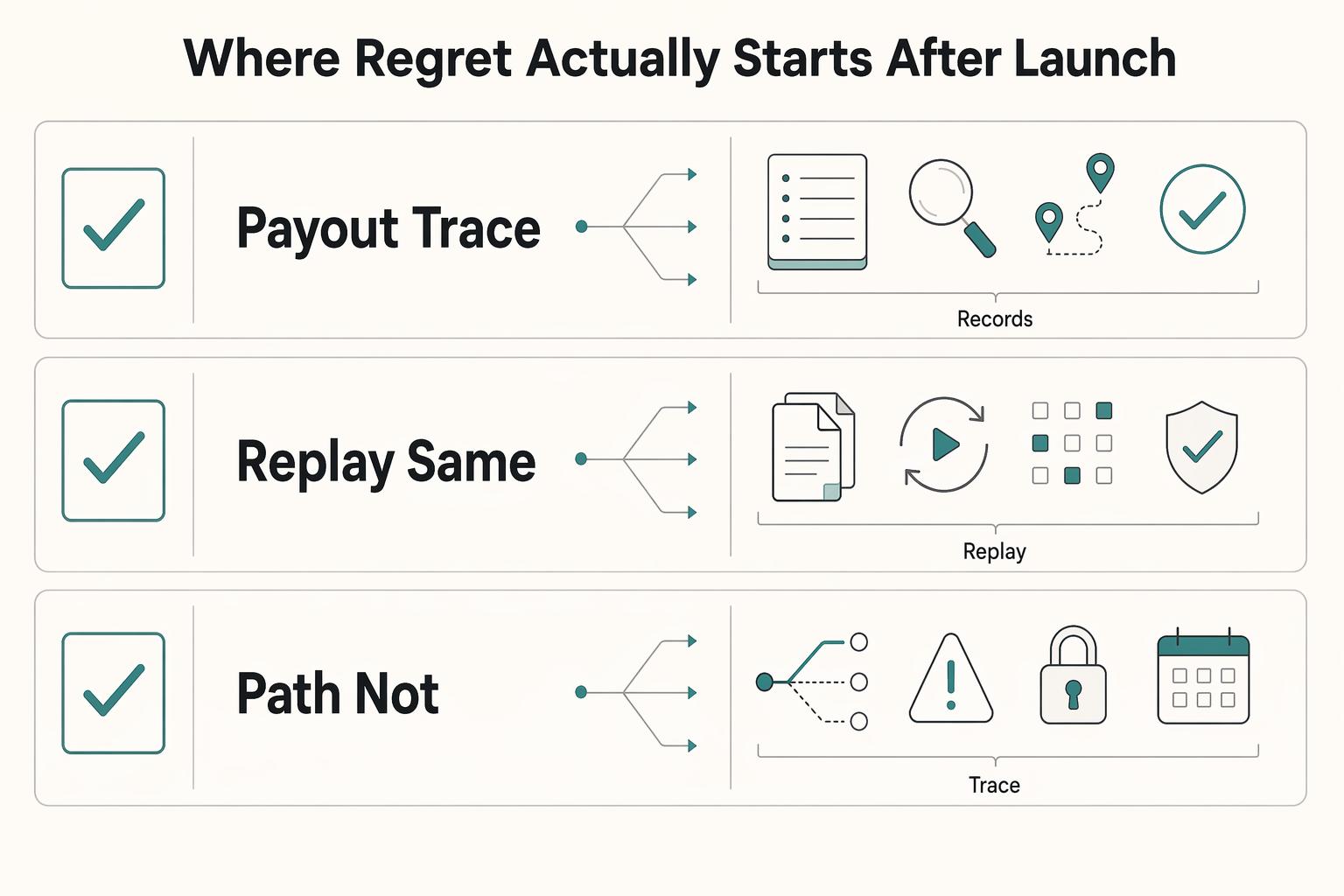
Where regret actually starts after launch#
Regret usually starts after go-live, not during it, when billing changes turn into ongoing maintenance work. If you choose a thin custom integration because Stripe Standard is fast to start with no setup fees, monthly fees, or hidden fees, the pressure often appears later when rules need to change safely.
| Checkpoint | What to verify |
|---|---|
| Trace one real subscription change | Follow it from API request to webhook event to invoice outcome and journal record |
| Replay the same path | Confirm behavior stays correct under retries |
| If the path is not cleanly verifiable | Keep custom code focused on policy-layer behavior and keep commodity billing mechanics bought for longer |
The core tradeoff is ownership timing. Stripe Connect frames the choice as offloading maintenance to Stripe or taking full control and ownership of payments. That is not just an architecture preference. If your pricing and entitlement rules are still moving, taking full ownership too early can create avoidable cleanup work.
Use one practical checkpoint before expanding custom billing scope:
- Trace one real subscription change from API request to webhook event to invoice outcome and journal record.
- Replay the same path and confirm behavior stays correct under retries.
- If you cannot verify that path cleanly, keep custom code focused on policy-layer behavior and keep commodity billing mechanics bought for longer.
We covered this in detail in Subscription Billing Platforms for Plans, Add-Ons, Coupons, and Dunning.
What to build yourself and what to buy first#
Start with a buy-then-build default: keep the product policy that defines your customer promise in-house, and buy the recurring billing mechanics first. This usually gives you speed without locking your team into a maintenance-heavy path too early.
The core tradeoff is opportunity cost and ongoing ownership. Time spent building backend commerce infrastructure is time not spent on differentiated product work, and homegrown billing systems often pull teams into recurring bug fixes and patch releases.
| Area | Keep close to product when | Buy first when |
|---|---|---|
| Plan packaging and entitlement policy | Your plan rules, feature access, and exceptions change often across self-serve (PLG) and sales-assisted (SLG) motions | Your packaging is still simple or you are still learning which rules actually need to be custom |
| Core recurring billing mechanics | You have clear, durable ownership for billing incidents, webhook/API behavior, and replay/reconciliation operations | Ownership is unclear or shared informally, and the team is already stretched |
A practical check is simple: if your team cannot clearly and consistently own billing incidents and follow-through work, delay taking orchestration in-house. Payments scope is wider than it first appears, including compliance, fraud, chargebacks, multi-currency, and tax concerns, and seemingly simple features can hide edge cases for a long time.
That is why buy-then-build remains a useful operating model: buy first, learn your real constraints, and only build custom components when the need is proven. In many cases, the build phase is smaller than expected, or never becomes necessary. For the full breakdown, read Build a Platform-Independent Freelance Business in 90 Days.
The hidden cost model most teams skip#
Your cost model is incomplete unless every workstream has both a named owner and a real operating artifact. If you only compare vendor fees to engineer salary, you miss the recurring operating load.
| Workstream | Cost lines teams miss | Verification checkpoint |
|---|---|---|
| Engineering ownership | API changes, webhook replay handling, idempotency bugs, patch releases, test maintenance | Name the owner and point to the incident runbook, replay dashboard, and duplicate-event test evidence |
| Finance reconciliation | Journal corrections, invoice-state mismatches, month-end review time, exception tracking | Show the reconciliation report, correction log, and close sign-off owner |
| Compliance operations | KYC, KYB, AML policy updates, audit prep, exception review | Identify the policy owner and the audit export or review log they use |
| Tax-document handling | W-8, W-9, Form 1099 collection, validation, follow-up, and storage | Confirm the document queue, reviewer, and export path for finance or tax reporting |
| Migration overhead | Data mapping, backfill checks, dual-running, rollback planning, support tickets during cutover | Produce the migration checklist, mapping sheet, and reconciliation criteria between old and new outputs |
The hidden lines are often the ones teams skip early. A bug cost is not just the fix; it also includes investigation, support handling, and reconciliation cleanup when records drift.
Use a hard gate before you choose build. If the model depends on "we probably won't hit edge cases," re-estimate. Hidden subscription charges can be easy to miss at first and keep pulling money over time; hidden operating costs behave the same way. If you cannot tie two or more workstreams to an owner and artifact, treat the build case as undercosted and keep buying longer. This pairs well with our guide on The Best Tools for Managing Subscription Billing.
Use buy then build with explicit switch checkpoints#
Buy first, then build only when the same constraint keeps recurring after your team has fixed its own operating discipline. That order prevents a common mistake: treating weak event handling or finance controls as proof the vendor must be replaced.
| Step | Focus | Detail |
|---|---|---|
| 1 | Launch | Launch on a bought billing platform |
| 2 | Event quality | Instrument API and webhook event quality for retries, duplicates, missing acknowledgements, and replay outcomes |
| 3 | Ledger traceability | Stabilize ledger traceability so invoice activity can be followed to journal output |
| 4 | Narrow build scope | Build only the narrow component that still blocks product or finance outcomes after those checks are stable |
Start with a clear sequence:
- Launch on a bought billing platform.
- Instrument API and webhook event quality (retries, duplicates, missing acknowledgements, replay outcomes).
- Stabilize ledger traceability so invoice activity can be followed to journal output.
- Build only the narrow component that still blocks product or finance outcomes after those checks are stable.
Start with bought reliability#
You are not at a switch point until your integration is explainable and repeatable. If you cannot reliably replay failed events, trace subscription changes through invoice and journal states, or show reconciliation artifacts at close, replacing the platform usually relocates the mess instead of removing it.
This is also where delegation overhead shows up: partial rebuilds add specification, supervision, review, and rework before they save time. If that overhead is still dominating, delay replacement and tighten operations first.
Switch only on repeated, measured constraints#
Use recurring evidence, not frustration.
| Repeated signal | Likely interpretation | Action |
|---|---|---|
| Entitlement workarounds keep expanding across plans or segments | Product policy is outgrowing commodity behavior | Build entitlement logic sooner; keep core billing bought |
| The same proration edge cases keep forcing manual corrections | Pricing behavior and platform defaults are misaligned | Build targeted proration handling only if the pattern is documented and recurring |
| Roadmap items stay blocked by platform expression limits | Vendor constraints are now product constraints | Build the smallest blocking component |
| Most failures trace to idempotency gaps, weak observability, or unclear ownership | This is an operating model issue | Do not switch yet; fix operations first |
Require a migration evidence pack before any switch#
Treat migration readiness as a hard gate. Require:
| Requirement | What the article requires |
|---|---|
| Data model mapping | Data model mapping from old to new records |
| Rollback plan | Rollback plan with explicit decision criteria |
| Dual-write period | Defined dual-write period |
| Reconciliation criteria | Reconciliation criteria between old and new journal outputs |
If mapping is unclear, rollback is manual-only, or dual-write comparisons are inconclusive, pause the switch.
Marketplaces running frequent pricing experiments may build earlier in entitlement logic. Finance-heavy teams with strict close controls usually benefit from extending bought components longer.
Related: Subscription Revenue for Platforms: How to Build Recurring Billing on Top of Your Marketplace.
Red flags that predict a bad build decision#
If these signals are present, pause the custom build decision. They usually indicate unclear ownership or undefined requirements, not a proven need to replace your billing platform.
| Red flag | What to require before approving build | Why this often leads to regret |
|---|---|---|
| Product asks for "full control" | Specify the exact billing behaviors expected to improve revenue or retention by plan or segment | Without specific behaviors, teams often rebuild commodity capabilities |
| Engineering treats build as a one-time project | Show ongoing plans for API versioning, webhook failure/replay handling, and idempotency testing | Billing ownership is continuous operational work, not just launch delivery |
| Finance and ops have no clear owners | Name owners for reconciliation, VAT validation review, and payout exception handling | Unowned workflows usually turn into manual fixes and downstream errors |
| Compliance scope is "we'll figure it out" | Define KYC, KYB, and AML coverage by market/program, including vendor vs internal responsibility | Vague boundaries can create launch blockers and reactive review queues |
A practical gate: ask product for a one-page brief that ties requested control to a measurable commercial outcome. If the team cannot clearly name the behavior in scope, treat "full control" as an unresolved design problem, not a build requirement.
Apply the same standard to engineering and operations. If replay handling, idempotency checks, reconciliation ownership, and compliance boundaries are still unclear, building now usually increases risk instead of reducing it.
You might also find this useful: How to Use Pause Subscriptions as a Retention Tool: Implementation Guide for Platform Builders.
Decision checklist you can run this week#
Run this as a go/no-go scorecard now: if two or more rows fail, choose buy-first, keep custom work focused on entitlement logic and packaging, and defer owning core billing orchestration.
| Check | What to verify this week | Pass looks like | Failing signal |
|---|---|---|---|
| Scope boundaries | Document what is strategic vs. commodity | Entitlement logic, plan packaging, and product policy are separated from invoice lifecycle, retries, and baseline subscription operations | "We need full control" is still the requirement |
| Technical readiness | Replay failed webhooks in staging, test duplicate events with idempotency keys, and reconcile ledger/journal records to wallet outcomes | Engineering can reproduce the same final state after reprocessing and has failure alerting coverage | Success depends on "events should only arrive once" or manual cleanup |
| Operations readiness | Assign owners for incident response, audit exports, and tax/compliance review paths | Finance, ops, and support know ownership, escalation, and where review records live | Shared inboxes, tribal knowledge, or no usable audit export path |
| Vendor fit | Validate API depth, migration constraints, reporting surfaces, and support for MoR, Virtual Accounts, or payout batches where relevant | A written list of confirmed capabilities, limits, export options, and migration blockers | Planning is based on assumptions instead of confirmed behavior |
Do not treat "we have webhooks" as readiness. Require one replay artifact, one duplicate-event artifact using idempotency keys, and one reconciliation artifact that finance can review without manual reconstruction.
Apply the rule strictly: fail two or more rows, buy first; pass three or four, and build only where control creates clear product advantage.
The practical default for most platform teams#
Default to buy-first for core subscription billing operations, then build only where your product needs differentiated entitlement logic or plan behavior. Use that default unless you can show repeated, measured limits in your current platform.
A practical lesson from operator discussion is that buy-then-build can work, and the build phase may never be necessary. Treat that as directional, not as proof for every billing context. The useful part is sequencing: learn real limits first, then define custom scope.
| Option | Use it when | Verify before you commit | Main risk |
|---|---|---|---|
| Buy-first for core billing | You need speed and dependable baseline operations | Total cost ownership, roadmap impact, and operational reliability checkpoints | You switch too early without proving platform limits |
| Buy, then selectively build | Product-specific entitlement or plan behavior keeps hitting recurring limits | A clear boundary between what stays bought and what becomes custom | Scope creep turns a focused build into full-engine ownership |
| Build core now | Custom billing behavior is already central and repeatedly blocked | Ownership, controls, and rollback criteria are agreed across teams | You take on long-tail maintenance before requirements stabilize |
Make switch decisions with evidence, not frustration. Use explicit checkpoints for TCO, roadmap impact, and reliability, and get cross-functional sign-off from product, engineering, finance, and ops before committing. Teams often regret what they failed to evaluate before commitment, not only the platform choice itself.
For a step-by-step walkthrough, see Retainer Subscription Billing for Talent Platforms That Protects ARR Margin.
Frequently Asked Questions
When does building a subscription billing platform become a regret instead of an advantage?
It can become regret in the first couple of years, especially when edge-case operations grow faster than team capacity. One 2026 CTO guide reports many enterprises regretted build-vs-buy choices within two years. If billing behavior cannot be traced reliably into accounting outcomes, ownership risk is still high.
Is buy-then-build actually safer, or does it just delay pain?
It is safer when you use it as a staged decision, not a postponement tactic. Buy the commodity layer first, then build only after you can show repeated vendor constraints in product-specific logic or roadmap speed. If today’s pain is mostly brittle point-to-point integrations, replacing the platform too early can move the same problem into your codebase.
What should a platform team build first versus buy first?
Build the policy layer that is truly product-specific. Buy commodity subscription and billing capabilities first, then customize where competitive value is clear. That hybrid build-buy approach is the practical default for many teams.
How much does proration and entitlement logic complexity change the decision?
A lot, but not evenly. Complex, product-specific rules can justify selective custom work because they shape packaging and access behavior your product team may need to change often. If the requirements are mostly commodity billing operations, buying is usually lower risk.
What evidence should we collect before switching from a bought platform to a custom billing engine?
Do not switch on frustration alone. Collect evidence of repeated vendor constraints, delivery impact, and operating friction, plus a migration plan with clear reconciliation and rollback criteria. The case should be tied to measured limits, not opinions.
How do API, webhook, and idempotency maturity affect build-vs-buy risk?
They are a technical risk filter. An API-first posture supports interoperability and reuse, but fragile integration patterns increase change risk over time. A design that depends on brittle point-to-point links is a warning sign for custom ownership.
How should finance and ops evaluate TCO beyond vendor pricing?
Price is only one line item. Add integration overhead, ongoing maintenance burden, incident and reconciliation work, and migration costs. If your model ignores those categories, your TCO is likely too optimistic.
Try a related tool
Researched and edited by the Gruv editorial team. Gruv builds cross-border billing, payouts, and finance-operations software for global businesses.
Sources
- fincen.gov/report-foreign-bank-and-financial-accountstrusted
- governor.arkansas.gov/wp-content/uploads/AR-Forward.pdftrusted
- govinfo.gov/content/pkg/CPRT-117HPRT47832/html/CPRT-117H...trusted
- intelligence.senate.gov/wp-content/uploads/2024/08/sites-default-fil...trusted
- irs.gov/individuals/international-taxpayers/figuring...trusted
- irs.gov/individuals/international-taxpayers/foreign-...trusted
- marketing.wharton.upenn.edu/wp-content/uploads/2024/05/Morwitz-Vicki-Wro...trusted
- oag.maryland.gov/resources-info/Documents/pdfs/Opinions/1968/...trusted
Educational content only. Not legal, tax, or financial advice.
Related Posts
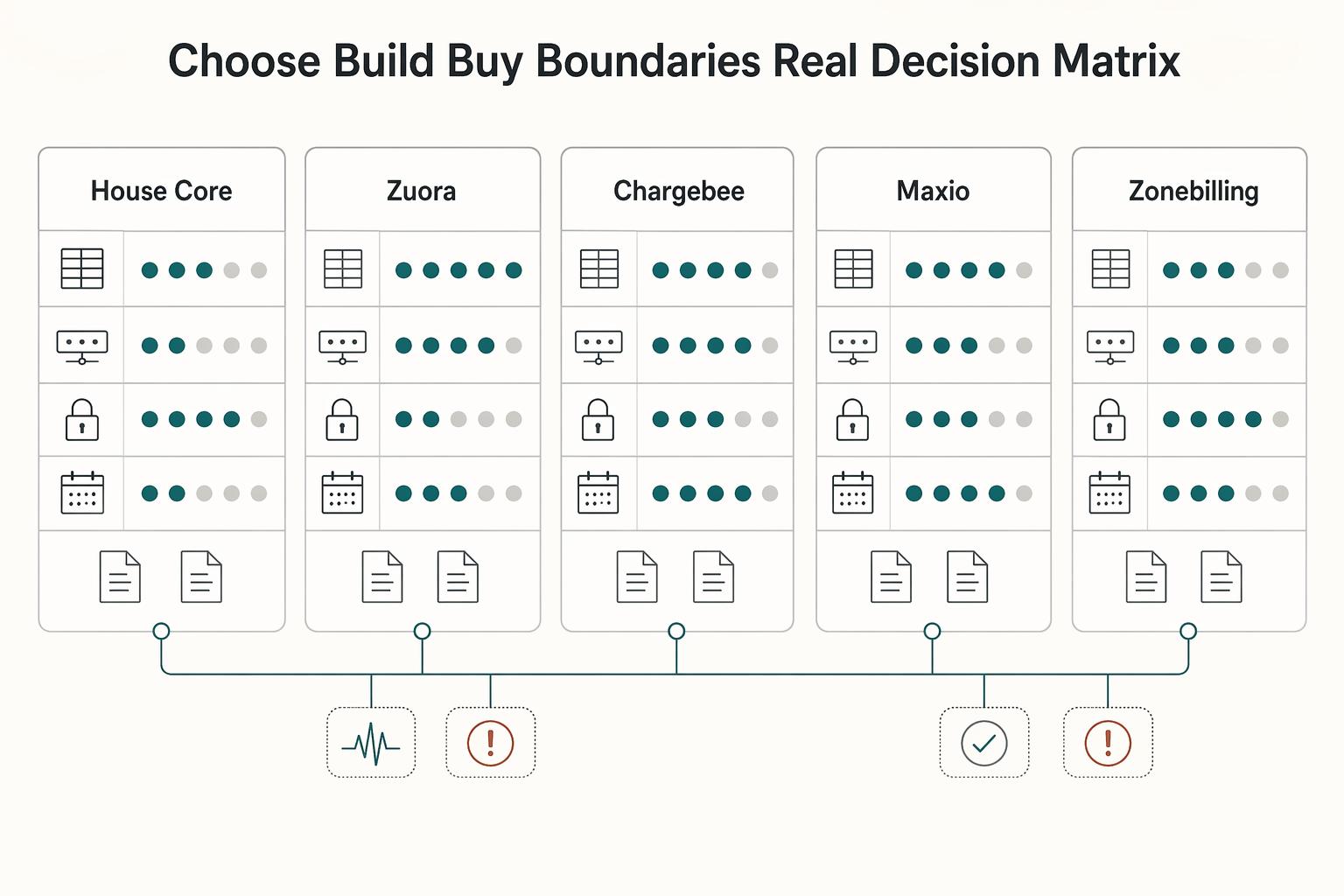
How to Build a Subscription Billing Engine for Your B2B Platform
If you are designing a B2B subscription billing engine, get the close and reconciliation model right before you chase product flexibility. A durable sequence is to define recurring billing scope (plans, billing periods, usage, and trials), then map settlement and payout reconciliation to transaction-level settlement outputs, and finally tie that discipline into month-end close controls. The real test is simple: finance should be able to trace invoices, payments, and payouts from source events through settlement records into reconciled close outputs without ad hoc spreadsheet rescue.
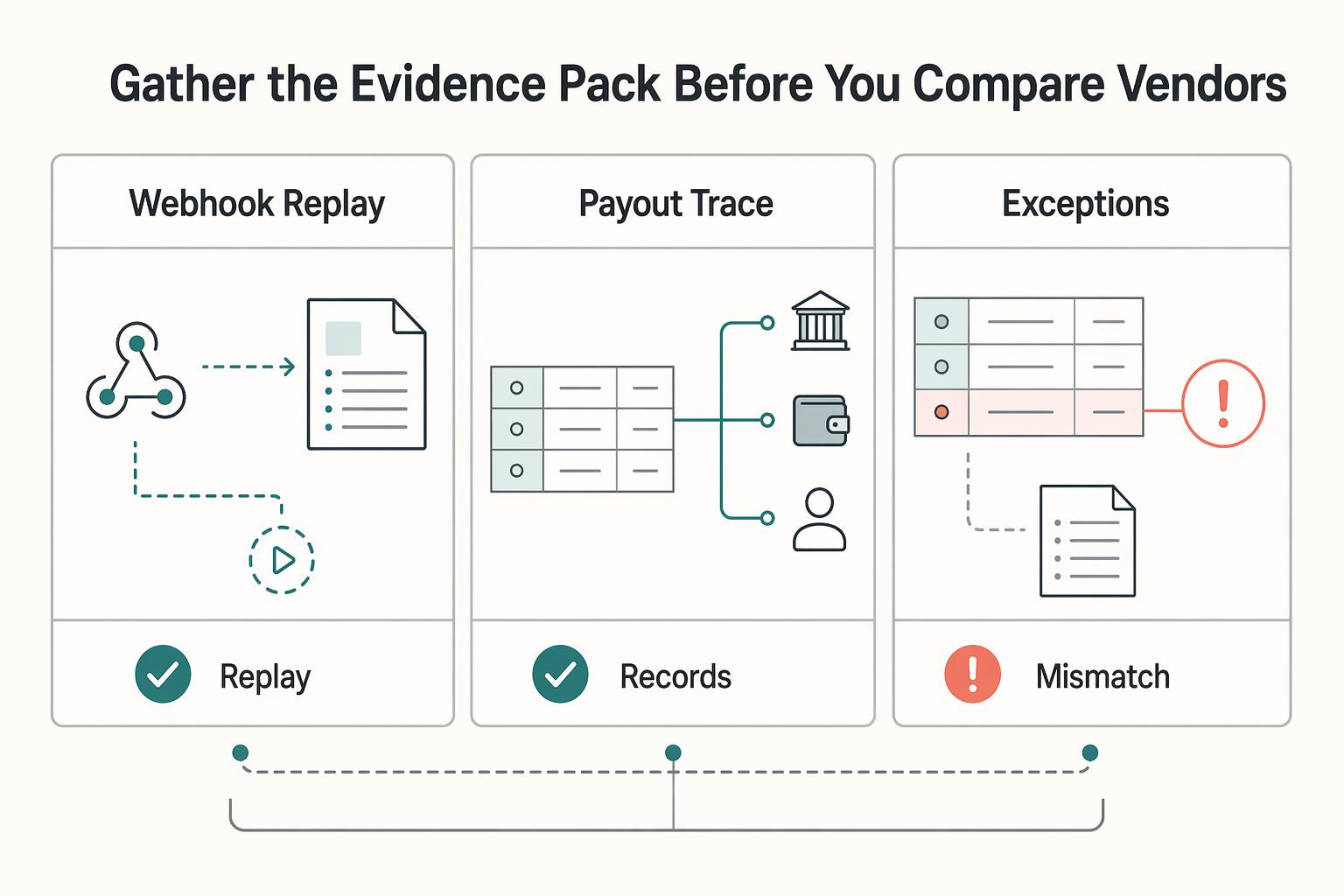
Building Subscription Revenue on a Marketplace Without Billing Gaps
Recurring billing usually breaks after the pitch stage for a simple reason. Teams buy a feature story when they really need an operating decision. If you are evaluating a subscription revenue platform for marketplace billing, the real question is not which vendor demo looks strongest. It is where you can launch first, which recurring-charge rules apply, and what your finance team can prove after go live.

How Platform Builders Implement Subscription Pause for Retention
Treat subscription pause as a policy decision in your subscription lifecycle, not a nicer-looking button in the cancellation flow. If you only surface pause when someone tries to leave, you may see short-term retention wins while creating unclear billing behavior and status handling across systems.