
Quick Answer
No. The family and medical leave act fmla is built for eligible employees at covered employers, so most freelancers do not receive that job-protected leave framework. For a solo practice, create your own structure: verify cash runway, set contract terms for pausing work and restarting it, and prepare a client notice sequence before leave starts. Use federal eligibility criteria as a screening step, then manage continuity risks directly.
Why FMLA Protection Does Not Reach a Solo Business#
The standard family and medical leave act (FMLA) playbook breaks for a business-of-one for a simple reason: it is an employee protection law, not an income continuity plan for self-employed people. If you are a freelancer, consultant, or independent contractor, the real risk during leave is usually lost billable work, delayed cash flow, and client disruption, not the loss of a job title.
Step 1 Understand what the law actually promises#
For an eligible employee, FMLA can provide up to 12 workweeks of unpaid leave a year, requires group health benefits to continue during leave, and includes return-to-work rights to the same or an equivalent job. For military caregiver leave, the entitlement can reach 26 weeks in a single 12-month period.
That contrast matters. Federal FMLA does not automatically require clients to keep sending work, preserve a retainer, or hold a project slot for a self-employed professional. If you want similar protection, you usually need to build it yourself through reserves, insurance, contract terms, and an upfront communication plan.
For a clean comparison, look at how employer obligations are documented in employee handbooks in California. If your work is cross-border, your legal setup also affects your risk controls, as in this Germany freelance visa guide.
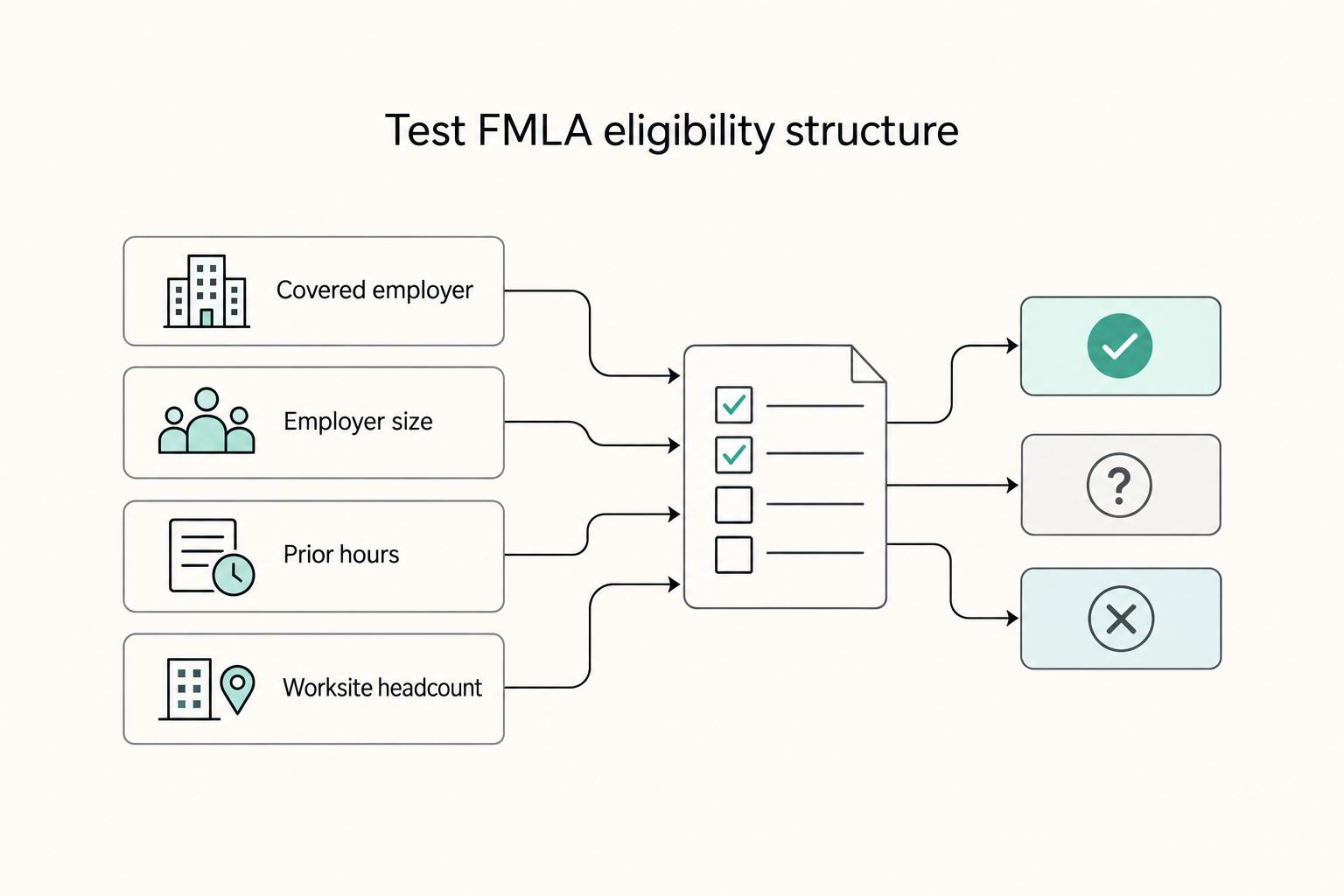
Step 2 Check the eligibility structure against your actual setup#
For most solo operators, the gap is structural, not personal. FMLA is built around a covered employer and an eligible employee, and a business-of-one usually does not fit that model.
| FMLA requirement | Why a business-of-one is usually out |
|---|---|
| Work for a covered employer | You work for your own business, not a qualifying employer. |
| Private employer has 50 or more employees for at least 20 workweeks | Most solo businesses do not meet that employer-size threshold. |
| Have 1,250 hours in the prior 12 months for that employer | Your hours are for your own business, not one covered employer. |
| Work where there are 50 employees within 75 miles | A solo business typically has no qualifying employee worksite. |
Practical checkpoint: identify the employer of record before you assume federal leave protection applies. If the answer is "me" or "my LLC," employee-based federal leave rules usually do not solve your leave risk.
One narrow exception here is Massachusetts PFML. A self-employed person there may elect coverage under the state program. That is not automatic. You must complete DFML's Self-Employed Notice of Election, pay the 0.88% (2026) contribution rate, contribute for at least 2 of the last 4 completed calendar quarters before benefits, and remain enrolled for at least 3 years.
Step 3 Reframe the risk you actually need to solve#
Once you accept that you are usually outside the employee model, the question gets more practical. It is not "Will I get my job back?" but "How will income and client delivery hold up if I cannot work for several weeks?"
That shift matters because clients are not employers. Without clear terms and early communication, a client may pause scope, delay payment on unfinished milestones, or move on.
Your prep file for the next section should be business-focused, not HR-focused. Pull your monthly personal burn, business overhead, active contracts, renewal dates, retainer terms, outstanding invoices, and any clause that allows a pause or rescheduling. Once you can see those, leave planning becomes operational instead of abstract.
If you want a deeper dive, read Why Freelancers Leave Platforms and How to Fix Contractor Churn.
Protect Income, Client Trust, and Business Continuity When You Cannot Work#
If you do not meet Family and Medical Leave Act (FMLA) eligibility criteria, a practical next move is a three-pillar system to protect income, client trust, and business continuity when you cannot work.
| Pillar | Protects | Reduces risk of |
|---|---|---|
| Financial base | your cash position through dedicated reserves, coverage, or other income continuity planning | a leave period immediately destabilizes personal and business obligations |
| Client layer | client relationships through clear contract terms, renewal awareness, invoicing discipline, and early communication | clients replace you because expectations were unclear during a pause |
| Continuity operations | restart speed and delivery stability through a documented pause-and-return plan that covers who gets notified, what pauses, what can be delegated, and how work resumes | time away turns into avoidable operational chaos |
Start with one quick eligibility check from the last section: Do you have a covered-employer relationship and the employee markers of 12 months, 1,250 hours, and 50 employees within 75 miles? If not, treat leave planning as a business continuity design problem, not a job-restoration assumption. Even when FMLA applies, leave may be unpaid, so cash planning still matters. That is the same basic logic behind clear process design in an employee handbook: define the rules before disruption starts.
A practical build order is financial base first, then contract controls, then continuity operations. The next section starts with cash.
You might also find this useful: How to Build a Developer Portal for Your Payment Platform: Docs Sandbox and SDKs.
Pillar 1: Set a Verified Cash Target and Automate Funding#
For a business-of-one, this is the cash side of leave planning. Set a verified target first, automate funding second, and then decide whether any existing policy coverage is worth relying on.
Before you start#
Work from records, not memory. Pull the documents that show your real burn rate and current coverage:
- last 3 months of personal and business bank statements
- card statements with recurring charges marked
- fixed business subscriptions, insurance premiums, and annual renewals
- current insurance summaries, policy numbers, and insurer contact details
Step 1 Set a verified runway target#
Start with numbers you can verify from statements, invoices, or renewal notices. Combine your verified monthly personal expenses and verified monthly business overhead, then apply a planning horizon you choose and review regularly.
Step 2 Match each tool to a specific risk#
Different tools solve different problems. Build the cash base first, then check whether policy coverage adds protection in your situation.
| Tool | What it does in your plan | What to verify before relying on it |
|---|---|---|
| Emergency savings | Immediate cash buffer you control | Liquidity, account access, true monthly burn coverage |
| Existing insurance policies | Potential additional support, depending on your contract terms | Confirm directly with your insurer what your current policy covers and how to use it |
| Other contingency options | Backup support if your primary plan is delayed or unavailable | Eligibility, timing, and operational constraints |
Do not assume one option replaces another. Cash reserves and policy-based options can serve different roles.
Step 3 Automate funding with a simple checklist#
Once you know the target, make funding routine so the plan does not depend on willpower.
- Define target: write the current total and funding gap in one sheet.
- Separate account: use a dedicated account such as "Self-Funded Leave."
- Automatic transfer rule: move funds on the same day you usually pay yourself.
- Review trigger: revisit after revenue shifts, major expense changes, price increases, or annual renewals.
Step 4 Document and stress-test the plan#
A leave fund only helps if you can see the whole picture quickly. Keep a compact file with your runway worksheet, account details, recurring expense list, policy summaries, policy numbers, and insurer contacts.
Review the file when client mix or receivables change so Pillar 1 stays workable in real operations. If collection delays are shrinking your runway, tighten receivables discipline as part of this pillar. You can review Gruv's guide on collecting B2B invoices when the FDCPA may or may not apply and How to Build a Trust and Safety Program for Your Contractor Marketplace for adjacent operational controls.
Pillar 2: The Contractual Shield: Managing Clients Through Your Absence#
Client continuity during leave is a contract design problem, not a goodwill gamble. If your absence may affect delivery, response times, or access to you, define that in writing before work gets busy.
This is the bridge from Pillar 1: your cash reserve protects solvency, and your agreement protects the client relationship during a pause. Federal leave rulemaking may shape expectations, but your continuity plan still lives in your contract terms, notices, and handoff discipline.
Before you edit language, gather the documents you actually use: your MSA, active SOWs, any retainer addendum, confidentiality terms, and invoicing terms. One common failure mode is adding a pause clause that conflicts with termination, acceptance, IP, or billing terms already in place.
Step 1 Define the pause before you need it#
A practical pause clause covers four things: the trigger, work status at pause, restart mechanics, and billing treatment during the pause. Keep any exact threshold or notice criteria unresolved until they are verified from current official/source records, counsel or HR policy records, or approved compliance records before the clause is used.
| Component | What the clause should say | What to verify before using it |
|---|---|---|
| Notice trigger | Planned leave notice applies when the verified threshold or notice criteria are met | Verify the exact threshold or notice criteria from current official/source records, counsel or HR policy records, or approved compliance records before use; confirm the trigger fits typical project length and does not conflict with delay or termination language |
| Work status at pause | You will deliver completed work, identify in-progress items, and list blocked items or dependencies as of the pause date | Confirm what counts as "completed" under acceptance and revision terms |
| Restart terms | Work restarts based on mutual written confirmation and your post-leave availability, with sequencing rules stated in the contract | Confirm alignment with any retainer priority or capacity commitments |
| Billing treatment | State whether billing stops, continues for reserved availability, or shifts to final invoicing for completed work | Match invoice cadence, deposits, and any nonrefundable fee terms |
If you are checking assumptions against federal leave materials, use an official-source checkpoint: the Federal Register FMLA proposed rule entry (77 FR 8960, dated 02/15/2012) notes that the XML page is unofficial and directs users to verify against the official PDF on govinfo.gov.
Step 2 Communicate in a sequence clients can follow#
Clients handle leave better when the sequence is predictable. Use the same order every time so timing is clear and no one is left guessing.
- Initial notice: Share that a planned absence is expected, provide an expected start window, and confirm that project-specific next steps will follow in writing.
- Scope freeze: Confirm what will be completed before the pause, what stops at the pause, and what new requests are out of scope until restart.
- Handoff expectations: Name any temporary contact or referral, define decision rights, and list what materials will be shared. If no one is covering, say so clearly.
- Return-window update: Near return, send a short update with your current return window, capacity changes, and whether restart dates need rebooking.
After this sequence, the client should be able to answer three questions without chasing you: What happens now? What is paused? When will they hear from you next?
Step 3 Refer clients carefully, not casually#
Referrals can preserve trust, but only if you control confidentiality and accountability. Get client consent before sharing briefs, pricing history, credentials, access links, or internal notes. Share only what is needed for the introduction, and confirm confidentiality terms cover any sensitive transfer.
Gruv's guide to the Defend Trade Secrets Act (DTSA) for Freelancers and Consultants is a useful companion when proprietary material is involved.
In the intro message, state whether you are only making a referral or staying involved in limited coordination. That one line prevents assumptions that you remain responsible for substitute delivery.
Keep a basic handoff record: client approval, files shared, access-granted date, access-revoked date if applicable, and who owns the ongoing relationship.
Step 4 Use retainers to protect the restart#
Retainers can help, but only when they buy defined continuity rather than vague future help. If you offer one around planned leave, set three terms up front: reserved availability window, restart priority, and payment cadence during the reserved period.
This works best with proven clients who value access and accept boundaries. For example, reserve a post-leave start window, give priority booking for a defined period, and bill on a fixed cadence for reserved capacity rather than active production. Keep the terms consistent with your broader compliance posture. Gruv's guide to employee handbooks in California is a useful reference for clear policy language and expectation setting.
Retainers can stabilize pipeline and smooth your return, but they also consume future capacity. If timing is uncertain, keep restart priority conditional and avoid overcommitting your first month back.
For a step-by-step walkthrough, see How to Write a Warranty and Disclaimer Clause for a Software Product.
Before you notify clients, draft your pause-and-resume language so expectations are explicit and clearly documented with the Freelance Contract Generator.
Conclusion: You Are the Architect of Your Own Freedom#
Real autonomy is not just choosing your projects or setting your hours. It is being able to step away from your business for a family or medical event without putting your finances and client relationships at unnecessary risk. FMLA is an employee-employer leave framework with specific eligibility limits tied to employer relationship, time worked, and employer size, so it is not an automatic safety net for solo freelancers. And even when it applies, the leave is unpaid.
That does not leave you without options. It means the protection has to be built on your side, on purpose.
- The Financial Base: your reserves and coverage choices, which protect personal cash flow and business obligations during time away.
- The Contractual Shield: your agreements and communication practices, which protect client relationships and turn your absence into a planned event instead of a surprise.
- The Operational Continuity Plan: your pause-and-return plan, which helps the business slow down cleanly and restart without avoidable chaos.
Do not wait for an employee system to solve a self-employed reality. Build the version that fits how your work actually runs. If you start with cash, tighten your agreements, and document how you pause and return, you will have a leave plan that supports the independent career you are trying to protect.
We covered related compliance detail in I-9 and E-Verify Compliance for Contractors and First-Time Employers. When your leave plan is set, build a practical admin stack you can maintain with Gruv Tools.
Frequently Asked Questions
What does the family and medical leave act fmla actually provide?
It provides eligible employees up to 12 workweeks of unpaid leave in a year, with group health benefits maintained during leave and a right to return to the same or an equivalent job. There is also a military caregiver pathway that can allow up to 26 weeks in a single 12-month period for eligible employees. If your plan assumes paid leave, reset that assumption first because FMLA is an unpaid framework.
Why does FMLA usually not solve leave risk for a solo practice?
Because FMLA is built around employee status at a covered employer, it may be a poor fit for a solo practice that depends on your own billable output. The federal criteria here do not establish freelancer or independent-contractor eligibility on their own. If you cannot clearly map your status to those checkpoints, plan directly for income interruption, client disruption, and handoff continuity.
What eligibility checkpoints matter most under FMLA?
Coverage and eligibility are checkpoint-based, not automatic. For private employers, coverage is tied to 50 or more employees for at least 20 workweeks, and employee eligibility includes 12 months of employment, 1,250 hours in the prior 12 months, and a location with 50 or more employees within 75 miles. If you cannot clearly map those checkpoints to your situation, treat FMLA as uncertain and plan your leave operations directly.
What counts as a serious health condition under FMLA?
A serious health condition includes inpatient care or continuing treatment by a health care provider. In one continuing-treatment path, the incapacity period is more than three consecutive full calendar days and the first treatment visit must occur within seven days of the first day of incapacity. For chronic conditions, the regulations describe periodic visits as at least twice a year.
How do I create my own version of leave policy as a freelancer?
Use one structure consistently: financial coverage, contract pause terms, and operational continuity. Write it down as a short policy you can actually follow, then mirror it in your client-facing language and project workflow. The structure in A Guide to Employee Handbooks in California is a useful model for clear expectations. Next step: publish your notice sequence and pause terms in your active agreement templates before you need leave.
What is the best substitute for FMLA when you are self-employed?
There is no single substitute. The practical replacement is the same three-part system applied with discipline: reserve funds, clear contract mechanics, and a restart plan. If your work spans jurisdictions or travel-heavy setups, align that plan with your operating footprint so your timeline and client commitments stay realistic. See Canada's Digital Nomad Stream: How to Live and Work in Canada and Germany Freelance Visa: A Step-by-Step Application Guide for planning context.
Try a related tool
Researched and edited by the Gruv editorial team. Gruv builds cross-border billing, payouts, and finance-operations software for global businesses.
Sources
- archive.regulations.delaware.gov/AdminCode/title19/1000/1400/1401.shtmltrusted
- dol.gov/sites/dolgov/files/OASP/legacy/files/TECHNIC...trusted
- dol.gov/agencies/whd/fmla/faqtrusted
- eeoc.gov/fiscal-year-2025-agency-financial-reporttrusted
- federalregister.gov/documents/2012/02/15/2012-2311/the-family-an...trusted
- finance.senate.gov/download/exploring-paid-leave-policy-practic...trusted
- kannapolisnc.gov/Portals/0/Kannapolis/Departments/Human%20Res...trusted
- lawfilesext.leg.wa.gov/law/wsr/2025/21/25-21PROP.pdftrusted
Educational content only. Not legal, tax, or financial advice.
Related Posts

Germany Freelance Visa Application Path for Freiberufler and Gewerbe
Choose your track before you collect documents. That first decision determines what your file needs to prove and which label should appear everywhere: `Freiberufler` for liberal-profession services, or `Selbständiger/Gewerbetreibender` for business and trade activity.
Canada Digital Nomad Visa Planning for Visitor Status and Work Permits
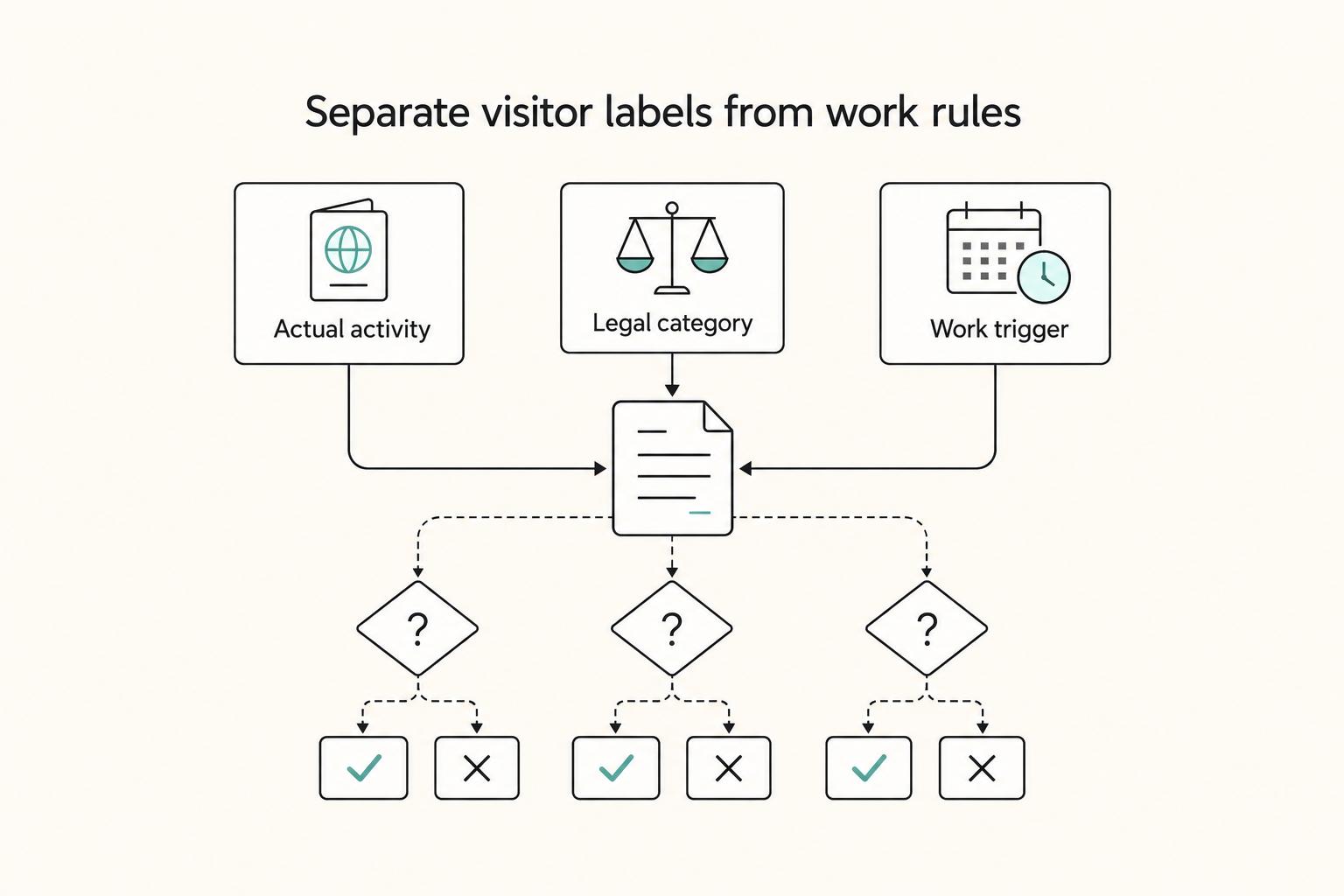
The phrase `canada digital nomad visa` is useful for search, but misleading if you treat it like a legal category. It is shorthand for existing Canadian status options, mainly visitor status and work permit rules, not a standalone visa stream with its own fixed process. That difference is not just technical. It changes how you should plan the trip, describe your purpose at entry, and organize your records before you leave.
Your First California Employee Handbook Without Guesswork
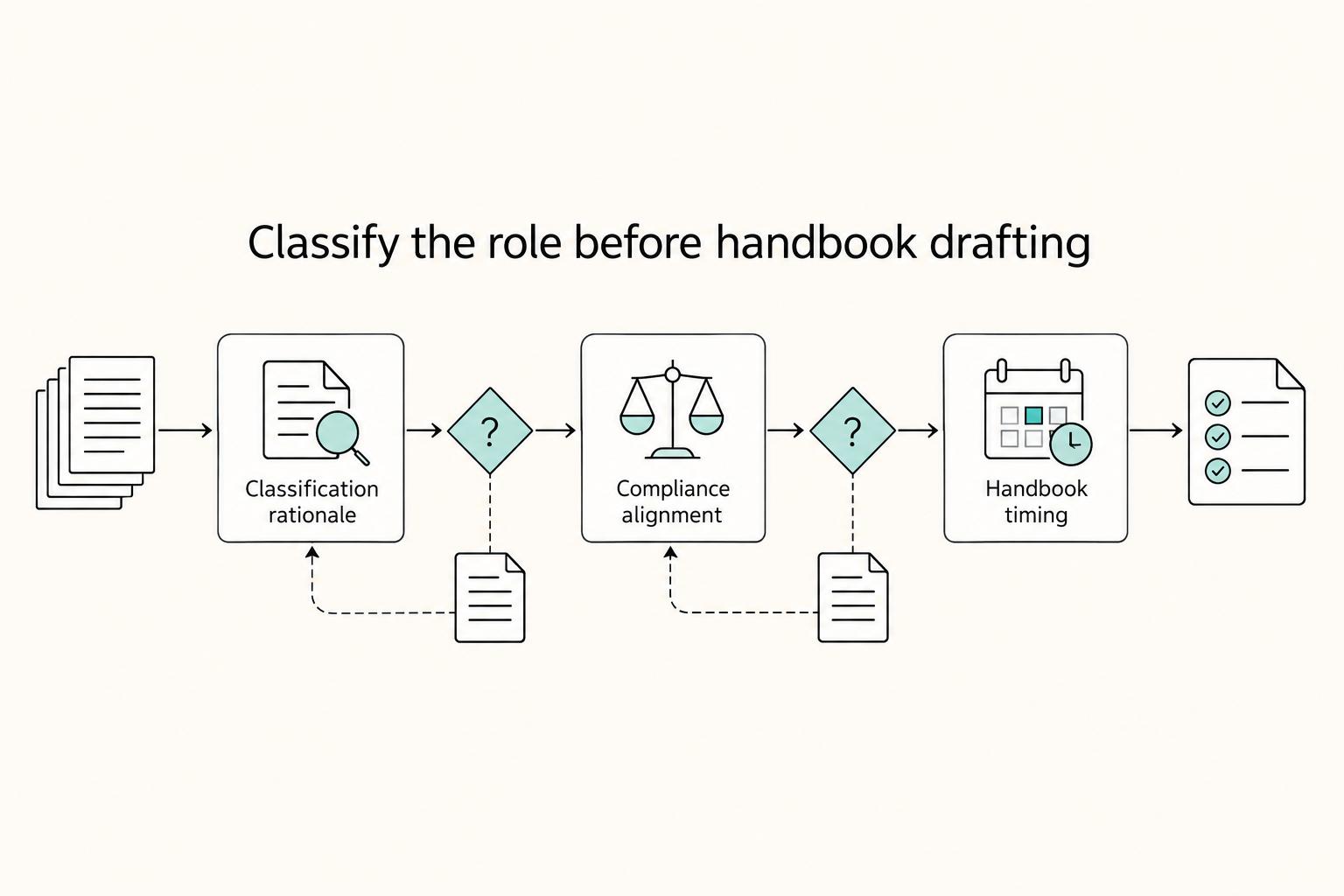
If you are making your first hire in California, one major risk is sequence, not templates. The practical order is to make three decisions: classify the worker, set written policy foundations, and complete onboarding paperwork on time.