
Quick Answer
Nonprofits disburse disaster relief funds by choosing the right operating model, assigning clear owners for approvals and screening, validating each payout corridor, and releasing funds only after documented checks pass. A workable process also needs idempotent payout creation, webhook-driven status tracking, reconciliation, and defined fallback and failure rules, because approved funding is not the same as money reaching a recipient.
How Disaster Relief Disbursements Work Across Borders#
If you are building a nonprofit disaster relief funds disbursement global payout capability, do not treat fund approval as if money is already in beneficiaries' hands. This guide is about the harder part: choosing an operating model that can hold up in real cross-border payout execution, with controls, reconciliation, and a recovery path when transfers fail or stall.
Before you start#
Bring three things into the room before you promise speed: the funding path, the target countries, and the evidence standard for who can be paid. That sounds basic, but it is where launches go wrong. FEMA's Disaster Relief Fund is the primary source of funding for the U.S. federal government's domestic general disaster relief programs, and FEMA states that grants are its principal funding mechanism. That is a useful reminder that "funding exists" and "beneficiary payout is operationally ready" are separate facts.
You should also confirm whether your charitable assistance sits inside a qualified disaster context where that matters. The IRS notes that certain charitable entities may provide assistance only in a "qualified disaster," such as a Presidentially declared disaster. If your program team cannot point to that eligibility basis, or cannot show the beneficiary evidence pack they plan to collect, do not let engineering build against vague assumptions.
Step 1 Separate allocation headlines from payout readiness#
A disaster program can look well funded and still be nowhere near executable. Humanitarian pooled funds like IFRC-DREF are designed for fast, localized response, with published targets such as approval within 24 hours and disbursement in less than 72 hours. That is a useful benchmark, but it is not proof that your beneficiary data, sanctions screening, payout rail coverage, and exception handling are ready.
Your first verification point is simple: can you trace one dollar from funding source to a named recipient type, country, approval owner, and release method? If not, you do not have launch readiness. You have an allocation story.
A common risk starts here. Leadership announces rapid relief, while ops is still deciding who approves beneficiary lists, finance is still checking what records must be retained, and engineering has no confirmed status model for paid, failed, or returned transfers. This guide is written to close that gap.
Step 2 Organize the work by operating phase#
A phase-based view will save you time. FEMA's disaster financial management guidance breaks activity into pre-disaster, initial post-disaster, and longer-term post-disaster periods. That maps well to platform work: pre-disaster is model selection and control ownership, initial post-disaster is corridor and payout execution, and longer-term post-disaster is reconciliation, reporting, and recovery handling.
The point here is practical, not magical: a compliance-first path aimed at production-grade global payout infrastructure in about 30 days, with explicit go or no-go checkpoints. For some organizations and corridors, that will be enough to launch. For others, the checkpoint will correctly tell you to stop, narrow scope, or switch to a partner-led route first. That is still progress, because a controlled no-go is cheaper than a public payout failure.
For a broader look at nonprofit disbursement operations and compliance controls, see Nonprofit Financial Automation: How Grant-Making and Program Organizations Disburse Funds Compliantly.
Choose the disbursement model before you choose tools#
Choose the operating model first, because tools cannot fix unclear ownership of eligibility, compliance, and final release authority.
Step 1 Match the model to the accountability chain#
Start with one question: who must defend each payout decision if it is audited, challenged, or delayed?
| Model | Best fit | What to confirm before tool choice |
|---|---|---|
| State-led disaster recovery program (FEMA-style path) | You need strict public oversight, formal eligibility chains, and documented award authority | FEMA states grants are its principal funding mechanism for committing and awarding federal funding. Treat this as a formal control chain where eligibility is defined up front, and verify whether that chain supports your required execution speed. |
| Insurance-triggered humanitarian payout | You need release tied to predefined event conditions | IFRC reported its first insurance payout trigger for DREF in 2024. The cited arrangement included a CHF3m annual premium, up to CHF15m payout capacity, and a CHF33m deductible threshold, so trigger design and post-trigger operating steps must be explicit. |
| Donor-advised fund or grant-led routing via a platform such as Bright Funds | Donor flexibility, pooled giving, or corporate philanthropy is the priority | The IRS defines a donor-advised fund as a separately identified account maintained by a 501(c)(3) sponsoring organization with donor advisory privileges. Bright Funds describes itself as a charitable giving platform and notes most DAFs on platform are registered as public charities; that supports donation and grant routing, but you still need to confirm who executes final beneficiary payout. |
Decision rule: choose government-partnered when public accountability and formal eligibility are non-negotiable; evaluate insurance-triggered release when predefined event triggers drive timing; choose grant-led routing when donor flexibility is primary.
Step 2 Assign the three control owners before procurement#
Before vendor selection, assign three owners in writing: beneficiary-list approval, sanctions screening, and final payout release. If ownership is shared, exceptions usually become unowned.
Keep this jurisdiction-specific and have legal, compliance, and finance confirm it. A trigger or grant approval may be objective, but recipient selection, screening, and release still require named decision makers. For each sample payout batch, you should be able to show one approval artifact, one screening result, and one release signoff without reconstructing events from email.
Step 3 Surface the unknowns leadership will otherwise ignore#
Treat country coverage, actual payout speed, and fee governance as launch gates, not procurement details. This is where approved funding is often mistaken for disbursement readiness.
Parametric triggers can be calculated against pre-agreed event conditions, which helps make funding release criteria objective. That still does not prove you can disburse to named recipients or organizations in each target country on your required timeline.
The same applies to donor-routed giving: platform support for giving and DAF workflows does not, by itself, settle disbursing-entity ownership, direct-beneficiary payment scope, or how fees, FX, and returns are governed. If those answers are not clear in one page, do not treat approved funds as disbursed funds.
Define the minimum controls pack for every payout#
Use this controls pack as a launch gate. If every payout batch cannot show the same checks, approval path, and exception record, the process is not ready.
Step 1 Set the gate order in writing#
Define your internal gate sequence in policy and keep it visible to program ops, compliance, and finance: beneficiary intake, eligibility evidence, KYC or KYB, AML review, then sanctions screening before release.
| Gate | Required artifact |
|---|---|
| Intake | Beneficiary record and destination country |
| Eligibility | Program basis for payment |
| KYC or KYB | Identity file; for legal entities, include beneficial ownership in the CDD package |
| AML | Review record plus suspicious activity escalation where applicable |
| Sanctions | Screening record designed to your risk profile across products, customers, transactions, and geographies |
Use the table as the minimum artifact set for each gate.
Before release, test one sample beneficiary record. A passed status without preserved evidence is not a complete control.
Step 2 Define overrides before the first block happens#
Set override rules before blocked payouts start. Do not let the requester clear their own exception, and do not allow single-person override release.
Document:
- Which functions can review blocked payouts.
- Which two approvers are required if policy allows override.
- What must be logged in the audit trail: blocked reason, match or alert details, evidence reviewed, decision basis, approver names, timestamp, and final disposition.
If your system only records "override approved," treat that as a control gap.
Step 3 Lock the approval chain for every payout batch#
Require a documented chain from program ops to finance release for every batch, with separation of duties. Program ops confirms beneficiary set and payment basis, compliance confirms checks are complete or formally escalated, and finance releases only after that record is complete.
Then run post-disbursement payment verification against reconciliation data to confirm beneficiaries received the correct amounts in the correct timeframe. An approved batch is not the same as a successful payout.
For a step-by-step walkthrough, see How to Hedge FX Risk on a Global Payout Platform.
Map country coverage and payout rails before launch commitments#
Do not commit country launch dates until your corridor matrix is complete. Each source-to-destination path is a separate operating decision, because coverage, delivery behavior, cost, and failures vary by corridor.
Step 1 Build a corridor matrix from destination to source#
Start with the receiving country and confirm the real payout rail options, then map back to the sending side. Cross-border payouts still depend on domestic rails at the first and last mile, and settlement can pass through multiple intermediary correspondent banks, so "country coverage" alone is not enough.
| Matrix field | What to capture | Note |
|---|---|---|
| Destination country | Receiving country | Start with the receiving country and confirm the real payout rail options |
| Beneficiary type | Recipient type | Each source-to-destination path is a separate operating decision |
| Available rail | Available rail | Country coverage alone is not enough |
| Expected delivery window | Expected delivery window by rail | Delivery behavior varies by corridor |
| Known return behavior | Known return behavior | Failures vary by corridor |
| Provider failure codes | Provider-specific failure codes | Keep native codes first, then map to internal categories later |
| FX path | FX path | Settlement can pass through multiple intermediary correspondent banks |
| Fallback route | Fallback route | If teams cannot describe the same fallback path, the matrix is not ready |
For each launch corridor, document: destination country, beneficiary type, available rail, expected delivery window by rail, known return behavior, provider-specific failure codes, FX path, and fallback route. Keep provider failure codes in native form first, then map to internal categories later. If you flatten codes too early, you lose important operational detail.
Run one readiness check before launch: ask program ops, finance, and engineering to explain how funds move from your account to the beneficiary in one corridor. If they cannot describe the same endpoint rail and fallback path, the matrix is not ready.
Step 2 Write FX rules before the first disbursement batch#
Set FX conversion as a policy rule, not a batch-level improvisation. Define when rates are quoted, when they are treated as locked, who approves conversions, and what happens when rates are stale at release.
Attach these rules to the payout approval pack: budget currency, whether beneficiary amounts are fixed in source or destination currency, and decision ownership when those goals conflict. Keep fee and FX components explicit, since cost includes transfer fee plus exchange-rate application and margin.
At release, require the batch record to include quote timestamp, currency pair, beneficiary-facing amount, and approver when policy requires escalation. Name FX settlement risk directly in the policy and define whether stale pricing triggers re-quote, escalation, or hold.
Step 3 Set fallback and escalation for weak corridors#
If a corridor has weak bank reach, repeated returns, or unreliable endpoint delivery, treat that as a routing decision. Partner distribution can be the better path than direct payout when a stable market and safe cash or voucher delivery conditions exist.
Do not make that switch automatic. Define an escalation path across program ops, compliance, and finance for markets where coverage changes by program or compliance policy, and record why the corridor remains direct, moves to partner distribution, or is paused.
Include an "escalation owner and fallback disposition" field in the matrix for every corridor. If it is blank, you are not launch-ready. For more on regional prioritization, see Global Payouts and Emerging Markets: 5 Regions Every Platform Should Prioritize.
Design payout orchestration that survives retries and asynchronous updates#
Build the payout flow so retries replay safely and async updates stay traceable end to end. The biggest avoidable failure is duplicate beneficiary transfers caused by retried create requests.
Step 1 Require idempotency at payout creation#
Create every payout with an idempotency key and make it mandatory. Safe retries should return the same operation result, not trigger a second transfer.
Use one payout intent and one idempotency key. Persist that key on the internal payout record before calling the provider, and reuse it for every retry of that same create request. If you mint a new key after a timeout, you convert a transport retry into duplicate-payment risk.
Validate this in test by replaying the same create request with the same idempotency key after a forced timeout or client retry. You should get one underlying payout object and one provider-side transfer reference.
Step 2 Ingest webhook events and write them to the reconciliation ledger#
Handle payout updates through your webhook endpoint, then write each accepted event into your reconciliation ledger. Do not treat the provider event stream as the ledger itself.
For each event, capture enough identifiers to correlate one transaction path: internal payout ID, idempotency key, provider request identifier, and provider transfer or external reference. Without those fields, failed, returned, or reversed updates become manual investigation instead of controlled reconciliation.
Step 3 Map provider events into internal checkpoints ops can act on#
Use one internal status model for operations, and map provider events into it.
| Internal checkpoint | What it means | Ops question |
|---|---|---|
| queued | Approved but not yet handed off or funded | Should this still be waiting? |
| processing | Provider confirms the transfer is in progress | Is timing still within corridor expectation? |
| paid | Provider reports completion | Does the ledger match the release amount? |
| failed | The transfer did not complete | Can this be corrected and retried safely? |
| returned | Funds came back after dispatch | Where do we rebook and who decides next action? |
| manual-review | A person must decide before any next step | Is this an ops issue, finance issue, or compliance issue? |
Treat these as internal checkpoints, not universal provider semantics. At minimum, map processing, paid, and failed equivalents from provider events, then add returned and manual-review where your controls require them. If you cannot trace create request to final status using both provider references and internal correlation IDs, the orchestration is not ready.
For more on corridor-level cost control, see Reduce Payout Fees by Matching Disbursement Rail to Destination Country.
Build failure handling for the mistakes that actually happen#
After you can trace each payout end to end, the key decision is this: which failures are safe to retry, and which must stop for review. Classify failures up front, store the provider failure_reason (code + description), and tie each class to an owner, an SLA, a beneficiary message step, and a payout-batch retry rule.
Step 1 Define a failure taxonomy your team can route without debate#
Start with the failures teams repeatedly see in payout operations: name mismatch, unreachable beneficiary, bank detail error, sanctions hit, and returned payout.
| Failure type | Default owner | SLA target | Beneficiary communication | Retry rule tied to payout batch |
|---|---|---|---|---|
| Name mismatch | Ops | Defined by your batch cadence | Confirm legal name exactly as held by the receiving bank | Retry only after corrected details are recorded on the same payout record |
| Unreachable beneficiary | Program ops | Defined by your batch cadence | Attempt contact through approved channels and log outcome | Do not requeue until contact is re-established |
| Bank detail error | Ops with finance check | Defined by your batch cadence | Request corrected account details through a verified intake path | Conditional retry after correction; provider failure codes can drive this decision (for example, incorrect-beneficiary ranges like 901XX - 904XX in older documented flows) |
| Sanctions hit | Compliance | Immediate manual queue | Do not promise release timing | No automatic retry; manual review only |
| Returned payout | Finance with ops support | Defined by your batch cadence | Confirm funds did not complete and explain next step | Do not create a new payout until the return is reconciled to the original transfer |
Name/account mismatches can be rejected in some corridors, and bank-detail errors can trigger rejection and automatic return, so do not collapse them into one generic "failed" bucket.
Step 2 Capture failure evidence before anyone touches the next batch#
Subscribe to failed-transfer events (for example, payout.transfer.failed) and write each event to your ledger with internal payout ID, payout batch ID, provider transfer reference, and exact failure_reason. This is what keeps exception handling auditable instead of becoming manual inbox work.
Step 3 Freeze risky cases with a do not retry list#
Maintain a strict do-not-retry list for risk events, including sanctions hits, unresolved compliance flags, and provider-declined suspicious payout events. Route these directly to manual review instead of recycling them into the next batch.
This is a speed control as much as a risk control: in emergency programs, leaders frame disbursement speed as critical because timing is everything.
Set governance and reporting that donors and auditors can verify#
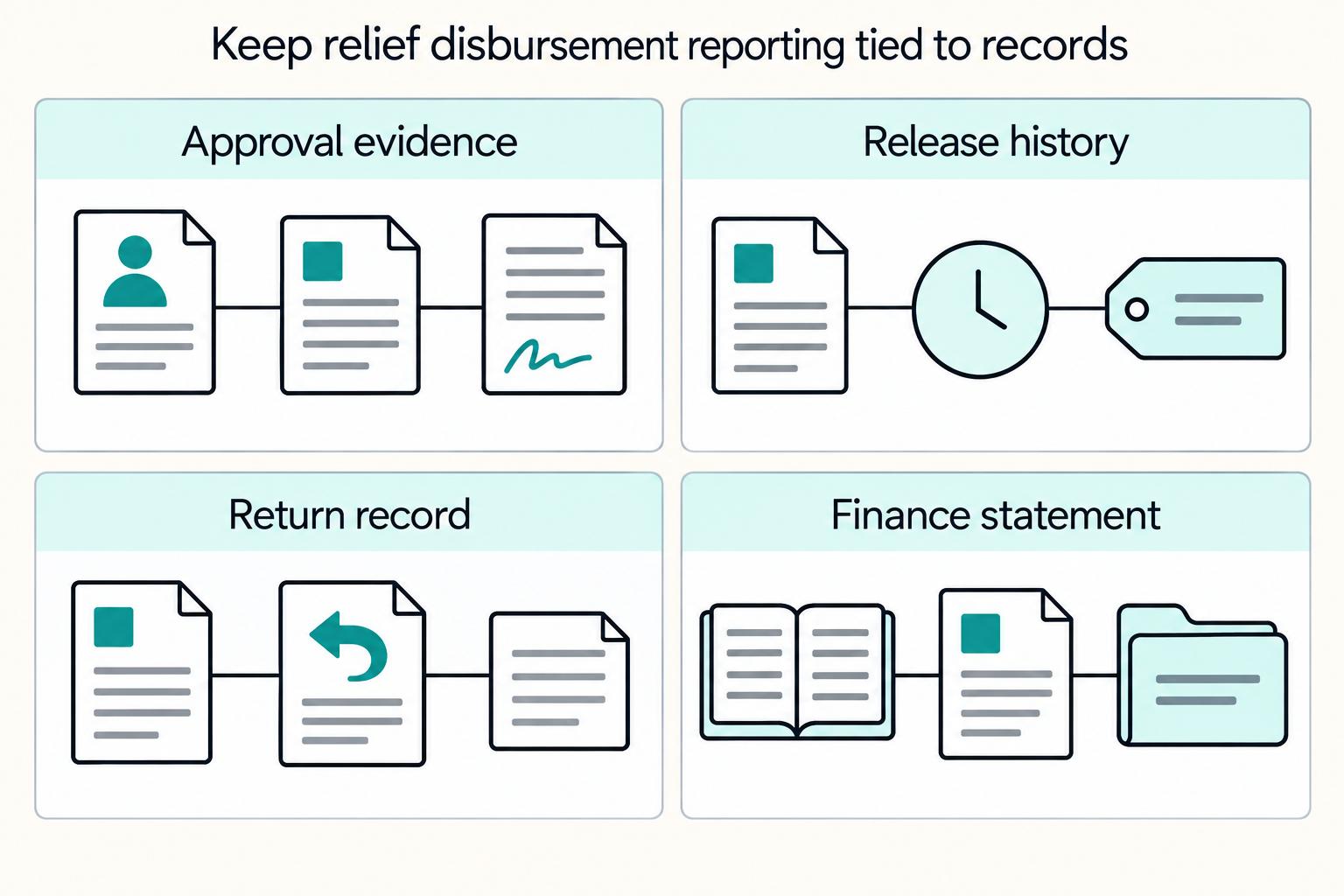
Once failures are routed, make your reporting provable: publish one pack that ties approvals, release events, provider outcomes, and reversals to a single audit trail and your reconciliation ledger.
Step 1 Publish one evidence-backed reporting pack#
For each payout batch, include the approval record, release timestamp, provider reference, status history, reversal or return events, and final finance posting. If federal-award funds are involved, keep records that identify the amount, source, and expenditure of funds, and make sure those records are supported by source documentation rather than summary totals.
Run a quick trace test: take one paid transfer and one returned transfer, and trace each from beneficiary approval to ledger entry to finance statement line. If any step depends on email or spreadsheet comments, the audit trail is still weak.
Step 2 Reconcile on two cadences#
Use two cadences: daily reconciliation from disbursement records to the reconciliation ledger, and monthly reconciliation to program finance statements. Daily checks catch operational breaks early; monthly checks confirm finance statements reflect what actually moved.
Watch timing drift closely. A provider return posted after release can miss month-end visibility if finance only sees gross disbursement totals. For federal-award flows, keep retention rules in scope: financial records, supporting documentation, and statistical records must be retained for three years from submission of the final financial report.
Step 3 Segment reporting by funding model#
Report FEMA-style public flows, insurance-triggered flows, and donor-pooled flows separately. These funding channels operate differently, and blended reporting can hide real performance and control issues.
For public-flow visibility, FEMA DRF reporting cadence is a useful benchmark: reporting by the 5th day of each month with activity broken out by state and event. Track speed, disbursement amounts, and reversals by model so stakeholders can compare like-for-like outcomes. For a deeper breakdown, read Catching Payout Errors Early in High-Volume Platform Operations.
Execute the 30-day implementation sequence with go or no-go gates#
Use this 30-day sequence as a launch filter, not a deadline; if a gate fails, hold launch.
| Week | Focus | Gate or evidence |
|---|---|---|
| Week 1 | Lock the model and control ownership | Clear ownership for blocked payouts, overrides, and batch releases with a named approver |
| Week 2 | Prove corridor and payout rail readiness | Build a corridor matrix and confirm coverage, expected delivery timing, return behavior, reversibility by rail, and FX conversion policy |
| Week 3 | Dry run retries and async events end to end | Verify no duplicate transfer is created and each status and return event is recorded in the reconciliation ledger with provider and internal references |
| Week 4 | Run a go/no-go launch review with evidence | Approve launch only if control completeness, reconciliation readiness, and incident-response ownership all pass |
Week 1: Lock the model and control ownership. Document one operating-model decision and assign one owner per control across program ops, finance, compliance, and engineering. Your gate is clear ownership for blocked payouts, overrides, and batch releases with a named approver.
Week 2: Prove corridor and payout rail readiness. Build a corridor matrix for your actual launch countries and payout methods, then confirm coverage, expected delivery timing, return behavior, and reversibility by rail. Include your FX conversion policy: when quotes are requested, how long rates stay locked, who approves conversion, and what happens if a quote expires before release.
Week 3: Dry run retries and async events end to end. Run a full pilot batch, replay the same create request with the same idempotency key, and verify no duplicate transfer is created. Then process webhook status and return events and confirm each event is recorded in your reconciliation ledger with both provider and internal references.
Week 4: Run a go/no-go launch review with evidence. Approve launch only if all three gates pass: control completeness, reconciliation readiness, and incident-response ownership. Bring the ownership matrix, corridor and FX policy, dry-run and replay logs, sample accounting statements, and incident contact ownership; if a failed payout event or pilot statement cannot be traced end to end, hold launch. For a related governance risk, see Commingling Funds Can Undermine LLC Protection.
Conclusion and copy-paste launch checklist#
If you are at launch week, do not add more tooling until these five decisions are closed. The real go or no-go test is not whether money is allocated. It is whether ownership, controls, corridor reality, technical reliability, and finance evidence hold up under stress.
- Choose one operating model and name the owner for each control. Pick public-program, insurance-triggered, or donor-pooled and write down who approves beneficiary or partner lists, who runs sanctions screening, and who gives final finance release. If your disbursement timing is tied to a grant agreement or annual funding decision schedule, capture that release schedule now instead of improvising it later.
Verification: one page that names program ops, compliance, finance, and engineering owners, plus the exact approval handoff between them. If any control has shared ownership with no final signer, treat that as a launch blocker.
- Lock the minimum compliance gates before the first live batch. Your floor should include identity and due-diligence checks appropriate to your program, AML review, sanctions screening, an approval chain, and a written exception policy. FATF Recommendation 8 supports a risk-based approach for nonprofits, so the standard should be proportionate, but it still needs explicit policies, procedures, and process controls. For sanctions, anchor screening to an actual list source such as the OFAC Sanctions List Search covering SDN and other OFAC-administered lists.
Verification: one approved case file, one blocked case file, and one override log that shows what evidence is required. A common failure mode is an emergency payout released on email approval alone with no audit trail.
- Validate every target corridor as a real payout path, not a slide assumption. Build a country and payout rail matrix for the countries you actually plan to serve, with currency, rail availability, FX handling, and fallback options. Use provider evidence first, then sanity-check coverage and pricing assumptions against published corridor data such as the World Bank remittance dataset, which spans 367 corridors from 48 sending countries to 105 receiving countries. Also remember that the exchange rate margin is part of cost, not just the visible transfer fee.
Verification: every country has a primary rail, a fallback path, and a named decision owner. If bank reach is weak or return behavior is unclear, route through a partner instead of forcing direct payouts.
- Test duplicate prevention and asynchronous status handling before scale. Require an idempotency key on payout creation so retries do not create a second transfer. Then test webhook ingestion for the payout states you rely on (such as queued, processing, paid, failed, returned, and manual review), and store both the provider reference ID and your internal correlation ID on every event.
Verification: replay the same request intentionally and confirm no duplicate payout is created; replay webhook delivery and confirm your status handling stays correct. Red flag: retrying after a timeout with a new key, or treating the first webhook as final truth.
- Make finance trust visible through reconciliation and traceability. Before full launch, reconcile disbursement activity on a defined cadence (for example, daily in high-velocity programs) and keep a complete audit trail from intake and eligibility evidence through provider outcome, return, reversal, and finance posting. Reconciliation artifacts matter because cash reconciliation can directly support later disbursement decisions, especially in grant-based programs.
Verification: pick 10 sample payouts, including at least one failure or return, and trace each one end to end. If you cannot prove why a payment was released, where it landed, and how it was reconciled, pause rollout.
For a quick next step, try the free invoice generator.
Frequently Asked Questions
What is the difference between disaster fund allocation and payout disbursement?
Allocation decides where money should go, while disbursement is the operational act of moving funds to a specific recipient through a specific payout rail. Disbursement also includes checks, release steps, returns, and reconciliation, so an approved allocation does not prove money reached the end recipient.
Which model fits emergency aid better for our case: direct, partner-led, or hybrid?
Use direct payouts only when you can verify beneficiaries, screen them, confirm rail coverage, and handle exceptions when payments fail or are returned. If those controls are weak, partner-led delivery is often more defensible, and a hybrid model works when local partners handle most cases with international partners as fallback.
What must a nonprofit validate before sending a global payout?
Before sending a global payout, validate recipient identity or organization status, program eligibility, destination-country rail availability, and any sanctions or AML checks required by policy. Finance should release the batch only when the approval record, supporting evidence, and chosen payout method are all documented.
How can we prevent duplicate or misdirected payouts in high-volume events?
Use an idempotency key when creating payouts so retries return the same operation result instead of creating a second transfer. Then ingest asynchronous status updates through your webhook endpoint, store provider and internal references, and reconcile queued, paid, failed, and returned states.
What records are required for audit and donor reporting?
Keep the full record chain: intake, eligibility evidence, screening results, approval history, payout instruction, provider outcome, any reversal or return, and the reconciliation entry tied to finance statements. Separate allocation reporting from disbursement reporting so stakeholders can see what was designated versus what was actually released.
How should we operate when local banking access is limited?
Do not assume bank transfer is available just because a country is live. Evaluate mobile money wallets where supported, and if bank or wallet coverage is unreliable, route through a local or international partner that can complete distribution and document beneficiary receipt.
Try a related tool
Where Gruv fits
Plan and approve payout batches
See how payee status, approval rules, route review, and exception handling sit in one payout workflow.
See reconciliation and mismatch review
Compare ledger entries, provider payment records, and statement rows to see what matches and what finance needs to review.
Researched and edited by the Gruv editorial team. Gruv builds cross-border billing, payouts, and finance-operations software for global businesses.
Sources
- bsaaml.ffiec.gov/manual/RisksAssociatedWithMoneyLaunderingAnd...trusted
- bsaaml.ffiec.gov/manual/OfficeOfForeignAssetsControl/01trusted
- congress.gov/crs-product/R45484trusted
- csrc.nist.gov/projects/incident-responsetrusted
- ecfr.gov/current/title-2/subtitle-A/chapter-II/part-2...trusted
- ecfr.gov/current/title-2/subtitle-A/chapter-II/part-2...trusted
- fema.gov/about/reports-and-data/disaster-relief-fund-...trusted
- fema.gov/sites/default/files/2020-07/fema_covid_disas...trusted
Educational content only. Not legal, tax, or financial advice.
Related Posts
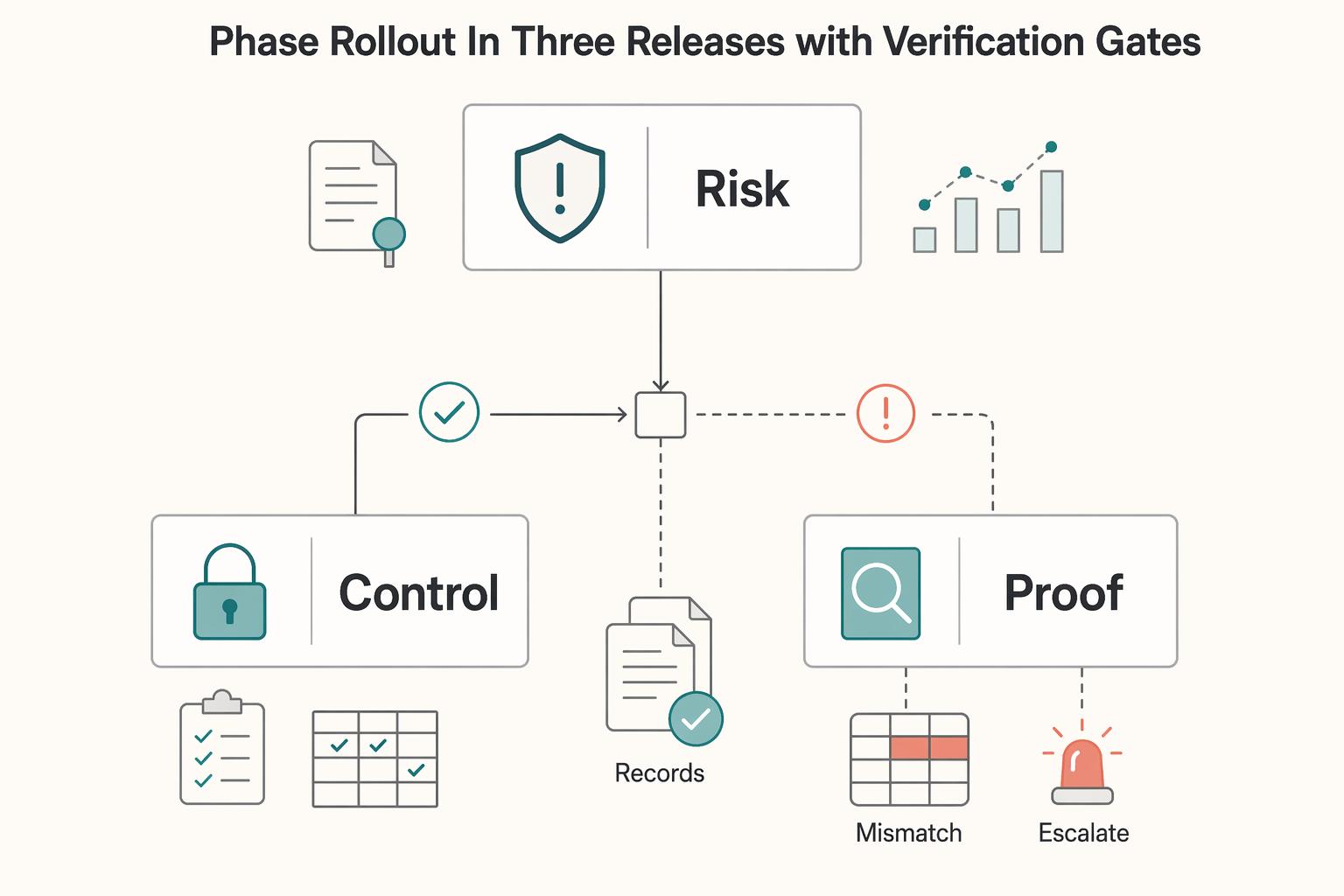
Building Compliant Grant Disbursement Operations for Nonprofits
Nonprofit teams do not need another generic automation pitch. They need a grant disbursement process that answers basic questions clearly: why a payout went out, which rules applied, and what evidence shows it was handled correctly.
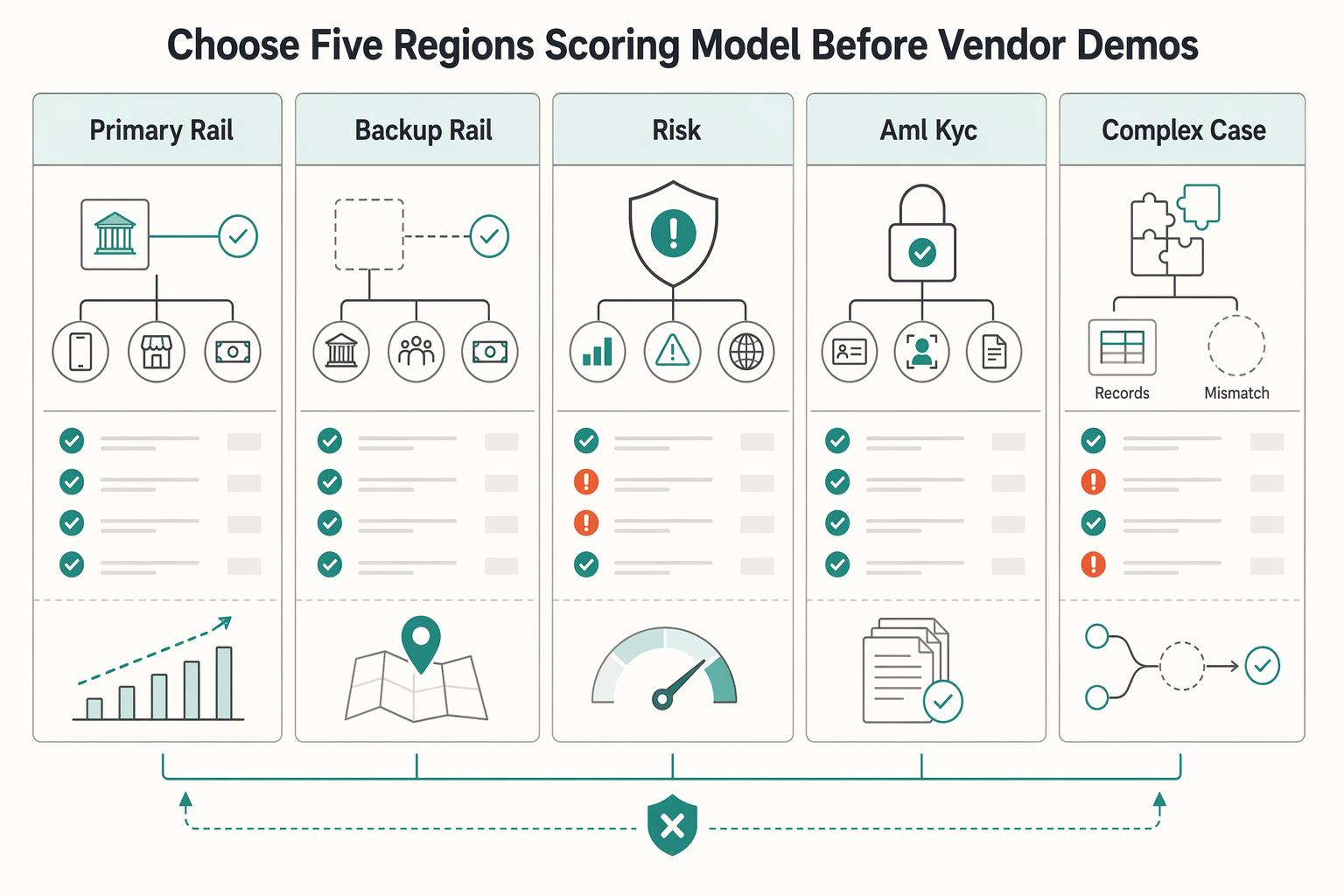
How Platforms Should Prioritize 5 Emerging-Market Payout Regions
If you are choosing where to launch cross-border payouts in 2026, start with what your team can actually run. Too many "top" lists lean on hype or market-cap tables. That may work for headlines, but it does not help with execution.
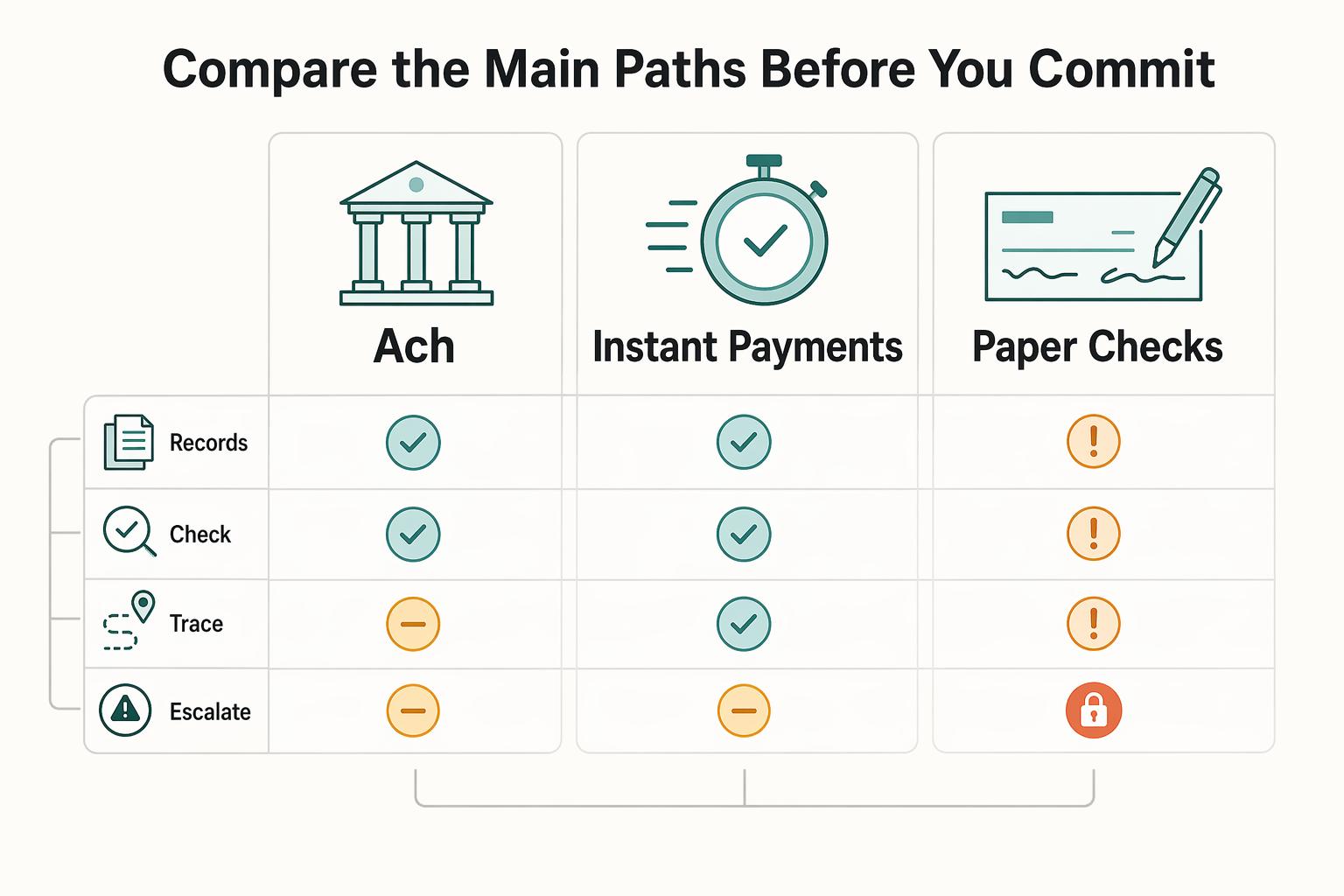
5 Reasons Insurers Should Modernize Claim Disbursements with Digital Payout Platforms
Claims payouts are where an insurer proves the product. If the money arrives late, trust erodes fast, and paper-heavy payment flows add friction. That is not just a service issue. The cited research says the longer it takes for money to reach the insured, the more trust erodes, and payment delays can stretch a claim by days or even weeks.