
Quick Answer
Map each payout corridor first, then hedge only what your team can trace from funding currency to settlement timestamp. Use one objective per corridor (cash flow hedging or balance sheet hedging), require ASC 815 or IFRS 9 documentation at trade inception, and block conversions when quote validity has lapsed. Do not scale until provider confirmations reconcile to ERP entries and payout batch references without manual guesswork.
FX Risk on a Global Payout Platform Starts as a Timing Problem#
FX risk on a global payout platform starts as a timing problem. If you collect in one currency, convert on another schedule, and release payouts on a third, exposure builds in the gap between transaction date and settlement date, even when the operation looks healthy on the surface.
Step 1 Name the exposure correctly#
Global payouts mean sending money to recipients in other countries, often in local currency. That sounds simple until you add the actual mechanics: currency conversion, regulatory checks across multiple jurisdictions, and delivery through local payment networks. A platform can hit payout SLAs and still carry FX exposure because the money-in event, the conversion event, and the money-out event do not happen at the same time.
That gap is where transaction risk shows up. It is the rate movement that happens between the transaction date and the settlement date. For payout teams, that is usually the first exposure window worth mapping. A useful checkpoint is simple: can you trace a payout batch back to its funding currency, conversion timestamp, and settlement timestamp? If not, your exposure is already harder to measure than the dashboard suggests.
Step 2 Start with controls you can actually operate#
This guide is not about turning your team into macro traders. It is about helping finance, ops, product, and engineering choose FX controls they can run consistently inside cross-border payments operations. In practice, that means deciding what to hedge, when to quote, who approves a conversion, and how to reconcile the result back to the payout event.
A good first rule is to resist product-first thinking. Do not shop for forwards, options, or vendor features before you can describe where the exposure appears in the payout lifecycle. One common failure mode is booking a hedge that finance understands but ops cannot tie back to actual payout releases. When that happens, you can still carry residual risk even though a hedge exists on paper.
Step 3 Draw a hard scope line#
This article is for platform builders moving funds across borders, not teams managing global investment funds. That distinction matters because some FX hedging material in the market is written for diversified portfolios, where the question is how foreign currency affects investment returns. A payout platform is dealing with operational timing, settlement dependencies, approval paths, and reconciliation discipline.
There is also a second risk to keep in view: FX settlement risk. In cross-border flows, one party can deliver the currency it sold and still fail to receive the currency it bought. You do not need an institutional portfolio playbook to deal with that. You need operational controls, clear ownership, and evidence that each conversion matched a real payout need.
Before you design any hedge, verify that your team can pull transaction date, settlement date, funding currency, payout currency, and payout references for a sample batch. If that record is incomplete, fix visibility first.
Related: How to Scale Global Payout Infrastructure: Lessons from Growing 100 to 10000 Payments Per Month.
Decide which volatility matters before you hedge#
Before you choose tools, decide which volatility you want to reduce in each corridor. If you pick instruments first, you can add treasury work without reducing the exposure that actually hurts you most.
Step 1 Choose one primary objective for each corridor#
Set the objective corridor by corridor, not as one global rule.
| If this is your main pain | Start here |
|---|---|
| Payout predictability | Cash flow hedging to reduce variability in cash flows tied to a specific risk |
| Reporting volatility | Balance sheet hedging focused on remeasurement effects for monetary assets and liabilities recognized in income |
Do not assume one hedge automatically solves both. Pick the primary objective first, then evaluate tools.
Step 2 Map exposure in a way you can approve and audit#
If a corridor is not clear enough to approve and audit, it is not ready to hedge. For each active corridor, document funding currency, payout currency, and where exposure sits, then label it hedge now or monitor only in your foreign exchange risk management policy.
Each corridor record should answer:
- What creates the exposure: receivable, payable, prefunded balance, or payout batch?
- Is the concern cash flow variability or income-statement remeasurement?
- Who owns the hedge decision, and what evidence ties it to a real payout exposure?
Use the same discipline every time: define exposure first, hedge second.
Step 3 Treat vendor pages as inputs, not decisions#
Vendor pages are useful for screening, not policy decisions. HedgeFlows positions itself as "Mission control for multi-currency businesses" and highlights one account across 35 currencies and 185 countries. Pangea highlights simple tools for global transactions and currency risk across multiple business types.
Those pages still leave key decisions with your team: eligibility for your entity and corridor, exception handling, and operational burden. They also do not confirm that your transactions qualify for hedge accounting under ASC 815 or IFRS 9. Before you commit, require failure-path detail: rejected conversions, quote expiry, cutoff misses, and reconciliation evidence back to payout references.
For a step-by-step walkthrough, see How to Choose a Merchant of Record Partner for Platform Teams.
Gather the minimum data and documents before first execution#
Before your first hedge, make sure your ERP data, payout data, and approval packet all point to the same exposure. If they do not, you are still planning, not executing.
Step 1 Pull a usable exposure baseline#
Start with measured exposure, not estimates. Pull history that shows volume, timing, and settlement behavior by legal entity, currency pair, and payout cadence. If you have 6 to 12 months, use it.
Use both your ERP and payout system, and align:
- Funding date
- Conversion date (if used)
- Payout release date
- Settlement date
Daily, weekly, and monthly payout reports are commonly available, so use the cadence that matches how your payouts actually move.
Your pass/fail check is simple: finance and ops can trace a sample corridor from source balance to final settlement without guessing which timestamp created the FX exposure. If that trace breaks, do not execute. As one treasury warning puts it: "if you can't see it, you can't manage it."
Step 2 Build the evidence pack before trade inception#
Build the approval pack before the first trade, not after. Under ASC 815 hedge-accounting documentation rules, hedge documentation is required at inception, including the hedging relationship and your risk-management objective and strategy.
| Document element | Timing | Detail |
|---|---|---|
| Hedging relationship | At inception | Required hedge documentation under ASC 815 |
| Risk-management objective and strategy | At inception | Required hedge documentation under ASC 815 |
| Exposure report | Before the first trade | Included in one pack |
| Policy owner | Before the first trade | Included in one pack |
| Approval path | Before the first trade | Included in one pack |
| Sign-off criteria for FX hedging changes | Before the first trade | Included in one pack |
In practice, keep one pack with the exposure report, policy owner, approval path, and sign-off criteria for FX hedging changes.
If you open a position first and document later, teams usually end up disputing whether the trade matched a real payout exposure.
Step 3 Set compliance boundaries for cross-border payments#
Define compliance boundaries early so treasury actions do not outrun payout controls. Cross-border requirements change, and FATF updated Recommendation 16 on 18 June 2025, so treasury and payout controls need to stay aligned.
Document what must clear before conversion or release, including:
- Market restrictions
- Beneficiary data requirements
- Sanctions checks
- Payout gating rules
If treasury can convert but ops cannot release funds, you have added timing risk. For corridors with unclear restrictions, keep them in monitor only until compliance signs off.
You might also find this useful: How to Pay Translators and Interpreters Globally: Language Services Platform Payout Infrastructure.
Compare hedging instruments and choose by operating constraints#
Choose the instrument your team can actually forecast, book, and reconcile. If payout forecasts are stable and margins are tight, start with forward contracts. If volumes are volatile and upside participation matters, evaluate FX options, then gate that choice through ERP and ledger readiness.
A forward contract is a firm commitment to exchange currencies at an agreed future date. An FX option gives you the right, not the obligation, to buy or sell at a fixed price by a future date. That structural difference drives the operating tradeoff.
If your reporting still leaves timing or notional gaps, pause instrument complexity and fix forecast quality first. Weak reporting makes exposure forecasts hard to defend.
| Decision point | Forward contracts | FX options | Do not use yet |
|---|---|---|---|
| Forecast certainty needed | Better fit when amount and timing are reliable because the contract is a firm commitment. | Better fit when notional or timing may change and execution flexibility is needed. | Do not use either if finance cannot defend the forecast bucket tied to the trade. |
| Cost predictability | High: the locked rate gives known payable/receivable economics. | More variable than a forward when flexibility is prioritized. | Do not proceed if your approval pack does not define acceptable variance. |
| Downside protection | Protects against adverse moves, but upside is limited by the commitment. | Can protect downside while still allowing benefit if the market moves in your favor. | Do not use options as a substitute for fixed payout economics when fixed outcomes are required. |
| Operational complexity | Lower relative complexity, but still needs clean trade/maturity/settlement/entity mapping. | Higher; public vendor guidance notes options may suit teams with a high level of understanding. | Do not use options if your ledger cannot reliably handle exercise, expiry, and confirmations. |
| Vendor operability signals | Convera publicly states forwards in 44 currencies. HedgeFlows states execution in 35 currencies. | Convera publicly states FX options in 19 currencies. U.S. Bank notes some strategies may only be appropriate and available for some large businesses. | For HedgeFlows, Pangea, Convera, and U.S. Bank, verify corridor coverage, entity eligibility, approvals, and confirmation format before treating any product as available. |
Before production, run a paper trade for each instrument you are considering. Finance and ops should be able to trace entity, notional, agreed rate or fixed price, trade date, maturity, settlement, provider confirmation, and mapped payout batch or forecast bucket without manual guesswork.
Set payout timing and quote controls so hedges match real flow#
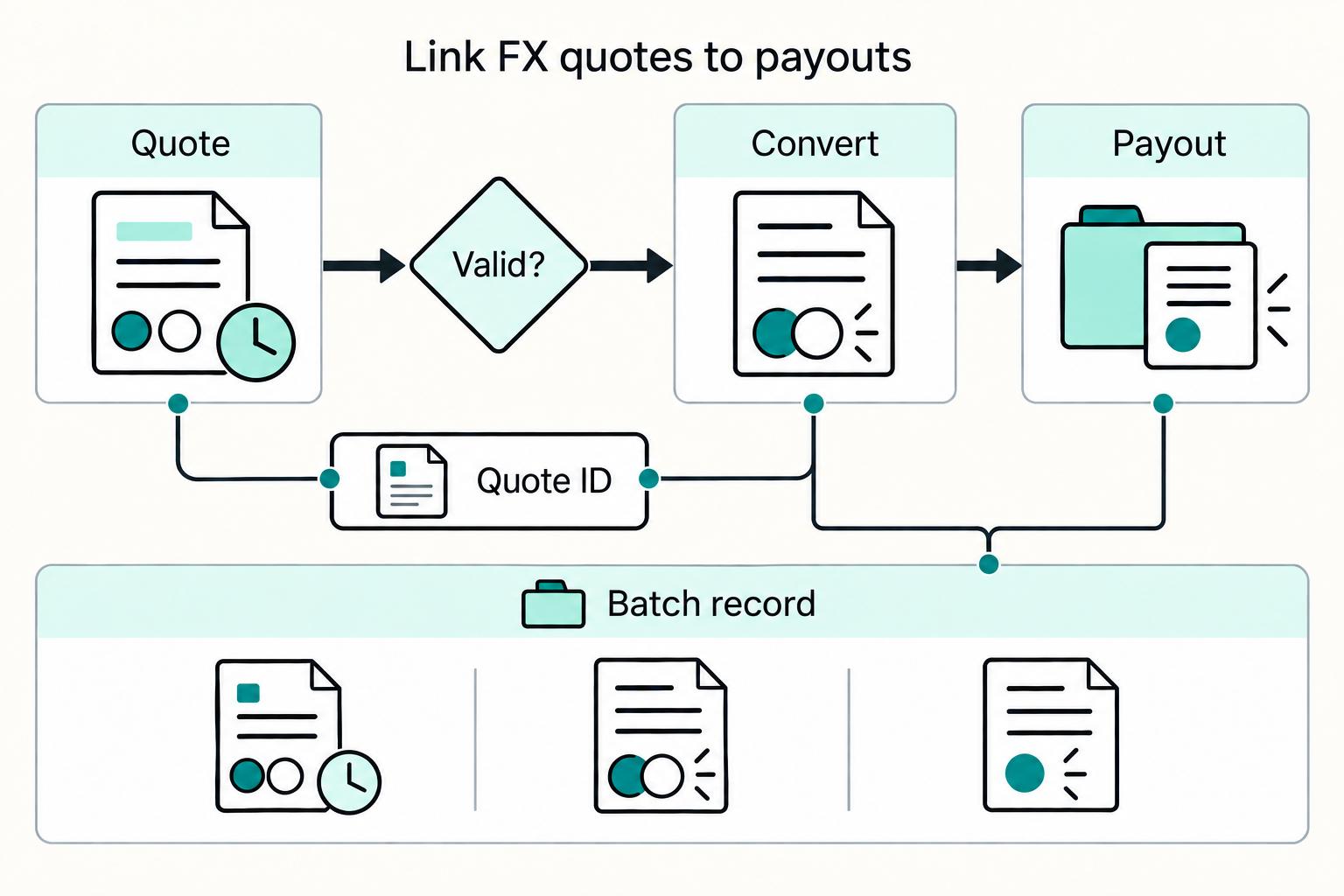
Once you pick the instrument, execution timing is what determines whether the hedge still matches the payout. Set one batch sequence, enforce quote expiry as a hard stop, and log each conversion-to-payout link so exceptions are traceable.
Step 1 Fix the batch sequence before you automate it#
Use one operating order for every payout batch:
| Order | Batch step | Trace in sequence |
|---|---|---|
| 1 | Exposure snapshot | Exposure amount |
| 2 | FX quote request | Quote timestamp |
| 3 | Quote acceptance | Quote expiry |
| 4 | Conversion execution | Conversion event |
| 5 | Payout release | Payout release time |
This control is practical, not vendor-specific: you need the priced amount to match what is paid out. If funding, conversion, and settlement drift, currency movement between those points can lead to underfunded payouts and reconciliation failures.
Your checkpoint is simple: for any batch, finance and ops can see exposure amount, quote timestamp, quote expiry, conversion event, and payout release time in sequence. If steps are missing or reordered, fix the process before scaling.
Step 2 Enforce quote validity as a hard control#
Treat quote validity as a system gate, not a team reminder. Stripe documents 5-minute, 1-hour, and 24-hour quote windows, and its API reference sets a maximum lock period of 1 day.
In your platform, reject stale quotes and require re-pricing before conversion or final batch approval. Do not assume this is handled the same way across providers; Airwallex documents that quotes can be updated when approval happens after expiry, but that behavior should not be treated as universal.
Also enforce traceability in the request path: pass the quote ID (or equivalent quote details) into conversion. If logs cannot show which quote was used, the control is incomplete.
Step 3 Log the conversion-to-payout link for audit and exceptions#
Document this failure mode explicitly: payout release after quote expiry can leave residual FX risk on uncovered amounts. Even when payout completes, the executed rate may no longer match the original approval context.
Log each conversion against payout references at batch and transaction level. At minimum, keep quote ID, accepted rate, notional, expiry timestamp, conversion confirmation, payout batch ID, and internal payout references covered by that conversion.
That audit trail lets you isolate whether a variance came from market movement, quote expiry, approval delay, or settlement timing.
If you want a deeper dive, read Global Payouts and Emerging Markets: 5 Regions Every Platform Should Prioritize.
Implement controls across product, ops, and engineering#
Once quote-expiry controls are in place, the next risk is handoff failure. The practical fix is to encode treasury policy in product controls, then require engineering and ops to produce auditable records for each lifecycle state and reconciliation outcome.
Step 1 Encode approval gates, permissions, and retry safety#
Start with segregation of duties: no one person should be able to initiate, approve, release, and then conceal errors in the same flow. In platform terms, separate permissions for approval, conversion execution, and payout release, and keep those actions traceable.
Finance or treasury should own policy and approval rules. Product should enforce those rules in workflow and permissions. Ops should execute within the approved path, not through untracked overrides.
Make idempotent requests a hard requirement for conversion and payout actions so retries do not create duplicate effects. Treat this as a testable control: for a failed request and retry, logs should show the same idempotency key, one final provider outcome, and one resulting state transition.
Step 2 Expose hedge lifecycle states and webhook-driven visibility#
Engineering should expose clear lifecycle states and event visibility so ops can act on current truth in cross-border payments operations. Keep internal states stable enough that humans and automation interpret them the same way, even if provider schemas differ.
Use webhook delivery, or an equivalent event feed, to push lifecycle updates into your systems in near real time. This improves operational response and gives you a stronger audit trail than relying on manual checks.
Also define an exception path for missing or unmapped events. If provider and internal states diverge, raise the exception, investigate, and resolve it before treating the batch as operationally complete.
Step 3 Reconcile provider confirmations to ERP and internal ledger records#
Provider confirmation is necessary but not sufficient. Ops should reconcile provider payout or settlement-batch records against ERP and internal ledger entries before closing the period defined in policy.
Treat reconciliation output as an evidence artifact, not a checkbox. For each batch, retain provider confirmation, payout batch ID, conversion reference, internal ledger postings, ERP posting reference, and exception notes.
Use exception queues actively. Unmatched items, missing postings, or mismatches should remain open until resolved and documented.
| Function | Owns | What good looks like |
|---|---|---|
| Finance or treasury | Hedge policy and approval rules | Approval paths, thresholds, and exception policy are documented and current |
| Ops | Execution quality and reconciliation | Batches follow approved controls; reconciliation exceptions are resolved with evidence |
| Engineering | Control integrity and observability | Permissions, idempotent retries, lifecycle events, and logs are reliable and reviewable |
This split is an operating control model, not a universal legal template. The goal is to prevent a single team or person from owning conflicting control points end to end.
Monitor exposure drift and rebalance with explicit triggers#
Do not rebalance on calendar alone. Once execution and reconciliation controls are in place, monitor where actual payout flow diverges from what you hedged, and act only when that drift crosses your policy threshold.
Step 1 Set review cadence by corridor and exposure type#
Use corridor-specific cadence, not one global schedule. Payout timing, forecast quality, and volatility differ by corridor and exposure type, so your checks should too. A high-activity corridor may need an end-of-month review plus intra-month checks, while lower-activity corridors can run a lighter cycle.
A practical baseline is a monthly operating review for active corridors, plus a formal hedge-effectiveness reassessment at least every three months. For each corridor, keep evidence of the hedged amount, expected payouts, settled payouts, and review owner.
Step 2 Rebalance on drift, not date#
Rebalance when exposure drifts materially, not just when the calendar rolls. Compare actual exposure versus hedged exposure by monitoring net open exposure, the unhedged portion, against your intended hedge ratio, the relationship between hedging instrument quantity and hedged-item quantity.
If payout timing or volume shifts, a date-only re-hedge can increase mismatch. Before approving a re-hedge, require one decision pack: latest exposure report, open hedge schedule, payout forecast delta, and unresolved execution exceptions for that corridor.
Step 3 Track the KPI set and use a trigger matrix#
Use three KPIs together for decisions: residual FX risk, execution exceptions, and hedge-to-payout match rate. Treat hedge-to-payout match rate as an internal control metric you define consistently in policy and reporting.
| Trigger | Action | Approver | Evidence required |
|---|---|---|---|
| Actual exposure diverges from hedged exposure beyond your policy threshold | Increase, reduce, or roll the hedge for that corridor | Finance or treasury owner | Current exposure report, open hedge schedule, updated forecast, net open exposure view |
| End-of-month review shows drift, or intra-month drift is flagged in a higher-volatility corridor | Review and rebalance within approved corridor rules | Finance or treasury owner; ops confirms execution readiness | Corridor summary, pending payout batches, provider confirmations, hedge-ratio check |
| Execution exceptions or low hedge-to-payout match rate persist | Pause re-hedge decisions until mapping or reconciliation is fixed | Finance with ops and engineering sign-off | Exception log, payout references, reconciliation status, provider and ledger evidence |
If the evidence trail is broken, treat it as a control issue first and fix that before adding new hedge activity.
Fix common failure patterns before they compound#
If drift reviews keep surfacing exceptions, do not widen hedge coverage yet. The costliest mistakes usually come from copying fund-style hedge structures into payout operations without adapting them for payout timing, and from selecting instruments before accounting and reconciliation controls are ready.
Step 1 Reject fund logic that ignores payout latency#
Fund-oriented structures can break in payout flows when hedge timing does not match when cash actually moves. In platform operations, gaps between funding, conversion, and settlement are where issues usually show up first as delayed settlements, payout variance, reconciliation gaps, or underfunded payouts.
For each active corridor, line up hedge maturity or execution date with payout release date, settlement date, and ERP posting date. If recent batches do not align, do not roll the same structure forward just because it worked in a fund example.
Step 2 Confirm accounting and control readiness before picking the instrument#
Choose the instrument only after accounting and controls are ready. For forwards and FX options, accounting treatment matters: option premium and time value can affect short-term reported results, hedge effectiveness must be assessed at inception and on an ongoing basis, and forecast transactions must remain highly probable to stay designated.
Before execution, require one evidence pack with the accounting treatment memo, approval path, and a reconciliation test that matches provider confirmations to payout references and ERP entries. If that pack is incomplete, keep hedge scope narrow.
Step 3 Recover narrowly, then restart#
When controls break, recover in a narrow sequence: pause new corridors, isolate mismatches by payout batch, reconcile affected conversions to ERP, then restart with a smaller scope. Start with the most predictable flow first, then expand.
Do not add new hedge volume while prior conversions are still unmatched. If the data trail is broken, treat it as an operational FX problem first, not an instrument-coverage gap.
Conclusion and 30-day execution checklist#
Treat the first 30 days as a controlled build, not a market call. The job is to reduce risk, not trade currency moves. Your strongest first checkpoint is also the simplest: can you explain the hedge objective, prove the exposure, and reconcile execution back to payout activity without manual guesswork?
| Step | Focus | Verification point |
|---|---|---|
| 1 | Define the objective and approve policy language | Policy names covered entities, currency pairs, allowed instruments, approvers, and what stays monitor only |
| 2 | Build the ERP exposure baseline and choose the first instrument | For each pilot corridor, show the forecast amount, forecast date, and how the provider confirmation will map to the ledger and payout batch |
| 3 | Implement execution controls in the global payout platform | Every conversion record carries approval identity, provider confirmation ID, timestamp, and payout reference |
| 4 | Run a controlled pilot and decide expand, adjust, or pause | Review net open exposure, timing misses, approval exceptions, and hedge-to-payout match rate |
- Step 1. Define the objective and approve policy language.
Write down, corridor by corridor, what you are trying to reduce: payout cash flow variability, reported balance sheet swings, or both. Do not let one corridor carry multiple vague objectives. If you want hedge accounting treatment, the critical rule is documentation at inception, including the formal designation of the hedge relationship and the entity's risk management objective and strategy for executing the hedge. Verification point: your foreign exchange risk management policy names covered entities, currency pairs, allowed instruments, approvers, and what stays monitor only. Red flag: if the policy says only "hedge FX when appropriate," execution teams will create inconsistent exceptions.
- Step 2. Build the ERP exposure baseline and choose the first instrument.
Pull historical data from your ERP and payout records by entity, currency pair, expected amount, and settlement timing. Then choose a narrow starting instrument set based on your forecast certainty and policy. Corporate FX toolsets can include spot, forwards, swaps, and options, but your pilot does not need all of them. If you use forwards, keep tenor aligned to forecast quality even if some providers market terms of up to 2 years. Verification point: for each pilot corridor, you can show the forecast amount, forecast date, and how the provider confirmation will map to the ledger and payout batch. Failure mode: being economically hedged but unable to tie the trade back to ERP entries and payout references.
- Step 3. Implement execution controls in the global payout platform.
Lock the operating order: exposure snapshot, approval, quote acceptance, conversion, payout release, then reconciliation. If your program uses quoted rates with expiry terms, make late-release handling explicit in product logic and ops procedures so residual exposure is reviewed and managed. Verification point: every conversion record carries approval identity, provider confirmation ID, timestamp, and payout reference so the trade can be audited end to end.
- Step 4. Run a controlled pilot and decide expand, adjust, or pause.
Start with a specific currency amount for a specific date, not a broad launch across every corridor. At the end of the pilot, review your net open exposure, meaning the unhedged portion, along with timing misses, approval exceptions, and hedge-to-payout match rate. If those records close cleanly, expand to the next corridor. If forecasts drift or documentation breaks, adjust scope. If you cannot evidence the relationship cleanly, pause before adding volume.
Frequently Asked Questions
When should a global payout platform hedge FX risk instead of passing FX risk through to users?
Hedge when users cannot practically accept live FX moves at the moment of each transaction, or when pricing and payout commitments are set before conversion happens. Pass-through pricing works when the customer sees and accepts a live rate in real time, but many B2B payout platforms do not have that option. If funding, conversion, and payout happen on different clocks, you may need hedge controls rather than pure pass-through.
What is the minimum data set needed in an ERP before starting cash flow hedging?
There is no universal field list required by every standard. You do need enough evidence to show the forecast transaction is highly probable and exposed to cash-flow variability. In practice, many teams use ERP and payout data that can tie forecasted exposures to later payouts and confirmations. A practical checkpoint is whether you can produce a corridor-level forecast and then map confirmations back to ERP entries with clear traceability.
How do cash flow hedging and balance sheet hedging differ for platform payouts?
Cash flow hedging is aimed at variability in cash flows from forecasted transactions or recognized items, so it fits payout volumes you expect to fund and settle in the future. What payout teams often call balance sheet hedging maps more closely to fair value-style protection for changes in the value of recognized assets, liabilities, or firm commitments already on the books. If payout predictability is the pain, start with cash flow hedging. If reported value swings on existing positions are the pain, focus there instead.
How often should FX hedge positions be reviewed for cross-border payments?
Do not assume one weekly or monthly rule works for every corridor. Review when actual exposure diverges materially from what you hedged, and increase frequency for volatile or operationally noisy corridors. The practical test is simple: compare hedged amounts and settlement timing against current payout forecasts and recent actuals.
What risks remain after you implement forward contracts or FX options?
Residual risk does not disappear just because an instrument is in place. Forecasts can miss, payout timing can slip, accounting eligibility can break if a forecast transaction is no longer highly probable, and foreign exchange contracts themselves still carry risk. You can also face operational risk if executed hedges are hard to reconcile to payout references and ledger postings.
Are all FX hedging tools available to every business model and jurisdiction?
No. Availability depends on jurisdiction, counterparty, and sometimes customer classification. In the U.S., only certain regulated entities may be counterparties to some off-exchange FX trades with retail customers, and in the EU, EMIR clearing obligations can apply to non-financial counterparties once thresholds are exceeded.
How should we evaluate HedgeFlows, Pangea, Convera, and U.S. Bank content without over-trusting vendor marketing?
Treat vendor material as orientation, not entity-specific advice. Convera's own product disclosure says its information is general in nature and does not take your objectives into account, which is a useful mindset for provider content generally. Ask each vendor for proof on your actual corridors: supported entities, document requirements, hedge tenor limits (including whether forwards are offered and for how long), settlement mechanics, and how confirmations map into your ERP.
Try a related tool
Where Gruv fits
Researched and edited by the Gruv editorial team. Gruv builds cross-border billing, payouts, and finance-operations software for global businesses.
Sources
Includes 4 external sources outside the trusted-domain allowlist.
- bis.org/cpmi/pietf/fx_risk_mitigation.pdftrusted
- ecb.europa.eu/paym/groups/pdf/omg/2024/240620/item_3_a_FX_...trusted
- investor.gov/introduction-investing/general-resources/new...trusted
- stripe.com/resources/more/global-payouts-explainedtrusted
- cls-group.com/insights/the-fx-ecosystem/settlement-risk-ad...external
- convera.com/products/forward-contractsexternal
- dart.deloitte.com/USDART/home/codification/broad-transactions/...external
- dart.deloitte.com/USDART/home/codification/broad-transactions/...external
Educational content only. Not legal, tax, or financial advice.
Related Posts
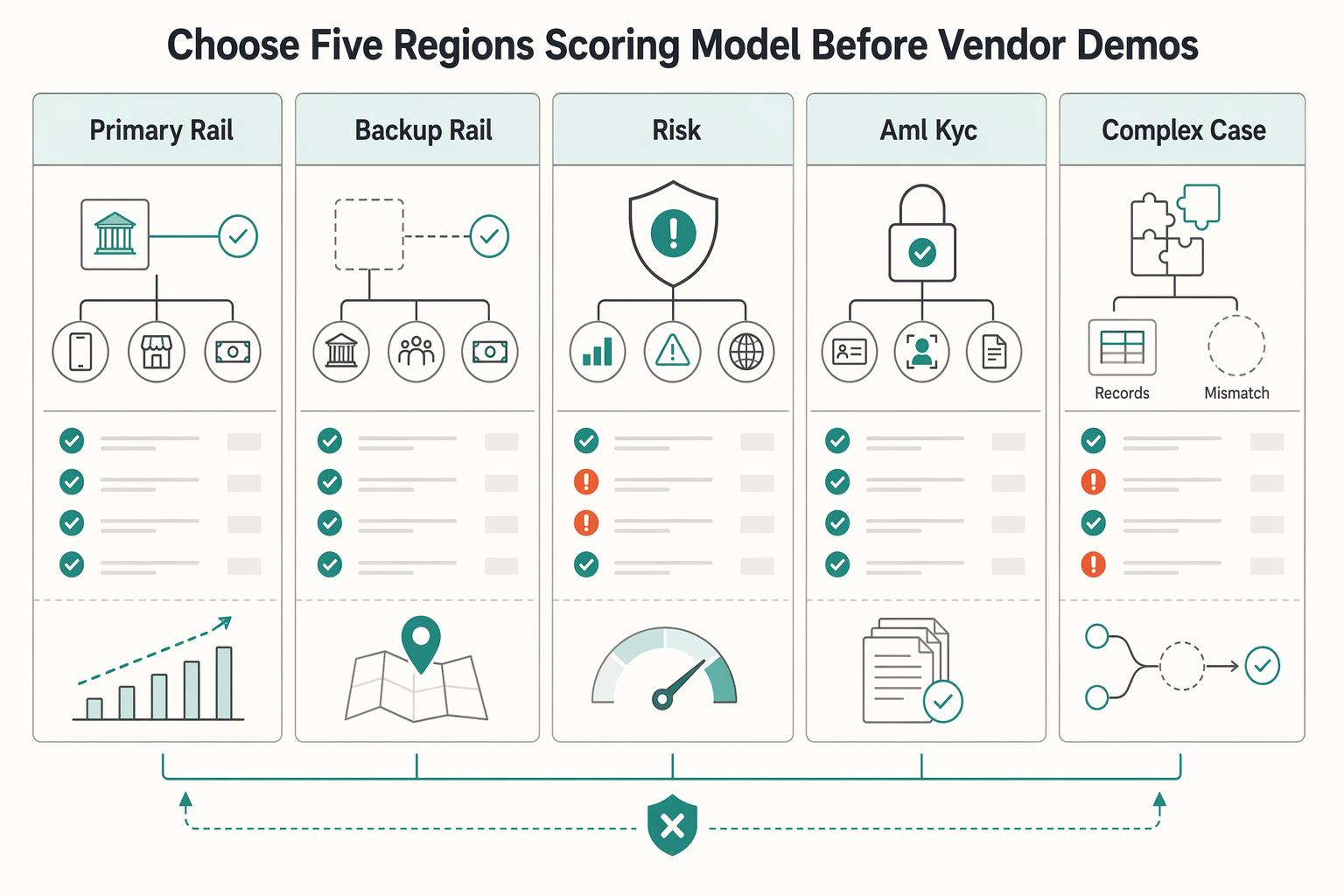
How Platforms Should Prioritize 5 Emerging-Market Payout Regions
If you are choosing where to launch cross-border payouts in 2026, start with what your team can actually run. Too many "top" lists lean on hype or market-cap tables. That may work for headlines, but it does not help with execution.
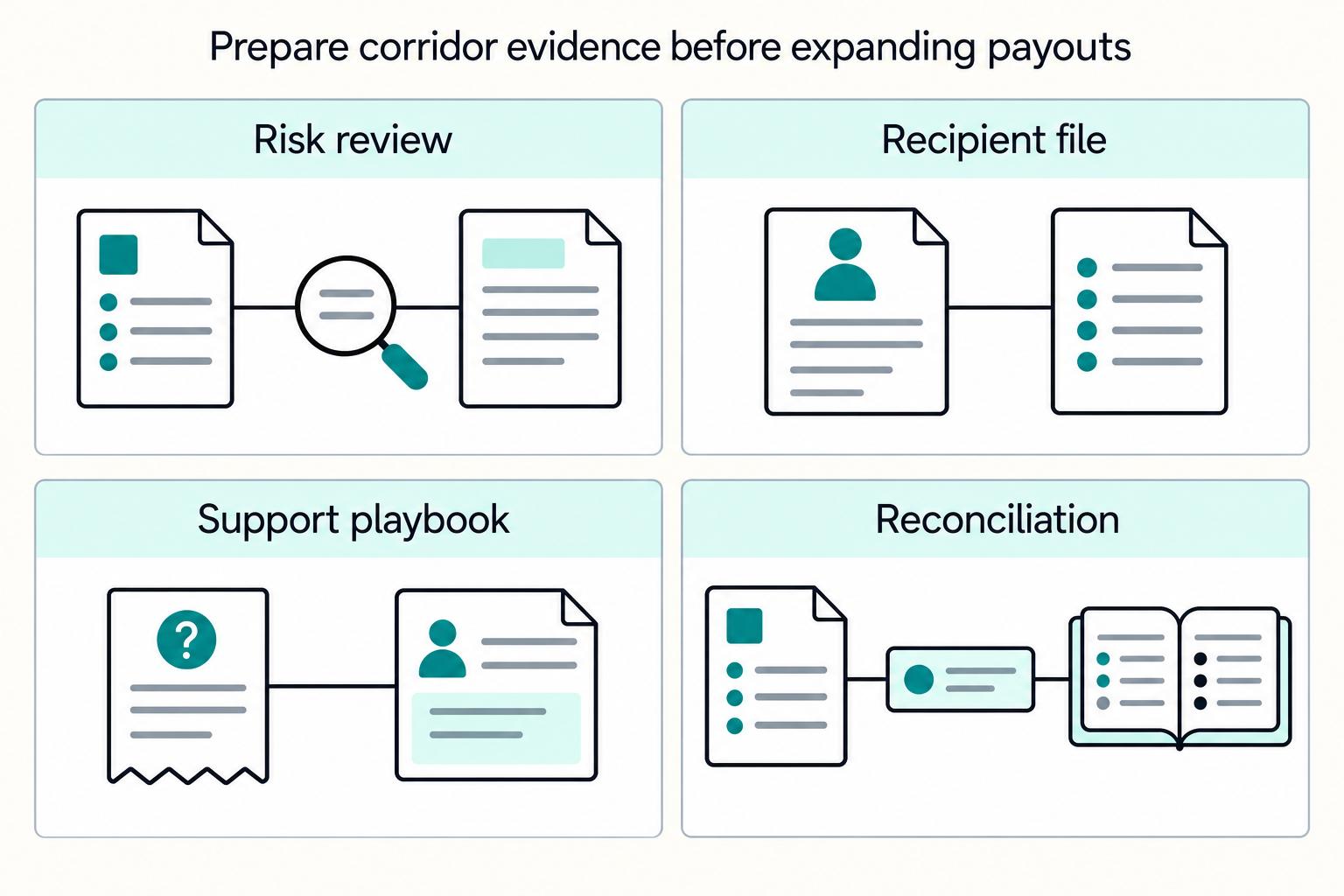
Scaling a Global Payout Platform from 100 to 10000 Monthly Payments
Scaling a global payout platform is rarely just a vendor problem. More often, it is an infrastructure and operating-discipline problem, because cross-border payments still carry persistent issues around cost, speed, access, and transparency. If growth is framed as "one more provider" or "higher API throughput," breakpoints can show up in finance, support, compliance, and reconciliation.
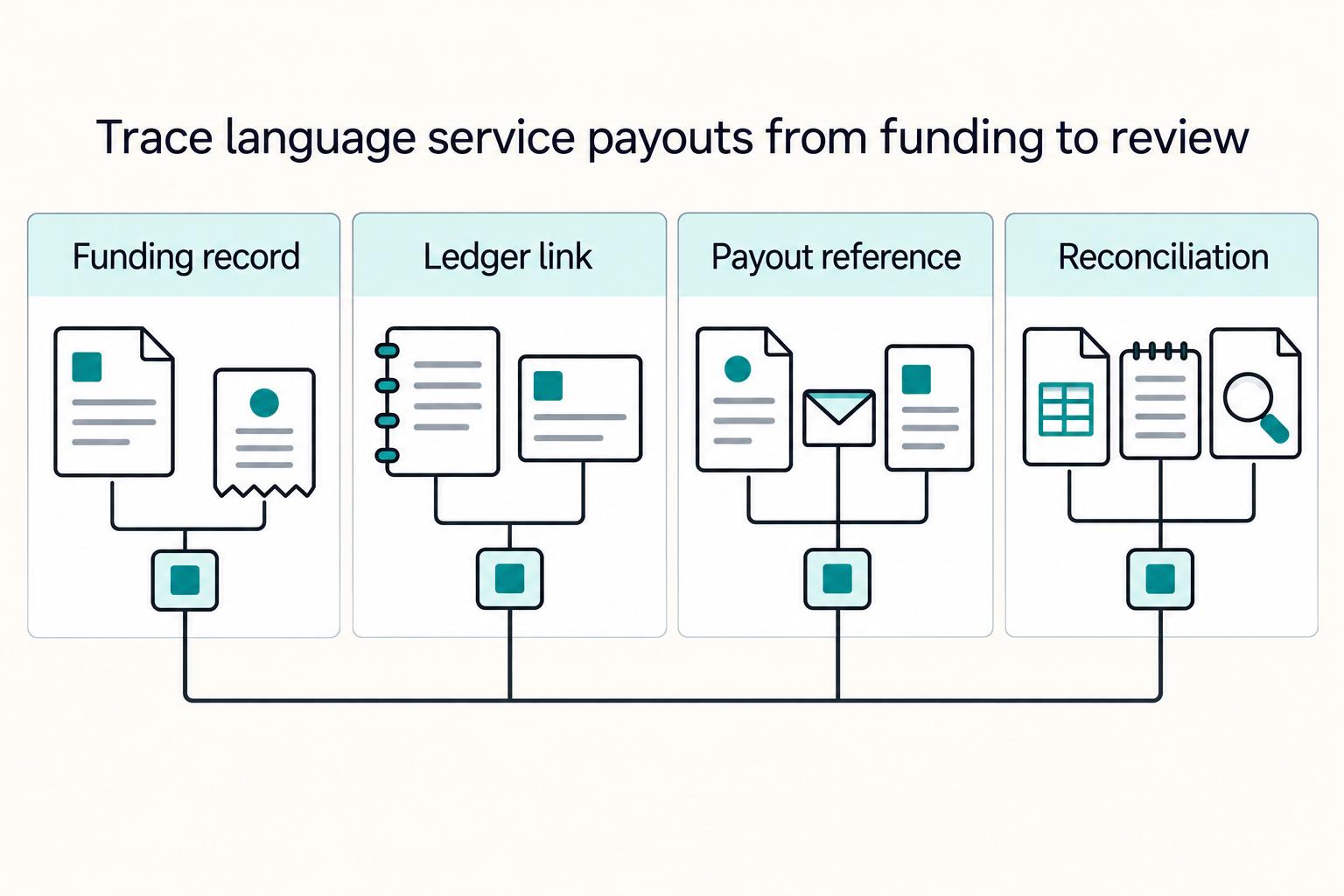
Pay Translators and Interpreters Globally for Language Services Platforms
Use Indeed, ZipRecruiter, and Vaia Talents for market signal only: they help you gauge demand and pricing, but they do not tell you how to run cross-border payouts.