
Quick Answer
Identify the actual seller/MoR for each buyer transaction and separate it from processing, banking infrastructure and downstream payouts. Require supported product/market scope, written responsibilities, comparable costs and operating evidence in the RFP. Test authenticated events, unknown outcomes, bounded provider replay and finance exports before final approval.
How to choose a merchant of record partner on ownership evidence, not headline fees#
Choose a merchant of record partner from the actual sale, responsibility split and evidence your teams need. Before vendor calls, build one decision record that finance, product, ops and engineering can test against the same scope and risk thresholds.
A Merchant of Record definition helps orient the team, but it does not answer the questions that usually block approval. Who owns refunds and chargebacks? What tax and reporting outputs does finance need? What does engineering have to build or monitor? What customer-facing controls does product keep? What happens when the service misses an SLA?
Those details determine whether a partner reduces compliance risk or shifts it into a harder-to-see part of your stack.
Before you start#
Bring these inputs together before you contact vendors:
- A plain-English scope note that says what you are selling, where you operate, and what you expect the provider to handle.
- A first-pass ownership view for tax, disputes, refunds, fraud handling, support handoffs, and customer statement visibility.
- A short list of non-negotiables, such as required markets, payment methods, reporting outputs, and support coverage.
- An evidence pack you will request from every vendor, including sample contract language, SLA definitions, escalation paths, and reporting examples your finance team can reconcile.
Your first verification point is simple. If those four functions cannot review that draft and say it is accurate enough to evaluate, you are not ready to issue a Request for Proposal (RFP).
Starting vendor calls without that baseline can create false confidence. One team may buy the promise of liability transfer while another inherits hidden integration work, manual exception handling, or unclear customer support ownership after launch.
Define the sale first, require evidence in the RFP, map actual responsibilities and compare supported service bundles. Then verify technical controls before pilot and go-live.
That order helps because commercial terms may not expose the real cost of weak accountability language or missing operational detail.
One caution up front: use guides, including this one, as orientation, not authority. In compliance work, the governing rule text, the current version of applicable requirements, and the signed contract matter more than any explainer, and general information is not legal advice. For any claim that changes liability, tax handling, revenue treatment, or customer-facing ownership, ask for the exact clause, policy, report sample, or API behavior that proves it.
By the end of this article, you should have more than a vendor preference. You should have a scoped decision, a scored RFP, a red-flag list, and pilot checkpoints your team can enforce before signature and go-live.
Define your operating scope before you contact vendors#
Identify the entity responsible to the buyer for the covered sale, including applicable refunds, disputes and tax responsibilities. An external reseller MoR can fill that role for supported products; a payment processor or payout API does not become the seller merely by moving money. Confirm the legal structure, network treatment and customer-facing identification for each flow.
| Step | What to define | Checkpoint |
|---|---|---|
| Step 1 | Define the buyer sale, seller/MoR, supported product and markets separately from downstream payouts | Finance, product, ops, and engineering should all describe the transaction the same way |
| Step 2 | Document your jurisdiction footprint and expected tax coverage by market | Finance should be able to map each market to what moves to the provider versus what stays in house |
| Step 3 | Write non-negotiables in plain language: required payment methods, ownership of chargebacks, refunds, and disputes, and any cross-border or international shipping requirements | If you cannot clearly state what stays with your team and what moves to the provider, pause and fix scope before vendor calls |
Step 1 Lock the launch use case before demos or pricing#
Separate the buyer’s purchase from downstream contractor or creator payouts. Describe seller, buyer, product/service, markets, funds flow and any submerchant relationship. A MoR partner must actually support that transaction model; payout capability alone is not a reseller MoR service.
Verification point: finance, product, ops, and engineering should all describe the transaction the same way. If they cannot, you are likely to mis-spec dispute handling, refund logic, or statement visibility.
Step 2 Document your jurisdiction footprint and expected tax coverage#
Document your jurisdiction footprint and expected tax coverage by market before any "global support" discussion. List where you sell now, where you plan to sell next, and which VAT, GST, and sales tax obligations you expect the provider to handle for covered transactions.
Verification point: finance should be able to map each market to what moves to the provider versus what stays in house. If that split is unclear, your RFP will attract broad claims instead of contract-ready answers.
Step 3 Write your non-negotiables in plain language#
Write non-negotiables in plain language. Include required payment methods, ownership of chargebacks, refunds, and disputes, and any cross-border or international shipping requirements that create extra support or compliance needs.
Decision rule: if you cannot clearly state what stays with your team and what moves to the provider, pause and fix scope before vendor calls.
Build an RFP that forces clear ownership and evidence#
Your RFP should force comparable, evidence-backed answers from every vendor. If responses are mostly sales language, you will end up debating presentation quality instead of accountability.
Step 1. Structure the RFP so each decision area is evaluated separately. Use scored sections for legal and accountability, regulatory compliance, technical and integration requirements, commercial terms, and operational support. This keeps required payment capabilities, security and compliance, and implementation effort from being blended into one generic response.
Set a required response format up front so proposals are directly comparable. If each vendor submits a different format, your scoring signal drops fast.
Step 2. Ask for evidence, not claims. Require artifacts your legal, finance, ops, and engineering teams can review before final commercial negotiation.
| RFP section | What to ask for | Why it matters |
|---|---|---|
| Legal and accountability | Sample contract language on liability, refunds, chargebacks, and tax handling | Confirms how responsibility is written, not summarized |
| Operational support | SLA definitions and incident escalation path | Makes support expectations comparable |
| Finance and reporting | Sample reporting outputs your finance team can reconcile | Validates month-end usability, not just demo quality |
| Technical and integration requirements | API and webhook documentation, including idempotency behavior | Clarifies retry behavior and failure handling |
| Product and customer experience | Statement descriptor controls and customer-facing ownership points | Confirms what end customers will actually see |
Treat "covered in standard terms" without sample language, reporting, or escalation detail as non-responsive.
Step 3. Use role-based questions to test real ownership. Generic prompts are easy to answer and hard to score.
- Finance: Who is liable for tax handling and related reporting for covered transactions, and what report outputs support reconciliation?
- Ops: How are refunds and chargebacks initiated, tracked, and resolved?
- Engineering: What are the API dependencies, webhook event model, retry behavior, and idempotency expectations?
- Product: Who controls statement descriptors and customer-facing ownership touchpoints?
Before issuing the RFP, have each internal owner score one sample answer. If they cannot tell whether an answer is decision-ready, the question needs rewriting.
Step 4. Set pass/fail gates before scoring. Use gates for required market coverage, required global payment methods, and minimum support model. If a vendor misses a gate, keep them out of the shortlist even if pricing is attractive.
State clearly that you can reject any or all proposals that do not meet the brief. That keeps the process anchored to your operating requirements.
Map legal and operational boundaries before pricing talks#
Pause pricing discussions until accountability is documented. A lower headline fee can become a higher operating cost if refunds, chargebacks, or tax handling are unclear after launch.
Step 1 Build a responsibility matrix before contract markup#
Use one shared matrix so both sides must name who is accountable, who operates the workflow, and who approves exceptions for each activity. Require written entries in your template, not narrative responses.
| Activity | What the vendor must state in writing | What your team should verify |
|---|---|---|
| Payment authorization | Who operates it, who investigates failures, who approves exceptions | Sample support path and named escalation contact |
| Refunds | Who initiates, who approves out-of-policy cases, who records final status | Sample case flow or queue states |
| Chargebacks | Who receives notices, who submits evidence, who owns deadlines | Sample dispute timeline and evidence handoff |
| Fraud disputes | Who reviews contested transactions and who makes the final call | Named decision owner and customer communication path |
| Regulatory compliance | Which obligations are covered by the provider and which remain with you | Contract language, not a sales slide |
Checkpoint: each row should map to a document or artifact, not just a named person.
Step 2 Pin down the tax chain in the jurisdiction of taxation#
For VAT/GST, get explicit written scope on registration, collection, remittance, and reporting for cross-border supplies of services and intangibles, plus any residual obligations on your side.
For each supported market and product, ask who calculates, collects, remits and reports applicable transaction taxes, what evidence finance receives and what stays with your business. A contract cannot erase duties imposed by law. Paddle’s current reseller agreement, for example, allocates sales-tax handling but retains supplier obligations for accurate product information and associated indemnity.
Apply the same written-scope discipline to sales tax: covered, excluded, and evidenced for finance review. A red flag is broad "we handle VAT/GST" language without supported jurisdictions, reporting outputs, or clear residual responsibilities.
Step 3 Define customer-facing ownership and exception handling#
Before selection, document what the customer sees and who communicates when issues occur. Put statement name, dispute communications, refund communications, and exception approvals in contract documents, not implementation notes.
Decide whether an external reseller MoR fits the sale#
Use the responsibility matrix from the last section to choose the model before you choose the vendor. Make the call on three things: control, operational burden, and speed to launch.
Step 1 Score the model before you spend#
MoR is a transaction responsibility; PSP is a processing service and BaaS is a financial-product infrastructure arrangement. These are different layers that can coexist. Identify the actual seller and covered sale before comparing service bundles; labels do not establish control, launch time or liability allocation.
| Model | Decision signal | What to verify in writing |
|---|---|---|
| External reseller MoR | You seek a supported reseller sale and contracted transaction operations | Actual seller role, eligible products/markets, refund/dispute/tax scope and retained supplier obligations |
| PSP/marketplace processing | You need payment processing while the actual platform or seller remains MoR | Per-flow seller/charge configuration, responsibility allocation, onboarding and reconciliation |
| BaaS infrastructure | You need a separate banking/financial-product capability | Actual licensed partners, account/funds-flow roles and residual duties; does not itself supply a reseller MoR |
Use one practical check for every option: what your team must do on day 1, at month end, and during a dispute spike. If the answer depends on future hiring or undefined manual work, the model is not implementation-ready.
Match any retained processing or financial-product responsibility with a named operating owner and actual legal/partner requirements. Do not assume an external MoR removes product delivery, accurate information, internal accounting or every downstream payout duty.
Step 2 Pressure-test one real marketplace scenario#
Do not compare models in the abstract. Run one corridor and one use case first, then scale. Use the same pilot sketch for each model: one market, one product line, one refund flow, one chargeback flow, and one month-end close.
This keeps the decision grounded in execution. Launch dependencies usually come from ownership, support flow, and reconciliation detail, not pricing alone.
Step 3 Add finance review to the decision log#
Have finance assess principal-versus-agent and other accounting conclusions from the actual contracts and performance obligations. A provider’s MoR label alone does not establish your gross-versus-net revenue presentation.
At minimum, request sample settlement and transaction exports, refund/chargeback status fields, and a draft mapping into your close process. If finance cannot show how provider data supports your process, pause selection until that gap is resolved.
If accounting questions remain open, review ASC 606 for Platforms: How to Recognize Revenue When You're the Merchant of Record before signing. Related: What is a Merchant of Record (MoR) and How Does It Work?.
Price the contract using total operating cost not headline fees#
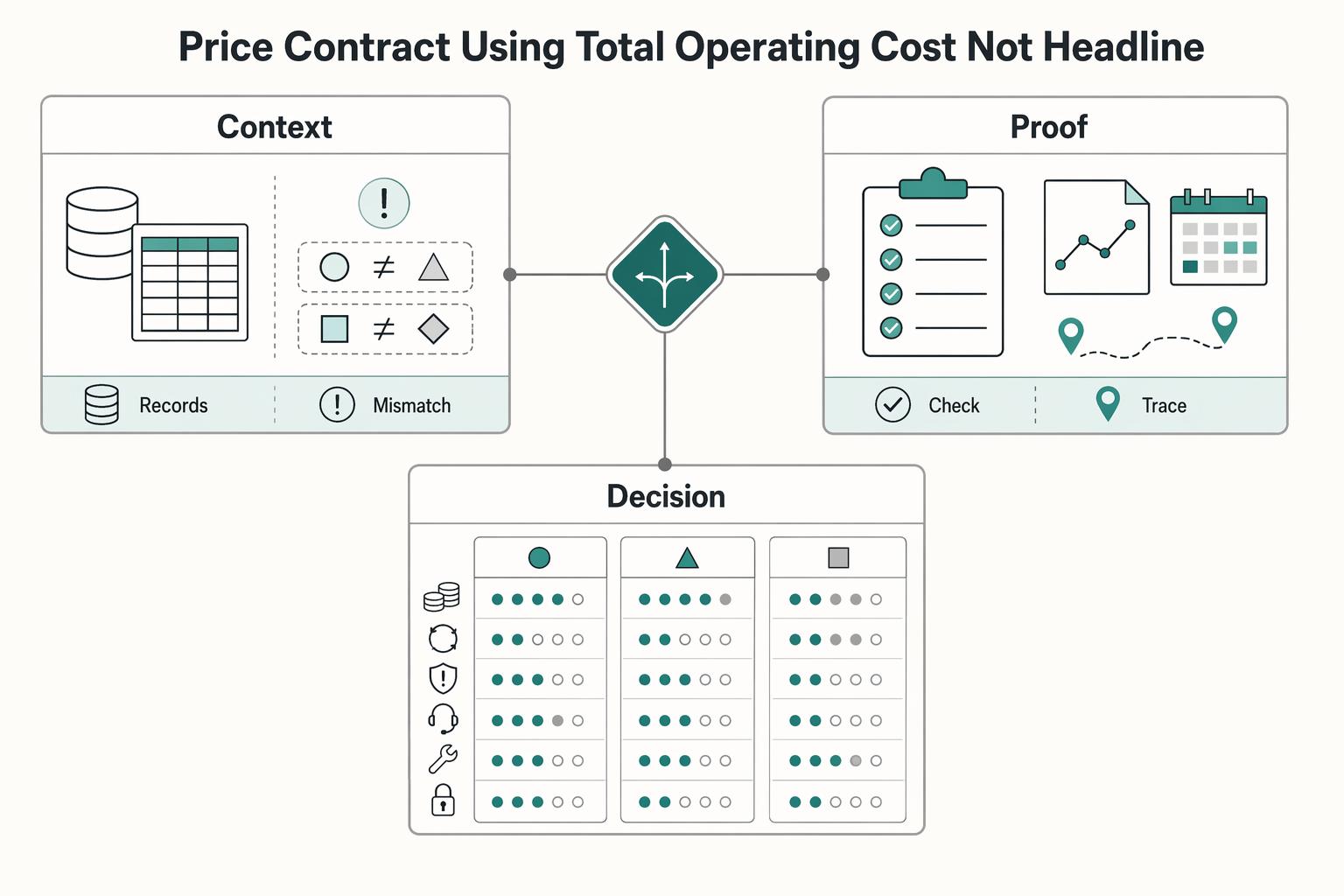
Price this contract as an operating decision, not a headline-rate comparison. A lower quoted fee can still be the higher-cost outcome once refunds, disputes, reporting delays, and support gaps shift work to your team.
| Step | What to review | What to require |
|---|---|---|
| Step 1 | Normalize every quote into one cost sheet: processing fees, refund handling, chargeback handling, support tier, implementation services, and custom work | Ask for contract schedules, not just sales summaries |
| Step 2 | Stress-test the SLA against real payment operations: incident response, settlement timing, reporting latency, escalation path, and remediation commitments | Sample incident communication, named escalation path, settlement report example, and expected report delivery pattern |
| Step 3 | Add failure-cost scenarios to procurement: delayed payouts, dispute backlogs, missing VAT/GST/sales tax outputs, and finance rework | Model the cost of operational failure, not only unit economics |
| Step 4 | Put onboarding assumptions in writing before signature: dependencies, your required inputs, approval gates, and known go-live delays | Make undefined legal review, custom reporting, or downstream tax configuration explicit |
Step 1. Normalize every quote into one cost sheet. Do not compare one processing-fee line to a bundled commercial package. Put each offer in the same structure: processing fees, refund handling, chargeback handling, support tier, implementation services, and custom work that could become a change order. If a term is labeled case by case, custom scoped, or deferred to onboarding, treat it as pricing risk.
Ask for contract schedules, not just sales summaries. That is usually where fees, exclusions, and support limits are actually defined.
Stress-test the SLA against actual operations: incident response and resolution, settlement timing, reporting latency, escalation, exclusions and remedies. Record how each time is measured and what happens when the provider misses it; a payment authorization is different from settlement or supplier remittance.
Use evidence checks: sample incident communication, named escalation path, settlement report example, and expected report delivery pattern. If settlement timing or reporting is vague, finance and ops carry the downside.
Step 3. Add failure-cost scenarios to procurement. Model the cost of operational failure, not only unit economics. Include scenarios like delayed payouts, dispute backlogs, missing VAT/GST/sales tax outputs, and finance rework when reports do not map cleanly to close.
This makes tradeoffs clearer. A slightly higher-fee provider can still be the lower total-cost option if it reduces daily manual work and close risk.
Step 4. Put onboarding assumptions in writing before signature. Do not accept implied "standard" timelines. Require each provider to list dependencies, your required inputs, approval gates, and known go-live delays.
If timing depends on undefined legal review, custom reporting, or downstream tax configuration, make that explicit in the RFP response and order form so execution risk is visible before you sign.
Verify integration and control surfaces before signing#
Do not sign until engineering, finance, and ops have each validated real workflows in the product. This is where you confirm whether the MoR model removes operational work or only shifts it.
| Area | What to test | Pass/fail check |
|---|---|---|
| API and event behavior | Payment creation, refunds, disputes/chargebacks, and any payout or tax-document flows; sample API responses, sample webhook payloads, retry behavior, and idempotent-request handling | Authentic durable events, atomic deduplication and execution reservation; pending outcomes block duplicate financial operations |
| Operator control surfaces | Audit-trail visibility, exception statuses, and export options for refunds, disputes, support actions, and payout-related cases | Your team can trace what happened, who changed status, and what evidence is available without manual guesswork |
| Compliance steps in signed scope | Payout gating, tax-document collection, and tax coverage where supported; actual workflow, exposed statuses, and escalation path when required information is missing | Use a written coverage matrix by country and product type as your control document |
Run technical diligence alongside commercial review in an isolated environment. Test payment creation, refunds, disputes and supported supplier remittance or tax flows, including concurrent duplicate requests, unknown outcomes and provider key-retention boundaries. Keep one durable business instruction and atomically reserve execution; an expired provider key is not durable duplicate protection.
Verify webhook authenticity before durable intake, then deduplicate and apply the intended lifecycle transition atomically. Handle out-of-order delivery and delayed final outcomes without treating acknowledgment as payment completion. A pending or unknown financial operation blocks a second attempt while the original is reconciled.
Step 2. Confirm operator control surfaces before you rely on managed operations. Even when the MoR appears on customer bank statements, your team still handles exceptions, customer questions, and close activities. Ask to see audit-trail visibility, exception statuses, and export options your team will use for refunds, disputes, support actions, and payout-related cases.
Run a mock month-end review with sample exports, then run one dispute case with ops. The test is practical: can your team trace what happened, who changed status, and what evidence is available without manual guesswork? Reduced business control is a known tradeoff in some MoR models, so verify visibility before signature.
Step 3. Validate compliance steps in your signed scope, not in marketing language. If a vendor says it reduces compliance overhead, map that claim to concrete operational steps: payout gating, tax-document collection, and tax coverage where supported. Ask for the actual workflow, exposed statuses, and escalation path when required information is missing.
Execute a staged pilot with explicit go or no-go gates#
Run your pilot as a documented protocol, not a verbal agreement. A clear written framework keeps execution predictable and makes go or no-go decisions easier to defend.
Step 1. Document scope and ownership before launch. Define exactly what the pilot covers, what it does not cover, and which team owns each workflow. If your teams cannot point to the same scope document, you are not ready to scale.
Step 2. Put decision gates in writing. Agree in advance on the operating signals that determine go or no-go, and who makes that call. Written gates prevent drift when pressure to expand rises.
Step 3. Prepare a pause path before expansion. Decide how you will halt rollout if risk or operational performance degrades. Without a pre-agreed pause path, teams tend to keep adding volume while unresolved issues accumulate.
Step 4. Review on a fixed cadence. Use recurring checkpoints to compare promised outcomes with live operating evidence. If the evidence is inconsistent, hold scope and stabilize before expanding.
Conclusion and copy paste selection checklist#
Do not sign on price or brand comfort alone. Sign when the provider has proved, in writing and in product, who owns the hard parts: tax, refunds, chargebacks, dispute communication, and the day-to-day data your finance and engineering teams need to operate.
Step 1 Confirm the model before you approve the vendor#
Confirm the actual merchant of record for each covered transaction, not merely the entity authorized to process an online payment. In an external reseller model, verify the reseller’s seller role and its supported product/market scope; in a Connect arrangement, charge configuration can make the platform or connected account MoR. Customer terms, receipt and statement identification must match the actual model.
Your verification point here is simple. Get the paper and the customer-facing evidence. Ask for sample contract clauses covering VAT, sales tax, refunds, chargebacks, and disputes, plus an example of the statement descriptor or card statement presentation. A common failure mode is assuming the seller-side work moved, then discovering after launch that your team still owns support escalations or finance cleanup.
Step 2 Verify the control surfaces your team will actually use#
Review authenticated webhook intake, duplicate/out-of-order events, durable financial instruction controls and provider-specific replay limits. Reconcile verified sales, tax, refunds, disputes and supplier remittance outcomes to finance records. Real-time delivery is not guaranteed, and a transport response is not a completed financial operation.
This is also where hidden cost shows up. A vendor can look acceptable on headline fees and still create manual rework if reporting arrives late, exports are incomplete, or exception statuses are hard to trace. If your sandbox or pilot cannot prove the data path, do not assume production will fix it.
Step 3 Use this copy paste checklist before signature#
If you are still working through the decision, use this as your final gate:
- We defined scope by model, markets, and global payment methods.
- We completed an RFP with pass/fail gates and evidence requirements.
- We documented MoR vs platform ownership for tax, disputes, refunds, and chargebacks.
- We identified the actual seller/MoR and compared supported processing, reseller and banking service layers against our goals.
- We evaluated SLA and total operating cost, not just headline fees.
- We passed technical and operational verification for webhooks and reconciliation.
- We set pilot go/no-go gates, rollback conditions, and post-launch performance reviews.
If even one box still depends on verbal reassurance, you are not at final approval yet. Pause, get the evidence, and only then move to signature.
Frequently Asked Questions
What does a Merchant of Record partner legally take responsibility for?
For covered sales, the MoR is the transaction’s responsible seller-facing entity, including applicable purchase refunds/disputes and taxes. An external provider may act as a reseller; verify actual supported products, legal scope, customer identification and contract duties. Your product fulfilment, accurate information and residual business obligations can remain.
How is a Merchant of Record different from a merchant services provider?
A PSP facilitates processing, while MoR identifies the entity responsible for the covered sale. The roles can coexist: in Stripe Connect, the platform or connected account can be MoR depending on the actual charge configuration. Buying a processing or payout service alone does not transfer the seller role.
When should a marketplace use an external MoR instead of a PSP or BaaS setup?
Use an external reseller MoR only when it supports your exact buyer/product/seller model and the contracted responsibilities meet your goals. Do not assume a marketplace or contractor payout program is eligible because a vendor handles software subscriptions. PSP and BaaS services can coexist with the seller role; compare actual responsibilities and a scoped pilot.
What are the non-negotiables to include in a MoR RFP?
Your Request for Proposal should force clear ownership, not broad claims. Use a structured evaluation question set and make pass/fail criteria explicit for scope, operating responsibilities, and growth fit. Require written contract language and practical evidence artifacts so accountability is verifiable before signing.
Which SLA terms matter most for platform finance and engineering teams?
Prioritize the terms that directly affect customer experience, financial outcomes, and your ability to scale: incident response, settlement timing, reporting latency, escalation path, and remediation commitments. Keep definitions explicit in writing, and review sample operational outputs before signature.
What operational risks still remain with the platform after signing an MoR partner?
Retained duties can include product fulfilment/support, accurate product and tax information, internal accounting, integration, supplier eligibility and contract indemnities. Verify each actual allocation, incident escalation and export capability rather than assuming all risk moves with the MoR label.
Try a related tool
Researched and edited by the Gruv editorial team. Gruv builds cross-border billing, payouts, and finance-operations software for global businesses.
Sources
Includes 2 external sources outside the trusted-domain allowlist.
- docs.stripe.com/connect/merchant-of-recordtrusted
- docs.stripe.com/webhookstrusted
- paddle.com/legal/termsexternal
- paddle.com/about/procurementexternal
Educational content only. Not legal, tax, or financial advice.
Related Posts

ASC 606 Revenue Recognition for Merchant of Record Platforms
If you run a Merchant of Record flow, cash movement is not your revenue policy. Under ASC 606, the hard part is that customer payment, processor settlement, and the point when revenue is actually earned can sit on different dates and in different records.
Banking Partnerships for Fintech Platforms: How to Choose Between BaaS and MoR
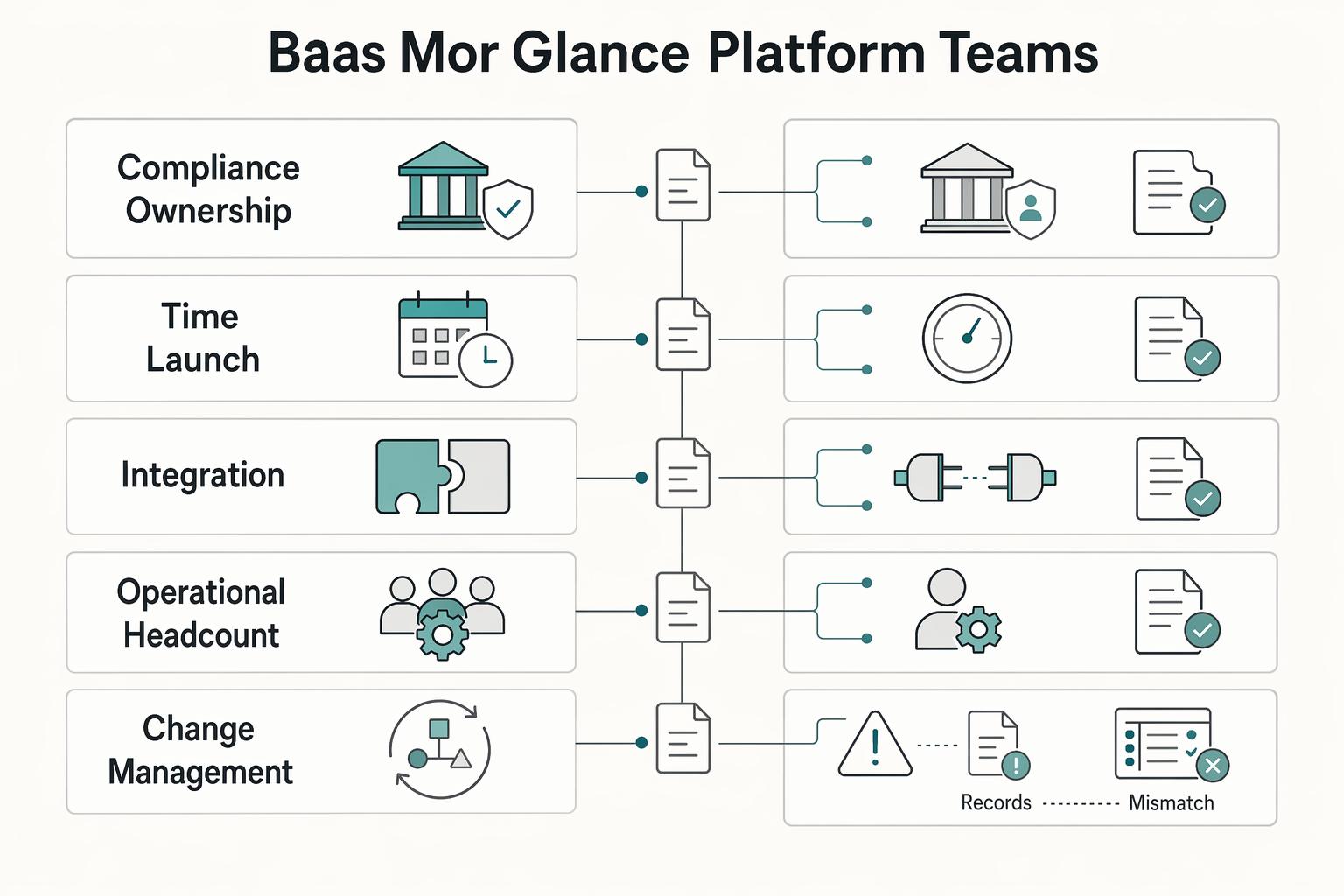
In banking partnerships, the BaaS vs. MoR decision is about operating ownership after go-live, not whose demo looks better. Before you compare vendors, you need clear owners for approvals, monitoring, reconciliation, exception handling, and change control.

What is a Merchant of Record (MoR) and How Does It Work?
**A merchant of record is the merchant responsible for the customer transaction in the payment system. An outsourced MoR service can take on that role so your business can sell eligible products through its checkout.**