
Quick Answer
There is no single EU VAT registration threshold for digital platforms. Since 1 July 2021, covered cross-border B2C e-commerce supplies use an EU-wide EUR 10 000 threshold, while domestic flows still need separate local-rule logic. A workable checker classifies each flow first, stores establishment evidence and rule version, and then routes to local handling, OSS, or manual review.
Why most VAT threshold content fails platform operators#
Most VAT threshold content fails platform operators because it starts as reference material, while your systems need a clear, logged decision for each transaction flow. There is no single VAT registration threshold EU rule you can drop into code for every case, even though payouts, invoicing, and month-end close still force one operational decision per flow.
Country lists help with context, but they are not decision logic. Since 1 July 2021, cross-border B2C e-commerce VAT rules changed. Earlier intra-EU distance-sales thresholds were replaced by an EU-wide EUR 10 000 threshold for certain cross-border B2C e-commerce supplies. Any checker built on one generic threshold assumption will break.
1. The country list checker#
A country list checker is easy to read, but weak in production. It gives you threshold rows by country, but not the flow-level logic needed to route real transactions.
For platform teams, classification has to come first. You need to know whether the flow is domestic or cross-border, the transaction type, the destination country, the seller establishment data, and whether the sale fits the cross-border B2C e-commerce pattern where the EUR 10 000 rule is relevant. If those inputs are missing, do not auto-decide.
2. The single-number checker#
A single-number checker is fast to ship and expensive to live with. It hides the branching that finance and product operations will still need.
| OSS scheme | Filing cadence |
|---|---|
| Non-Union | Quarterly |
| Union | Quarterly |
| Import | Monthly |
There is no universal EU threshold across all transaction types, and OSS is not one single path. OSS has three optional schemes: non-Union, Union, and import. Cadence differs by scheme. Non-Union and Union are quarterly. Import is monthly. If you centralize declaration and payment through OSS, your logic still has to branch by scheme and eligibility.
In practice, track the Member State of identification and scheme in each decision record. Your ledger and ops UI should reflect the same scheme and filing-cadence assumption for OSS-routed flows, or reconciliation drift follows.
3. The filing-only checker#
A filing-only checker enters the process too late. The highest operational risk often shows up earlier, at onboarding, invoicing, wallet activation, and payout release.
OSS can centralize qualifying declaration and payment through one Member State registration, but OSS returns are additional and do not replace domestic VAT returns. So a checker that answers only "use OSS or not" leaves gaps in downstream controls and auditability.
The stronger model turns VAT nuance into auditable actions: classified flow, rule version applied, seller establishment evidence, and resulting treatment. For complex cross-border cases, escalate instead of guessing. VAT Cross-border Rulings (CBR) exist for advance rulings, and requests must follow national ruling conditions in the relevant EU country.
That standard drives the rest of this list: checker designs that turn legal nuance into auditable actions across ledgers, settlements, and compliance gates. If you want a deeper dive, read A Guide to VAT for UK Freelancers.
Selection criteria and who this list is for#
This list is for teams that need VAT decisions to hold up in payouts, ledgers, and multi-country reconciliation, not just in a reference table. If you manage seller sales turnover, payout execution, and close across multiple Member States of the European Union, you need more than a static threshold lookup.
If that is not your operating reality, keep it simple. A single-country micro business with one local entity and no cross-border transaction flow may only need a local accountant table plus manual review, and this list is not meant to replace that setup.
1. Multi-state platform teams#
This list is built for platform finance, ops, and product owners handling real transaction branching. That means domestic or cross-border flows, seller establishment status, and whether a flow stays domestic or goes through an EU One-Stop Shop (OSS) path. That includes marketplaces and platforms inside and outside the EU, since the cross-border B2C e-commerce VAT changes apply across that supply chain.
The practical consequence is the point. VAT logic affects invoice treatment, wallet activation, payout release, ledger posting, and month-end exceptions, so a country list alone is not enough when sellers transact across multiple EU countries.
2. Not for static local-only use#
If you operate in one country only, with no cross-border B2C e-commerce pattern and no OSS need, a lightweight local control can be enough. In that case, a static table plus review step may be the right design.
The boundary is your change surface. Once cross-border flows or centralized OSS declaration enter the process, you are no longer maintaining a reference sheet. You are maintaining a live decision system.
3. Legal fit first#
Legal fit comes first. Your checker must route flows into the correct legal branch instead of treating all threshold logic as one rule. Since 1 July 2021, earlier intra-EU distance-sales thresholds were replaced in scope by an EU-wide EUR 10 000 threshold for intra-EU distance sales of goods and TBE services. That means classification has to come before threshold application.
If you use OSS, store the legal handles that drive downstream work: selected scheme and Member State of identification. OSS covers three schemes, non-Union, Union, and import, with quarterly returns for non-Union and Union and monthly returns for import.
4. Operational fit under repeat events#
Operational fit means the checker stays stable under real platform behavior, including duplicate, delayed, or out-of-order events. Idempotent handling is not a legal rule, but it is often a practical requirement for API, import, and webhook-driven operations.
Use repeatability as the test. For the same seller facts, transaction classification, and rule version, the checker should return the same result and avoid drift in tax status, postings, and review flags.
5. Audit fit for each taxable person decision#
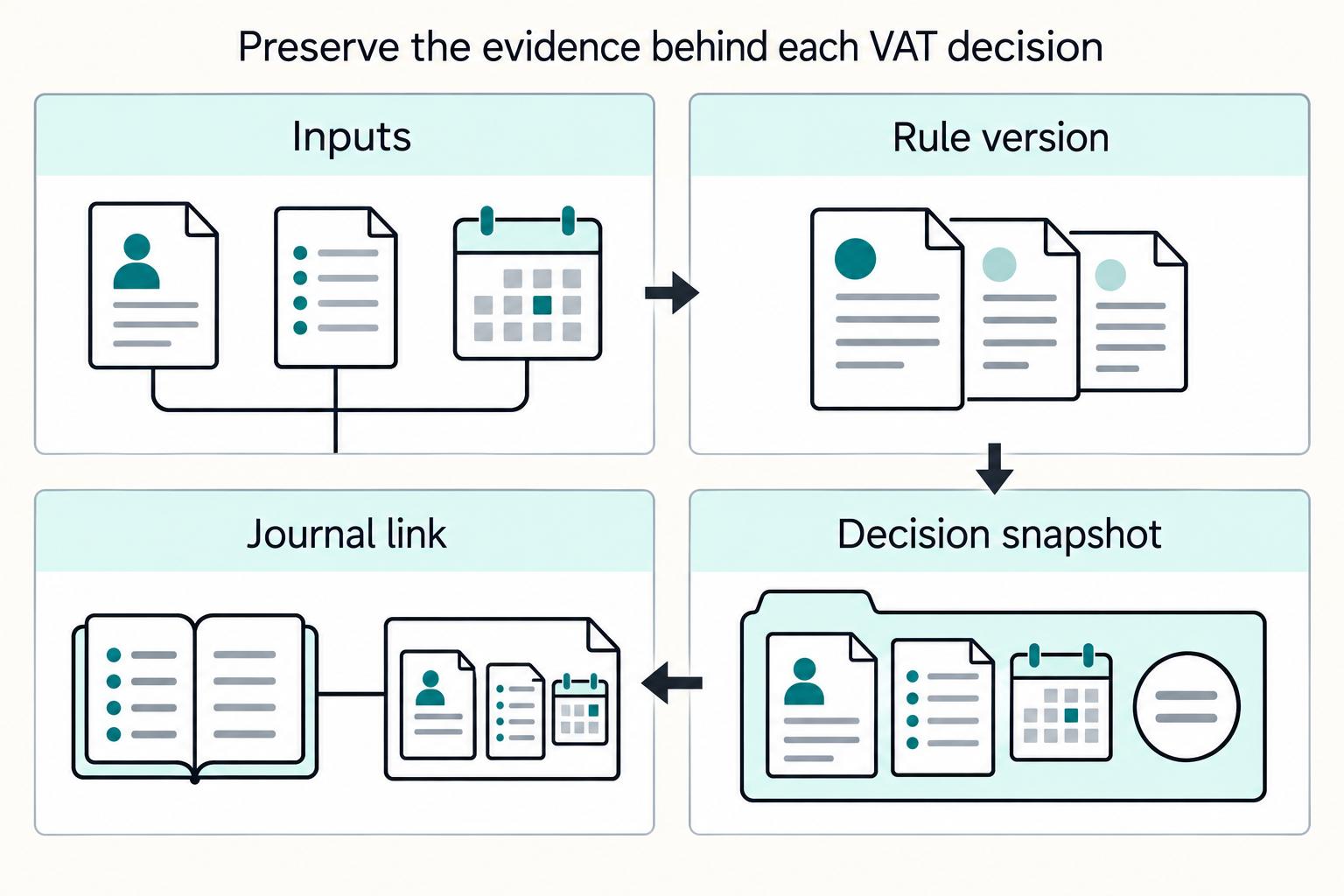
Audit fit means storing the evidence behind each taxable person decision, not just the output. Keep enough decision evidence for reconstruction, such as the seller facts used, the classification and rule version applied, and the resulting VAT treatment.
This is not optional for platform-grade control. OSS includes record-keeping and audits, and OSS returns are additional to domestic VAT returns rather than replacements. If a case is genuinely complex and cross-border, escalate instead of guessing. VAT Cross-Border Rulings exist for advance treatment, and requests must follow national VAT ruling conditions in the EU country where filed.
You might also find this useful: How to Invoice as a Freelancer in the UK: VAT Registration MTD and Sole Trader Rules.
Best for domestic-only platform activity in one Member State#
Choose this model only if your activity stays domestic in one Member State. If sellers are resident businesses and you have no intra-EU B2C supplies, a checker centered on one national threshold can be a fast way to run threshold alerts and registration review triggers in back office.
- Best for: local-only platforms in one Member State with no cross-border B2C flow.
- Pros: fast implementation around one national threshold; simpler policy gates and review handling.
- Cons: breaks once cross-border flow appears; can misfit cases that need additional local-rule branches.
- Concrete use case: a local services marketplace that needs a threshold alert and a clear review trigger for possible registration under local rules.
Why this is the right fit#
This setup works when timing is your main problem, not cross-border classification. You monitor seller turnover against one local threshold and trigger review for possible registration under local rules.
What you must verify#
Before you trust the checker, keep evidence that the case is still domestic: seller residency in that Member State, the turnover period used, and the rule version applied. Add a recurring sample check so you catch early signs of non-local buyer-country patterns.
Where it breaks#
The first cross-border flow is where this breaks. Since 1 July 2021, the previous within-EU distance-sales thresholds were abolished and replaced in scope by an EU-wide threshold of EUR 10 000 for covered cross-border supplies. Those cases need a different branch, including an OSS check where relevant. OSS is optional, but if used it runs through one Member State of identification for that scheme.
For a step-by-step walkthrough, see 1099 Reporting Threshold Checker for Platform Filing Decisions.
Best for EU-established platforms with cross-border SME usage#
This model fits when sellers are EU-established and their activity mixes domestic and cross-border B2C supplies. Anchor routing to the seller's Member State of establishment for Union-scheme OSS cases, branch domestic and cross-border flows early, and treat SME handling as a controlled review path rather than an automatic rule.
- Best for: platforms onboarding EU-established sellers who may need SME-related review alongside OSS routing through a Member State of identification path.
- Pros: clearer separation of establishment, transaction type, and OSS routing; easier to operate one Member State of identification path for Union-scheme cases.
- Cons: needs tighter evidence capture and legal-reviewed SME checks because this section's evidence does not define SME eligibility criteria or country rollout.
- Concrete use case: a creator platform where sellers begin with local sales, then add cross-border EU B2C sales in the same year.
- Recommendation: if your seller base is mostly EU-established and cross-border activity is increasing, prioritize this model before adding advanced exception branches.
Why this is the better fit#
The trigger is not turnover alone. Since 1 July 2021, cross-border B2C e-commerce VAT rules changed, including an EU-wide EUR 10 000 threshold for covered cases. A domestic-only checker becomes unreliable as cross-border flow appears.
For EU-established taxable persons, OSS is a confirmed optional mechanism for covered cross-border supplies. Under the Union scheme, the Member State of identification is the Member State where the business is established, which gives you a stable operational anchor for filing and review. If OSS is used, supplies that fall under that scheme should be declared through the OSS return.
Keep OSS and SME logic separate. OSS mechanics are evidenced. Confirm SME criteria with the relevant authority before applying SME outcomes.
What you should store before you automate it#
Store the following before you automate it:
- evidence of seller establishment in the Member State of establishment, plus any fixed establishments in other Member States
- transaction classification at branch time, domestic or cross-border B2C
- OSS participation status and, if applicable, the Member State of identification and choice date
- rule version used for the decision path
- if multiple fixed establishments exist and one Member State of identification is chosen, the lock period, current calendar year plus two following calendar years
Where it breaks#
The common failures are operational, not theoretical:
- treating "SME" as an automatic outcome from onboarding inputs
- running partial OSS logic after a scheme is used, even though supplies in that scheme should be declared via the OSS return
- missing filing and controls context, for example that Union-scheme OSS returns are quarterly
- keeping critical lock-period and evidence data outside seller-operational records
When classification is unclear or cross-border treatment is complex, route to review instead of forcing one-rule automation. Need the full breakdown? Read 1099 Filing Threshold Calculator for Platform Contractor Decisions.
Best for non-EU platforms with EU taxable supplies#
Pick this model when a seller has EU taxable supplies but no EU business or fixed establishment. Start the checker with establishment evidence and OSS eligibility, not other-scheme assumptions or a domestic-threshold shortcut.
- Best for: non-EU platforms selling to EU consumers.
- Why this works: OSS explicitly covers marketplaces and platforms inside and outside the EU, and from 1 July 2021 the cross-border B2C VAT rules changed.
- Core route: if the taxable person has neither a business establishment nor a fixed establishment in the EU, the Non-Union scheme allows registration in one Member State of identification for covered declarations and payments, and that taxable person can choose any Member State of identification.
- Important limit: if the taxable person is not established in the EU, the Union scheme is limited to declaring supplies of goods in scope.
What you should capture#
Store the evidence used for the non-EU status decision before automating routing: legal address, establishment declaration, reviewed fixed-establishment checks, chosen OSS scheme, and selected Member State of identification. If registered, retain the OSS VAT identification number in the non-Union format (EUxxxyyyyyz) and the rule version used for the decision.
Where teams get caught out#
Do not treat OSS as a full replacement for VAT filing. OSS returns are additional and do not replace domestic VAT returns. Keep filing cadence explicit in your controls: non-Union and Union are quarterly, import is monthly. If treatment is genuinely complex, route to review and consider a VAT Cross-border Ruling in a participating country where you are VAT-registered.
For related platform-operator tax workflows, see Canadian GST/HST Registration for Platform Operators in the Digital Economy.
Best for mixed resident and non-resident seller populations#
This model is useful when one marketplace serves both EU-established and non-EU-established sellers in the same payout stack. In practice, branch in this order: establishment status first, transaction type second, and threshold logic third.
For OSS routing, start with whether the seller has established its business in the EU or has a fixed establishment there. If the business is established in the EU, the Union scheme path is generally tied to the Member State where the business is established. If the taxable person has neither a business establishment nor a fixed establishment in the EU, the non-Union scheme is the relevant path for covered supplies. A non-EU taxable person using the Union scheme can use it only to declare supplies of goods within scope.
Since 1 July 2021, an EU-wide threshold of EUR 10 000 applies to covered cross-border B2C e-commerce supplies, so classify the flow before applying threshold fields. A practical sequence is:
- Confirm establishment facts and effective dates.
- Classify the transaction flow.
- Route to the Union scheme, non-Union scheme, import scheme, or local handling as applicable.
- Store the rule version and evidence used for the decision.
When seller status changes, keep earlier decisions tied to their original effective period and apply new routing prospectively from the verified change date. Capture establishment evidence, fixed-establishment review outcomes, chosen Member State of identification if any, OSS registration details if any, and decision metadata so the result is auditable.
Two controls matter most in mixed populations. Where multiple fixed establishments exist, selecting a Member State of identification can bind the choice for the calendar year plus the next two years. Filing cadence should also stay explicit by scheme: Union and non-Union quarterly, import monthly. Record-keeping still matters even where the platform is not treated as a deemed supplier.
This pairs well with our guide on Singapore GST for Freelancers: Threshold, Registration, Invoicing, and Filing.
Best for teams that need policy-gated onboarding decisions#
Choose this model when you need a VAT decision before activating invoices, payment links, wallets, or first payouts. The gate should confirm whether the seller is a taxable person, whether an OSS route is relevant, and what evidence supports that decision before anything hits your live ledger.
- Best for: ops teams that require a registration decision before first payout release.
- Pros: ties taxable-person and OSS-path checks to onboarding, which can reduce downstream invoice and reconciliation rework.
- Cons: adds onboarding friction if document requests are not sequenced by decision branch.
- Concrete use case: a platform that blocks payment links and invoice generation until seller VAT status is validated against establishment facts and transaction scope.
OSS is optional, but operationally useful as a structured decision path. A seller that opts in can declare and pay covered VAT through one Member State, so your policy can hold activation until you know whether to route to Union, non-Union, another handling path, or manual review.
Threshold checks come after classification. Since 1 July 2021, the EUR 10 000 EU-wide threshold applies in the cross-border B2C e-commerce context, so onboarding should not jump to threshold arithmetic before confirming that context applies.
The decision points to lock before activation#
Before activation, lock these four points:
| Decision point | What to confirm |
|---|---|
| Taxable person status | Confirm the seller is acting as a taxable person for the supplies you process |
| Establishment facts | Verify establishment facts and determine whether Union or Non-Union OSS could apply |
| Member State of identification | Identify it if the seller opts into OSS |
| Decision record | Store evidence, effective date, and rule version before activation |
For the Union scheme, the Member State of identification is where the taxable person has established the business. Where multiple fixed establishments exist in the EU, the chosen Member State can bind the taxable person for that calendar year plus the next two years, so this decision should be locked before payout rails go live.
Where teams create friction by accident#
A common friction point is sequencing, not the tax check itself. Request the minimum evidence needed to classify first, then request scheme-specific artifacts only when that branch is triggered. If a non-Union OSS registration is provided, capture the OSS VAT ID in the expected format (EUxxxyyyyyz) and tie it to the seller record and activation date. If facts are complex or disputed, pause activation and escalate.
The failure mode to design around#
Do not treat onboarding approval as permanent. If a taxable person uses an OSS scheme, all supplies covered by that scheme must be declared through OSS returns, and a Member State can exclude a taxable person or intermediary from the scheme. Build a post-approval checkpoint to verify scheme status before first payout and on a recurring cycle aligned to filing cadence, quarterly for Union and non-Union, monthly for import.
If the fact pattern is genuinely complex and cross-border, consider whether a VAT Cross-border Ruling is needed instead of stretching threshold logic beyond what the facts support.
Related reading: 1099-K Reporting Threshold After the IRS Delay: Control Updates for Platform Operators.
Best for high-volume platforms that need defensible audit trails#
If you run high transaction volume, the core control is replayability. You should be able to reconstruct the exact inputs, rule version, and posting outcome for any VAT decision later. For an EU VAT checker, that matters more than speed alone.
Online marketplaces and platforms have new record-keeping requirements, and cross-border B2C e-commerce VAT rules changed from 1 July 2021. Each decision record should show not just the outcome, but also how the transaction was routed in your internal logic and which threshold logic was applied.
What to store for every decision#
Attach an evidence pack to each decision record so it can be replayed:
- seller establishment proof used at decision time
- the
sales turnovercalculation window used - the applied threshold logic used, including any relevant national annual threshold or cross-border branch trigger
- the final outcome, for example exemption path, registration-required path, or manual review
Be strict on two points: timestamp the evidence snapshot with the rule version, and store the establishment evidence that actually drove the decision, not only a later-updated seller profile.
If OSS is in scope, store scheme artifacts too: chosen scheme, Member State of identification, effective date, and for non-Union OSS where relevant, the VAT ID in EUxxxyyyyyz format. A taxable person can register in one Member State for covered supplies, and if they choose a scheme, supplies under that scheme must be declared through that scheme's OSS return.
Order of operations that holds up under review#
- Ingest the transaction event and assign an immutable event ID.
- Classify the flow in your internal routing before threshold math.
- Evaluate the threshold branch using the stored rule set and calculation window.
- Lock decision version and evidence snapshot.
- Post the ledger journal from that locked result.
- Expose status and reason code in the ops UI for exception handling.
Keep threshold evaluation behind classification. Since 1 July 2021, an EU-wide threshold of EUR 10 000 applies in the cross-border B2C e-commerce context for covered supplies.
Where defensibility usually breaks#
Defensibility usually breaks when records are incomplete, rules are not versioned, or OSS status and return obligations are not kept current. Treat corrections as new events linked to prior decisions, with reversal and repost handling where needed.
OSS adds another risk: a taxable person or intermediary can be excluded from a scheme, and filing cadence differs by scheme, quarterly for Union and non-Union, monthly for import. Recheck scheme status on a cadence that matches filing reality.
Checkpoints worth paying for#
Use three controls consistently: periodic sample checks across decision branches, a defined exception-handling process, and reproducible logs with clear reason codes for establishment, scope, threshold, and OSS status.
If a pattern is genuinely complex and cross-border, pause automation and consider requesting a VAT Cross-border Ruling in a participating Member State where you are VAT-registered instead of forcing uncertain threshold logic into production.
Best for product teams embedding checker logic in APIs and webhooks#
This model is best when invoicing, ledger posting, wallet projections, and payout release all need the same VAT decision in real time from one service call. It gives you consistent outcomes across product surfaces, but only if you keep rule versions and event contracts stable.
Best fit and what to centralize#
Use this pattern when your platform is API-first and actions run from events or webhooks. Centralizing the threshold decision behind one service prevents checkout, invoicing, and payouts from applying different logic.
The real gain is branch control, not speed alone. Keep domestic and covered cross-border B2C logic in separate branches. From 1 July 2021, the old intra-EU distance-sales thresholds were replaced in that covered context by an EU-wide threshold of EUR 10 000.
What the response object should actually contain#
Do not return only vat_required: true/false. Return the branch, basis, and version used to produce the decision.
| Field | What it should say | Why it matters downstream |
|---|---|---|
decision_status | exempt, registration_required, or manual_review | Lets invoice and payout services act without guessing |
classification_branch | domestic, covered_cross_border_b2c, or another scoped branch | Stops teams from applying the EUR 10 000 trigger to domestic flows |
threshold_basis | national_annual_threshold or eu_10000_cross_border_branch, plus calculation window | Gives finance and support a verifiable explanation |
rule_version and effective_at | Immutable rule-set ID and timestamp | Supports regression testing and historical replay |
oss_context | scheme, Member State of identification, effective date, and scheme status when relevant | Required when OSS status affects downstream handling |
For OSS, this context is operational, not decorative. A taxable person registers in one Member State of identification for covered supplies, and if they choose a scheme, supplies under that scheme must be declared through that scheme's OSS return.
In Union-scheme multi-establishment cases, treat Member State of identification carefully in contracts. That choice can bind the taxable person for the current calendar year plus the two following calendar years.
Why this model is strong for testing and orchestration#
A shared API improves regression testing because teams can replay the same fixtures against the same rule_version before and after releases. It also improves orchestration: one VAT status object can drive invoice treatment, wallet reserve behavior, and payout eligibility without downstream recomputation.
The tradeoff is change discipline. If webhook schemas flatten domestic and covered cross-border branches into one generic threshold field, consumers are likely to break when branch logic or document requirements change.
Red flags and verification points#
The most common failure is recalculating against newer profile data during retries. Lock decisions to immutable event IDs and rule versions so retries do not silently drift.
Use controls that catch this early:
- Reject or pause requests missing establishment evidence or transaction classification needed for branch selection.
- Make webhook handling idempotent with immutable event IDs and locked
rule_version. - If your platform facilitates goods, include a
deemed_supplierreview flag where relevant, and keep record-keeping controls even when the platform is not treated as a deemed supplier.
If OSS is in play, align scheme-status rechecks with filing cadence: Union and non-Union returns are quarterly, import-scheme returns are monthly.
Concrete use case#
A practical implementation is an internal API that returns one VAT status object used by invoice generation, wallet projections, and payout eligibility checks. If the object is registration_required, downstream services can apply that state consistently. If it is manual_review, all three surfaces pause instead of creating partial actions.
For genuinely complex cross-border cases, keep manual_review and consider a VAT Cross-border Rulings request where the requester is VAT-registered, following national ruling conditions in the participating country.
Best for finance teams closing month-end without VAT surprises#
Month-end should confirm that VAT statuses were applied consistently before settlement is finalized. Reconcile seller-level status changes before you lock settlement files, because exemption handling, taxable sales, and OSS follow-up can break at different points in the close process.
This approach fits finance ops teams reconciling across EU entities, especially when a seller changes status during the period. Do not close on revenue totals alone. Keep a status-change view that separates covered cross-border B2C cases, including where the EU-wide EUR 10 000 threshold introduced from 1 July 2021 applies, domestic-path decisions, and unresolved manual reviews.
The month-end pack that actually helps#
Use a short control pack tied to your existing ledger and settlement decisions:
| Month-end control | Review focus |
|---|---|
| Threshold near-miss report | Prioritize sellers close to the applicable threshold branch before the next payout cycle |
| VAT exemption population review | Compare sellers treated as exempt in the month with prior-period treatment and onboarding evidence |
| Non-OSS reporting flags | Keep other reporting obligations as explicit finance flags for the correct reporting track |
| Unresolved exceptions register | Track every seller or transaction still in manual review, including branch, rule version, and missing documentation |
The OSS check finance should not skip#
OSS can simplify VAT declaration and payment for covered cross-border supplies through one Member State of identification, but OSS VAT returns are additional and do not replace domestic VAT returns. At close, verify which entities are in OSS, which scheme applies, and which Member State of identification is recorded.
Also align month-end controls to scheme cadence: Union and non-Union returns are quarterly, and import-scheme returns are monthly. A quiet OSS filing month does not mean domestic VAT work or record controls can be skipped.
How to apply it in settlement reconciliation#
Before settlement finalization, compare the VAT status used in invoicing and ledger posting with the status attached to the settlement file. If a seller changed status mid-month, resolve cutoff treatment, correction handling, and payout impact before close.
For covered cross-border B2C threshold decisions in the EU, keep the branch, rule version, and evidence used for each decision. If cross-border treatment is unclear, escalate during close. For complex cross-border VAT treatment, consider whether a VAT Cross-border Rulings request is appropriate in a participating EU country where the taxable person is VAT-registered.
Related: A Guide to VAT Registration for a UK Company Selling to the US.
Comparison table to pick your checker model fast#
Pick the smallest checker that matches your actual transaction mix. Move to branch-aware logic as soon as cross-border B2C, mixed establishment, or OSS enters scope.
| Best for | Legal coverage | Operational complexity | Audit defensibility | Implementation time | Failure risk |
|---|---|---|---|---|---|
| Domestic-only | OSS: generally intended for covered cross-border B2C supplies, so pure domestic flows are often out of scope. SME scheme / sectoral thresholds: Unknown unless country-confirmed. | Low | Medium | Short | Medium once cross-border flows appear or a country-specific branch is missed |
| EU-established cross-border | OSS: strong fit for covered cross-border B2C supplies, including the EUR 10 000 EU-wide threshold path from 1 July 2021. SME scheme: Unknown here unless implementation is confirmed. | Medium to high | High if scheme and Member State of identification are stored | Medium | Medium to high if OSS is selected but only part of in-scope supplies are routed through it |
| Non-EU sellers | OSS: can fit through non-Union or import schemes, which are optional. SME scheme: Unknown here. | High | High | Medium to high | High if scheme routing is wrong or if OSS and domestic return tracks are collapsed |
| Mixed residency | OSS: depends on seller establishment and transaction branch. SME scheme / sectoral thresholds: Unknown unless verified country by country. | High | High only if establishment evidence is retained | Long | High when seller residency or establishment evidence is incomplete |
| Policy-gated onboarding | OSS: useful where status must be known before invoices, wallets, or payouts go live. SME scheme: Unknown unless country-confirmed. | Medium | Very high | Medium | Medium if automation proceeds before seller evidence is complete |
| API-embedded | OSS: good fit where VAT status must be returned in real time across invoicing and payout logic. SME scheme / implementation status: Unknown unless maintained separately. | High | High | Long | Medium to high if one product surface updates and another keeps old logic |
| Audit-heavy | OSS: strongest fit when you must evidence scheme choice, Member State of identification, and platform record-keeping. SME scheme / sectoral thresholds: Unknown unless documented. | High | Very high | Medium to high | Lower than most, but only if reproducible logs and retained records are required |
| Decision rule | If you are domestic-only in one Member State, start with a basic, country-confirmed VAT registration threshold model plus explicit evidence capture. Escalate to multi-branch logic when covered cross-border B2C supplies or OSS routing is in scope. |
If sellers use OSS, store two fields that finance and ops can verify later: scheme and Member State of identification. If a taxable person chooses an OSS scheme, all supplies under that scheme must be declared through that OSS return; Union and non-Union are quarterly, import is monthly. OSS returns are additional and do not replace domestic VAT returns, so keep both tracks visible in your checker.
For multi-country operations, mark unresolved legal inputs as Unknown in both product logic and decision logs. Keep country-level sectoral thresholds, SME-scheme implementation status, and any unconfirmed local rule out of automated production routing until confirmed.
Treat OSS exclusion by a Member State as a real failure branch. Keep a manual-review path ready, and for disputed complex cross-border treatment, escalate to specialist review and consider a VAT Cross-Border Rulings request in a participating EU country where the taxable person is VAT-registered.
Before you lock a checker branch, validate seller VAT IDs in your exception path so onboarding and payout decisions have cleaner inputs: Use the VAT Number Validator.
Conclusion#
Start with one checker model that fits your current seller and transaction mix, then add branches only when real patterns require them.
- Start narrow, then expand on evidence. Use your domestic VAT logic first if your live activity is mostly domestic. Add cross-border branches when transactions actually require them, including deemed supplier cases or OSS coverage.
- Store each result as a reproducible decision. Treat output as more than a threshold lookup: keep establishment evidence, turnover basis, rule version, and outcome together so another operator can rerun the same logic later. This keeps VAT status aligned with invoicing, ledger records, and payout operations.
- When using OSS, let it drive filing scope. OSS allows registration in one Member State of identification for covered supplies, but OSS returns are additional and do not replace domestic VAT returns. If a taxable person opts into a scheme, they must declare all supplies under that scheme through OSS, so your checker should determine both status and scope. Keep cadence by scheme clear: Union and non-Union are quarterly, import is monthly.
- Escalate complex cross-border cases deliberately. VAT Cross-border Rulings (CBR) can provide advance VAT treatment for complex cross-border transactions, but requests must follow national ruling conditions and participation is limited to currently participating countries.
A strong EU VAT threshold checker is not a single threshold table. It turns ambiguity into repeatable, audit-ready decisions, especially around post-1 July 2021 cross-border B2C branches and the EUR 10 000 EU-wide threshold context for covered scope.
When you move from policy design to execution, map your VAT decision states to payout gates and retries so failures stay traceable: See Gruv Payouts.
Frequently Asked Questions
Is there one EU VAT registration threshold?
No. The article confirms an EU-wide EUR 10 000 threshold for qualifying cross-border distance sales of goods from 1 July 2021. That is a specific rule branch, not a universal registration threshold.
What changed under the SME scheme from 2025?
This article does not confirm the specific 2025 SME scheme changes. Keep SME logic versioned and country-validated before using it in automated decisions.
Can a non-EU business use the SME scheme?
This article does not establish a definitive SME scheme answer for non-EU businesses. It does confirm that, for OSS, a non-EU taxable person can use the Union scheme only for supplies of goods within that scheme's scope. Treat SME eligibility as a separate legal check.
How is the distance-selling threshold different from domestic thresholds?
The EUR 10 000 threshold applies to qualifying cross-border B2C distance-sales contexts. It is not a universal domestic threshold. Domestic-threshold checks still need separate logic.
Why do threshold figures differ across sources?
This article does not give one definitive reason for every difference across sources. It does confirm that scope differs: the EUR 10 000 figure applies to qualifying cross-border distance sales, while OSS guidance is optional and process-focused. Validate scope before relying on any number.
What is the minimum evidence we should retain per threshold decision?
The article does not define one legal minimum evidence bundle. For operational control, retain enough information to reproduce the rule path and outcome. If OSS is used, also store the scheme and Member State of identification.
Do threshold decisions affect payout operations directly?
The article does not say payout gating is legally mandatory. For platform operations, that is a policy choice. If you gate by threshold status, keep invoicing, payouts, and reporting logic aligned because OSS returns are additional and do not replace domestic VAT returns.
Researched and edited by the Gruv editorial team. Gruv builds cross-border billing, payouts, and finance-operations software for global businesses.
Sources
Educational content only. Not legal, tax, or financial advice.
Related Posts

The Freelance Payment Penalty: A Modeled Audit of Platform Fees, FX Spreads, and Payout Delays
The money rarely disappears through a single, easy-to-spot fee. The real loss is stacked. A marketplace takes its commission, a processor adds a charge for international cards, a bank or payment company converts the currency at a spread, a platform holds the funds before release, and a wire sheds a little to intermediaries on the way in. Each layer looks defensible on its own, but the worker feels the combined result as a smaller deposit and a later payday.

How to Respond to a Subpoena for Business Records
Move fast, but do not produce records on instinct. If you need to **respond to a subpoena for business records**, your immediate job is to control deadlines, preserve records, and make any later production defensible.
A US Expat's Guide to Investing in UCITS ETFs to Avoid PFIC Issues
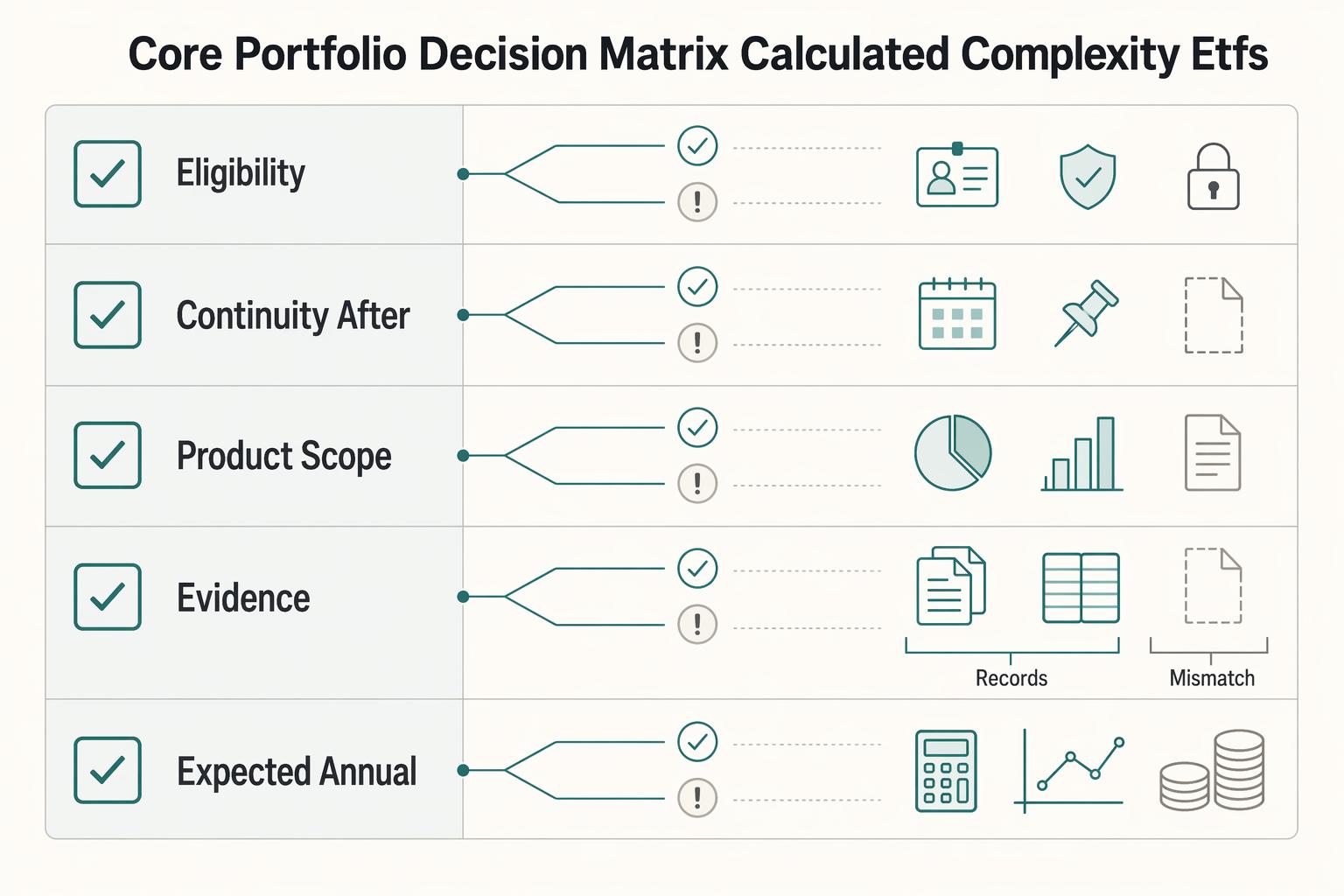
The real problem is a two-system conflict. U.S. tax treatment can punish the wrong fund choice, while local product-access constraints can block the funds you want to buy in the first place. For **us expat ucits etfs**, the practical question is not "Which product is best?" It is "What can I access, report, and keep doing every year without guessing?" Use this four-part filter before any trade: