

If you got a subpoena today, here is how to stay safe#
Move fast, but do not produce records on instinct. If you need to respond to a subpoena for business records, your immediate job is to control deadlines, preserve records, and make any later production defensible.
Identify exactly what was demanded#
Start with the face of the document. A subpoena is a written legal order, and a subpoena duces tecum requires production of records or other evidence. Under Rule 45, a civil subpoena can require documents, electronically stored information, or tangible things in your possession, custody, or control.
This guide stays in the Rule 45 records-production lane under the Federal Rules of Civil Procedure. It does not cover full federal civil litigation strategy or criminal, grand-jury, or agency-specific practice. Your first checkpoint is simple: does it command records, and does it state a time, date, and place for compliance?
Control the calendar immediately#
The first real risk is timing. Civil subpoena forms command production at a specific time, date, and place, so same-day triage protects your options.
One timing point matters right away. The written objection window can run by the earlier of the compliance date or 14 days after service. That does not mean you must produce everything in 14 days. It means you should calendar the dates now, preserve records now, and get legal review before anyone exports, deletes, or starts explaining anything. That timing matters even more because Rule 45 also allows a timely motion to quash or modify.
Avoid two high-risk mistakes#
Two mistakes can create early damage: silence and tampering. If a served person fails to obey without adequate excuse, the court may hold that person in contempt of court.
The other danger is record tampering after service. The serious line is knowing alteration, destruction, concealment, falsification, or false entries made with intent to impede a federal matter. That is where obstruction risk appears under 18 U.S.C. § 1519, which carries a maximum term of 20 years. Use a simple operating rule: preserve first, decide second. Do not delete, overwrite, rename, backfill, or selectively forward only favorable records.
Assume records exist in multiple systems#
Do not assume the responsive set lives in one folder. Rule 45 expressly includes electronically stored information, and business records may be maintained electronically. Supporting records can include proof-of-payment records, electronic funds transfer records, canceled checks, and related financial documents.
On day one, list the sources you control and the likely date range covered by the subpoena. Missing an email source, financial record set, or other ESI early can become a harder problem later. Once you have that first read, turn it into a disciplined intake and preservation process.
For a step-by-step walkthrough, see How to Create a Buy-Sell Agreement for a Partnership.
What to prepare before you respond#
Before anyone collects, exports, or explains anything, lock down intake, deadlines, and roles. That is what keeps a Rule 45 response defensible.
Capture the packet in one intake note#
Capture the subpoena packet in one intake note as soon as possible. Record the issuing court, case caption or other identifiers, service date and available service details, and the specified time and place for compliance. Mark whether this is a document subpoena, often a subpoena duces tecum, and whether it commands records only or also testimony.
Use one immediate checkpoint: does it state the court from which it issued and a specified time and place? If it is document-only, note that personal appearance is not always required unless testimony is also commanded.
Open one matter file and calendar the deadlines#
Open one matter file and keep all subpoena work there. That file should hold the subpoena packet, proof of service if available, communications, deadline notes, preservation instructions, drafts, and counsel comments. Tie the file to Rule 45 and the Federal Rules of Civil Procedure for this federal civil records demand.
Calendar the objection window in that file, not just in email. Written objections must be served before the earlier of the compliance date or 14 days after service.
Build the response team early#
Build the response team as soon as the demand arrives. At minimum, include the records custodian and IT support for electronically stored information, and consider involving experienced outside counsel early. Even in a small business, clear ownership matters.
Assign concrete jobs early. The custodian helps identify likely sources and date ranges, IT preserves data and stops auto-delete functions, and counsel can handle scope, objections, and communications with the issuing side.
Set one communication rule before anyone explains anything#
Set one communication rule before anyone gets into substance: as a practical safeguard, avoid ad hoc explanations by email or chat before legal review. Casual messages about "what we have" are often incomplete and hard to unwind later.
If you need to acknowledge receipt while you prepare to respond to a subpoena for business records, consider doing it through counsel or with counsel-reviewed wording. For broader litigation context, see A Guide to Small Business Litigation: What to Expect.
Validate the subpoena before producing anything#
Do not produce records until you know what authority the demand uses and whether it is enforceable. The right sequence is: classify the demand, validate the mechanics, then decide whether to produce, narrow, or challenge.
Identify the legal lane from the face of the demand#
A federal civil records subpoena is governed by Rule 45 of the Federal Rules of Civil Procedure, and Rule 45 says the subpoena must issue from the court where the action is pending. A federal grand jury subpoena is governed by Rule 17 of the Federal Rules of Criminal Procedure. A DOJ-linked civil investigation may arrive as a Civil Investigative Demand (CID) under separate statutory authority, including demands for documentary material or written interrogatory responses before a civil proceeding is filed.
Before discussing scope, confirm that the demand clearly identifies its issuing court or authority and references Rule 45, Rule 17, or CID authority.
Check service and compliance mechanics under Rule 45#
For a civil subpoena, validate service and compliance mechanics under Rule 45 before arguing about the merits. Rule 45 allows service anywhere in the United States, but service must be made by someone at least 18 years old and not a party. If attendance is commanded, service must include tender of 1 day's attendance fee and allowed mileage.
Then check the compliance location. Rule 45 includes a 100 miles limit tied to where the person resides, is employed, or regularly conducts business in person. If the demanded place of compliance does not fit that rule, flag it immediately. Keep the full packet, proof of service if available, cover correspondence, and any fee or mileage tender in the matter file.
Classify what you have before producing anything#
| Validation question | If yes | If no |
|---|---|---|
| Is the issuer clearly identified as a civil court subpoena under Rule 45, a grand jury subpoena under Rule 17, or a DOJ-linked CID? | Go to the next question. | Unclear jurisdictional authority. Pause production and get counsel to confirm the source. |
| For a civil subpoena, does it appear to come from the court where the action is pending, with facially proper service and a compliant place of performance? | Go to the next question. | Potentially invalid. Escalate quickly for defect analysis. |
| Is the request specific enough to identify sources, custodians, and dates without guessing? | Valid and clear. Move to preservation and scoped collection. | Valid but overbroad. Negotiate narrowing before collection. |
Escalate by category and record the reason#
If the demand appears valid but too broad, have counsel negotiate narrower date ranges, custodians, or systems first. If validity is in doubt, counsel should assess a motion to quash or modify. Under Rule 45, that motion is brought in the district where compliance is required. Under Rule 17, a court may quash or modify if compliance would be unreasonable or oppressive.
Document the escalation decision and reason in the matter file, for example, wrong court, unclear authority, missing attendance tender, or a 100-mile issue. You might also find this useful: E-Discovery for Small Businesses Under Real-World Pressure.
Execute the first 24-hour triage in order#
In the first day, do not try to win by producing quickly. Win by controlling intake, preventing data loss, and routing communications through one legal owner.
Log the demand details and escalate immediately#
Log the demand details and escalate immediately. Capture the issuer, authority cited, all dates shown, who received service, and who owns the legal response. Then send the full packet to counsel so they can confirm the authority path before anyone commits to scope or timing.
Reconfirm the demand type in your note: grand jury subpoena, agency administrative demand, or another subpoena type. That checkpoint matters because, in the CRS analysis, agency demands may rely on administrative subpoena authority, which can compel testimony, document production, or both.
Pause routine deletion before anyone starts cleanup#
Pause routine deletion before anyone starts cleanup. Preserve first, then assess scope. A short written preservation notice, often called a litigation hold, can help you do that consistently.
Keep the first-day posture controlled. Preserve to avoid loss, but do not over-collect blindly. In the CRS discussion, administrative subpoenas are described as quick and efficient in one view, and as carrying privacy-risk concerns in another, so your default should be disciplined preservation, not expansive collection.
List likely custodians and systems before collection starts#
List likely custodians and systems before collection starts. Build a preliminary source map for the matter file, including likely people, accounts, folders, platforms, and devices that may hold electronically stored information.
For each source, record:
- Current owner or access controller
- Likely relevant date range
- Expected record types (messages, files, attachments, exports)
Send one acknowledgment through counsel and lock down the do-not-do list#
Send one acknowledgment through counsel and lock down a do-not-do list. Centralized communication helps limit avoidable promises and keeps the record clean.
Use a short internal list:
- Do not ignore the demand.
- Do not delete or selectively remove records.
- Do not make scope or timing promises outside counsel.
- Do not circulate ad hoc exports without tracking source and handling.
By the end of day one, aim to have a stable matter file, a preservation instruction, a preliminary custodian and system map, and a single counsel-led communication path. This pairs well with our guide on How to Keep Records for IRS Audits.
Build a defensible records map and preservation log#
This phase is about making your preservation decisions visible and explainable. A records map and preservation log will not prove perfection, but they do show that you took reasonable steps, identified likely sources, and stayed disciplined under pressure.
Map sources to possession, custody, or control first#
Map sources to possession, custody, or control first. Use Rule 45's boundary as your filter: documents and ESI in your possession, custody, or control.
For each source, record practical details such as:
- source name
- owner or access controller
- likely record type
- relevant date span
Keep the map aligned to how records are kept in the ordinary course of business. That makes later production decisions easier to explain and supports either ordinary-course production or organized labeling to subpoena categories.
Separate straightforward sources from risk-heavy sources#
Separate straightforward sources from risk-heavy sources before collection expands. Some sources contain ordinary business records. Others may mix in privileged communications or confidential commercial information.
Use a simple split:
- likely responsive, producible sources
- sources needing counsel review before export because they may include privileged or protected material
If a mailbox or folder mixes ordinary records with legal advice, flag it early, narrow scope where possible, and route it through counsel. If you withhold on privilege, make the claim expressly and describe withheld materials clearly enough to support the claim.
Keep a preservation log that shows actions, not just intent#
Keep a preservation log that shows actions, not just intent. If ESI is later missing, the question will be whether reasonable preservation steps were taken.
Track items like:
- hold issue date and recipients (custodians or data stewards)
- preservation actions by repository, for example paused routine deletion
- export dates and who performed exports
- search terms, filters, and date limits used
- sources identified as not reasonably accessible due to burden or cost
- follow-up on sources that could not be accessed, searched, or exported
This log helps you run the work now and defend the process later.
Run verification checkpoints before you trust the map#
Run verification checkpoints before you trust the map. Verification often surfaces edge-case gaps in access or source scope.
Use practical checks:
- confirm access to each identified custodian and data source, including shared or archived repositories where relevant
- recheck whether "inaccessible" sources are truly not reasonably accessible because of burden or cost
- if a source cannot be accessed, document the blocker and next action
These checkpoints are practical safeguards, not universal legal requirements. If one fails, log what happened, who investigated, and the next action so your search remains credible and explainable. Related reading: How to Perform a Business Valuation for a Small Agency.
Choose your response path and document the decision#
Pick your path early and record why. In most cases, your choices are to comply as written, negotiate narrower scope, or object and seek a motion to quash or modify under Rule 45. If scope is the main problem, start by narrowing scope. If the problem is a Rule 45 defect or undue burden, escalate. Keep timing in view because written objections must be served before the earlier of the compliance date or 14 days after service.
Choose the path that fits the problem#
Use the subpoena as served and map it to a Rule 45 decision tree for federal civil litigation.
| Path | When it fits | What to document |
|---|---|---|
| Comply as written | Request is clear, facially valid, and burden appears reasonable | Why scope is manageable, sources to search, target production date |
| Negotiate narrower scope | Request appears valid but categories, date ranges, or custodians are broader than needed | Proposed limits, burden reduced by those limits, meet-and-confer record |
| Object and seek a motion to quash or modify | Rule 45 defects appear present, or compliance creates undue burden or expense | Specific Rule 45 grounds, timing, supporting facts, escalation decision |
A useful rule of thumb is this: sweeping scope and high burden point toward narrowing, while clear Rule 45 defects point toward an early challenge.
Negotiate early when scope is the issue#
Broad is not automatically invalid, but it is often a sign that you should tighten scope before collection grows. Early communication can narrow categories, date ranges, custodians, and sources. It also helps replace vague requests with workable ones.
If the request is sweeping, treat that as a scope-control trigger and propose specific limits tied to custodians, date ranges, and source systems.
Escalate when the issue is legal#
When the issue is legal, not practical, do not paper over it with a partial collection. Rule 45 expressly includes undue burden as a basis to quash or modify, and a timely motion can require quash or modify relief when Rule 45 criteria are met. If you serve objections, plan for the next branch: the serving party may move to compel.
Keep objections specific and reasoned, not generic.
Document the decision promptly#
Create a short decision memo so the response is explainable later.
Include at least:
- service date, compliance date, and the earlier 14-day objection deadline
- chosen path and approvers
- facts from your records map and preservation log supporting that path
- proposed narrowing terms or Rule 45 grounds
- communications with the requesting side and current outcome
If your evidence trail spans invoices, wallet activity, and payout events, centralizing records now can make legal response work far cleaner later. See implementation details in Gruv Docs.
Protect restricted data without noncompliance#
Sensitive records need triage, not reflexive withholding. The goal is to protect restricted material while staying inside Rule 45.
Bucket the material before you export it#
Sort each document set into four working buckets:
- Producible as is
- Redaction candidate
- Potentially privileged information
- Confidential information that may require objection, narrowing, or a protective-order path
Treat this as a legal triage step, not just labeling. "Confidential" does not automatically mean "withholdable," even if a contract or internal label says sensitive. If disclosure would expose trade secrets or other confidential research, development, or commercial information, a court may quash or modify the subpoena.
For every item that is not being produced cleanly, log the document ID, date, custodian, bucket, and proposed basis. If you withhold as privileged or protected, make the claim expressly and describe the nature of the withheld material so the other side can assess the claim without revealing the protected content.
Cross-check contract duties before disclosure#
Review the governing contract set and focus on Indemnification, Limitation of Liability, Termination, Governing Law, Jurisdiction, and Dispute Resolution.
Use this review to map risk, not to justify nonproduction. A governing law clause selects applicable law, and indemnification addresses compensation for specified losses, but neither clause excuses compliance by itself. The practical goal is to flag notice obligations, potential parallel disputes, and where confidentiality disputes may be argued.
Flag HIPAA and SEC paths before format is locked#
Before you finalize production format, screen for regulated data paths.
- HIPAA context: If the records involve PHI and a covered entity or business associate is involved, apply HIPAA process rules before disclosure. For subpoenas not issued by a judge, covered providers or plans may disclose only when Privacy Rule notification requirements are met. Nonparty covered entities may disclose when they receive written documentation of reasonable notice or protective-order efforts. Keep disclosures to the minimum necessary. If using a qualified protective order, it must limit PHI use to the proceeding and require return or destruction at the end.
- SEC context: For information required to be filed under the Exchange Act, 17 CFR 240.24b-2 is the exclusive confidential-treatment procedure. If Regulation S-P applies, covered institutions must maintain written policies and procedures with administrative, technical, and physical safeguards for customer information. SEC staff guidance is not binding law.
Route every protection decision through counsel#
Redaction, withholding, and protection calls should run through counsel before production.
Counsel should approve the legal basis, objection wording, protective-order requests, and withheld-material descriptions so the response stays consistent and defensible. Keep this tied to Rule 45 timing, including the earlier-of deadline for written objections: the compliance date or 14 days after service.
Need the full breakdown? Read How to Open a Stripe Account for a Non-US Business.
Produce records in a way you can defend later#
A defensible production is organized, traceable, and easy to explain after the fact. The standard is not elegance. It is whether you can show what you sent, what you held back, and how key files were handled.
Package records in controlled batches#
If you need to deliver in stages, use rolling production and keep each batch coherent.
For each batch, keep a practical record of what was included and when it was produced. Bates stamp produced documents so each page can be tracked and discussed precisely.
Track handling for key ESI#
Before collection and transfer, confirm where responsive records are stored and the form they are stored in.
Use a transfer approach that maximizes security while minimizing disruption to business operations.
Route production communications through counsel#
Do not produce directly to the requesting party. Have counsel transmit each production.
If privilege issues are present, keep the production log process coordinated through counsel. When helpful, have counsel summarize what is being produced and what is still under review.
Make completeness testable for finance records#
If finance systems are part of the response, document what records were available, what was not available, and what good-faith steps were taken to comply.
Aim for a transfer method that protects data while staying workable for your business operations.
Handle missing, destroyed, or never-created records#
When records are unavailable, precision matters more than reassurance. A candid, documented explanation is far more defensible than a vague claim of completeness.
State the gap precisely#
Classify each gap clearly: records never created, records once existed but are now unavailable, and records not found after a reasonable search. A missing record is not the same as a withheld record.
For each unavailable item, state the record category, date range, likely custodian, and systems searched. Keep the language plain and specific so counsel can map each gap to a custodian, a repository, and a search result. Do not call privileged or protected material "missing." If you are withholding material on privilege or protection grounds, Rule 45 requires describing the withheld items so the claim can be assessed.
Show the good-faith search and preservation record#
When records are unavailable, your process record matters as much as your conclusion. Keep a short file showing who was contacted, what was searched, and what preservation steps were taken once litigation was reasonably anticipated or a hold was issued.
Judge Paul Grimm's framing is the key preservation trigger: "Federal cases uniformly hold that a duty to preserve relevant information arises when one reasonably anticipates litigation." Your timeline should therefore show whether any loss happened before or after that duty and before or after the hold.
A practical record can include:
- the litigation-hold date and custodians notified
- systems searched, with date ranges and any filters used
- access failures or technical limits encountered
- deletion or retention routines you paused
- what was recovered, what was not, and who confirmed each result
Distinguish inability to produce from higher-risk conduct#
Inability to produce is not automatically contempt. Under Rule 45(g), a court may hold a served person in contempt for failure to obey without adequate excuse, so documented good-faith nonproduction is different from silence or evasive responses.
The higher risk is intentional conduct. Rule 37(e)(2) ties the most severe lost-ESI measures to intent to deprive, and 18 U.S.C. § 1519 targets knowing destruction, concealment, or falsification with intent to impede or obstruct.
State the facts directly. If a record was never created, say so. If it became unavailable before any preservation duty, explain the timeline. If anything was deleted or altered after a hold or after subpoena service, escalate to counsel immediately.
For related documentation practices, see How to Create a Privacy Policy for a SaaS Application.
Run cross-border and agency-specific checks before final submission#
Before you send anything, confirm the exact legal channel you are answering. A Rule 45 subpoena, a federal grand jury subpoena under Rule 17, an SEC subpoena under a formal order, and an IRS summons under 26 U.S.C. § 7602 do not run on the same authority.
Identify the issuing channel#
Treat the demand itself as the source of truth. Confirm the issuing court or agency, caption, return date, and the rule or statute named on the face of the request.
If the matter references the Federal Bureau of Investigation, verify whether the records demand is tied to a grand jury process. If it is SEC-driven, confirm whether it is under a formal order that allows Enforcement staff to compel testimony and books and records by subpoena. If it is tax-related, confirm whether you are dealing with IRS summons authority under 26 U.S.C. § 7602.
Check cross-border routing before transfer#
If requested records sit outside the United States, escalate that issue to counsel before production. For civil or commercial evidence abroad, Hague Evidence Convention routing can apply, and OIJA is the U.S. Central Authority for that channel. For criminal evidence requests, do not assume the same path, because DOJ states OIJA does not handle criminal evidence requests.
For EU personal data, do not treat GDPR Article 48 as a complete answer by itself. Transfer still needs Article 6 and Chapter V compliance checks. Also confirm whether Rule 45's reference to 28 U.S.C. §1783 is relevant when the subpoena targets a U.S. national or resident in a foreign country.
Re-screen contract and confidentiality constraints#
Contract terms can change how you produce, even when they do not cancel a valid subpoena. Re-check notice clauses, confidentiality terms, data-processing commitments, and overlapping regulatory duties before submission.
Keep distribution tight where needed. In SEC matters, investigations are conducted privately, so avoid broad internal forwarding while counsel finalizes the response plan. Your final pack should include a short cross-border note, key contract extracts, and counsel-approved handling for any notice, redaction, or timing conflict.
Avoid the mistakes that hurt freelancers most#
A common failure pattern for freelancers is treating a subpoena like routine client work, responding too casually, and producing before scope, burden, and privilege are under control.
Move communications out of routine client channels#
Avoid handling subpoena communications in normal client email or chat threads. Route replies, scope discussions, and timing through counsel, and keep nonessential third parties off legal-strategy threads because confidentiality can be compromised when outsiders are included.
Use one matter folder, one counsel-approved reply path, and no off-the-cuff explanations to the requesting party or client.
Negotiate scope before any bulk export#
Do not produce first and sort out the issues later. Under Rule 45, objections must be served before the earlier of the compliance date or 14 days after service, so raise scope and undue-burden concerns early.
Have counsel define date range, custodians, repositories, search terms, and privilege boundaries before export. If you withhold material as privileged, make that claim expressly.
Rebuild a written trail if handling started informally#
If tracking was informal at the start, rebuild it in writing now. Use inbox history, export logs, timestamps, and custodian check-ins to document what was searched, by whom, and when.
Each produced set should map back to a source system, custodian, and date span so you can clearly explain your process if challenged.
Re-screen confidentiality and regulated data before final production#
Before submission, re-check confidentiality limits and any regulated-data exposure. HIPAA disclosures are not open-ended, and a court order allows disclosure only of the information specifically described in that order.
For SEC-related obligations, stay precise: Regulation S-P applies to covered institutions with written safeguards duties, and Rule 17a-4 applies only to certain securities entities, not every freelancer or consultant. If you want a deeper dive, read Germany Freelance Visa: A Step-by-Step Application Guide.
Copy-paste checklist for a defensible response#
Based on the excerpt available, use this as an internal checklist and get legal advice for any subpoena-specific requirements.
Step 1. Confirm what was received and involve counsel.
Record what was received, when it was received, and who received it. Send the full packet for legal review before giving substantive explanations.
Step 2. Preserve only as directed by counsel.
Do not assume a required preservation protocol from this excerpt alone. Document any preservation instructions, including who was notified and when.
Step 3. Choose your response path with counsel and document why.
Let counsel define the response path and record the rationale. Avoid guessing about deadlines, objection windows, or legal standards.
Step 4. Screen sensitive material before any production.
If third-party tools are involved, review the terms you accepted, including Terms of Service, Privacy Policy, cookie consent, and any marketing-contact consent, before anything is sent.
Step 5. Produce in an organized, counsel-reviewed package.
When production is approved, send records in clear batches and keep a simple log of what was produced and when. Keep communications precise about what is included, what is excluded, and what is still being checked.
Step 6. Document missing or unavailable records without guessing.
If something cannot be found, note what sources were checked, who was asked, and what the result was. Keep that note specific enough that another reviewer can follow your process from start to finish.
If you want a compliance-first setup for cross-border collection and payouts with clearer audit trails, discuss fit and coverage with Gruv.
For official legal references and forms while you prepare your response, review www.law.cornell.edu, www.law.cornell.edu, and www.hhs.gov.
| First 24 Hours | Action | Evidence to Save |
|---|---|---|
| Intake | Read scope, deadlines, and issuing authority carefully | Copy of subpoena and service details |
| Preservation hold | Stop deletion/retention auto-purges | Written hold notice and acknowledgment |
| Counsel alignment | Decide response path before producing records | Decision memo and responsibility owner |
| Production Decision | When to Use | Main Tradeoff |
|---|---|---|
| Produce as requested | Scope is clear and proportional | Fastest path, less room to narrow scope |
| Negotiate scope | Request is broad or unclear | May reduce burden, requires clear legal basis |
| Move to quash/modify | Defect or undue burden exists | Higher legal effort, stronger documentation needed |
| Sensitive Data Handling | Control | Audit Trail |
|---|---|---|
| PII/regulated data | Minimize and redact per legal direction | Redaction log with rationale |
| Privileged material | Run privilege review before production | Privilege log tied to document IDs |
| Cross-border records | Check transfer and localization constraints | Jurisdiction memo and approval record |
Frequently Asked Questions
Can you ignore a subpoena for business records, and what happens if you do?
You should not ignore it. A subpoena is a legal demand that needs prompt triage. Missing the response deadline can lead to significant consequences. A safe first move is to verify what was served, calendar the response date, and get legal review before anyone responds or produces records.
What should you do first after service to stay compliant under Rule 45?
Start with verification. Confirm service reached the correct entity and registered agent, then review required form and content points such as the issuing court, action title and case number, command, rights and duties, scope, response date, and whether reasonable production costs were tendered. Calendar the deadline immediately and assign a responsible internal owner for the response.
What if you do not have all requested records or they no longer exist?
Do not guess or overstate what you can produce. There is no specific Rule 45 procedure spelled out for this scenario, so escalate quickly to counsel and prepare a factual explanation of what records are available versus unavailable.
When should you negotiate scope versus file objections or move to quash?
Use the initial Rule 45 checks first: form, contents, service, scope, and response timing. If scope looks too broad or validity looks questionable, escalate quickly to counsel to decide whether to negotiate scope or use formal legal options.
Can you withhold privileged or confidential client material?
Treat it as a legal-review issue and involve counsel before deciding what to produce or withhold.
Could a subpoena be invalid because of service, court authority, or distance burden?
Service and court-authority issues can affect validity. Check service on the correct entity and registered agent, and confirm the subpoena includes required Rule 45 content such as issuing court, action title and case number, command, rights and duties, and a reasonable response time. If key validity points appear off, escalate before producing.
Researched and edited by the Gruv editorial team. Gruv builds cross-border billing, payouts, and finance-operations software for global businesses.
Sources
- chancellor.berkeley.edu/about/offices/legal-affairs/FAQstrusted
- cms.gov/regulations-and-guidance/guidance/manuals/do...trusted
- congress.gov/crs-product/RL33321trusted
- ecfr.gov/current/title-17/chapter-II/part-248/subpart...trusted
- ecfr.gov/current/title-17/chapter-II/part-240/subpart...trusted
- edpb.europa.eu/system/files/2024-12/edpb_guidelines_202402_...trusted
- fbi.gov/how-we-can-help-you/victim-services/a-brief-...trusted
- fjc.gov/sites/default/files/2016/Electronically%20St...trusted
Educational content only. Not legal, tax, or financial advice.
Related Posts

Germany Freelance Visa Application Path for Freiberufler and Gewerbe
Choose your track before you collect documents. That first decision determines what your file needs to prove and which label should appear everywhere: `Freiberufler` for liberal-profession services, or `Selbständiger/Gewerbetreibender` for business and trade activity.
What to Expect in Small Business Litigation as a Freelancer
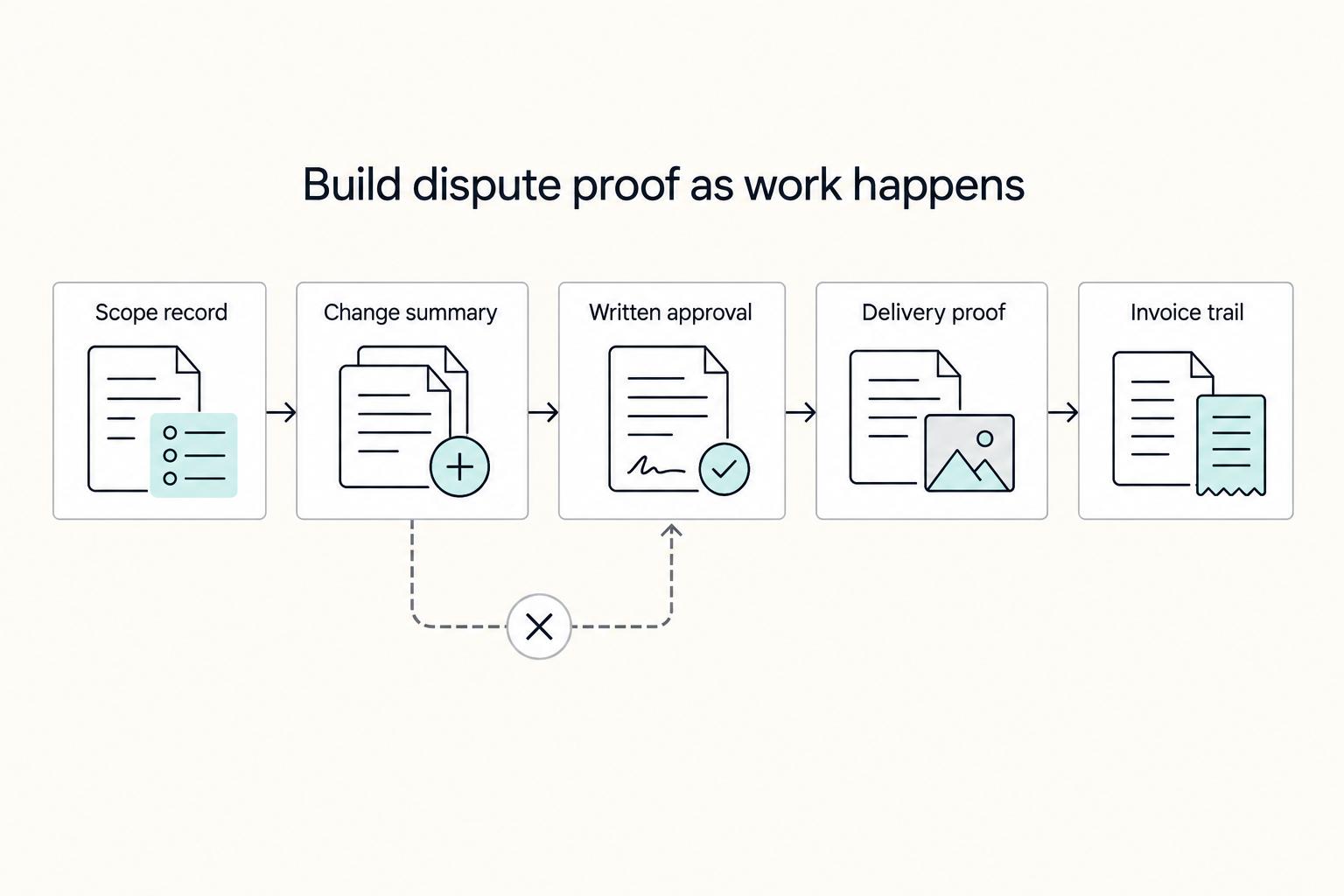
If you want to reduce avoidable disputes, separate the relationship terms from the project terms. Use an MSA for the standing legal framework and an SOW for the specific work.

The Freelance Payment Penalty: A Modeled Audit of Platform Fees, FX Spreads, and Payout Delays
The money rarely disappears through a single, easy-to-spot fee. The real loss is stacked. A marketplace takes its commission, a processor adds a charge for international cards, a bank or payment company converts the currency at a spread, a platform holds the funds before release, and a wire sheds a little to intermediaries on the way in. Each layer looks defensible on its own, but the worker feels the combined result as a smaller deposit and a later payday.