
Quick Answer
Yes - classify the settlement path first, then run the matching form test. Form 1099-K is evaluated separately from Form 1099-NEC and Form 1099-MISC, with a source-stamped decision record for each stream. Use the IRS FAQ update dated Oct. 23, 2025 for the TPSO branch, and keep “required by threshold” distinct from “optional issuance observed.” Treat Draft Publication 1099 as a monitoring signal, not a production rule source, until final IRS materials are posted.
Classify the payment path before you automate filing#
If your team cannot explain, for a given payment flow, which 1099 form family applies, what reporting trigger controls it, and what record proves the decision, you are not ready to automate filing. This guide gives platform finance, ops, and product teams a usable way to decide when filing may be required and what evidence to keep either way.
The scope is intentionally narrow so the guidance stays dependable. This is a U.S. federal information reporting explainer focused on Form 1099-K and the separate decision path your team may also need for Form 1099-NEC and Form 1099-MISC. It is not legal or tax advice, and it does not try to solve every payer, payee, or state rule in one pass. The goal is to help you make cleaner filing decisions on real platform payment flows without mixing unrelated standards.
That matters because teams often confuse taxable income treatment with reporting-trigger rules. The Internal Revenue Service says Form 1099-K is a report of payments received for goods or services, and recipients should use it with other records to figure and report taxable income. In practice, "income may be taxable" and "a filer is required to issue an information return" are different questions. When teams blend them, they create bad threshold logic, duplicate form handling, and audit friction during reconciliation.
Keep current IRS operational guidance separate from draft material. For example, IRS FAQ text updated Oct. 23, 2025 states that third party settlement organizations are not required to file Form 1099-K unless payments exceed $20,000 and the number of transactions exceeds 200. Draft Publication 1099, by contrast, is explicitly labeled "DRAFT, NOT FOR FILING" for preparing 2026 returns. That is useful for monitoring change, but it is not a final authority you should wire into production rules.
What you want is not just a yes or no answer. You want a traceable threshold decision record that finance, operations, and product can defend later. It should show which form family was evaluated, which facts were checked, which source controlled the decision, and whether the result was required filing or no filing trigger met. If you build that record first, the automation that follows is much easier to trust.
For a step-by-step walkthrough, see Does Country-by-Country Reporting Apply to Freelancers?.
Build a one-screen threshold map before you automate anything#
Build the map before you automate. If your team cannot place a payment flow into one form family and one source-backed threshold row in under 60 seconds, block automation and route it to policy review.
Use one screen to show who files, what trigger applies, which authority controls the rule, and what is still unresolved. Most failures come from applying the wrong trigger to the wrong payment rail, not from math mistakes.
| Form / flow row | Reporting party to map first | Trigger logic to test | Legal anchor field to record | Known vs unknown |
|---|---|---|---|---|
| Form 1099-K, direct card-payment path | Payment card processor | IRS page language says the recipient gets Form 1099-K from the payment card processor for direct credit, debit, or gift card payments regardless of payment count | Internal Revenue Service Form 1099-K page; record IRC Section 6050W as the cited code field | Known: direct card-processing should not be forced through the TPSO transaction-count test. Unknown: this section does not provide statutory text for IRC Section 6050W. |
| Form 1099-K, payment apps or online marketplaces acting as TPSOs | Third party settlement organization | IRS FAQ updated Oct. 23, 2025 says filing is not required unless gross payments exceed $20,000 and transactions exceed 200 | IRS Form 1099-K FAQs; record IRC Section 6050W as the cited code field | Known: both tests appear in the FAQ text. Unknown: do not infer broader law changes from Section 70432 or Section 70433 based on excerpts alone. |
| Form 1099-K, below-threshold issuance row for payment apps | TPSO | Keep a separate outcome row for threshold not met but form still issued or expected operationally; do not relabel that as threshold-required filing | Same IRS FAQ and Form 1099-K page references; IRC Section 6050W field | Known: the threshold-required test is separate from whether a form may still appear in practice. Unknown: the legal basis for below-threshold TPSO issuance is pending policy review. |
| Form 1099-K, below-threshold issuance row for online marketplaces | TPSO | Same handling as payment apps: preserve a distinct below-threshold outcome instead of forcing a yes-or-no required-filing answer | Same IRS references; IRC Section 6050W field | Known: online marketplaces are included in the IRS description of TPSOs. Unknown: Section 70432 and Section 70433 stay unresolved until IRS operational guidance or final instructions confirm a rule change. |
| Form 1099-NEC or Form 1099-MISC track | Payer issuing an information return, not a TPSO row by default | Do not use the 1099-K tests; map these to a separate evaluation path before any threshold math | Record IRC Section 6041 or IRC Section 6041A in the anchor field | Known: this is a different form-family branch than the 1099-K network-reporting branch. Unknown: this section's IRS excerpts do not supply NEC or MISC threshold details, so do not automate them from this table alone. |
Two details make the map usable. Keep the source stamp on the same screen as the rule, including the IRS FAQ reference and its Oct. 23, 2025 update marker for the TPSO row. Also store the payment rail used to choose the row: direct card processor, payment app, or online marketplace.
The 60-second checkpoint#
Before engineering touches filing logic, test one real payment flow and require four answers in under a minute: who settled it, which form family applies, which threshold row controls, and which IRS page supports the call. If the reviewer hesitates between the direct-card row and the TPSO row, your inputs are not yet clear enough for automation.
A common failure mode is treating the IRS FAQ "$20,000 and 200 transactions" test as universal. Applying that test to every card-based flow can mis-scope direct payment-card reporting and create reconciliation friction when recipient copies are issued by January 31.
What goes in the map record#
For each row, record the authority, payment rail, and unresolved items. If someone proposes logic changes from summary material referencing the American Rescue Plan Act of 2021, Section 70432, or Section 70433, keep that in the "unknown" column until IRS operational guidance is clear enough to enforce.
If your team is revisiting the IRS delay and what changed operationally, 1099-K Reporting Threshold Changes: What Platform Operators Need to Know After the IRS Delay gives the timeline behind the current TPSO branch.
Separate form families so teams stop applying the wrong threshold#
Classify the payment flow first, then test thresholds. Most filing errors happen when teams choose a number before they choose the reporting branch.
For Form 1099-K, start with network settlement flows. The IRS describes 1099-K as payments for goods or services from payment cards, payment apps, or online marketplaces, and says payment apps/marketplaces (TPSOs) and payment card companies send copies to the IRS and the recipient. For card-processor paths, the IRS also notes a recipient can get Form 1099-K regardless of payment count.
Keep Form 1099-NEC and Form 1099-MISC in a separate payer-issued branch. Do not reuse 1099-K logic there. The same payee can receive funds through both paths, but the reporting decision changes when your business is the direct payer rather than the network settlement party.
Use different legal-anchor fields in your map#
Use separate anchor fields so your checker does not blend form families. Keep your 1099-K network rows and payer-issued NEC/MISC rows distinct, including the legal-anchor labels your team uses for each branch. That will not resolve every interpretation issue, but it prevents the common mistake of applying one threshold rule across both branches.
A quick verification check is who sends the recipient copy. For 1099-K flows, IRS materials describe that as the payment card company, payment app, or online marketplace, with recipient copy timing by January 31. If your record shows your company as filer but settlement facts point to card processor or TPSO reporting, pause and reclassify before automating.
A practical rule for routing transactions#
- If your platform is only routing card, payment app, or marketplace settlement, start with 1099-K logic.
- If your entity is paying service providers directly, start with the NEC/MISC branch.
The main failure mode is a blended ledger. Teams see contractor income and push everything into NEC review, or they apply the 1099-K branch to direct company-paid disbursements because the same vendor also sells through the platform.
Record one classification fact on every row: the settlement path that justified the branch. Direct card processor, payment app or marketplace TPSO, and company-paid direct disbursement are usually enough to make the threshold decision defensible.
Related: 1099 Filing Threshold Calculator: Is Your Platform Required to File for Each Contractor?.
Run the checker in this order to avoid false positives#
Run the checker in the same sequence every time: classify, assign form, test trigger, tag exceptions, then branch to withholding. That keeps threshold math from running on the wrong stream.
| Step | Action | Record |
|---|---|---|
| 1. Classify | Tag payer, payee, payment rail, and settlement path; stop if settlement path is blank, mixed, or inferred from a payee label alone | Role and settlement tags |
| 2. Assign form family | Route card/app/online marketplace settlement streams to Form 1099-K logic; route direct company-paid disbursements to the payer-issued Form 1099-NEC/1099-MISC branch | Assigned form and rule source |
| 3. Test trigger | For 1099-K rules based on the IRS FAQ excerpt, apply both conditions: gross amount exceeds $20,000 and transactions exceed 200 | Pass/fail, timestamp, rule version, and policy note |
| 4. Separate issuance types | If a form is issued when the threshold test fails, tag it as optional issuance observed, not required by threshold | Optional issuance observed vs required by threshold |
| 5. Branch to withholding | Treat missing or incorrect TIN data as a separate path; Publication 1281 lists a 24% rate for subject payments after December 31, 2017 | Form W-9 status, TIN validation or TIN Matching result, and whether the backup withholding branch was triggered |
The sequence matters. Start by tagging payer, payee, payment rail, and settlement path, and stop if settlement path is blank, mixed, or inferred from a payee label alone. Then assign the form family and log why. For 1099-K rules based on the IRS FAQ excerpt, apply the dual condition exactly: gross amount exceeds $20,000 and transactions exceed 200, and store pass/fail, timestamp, rule version, and policy note. If a form is issued when the threshold test fails, tag it as optional issuance observed, not required by threshold. Keep missing or incorrect TIN data on a separate backup-withholding branch, and record Form W-9 status, TIN validation or TIN Matching result (if eligible), and whether the branch was triggered. Publication 1281 lists a 24% rate for subject payments after December 31, 2017.
For defensible audit trails, keep these fields on every stream: role and settlement tags, assigned form and rule source, threshold result with timestamp/version, and taxpayer-data status.
Design the minimum evidence pack auditors and controllers will ask for#
Your evidence pack should let someone trace each filing decision without reworking the full year. For each recipient, keep a decision record that links the reporting outcome to classified payment streams and the underlying money movement.
Start with a per-entity decision record#
Keep one current record per payee/recipient entity with:
- tax-document status under your policy (for example, Form W-9 status)
- assigned form family (Form 1099-K, Form 1099-NEC, or Form 1099-MISC)
- threshold outcome (pass/fail) and rule version
- reason code: required by threshold vs optional issuance observed
This separation prevents optional issuance from being mistaken for a legal trigger. As a control, every issued form should map to one decision record, with links to all relevant classified streams for that recipient.
Keep lineage from payment initiation to settlement#
Store lineage from payment initiation through settlement confirmation, then link threshold outcomes to ledger and reconciliation records. For Form 1099-K, this is critical because it is a report of payments received for goods or services, and payment card companies, payment apps, and online marketplaces are required to file it with the IRS each year.
Do not rely on payee labels alone. Keep event-level links so you can show why one stream was routed to 1099-K and another to a payer-issued form.
Verify on a recurring cadence and protect sensitive tax data#
Run recurring spot checks between issued Form 1099-K/Form 1099-NEC counts and unresolved exception queues. A monthly cadence is an operating choice, not a cited IRS mandate, but it helps catch drift early, especially with the January 31 recipient-copy timing for Form 1099-K.
Use least-privilege handling for taxpayer data in operations workflows: show only what teams need for review, protect raw tax fields in storage, and restrict document retrieval access. These are control-design choices for risk management, not claims about specific IRS technical-control requirements in the cited excerpts.
Recipient-side questions usually show up after issuance, so A Guide to Form 1099-K for Freelancers Using Payment Apps can help support and ops teams understand what payees will see.
Handle the edge cases competitors gloss over#
Treat mixed rails and law-change claims as manual-review cases until you can prove the right form family for each payment stream. The most common failure is collapsing one payee into one annual total and letting the checker decide from that merged number.
Separate mixed rails before you total anything#
A single payee can belong to two reporting paths at the same time. Payments settled through a payment app, online marketplace, or card flow point toward Form 1099-K, which the IRS describes as a report of payments received for goods or services. Direct service payments outside that network flow are a separate analysis and may fall under Form 1099-NEC.
Set one control rule: do not aggregate by payee alone. Aggregate by payee, payment rail, and settlement path. That lets one recipient carry two decision records in the same year, each with its own event lineage and rule source, and prevents dedupe jobs from inflating 1099-K totals or hiding direct payer-issued payments that need separate review.
A practical check is to sample payees with both marketplace settlements and direct AP payouts, then confirm you can see two classified streams and two distinct form decisions where appropriate. If your checker cannot show that split in one view, keep year-end issuance manual for those accounts.
Below threshold does not mean non-taxable#
Keep two separate fields in policy and UI: "reporting required" and "income taxable." IRS guidance for Form 1099-K says recipients should use the form with other records to figure and report taxable income, so missing a filing trigger does not erase taxability.
Use that distinction in support and product copy. Say the narrow thing: no form was required under the reporting rule for that stream. Avoid messages that imply no tax reporting applies at all.
Use an authority ladder when rules appear to change#
If a threshold change is based on a blog post, an IRB synopsis, or draft instructions, pause automation. IRB synopses say they are not authoritative interpretations, and draft Publication 1099 materials explicitly say not to file draft forms.
| Source | Article says | Action |
|---|---|---|
| Blog post | If a threshold change is based on a blog post | Pause automation |
| IRB synopsis | IRB synopses are not authoritative interpretations | Pause automation |
| Draft instructions or draft Publication 1099 | Draft Publication 1099 materials say not to file draft forms | Do not use as a production trigger |
| Current IRS operational pages and FAQs | For Form 1099-K, anchor production rules here | Use for production rules |
For Form 1099-K, anchor production rules to current IRS operational pages and FAQs. The IRS FAQ update released Oct. 23, 2025 says the pre-ARPA TPSO test was reinstated and uses both conditions together: gross reportable payments exceeding $20,000 and transactions exceeding 200. If non-IRS summaries cite the American Rescue Plan Act of 2021, Section 70432, or Section 70433 to justify rule changes, require legal or policy signoff before release.
Red-flag rule: if internal policy text and current IRS operational pages conflict, freeze automated threshold updates, preserve the proposed rule note, and route affected accounts to manual review until finance approves.
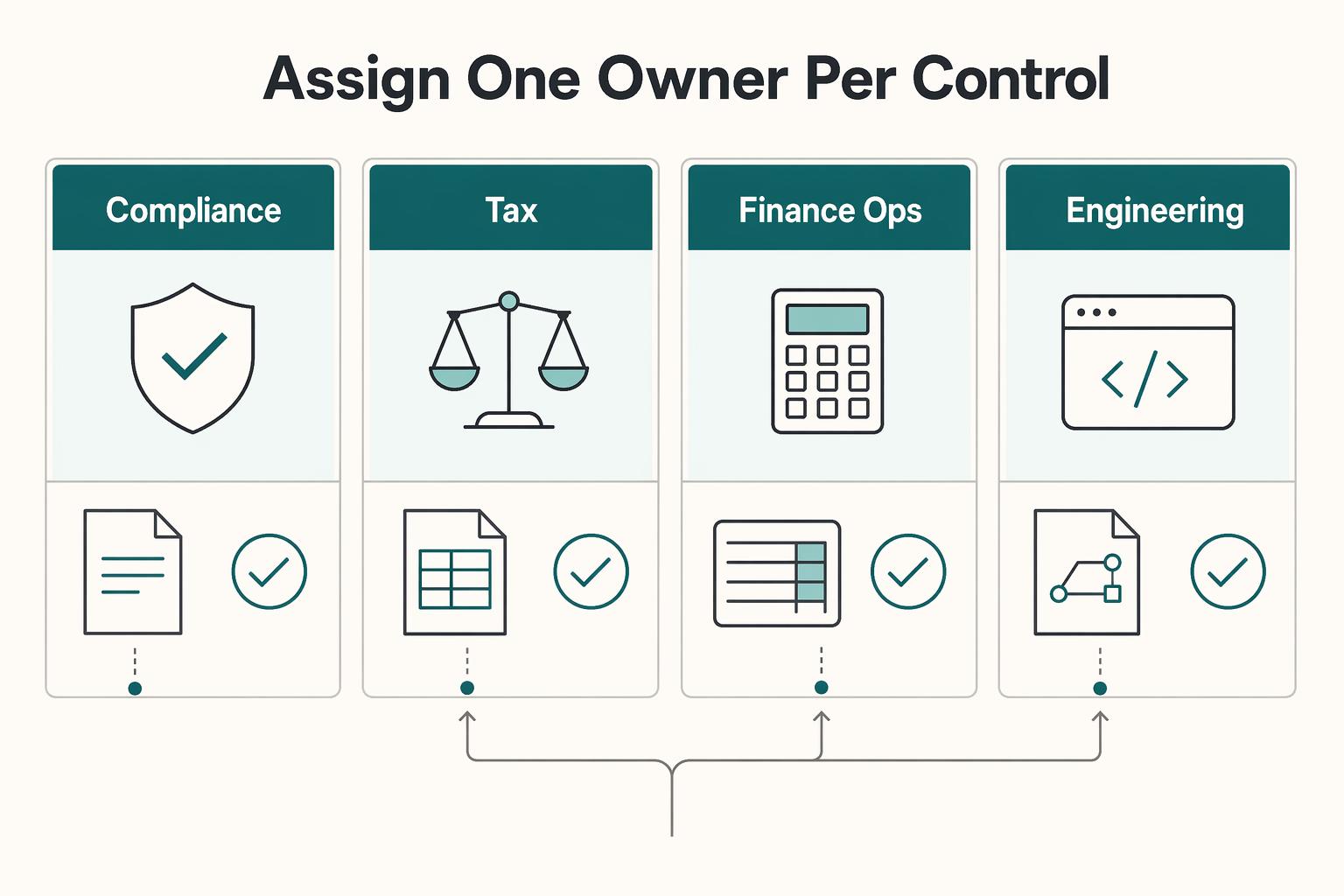
Assign ownership so threshold decisions do not fall between teams#
Threshold decisions stay reliable when policy, execution, and checker logic have different accountable owners. A checker usually breaks at handoffs, not in the math, so make ownership and approvals explicit.
- Finance owns interpretation of IRS operational guidance and signs off threshold policy, including Form 1099-K decisions tied to the current IRS FAQ position: gross payments exceeding $20,000 and transactions exceeding 200 for TPSO filing.
- Payments ops owns exception handling, including mixed-rail cases, recipient disputes, and manual-review queues that could affect the January 31 recipient-copy deadline.
- Product/engineering owns checker logic, version control, and audit logging so each threshold result ties back to a rule source and release date.
Set response times by risk#
Use SLA tiers to prevent predictable misses (these are operating targets, not legal mandates):
- Same-day triage for filing blockers, such as broken form-family assignment or queues that could delay recipient copies.
- Weekly resolution for classification defects, such as payees merged across Form 1099-K and direct payer-issued streams.
- Monthly policy refresh to review current IRS operational pages and reject updates that rely on draft materials marked "Do not file draft forms."
Put dual approval on the dangerous branches#
Require two approvers for rule changes that affect Form 1099-K thresholds or backup withholding branches under IRC Section 3406. In practice: finance approves policy interpretation, engineering approves implementation, and the audit log records both approvers, the effective date, and affected sample accounts.
Your RACI only needs to answer one question clearly: who approves thresholds, and who executes filings? If that line is unclear, freeze the rule change and route it back for signoff.
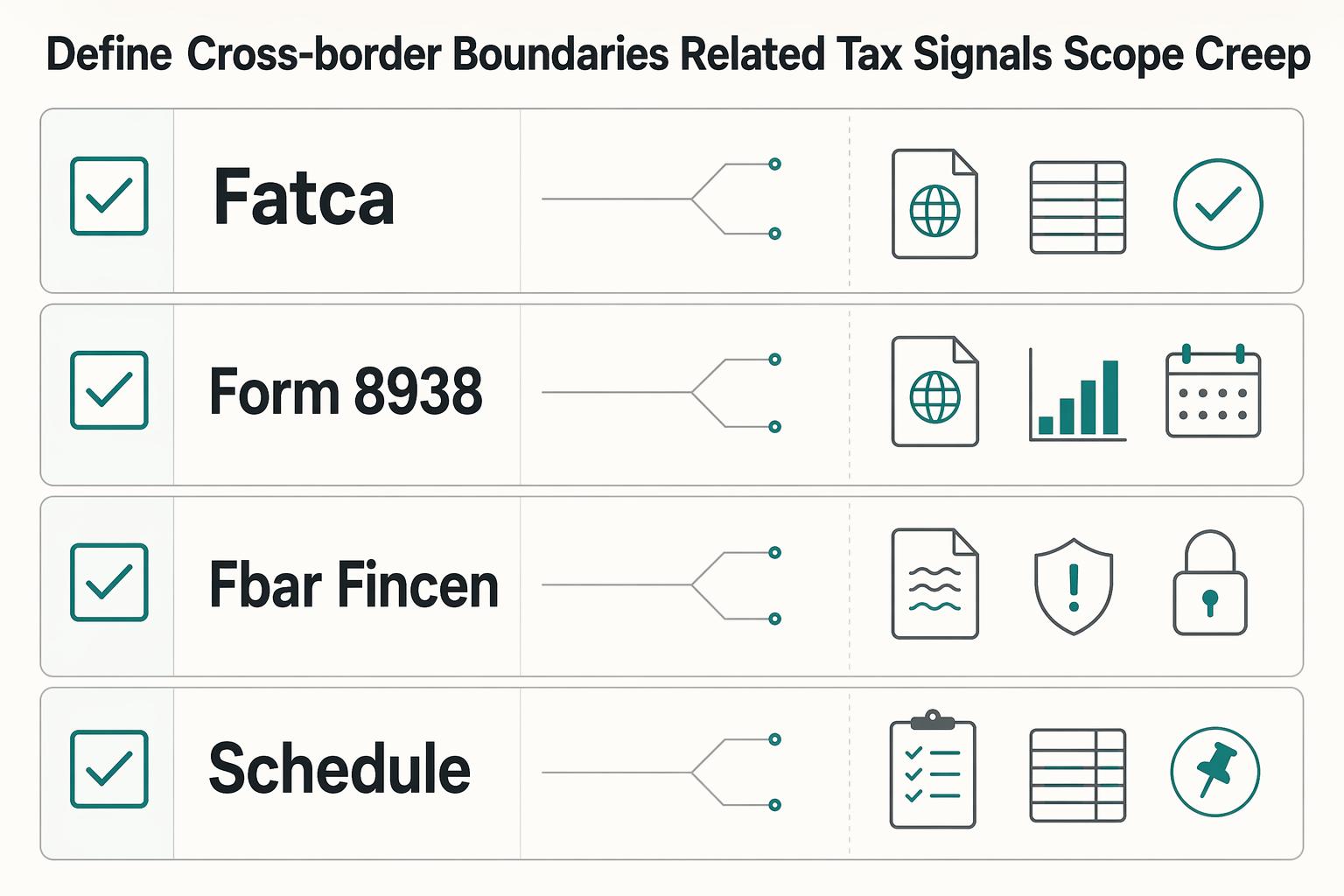
Define cross-border boundaries and related tax signals without scope creep#
Keep this checker scoped to U.S. information reporting decisions for Form 1099-K, Form 1099-NEC, and Form 1099-MISC. It should not act as a broader cross-border tax engine.
| Signal | Article says | Role here |
|---|---|---|
| FATCA | Separate foreign-asset reporting obligation | Not 1099 threshold logic |
| Form 8938 | Attached to an annual tax return and generally tied to aggregate foreign assets above $50,000, with higher thresholds in some cases | Not 1099 threshold logic |
| FBAR (FinCEN Form 114) | May also apply | Not 1099 threshold logic |
| Schedule SE | Relevant in tax operations | Separate from 1099 threshold branching |
The main failure mode is treating adjacent tax signals as 1099 threshold triggers. FATCA and Form 8938 are separate foreign-asset reporting obligations, and the IRS says Form 8938 is attached to an annual tax return and is generally tied to aggregate foreign assets above $50,000 (with higher thresholds in some cases). FBAR (FinCEN Form 114) may also apply. These are important compliance signals, but they are not 1099 threshold logic. Handle Schedule SE the same way: relevant in tax operations, separate from 1099 threshold branching.
To prevent scope drift, require each module and payout route to carry an explicit coverage label like "U.S. only" or "coverage varies by market/program." Make that label visible in config review and evidence records so teams do not assume one rule applies across every market or payout rail.
Before launch, confirm four items:
- Jurisdiction scope: mark each product, market, and payout route as in scope for U.S. information reporting or not.
- Form-family mapping: verify each stream maps cleanly to 1099-K, 1099-NEC, or 1099-MISC.
- Evidence retention: keep the scope note, mapping decision, and supporting policy record.
- Staged automation: launch on reviewed U.S. routes first, then expand after exception checks pass.
Related reading: How to Automate Client Reporting with Google Data Studio and Supermetrics.
Conclusion#
A strong 1099 reporting threshold checker is not just threshold math. It is a classification and evidence discipline that helps you apply the right internal rule set and show later why the outcome was reasonable.
That order matters more than most teams expect. First classify the payment stream under your policy. Then run the threshold test that matches that classification. Then preserve a clear decision record so finance, ops, and engineering are not reconstructing judgment after filing season or during a reconciliation dispute.
The practical next move is simple: define a one-screen decision map and clear evidence requirements before you touch production filing rules. If a reviewer cannot look at one screen and tell which rule set applies, what source you relied on, and whether the result is required, optional, or blocked pending review, your process is still brittle. A common pitfall is changing a rule in code because someone saw a summary of a legal change while the underlying IRS filing materials were still in draft or the source authority was still unclear.
That source check is not a minor detail. The IRS draft Publication 1099 page for preparing 2026 returns explicitly says, "Do not file draft forms." It also says draft instructions and publications usually have additional changes before final release. Early release drafts are posted at IRS.gov/DraftForms and remain there after final release is posted. So if your team monitors early-release material there, treat it as a watch item, not a production trigger. The verification checkpoint is straightforward: before any threshold change goes live, confirm that the IRS source is final and archive the dated version your team approved.
If you want one operating rule to keep, use this: do not let threshold logic outrun classification or documentation. If a payment flow cannot be cleanly classified, pause automation and route it for policy review. If a rule changed but you cannot show the final IRS source behind that change, hold the update. If you reached the right filing outcome but cannot reproduce the decision record later, you still created audit risk.
That is the real standard here. A usable checker gives you a defensible answer, not just a number on a screen. If you need help turning that into production controls across API events, ledger traceability, and payout operations, request a Gruv walkthrough for your current stack.
If this workflow expands into self-certification and cross-border data-mismatch checks, Common Reporting Standard (CRS) for Digital Nomads: Self-Certification and Data Mismatch Risk shows where those obligations branch away from 1099 filing logic.
Frequently Asked Questions
Is Form 1099-K threshold logic the same as Form 1099-NEC or Form 1099-MISC logic?
This guide only covers Form 1099-K rules. It does not provide thresholds or trigger logic for Form 1099-NEC or Form 1099-MISC, so do not reuse the 1099-K threshold test for NEC or MISC without separate authority.
If a payee is under a filing threshold, is that income automatically non-taxable?
No. The IRS says to use Form 1099-K with other records to help figure and report taxable income. A reporting threshold tells you when a form must be filed, not whether the underlying payment is taxable.
Do we check transaction count, dollar amount, or both for Form 1099-K decisions?
For the cited TPSO rule, check both. The IRS FAQ excerpt says reporting is required when gross payments exceed $20,000 and the number of transactions exceeds 200. If your logic tests only dollars or only count, you can misclassify accounts right at the edge.
Can a Third Party Settlement Organization issue Form 1099-K below the required threshold?
The TPSO rule tells you when reporting is required, not a general rule for below-threshold issuance. If you see a form below the threshold, do not assume the rule changed. First verify whether the payments were actually for goods or services, because family and friends transfers that are not for goods or services should not be reported on Form 1099-K.
What changed in recent law references like Section 70432 and Section 70433, and what is still uncertain from available excerpts?
The supported point is narrow: the IRS FAQ update dated Oct. 23, 2025 says the One, Big, Beautiful Bill retroactively reinstated the reporting threshold that applied before ARPA. The full text of Section 70432 or Section 70433 is not reproduced here, so you should not map those section numbers directly into production rules without reviewing the primary law and current IRS guidance.
What records should we retain to defend a threshold decision during audit or reconciliation?
A full records-retention checklist requires its own policy review. Do document whether payments were for goods or services, the gross payment amount, the transaction count, and, when a Form 1099-K is issued, that the recipient copy was sent by January 31.
When should we trigger backup withholding checks tied to Form W-9 or Form W-4 data quality?
Backup withholding trigger rules tied to Form W-9 or Form W-4 are a separate topic from 1099-K threshold content; do not infer them from it. Treat missing or suspect taxpayer data as a separate exception path that needs its own policy review.
Try a related tool
Researched and edited by the Gruv editorial team. Gruv builds cross-border billing, payouts, and finance-operations software for global businesses.
Sources
Educational content only. Not legal, tax, or financial advice.
Related Posts
1099-K Reporting Threshold After the IRS Delay: Control Updates for Platform Operators
This is a controls update, not a news recap. If your Form 1099-K program was built around transition-era assumptions, recheck it against the current IRS baseline before you change workflow or code.
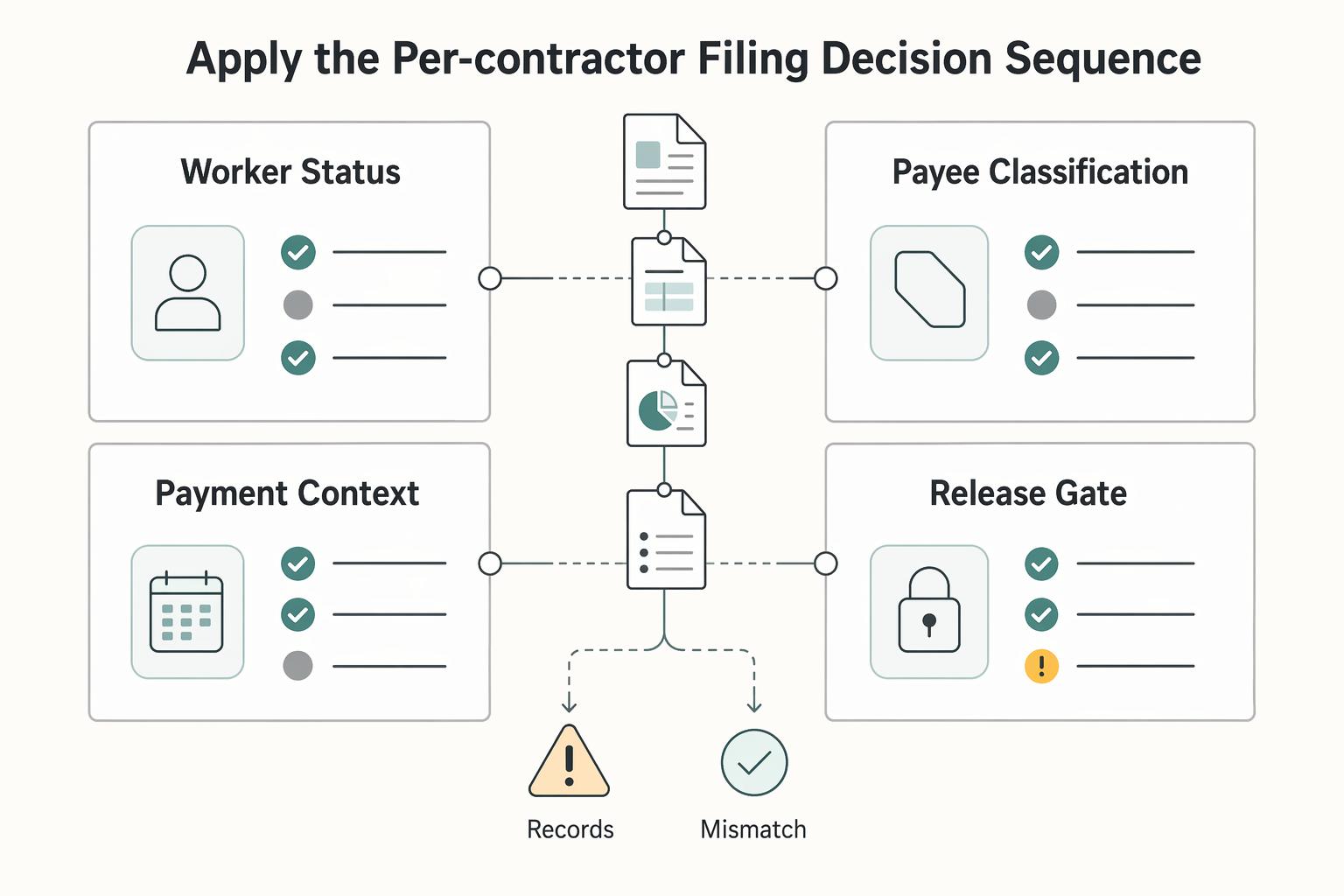
1099 Filing Threshold Calculator for Platform Contractor Decisions
If you own compliance, legal, finance, or risk for a platform, the question is not, "what is the general 1099 threshold?" It is this: for this payee, with this payment flow and this documentation, are you required to file, not required to file, or unable to decide yet without review?
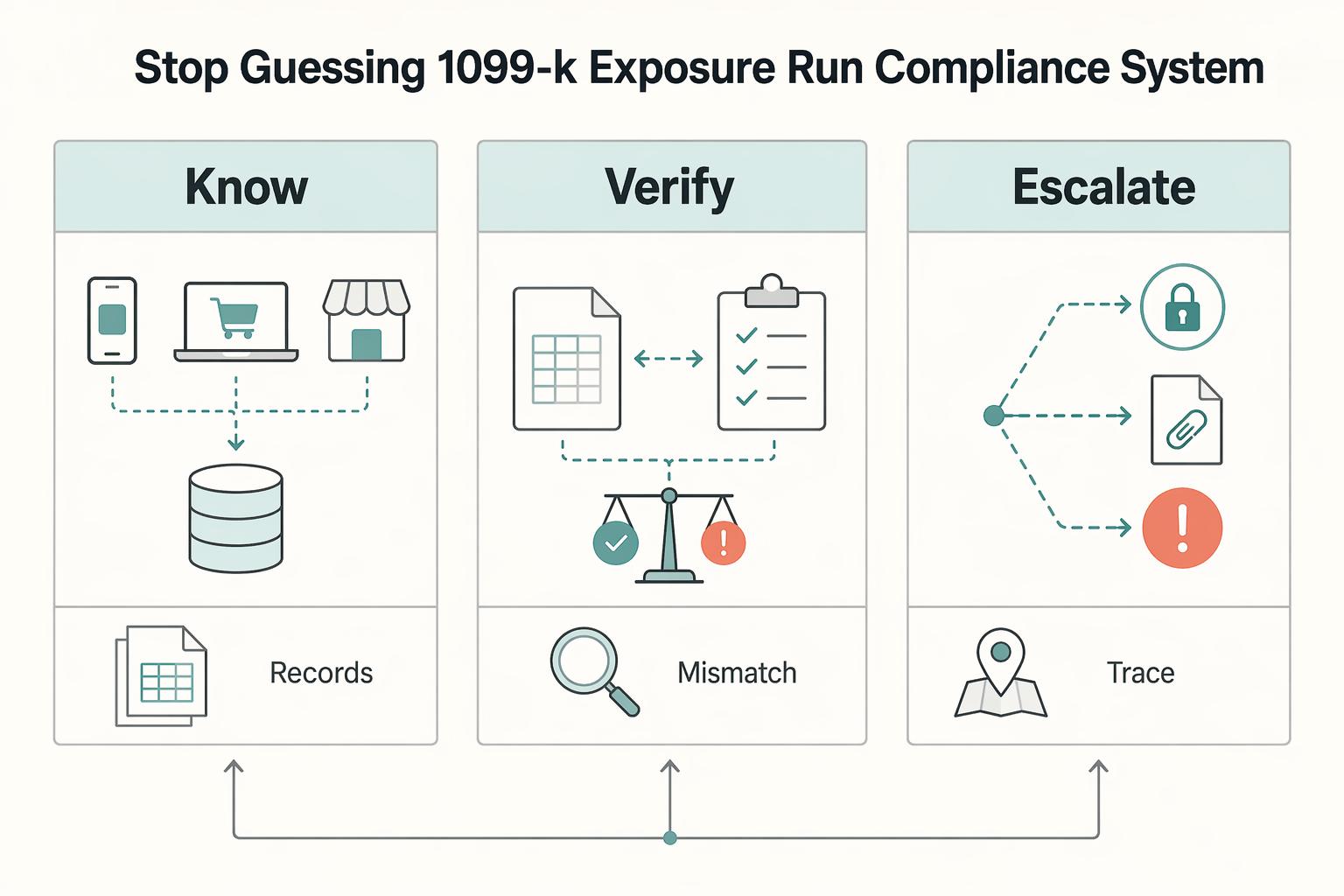
A Guide to Form 1099-K for Freelancers Using Payment Apps
Run a monthly Know/Verify/Escalate loop for Form 1099-K instead of guessing thresholds. That routine cuts avoidable tax risk and keeps your reporting process stable when guidance shifts. Payment apps and marketplaces can split your records across platforms, payout types, and reporting rules, which is where the stress starts. If you run a business of one, replace guesswork with a repeatable close process.