

Quick Answer
Agree recipient consent and settlement terms, approve the exact token and network, and choose provider conversion or platform custody. Track submitted, confirmed and credited states separately. Retry or use fiat fallback only after authoritative evidence shows the replacement cannot duplicate the original payment.
Define what the contractor will receive#
A USDC payout program changes the delivery of an existing payment obligation. Start with the contractor’s agreement: whether they choose this method, what currency the obligation uses, how many tokens settle it, which network and token are accepted, who pays fees and when delivery discharges the obligation. Do not replace a promised bank payment with crypto merely because the platform can send it.
Use one narrow pilot route whose recipient eligibility, wallet compatibility and withdrawal path have been established. Confirm lawful use for the platform and contractor, including any required payment-service permissions and provider conditions. A public blockchain’s reach does not establish that a provider can serve every country or that every worker may be paid this way.
| Delivery agreement | What to record |
|---|---|
| Recipient choice | Explicit consent, supported legal entity and an available agreed alternative |
| Amount | Invoice currency, token quantity or conversion rule, quote expiry and underpayment handling |
| Destination | Exact chain, token contract or mint identifier, address and any required memo |
| Custody | Self-controlled wallet or custodial deposit; whose account owns the destination |
| Completion | Required on-chain status and any custodial credit or bank-arrival requirement |
| Costs | Platform fee, conversion cost, sender gas, recipient movement and cash-out costs |
For example, a USD 1,000 obligation may be settled by 1,000 specified USDC tokens only if that is the agreed exchange and discharge rule. If the contractor instead requires USD 1,000 deposited into a bank, sending 1,000 tokens is an intermediate step. The net bank amount can differ after spread, fees and foreign exchange.
Choose provider conversion or platform custody#
| Model | Who controls funds and signing | Platform responsibility |
|---|---|---|
| Fiat-funded provider payout | Provider converts and sends under its program | Approved recipient, commercial terms, provider evidence and payable reconciliation |
| Platform-controlled wallet | Platform holds tokens and controls signing | Funding, keys, signing approvals, gas, screening and on-chain monitoring |
| Bank-delivery route using stablecoins internally | Provider handles token movement and eligible bank payout | Quote and bank endpoint approval; complete only on agreed bank evidence |
Stripe’s Connect stablecoin payout documentation, checked October 3, 2026, describes fiat platform balances with Stripe handling conversion and wallet payout. It remains a private-preview feature for U.S.-based platforms, available to individuals or sole proprietors in supported locations; companies and nonprofits are excluded. Recipients need the Express Dashboard, and the integration uses Transfers. Its listed U.S. coverage excludes New York and Hawaii.
This is a specific eligibility boundary, not a promise of access. A USD transfer into a connected-account balance is distinct from delivery to the recipient’s wallet. Obtain approval and the actual payout program terms before designing recipient commitments. Generic Connect bank-payout prices, crypto payment-acceptance fees and MoR pricing do not establish this program’s total contractor payout cost.
A platform-controlled wallet provides different responsibilities: the platform must manage access, signing and recovery itself or under an explicit custody arrangement. Keeping most funding in fiat reduces time spent holding tokens, but adding USDC still needs liquidity, custody and exposure limits. It is a treasury-policy decision even when the intent is payment rather than investment.
Validate the exact token and network#
Treat the approved destination as a versioned record bound to the recipient. Check the chain identifier, token contract or mint, full address and custodial deposit requirements. A valid-looking address is insufficient: the same address shape can be accepted on several networks while the recipient service supports only one. Reapprove destination changes before using them in a new instruction.
Native USDC and a bridged representation can have different contracts, backing arrangements and receiving support. Circle’s Polygon explanation identifies native USDC and bridged USDC.e as separate token contracts. Its current Mint support documentation warns against depositing bridged USDC or unsupported tokens into Mint addresses. A provider-supported bridged payout on another network still needs explicit recipient and off-ramp compatibility; a familiar ticker never substitutes for that check.
Establish address control through the provider’s supported onboarding or verification process, and confirm new details through a trusted channel. A small test transfer validates part of the route; it does not prove every future amount, limit or bank withdrawal will succeed. Recheck the complete destination for the main payout. Do not ask contractors for private keys or recovery phrases.
Budget the fee asset for ordinary self-custody transactions. Ethereum USDC transfers generally need ETH for gas; other chains have their own native-fee requirements, and some providers offer fee sponsorship. The contractor can receive USDC but be unable to send it onward without the appropriate fee funding. State whether the platform supplies that funding or the recipient must obtain it.
Scope compliance and tax to the real parties#
Assign who verifies platform and recipient identity, screens relevant parties and destinations, handles flagged cases and retains the decisions. Provider checks do not automatically discharge the platform’s own obligations. OFAC’s virtual-currency guidance explains that U.S. sanctions obligations also apply to virtual-currency transactions and recommends a tailored risk-based program. This does not establish identical onboarding requirements in every jurisdiction.
Determine tax documents from the payer, recipient status, work and applicable rules. W-8 and W-9 forms are U.S. tax-document paths, not universal wallet onboarding forms. Contractor VAT treatment, withholding and information reporting do not disappear because the payment uses a token. Collect only information needed for the applicable relationship; restrict access and avoid sensitive details in request logs.
For U.S. recipients, the IRS digital-asset FAQs state that payment for services creates income at the dollar fair market value of the assets when received; a later disposition is a separate tax event. Keep the valuation timestamp and source, token quantity, payment reference and fees. Other countries require their own treatment. Personal foreign-earned-income eligibility is not a general prerequisite for sending a contractor payout.
Execute with separate financial and delivery states#
- Approve the payable: capture the amount owed, due date, recipient agreement and approved destination version.
- Confirm eligibility and available funding, including fees; obtain and retain any conversion quote before its expiry.
- Reserve the approved amount in the internal ledger and create a unique payout intent before calling the provider or signing.
- Submit through the approved route, retaining request ID, idempotency key or transaction lineage, provider reference and payload identity.
- Track provider acceptance, broadcast, confirmations and recipient credit as separate events; process duplicate and late notifications safely.
- Resolve the payable only when the contractual completion condition is satisfied; reconcile funding, conversion, fees, delivery and any remaining assets.
Use the actual provider states rather than forcing every system into the same vocabulary. Circle Mint’s confirmation guide distinguishes an incoming transfer seen on-chain from one credited after its required confirmations. Its requirements vary by chain. Those are Circle’s crediting conditions, not a universal finality rule for every payout provider or receiving exchange.
Store the transaction hash or signature when available, and verify successful execution, the approved token, address and quantity on the correct network. A provider’s “submitted” event or an explorer entry without execution success is not sufficient completion evidence. A custodial wallet can need additional crediting steps; a bank-delivery route needs bank outcome evidence.
Handle unknown results before retrying or falling back#
| Incident | Safe next action |
|---|---|
| Request times out | Keep outcome unknown; retrieve status using the existing reference and supported idempotent recovery |
| Transaction is pending | Monitor the original; use only a documented replacement or cancellation process |
| Confirmed execution failure with no token delivery | Establish fees and funding state, correct the cause and approve a linked replacement |
| Wrong address or unsupported token/network | Stop further sends and seek provider help; recovery may be impossible |
| Wallet delivery succeeds but off-ramp is unavailable | Support the receiving-side issue; do not automatically create a second bank payment |
| Compliance block | Route to the designated review process; preserve the payable and applicable legal obligations |
There is no universal “one retry” rule. A replacement must be safe for the observed state, not just the attempt count. Circle’s failure documentation notes that a failed transaction replacement can leave the original executing, and that an already-broadcast Solana transaction should be allowed to reach confirmation or failure. Treat these as warnings against using a local error as proof of nondelivery.
Provider idempotency is also bounded. Stripe’s API documentation explains that keys may be pruned after at least 24 hours and later reuse can create a new request. Retain your own payout-intent uniqueness and provider references across that window. A direct blockchain send needs its own signing and transaction tracking; an HTTP key alone cannot prevent two independently signed transfers.
Before switching to fiat, establish that the token instruction never executed or was validly cancelled, and that funds are available for the replacement. Obtain the recipient’s alternative destination agreement and link the replacement to the same payable. If tokens already arrived, a second payment requires an explicitly approved recovery or compensation decision; it is not ordinary failure fallback.
Compare full cost and usable-money timing#
Illustrative direct-wallet payout, not a vendor quote: the contractor is owed USD 1,000 and has agreed to 1,000 USDC. The platform pays USD 1,000 for tokens, USD 4 provider fee and USD 1 equivalent sender gas, for USD 1,005 total cost. The contractor later incurs USD 2 movement cost and USD 3 conversion/withdrawal cost, receiving USD 995 in bank cash under the assumed sale rate. Show both sides of the cost rather than calling the route a USD 1 payment.
If the promise is USD 1,000 net bank cash, that example does not fulfil it: the bank-delivery quote must account for the required net amount, actual exchange rate and charges. Measure provider release time, wallet receipt and usable bank money separately. Faster on-chain delivery can coexist with slower identity review, conversion or bank withdrawal.
USDC is designed to maintain a dollar value. Circle’s terms distinguish eligible direct-redemption customers from other holders and describe restrictions, including freezing in specified circumstances. A contractor’s token balance is not an insured bank deposit or a guarantee of immediate USD redemption through their chosen service. Define an exposure cap and an incident response for token, provider or network disruption.
Pilot a route that can be reconciled#
Use one approved recipient cohort, token and network with documented off-ramp support. Evaluate a small set of realistic cases: ordinary delivery, destination change, insufficient fee funding, duplicate webhook, timeout after submission, failed execution and an off-ramp outage after successful receipt. Separate simulated provider events from real delivery evidence.
Track the number and value of completed, pending, blocked and failed payouts, duplicate-payment incidents, all-in platform costs and recipient net receipts. Reconcile opening funds plus funding minus conversions, sends and fees with closing balances, then reconcile the contractor payable ledger. Expand only when the team can explain each unresolved obligation and the recipient can use the agreed delivery method.
Frequently Asked Questions
Can a platform keep fiat balances and send USDC?
Yes, an approved provider conversion model can do that. Confirm access, recipient eligibility, conversion terms and delivery evidence; adding token payouts still requires a treasury and operational risk policy.
Is Stripe stablecoin payout access available to every platform?
No. The checked documentation describes a private preview for U.S.-based Connect platforms with restricted recipient types and locations. Obtain program approval before promising availability.
Are native USDC and USDC.e interchangeable?
Do not assume so. Confirm the exact token contract, network and receiving service support. Circle Mint warns against deposits of bridged USDC; other provider-supported routes need their own compatibility checks.
When should we retry or send a bank fallback?
Only after authoritative evidence makes the replacement safe. Timeout, delayed notification or failed replacement does not prove the original transfer failed. Preserve one payout intent and link any approved replacement.
Does on-chain receipt prove bank cash is available?
No. Wallet receipt, custodial credit, conversion and bank arrival are separate stages. Completion depends on the recipient’s agreed settlement terms.
Try a related tool
Researched and edited by the Gruv editorial team. Gruv builds cross-border billing, payouts, and finance-operations software for global businesses.
Sources
Includes 4 external sources outside the trusted-domain allowlist.
- docs.stripe.com/connect/stablecoin-payoutstrusted
- docs.stripe.com/api/idempotent_requeststrusted
- irs.gov/individuals/international-taxpayers/frequent...trusted
- ofac.treasury.gov/system/files/126/virtual_currency_guidance_b...trusted
- circle.com/legal/usdc-termsexternal
- circle.com/blog/what-you-need-to-know-native-usdc-on-po...external
- developers.circle.com/circle-mint/references/supported-chains-and-...external
- developers.circle.com/circle-mint/references/blockchain-confirmationsexternal
Educational content only. Not legal, tax, or financial advice.
Related Posts

The Freelance Payment Penalty: A Modeled Audit of Platform Fees, FX Spreads, and Payout Delays
The money rarely disappears through a single, easy-to-spot fee. The real loss is stacked. A marketplace takes its commission, a processor adds a charge for international cards, a bank or payment company converts the currency at a spread, a platform holds the funds before release, and a wire sheds a little to intermediaries on the way in. Each layer looks defensible on its own, but the worker feels the combined result as a smaller deposit and a later payday.
How to Respond to a Subpoena for Business Records
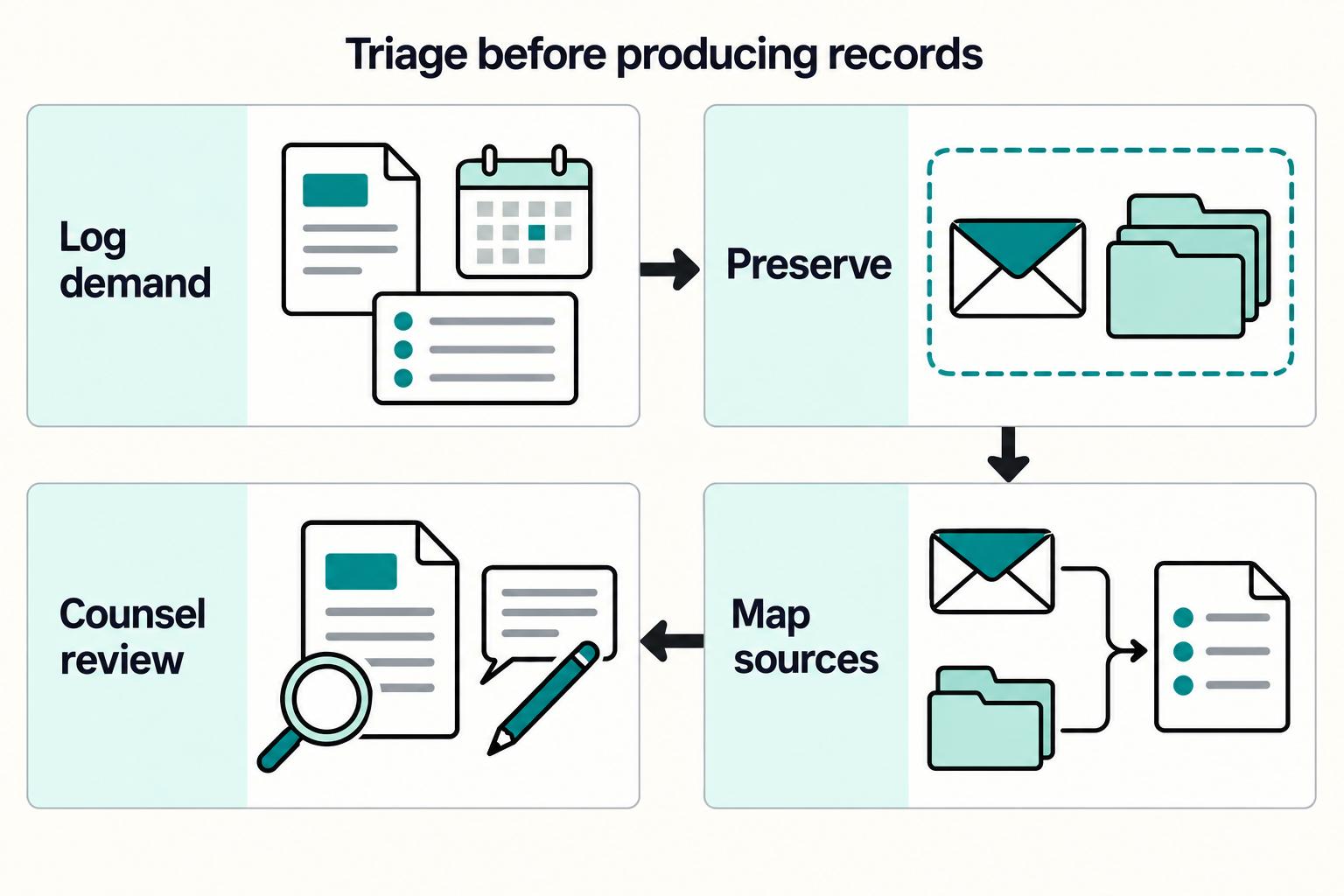
Move fast, but do not produce records on instinct. If you need to **respond to a subpoena for business records**, your immediate job is to control deadlines, preserve records, and make any later production defensible.
A US Expat's Guide to Investing in UCITS ETFs to Avoid PFIC Issues
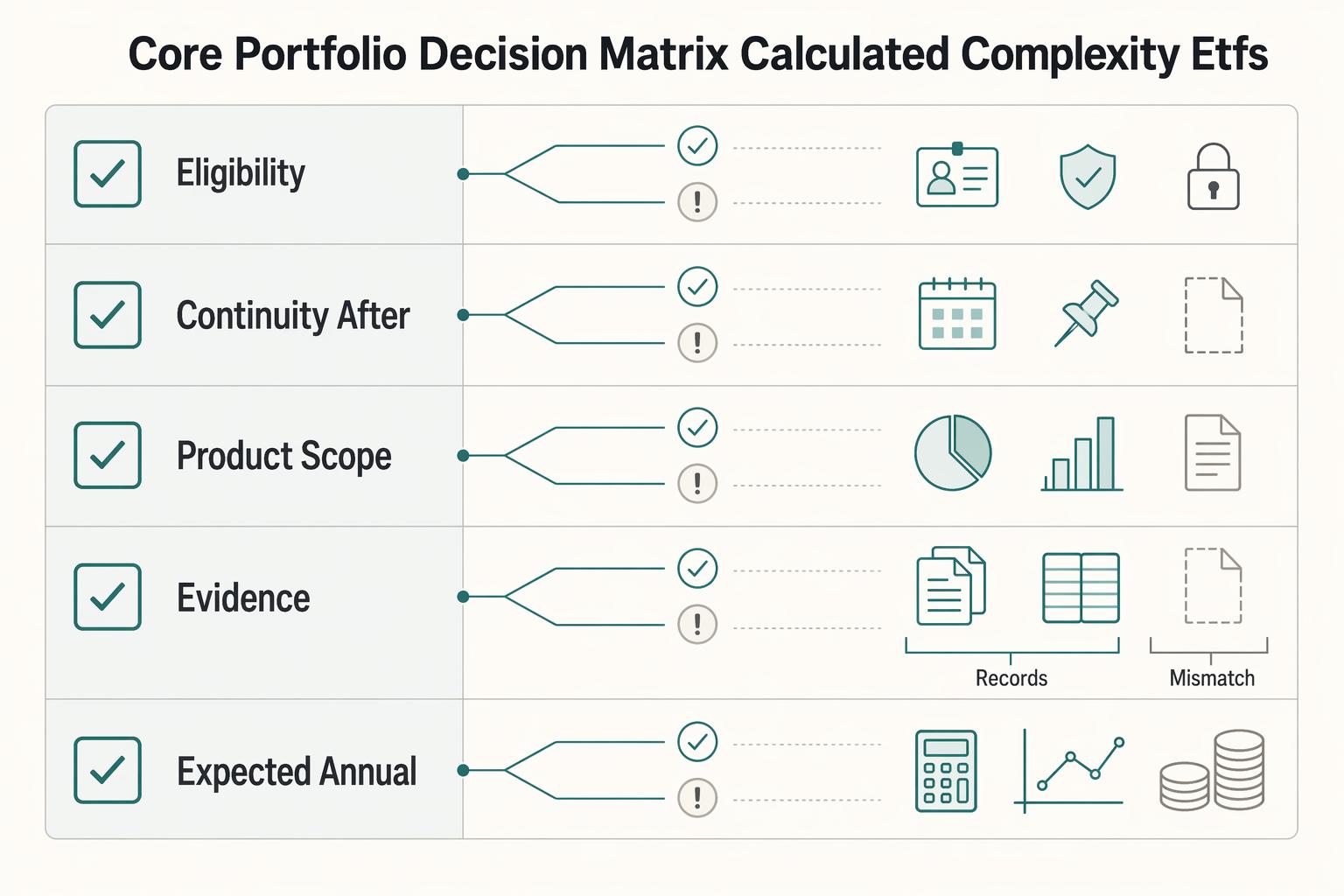
The real problem is a two-system conflict. U.S. tax treatment can punish the wrong fund choice, while local product-access constraints can block the funds you want to buy in the first place. For **us expat ucits etfs**, the practical question is not "Which product is best?" It is "What can I access, report, and keep doing every year without guessing?" Use this four-part filter before any trade: