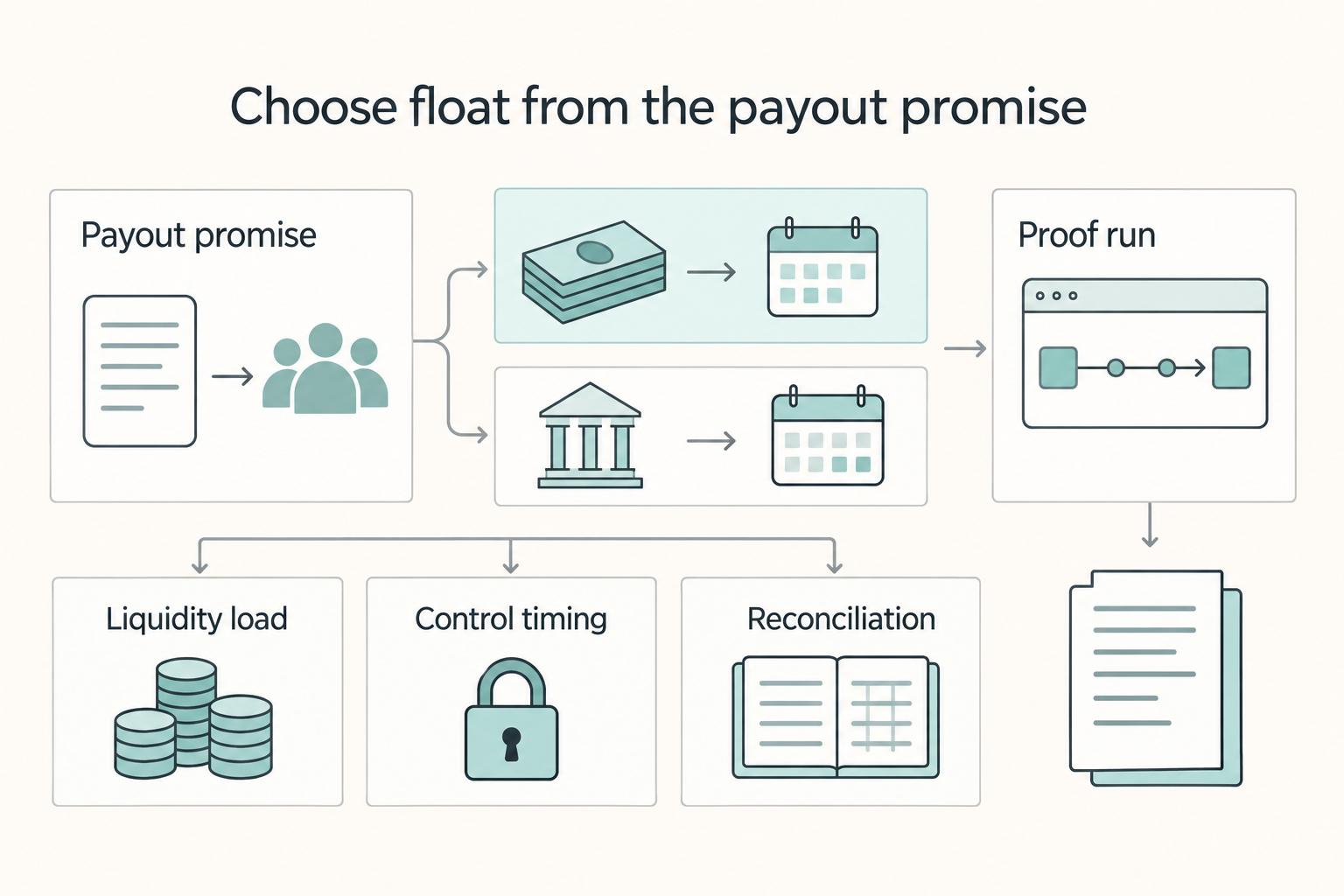
Choose the payout-readiness rule before choosing speed. In practice, payment platform float explained is the time gap between collection, settlement, internal posting, and disbursement, and the job is to control that gap with explicit checks. Ground your model in observed delay points, hold causes, and reconciliation breaks, then apply the matching approach for your risk posture: settlement-led, reserve-buffered, rolling-window, compliance-gated, or prefunded release.
If your platform collects funds and pays out later, float is an operating constraint, not a side topic. It shapes payout promises and reconciliation. Below, we define float in platform terms, show where the risk actually sits, and frame how to control it.
Here, float is the temporary money-and-time gap between payment movement and final availability. It exists because collection, settlement, internal posting, and payout release do not finish at the same moment. Digital systems can narrow that gap, but they do not remove it. The focus here is platform operating float.
The real exposure window sits between collection and payout. In practice, you are managing several timing layers at once. Payment float runs from incoming funds to disbursement. Settlement float exists while funds are in transit. Treasury float appears where reserves are held for operational liquidity. The moment you promise payout before each stage is final, finance, product, and engineering share timing risk.
A usable float model starts with checkpoints, not assumptions. You should be able to trace a payment from collection to internal posting to payout release and confirm that settlement and reconciliation states match your internal records. Without that visibility, you do not have a controlled float model.
Faster payout usually means higher liquidity demand and more operational load. One source in stablecoin operations reports businesses holding 5 to 7 days of transaction volume in operational float, with some processors holding reserves around 10 to 20% of weekly volume. Treat those figures as context, not universal targets. If speed is the promise, plan for more reserve and more exception handling. If containment is the priority, wait for clearer settlement and approval signals.
A practical boundary matters here. This article is not about yield optimization. External yield claims like 6 to 9% APY or 4 to 5% regulated yields may look attractive, but some strategies require custody transfer that can introduce regulatory and operational blockers. For most operators, the first win is simpler: a release model you can explain, reconcile, and defend.
That is the thread through the rest of this piece. Choose a float model that matches your payout promise, then implement controls that keep settlement and reconciliation aligned so finance closes cleanly and recipients get the timing you intended.
You might also find this useful: How to Set Up an IRS Payment Plan and Keep It Active.
Choose your float model from the payout promise you can actually operate, not just the speed you want to market. Start with the decision rule, then pressure-test it against liquidity, controls, and reconciliation.
If fast payout is part of the product promise, you are taking on more liquidity pressure and more operational burden. Moving from batch processing to instant rails can shift settlement from days to seconds, and one cited example lists SEPA Instant at < 10 seconds. If your priority is risk containment, release only after settlement and internal checks are complete.
This article is for marketplace, creator, and contractor payout operators with compliance exposure. It is not about personal Credit card float tactics or basic Accounts Payable (AP) card tooling. It is also not the consumer Float instalment product, with checkout in 3 easy steps, the full amount reserved upfront, and up to 24 months to repay. It is not macro managed-float currency policy either.
Use the same lens every time: payout speed promise, liquidity burden, control complexity, and reconciliation effort. The tradeoff is simple even when implementation is not. More speed usually means more fraud prevention pressure and more capital at risk.
A rail that settles quickly does not make your end-to-end release instant by itself. Instant-rail adoption still requires explicit management of irrevocability and liquidity, so your timing model should include internal approval steps and release controls. Check whether your internal payout-ready timing and actual release timing line up.
Do not pick a model until you can show where delays happen in your flow and whether they are driven by liquidity constraints, control steps, or release sequencing. That keeps the model choice tied to reality and reduces downstream vendor friction and churn.
For a step-by-step walkthrough, see How to Use Stripe Payment Links for Easy Invoicing.
A practical comparison point is the release trigger: the event you treat as moving funds from collected to payout-ready in your records. Before you optimize for speed, align that trigger with your documented controls.
| Model | Release basis | Main upside | Constraint |
|---|---|---|---|
| Settlement-led release | Release after settlement, not just clearing | Keeps release state tied to settled value and can reduce timing mismatches | Recipient speed can be slower; one to five days in some card and ecommerce contexts |
| Reserve-buffer release | Release earlier from reserve, then replenish as funds settle | Faster payouts without treating unsettled funds as already available | Excess cash buffers reduce capital efficiency and shift pressure onto balance-sheet liquidity |
| Rolling payout window | Release what is eligible at each window and carry the rest into the next pass | Predictable, repeatable release operations | One window should not imply one timing promise across both rails; status timing, platform-origin rules, and version limits can create exceptions |
| Compliance-gated release | Hold after collection until internal release checks are complete | Tighter control and clearer decision traceability at release time | Operational drag; payouts can stall when review ownership or evidence is unclear |
| Prefunded wallet release | Fund a wallet or payout pool in advance, then release approved obligations from that balance | Faster, more predictable execution path for approved items | Idle capital and tighter liquidity discipline; balances can sit for 24-72 hours before disbursement |
Use the table as a decision scaffold, not as a source-backed ranking of model performance. The provided sources support two broad points relevant to any model: float is temporary double-counting created by processing delay, and intentional misuse of float (such as overdrawing) can create legal exposure. Those delays can come from institution backlogs, sometimes called holdover float, or from transport disruption, sometimes called transportation float.
The table gives you a structure, but the provided sources do not establish rail-, provider-, or legal-setup-specific differences. Differences in SEPA (Single Euro Payments Area) behavior and dependency on EMI, PI, or Agent Model structures are not established in the provided sources. Treat those as legal and program-design questions to confirm in your provider and contract stack. Use EU Payment License Types Explained: EMI vs PI vs Agent Model for Platforms for model context.
One grounded control anchor does exist. The OCC Payment Systems booklet includes dedicated risk and policy sections and an Appendix A 12 CFR 7.1026 Compliance Worksheet. Whatever model you choose, document the release trigger, approver, retained evidence, and exception path so release decisions are auditable instead of implicit.
If you want a deeper dive, read What Is SEPA? Single Euro Payments Area Explained for Platforms.
If you need payout readiness to track actual money movement, use settlement as the release trigger. Release funds after settlement (transfer of value), not just clearing (transfer of payment instructions).
In an ideal flow, the payer debit and payee credit post at the same time. Float appears when posting is asynchronous, especially when intermediaries or slow processing stretch timing. A settlement-led rule keeps your Ledger release state tied to settled value rather than earlier status signals.
The main advantage is control. You are not marking funds payout-ready before value has settled. That can reduce timing mismatches between external payment status and internal records, and it can make release decisions easier to defend.
The tradeoff can be recipient speed. Settlement timing is not uniform, and delays can be material. In some card and ecommerce contexts, funds availability can take one to five days. Treat that as an example, not a universal SLA.
Make the checkpoint explicit before any balance becomes payout-ready. Confirm that:
A useful policy artifact is an availability schedule: a written rule for when collected funds become available for payout after settlement evidence is confirmed.
A failure mode is treating a pre-settlement event as payout-ready. Once that happens, release state drifts from settled-value reality and exception handling expands quickly.
A second failure mode is assuming average timing will hold for every transaction. When delays hit, repeated manual overrides before settlement confirmation can mean the release rule needs tighter enforcement.
Use a reserve-buffer release model when you need faster payouts than settlement timing alone can support and you can fund that promise with your own cash cushion. In this model, teams may release earlier from reserve and then replenish as funds settle, so float is managed as a deliberate operating choice.
This model gives you speed without pretending unsettled funds are already available. For platforms with predictable volume and real treasury capacity, it can be a workable middle ground.
The tradeoff is capital efficiency. Maintaining excess cash buffers to absorb payment delays can reduce efficiency. If working capital is already tight, faster release does not remove pressure. It shifts pressure onto balance-sheet liquidity.
A simple test helps: if payout demand spikes before matching settlements arrive, can you still release on time without emergency moves? If not, the model is likely underfunded for the promise it makes.
Implementation details vary. What matters is the control objective: clear internal tracking of what was released, what later covered it, and what gap remains. Release decisions should stay explainable and auditable, and speed gains should not come at the expense of core safeguards.
Before you widen faster release, check reserve sufficiency against current committed payouts and known exceptions, not just average or month-end views. Keep release evidence organized so finance, ops, and support can answer timing questions quickly.
The core failure mode is reserve tuning that looks fine in normal periods and fails under stress. Constrained pilots can miss stress behavior, so smooth test results alone are weak proof.
The second failure mode is opacity. When teams lose clear visibility into exposures and interdependencies, hidden risk grows.
Persistent overbuffering can tie up cash. Poor liquidity management can also contribute to preventable costs, including late payment penalties.
Need the full breakdown? Read Goodwill and Intangible Assets on a Balance Sheet for Payment Risk.
Use a rolling payout window when you want a repeatable release point instead of ad hoc payouts. Its value is operating discipline: decide what is eligible at each window, release only that set, and carry the rest into the next pass.
This model works well when you want predictable release operations without treating unsettled funds as available. It is especially useful when rail behavior differs, because settlement architecture and transfer behavior are not identical across systems.
Keep rail-level expectations explicit. Worldpay describes FastAccess Funding as separate from ACH and quotes transfer within 30 minutes, so one window should not imply one timing promise across both rails.
A key control point is instruction submission. In Worldpay Dynamic Payout, funding instructions must be submitted on the provider platform, so that handoff is a clear checkpoint before execution.
For each window, keep a complete operating record: cutoff time, included payouts, excluded payouts with reasons, provider instruction IDs, and final statuses. That record helps keep payout decisions traceable when items move between windows.
If you run Dynamic Payout and Direct Debit in the same environment, keep them separate in operations and reporting. They are distinct flows even if both can use ACH.
A boundary risk is status timing. A submitted funding instruction can be voided only before it settles, so late error discovery may require remediation instead of voiding.
Another break point is platform mismatch. Worldpay states you cannot distribute funds from transactions processed through a different platform, so eligibility logic should enforce platform origin before payout release.
Integration-version limits can also create exceptions. Worldpay notes cnpAPI version 9.0 supports PayFac/Reserve/Sub-merchant credit and debit types, while version 9.2 adds physical check credit/debit. If your release rules assume transaction types beyond what the version supports, exceptions can increase.
Use a compliance-gated release model when release risk matters more than release speed. Funds can stay held after collection until your internal release checks are complete, including periods when money is still in platform float.
This can be a practical starting point for programs that span multiple jurisdictions or payment roles. Regulatory treatment of non-bank payment service providers is not uniform. BIS survey evidence across 75 jurisdictions supports treating release rules as market- and setup-specific rather than as one global toggle.
Choose this model when payout decisions need to be explainable and consistent, not merely fast. It fits programs where you already run documented review steps before payout and need a clear record of what was checked before status moved to payout-ready.
Keep funds received separate from funds releasable in your ledger and payout logic. A practical gate usually confirms these points:
| Checkpoint | Grounded detail | Timing note |
|---|---|---|
| Payee or merchant record | Meets your policy requirements | Before release |
| Transaction checks and review | Has completed the checks and review steps you actually run | Before release |
| Funding progress | Unsettled money is not treated as available cash | Pre-settlement float can remain on T+1, T+2, or T+3 schedules |
| Conversion or treasury steps | Timing can extend further | 4-24 hour FX holds; 24-72 hour prefunding dwell times |
That funding point is easy to miss. Pre-settlement float can remain between deposit and payout on schedules such as T+1, T+2, or T+3. If you also run conversion or treasury steps, timing can extend further, including 4-24 hour FX holds and 24-72 hour prefunding dwell times.
The strength of this model is tighter control and clearer decision traceability at release time. The tradeoff is operational drag. Payouts can stall when review ownership or evidence is unclear.
A second failure mode is liquidity waste. Teams often keep precautionary buffers that are over-provisioned and rarely optimized. Where reserve use is regulation-dependent, keep release policy aligned to what is permitted in each market.
This pairs well with our guide on Collection Agencies for Small Businesses: Use a Payment Assurance System First.
Use a prefunded wallet release model when payout speed and certainty matter more than capital efficiency. You fund a wallet or payout pool in advance, then release approved obligations from that balance instead of waiting for each collection to complete settlement.
This model can fit programs where payout delays create real commercial pain, including late-payment penalties. It removes part of the timing dependency between collection and disbursement. That helps when pre-settlement timing still runs on T+1, T+2, or T+3 schedules, or when treasury and FX steps can add another 4-24 hours.
The main upside is a faster, more predictable execution path for approved items. Processors may prefund payout pools ahead of anticipated volume, and those balances can sit for 24-72 hours before disbursement.
The tradeoff is idle capital and tighter liquidity discipline. Float can hide across stages, so keep separate buckets for prefunded balances, pre-settlement float, and operational buffers instead of treating everything as one available balance.
Buffer sizing is another cost center. One cited mid-size processor example holds $2-10M in operational buffers, and those cushions are often over-provisioned and rarely optimized. If balances routinely sit untouched for 24-72 hours, revisit wallet sizing cadence and release assumptions.
A business client prefunds a wallet, and the platform releases approved obligations from that pool on a schedule. The speed gain comes from not waiting on each individual collection to settle at release time.
Do not run one release rule across every account. Use a tiered internal policy: start slower where risk is less proven, move faster only when your own evidence stays clean, and define a clear downgrade path.
Treat this as operating policy, not a legal shortcut. The BIS FSI paper (July 2021), informed by responses from 75 jurisdictions in early 2021, provides cross-country context for NBPSP digital payment and e-money services. It describes both differentiated and more uniform regulatory application, and NBPSP roles that include customer-facing services and back-end clearing/settlement/processing. Use it as analytical context, not binding legal text.
| Scenario | Example starting posture | Evidence to move faster (internal policy) | Red flag before upgrade |
|---|---|---|---|
| New seller | Slower initial release posture (for example, compliance-gated or settlement-led if your policy uses it) | Program checks complete, early cycles reconcile cleanly | Missing required records, repeated manual intervention, unresolved ledger breaks |
| Trusted high-volume seller | Rolling or reserve-buffer release | Sustained low exceptions, stable reconciliation outcomes, no recent escalations | Exception trend rising, reserve pressure, recurring batch/recon breaks |
| Cross-border first payout | Slower first release for corridor validation | Beneficiary and payout details validate, required program documentation is on file, first payouts settle and reconcile cleanly | Data mismatches, documentation gaps, repeated reject/retry patterns |
| Payout rail change | Treat as a fresh risk event on the new rail | Provider status mapping validates, rejection handling is stable, ledger mapping remains intact | Duplicate attempts, status gaps, new unresolved rejection patterns |
The table gives you a starting posture. The practical work is deciding what evidence earns an upgrade and what evidence forces a downgrade.
New sellers and trust build. For new sellers, optimize for auditability first, then speed. Define an explicit evidence pack before tier upgrades so support pressure or early volume does not become the upgrade trigger.
Trusted high-volume sellers. High volume can justify faster release only when operations stay clean over time. Keep downgrade rules explicit so fast tiers can be rolled back quickly when exception or reconciliation quality deteriorates.
Cross-border first payout and rail changes. Treat first cross-border payouts and rail changes as separate risk events, even for trusted accounts. Re-validate event flow and reconciliation before restoring higher velocity.
Tax and compliance gates. If your program depends on tax or compliance artifacts, name those artifacts explicitly in policy and frame them as internal readiness gates, not universal legal rules.
Source quality matters when you set those gates. In this research set, the 1099-K item was a community forum page, and a Federal Reserve PDF link returned page-not-found. Refresh to primary, accessible sources before changing policy.
Quarterly review. Run a quarterly policy review even when incidents are low. At minimum:
The operating rule is straightforward: faster release should follow clean evidence, and every faster tier should have a defined path back down.
For a related risk lens, see What Is EBITDA and How to Calculate It for Client Payment Risk.
Before you lock a float model, translate your tier rules into explicit payout states, hold gates, and retry logic with this integration guide.
Build order matters. Prove system behavior before you optimize release speed. Define normal behavior first, then assign clear ownership, add monitoring checkpoints, and run failure experiments.
Your first artifact should be a clear steady-state hypothesis for healthy system behavior, including the signals that show whether the system is stable. Run a baseline flow end to end and confirm finance, support, and engineering all describe the same current state and next event.
Treat disruptions as expected test conditions. Run controlled experiments and confirm behavior stays stable instead of drifting into conflicting visible states.
Write down who proposes, approves, and runs experiments, plus the stop conditions. If ownership is vague, teams can make different decisions under stress and create avoidable support friction.
Set up monitoring and alerts so drift becomes visible early. Every unresolved alert should have an owner and a next action, or you are only tracking risk, not reducing it.
Production systems fail in unpredictable ways, so practice failures intentionally. Define the steady-state hypothesis, set up monitoring and alerts, and use controlled experiments to gather empirical evidence of resilience. This is the practical guardrail against cascading failures, including incidents that can cost thousands per minute. For adjacent economics, see How EOR Platforms Use FX Spreads to Make Money.
Your float model may be drifting when delayed-funds incidents turn into status arguments instead of quick, evidence-based resolution. These signals do not, by themselves, prove the exact underlying float-control failure, but they do indicate payout-availability risk.
Complaints categorized as "Money was not available when promised" are an external signal that payout availability may not be matching user expectations.
Complaint narratives include cases where a sender-side flow appeared done, but the recipient reports, "The funds never showed up in my Kraken account." Treat that as a potential transfer/release visibility issue to investigate, not just a messaging issue.
One complaint narrative states, "I am not given any information as to why my account is restricted." Holds may be valid, but if the reason, owner, and next step are unclear, your operating model is harder to audit.
The CFPB export tracks fields like Date sent to company, Company response to consumer, Timely response?, Consumer disputed?, and Complaint ID. If your internal payout incidents are less traceable than that, resolving and closing cases consistently becomes harder.
At least one record shows a company response that attributes cause to a third party while the consumer reports a different failure path. When this pattern repeats, your incident process needs a tighter shared evidence trail before cases close.
Reduce choice before you add options: use one default release model, one written approval policy, and a short list of documented exceptions.
Start with one baseline release rule for every new account, then make faster release a controlled upgrade. If you cannot explain in one sentence why an account is payout-ready, the policy is not operational yet.
Make graduation evidence-based. A grounded checkpoint is pre-settlement verification and risk management, with dual-control approval and an immutable audit trail. In practice, move an account to a faster tier only after required checks pass, approvals are recorded, and the trail is complete.
A simple tier structure helps. The grounded example is Tier 0/1/2 supervisory access: routine monitoring at the base level, tighter oversight for exceptional cases. Keep standard release paths separate from paths that require extra review.
Write release rules that point to records, not opinions. Define which checkpoints must exist before release, who can approve exceptions, and what artifact must be attached when someone overrides the default.
Keep legal terms primary over automation. The grounded rule is explicit: contract terms come first, and code implements them rather than replacing them. Use a hard red flag here: manual release without a documented reason and second approver should be treated as a control failure, not a workaround.
Do not import consumer credit-card float logic into platform payout policy. Consumer grace periods, often described as 21-25 days, depend on full-balance repayment, and carrying a balance removes that grace-period benefit. The useful takeaway is timing discipline, not a payout rule.
Before you broaden rollout, verify where your policy actually works. A grounded design cue is dual-mode settlement rails: some environments support both atomic and netted settlement paths. From these excerpts alone, specific payout SLA targets, exact tier-graduation thresholds, and jurisdiction-specific rail coverage are unknown.
Roll out in controlled stages and review results weekly. Track segment-level payout timing, exception-handling share, and release-blocking record breaks. If exceptions rise after a policy change, pause expansion and fix the failing checkpoint first.
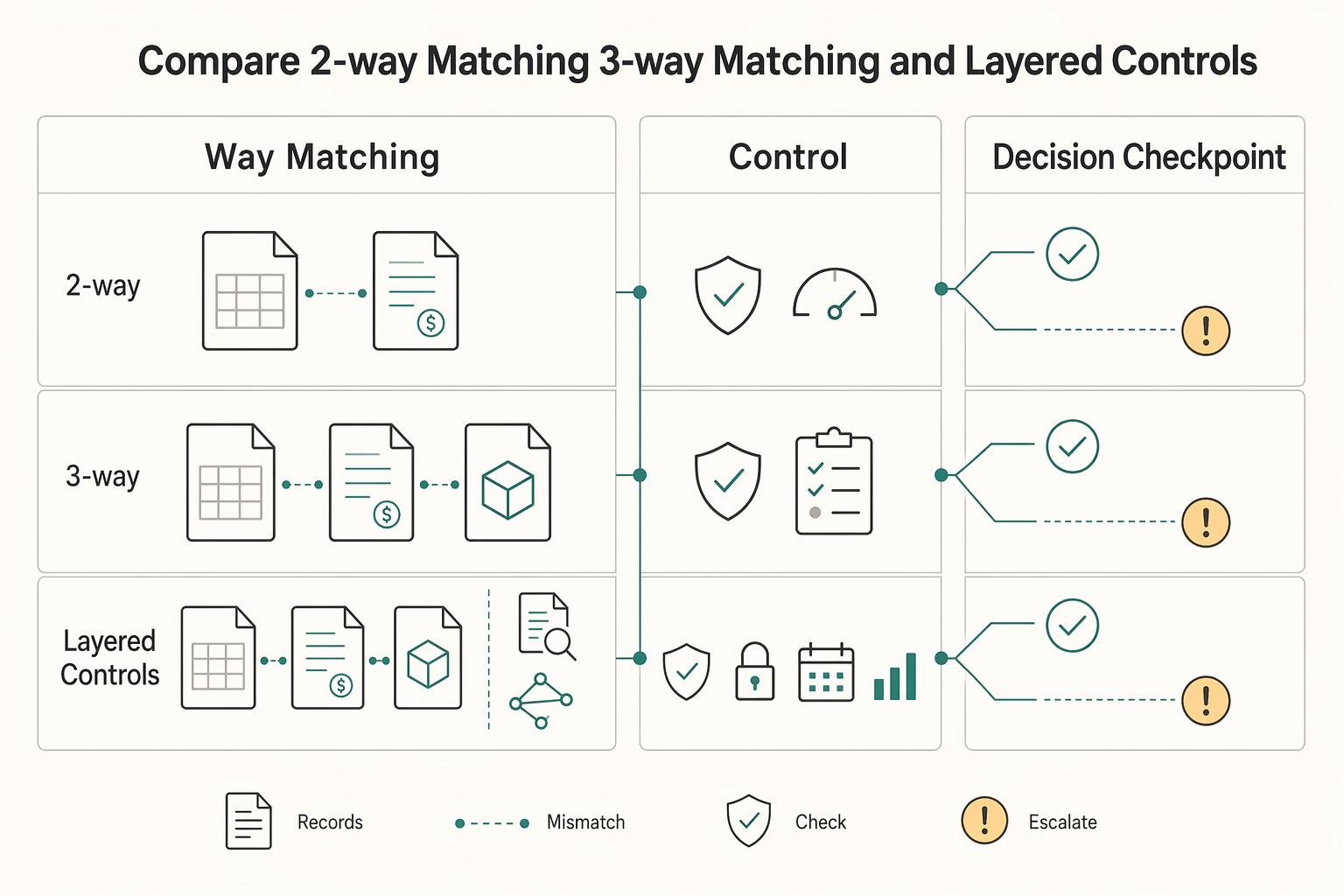
If you are tightening release evidence, strengthen matching discipline at the same time. Invoice Matching Explained: How Platforms Automate 2-Way and 3-Way Matching to Prevent Overpayment is a practical next read for that side. Related: How to Set Up a UPI Payment Gateway on Your Website. If you want a practical review of your payout design across policy, rails, and reconciliation controls, talk with Gruv.
These sources do not provide a single authoritative definition of "payment platform float." The closest grounded analogue is banking float: while funds are still clearing, the same amount can appear in two accounts until cleared. For operators, the practical question is what evidence must exist before release.
No. Banking-style float is about clearing and account timing, while the consumer product named Float is a card-linked instalment flow. In that flow, the full purchase amount is reserved, only the first instalment is charged initially, and shoppers can get up to 24 months to pay.
It depends on your operating model and release policy. Different policies shift timing, liquidity, and support pressure between platform and payee. Treat risk ownership as an explicit policy decision, not an assumption.
Payout timing changes based on which checkpoint you require before release. If you wait for stronger confirmation, timing is typically later but the evidence is clearer. The key control is the underlying state and record quality, not just a UI status label.
Use a ledger that conserves value through explicit, balanced entries and keep an audit trail for every state change. Add clear status and decline visibility so teams can explain what happened quickly. Where relevant, practical controls like spending limits, usage controls, and real-time tracking improve day-to-day operations.
As an operational policy, hold funds when required approval checks have not passed or when the record is incomplete. A grounded example is gating card access until OFAC and KYC approval is complete. Releasing against unclear or uncleared states increases operational risk, and misuse of float can create legal risk.
The provided sources do not define webhook retry or idempotency-key behavior. They do show that timeout scenarios can produce duplicate charges, so release decisions should rely on controlled state transitions plus ledger integrity and audit trail. If entries are not balanced and traceable, do not release funds.
Avery writes for operators who care about clean books: reconciliation habits, payout workflows, and the systems that prevent month-end chaos when money crosses borders.
With a Ph.D. in Economics and over 15 years of experience in cross-border tax advisory, Alistair specializes in demystifying cross-border tax law for independent professionals. He focuses on risk mitigation and long-term financial planning.
Educational content only. Not legal, tax, or financial advice.

Platform teams do not need another glossary entry on invoice matching. They need controls that stop real overpayment paths before money goes out the door. At its core, invoice matching compares an invoice with supporting records before payment. The practical question is what you add when a clean match still does not mean the invoice should be paid as submitted.
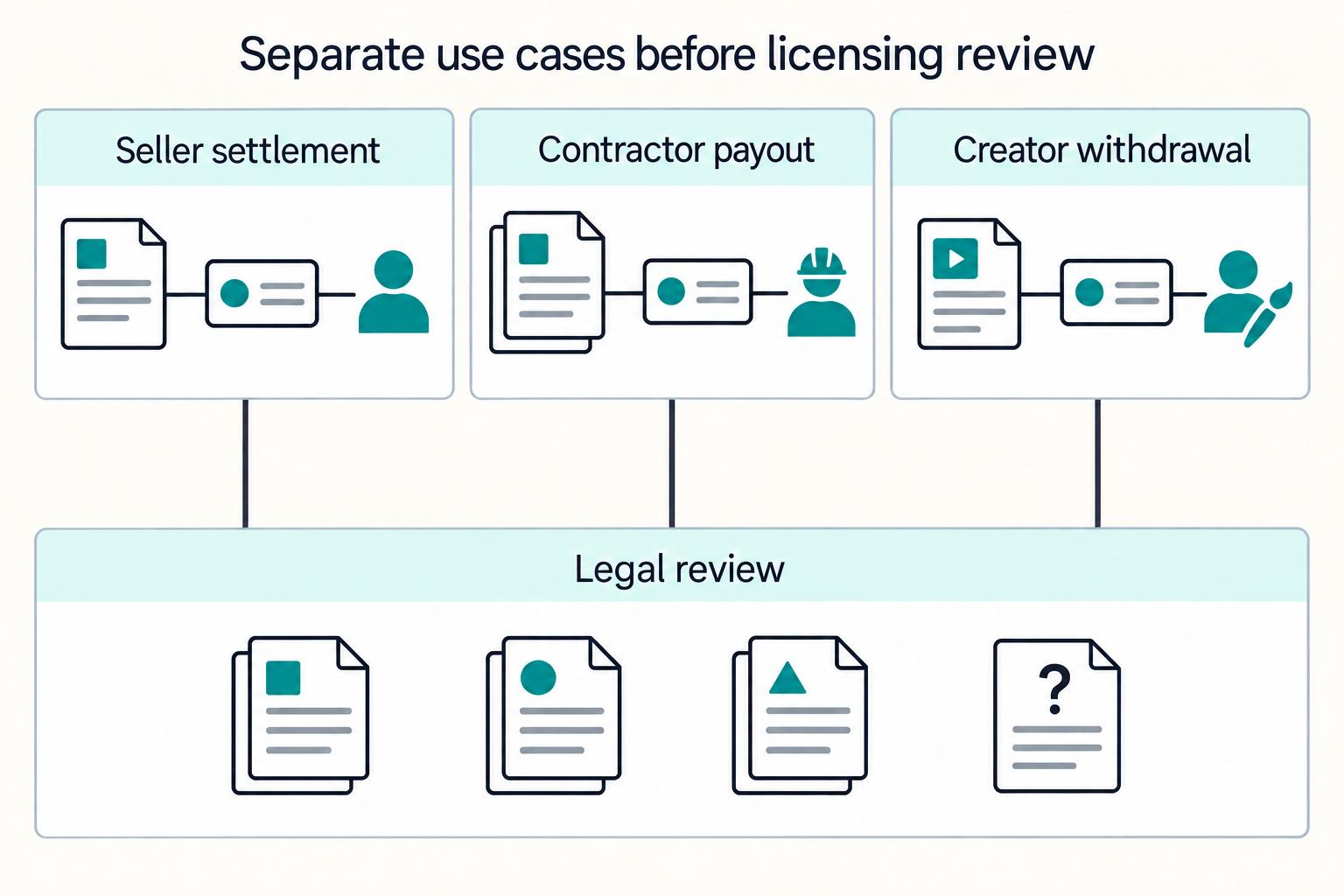
The hard part is not calculating a commission. It is proving you can pay the right person, in the right state, over the right rail, and explain every exception at month-end. If you cannot do that cleanly, your launch is not ready, even if the demo makes it look simple.

Step 1: **Treat cross-border e-invoicing as a data operations problem, not a PDF problem.**