
Quick Answer
Start with a tightly scoped request for proposal global payout platform 20 must-ask questions rfp that forces comparable answers and proof. The article recommends five question blocks (capability, risk/compliance, integration, operations, commercial terms), with every response tagged confirmed, partial, or unsupported. It also sets a strict rule: if required country and rail support is not evidenced, stop before pricing. Use RFI when scope is still forming and RFQ only when requirements are already stable.
Use the RFP at the Right Stage#
If you are selecting a global payout platform, your RFP needs evidence, not polished copy. Weak assumptions can slow decisions and create rework later in the process.
A strong Request for Proposal is driven by the problem you need to solve, not by a vendor's preferred product shape. It works best as the start of an ongoing conversation, not a document you send once and score in a vacuum. This article assumes vendor responses are backed by evidence, not marketing claims.
Before you start#
Define the problem before you draft questions. Write the RFP around the job you need done, not the category label. If your real need is creator earnings, contractor disbursements, or marketplace seller payouts, say that plainly and describe the operating constraints around it. Your first checkpoint is simple: another reviewer should be able to read the problem statement and identify what would make a response incomplete or non-responsive.
Ask questions that are both comparable and revealing. Closed-ended questions are easiest to score across vendors, so use them when you need side-by-side comparison. Open-ended questions still matter because they can reveal how a vendor thinks through your requirements. A common failure mode is an RFP made up only of broad narrative prompts, which produces attractive answers that are hard to compare honestly.
Treat evidence as part of the answer. The useful version of this process is not a long list of generic prompts. You need a decision-ready structure: what to prepare before issuing the document, which questions expose real fit, how to score responses, and where to place go or no-go checkpoints. If a vendor makes a material claim but cannot support it with examples, artifacts, or contract language, treat that answer as unproven.
This guide is for teams that want fewer surprises during selection, not more procurement theater. You will see where an RFI may be a better first step than an RFP, and where some question sets fit an RFP or RFI better than an RFQ. The rule throughout is straightforward: score to evidence, not to presentation quality. That is what helps you reach a clearer shortlist and a faster vendor decision.
What to prepare before you write the RFP#
Set ownership, process controls, and evidence requirements before you draft questions, or you will get polished answers that are hard to compare and harder to contract.
| Document | Use when |
|---|---|
| RFI | You still need general information |
| RFP | You are evaluating solution fit |
| RFQ | Requirements are stable and pricing is the focus |
Lock the review team and one process owner. Assign clear review lanes across your core functions and name a single contact for vendor communications. Formal RFP processes commonly define contact ownership, a question window, and a clarification path, so decide those controls up front to avoid inconsistent answers.
Gather your baseline operating pack. Document the operating context you will score against, including target corridors, expected payout volume at scale, current failure reasons, and required reconciliation outputs. Your check is simple: another reviewer should be able to identify what counts as non-responsive from your documentation alone.
Choose the right document path before writing questions. Use an RFI when you still need general information, an RFP when you are evaluating solution fit, and an RFQ when requirements are stable and pricing is the focus. If core requirements are still moving, do not force an RFQ.
Define submission evidence and timeline controls. Require proof artifacts, such as sample logs, status payloads, and SLA language, not just narrative responses. Publish the schedule and governance details in advance: milestones, question deadline, proposal deadline, addenda handling, and whether responses are binding for a fixed window (some RFPs use 180 days). If you want an operations view, see How to Scale Global Payout Infrastructure: Lessons from Growing 100 to 10000 Payments Per Month.
Define your global scope and non-negotiables first#
Define scope in operational terms before vendors respond. Do not ask whether a vendor is "global"; ask them to confirm your exact multi-geography needs, and treat unsupported responses as non-responsive.
Turn "global" into a country-by-country operating list. Build a working table for each target market: payout country, payee type, settlement expectation, and required payment channels. If needs differ by market, for example bank payout in one and wallet or local method in another, state that directly.
Your review test should be row by row: confirmed, partial, or unsupported. If an answer claims broad coverage but does not confirm the exact country-plus-channel combination, it is not ready for commercial comparison.
Separate hard gates from preferences before drafting begins. If your model depends on contractor payouts, keep sanctions controls and SLA commitments in the non-negotiable lane, and require evidence-backed responses rather than narrative-only claims. Put nice-to-haves in a separate lane so they do not mask core delivery risk.
Set commercial and technical constraints early. State your preferred payment-processing pattern up front: whether you want a single provider relationship, whether partner-delivered coverage is acceptable, and how much dependency is acceptable. If network extensibility matters, ask how new markets or providers are added and what changes in integration, reporting, or reconciliation when that happens.
Keep this in your specifications/questions section, then evaluate pricing separately. Public RFP structures often separate "Specifications and Additional Questions" from "Pricing and Delivery Schedule," which helps keep fit decisions clear before cost comparisons.
Use one decision rule before pricing. If a vendor cannot confirm required country and rail support with evidence, do not advance them to pricing.
The 20 must-ask questions grouped by decision category#
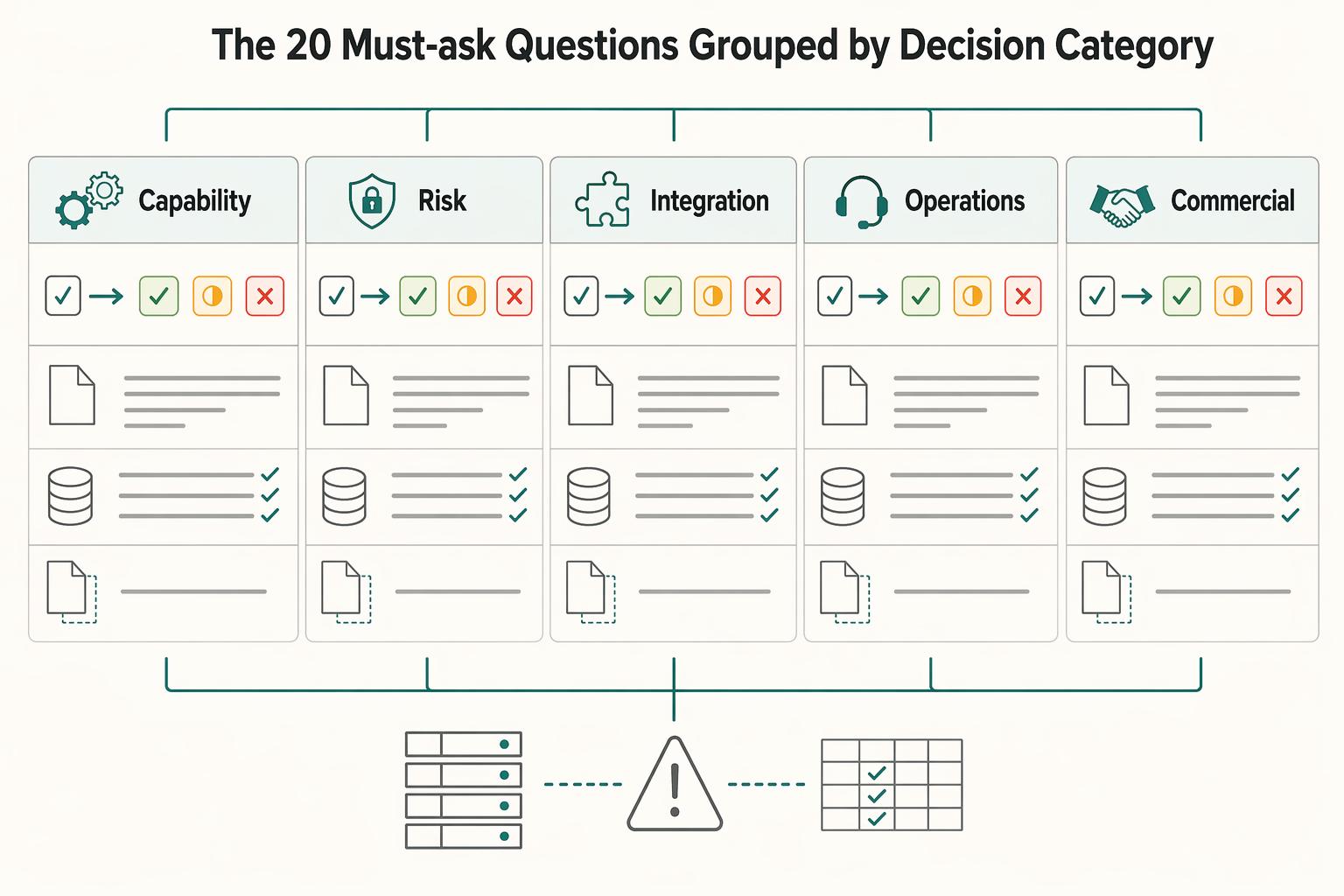
Once scope is fixed, use one scoring format across 20 closed questions in five blocks: capability, risk/compliance, integration, operations, and commercial terms. Require every answer to be tagged confirmed, partial, or unsupported, with evidence attached. Score in the same buckets you use to decide; public RFPs commonly formalize this with an evaluation criteria/selection committee section.
| Category | Focus | Evidence |
|---|---|---|
| Capability | Countries, currencies, payout rails, full-stack coverage, alternative payment methods, pay later support | Use a country-by-country capability matrix and mark roadmap-only items as future phase |
| Risk/compliance | Sanctions control ownership, monitoring points, exception handling, retained evidence | Require an operating model and sample audit evidence tied to actual decision steps |
| Integration | Payout initiation, updates, final status, webhook events, duplicates and retries, change impact when a corridor or provider is added | Be explicit about integration boundaries in the RFP itself |
| Operations | Volume patterns, failure states, retry rules, reprocessing options, reconciliation outputs, audit trail | Ask for exports, failure-code lists, and status history |
| Commercial | Foreign exchange handling, fees for failed, returned, cancelled, or manually reviewed payouts, SLA commitments and remedies, assumptions and exclusions | Confirm provider posture explicitly |
Use the same response-control rule in every block: direct answer, status tag, evidence, and addenda for any wording change so all bidders respond to the same version.
Capability questions that expose real delivery#
- Which of our required countries, currencies, and payout rails are live today, and which are limited or dependency-based?
- What is included in your full-stack payment processing solution versus handled by a third party or separate contract?
- Which alternative payment methods are supported in our named markets, and do they use the same reporting and controls as bank payouts?
- Where are pay later options actually supported now, and what is explicitly out of scope or a future phase?
Use a country-by-country capability matrix, not narrative claims. If something is roadmap-only, mark it as future phase rather than present capability.
Risk/compliance questions that pin down control ownership#
- Who owns sanctions controls, screening decisions, and the final decision to release or hold a payout?
- At which points in the payout lifecycle do you monitor transactions or counterparties, and what events trigger review?
- What is the exception-handling path for possible matches, false positives, or missing data?
- What evidence is retained for each hold, release, override, or escalation decision?
Do not accept generic "compliant" statements. Require an operating model and sample audit evidence tied to actual decision steps.
Integration questions that make dependencies visible early#
- How is a payout initiated, updated, and confirmed from your API through final status?
- Which webhook events or status payloads will we receive, and can you provide samples?
- How do you prevent duplicates and handle retries when our platform resends a request?
- When a new corridor or provider is added, what changes in our integration, status mapping, or reporting outputs?
Be explicit about integration boundaries in the RFP itself. Public RFP Q&A can be this direct, for example explicitly stating no vendor POS integration, and your payout scope should be equally unambiguous.
Operations questions that prove the partner can run at scale#
- What volume patterns can you support for payouts at scale, including batch spikes and same-day peaks?
- What are your failure states, retry rules, and reprocessing options for rejected or timed-out payouts?
- Which reconciliation reporting outputs do you provide for settlement, fees, returns, and status changes?
- What audit trail lets us trace one payout request from submission through final outcome?
Ask for exports, failure-code lists, and status history, not just dashboards. Finance and Ops should be able to reconcile and explain outcomes without escalation.
Commercial questions that remove hidden cost and service ambiguity#
- How is foreign exchange handled, including rate timing, disclosure, and any separate fee components?
- Which fees apply to failed, returned, cancelled, or manually reviewed payouts?
- What service-level agreement commitments apply to support response, incident handling, and payout issue resolution, and what remedies are contractual?
- Which assumptions, exclusions, or bidder updates could change your commercial response after submission?
Also confirm provider posture explicitly. If you are provider-agnostic, say so; if not, make required-provider constraints explicit so proposals are priced against the right model.
We covered this in detail in Bank-Rejected Contractor Payout Recovery for Platform Teams.
Want a quick next step? Try the free invoice generator.
Build the scoring matrix and evidence pack before responses arrive#
Decide how answers will be judged before proposals arrive, or you will end up scoring presentation quality instead of delivery risk.
Separate hard gates from scored differentiation#
Use the same structure many public RFPs use: Evaluation Criteria, Mandatory Requirements, Minimum Qualifications, and Contents of Proposal. Put non-negotiables in pass/fail rows, and score only areas where two acceptable vendors can still differ.
Do not let a bidder average away a hard failure. If an item is mandatory for launch, it must stand on its own as pass/fail before any weighted scoring discussion starts.
Define the evidence pack in the proposal contents#
Set evidence requirements in the proposal contents up front, not later by email. Keep evaluation rules and submission requirements separate so reviewers can score against the same artifacts.
| Artifact | What it should include |
|---|---|
| Architecture diagram | Integration touchpoints and third-party dependencies |
| Sample webhook events or status payloads | Samples that let Engineering trace one payout from request to final status |
| Failure-code catalog | Plain-language meanings |
| Sample reconciliation reporting exports | Settlement, fees, returns, and status changes so Finance can verify month-end matching |
For a global payout platform, require evidence by section, not generic attachments. Judge usability, not file count. Those artifacts should let Engineering trace one payout from request to final status, and let Finance verify month-end matching.
Score closed questions first, then test depth#
Score closed questions first for comparability, then use open questions to test operational depth and vendor-neutrality claims. Closed questions should map directly to confirmed, partial, and unsupported so reviewers are not inventing scales in the room.
If narrative and evidence conflict, score to evidence and flag the claim. For example, if a bidder says "no impact" when adding a corridor or provider, but submitted diagrams or sample events show dependency changes, treat that as a red flag.
Test integration and architecture risk before shortlist decisions#
Test integration risk before you shortlist vendors, not during finalist demos. Use the RFP process to verify how the solution is structured, where dependencies sit, and what changes when your scope changes.
Use a draft phase to surface architecture risk early#
NASA's Draft Request for Proposal (DRFP) model is useful because draft feedback can refine the final solicitation structure before it is locked. Use that window to test whether your technical questions are clear enough to expose real delivery risk.
Ask for feedback on scope, not just pricing or terms. Treat the equivalent of the Performance Work Statement as the core artifact, then require vendors to comment on ambiguities, dependency assumptions, and implementation boundaries. If draft feedback does not improve your final requirements, your RFP is likely not pressure-testing architecture risk yet.
Turn architecture review into a scenario task#
Do not accept slideware as architecture proof. NASA included illustrative task orders for different challenge classes; use the same pattern by giving vendors a realistic scenario and asking them to map how their system handles it.
Require concrete evidence:
- an architecture diagram with your integration touchpoints and third-party dependencies
- a written sequence showing system handoffs through the scenario
- a change-impact note describing what must change when inputs, providers, or integration conditions change
Score traceability over presentation quality. If ownership and handoffs are unclear, the integration risk is still unresolved.
Treat extensibility as a breakage test, then gate shortlist eligibility#
The VA RFI language highlights a practical integration test: can the solution ingest data from multiple sources. Use that as a breakage question and ask what changes in mappings, validation, and reporting outputs when data inputs expand.
Then separate hard gates from scored criteria. INPRS-style structure is useful here: keep Mandatory Minimum Qualifications distinct from Scope of Services so baseline integration requirements stay pass/fail and cannot be offset by stronger narrative answers.
For a step-by-step walkthrough, see How to Hedge FX Risk on a Global Payout Platform.
Pressure-test compliance and operational controls by market#
Treat control ownership as a scored contract item, not a demo talking point. In your Request for Proposal (RFP), require each bidder to state in writing who performs market-level checks, who can block or release payouts, and which responsibilities stay with your team versus the payments partner.
Put ownership in one written artifact#
Ask for a responsibility matrix by market covering sanctions controls, exception review, escalation, and approval rights. If Legal, Ops, and Finance cannot all point to the same artifact, your control model is still unclear.
Use formal Q&A deadlines to close gaps before scoring. In one public RFP example, questions close on February 4, 2026 2:00PM EST and February 10, 2026 2:00PM EST, with proposals due February 16, 2026 2:00PM EST.
Pressure-test edge cases in the proposed SLA workflow#
Test delayed screening, false positives, and manual override requests against the bidder's written process. Ask for queue ownership, timestamps, approval records, and what operators can see before they act.
Score down answers that stay at "centralized compliance" language but do not show a documented path for pending reviews and override approvals.
Control policy changes across multi-geography operations#
Require bidders to explain how policy updates are communicated, versioned, and rolled out across markets. Keep those changes in official addenda or bid amendments so the scored response reflects the current requirement set.
Require final control responses through the stated electronic submission channel, and clearly mark superseded versions. That keeps late revisions from drifting outside the official record. For adjacent operations work, see How to Leverage Cloud Spend Management for a Global Payment Platform.
Compare commercial models and make a go or no-go call#
Make the go or no-go decision only after commercial terms are written in a format you can score, not explained in sales narrative. Once control ownership is documented, test whether the commercial model still works under your real operating conditions.
Separate commercial answers into the same buckets you will score#
Keep Pricing, Proposal Validity, and Evaluation Criteria as distinct response sections. Temple Terrace RFP 26-003 uses that structure with 1.4.4 Pricing, 1.4.5 Proposal Validity, and 1.11 Evaluation Criteria, and it makes commercial review cleaner.
In your commercial schedule, require bidders to state treatment and assumptions for foreign exchange, exception work, support access, and any SLA remedy terms in writing. If high-frequency items are left as "custom" or "post-award," treat the response as incomplete.
Run two volume cases before negotiation closes#
Use one launch-case scenario and one growth-case scenario so you can compare how the same proposal behaves under different operating loads. If economics only work at future scale, negotiate phased terms now and anchor them to clear triggers inside the proposal validity window or contract draft.
Durham's Compensation Amount and Schedule section is a useful model: amount and timing belong in the formal response, not in verbal follow-up.
Make the final call with one checkpoint table#
| Checkpoint | What must be true | No-go signal |
|---|---|---|
| Capability fit | Required countries, rails, and payout operations are confirmed in writing | Coverage is broad but not tied to your scope |
| Risk fit | Compliance ownership, exception handling, and approval rights are contractable | Key controls are still described only in calls or slides |
| Integration risk | Core payout lifecycle and failure handling are documented clearly | Critical behaviors are deferred to post-implementation design |
| Finance control readiness | Finance can validate activity from bidder outputs with clear field definitions | Reporting detail is deferred, partial, or ambiguous |
If capability is strong but finance control readiness is weak, treat that as a no-go until the gap is closed in writing.
Conclusion#
If you want a decision you can defend months after launch, keep the closeout simple and strict. Define non-negotiables first, ask evidence-backed questions, and use clear pass/fail gates before commercial negotiation starts.
Confirm scope, requirements, and owner#
Before you compare vendors, make sure your team is scoring the same request type and scope. Clarify whether you are running an RFP, RFI, or RFQ, then document required coverage and named owners across Product, Engineering, Finance, and Ops. Your checkpoint is simple: each must-have requirement has an owner and a decision label such as required now, future phase, or out of scope.
A common risk is broad language that different bidders interpret differently, so scoring stops being comparable.
Finalize the scoring matrix and required evidence pack#
Your scoring matrix should separate hard gates from differentiators. If a requirement is mandatory, do not let it get averaged away inside a weighted score. For the rest, require evidence tied to each answer.
A good check here is one row per requirement with three fields attached: pass or fail rule, score rule, and required artifact. If the response narrative says "supported," but the evidence pack is missing or vague, score to the evidence and mark a red flag. For substantive claims, require supporting data and relevant case studies.
Run shortlist reviews against real scenarios#
Do not keep the review on the happy path. Use one standard script and ask each bidder to show the same workflow end to end, including how exceptions are handled and surfaced in operational outputs.
This is where your question set becomes useful as an operating filter, not a writing exercise. If a bidder cannot show how the process works in practice, the risk is real even if the commercial terms look attractive.
Complete a cross-functional go or no-go review#
Bring Product, Engineering, Finance, and Ops into one final review and force an explicit decision. If one function is carrying unresolved risk, treat that as a no-go until the gap is closed or formally accepted. A clean shortlist should survive technical scrutiny, operational scrutiny, and finance control scrutiny at the same time.
Approve only when submission and contract terms are explicit#
Good RFP discipline matters at the end as much as at the start. Public procurement examples show why: some issuers reject late proposals, require all pages marked for return, or disallow hand-delivered, faxed, or emailed proposals; another requires electronic submission through DynamicForms for that specific process. Use that same discipline in your own process. State exactly what must be submitted, in what format, and by what deadline. Then hold approval until contract terms, control ownership, and reporting outputs are written clearly enough to enforce.
Frequently Asked Questions
What makes a global payout platform RFP different from a generic software RFP?
A payout-platform RFP needs clearer operating scope and compliance detail than a generic software RFP, because cross-border selection can involve varying regulations and complex integrations. At minimum, your Request for Proposal should clearly state business goals, challenges, timeline, budget, and vendor questions, then map those to the operating scope vendors are expected to support.
Which questions are true non-negotiables versus nice-to-haves?
Treat non-negotiables as requirements that must be met. Public RFP examples show why this matters: some capabilities can be explicitly out of scope, and some can be deferred to a future phase. Ask vendors to label each requested capability as supported now, future phase, or not offered.
How should we verify payout reliability claims instead of trusting vendor slides?
Do not score reliability from slides alone. Require evidence in the submitted response, then check whether the written claims and submitted materials are consistent; if they conflict, treat the claim as unproven. Use objective submission controls as well, since timestamped electronic receipt has been used in a public RFP Q&A to confirm deadline compliance.
What should Engineering ask that Finance or Procurement usually misses?
Instead of splitting questions by function, keep one shared set that covers both compliance and integration risk. Cross-border vendor selection can involve varying regulations and complex integrations, so your questions should test both areas directly and require clear written responses.
When should we run an RFI before an RFP?
A practical approach is to use an RFI when scope is still unclear, then move to an RFP once you can clearly state goals, challenges, timeline, budget, and vendor questions.
How do we evaluate FX and settlement terms without overfitting to one market?
Ask bidders to state assumptions clearly and compare proposals against your defined scope, timeline, and requirements.
Try a related tool
Researched and edited by the Gruv editorial team. Gruv builds cross-border billing, payouts, and finance-operations software for global businesses.
Sources
- bidcondocs.delaware.gov/DOE/DOE26003-WEB_RECRUIT-rfp.pdftrusted
- clark.wa.gov/sites/default/files/2024-12/_rfp-910-eng-con...trusted
- cornyn.senate.gov/wp-content/uploads/2026/03/80JSC026R0014Draf...trusted
- courts.ca.gov/system/filestrusted
- dam.assets.ohio.gov/image/upload/procure.ohio.gov/pdf/7142021142...trusted
- durhamnc.gov/DocumentCenter/View/63154/Enterprise-Archite...trusted
- durhamnc.gov/DocumentCenter/View/20549/Employee-Performan...trusted
- humanservices.arkansas.gov/wp-content/uploads/710-24-0013-Solicitation-...trusted
Educational content only. Not legal, tax, or financial advice.
Related Posts
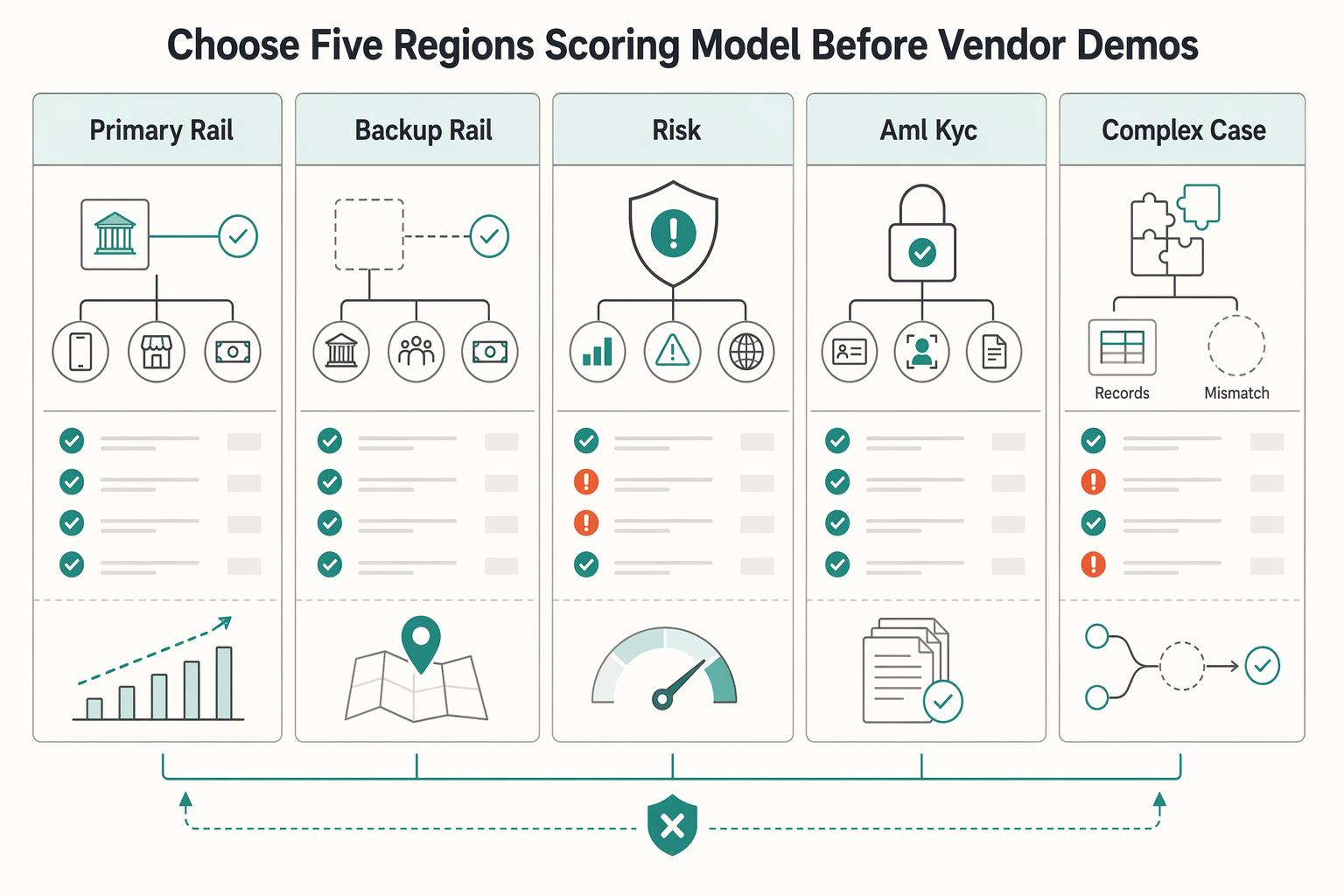
How Platforms Should Prioritize 5 Emerging-Market Payout Regions
If you are choosing where to launch cross-border payouts in 2026, start with what your team can actually run. Too many "top" lists lean on hype or market-cap tables. That may work for headlines, but it does not help with execution.
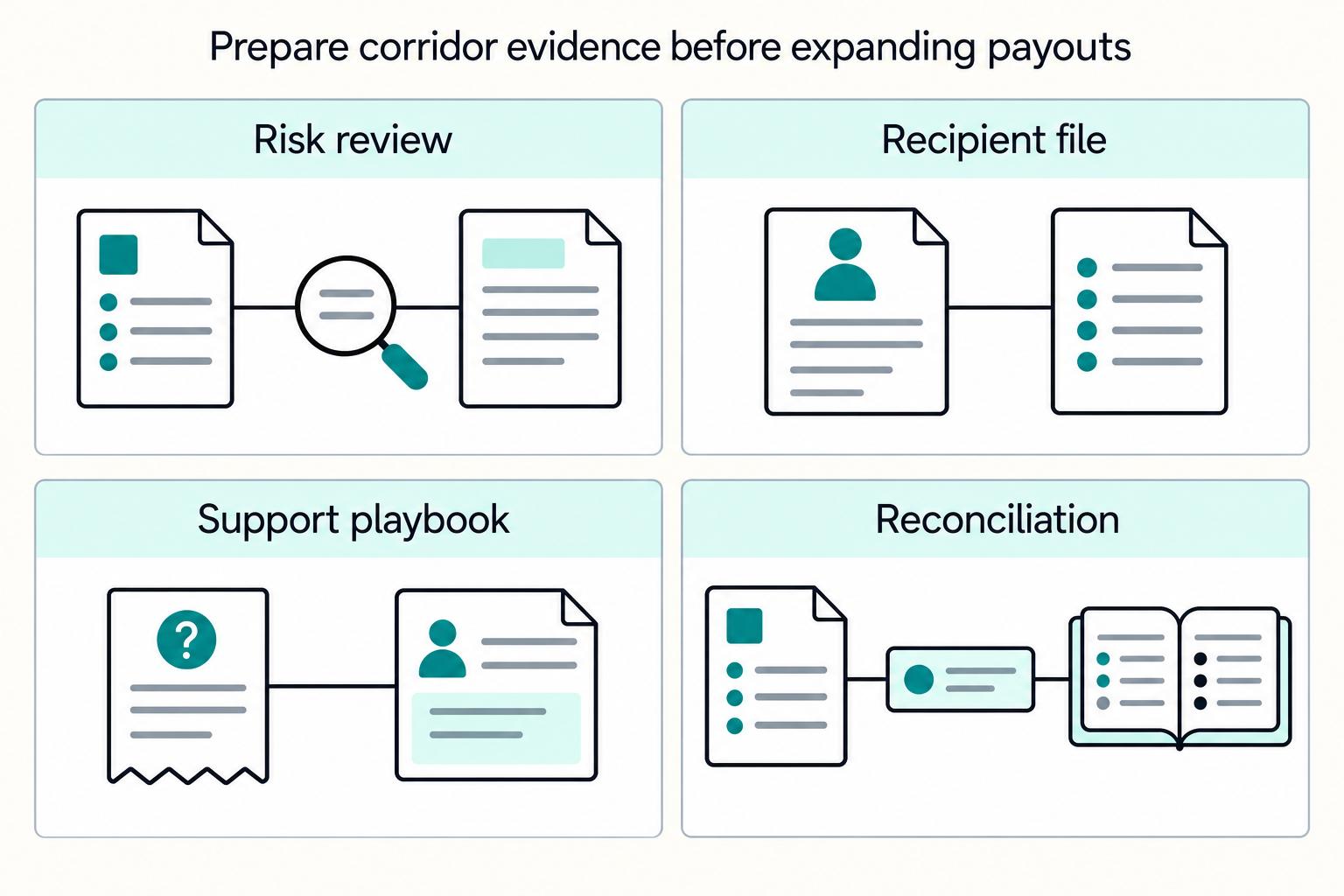
Scaling a Global Payout Platform from 100 to 10000 Monthly Payments
Scaling a global payout platform is rarely just a vendor problem. More often, it is an infrastructure and operating-discipline problem, because cross-border payments still carry persistent issues around cost, speed, access, and transparency. If growth is framed as "one more provider" or "higher API throughput," breakpoints can show up in finance, support, compliance, and reconciliation.
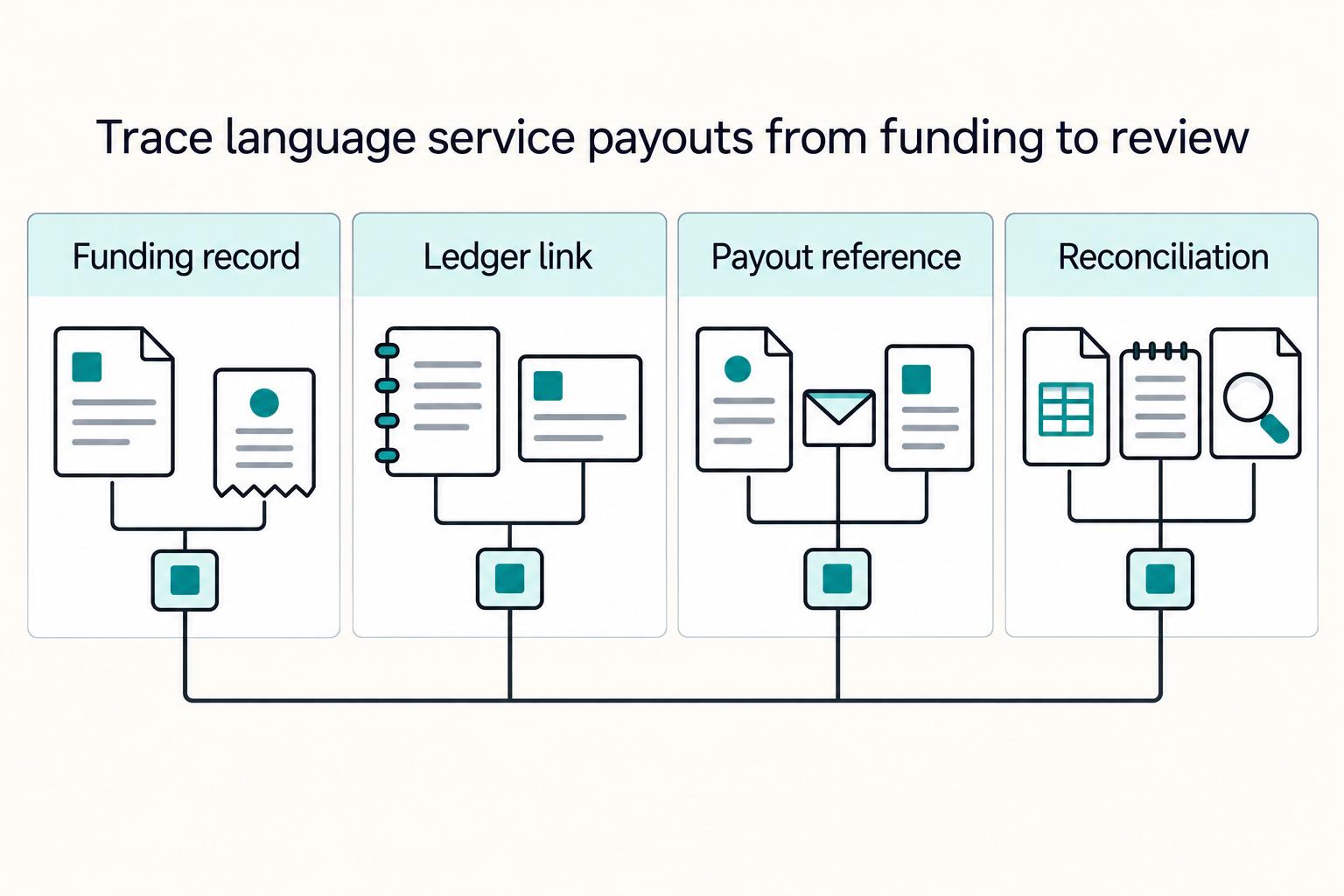
Pay Translators and Interpreters Globally for Language Services Platforms
Use Indeed, ZipRecruiter, and Vaia Talents for market signal only: they help you gauge demand and pricing, but they do not tell you how to run cross-border payouts.