
Quick Answer
Start with controls, then automate: standardize the MSA, SOW, rate card, and rebate agreement, map those terms into versioned rules, and separate accrual, payout approval, and settlement status. Assign owners for rule changes and exception recovery across finance, product, and engineering before vendor rollout. A reliable setup proves one line can be traced through agreement ID, matched transaction, approval record, payout reference, and ERP posting.
Rebate automation is now an execution problem, not a feature checklist#
Treat rebate automation as an operating problem before you treat it as a software search. The challenge is not only finding a tool that can calculate a rebate. It is running payout and disbursement processes without weakening control over accruals, auditability, and reconciliation as volume grows.
Step 1. Define the real constraint. Most teams start with vendor comparison pages and feature grids. Rebate software can track sales and purchases, calculate rebates, manage payouts, and record agreements, but production risk usually shows up in the handoffs between those jobs. Manual handling is where misleading accruals and inaccurate payouts can creep in, so start with a harder question: what must stay controlled as calculations turn into money movement?
Step 2. Set the decision standard before you look at demos. For this guide, the bar is simple: move from agreement design to live payout operations with a clear chain of records. Agreement terms, transaction matching, accrual logic, payout approval, and final disbursement status should connect. If finance asks why one payout line exists, your team should be able to trace the agreement version, qualifying transaction or sales record, accrual entry, and payout reference.
Step 3. Keep the scope narrow enough to be useful. This article is about B2B rebate software for marketplace, contractor, creator, and embedded payments platforms. In practice, these tools are often deployed as standalone products that integrate with ERP or CRM, not as isolated calculators. That matters because the real work is lifecycle orchestration, not just rules entry. If you run multiple partner programs, variable agreements, or payout timing requirements, the key question is whether your setup can manage the full rebate lifecycle with auditability, not whether one screen can display a percentage.
Step 4. Pressure test the parts vendor pages usually skip. Implementation can be difficult, so operating ownership and recovery paths matter as much as dashboard polish. One workable split is: finance owns accrual signoff and reconciliation criteria, product owns program behavior and exception policy, and engineering owns integrations and payout-state handling.
If a vendor pitch stays at the dashboard level, ask three direct questions: who approves rule changes, how failed payouts are recovered without duplicates, and what evidence is available for period-end review. That is why automation is most reliable when the operating setup is designed first.
What rebate automation must handle from contract to cash#
Rebate automation must run the full contract-to-cash lifecycle with control evidence at each step, or it will break under real operating volume.
| Requirement | What it covers | Evidence to keep |
|---|---|---|
| Convert agreements into usable system logic | Capture rebate terms in structured, versioned form | Identify which agreement version governed each eligible outcome |
| Match transactions to agreement terms before payout | Handle transaction-to-agreement matching and rules-based calculation | Trace each eligible purchase or sale to the applied terms, calculated result, and resulting accrual |
| Treat accrual, payout, and disbursement as separate states | Keep accrual, approved payable value, and settlement or payment movement distinct | Use an explicit settlement record that supports reconciliation |
| Use controls, not dashboards alone, as the standard | Tie reporting, audit trail, compliance tracking, and automated payout handling to end-to-end explainability | Show agreement terms, matched transaction, calculation, accrual entry, payout reference, settlement status, and posted ledger outcome |
- Convert agreements into usable system logic.
Capture rebate terms in structured, versioned form so you can identify which agreement version governed each eligible outcome.
- Match transactions to agreement terms before payout.
Transaction-to-agreement matching and rules-based calculation are core requirements. Each eligible purchase or sale should be traceable to the applied terms, calculated result, and resulting accrual, with policy gates for overlaps and exceptions before money moves.
- Treat accrual, payout, and disbursement as separate states.
Accrual records recognition, approval fixes the payable amount, and disbursement tracks the payment instruction and its outcome. Keep rebate-calculation settlement separate from bank settlement: a final or partial rebate calculation does not prove that money reached the recipient.
- Use controls, not dashboards alone, as the standard.
Real-time reporting, audit trail, compliance tracking, and automated payout handling are baseline capabilities. ERP/CRM visibility helps, but done means every payout line is explainable end to end: agreement terms, matched transaction, calculation, accrual entry, payout reference, settlement status, and posted ledger outcome.
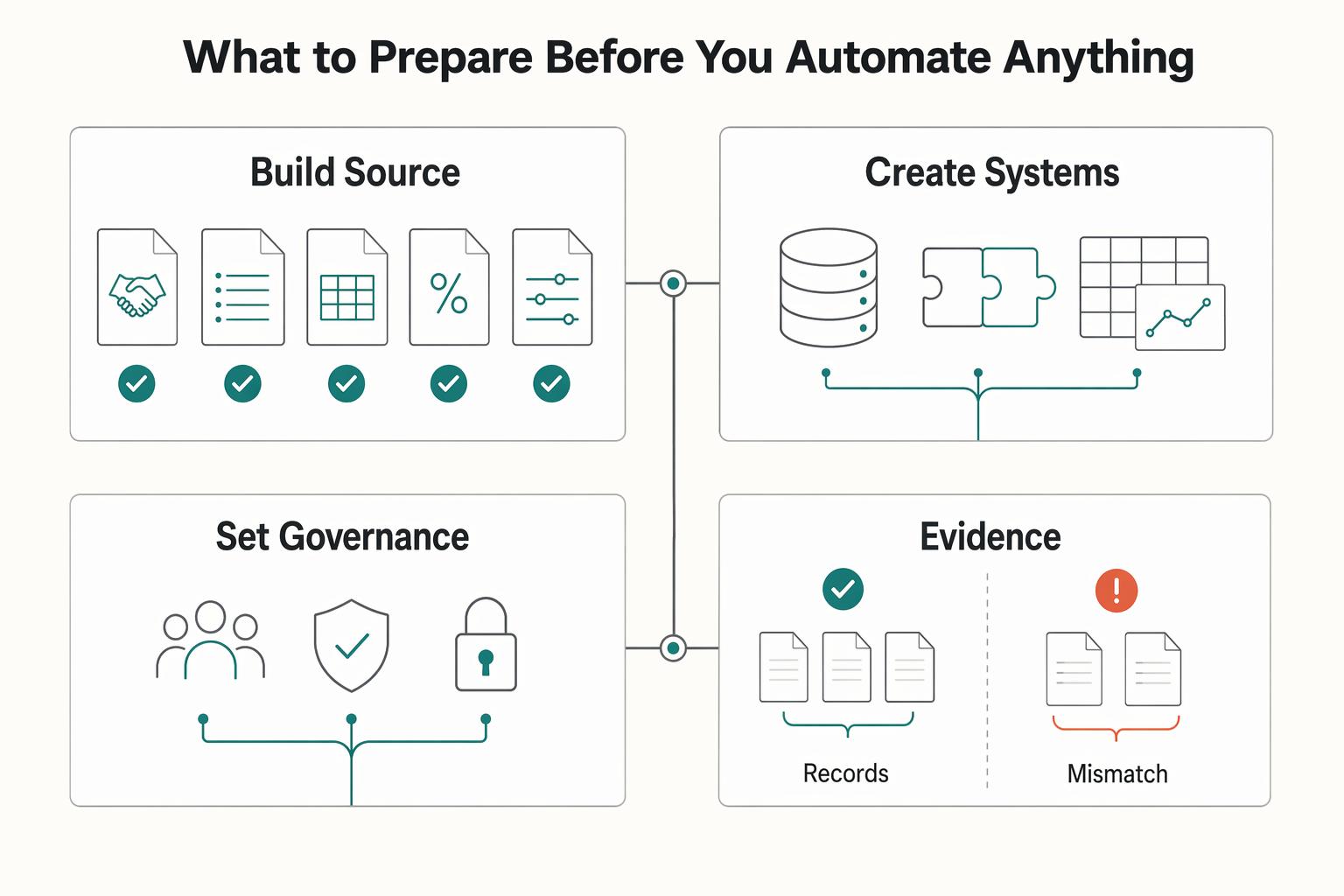
What to prepare before you automate anything#
Do not start configuration until your inputs are controlled. Rebate automation usually fails early when contract inputs, ownership, and success criteria are unclear.
| Prep area | What to assemble | Checkpoint |
|---|---|---|
| Gather your program documents before you map a single rule | Active MSA, current SOW, rate card, rebate agreement template, and exception policy | Keep one current version of each document with an owner and effective dates |
| Create a systems inventory with current handoffs and owners | ERP, CRM, payout rails, and each system's source-of-truth role for agreement data, transaction data, accrual, payout approval, disbursement status, and ledger posting | Trace one sample rebate line end to end without guessing who updates what |
| Set governance before rule changes start flowing | Formal approval control for rule and configuration changes, rebate accrual signoff each period, and dispute-resolution SLAs | Each change should show what changed, who approved it, and when it became effective |
| Define success checkpoints that produce evidence, not just status updates | Calculation accuracy on known samples, payout timeliness measured against your SLA response-time definition, and reconciliation closure between internal books and external records | Run a historical sample before go-live and confirm you can produce the evidence pack |
Step 1. Gather your program documents before you map a single rule. Collect the live documents for each rebate program: active MSA, current SOW, rate card, rebate agreement template, and exception policy. The MSA sets foundational relationship terms, and the SOW should define work details, period of performance, and deliverable schedule.
For every active program, keep one current version of each document with an owner and effective dates. If rate logic is split across PDFs, email approvals, and CRM notes, you are not ready to automate.
If your documents are still fragmented, normalize them first. This is where Vendor Contract Management for Platforms: How to Automate SOWs MSAs and Rate Cards is useful.
Step 2. Create a systems inventory with current handoffs and owners. List every system that touches rebate data or payout execution, then assign ownership for each handoff. At minimum, list ERP, CRM, and payout rails; in many stacks that includes SAP, Oracle NetSuite, Microsoft Dynamics, and Salesforce.
Do not stop at tool names. Mark each system's source-of-truth role for agreement data, transaction data, accrual, payout approval, disbursement status, and ledger posting. You should be able to trace one sample rebate line end to end without guessing who updates what.
Step 3. Set governance before rule changes start flowing. Define formal approval control for rule and configuration changes before go-live. Decide who approves rule edits, who signs off rebate accrual each period, and who owns dispute-resolution SLAs.
Make approvals visible in your audit trail. Each change should show what changed, who approved it, and when it became effective.
Step 4. Define success checkpoints that produce evidence, not just status updates. Use a short readiness scorecard: calculation accuracy on known samples, payout timeliness measured against your SLA response-time definition, and reconciliation closure between internal books and external records. Keep traceability so each result can be audited and investigated if mismatches appear.
Run a historical sample before go-live. Confirm calculated amounts match approved terms, payout timing is measurable, and reconciliation can close with supporting records. If you cannot produce that evidence pack, automation will scale disputes faster than it scales control.
If you want a deeper dive, read Tail-End Spend Management: How Platforms Can Automate Long-Tail Contractor Payments.
Choose your architecture before you choose a vendor#
Choose the architecture first, because it determines who controls rules, where audit evidence lives, and how payout recovery works when something fails. Make that call before vendor demos. If you expect frequent rule changes and money movement across multiple parties or entities, favor an API-first payout layer plus a dedicated rules-based calculation engine. If finance needs tight control in SAP or Oracle and engineering bandwidth is limited, an ERP-led path is still valid, with slower change cycles as the tradeoff.
Compare the three architecture paths against the work you actually need done#
Use three lanes in your short list: ERP-led customization, standalone B2B rebate management software, and an API-first embedded model connected to payouts. Standalone rebate tools are commonly deployed as separate products that integrate with CRM and ERP. ERP-led options tie rebate capability closely to ERP ecosystems such as SAP S/4HANA. API-first payout stacks are designed for platform and marketplace money movement across multiple parties. The comparison below describes design tradeoffs to test, rather than verified capability ratings for every product in each category.
| Path | Where it fits | Integration depth with CRM and ERP | Compliance tracking flexibility | Audit trail depth | Payout exception handling |
|---|---|---|---|---|---|
| ERP-led customization | Finance wants control anchored in SAP or Oracle | Strong inside ERP, often slower outside it | Good when policies follow ERP controls, less flexible for fast program changes | Usually strong for ledger-side evidence and approvals | Often workable, but recovery logic may be split across ERP and payout tools |
| Standalone rebate management software | You want a dedicated rebate layer without replacing core finance apps | Built to integrate with ERP and CRM | Usually better for evolving rebate terms and governed program operations | Typically strong when agreement, calculation, and approval history is visible | Varies widely, so test exceptions directly |
| API-first embedded model connected to payouts | You run a platform or marketplace and move funds across multiple parties | High when your team can connect CRM, ERP, and payout rails | High when paired with a flexible rules engine for tiers, thresholds, and conditions | Can be deep if rule versions, approvals, and payout states are recorded end to end | Strong fit when multi-party disbursement and retry logic matter |
Do not score only for calculation speed. Score for control depth too. A rebate line is not truly automated unless you can trace the agreement term, the rule version used, the approval, the payout reference, and the ERP posting outcome without stitching together evidence across teams.
Apply the two decision rules early#
If rebate terms change often, or commercial teams keep adding tiers, thresholds, and exceptions, treat a flexible rules engine as mandatory. That matters even more when rebates are paid across multiple entities or counterparties. In that case, an API-first model connected to payouts is usually a cleaner fit, because the money movement model already supports multi-party transfers while rules can evolve.
If finance requires governance inside SAP or Oracle, test an ERP-led path against your change-control process and available integration capacity. Measure how long an approved rule change takes and how exceptions reach the payout system; an ERP label alone does not determine that speed.
A standalone rebate product often sits between those two paths. It can be the right fit when you want a governed rebate layer without burying logic in ERP customizations. But do not assume it resolves payout complexity on its own. Some products are stronger in agreement control than in payout recovery.
Verify the architecture with one live scenario and one failure scenario#
Before selecting a vendor, run the same two tests across all three paths:
- Use one active rebate agreement with tiered terms and an exception memo. Ask each option to show where the rule is configured, how version changes are approved, and how the amount reaches ERP.
- Use one failed or reversed payout case. Ask where pending, failed, and settled states are stored, how duplicate payouts are prevented, and what evidence finance receives for reconciliation.
Your checkpoint is simple: trace one sample rebate line from CRM context to calculation logic to disbursement status to ERP record without ambiguity. A common failure mode is an architecture that demos well but splits exception handling across ERP, the rebate tool, and the payout rail, leaving no single system that can explain underpayment, holds, or duplicate payout events.
Build a rebate rule model your ops team can actually run#
Your rule model should make contract intent executable and explainable, not just produce an amount. If ops cannot show which contract term drove a payout line, the process is not truly automated.
Translate contract terms into executable rule objects#
Start from the documents that govern payment: the MSA, rebate agreement, and written exception terms. Convert each payable clause into explicit rule parts: eligibility, measurement basis, formula, timing, and exclusions.
Keep each rule tied to its source clause, owner, and version so teams can trace logic back to contract language. Oracle Business Rules highlights governance, versioning, and traceability in its rule stack, and that is a useful operating standard even outside Oracle. Avoid combining eligibility, tiers, and exceptions into one formula, because split rules are easier to test, change, and explain.
Set rule priority before you load live data#
Define rule priority explicitly so overlapping logic resolves in a deterministic order. Priority-based evaluation is a documented mechanism, so encode your precedence policy in the engine instead of relying on implicit behavior.
Test this with historical transactions that could match multiple rules. The engine should show which rule applied, which rule did not, and why. If that outcome is not clear, reconciliation will be fragile.
Verify outputs and require explainability on every payout line#
Validate the model with sample historical runs and edge cases before go-live, then use a finance and product checkpoint on line-level explanations. Focus on whether each payout can be understood and defended, not only whether totals look right.
Each payout line should include a traceable rule path and audit-trail fields such as agreement ID, rule version, source transaction or aggregate reference, calculation timestamp, approver, and payout reference. Salesforce documents configurable predefined flows for rebate calculations and explicitly calls out traceability with Rebate Member Aggregate Items. That is the bar: not just the result, but the path that produced it.
If a tool shows only final amounts without rule paths and change history, month-end teams will still reconstruct answers manually. Test an exception as well as a routine calculation so the export explains adjustments and approvals.
Implement disbursements with controls for real-world failures#
Once a payable amount is approved, disbursement should execute against that fixed amount rather than recalculate. Use a fixed order every time: freeze the accrual period, approve the payable amount, execute the payout, then post final settlement status. If you change that order, reconciliation and dispute handling both get harder.
Freeze and approve before money moves#
Treat period freeze as a control gate. Lock the transaction set, rule version, and approved payable amount before any payout is created so finance signs off on one stable number.
Make the pre-release check line-level and mandatory: agreement ID, rule version, approved amount, approver, and payout reference. If a file or API request can go out without those fields, you lose a clean audit trail when exceptions happen.
Provider acceptance confirms an instruction, not receipt by the payee. Track pending, completed, failed and returned or reversed outcomes separately. Reconcile the provider record with bank or settlement evidence, and retain later returns rather than treating a completed status as irreversible finality.
Make retries safe and status changes explicit#
Idempotency is the core reliability control. Use one unique idempotency key per intended rebate disbursement and persist it with the payout reference so retries do not create duplicates.
After an ambiguous timeout, query the provider and retry only under its documented idempotency contract using the same key and parameters. Persist an internal disbursement intent independently of provider key retention. A corrected reissue after a confirmed failure needs a separately linked attempt and the required approval; do not create a fresh payment merely because a response was lost.
Define allowed payout transitions up front, including pending, failed, reversed, and settled/paid. Also plan for non-linear outcomes, including cases where a payout appears paid and later fails after bank refusal. For each exception, keep an evidence pack: provider payout reference, idempotency key, status event history, and finance posting reference.
Assign owners for predictable failure recovery#
Failure recovery must be owned before launch, not during month-end close. Payment operations includes resolving failures and returns, reconciling to bank statements, and booking to the general ledger, so ownership has to be explicit across ops, finance, compliance, and engineering.
| Trigger | Owner | Evidence required | Recovery action |
|---|---|---|---|
| Returned payout | Payments ops | Provider payout reference, status event history, bank return detail, ACH return reason code if applicable | Move payout to failed or reversed, stop auto-reissue, validate payee details, then resubmit only after correction and new approval if required |
| Compliance hold | Compliance with finance ops informed | Hold reason, case or review reference, beneficiary details, original approval record | Keep payout in pending hold state, block release, document disposition, then either release or cancel and post final status |
| Partial settlement mismatch | Finance ops with engineering support | Approved payout batch, provider event log, bank statement extract, general ledger posting reference | Reconcile line by line, isolate unmatched items, reverse or adjust affected records, then repost final settlement status only when totals match |
Stress-test these controls before launch with realistic failures: one timeout after submit, one returned payout with an ACH return reason code, and one provider-versus-bank mismatch. That is the fastest way to confirm the process is operable in production.
Connect ERP and CRM without breaking reconciliation#
Reconciliation stays reliable when each system has a single financial role. Keep ERP as the financial system of record, CRM for partner context, and the rebate engine for calculation logic. If CRM can change approved payable amounts after period freeze, reconciliation drift is likely.
Set hard integration boundaries first#
Set boundaries before field mapping. A system of record is the authoritative source for its business domain, so document that explicitly in both system design and operating procedures.
| System | Owns |
|---|---|
| ERP | Accruals, journal postings, settlement status |
| CRM | Partner context and relationship history |
| Rebate engine | Rule execution and rebate calculations |
Use one practical control: after period freeze, CRM can inform finance fields but not finalize them. Validate this with a line-level check: one approved rebate line should match between rebate engine output and ERP amount, with no CRM field acting as the final source for money movement.
Define a data contract that survives system boundaries#
Cross-system traceability depends on persistent identifiers that travel across boundaries. You do not need one universal field set for every stack, but you do need stable IDs across CRM, rebate engine, payouts, and ERP.
Keep these identifiers consistent across every hop:
- transaction ID or source transaction reference
- agreement ID
- payout reference
- accrual state and settlement state
- ERP posting reference once booked
Most failures here come from identity drift, not formula errors. Add a release trace test: start from a payout event or bank line and confirm you can trace back to the ERP posting, approved accrual, and originating agreement without manual guesswork.
Run close as two reconciliations, not one#
Close should run as two reconciliations: first accruals versus paid amounts, then paid amounts versus ERP journals and the general ledger. This aligns with finance control practice of reconciling the general ledger to core subledgers.
Keep approved accrual reports, payout references, exception logs, ERP journal references and reviewer signoff as period-end evidence. Match approved amounts to provider and bank records, then reconcile the financial subledger to the general ledger. Microsoft Dynamics 365 Finance provides an account reconciliation workspace; verify availability and configuration in your deployed version.
Set retention according to the records, contracts and legal obligations that apply to your program. Keep the calculation version, approval and reconciliation evidence together; a university accounting policy does not establish a general B2B retention period.
Need the full breakdown? Read Document Management for Accounting Firms: Secure Intake, Retrieval, Retention, and Automation.
Common mistakes that create disputes and revenue leakage#
Most disputes and leakage come from control gaps before disbursement, not from the payout rail itself.
| Mistake | Risk | Recovery |
|---|---|---|
| Automating payout before agreement data is normalized | Weak agreement data undermines payout accuracy from the start | Normalize agreement terms first, then move to production disbursements only after transaction-to-agreement matching is reliable |
| Running operations on one black-box KPI | Exceptions and mismatches can accumulate underneath | Track calculation variance, exception volume, and reconciliation aging separately, and review open exceptions, addressed exceptions, and auto-reconciled items as distinct signals |
| Allowing ad hoc edits to the rules engine | Control integrity and auditability break quickly | Use formal change control for rule updates, including versioned releases, approvals, and effective-date discipline |
| Treating compliance as an afterthought | In regulated flows, payout decisions can be detached from policy checks | Bind eligibility to compliance controls where supported, and retain clear decision evidence for holds and releases |
-
Mistake: Automating payout before agreement data is normalized. Incorrect contract terms can produce inaccurate accruals and payments even when the payout integration works. Match purchases or sales to the approved agreement version before releasing funds.
-
Recovery: Normalize agreement terms first, then move to production disbursements only after transaction-to-agreement matching is reliable.
-
Mistake: Running operations on one black-box KPI. One headline metric can look healthy while exceptions and mismatches accumulate underneath.
-
Recovery: Track calculation variance, exception volume, and reconciliation aging separately, and review open exceptions, addressed exceptions, and auto-reconciled items as distinct signals.
-
Mistake: Allowing ad hoc edits to the rules engine. If production logic changes without governance, control integrity and auditability break quickly.
-
Recovery: Use formal change control for rule updates, including versioned releases, approvals, and effective-date discipline.
-
Mistake: Treating compliance as an afterthought. In regulated flows, payout decisions should not be detached from policy checks.
-
Recovery: Bind release to the compliance checks applicable to your entities and payment flow, retain hold and release evidence, and document the provider/platform duty split. Bank-specific AML program requirements are not a universal rebate-platform mandate.
Start with control points, then scale volume#
Teams that execute rebate automation well run it as a controlled system, not a one-time tool purchase. Before you scale volume, every control point should have a named owner and evidence you can review.
Use this launch checklist as a gate: if an item does not have a clear document, owner, and verification step, hold volume.
- Normalize contract inputs before calculation.
Treat the rebate agreement, MSA, SOW, and rate card as one intake set, not separate files managed in different lanes. The MSA sets baseline relationship terms, and the SOW defines execution details, so mismatches across these documents create downstream payout risk. Verification point: confirm one live program reads the same commercial terms consistently across all four documents. If terms conflict, fix that before first disbursement. For prep work, see Vendor Contract Management for Platforms: How to Automate SOWs MSAs and Rate Cards.
- Confirm architecture boundaries and owners.
Make build-vs-buy explicit, then define system boundaries and ownership. Rebate tools are often standalone and integrated with CRM and ERP, so ownership decisions matter as much as feature decisions. Verification point: document who owns rule changes, who owns ERP posting/close impact, and who owns payout execution.
- Prove calculation, accrual, and payout checkpoints with audit evidence.
Run one sample rebate end to end, then export the evidence pack. You should be able to show agreement version, matched transaction, calculated amount, approval state, and payout/settlement status for a single payable line. Verification point: finance can review that line without pulling engineering logs or stitching email history.
- Lock reconciliation and exception recovery before scaling.
Real-time reporting helps operations, but it does not replace period-end reconciliation. Define a reconciliation cycle that checks completeness and supports external audit review, then add payout-level reconciliation so you can verify which transactions were included in each settlement batch. Verification point: document exact recovery steps for failed, reversed, or partially mismatched payouts. If recovery is still manual and undefined, do not scale yet.
You might also find this useful: Merchant of Record for Platforms and the Ownership Decisions That Matter.
Frequently Asked Questions
What does rebate automation actually automate in practice for platform teams?
At a minimum, it should centralize rebate and deduction transactions so your team can create, review, and process them in one place. In practice, that means matching each purchase or sale to the right agreement, calculating the rebate accrual, and handling payout processing after invoicing rather than treating it like an upfront discount. If a product only gives you a dashboard and exports, it is not automating the hard part.
What are the minimum capabilities a credible B2B rebate management software stack must include?
The hard floor is transaction-to-agreement matching, automated rebate calculation, and automated payment processing for payout. You also want an audit trail that lets finance trace each payable line back to the governing agreement and matched transaction. A quick check is simple: ask the vendor to trace one sample transaction all the way from agreement match to posted payout status without leaving the product.
Why do spreadsheet and ERP add on approaches fail as rebate complexity grows?
Spreadsheets are a known replacement target because they are disconnected and usually require manual handoffs instead of one central workflow for agreements, calculations, and processing. ERP add ons can still work for simpler programs, but they can get harder to operate when your team needs frequent rule changes, partner exceptions, and payout handling across multiple owners. A common failure mode is operational drag: slower change control, thinner explainability, and manual reconciliation work piling up.
How can we evaluate vendors quickly when pricing and rollout timelines are unclear?
Run a scenario test with the same agreement, sample transactions and exception case for each vendor. Ask for agreement matching, calculation output, payout processing and the operator view of failure recovery. Treat category listings as discovery aids; verify the required workflow in the actual product and integration.
What should finance ask for to verify audit trail quality before go live?
Ask for one exported evidence pack for a single payout line. It should show the governing agreement, the transaction or sale matched to it, the calculated amount, approval or review status, and the final payout or settlement status. Red flag: if finance has to stitch that story together from email, ERP notes, and a separate payout tool, your audit trail is not ready.
How should engineering design retries so a failed rebate disbursement does not create duplicates?
Use a stable key for retries of the same intended request where the provider supports idempotency. Stripe can prune keys after at least 24 hours; reuse after pruning can create a new request, and saved results can include errors. Keep a durable internal intent record, reconcile ambiguous outcomes and test timeout recovery before allowing a new disbursement attempt.
Try a related tool
Researched and edited by the Gruv editorial team. Gruv builds cross-border billing, payouts, and finance-operations software for global businesses.
Sources
Includes 4 external sources outside the trusted-domain allowlist.
- bsaaml.ffiec.gov/manual/OfficeOfForeignAssetsControl/01trusted
- csrc.nist.gov/glossary/term/baseline_configurationtrusted
- docs.stripe.com/api/idempotent_requeststrusted
- oregon.gov/das/Procurement/Guiddoc/SOWDraftingTasks.pdftrusted
- 360insights.com/ecosystem-incentives-suite/b2b-rebatesexternal
- docs.oracle.com/en/cloud/saas/supply-chain-and-manufacturing...external
- enable.com/rebate-managementexternal
- help.salesforce.com/s/articleViewexternal
Educational content only. Not legal, tax, or financial advice.
Related Posts
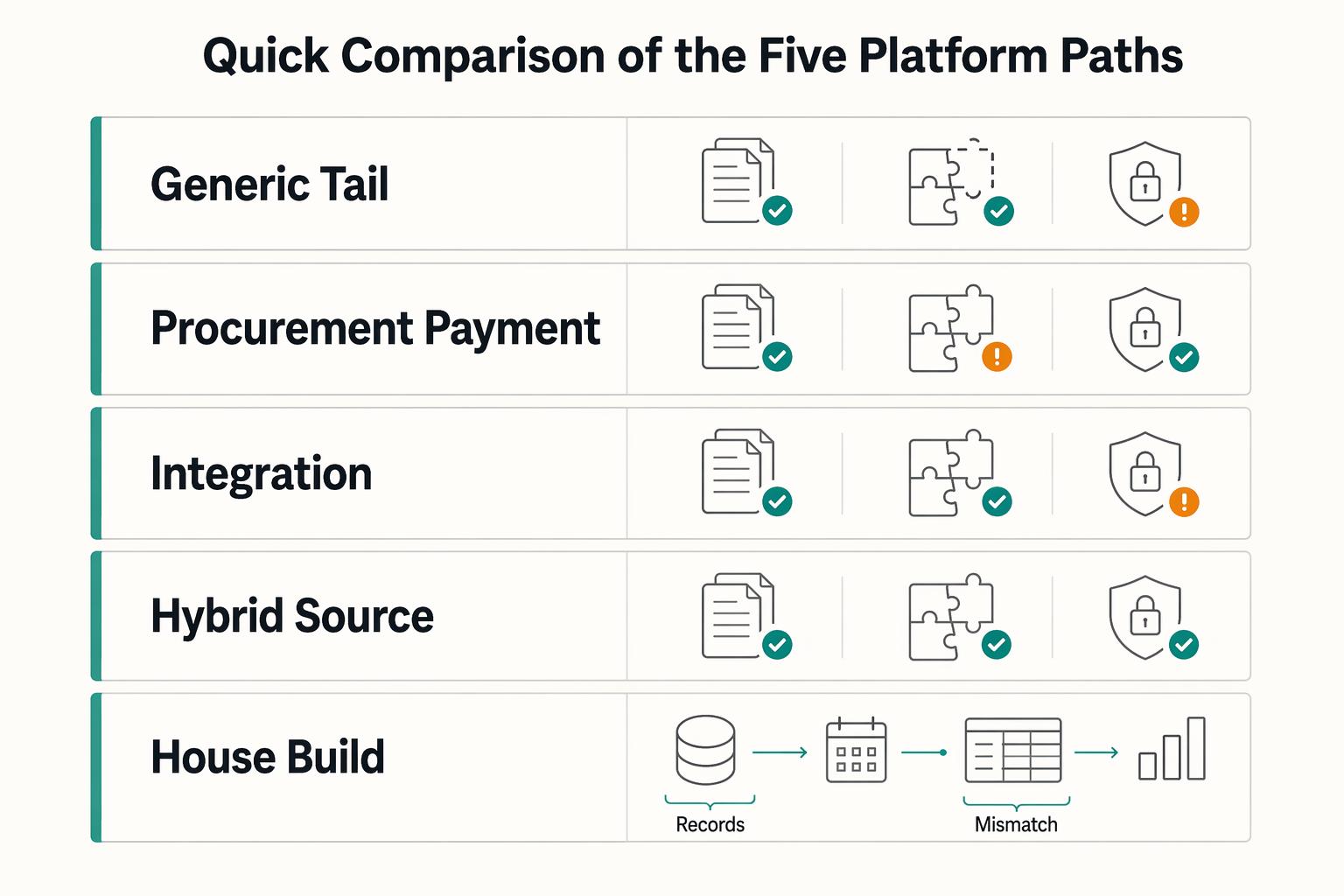
Choosing a Tail-End Spend Management Platform for Long-Tail Contractor Payments
Tail-end spend management can start to break down when long-tail contractor payouts begin to scale. Tools built for low-value, low-visibility procurement can tighten approvals and policy. They are not automatically built for payout-state tracking, retry safety, payout failures, or reconciliation evidence. That gap is the real decision here.
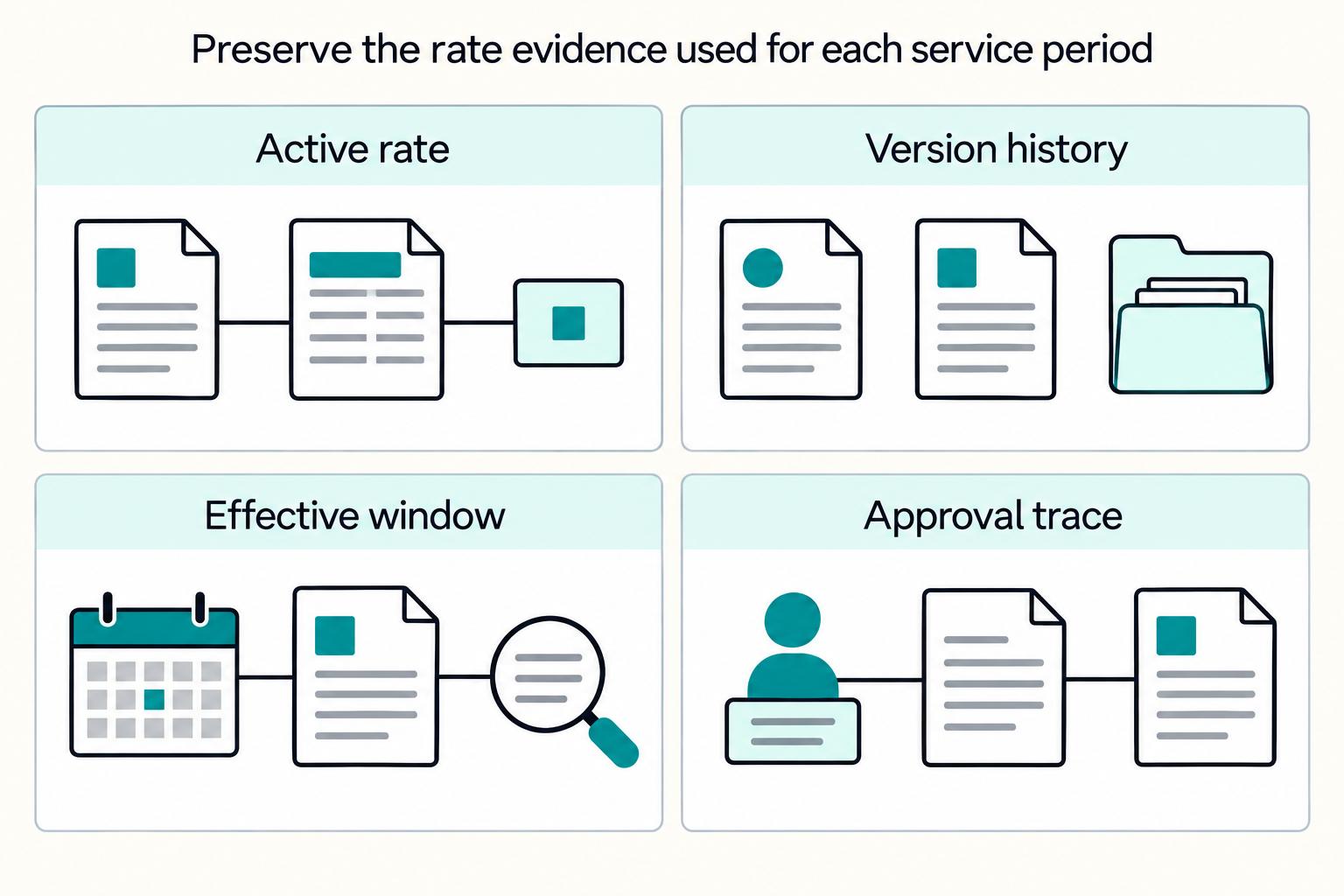
Vendor Contract Management for Platforms: How to Automate SOWs MSAs and Rate Cards
If you are evaluating how **vendor contract management platforms automate SOWs, MSAs, and rate cards**, start with the control chain, not a feature grid. You need a governing **Master Service Agreement (MSA)**, the right **Statement of Work (SOW)** for each engagement, a current **Contract Rate Card**, and checks before anyone is approved, activated, or paid.
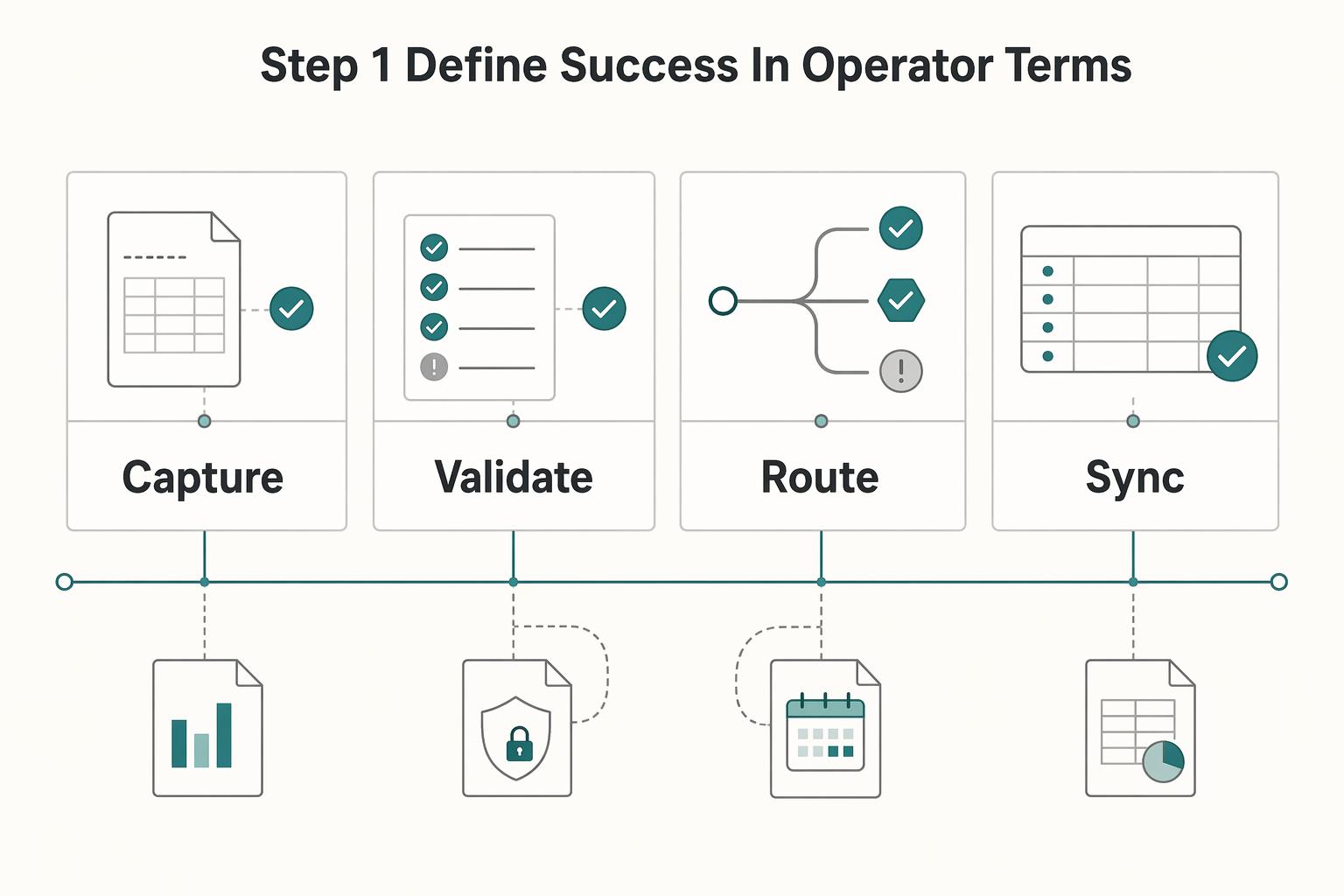
How Platform Teams Automate Reimbursements With Enforceable Policy Controls
Buy an expense tool only if it can do two things at once: enforce policy before money moves, and leave a clean trace after reimbursement hits payment and accounting. Feature-led buying often misses that. You may get easier submissions and faster approvals, but Finance inherits the cleanup when a claim cannot be tied back to the right evidence, payment record, or ledger entry.