
Quick Answer
Podcast payouts depend on the earning model: qualifying ads, contracted sponsorships, paid subscriptions or program-defined consumption. Calculate creator earnings from the correct unit and share, then separate deductions and payment timing from hosting and operating costs. Verify the specific program's eligibility and reconcile finalized earnings to the cash received.
How Podcast Platform Payouts Actually Work#
Teams can overestimate podcast payouts when they compare bundled products as if they were one decision. They are not. Hosting, distribution, ad access, and payment handling may sit inside the same product, but you should still treat them as separate layers until the payout mechanics are clear.
| Model | Earning unit | Main variable |
|---|---|---|
| Advertising | Eligible ad impressions at a contracted CPM | Fill, advertiser price and creator revenue share |
| Host-read sponsorship | Contracted campaign or delivered inventory | Sales terms, delivery and make-goods |
| Subscriptions | Paid subscriber billing cycle | Price, platform share, refunds and retention |
That matters because a so-called monetization platform may do much more than host audio. It can insert ads, process payments, and match shows with brands. On paper, that can look like a complete answer. In practice, you still need to ask four basic questions: who actually pays, what event triggers the payout, what fees sit in the middle, and how visible the settlement is when finance needs to reconcile it.
This article takes that operator view. The goal is not to repeat ranking lists or chase the highest headline revenue share. It is to give you a decision path that separates model type from eligibility, market rollout, and net payout expectations. You want that clarity before you spend GTM budget or shape product around a monetization promise that may not hold in your launch countries.
A CPM is a price per thousand qualifying ad impressions, not per thousand episode downloads. One episode can carry several ads, and not every available slot is filled or eligible. Subscriptions use a different unit: a paid billing cycle. Build forecasts from those units instead of treating every stream as a payable event.
Eligibility varies by program. As checked on October 3, 2026, the Partner Program application route for shows hosted on Spotify for Creators requires an eligible legal address, at least three published episodes, 2,000 consumption hours and 1,000 audience count on Spotify in the preceding 30 days. Admission also requires policy review. Megaphone customers and shows hosted elsewhere must confirm access with their representative or hosting provider. Libsyn Automatic Podcast Ads, by contrast, advertises no minimum downloads but still requires an application. Check the specific program rather than importing one threshold into every model.
The recommendation is straightforward. Do not look for a universal winner. Look for the payout mix that fits your stage, your audience shape, and your launch geography. In many cases, the better answer is a blend of methods rather than one monetization stream, but only after you verify thresholds, fee layers, and payout traceability. That is the lens for the rest of the piece.
Related reading: What Is a Demand-Side Platform (DSP)? How Programmatic Ad Platforms Manage Publisher Payouts.
Stop asking which platform pays most#
The question "which platform pays most?" is usually the wrong starting point because hosting cost and creator monetization are different mechanisms. A product can charge you to host audio while creator revenue comes through separate paths like sponsorships, ad programs, subscriptions, or network deals.
Keep those lines separate in every comparison. Paying for file hosting is an operating cost; creator payouts depend on monetization terms and payment triggers. A low hosting bill does not establish high ad fill or eligibility for a monetization program.
Use this first-pass filter before trusting any payout comparison:
- separate hosting cost from payout mechanics
- identify who actually pays the creator
- confirm what event triggers payment
- flag whether an example is a creator payout, a listener incentive, or a personal case study
A listener reward is also a different flow from creator earnings. Record who receives the money and what event earns it before comparing amounts; otherwise a promotional voucher can end up next to an ad-revenue share as if they measured the same outcome.
Treat "top payout platform" lists as directional input, then validate with your own operator data before rollout: hosting spend, monetization access by show type, and net cash received.
Map payout models before you compare platforms#
Compare model to model before you compare brand to brand. If you skip that, you mix different payout events, reporting definitions, and payors, and the comparison stops being decision-ready.
Define the mechanisms separately: ad revenue share divides the program's defined advertising revenue, while consumption-based earnings use eligible viewing or listening under platform rules. Spotify, for example, separates its 50% share of recognized revenue from Spotify-monetized ads from Premium video revenue calculated through a proprietary formula. Neither is a universal fixed dollar rate per podcast stream.
Lock the measurement layer first#
Downloads, listening time and ad delivery measure different things. A download does not by itself prove that an ad earned revenue. Keep the definition, reporting period and eligibility exclusions for each metric so the economics sheet uses the same unit as the contract.
Use one fixed event dictionary for every row: download, stream, ad delivery, subscriber event, and payable period. If a source does not define those clearly, mark it as unverifiable instead of filling gaps with assumptions.
Compare model families, then attach platform examples#
Use a table that separates the model from the platform name, and keep a known unknowns column so public announcements do not get mistaken for creator-level net outcomes.
| Model family | Who pays | Payout basis | Known examples | Known unknowns |
|---|---|---|---|---|
| Host-read ads via podcast network | Advertiser/network | Contracted monetized inventory | Podcast network deals | Fill, deductions, reporting detail, remittance clarity |
| Marketplace ads via ad managers | Platform/intermediary | Monetized ad delivery under program rules | Acast, RedCircle Core | Attribution method, exclusions, fee impact, net visibility |
| Subscriptions | Listener | Paid subscription events and renewals | Subscription products across creator platforms | Platform cuts, refunds, tax handling, retention quality |
| Platform programs / rev-share | Platform | Program-defined eligible events | Spotify for Creators, Spotify Partner Program, YouTube AdSense | Eligibility gates, country coverage, event definitions, reporting depth |
Keep "known unknowns" as a hard gate#
If attribution tooling or event definitions change, flag the break and explain which periods remain comparable. Keep the old and new definitions with the earnings records instead of presenting a continuous trend that the data cannot support.
Validate eligibility and market gates before product commitment#
Treat eligibility as a launch gate, not an admin detail. Until access is verified for your first countries, your monetization plan is still a hypothesis, not a validated offer.
In your working notes, separate global brand presence from monetization availability. Do not treat broad platform reach as proof that your payout path is available for your exact launch setup. Keep separate validation rows for Spotify for Creators, Spotify Partner Program, Acast, and Megaphone.
Use one gate checklist across every platform#
Track the same four gate types for every platform:
| Gate type | Platform question | Status |
|---|---|---|
| Audience thresholds | Are there audience thresholds? | yes / no / unverified |
| Engagement thresholds | Are there engagement thresholds? | yes / no / unverified |
| Program admission or approval | Is program admission or approval required? | yes / no / unverified |
| Payout access path | Is payout access direct or dependent on a podcast network? | yes / no / unverified |
Force each gate to yes, no, or unverified per launch country. Save one dated evidence item per gate, such as a current terms page, help-center page, partner response, or product screenshot.
Set a hard go or no-go rule#
Set the rule before roadmap pressure builds: if you cannot verify eligibility rules and payout access for your first launch countries, do not commit engineering work yet. Test assumptions before commitment.
| Platform row | What you verify now | Evidence to save | Owner and recheck |
|---|---|---|---|
| Spotify for Creators | Launch-country availability, required approvals, payout access path | Dated screenshots, terms URL, partner reply if needed | Named owner, recheck date |
| Acast | Market coverage, admission conditions, payout path | Current help or sales confirmation, saved in internal sheet | Named owner, recheck date |
| Megaphone | Commercial access assumptions, market scope, payout dependency | Contract note, product page, or partner confirmation | Named owner, recheck date |
Treat this sheet as a live control. When evidence is stale, your decision is stale too.
For a step-by-step walkthrough, see Gruv Platform Payments for Global B2B Payouts and Compliance.
Calculate net payout economics and reconciliation burden#
After a model clears eligibility, compare creator earnings, expected cash timing and operating contribution separately. A higher creator share can still lose its advantage through poor fill, extra fees or manual reconciliation. Use the same audience and delivery assumptions in each comparison.
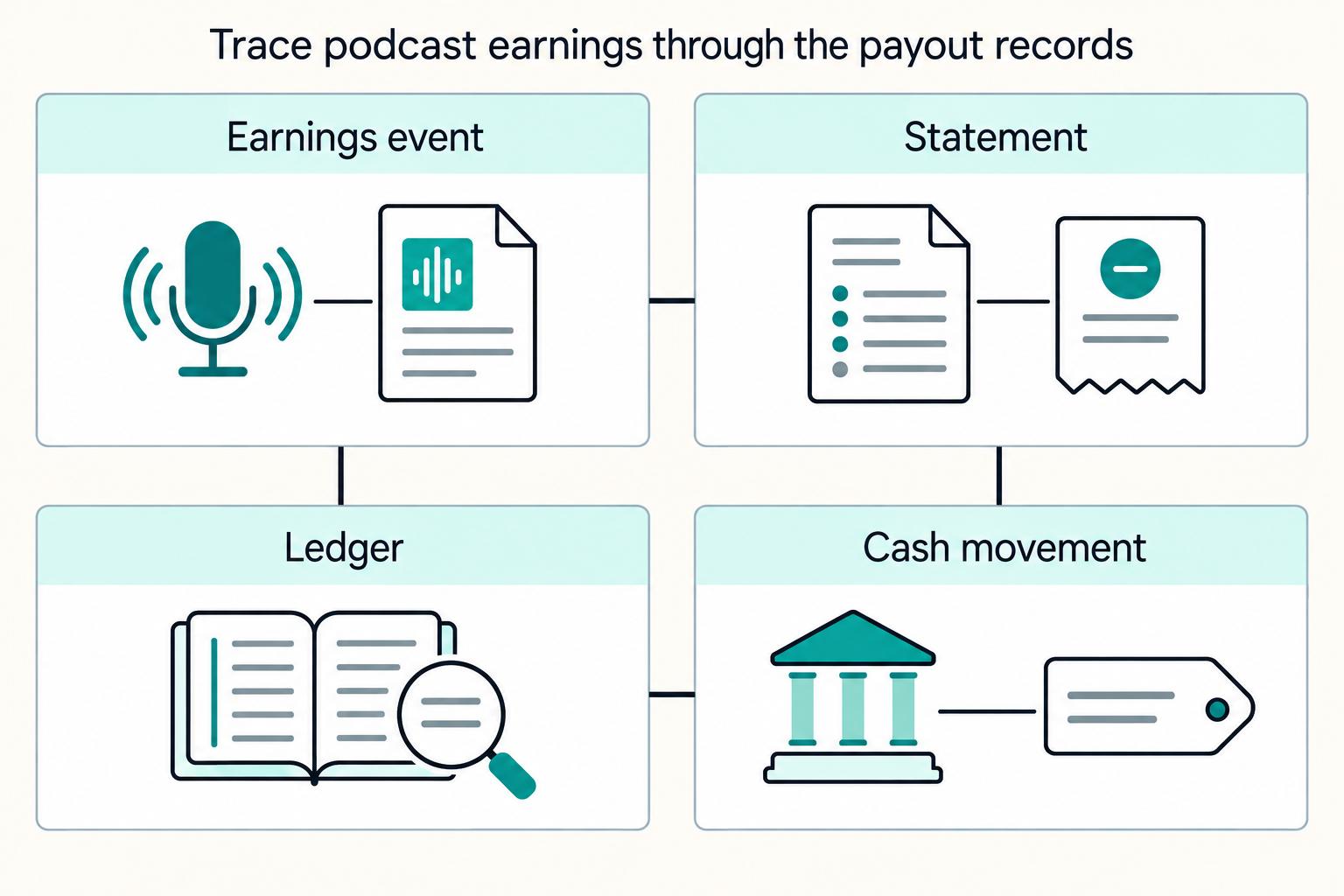
Use this traceability test: can you follow one earnings event from source, to statement line, to cash movement, to ledger entry without guesswork? If not, treat that gap as a real cost in your net economics.
| Flow | Gross earnings source to identify | Fee stack to verify | Rev-share or platform cuts | Payout timing to verify | Reconciliation effort |
|---|---|---|---|---|---|
| Apple Podcasts | Subscription or other creator earnings source used in your model | Any platform deductions and payment-product costs you bear or pass through | Apple lists 70% of subscription price minus applicable taxes, rising to 85% after a subscriber accumulates one year of paid service | Do not assume; save current payment schedule evidence | Often moderate to high if earnings, subscriber activity, and cash movement arrive in separate views |
| YouTube AdSense | Finalized AdSense for YouTube earnings; keep YouTube Analytics estimates distinct | AdSense-related payment costs, bank fees, and internal processing costs | Watch Page module pays 55% of net ad revenue; Shorts and fan funding use different rules | Finalized prior-month earnings appear in AdSense between the 7th and 12th; payment is subject to thresholds, holds and the applicable timeline | Can rise quickly if reporting dimensions do not map cleanly to payout files |
| Spotify flows | Program-specific earnings source such as creator or partner program reporting | Platform deductions, payment-rail costs, and any intermediary share if a network is involved | Partner Program ad share is 50% of recognized Spotify-monetized ad revenue; Premium video uses a separate proprietary formula | Do not assume; keep dated evidence by market and program | Moderate to high where event-level earnings and final disbursements require multiple exports or partner data |
Here is a hypothetical monthly ad example, not a market benchmark: 100,000 eligible ad impressions at a $20 CPM produce $2,000 of shareable revenue. At an assumed 50% creator share, creator earnings are $1,000. If this illustration also assumes a $20 payout fee and no withholding, cash received is $980. Subtracting an allocated $50 hosting cost and $150 of reconciliation labor leaves $780 of operating contribution before production costs and income tax. Hosting and labor reduce contribution, not the bank payout. If the statement already reports the creator's $1,000 share, do not apply the share a second time.
Treat operational friction as part of margin#
Before leadership sign-off, pressure-test three failure modes:
- unclear payout event mapping between earnings, statements, cash, and ledger records
- delayed or incomplete settlement files that prevent same-month close without manual reconstruction
- weak cross-team traceability when commercial ownership and payments-control responsibilities are split
Payments control can extend beyond revenue ownership into operational functions such as compliance, disputes, fraud monitoring, security, systems, and specialized support. If your model shifts more of that burden to your team, your real unit economics change.
Build the sign-off pack before commitment#
Bring an evidence pack, not just a revenue forecast:
- Assumptions log: reporting source, payout entity, country scope, and unverified items for each flow
- Sensitivity scenarios: downside cases when effective net drops because of payment-product costs, manual reconciliation, or withheld amounts
- Payout failure modes: where funds can stall, where files can arrive late, and who owns escalation
- Monthly close checklist: statement retrieval, cash tie-out, exception review, ledger posting, and recheck of stale platform terms
If two options are commercially close, pick the one with auditable lineage from earnings event to final disbursement.
Choose distribution mix based on control and risk#
After you price reconciliation burden, decide how much concentration risk you can carry. A platform-heavy strategy can work, but a blended mix is usually more resilient because one policy, eligibility, or demand shift is less likely to pressure your entire revenue line at once.
A blended path across Spotify, YouTube and Apple Podcasts can spread dependence on one program's reporting, policy or demand. But extra channels also add production and reconciliation work. Compare the downside protection against that cost before committing to all three.
Match the mix to your actual sales muscle#
Use scenario rules, not ideology:
| Situation | Weight toward | Reason |
|---|---|---|
| Direct brand-sales motion is strong | Host-read ads | Commercial control stays closer to your team |
| Audience is growing but sales coverage is thin | Platform monetization | Build direct demand while coverage is thin |
| Testing paid access | Keep it distinct from public ad-supported distribution | Private distribution can help protect IP and control premium access |
Dynamic ad insertion can place different ads into existing episodes. It changes inventory and targeting, but does not establish better net earnings by itself. Compare actual qualifying impressions, fill, revenue share and any insertion costs.
Model concentration risk before it becomes an incident#
Before committing, model a downside month where your primary channel underperforms and secondary channels must carry results. You do not need a precise probability to do this; you do need a scenario you can defend operationally.
Then test diagnostic speed: if revenue drops, how fast can your team determine whether the issue is audience delivery, ad fill, episode publishing, or payout reporting? RSS feed health is a critical control point because directories use your feed and metadata to distribute the show. In a blended setup, verify feed integrity first, then investigate monetization.
If one opaque platform view carries most of your forecast, treat that as a red flag. Choose the mix your team can publish once, monitor cleanly, dispute confidently, and explain inside the same close cycle.
If payout timing matters to your cash forecast, see our guide on Same-Day vs Next-Day vs T+2 Payouts and the Real Cost to Your Platform.
Sequence country rollout with compliance and payout readiness#
Sequence rollout by verified payout readiness first. Listener demand can guide where you publish, but it should not decide where you promise monetization.
The key risk is treating "we can distribute there" as equivalent to "we can pay there." In payments operations, regulatory and operational complexity can multiply quickly across borders, so country order should follow evidence of payout readiness, not audience heat maps alone.
Set a minimum readiness bar for every country#
Use one country sheet per launch market and require current evidence, not assumptions. The practical check is straightforward: can a creator in that country complete onboarding, clear compliance checks, select a supported payout method, and get support if a disbursement fails?
| Readiness item | What to verify | Evidence to keep |
|---|---|---|
| Program availability | Whether the monetization path you plan to use is open in that country now | Dated screenshot or internal note with source URL and recheck date |
| Payout method support | Which payout method is available in that market and whether settlement can complete to that destination | Provider confirmation, test account result, or written platform support response |
| Tax and compliance handling | Who collects tax details, what validation step exists, and where exceptions are reviewed | Onboarding flow capture, required document list, owner for review |
| Failed disbursement path | Who investigates rejected or returned payouts and how long escalation should take | Named internal owner, support channel, expected response path |
If you cannot fill those four rows with evidence, that country is not launch-ready.
Treat each market as a separate transition until proven otherwise#
Assess creator monetization eligibility and payout readiness in each proposed market. A listener country, the creator's legal-address country and the destination bank country may play different roles in the rules. Do not use one country field for all three.
Distinguish announced availability from a live program. Spotify's page checked on October 3, 2026 lists additional markets scheduled for October 20; an announcement of that future launch is not current eligibility. Keep the effective date alongside the supported-market entry.
Pilot unclear markets with hard stops#
If market rules are still unclear, run a limited pilot instead of a broad launch. Set hard stop criteria before launch:
- Stop broad rollout if onboarding exceptions have no approved review process or named owner.
- Stop if tax-document collection and escalation ownership are still unclear.
- Stop if a test disbursement fails and there is no documented resolution path inside your close cycle.
For regional prioritization, pair this with Global Payouts and Emerging Markets: 5 Regions Every Platform Should Prioritize. For payout flow detail, see How PROs Collect Performance Royalties and How Platforms Distribute Payouts.
Operationalize payouts with traceable money movement#
Traceability is the operating requirement at this stage: if your team cannot follow an earning through approval, payout release, return, and finance review, the payout model is not ready to scale.
For each payable event, capture the source platform, earning period, creator or payee ID, country, currency, amount, hold reason and authorizing status. If your team executes payouts, retransmit an ambiguous request using the provider's supported idempotency rules and independently prevent duplicate business obligations or ledger postings. A legitimate new attempt after a confirmed failure is a different operation. Reconcile provider outcomes to the approved obligation so support, ops and finance can explain the same balance.
If you use Gruv, map modules to those needs only where support is confirmed in your environment: Payouts for disbursement control, Virtual Accounts for inbound flow separation, and audit-ready exports for finance review.
Implementation checkpoints#
- Event mapping: define earning, adjustment, hold, release, failure, and return events, plus the owner for each exception queue.
- Retry and escalation: document when retries stop, what triggers manual review, and who resolves returned or blocked payments.
- Month-end close: verify that approved earnings, paid amounts, held amounts, and returned amounts reconcile to the same source records.
If you are still deciding where this should live, read Integrated Payouts vs. Standalone Payouts: Which Architecture Is Right for Your Platform?. The supply-side cost of getting this wrong is real, so payout quality should sit in the same decision set as creator retention.
For a deeper supply-side view, read Bad Payouts Are Costing You Supply: How Payout Quality Drives Contractor Retention.
Conclusion#
The right move is usually not choosing the platform with the biggest payout story. It is choosing a monetization mix you can verify now, operate without guesswork, and reconcile when the money actually lands.
Compare the same earning units when choosing a mix. An exclusive media-rights deal, a self-sold campaign and a platform ad program can all generate creator income, but their payment triggers and obligations differ.
For an early show, a small amount of eligible ad revenue may remain below the payout threshold. That is earned balance awaiting payment, not necessarily a failed transfer or a reliable forecast of future demand.
That gap is why headline comparisons can mislead teams. If you want better expansion decisions, separate three things every time: the payout model, the eligibility gate, and the net economics after operational friction. A platform can look attractive on paper and still be a poor launch choice if terms change, if access depends on application or approval, or if your finance team cannot trace the earnings event back to the final remittance.
A practical next step is to build one internal comparison table and keep it current. At minimum, include:
- who pays you
- what triggers payment
- current eligibility requirements
- evidence link or saved terms page
- owner and recheck date
- expected net outcome and key assumptions
That evidence pack matters more than another "best platform" list. Save screenshots or PDFs of the monetization terms you relied on, note when they were checked, and keep any application or approval records with them. One avoidable risk is committing product or GTM resources based on last quarter's rules, then finding that monetization requirements have changed.
If your audience is still early and direct ad sales are unreliable, test a small sponsorship or affiliate arrangement with explicit delivery or conversion terms. A reachable program does not guarantee meaningful earnings; use observed results before scaling the forecast.
So the real test is simple: can your team explain who pays, why you qualify, what can change, and how you will verify the final amount? If not, pause the rollout, finish the comparison table, and confirm program coverage before you spend engineering or go-to-market effort.
Frequently Asked Questions
Do podcast hosting platforms pay creators directly?
Not as a universal rule. Some hosts offer monetization tools or ad programs, but that is different from saying every host is the payor for every show. Confirm the exact payer, the trigger for payment, and whether creators must join a separate program first. For example, Libsyn says creators can apply to enable audio advertising in its Automatic Podcast Ads program, so access is program-based, not automatic.
What determines whether a show qualifies for platform payouts?
Qualification depends on the specific program's admission rules, creator location, content and audience requirements. Libsyn Automatic Podcast Ads accepts applications without a minimum download count; Spotify Partner Program has published audience, consumption and market gates. Confirm the current program rules and approval status before forecasting eligible earnings.
How is ad revenue share different from a per-stream model in operator terms?
Ad revenue share pays a defined percentage of qualifying ad revenue. A consumption-based program may instead use eligible viewing time and a platform formula, as Spotify Premium video revenue does. A stream count alone cannot establish the payout; use the applicable program calculation and distinguish estimated earnings from finalized amounts.
Why can a platform announce large total payouts while many creators still earn modest amounts?
A total can combine many creators, periods and revenue sources without showing the distribution of earnings. It does not establish a typical creator result. Compare your eligible audience, monetized inventory, contracted share and deductions rather than dividing a headline total by a broad creator count.
When should an operator prioritize host-read ads over platform program monetization?
Prioritize direct host-read or sponsorship deals when your team can sell and fulfill campaigns and wants control of price, placement and terms. Include sales effort, delivery reporting and any make-goods in the economics. Platform-sold ads can be useful when that sales capacity is limited, but their fill and program terms still determine earnings.
What should be verified before launching podcast payouts in a new country?
Start with four checks: is monetization allowed in that country, does access require application or approval, who is the legal payer, and what payout details must be collected before release. Keep evidence, not assumptions: save the current terms page, note the country support statement, assign an owner, and add a recheck date. A common failure mode is treating global distribution as proof of local monetization support.
Try a related tool
Researched and edited by the Gruv editorial team. Gruv builds cross-border billing, payouts, and finance-operations software for global businesses.
Sources
Includes 7 external sources outside the trusted-domain allowlist.
- libsyn.com/automatic-podcast-adsexternal
- libsyn.com/blog/automatic-podcast-ads-faq-10-common-que...external
- podcasters.apple.com/support/5553-subscription-launch-checklistexternal
- podcasters.apple.com/support/904-availability-of-apple-podcasts-f...external
- support.google.com/youtube/answer/72902external
- support.google.com/adsense/answer/7164703external
- support.spotify.com/us/creators/article/spotify-partner-programexternal
Educational content only. Not legal, tax, or financial advice.
Related Posts
Integrated Payouts vs Standalone Payouts for Platform Architecture Decisions
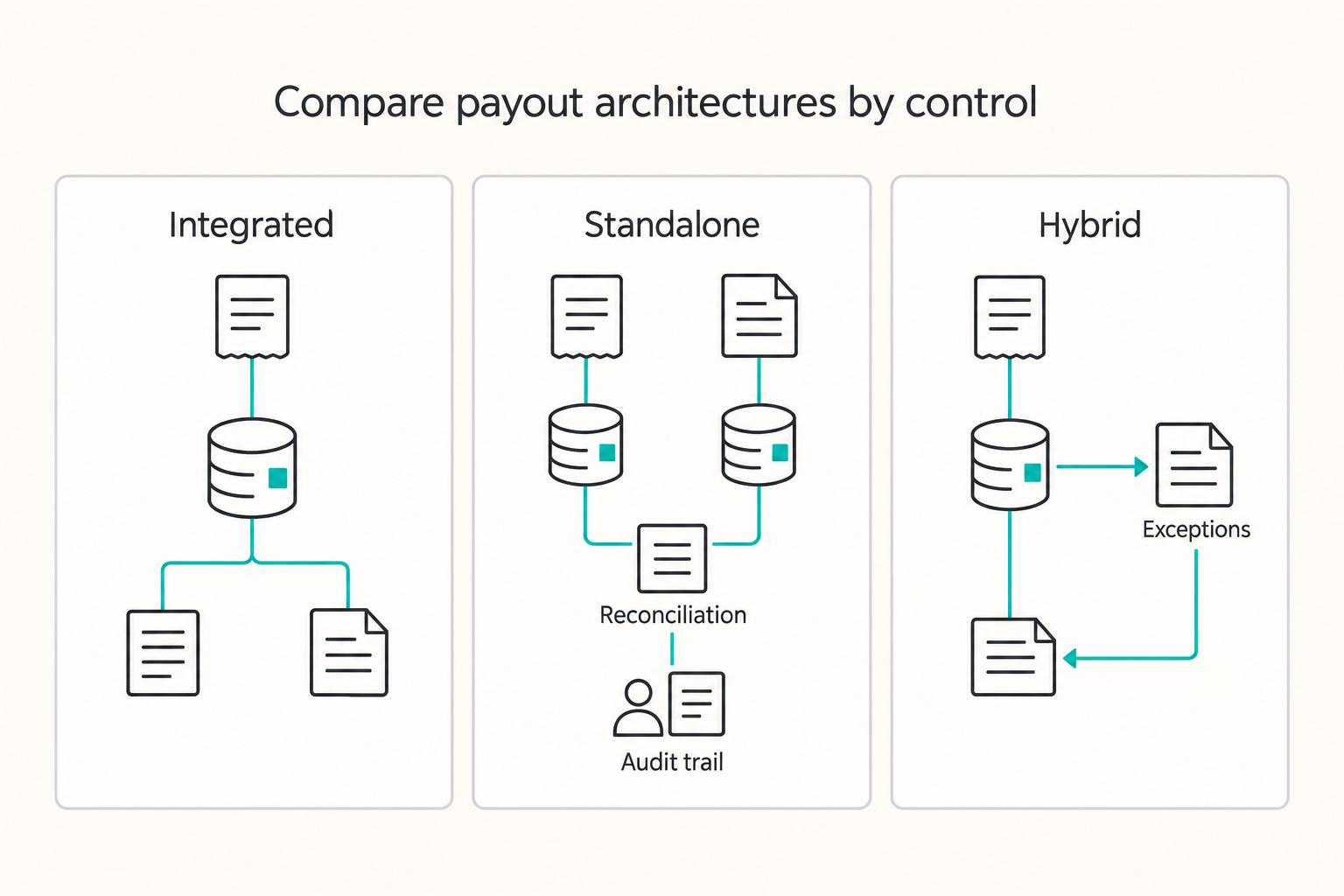
Here, integrated means a provider supports both collection and payout in the platform’s funds flow. Standalone means a separate provider executes disbursements, funded from your platform or another payment system. Hybrid means multiple governed routes. These are working architecture definitions, not universal vendor product categories.
How Platforms Should Prioritize 5 Emerging-Market Payout Regions
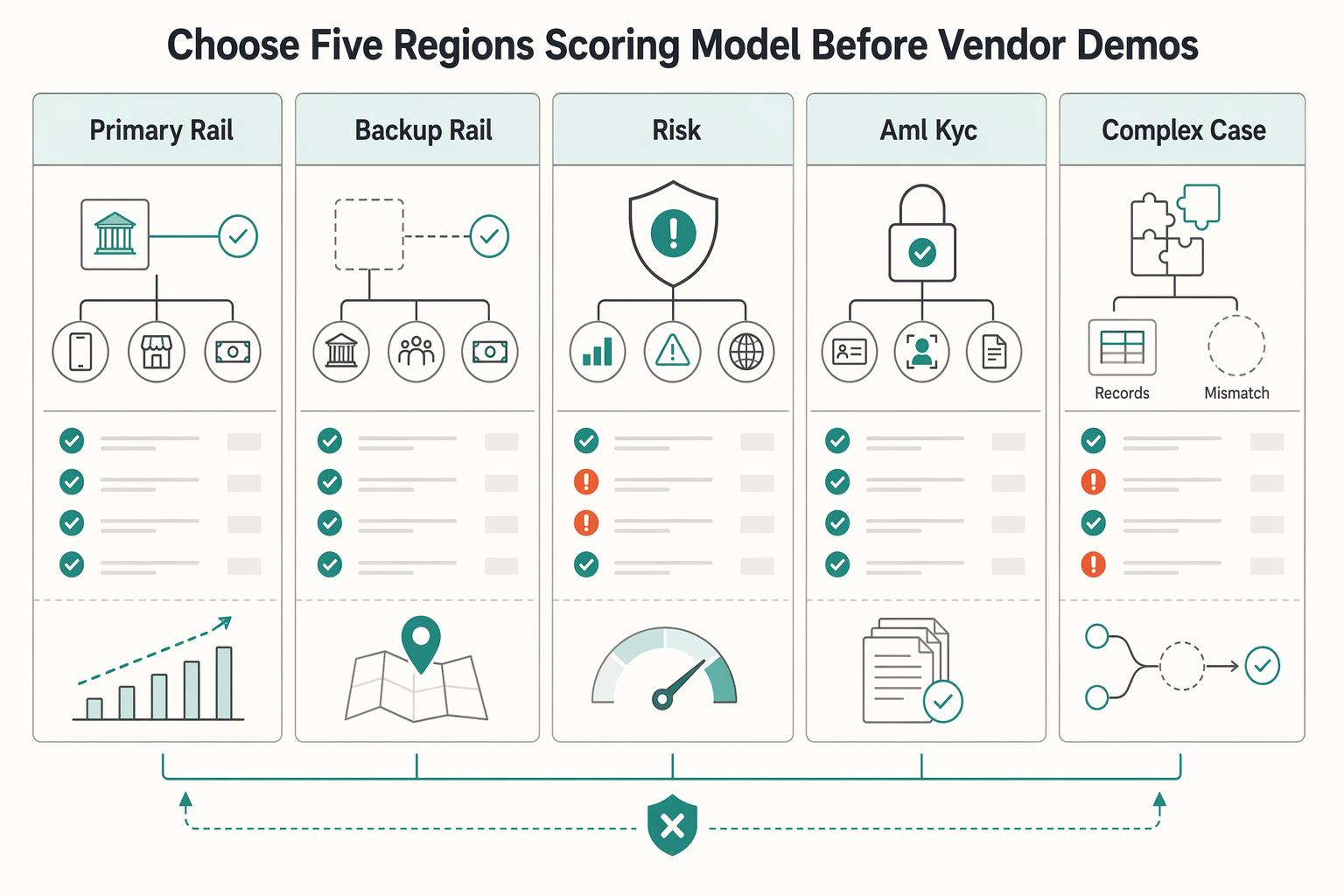
If you are choosing where to launch cross-border payouts in 2026, start with what your team can actually run. Too many "top" lists lean on hype or market-cap tables. That may work for headlines, but it does not help with execution.
Bad Payouts Are Costing Your Supply in Two-Sided Platforms
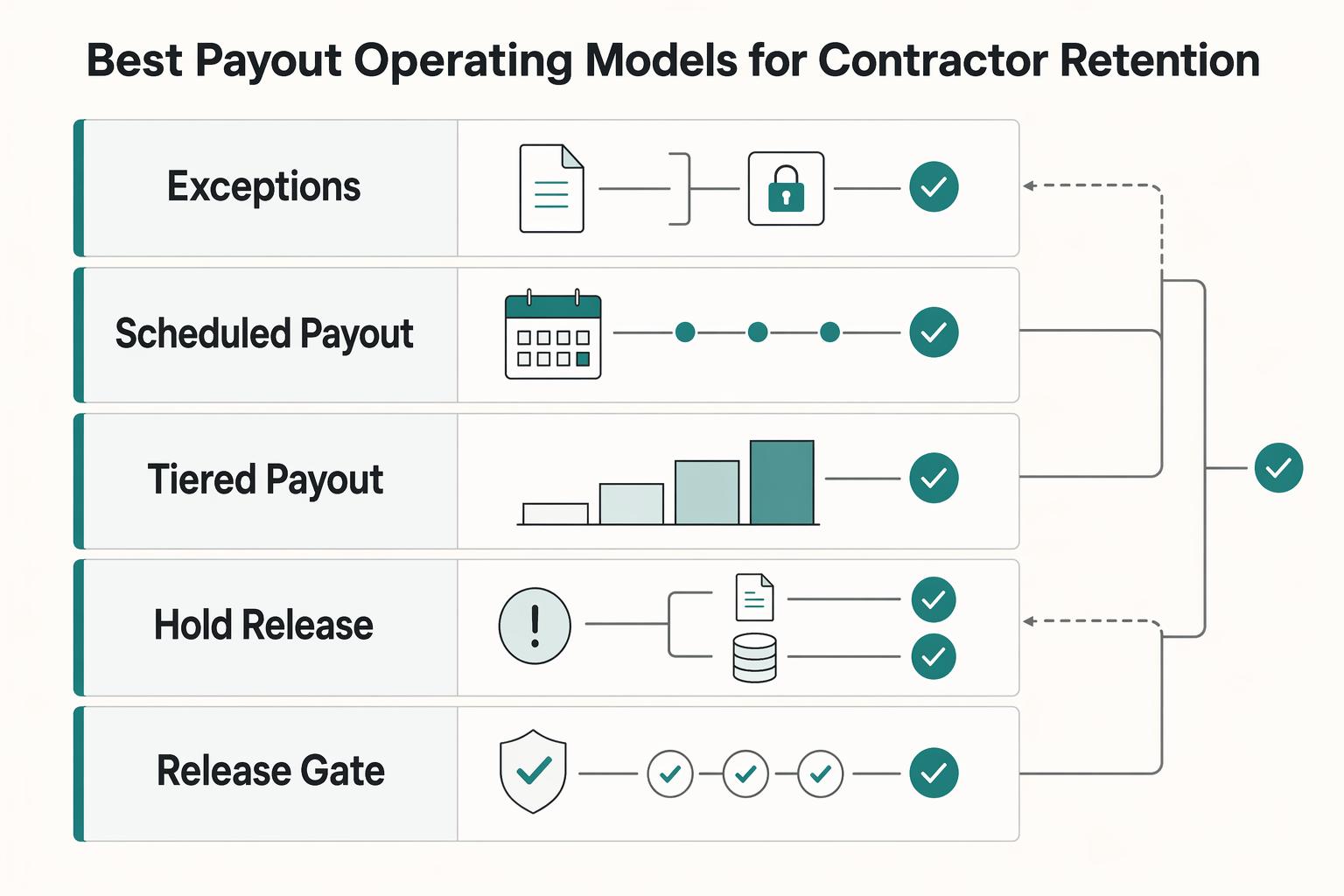
Payout issues are not just an accounts payable cleanup task if you run a two-sided marketplace. They shape supply-side trust, repeat participation, and fill reliability. They can also blur the revenue and margin signals teams rely on.