Use a market-entry scorecard and launch only where payment-method fit, payout rails, and ownership of support and risk checks are documented. Validate one full money path before go-live: checkout event to ledger entry, then earned, pending, and payable states, then payout attempt and failure routing. Keep withdrawals gated by market-specific KYC and AML triggers, and do not move a country out of Hold until exceptions, reserve logic, and reconciliation evidence are clear.
Treat this launch as an operations decision, not just a monetization decision. In-game economies can create real commercial value, but if payout design, settlement timing, and reconciliation are unclear at launch, early growth can turn into long-term cleanup.
Before you start, write down your target markets, what players can buy, who earns from each transaction, and how money should move from checkout to payout. If those inputs live only in product tickets and Slack threads, you are already creating avoidable debt.
A game economy is not just a product feature. Once players can buy, earn, or trade value inside the game, you are effectively operating a payment environment with real support and payout consequences.
Many games now run virtual economies with in-game currencies that players can earn, buy, or trade, and communities form around digital assets. Scarcity mechanics like limited-edition items or seasonal prizes can shape demand. They can also make payout logic more sensitive as value is earned, spent, and traded continuously.
Monetization choices are not interchangeable. Different monetization models create different payout events, dispute exposure, and reporting needs. Leave this step with one clear answer: what is being bought, and who is entitled to what after each purchase?
Fast launch and low-friction checkout help growth, but they can hide weak settlement design. Low-value, high-frequency purchases get hard to operate when rails include fixed fees, minimum thresholds, and slow settlement. Many gaming purchases are only "a few cents" or even "fractions of a cent," so payment economics and timing matter early.
This is where product ambition and operations collide. Redirects, authentication steps, and payment failures can interrupt gameplay and increase checkout drop-off, while disputes and chargebacks still take time and resources to manage and reconcile. If your team cannot state when a payment is authorized, when funds are treated as settled, and when earnings move from pending to payable, do not promise fast withdrawals.
Scale the parts that can hold up, not the parts that look promising in a deck. Set the internal promise as "launch where monetization and payout operations can both hold up," not "launch everywhere fast."
Use this sequence: choose markets first, then the monetization mix, then payout design and compliance gates based on what each market can support.
Your checkpoint is simple. For each market, trace one purchase from checkout event to ledger entry, then to earned or pending balance, then to payable amount, and finally to payout action. If any step depends on manual fixes or unclear ownership, delay that market instead of masking the gap with exceptions.
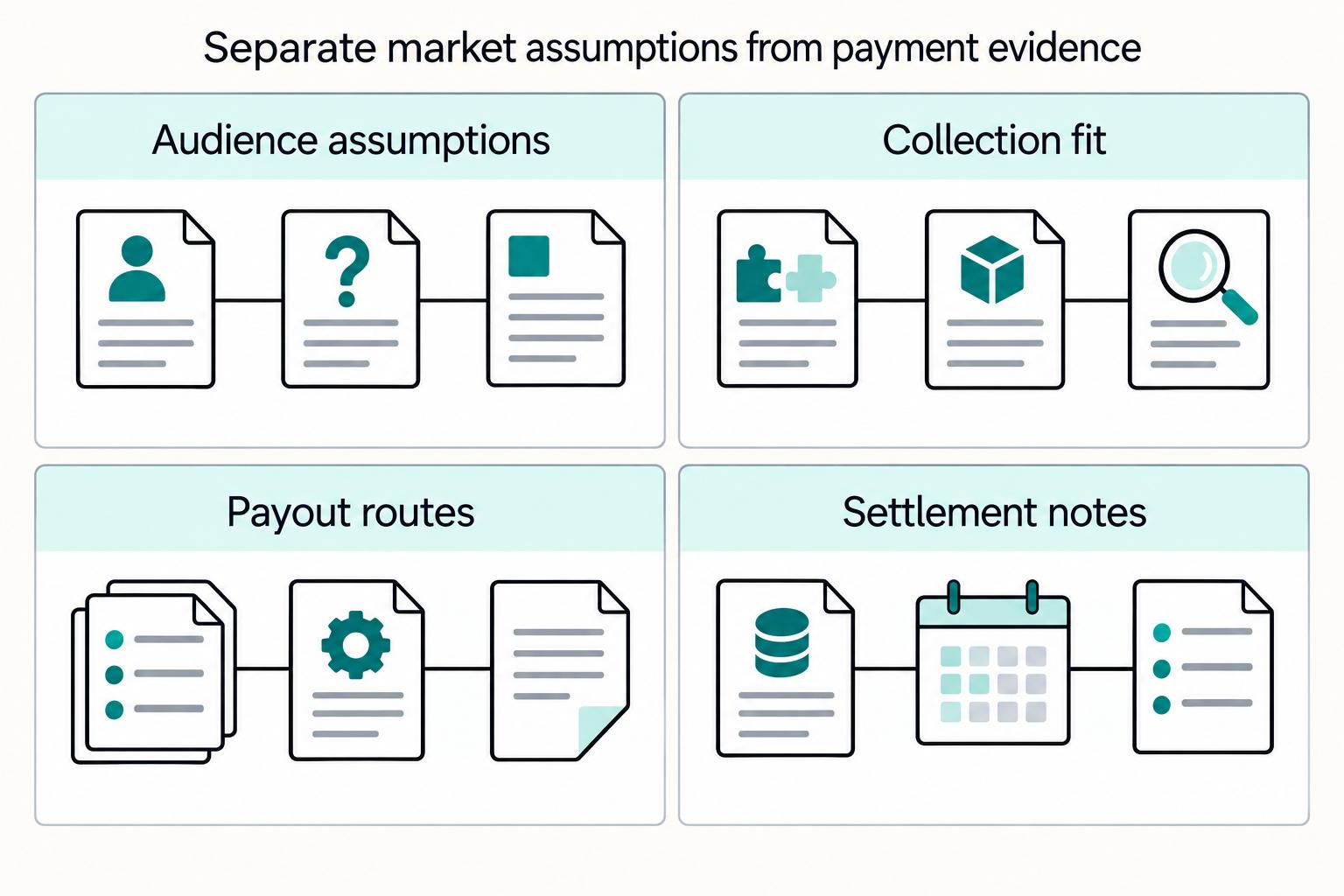
Before you choose products for any market, turn your checkout-to-payout map into a scorecard. The point is to compare demand, payout readiness, and operating risk on one sheet so launch choices are evidence-based.
Set the same fields for every market first, even when some answers are incomplete or unknown. If you skip this step, high-demand markets can look launch-ready before payout and support constraints are clear.
| Scorecard field | What to record | Early red flag |
|---|---|---|
| Local payment method fit | Which checkout methods you can support for player purchases | Demand is strong, but player payment fit is unclear |
| Payout rails coverage | Whether you have a workable route to pay developers, studios, or creators, or whether this is still unknown | Earnings accrue, but withdrawals depend on manual exceptions |
| Expected settlement timing | What is known today about when collected funds can be used for payout decisions, and what remains unknown | Product promises withdrawals before finance can confirm readiness |
| Support burden | Likely payment, payout, and balance-related support load | Likely ticket types have no owner or escalation path |
| Chargebacks exposure | Where dispute pressure could appear in your flow | No reserve, hold, or payout-delay logic is defined |
| AML friction | Expected review and monitoring effort (if applicable) | No hold/review path for unusual earning or withdrawal activity |
| KYC gating before withdrawals | Where identity checks happen before funds move out (if applicable) | Withdrawal flow exists, but gating point is undecided |
Keep the fields stable across markets. Simple labels like strong, workable, unclear, weak, and unknown are enough.
Do not let people score markets from instinct. Require one evidence line per field. If a market is marked workable, someone should be able to explain why in two or three sentences and point to the note.
| Evidence item | What to include |
|---|---|
| Checkout-path note | How a purchase is initiated and recorded |
| Payout-path note | How earnings move from pending to payable, or which step is still unknown |
| Risk note | Dispute, AML, and KYC friction |
| Owner | One owner for any unresolved field |
This matters in game economies because players may buy, earn, or trade in-game currencies, and virtual items can carry monetary value tied to scarcity or aesthetics. If your design uses limited-edition items or seasonal prizes, note the likely effect on scarcity dynamics, player competitiveness, and transaction activity.
Use a compact evidence pack per market:
A scorecard only works if it can block a weak launch plan. High demand is not enough when payout reliability or review ownership is unclear.
Keep chargebacks, AML friction, and KYC gating as explicit columns. Define the operating choices now: where checks happen, who can place or release holds, and how exceptions are handled. Do not fill legal thresholds with assumptions.
Also add a data-governance note where relevant. Research on digital apps describes behavior tracking as a governance tool and also warns that it can become exploitative and create privacy-intrusion risk.
Be strict here: if demand scores high but payout reliability is unknown or low, delay launch until the payout path is operationally validated. Do not substitute manual workarounds for a production payout path.
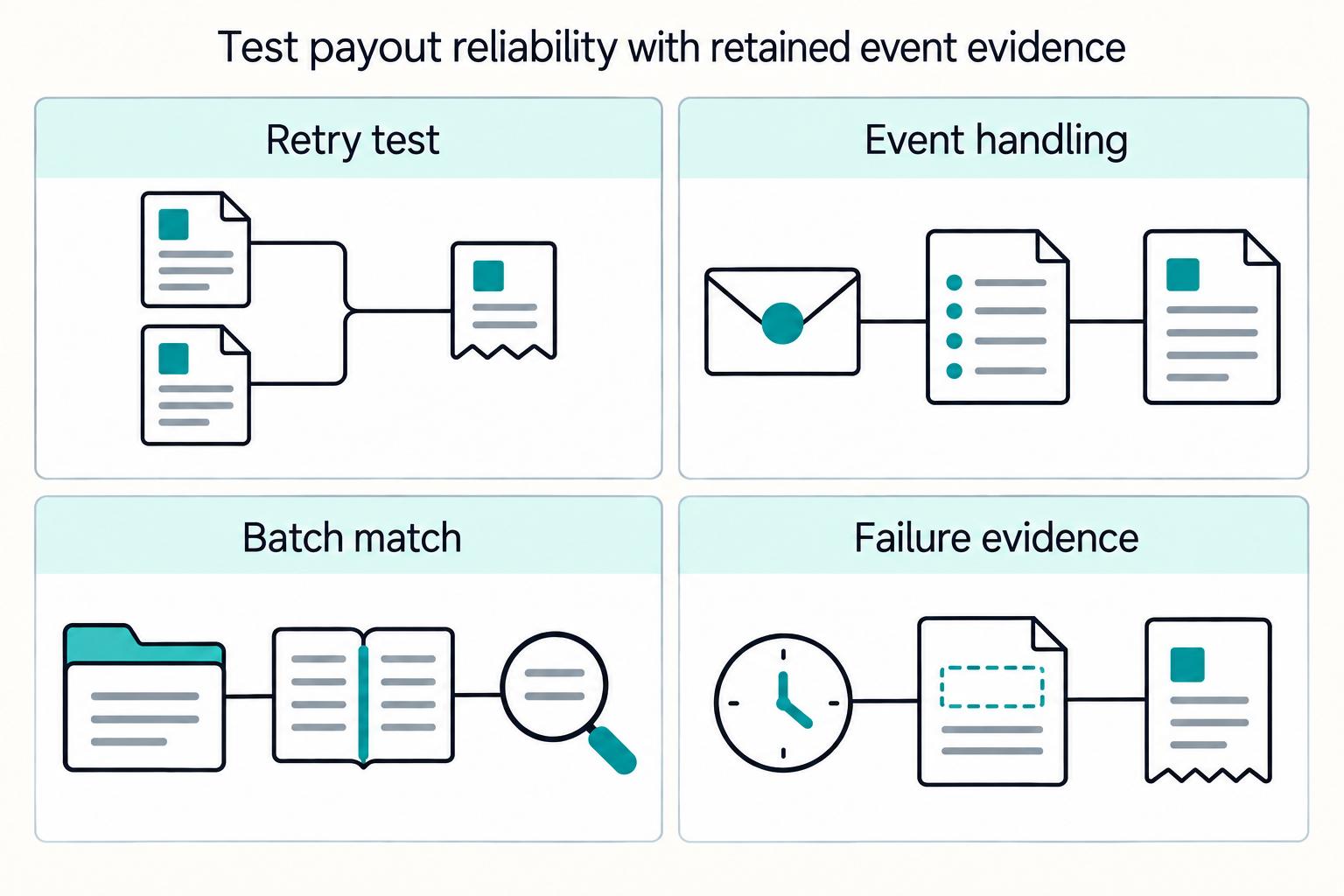
Before assigning Wave 1, test one recipient journey end to end, for example: earnings recorded, pending status, payable trigger, review hold, payout attempt, and failure trace. If key steps still depend on manual rescue, that market is not ready.
Use these as internal planning labels, not a validated scoring formula:
Avoid parallel launches where the scorecard is mostly assumptions. If you need a tie-breaker, prioritize the market with the clearest payout path and fewest caveats.
If you want to pressure-test Wave 1 assumptions against real payout routing and failure visibility, map your requirements to Gruv Payouts.
Pick the monetization model that matches a repeat player action and a workable payment path in each market. If return behavior is still weak, avoid layering multiple monetization surfaces until one loop is clearly working.
Start with the loop, then map the money. In a free-to-play virtual goods model, the core experience is free and ancillary goods are sold on top. Research on free-to-play also flags two persistent operating challenges: monetizing a free product and maintaining the user base over time.
For your scorecard, name the exact repeat action expected to trigger spend. If you cannot state that action in one sentence, the model is still too abstract to operate.
Then check payment reality early. Localized payment preferences shape player engagement, so confirm your model and price points match how players actually pay in that market.
Choose one primary model first, then add layers only when the loop and the operating path are stable. If you choose free-to-play purchases, a subscription structure, or a battle-pass structure, define the player value clearly. Define the payment state transitions clearly too, so product, support, and finance explain them the same way.
If return behavior is weak, run one recurring test at a time instead of adding multiple new surfaces at once. That keeps measurement clean and prevents support and reconciliation complexity from scaling faster than learning.
Creator-economy data supports that caution. Naavik estimates developer payouts across Roblox, Fortnite, and Overwolf at about $2.2B in 2025 (+47% vs. 2024). In Fortnite Creative, monetization options such as in-island transactions have expanded, while estimated engagement-based payout growth is about +5% YoY and active creators are described as slightly down since 2024. More monetization options do not automatically translate into fast, broad payout growth.
If you add rewarded video tied to in-app currency, make the exchange explicit and traceable: what triggers reward issuance, what amount is granted, and how that balance is recorded.
Keep ad-earned and purchased balances distinguishable in transaction records. Without that separation, support and finance can lose clarity during disputes, reversals, and payout reconciliation.
Evaluate model fit and execution load together, not revenue potential alone.
| Model | Early fit check | Payment/ops check before launch | Complexity notes |
|---|---|---|---|
| Free-to-play + in-app purchases | Players repeatedly buy optional virtual goods | Local methods match how players prefer to pay | Define reconciliation and support states before launch |
| Subscription structure | Recurring value is clear to players | Renewal, lapse, and entitlement states are documented | Validate billing and support handoffs early |
| Battle-pass structure | Season/progression logic is stable | Expiry, claim, and progression states are documented | Validate state transitions before scaling |
| Rewarded video + in-app currency | Reward is optional and clearly defined | Reward issuance is traceable and separated from purchased balance | Validate dispute and reversal handling before scaling |
Use this as a gating tool: launch the model with the clearest repeat action, cleanest payment path, and fewest unresolved support states, then expand based on measured results.
If you want a deeper dive, read Gaming Platform Payments: How to Pay Game Developers Studios and Tournament Players at Scale.
If you wait to define asset rights and payout logic, disputes can start after money is already moving. In a free-to-play, game-as-a-service model with ongoing monetization, your catalog terms, user agreements, and rev-share contracts should describe the same asset types the same way.
Start by naming what the player is buying, then keep the categories separate: consumable virtual goods, durable inventory, and balances in in-app currencies.
| Asset type | What the user is buying | Rights question to define | Common red flag |
|---|---|---|---|
| Consumable virtual goods | One-time use item or boost | What happens after use or reversal? | Support and finance handle reversals differently |
| Durable inventory | Ongoing access to a skin, weapon, or item | Is access treated as persistent account entitlement? | Store language implies ownership, terms describe limited use |
| In-app currencies | A balance that can be earned, bought, or traded | Which actions can create, spend, or remove balance? | Earned and purchased balances are mixed |
Before launch, map each live SKU to one category and use the same label across the storefront, user-facing terms, and internal ledger logic.
Once assets are classified, tie each type to rev-share rules so creators and studios can see how earnings are calculated and what activity is payout-eligible. Do not stop at broad language like "share of sales." Define which transaction types count and which transaction states are excluded.
This matters most in economies where players and creators can trade, earn, and in some cases monetize activity over time. If an item or currency can be both earned and bought, write down whether rev-share applies to purchased activity, earned activity, both, or neither. Keep one contract appendix that lists asset category, earning trigger, exclusions, and the report creators will receive.
Loot crates, limited offers, and seasonal scarcity mechanics need a pre-launch review gate. They can drive engagement, but unclear purchase terms create consumer-protection risk.
Make the in-game purchase language in terms of service and user agreements a pre-launch checkpoint before rollout. If an offer is time-limited or randomized, freeze offer text, reward logic, and disclosure language for legal and compliance review before release.
If brand partnerships are part of the plan, document the boundaries up front so payout and ownership questions do not get answered ad hoc later. Record what the sponsored asset is, where it appears, how long it runs, and which monetization events are eligible for creator sharing under your rev-share terms.
Keep the signed partnership terms, asset-rights definitions, and payout logic in one place so support, finance, and creator operations resolve issues from the same source.
Payout architecture should be ledger-first. Define how money moves through records before choosing payout rails. That can help keep cross-border payouts and creator support manageable as volume grows.
The provided sources do not prescribe one end-to-end payout flow, so define one internal path for each monetization event and keep it consistent across payee types. Then map payout-rail differences without changing your core ledger logic.
Scale is the reason to lock this down early. Reported developer payouts across Roblox, Fortnite, and Overwolf were about $2.2B in 2025, up 47% over 2024, so payout operations become a product function, not a back-office task.
Set a hard readiness gate before any payee enters payouts: the account must be verifiable and reportable. Publisher resources frame this with checkpoints like "Verify your organization" and "Get financial reports."
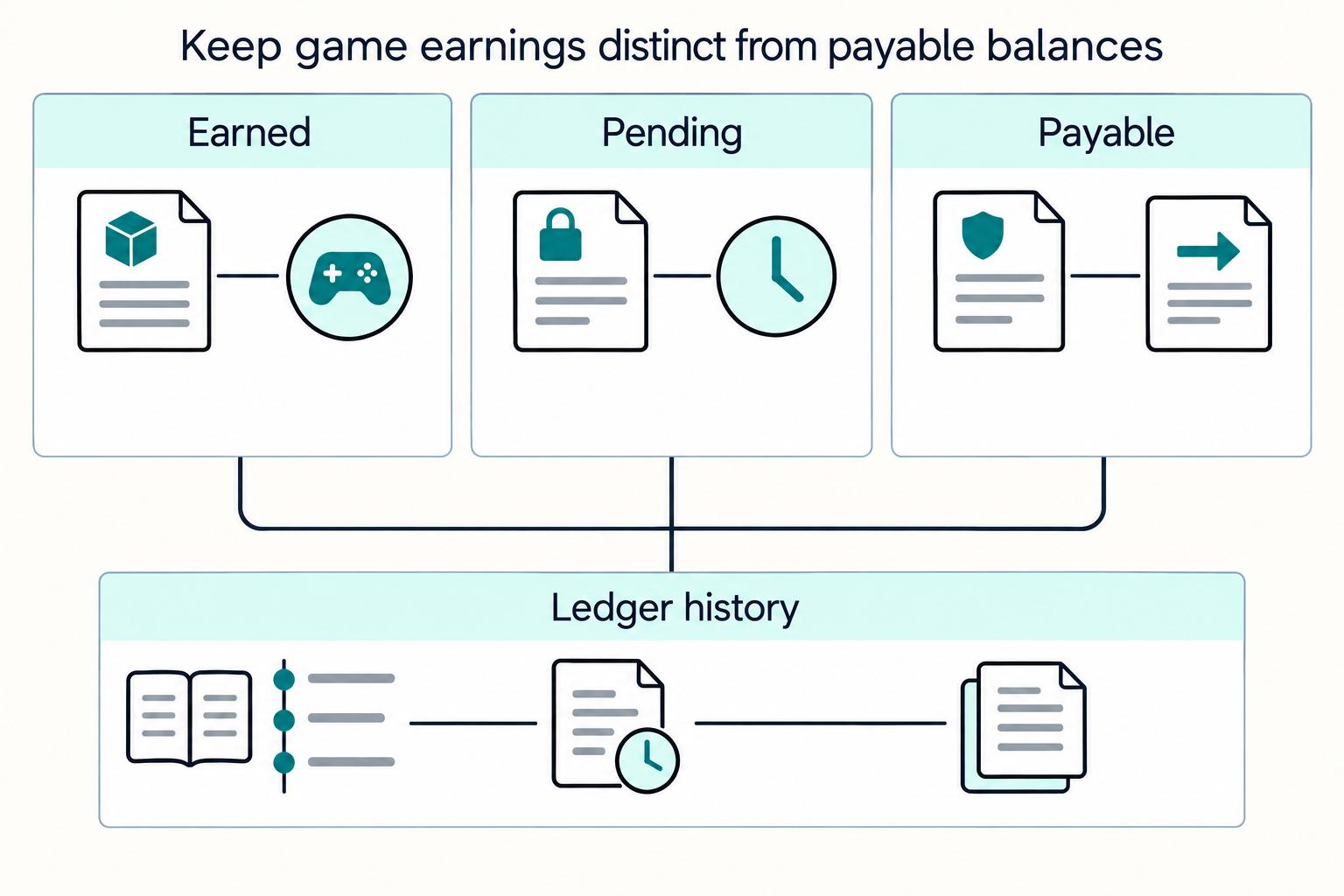
If you use earned, pending, and payable states, keep them separate and explicitly defined in your own system rules. A single blended balance can hide timing and reversals, then turn normal delays into payout disputes.
Move balances only when your internal eligibility conditions are met, and record each state change in the ledger. The sources here do not specify exact accounting formulas, timing windows, or thresholds, so treat those as implementation decisions.
Retry logic should prevent duplicate payouts and make failure handling explicit. For each failure, route to the next action: payee fix, automated retry, or manual review.
Treat repeated failures as a signal to inspect payee setup and payout data, not just provider availability. This matters even more in cross-border flows, where incomplete setup and data issues can look like temporary rail problems if you only monitor status codes.
Reporting should come from the same ledger states that drive payouts. When reporting and payout logic diverge, disputes increase and operations slow down.
Plan for uneven growth, not straight-line assumptions. Reported engagement-based payouts in Fortnite Creative were up only an estimated 5% YoY, active creators were reported as slightly lower than 2024, and creator constraints were still noted. Your exception handling and reporting clarity need to hold up even when growth decelerates.
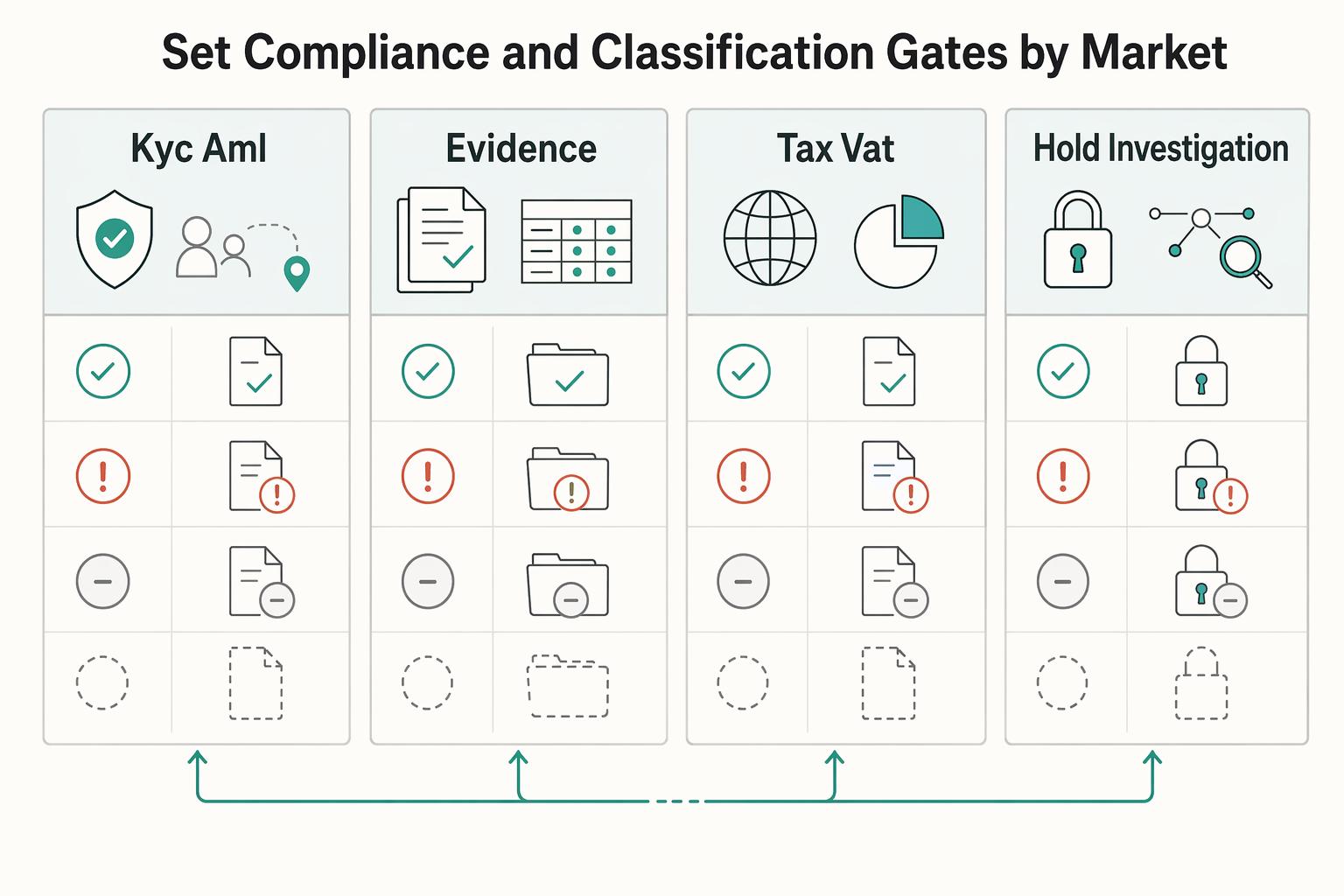
Set withdrawal controls before launch, and tie them to risk instead of a generic signup flow. When users can turn gaming assets into cash, you are operating adjacent to financial-like activity, so withdrawal access should include explicit KYC, AML, and reversal-risk controls that match each market.
Define the KYC trigger per market before enabling withdrawals. Use one clear trigger point for each market, then enforce that rule in product so access is not handled ad hoc.
Do not treat one timing model as universal. Market treatment can vary. Some conditions are still unsettled or draft-stage, so your policy matrix should show current status by market and whether a rule is final or still being monitored.
In higher-risk flows, delayed verification can increase exposure. Reported gaming failure modes include hacking attempts, account theft, scams, and unauthorized transactions, so you need a clear way to stop payout on accounts under review.
Your AML design should answer three questions up front: what triggers review, who can place a hold, and what clears release. Use documented risk signals that fit your market obligations, then document how cases move from hold to resolution.
The key is traceability. Each hold should capture reason, owner, timestamp, and next action, and each release should record what resolved the case. Without that record, it becomes hard to explain or defend inconsistent payout outcomes.
This matters in gaming because reported consumer protections may not mirror traditional banking or payment systems, and a buyer-beware environment leaves less room for unclear withdrawal decisions.
Use stricter payout timing and reserve posture where dispute and reversal risk is higher. The goal is not to block all withdrawals. It is to align payout eligibility with how reversible the underlying revenue is.
If a monetization path has higher risk of later disputes or unauthorized-transaction reviews, keep balances in pending states longer before they become payable. That can reduce the chance of paying out funds that later need to be clawed back.
Publish one operating matrix that product, risk, support, and payments all use. For each market, define the KYC trigger, AML review and hold ownership, withdrawal behavior during review, and your payout-delay or reserve posture for higher-reversal environments.
| Matrix field | What to define |
|---|---|
| KYC trigger | The KYC trigger for each market |
| AML review and hold ownership | AML review and hold ownership for each market |
| Withdrawal behavior during review | Withdrawal behavior during review for each market |
| Payout-delay or reserve posture | Payout-delay or reserve posture for higher-reversal environments |
| Requirement status | Whether a market requirement is final policy or draft monitoring |
Then align that matrix with user-facing policy language such as Payments and Refunds and dispute-resolution terms so internal controls and external commitments stay consistent. If a market requirement is still draft-stage, label it explicitly as draft monitoring rather than final policy.
For a step-by-step walkthrough, see AgriTech Platform Payments: How to Pay Farmers and Agricultural Workers in Emerging Markets.
Make reconciliation audit-ready from day one. A practical way to do that is to take a bookkeeper-first approach from launch and treat payouts as more than a single paid status. In gaming, teams still need to connect in-game activity to real-economy payouts in a way that is stable and trusted.
Reconcile transactions across your internal states. Reconcile each movement across your system states rather than closing on one final-looking status. If one layer shows paid while another still shows unresolved activity, treat that as an exception and resolve it before close. This helps reduce the chance of carrying forward balances that may later reverse.
Align earnings windows to actual fund availability. Creator or developer balances can move to payable when funds are actually available under your internal settlement logic. If funds are still pending internally, keep them out of the payable bucket even when the user-facing event looks complete. This can trade faster access for fewer downstream surprises.
Keep finance evidence organized and repeatable. Finance should be able to review payout logic without rebuilding history from multiple tools. Maintain a recurring evidence trail that ties payouts, exceptions, and supporting records together. This becomes more important as payout volume grows: measured UGC ecosystems reported about ~$2.2B in developer payouts in 2025, and greater scale has also brought greater scrutiny.
Add a finance checkpoint before close. Use one explicit checkpoint before period close so finance can review reconciled totals and clearly owned exceptions. This is an operating control, not a legal formula, but it can help catch drift early. If totals do not align, investigate and resolve the mismatch before treating the period as final.
Related reading: How to Launch a Legal Compliance Platform for Freelancers and Handle Their Payments.
Do not run monetization and payment performance from one blended dashboard. Keep separate views so revenue gains do not hide checkout friction or rising payment-risk signals.
Segment monetization metrics by cohort and genre. Track in-app purchases and ad monetization by cohort and genre, not just in aggregate. Revenue patterns vary by category, and that split helps you see whether growth is concentrated in a narrow payer segment or spread across broader ad-driven cohorts.
For IAP, track conversion and where drop-off starts in the payment flow. Nuvei's survey of 6,000 players across 8 markets found that over half of gamers abandoned a purchase because of payment issues. If conversion dips after a launch or checkout change, review the payment path before assuming pricing or content is the problem.
Separate payment-flow health from revenue health. Track payment performance on its own line: checkout completion, decline reasons, and coverage for local payment methods by market. Revenue can rise while payment experience deteriorates, so treat payment performance as its own operating view.
Use a simple weekly check: is payment friction improving or compounding? If monetization looks strong but abandonment and unexplained declines are rising, treat that as an active operations issue and review checkout steps, method coverage, and pricing clarity by market.
Gate LTV optimization with payment-friction metrics. Optimize for player lifetime value only while payment experience stays stable. If unexplained declines or payment-related abandonment rise after a promotion, pause LTV tuning and fix the payment path first.
Keep the tradeoff visible in your model: ad monetization can broaden revenue beyond top titles, but increasing ad inventory can also intensify placement competition and limit pricing upside.
When monetization signals conflict, do not default to a growth explanation. Treat recovery as an operations problem. Start with verifiable system states, then decide whether to adjust offers or request additional review inputs.
Confirm what is actually configured before changing flows. In PlayFab Economy v2 (generally available) IAP flows, PlayFab and the Android Billing API work together with the Unity IAP Service. Recheck Product IDs and Prices in PlayMarket and confirm catalog mapping before taking broader corrective action.
Validate offer-to-item mapping before diagnosing broader risk. Products begin as faceless digital entities until they are mapped to player-meaningful items. If that mapping is off, fix this dependency first before treating the issue as a wider monetization failure.
Make uncertainty explicit for payout and compliance claims. The provided sources do not establish specific payout-hold mechanics, chargeback controls, or KYC/AML trigger timelines. If you include those controls, present them as internal policy choices rather than sourced facts.
Use this 90-day plan as an internal operating cadence, not a source-validated timeline: expand only when each phase clears an internal go/no-go check. That discipline matters because localized payment preferences and changing regulatory frameworks can shift launch conditions by market.
| Phase | Days | Primary focus | Internal checkpoint |
|---|---|---|---|
| Phase 1 | Days 1 to 30 | Finalize the market-entry scorecard and choose one primary monetization mix for launch | You can name one priority market, one monetization mix, and the KYC, AML, and withdrawal holds you will enforce there |
| Phase 2 | Days 31 to 60 | Test payouts end to end before increasing volume | Any rail with ambiguous failure states or weak ledger traceability stays out of launch scope |
| Phase 3 | Days 61 to 90 | Launch one priority market first and run weekly reviews of payout exceptions, withdrawal holds, compliance escalations, and support tickets | Approve the next market only if the scorecard still holds under live traffic |
In the first 30 days, finalize the market-entry scorecard, then choose one primary monetization mix for launch, such as free-to-play with in-app purchases or a subscription model. Freemium is common in games, but your first-market choice still has to match local payment behavior, payout-rail coverage, support load, and your withdrawal policy gates.
Use a concrete checkpoint artifact before launch scope is approved. Compare your creator-economics assumptions against measured ecosystems like Roblox, Fortnite, and Overwolf instead of relying on top-line growth alone. Internal go/no-go checkpoint: you can name one priority market, one monetization mix, and the KYC, AML, and withdrawal holds you will enforce there.
In days 31 to 60, if cross-border payouts are in scope, test payouts end to end before increasing volume: collection event, ledger entry, eligibility check, reserve logic, payout request, and return handling. If provider statuses do not reconcile cleanly to your earned, pending, and payable states, do not scale.
Validate reserve behavior against chargebacks and settlement-delay scenarios with test cases. Keep a verification pack with payout batch logs, exception reports, and records for failed or reversed transactions. Internal no-go checkpoint: any rail with ambiguous failure states or weak ledger traceability stays out of launch scope.
In days 61 to 90, launch one priority market first, then run weekly reviews of payout exceptions, withdrawal holds, compliance escalations, and support tickets as an operating control. Treat these reviews as decision inputs, not as a substitute for market-specific compliance requirements.
Approve the next market only if the scorecard still holds under live traffic. At least one large network shows that content volume can rise while payout growth slows, so early volume alone is not enough evidence to expand.
The key is sequencing: decide market entry first, then align monetization, payout design, and compliance controls before you scale. In a market that reached nearly $190 billion globally in 2024, growth potential and regulatory attention rise together, especially around consumer protection, data privacy, and financial crime.
Make expansion decisions with a structured market-entry checklist instead of demand signals alone.
In-game currencies and virtual goods can be effective, but only when they match how players actually engage and transact.
If players can buy, earn, or trade digital items, keep product definitions, contract terms, and ledger categories aligned.
Keep clear states like earned, pending, and payable so sales activity does not automatically become withdrawable balance.
Set clear review gates so identity and risk checks are handled consistently.
Maintain traceable records from collection events through provider outcomes and internal ledger totals.
Scale only when payout behavior, compliance controls, and reconciliation are all working as intended.
For a broader payout-operations view, read How Platform Operators Pay Creators Globally Across YouTube, Twitch, and Substack.
Separate monetization from payout eligibility. Use models such as in-app purchases, subscriptions, and marketplace activity, but tie payouts to balances that have cleared eligibility and risk checks rather than sales activity alone. Keeping internal ledger states consistent can help ensure sales activity does not automatically become withdrawable funds.
There is no universal model, so match the mix to the game. Micropayment-heavy flows can create high volumes of low-value transactions. Subscription flows are often more predictable operationally, but fraud controls still need to be strong, and coercive monetization can undermine the strategy.
Validate compliance before launch. Payment compliance means keeping operations aligned with applicable local and international rules, and cross-border requirements change over time. At minimum, document your risk assessment and confirm your KYC and AML controls are implemented and consistently applied.
Avoid rail-specific assumptions about reliability. Use consistent internal risk and record-keeping controls across payment operations so provider outcomes can be traced and reviewed.
Block withdrawals when required identity or risk review has not cleared. The exact trigger points depend on your market, provider setup, and risk profile, so define them explicitly before launch and apply them consistently.
Treat payout eligibility as a risk and compliance decision, not just a sales event. Virtual-currency and marketplace flows can carry higher fraud exposure, so payout timing and dispute handling should follow clearly defined risk controls.
A former product manager at a major fintech company, Samuel has deep expertise in the global payments landscape. He analyzes financial tools and strategies to help freelancers maximize their earnings and minimize fees.
With a Ph.D. in Economics and over 15 years of experience in cross-border tax advisory, Alistair specializes in demystifying cross-border tax law for independent professionals. He focuses on risk mitigation and long-term financial planning.
Includes 2 external sources outside the trusted-domain allowlist.
Educational content only. Not legal, tax, or financial advice.

---

Growth is real, but expansion can break when monetization plans outrun payout operations. If you are building in streaming or esports, do not start with "where is demand highest?" Start with "which markets and revenue streams can we actually collect, disburse, and reconcile without creating avoidable failures?"
Your first decision is the billing structure: choose **Milestone payment**, **Retainer agreement**, or **Hourly billing** based on how the work is bought and delivered. There is no universal best model. When the fit is wrong, collection becomes less predictable and payment risk goes up.