
Quick Answer
Evaluate demand and payment readiness together. For each market, confirm lawful and provider-approved activity, usable collection methods, recipient payout eligibility, settlement and arrival estimates, fees and correction handling. Stripe’s typical 7–14-day initial payout is one provider example; use your actual account estimate before promising a creator pay date.
Why Monetization and Payout Infrastructure Need to Scale Together#
Growth is real, but expansion can break when monetization plans outrun payout operations. If you are building in streaming or esports, do not start with "where is demand highest?" Start with "which markets and revenue streams can we actually collect, disburse, and reconcile without creating avoidable failures?"
That matters because the market is large enough for infrastructure mistakes to get expensive fast. The Kansas City Fed cites nearly $60 billion in U.S. video game revenue in 2024 and $190 billion globally. It ties that growth to both changing revenue models and the payments infrastructure underneath them. The opportunity is there, but the plumbing is part of the business model, not a back-office afterthought.
Before you start#
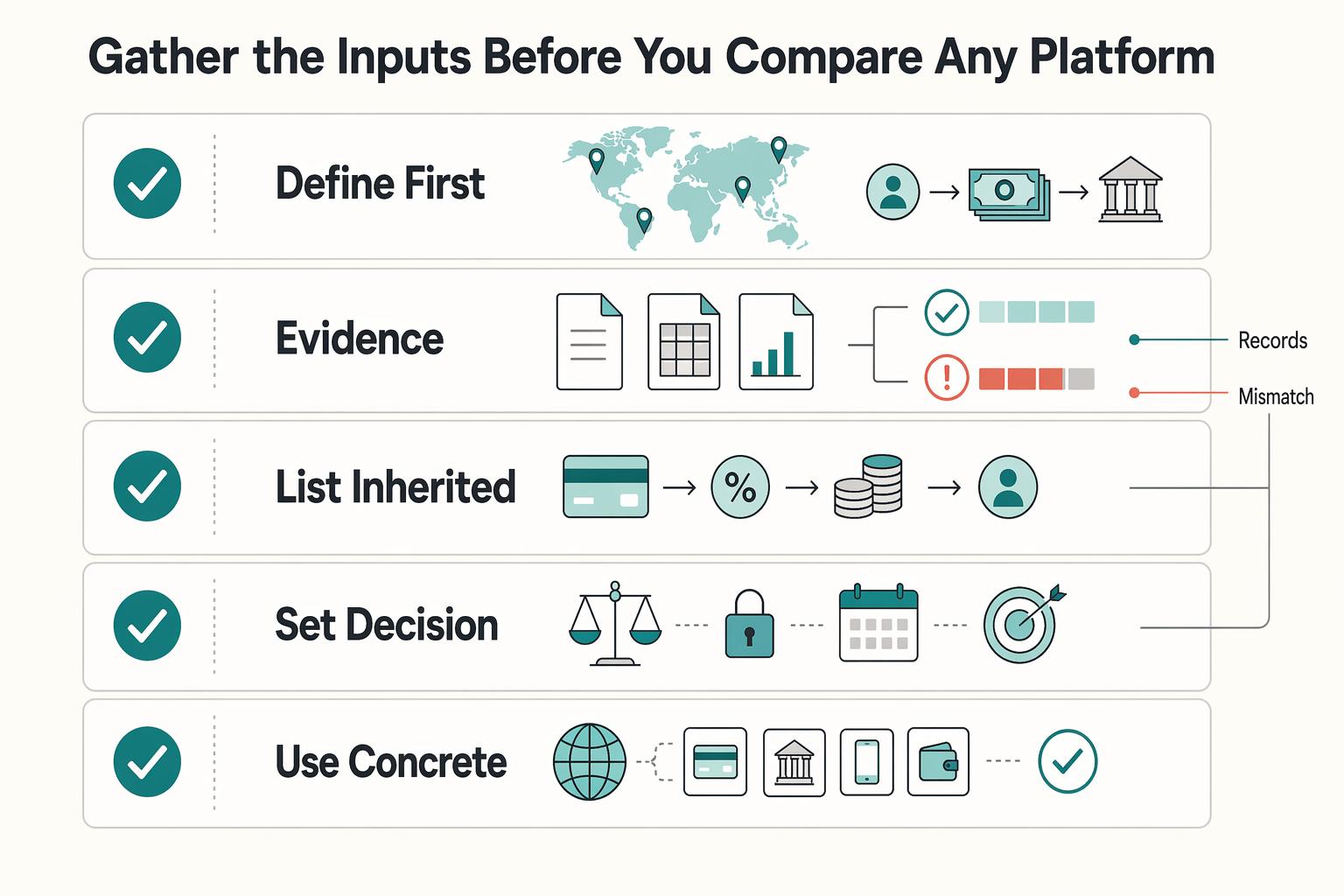
Bring these four things into the rest of this guide:
- A short list of target countries
- Your planned monetization mix, even if it is still rough
- Your current payment and payout provider setup
- One named owner for reconciliation and payout exceptions
If you cannot name who will review failed disbursements or match internal records to provider and bank records, you are not ready to treat expansion as an execution problem yet. Payment reconciliation is the process of matching and comparing transaction records, and it belongs in launch readiness, not cleanup afterward.
Treat go-to-market and payments as one decision#
Stripe's platform launch guidance includes defining pricing and go-to-market strategy. It is a useful reminder that market entry is not just a product build. A country may look attractive on audience demand, but if your payment method mix is a poor fit or your payout timing is weak, the launch can feel broken to users long before revenue scales.
Confirm the actual payment methods supported for each business country, customer location, currency and product. A method available for one-off digital goods may not support subscriptions. Check local-method coverage against audience preference before assigning development work.
Sequence monetization behind payout reality#
Payout availability varies by country and operating context, and initial live timing can be slower than teams expect. Stripe notes that an initial payout is typically scheduled 7 to 14 days after the first successful payment. That is not a small detail if your creators, teams, or tournament operators expect fast access to earnings.
A common risk is launching before settlement timing, payout rails, and exception handling match the user promise. This guide is meant to prevent that. The goal is to give you concrete checkpoints for go-to-market, payment methods, payout rails, and reconciliation before you commit product resources to expansion.
Keep one checkpoint in view from the start. If you cannot track payout activity and exceptions with clear status visibility, usually through provider events or webhooks, you are scaling blind.
For a deeper look at tips, subscriptions, and creator payouts, see Live Streaming Platform Monetization: How to Handle Tips Subscriptions and Creator Payouts.
Set your scale target and monetization baseline#
Set your phase-one monetization baseline around what you can reliably collect, disburse, and reconcile, then scale from there.
Define your real starting mix#
Document your starting mix across sponsorships, advertising, media rights, digital goods, tips, memberships and subscriptions. For each lane, use your actual commercial terms and audience evidence rather than assuming an industry-average revenue split.
For each revenue line, capture:
- who pays you
- who you may need to pay out
- whether the flow is recurring or event-driven
This keeps your model tied to operating reality, not just top-line opportunity.
Choose one primary lane and one supporting lane#
Treat this as execution discipline, not a fixed rule. Trying to launch too many lanes at once raises internal cost and payment-ops complexity. A practical phase-one approach is to prioritize one primary lane and one supporting lane, then assign clear owners for payout exceptions and reconciliation before adding more.
Use the same operating check for each lane:
- who handles failed payouts
- who answers payout-timing questions
- who reconciles provider records with internal records
- who approves payout-policy changes
Set a recurring versus event-driven target#
Write down the revenue cadence and the recipient payout rule separately. Memberships and subscriptions usually recur; sponsorships and media rights may be one-off, installment or recurring under their contracts. Tournament prize obligations follow the published and lawful event terms.
| Revenue line | Flow type | Note |
|---|---|---|
| Memberships | Recurring | Typically recurring |
| Subscriptions | Recurring | Typically recurring |
| Sponsorships | Contract-dependent | May be one-off, installment or recurring |
| Media rights | Contract-dependent | May be one-off, installment or recurring |
| Tournament-linked flows | Event-driven | More event-driven |
Define payout timing and thresholds before launch. For example, a hypothetical $50 threshold means a creator with $40 earned may wait for more earnings; show that remaining amount and the next eligibility condition clearly. Check that the threshold and timing comply with the agreement and applicable obligations.
Use this baseline question: what is the smallest revenue mix we can run cleanly in a new market? That gives you a stronger foundation for country scoring and launch sequencing.
Related: Gaming and Esports Payout Infrastructure: How to Pay Prize Pools Tournament Winners and Streamers.
Prepare the market evidence pack before you build#
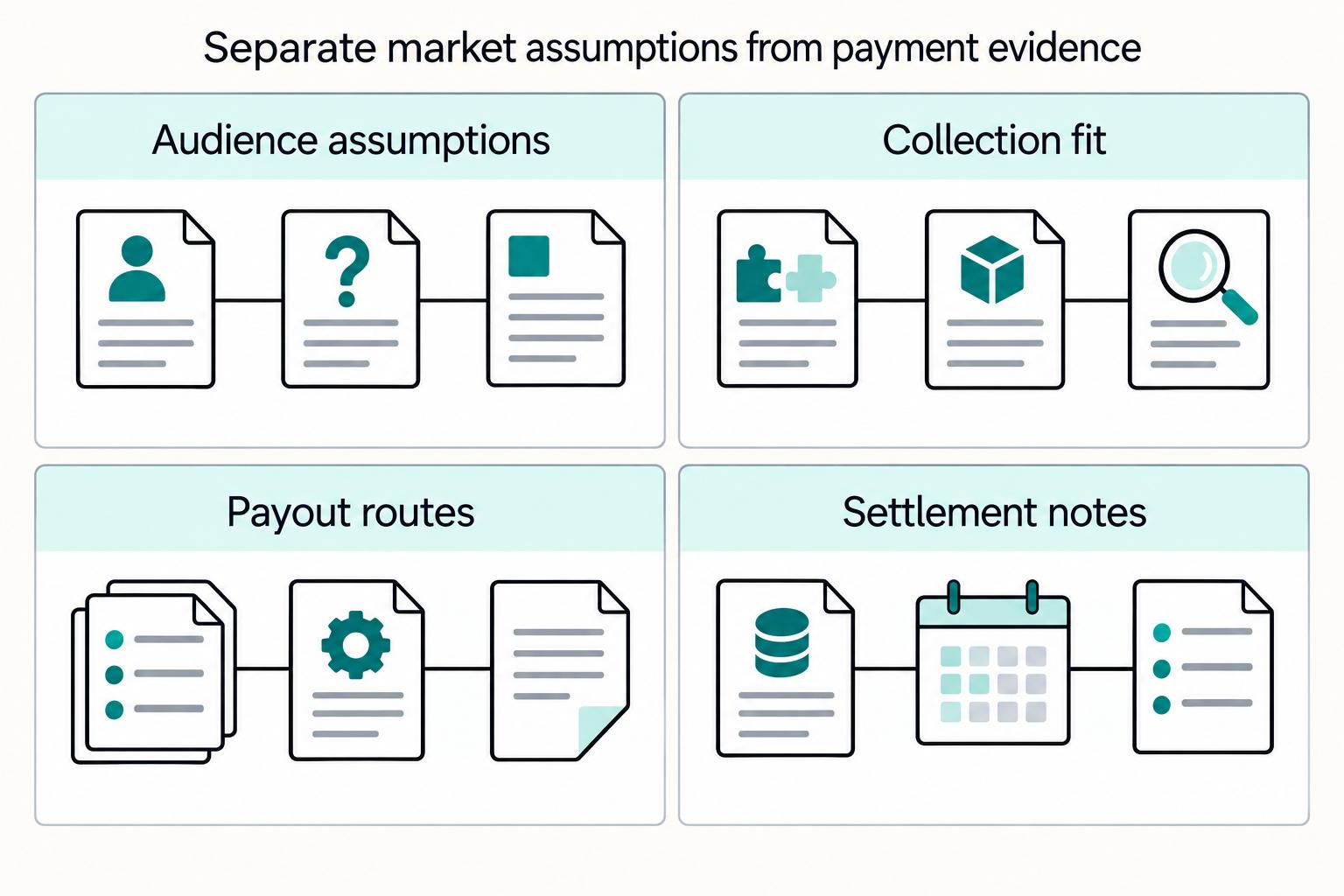
Before you build for a new country, require a per-market evidence pack that clearly separates verified payment capability from directional market signals.
Start with a minimum country file#
For each target country, include:
| Country file item | What to document |
|---|---|
| Target audience profile in game streaming | Who pays you, who you pay out, and where that flow can break |
| Preferred payment methods | Preferred payment methods |
| Known market-specific payment constraints | Known market-specific payment constraints |
| Payout route options in your provider stack | Payout route options in your provider stack |
| Expected settlement timing and payout schedule notes | Expected settlement timing and payout schedule notes |
| Fallback path if a primary rail fails | Fallback path if a primary rail fails |
Keep the audience profile practical: who pays you, who you pay out, and where that flow can break.
Separate verified capability from assumptions#
Mark every line item as verified or assumed so you are not making decisions on blended claims.
Verified: payment-method compatibility is confirmed for country, currency, product, and API capability.Verified: payout routes are confirmed in your stack for that market.Verified: settlement expectations are documented, including that payout schedule choices do not remove underlying settlement delays and first payout timing can vary by country and risk profile.Assumed: demand patterns, creator preferences, and audience behavior inferred from public/editorial inputs.
Add a launch-gate compliance note per market#
Check the legality of the exact model and the provider’s business restrictions before scoring technical readiness. Paid-entry tournaments, prize games and gambling-related activities may be prohibited or require provider review even where locally lawful. Record any required authorization alongside country, currency, account and product eligibility; a working API alone is not launch approval.
Use this evidence pack as a go/no-go gate. If collection fit, payout timing, route fallback, or ownership of exceptions is unresolved, the market is not ready for product commitment.
Score countries by revenue fit and payout feasibility#
Score countries with a go/no-go lens, not demand alone. A market is not launch-ready if payout execution is still fragile.
Use one comparison table so product, finance, and operations evaluate the same signals:
| Country | Demand signal | Monetization fit (subscriptions vs streaming advertising) | payout rails coverage | Operational burden |
|---|---|---|---|---|
| Market A | High / Medium / Low | Clear / Mixed / Weak | Verified / Partial / Unclear | Low / Medium / High |
| Market B | High / Medium / Low | Clear / Mixed / Weak | Verified / Partial / Unclear | Low / Medium / High |
A simple pass/watchlist/not-ready label is enough, as long as each label reflects both revenue fit and payout feasibility.
Apply a delay rule when payout feasibility is weak#
Strong top-line demand is not enough if payout reliability is uncertain. If your model depends on creator or partner disbursements, failed or delayed payouts can damage trust faster than slower market growth.
For Stripe, initial payouts are typically scheduled within 7–14 days depending on country, industry and risk. Keep this example separate from your provider’s actual account estimate, recurring settlement delay and bank arrival time. Do not promise a date until those dependencies fit the offer.
Flag operational risk early#
Mark these as red flags before build:
- fragile settlement timing relative to your user promise
- limited payout fallback paths when failures repeat
- high manual exception load in reconciliation workflows
- unclear ownership for payout-failure resolution across teams
Use the provider’s actual rejection reasons to forecast correction work. Incorrect bank details are one case to test alongside unsupported destinations and uncertain transfer outcomes.
Define go/no-go checkpoints before build#
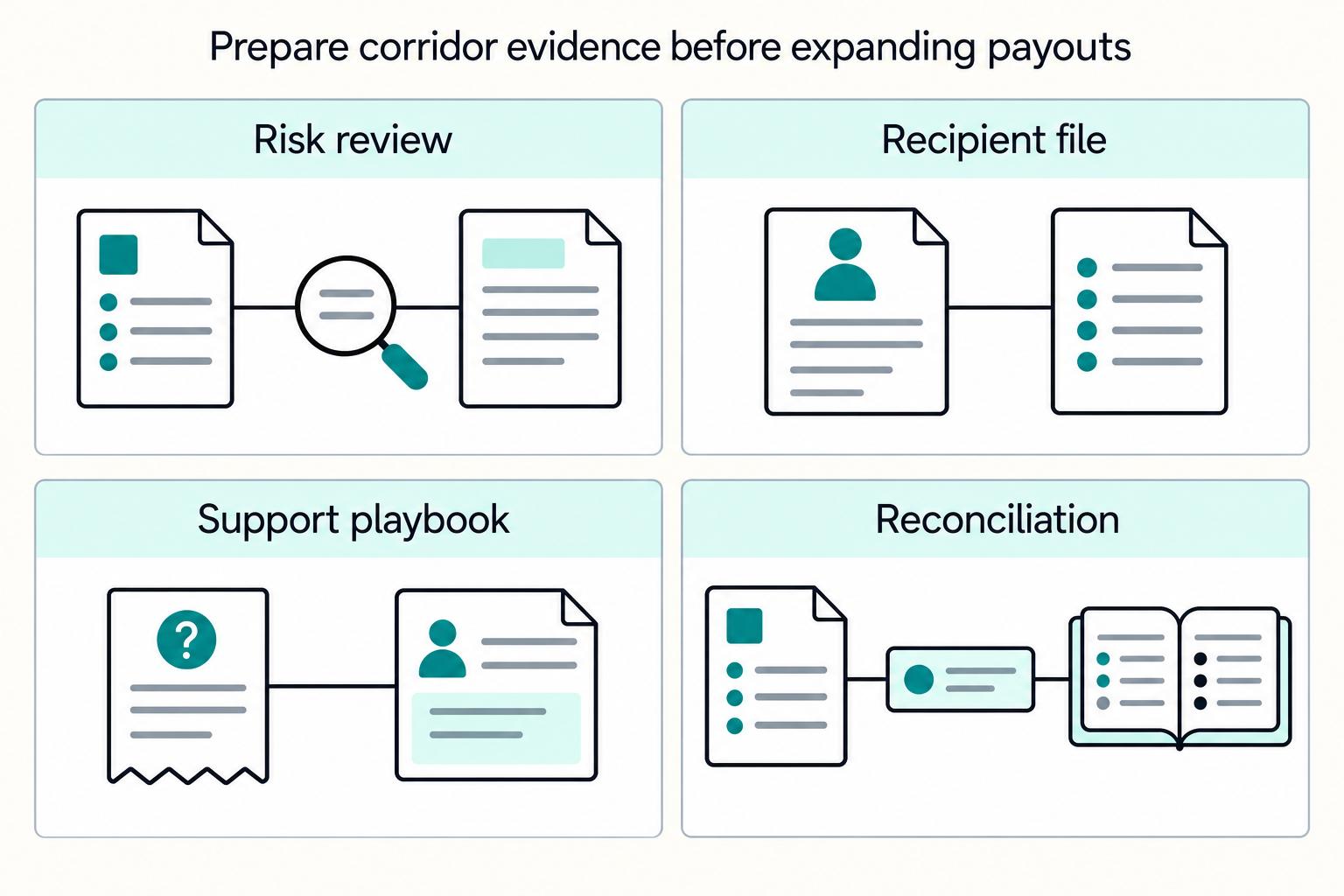
Before you commit product resources, require:
- a stable payout success trend for your intended flow
- a manageable failure queue with a defined handling path
- clear ownership between product and payments ops for exceptions and reconciliation
If those checkpoints are not met, delay expansion and re-sequence the market. That is disciplined rollout planning, not a missed opportunity.
Match monetization models to payout infrastructure requirements#
Start with lanes you can collect, allocate to recipients, pay and reconcile reliably. The table describes collection cadence; set recipient payout timing separately from the earning rule, contract, available funding and supported provider schedule.
| Monetization model | Collection/revenue cadence | Failure impact | Support load | Minimum reconciliation workflows |
|---|---|---|---|---|
| Memberships and subscriptions | Recurring charges over time | Access interruptions and recurring charge failures become visible quickly | Medium to high once volume grows | Recurring billing lifecycle tracking, customer data handling for future charges, and clear retry/failure ownership |
| In-game digital goods and tips | Higher-frequency transaction activity; repeated spend can increase throughput pressure | Payment/payout exceptions can affect user trust fast when earnings cadence matters | High if payout status is not transparent | Event-level payout tracking (for example, webhook-driven status), failed payout handling, and exception queues with clear owners |
| Sponsorships and media rights | Often lower-count, relationship-driven flows, but cadence depends on commercial terms | Fewer counterparties can still create concentrated reconciliation risk when exceptions occur | Variable | Contract-to-payment tracking plus provider/bank record matching for each payout event |
Two constraints should gate sequencing across all lanes: payout availability varies by country and industry, and creator-facing "instant" payout promises require infrastructure that can support immediate balance access and exception handling. Validate sponsorship and media-rights timing patterns directly with partners before launch.
For a more detailed payout scaling playbook, see How to Scale Global Payout Infrastructure: Lessons from Growing 100 to 10000 Payments Per Month.
Decide when instant payouts should be a feature or a cost center#
Offer instant payouts where faster access provides enough value to cover the provider fees, risk and support cost. Keep a clearly priced standard option with its actual account-specific arrival estimate; there is no universal two-business-day or fee-free schedule.
Start with a segment test, not a universal rollout#
Test instant payouts by cohort and destination. Stripe Connect eligibility depends on supported countries, local payout currency, an eligible external account and available balance. Its published typical bank arrival is within 30 minutes; show the estimate alongside limits and exceptions rather than guaranteeing it.
Choose pricing on purpose#
Use one of these models based on your unit economics and positioning:
- absorb the instant payout cost as a platform feature
- pass the fee through to users who choose instant access
- gate instant payouts behind a tier or membership level
Price the selected product and region using the current provider schedule. For example, if a hypothetical provider charges 1.5% on a $200 instant payout, the cost is $3 before any additional charges. Decide whether the platform absorbs that $3 or the user receives $197 under disclosed terms; compare actual fees with the standard option before enabling the feature.
Set failure policy before launch#
Show a clear fallback when instant payout is unavailable or fails. If the provider outcome is unknown, query the existing attempt before making a replacement. If it confirms failure, correct the destination or obtain authorization for a supported alternative, and disclose its timing and any fee difference. Keep the original earning and each attempt linked in the ledger.
Build the launch sequence with operational checkpoints#
Build and test collections, monetization events, payout orchestration and reconciliation together for the first flow. Collecting live money before the payout and recovery path is ready creates an obligation your platform may be unable to meet.
- Set phase-one scope and monetization events. Lock the initial markets and the first monetization lanes you will run live so product and operations are solving for the same launch shape.
- Validate collection coverage before payout scaling. Confirm which payment method families you will support at launch, then align support and product messaging to that exact scope.
- Require retry safety on payout writes. Persist one business obligation and its attempt IDs. Reuse a supported provider idempotency key for retries within its retention window; reconcile an unknown or expired attempt before creating a replacement, including across different providers.
- Build status visibility for asynchronous lifecycle changes. Track payout and exception states with provider events or webhooks, not only synchronous API responses.
- Tie reconciliation to settlement cadence. Define how payout batches will be matched to bank statements and how settlement checks run by market based on your configured payout frequency.
- Assign explicit ownership with role clarity. Decide who approves new payment methods, who owns payout exception queues, and who signs off on country expansion decisions.
- Run checkpoint gates before and after go-live. Use a pre-launch dry run, then a week-one failure review and a month-one settlement audit as operating checkpoints for the markets you launch.
Related reading: Scaling Global Payout Infrastructure and Gaming and Esports Payouts.
Common mistakes that stall expansion and how to recover#
Expansion usually stalls when market opportunity is treated as enough, even though payment operations, payout experience, and exception handling determine whether a launch holds up.
| Mistake | Recovery |
|---|---|
| Choosing markets on demand alone | Re-rank markets only after payout readiness and operational constraints are clear |
| Over-indexing on subscriptions while underbuilding payout and support flows | Keep the monetization mix realistic for the market and ship payout reliability and support workflows as first-order milestones |
| Launching instant payouts without clear economics | Offer instant payouts with clear eligibility and monitor support load and margin impact before broad rollout |
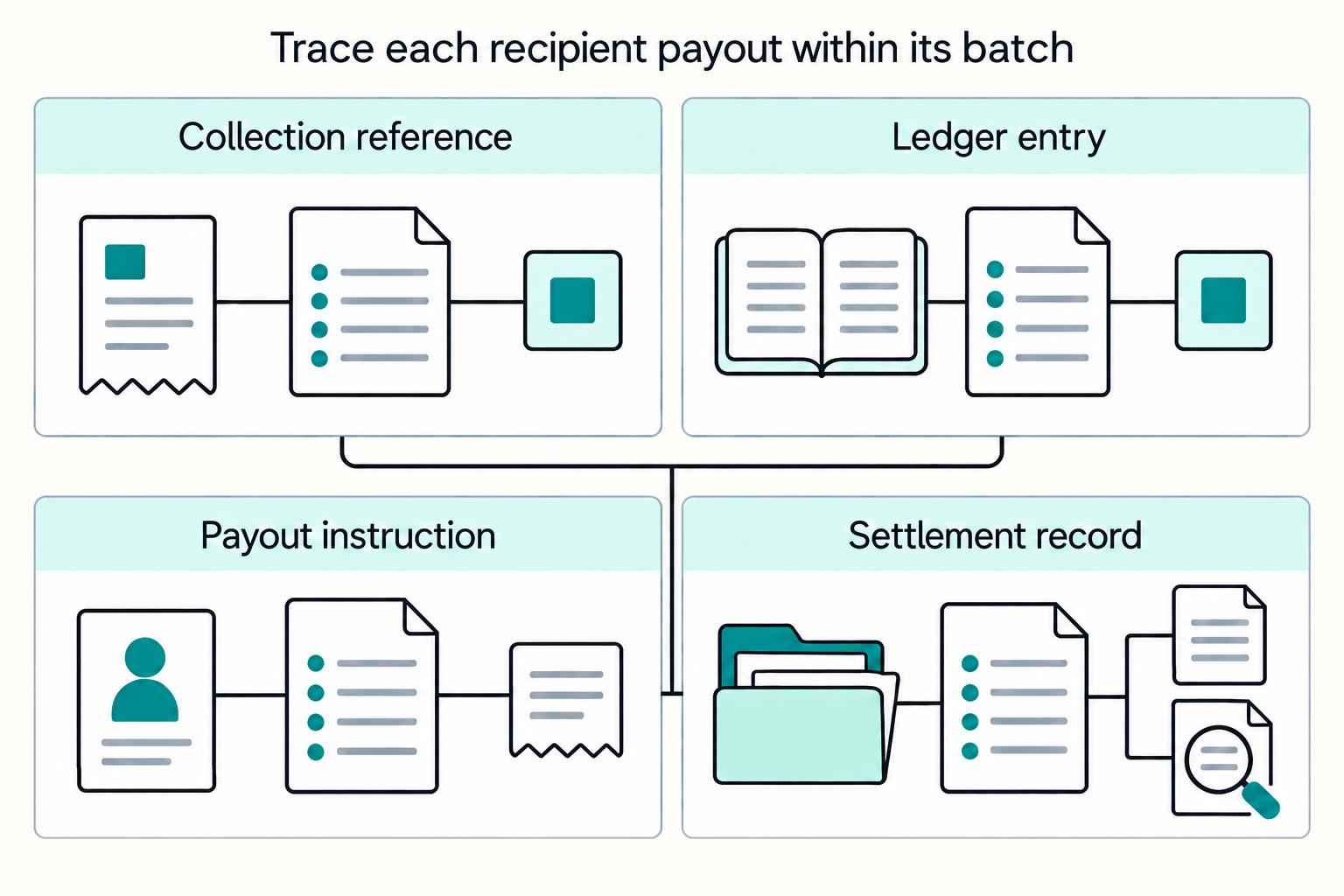
| Treating reconciliation as back-office cleanup | Enforce ledger-to-provider matching, define exception queues, and assign explicit owners before adding new markets |
Mistake 1: Choosing markets on demand alone#
High demand is not a launch plan if payout feasibility is still unclear. In gaming payments, expansion decisions also sit under consumer-protection, privacy, and financial-crime scrutiny, so headline growth alone is a weak filter. Recover by: re-ranking markets only after payout readiness and operational constraints are clear.
Mistake 2: Over-indexing on subscriptions while underbuilding payout and support flows#
Subscriptions still need cancellation, failed-charge recovery and reliable creator payouts. Choose an ad-supported or recurring mix from your audience and actual margins; one streaming-market trend does not establish the right mix for a gaming platform. Recover by: keeping the initial mix operable and funding payout reliability and support.
Mistake 3: Launching instant payouts without clear economics#
Instant payouts add a direct unit cost. Compare current fees, failed-attempt treatment and support work with the actual standard route; avoid assuming the slower option is always free or arrives in two days. Recover by: testing eligible cohorts and monitoring net margin and correction load.
Mistake 4: Treating reconciliation as back-office cleanup#
Expansion breaks when reconciliation and exception handling are unclear. If nobody owns matching internal records to provider and bank outcomes, issues linger and launch risk compounds. Recover by: enforcing ledger-to-provider matching, defining exception queues, and assigning explicit owners before adding new markets.
The pattern is consistent: expansion fails when teams confuse demand with operational readiness. Recovery starts when payout feasibility, economics, and exception ownership are part of the go/no-go decision.
For a step-by-step walkthrough, see How OTT Platforms Handle Billing Trials and Churn in Streaming Subscriptions.
Conclusion#
Expansion in streaming and esports is not just a demand problem. It is also a money-movement problem with a go-to-market wrapper. Teams that scale more reliably tend to treat monetization, payment methods, payout timing, and reconciliation as one system.
Start with a focused list of countries and a revenue mix that goes beyond a single model. Build a market evidence pack before product work starts. Score countries on revenue fit, payment-method support, settlement behavior, payout feasibility, and compliance risk, not just excitement. Match the monetization lane to payout reality. Be explicit about when faster payouts are core to the product and when they are an added cost. Then launch with checkpoints that give finance, product, and operations a shared view of what "ready" means.
If you do that, you reduce the chance that growth gets blocked by preventable payment failures. More importantly, you create a launch plan that can survive first contact with real users, real payouts, and real reconciliation work.
Frequently Asked Questions
What should come first: market demand or payout feasibility?
Evaluate them together. A market with real demand can still be the wrong near-term choice if you cannot collect with the right methods, disburse in a way that fits the offer, or support the compliance and trust expectations of that market.
How many monetization lanes should we launch with?
Start with a focused mix instead of launching every lane at once. Game monetization extends beyond up-front pricing, so use an initial model set you can operate reliably, then expand as payment operations stabilize.
Why do recurring and event-driven models need to be separated early?
Collections and earnings allocation can follow different cadences. Subscriptions need recurring-charge capability, while sponsorship and prize payments follow their contracts. Define when revenue becomes payable to each recipient, how refunds affect it and how each payment reconciles.
When do payout thresholds and timing assumptions need to be documented?
Before product work is deep, not after launch issues appear. Even a simple minimum-payout threshold can change how users interpret when they will receive money. Timing matters just as much because settlement timing varies by country and payment method, so teams need this documented before they make promises.
Why is reconciliation part of launch readiness?
Because unresolved payment mismatches can become support, finance, and trust issues. If reconciliation starts only after launch, teams have less visibility into problems and spend more time diagnosing issues under pressure.
What makes a country ready for launch?
Launch readiness requires lawful and provider-approved activity, verified collection and payout paths, acceptable settlement timing and economics, and a tested correction and reconciliation owner. Check the exact account, country, currency and product instead of treating API coverage as authorization.
Try a related tool
Where Gruv fits
Plan and approve payout batches
See how payee status, approval rules, route review, and exception handling sit in one payout workflow.
See reconciliation and mismatch review
Compare ledger entries, provider payment records, and statement rows to see what matches and what finance needs to review.
Researched and edited by the Gruv editorial team. Gruv builds cross-border billing, payouts, and finance-operations software for global businesses.
Sources
Includes 1 external source outside the trusted-domain allowlist.
Educational content only. Not legal, tax, or financial advice.
Related Posts
Scaling a Global Payout Platform from 100 to 10000 Monthly Payments
Scaling a global payout platform is rarely just a vendor problem. More often, it is an infrastructure and operating-discipline problem, because cross-border payments still carry persistent issues around cost, speed, access, and transparency. If growth is framed as "one more provider" or "higher API throughput," breakpoints can show up in finance, support, compliance, and reconciliation.
Gaming and Esports Payout Infrastructure for Tournament Winners and Streamers
Prize pools are easy to see. The harder part is getting money to the right people, with the right checks, across borders.
Comparing Live Streaming Monetization: Tips, Subscriptions, Pay-Per-View, and Creator Payouts
A lot of advice on live stream monetization focuses on creators deciding where to publish. Founders and operators need a different lens: choose revenue features and payout design together. The right model depends not only on audience demand, but also on what you are selling, who you are selling to, and whether you can support the money movement behind it.