
Quick Answer
Compare live streaming monetization options by tracing one full transaction from viewer purchase to creator payout and measuring margin predictability, payout reliability, reconciliation burden, and speed to launch. Subscriptions often offer the lowest-ambiguity rollout path, while tips and pay-per-view need tighter support, exception handling, and payout ownership before they should become core revenue pillars.
How Tips, Subscriptions, PPV, and Creator Payouts Differ#
A lot of advice on live stream monetization focuses on creators deciding where to publish. Founders and operators need a different lens: choose revenue features and payout design together. The right model depends not only on audience demand, but also on what you are selling, who you are selling to, and whether you can support the money movement behind it.
That is why the options can look simpler than they are. Some platforms lean on ads and tips, while others support subscriptions and ticketed access. Tips usually mean live chat products like Twitch Bits, YouTube Super Chat, and YouTube Super Stickers. Ticketed access and pay-per-view are closer to event sales, where viewers pay once for a class, concert, workshop, or special stream. These revenue shapes behave differently, and they create different support and reconciliation work once creators expect payouts on time.
Headline split claims rarely tell the whole story. One example is YouTube Supers, where creators receive 70% of Supers money after fees under the Commerce Product Module. That is useful, but it is not enough to make an entry decision. You still need to know what surrounds that share in your business: which fees are visible, which party controls policy changes, how exceptions are handled, and whether finance can trace a viewer payment into a creator payout without guessing. You see the same issue with vendors. Vimeo OTT, for example, is cited as using both a per-subscriber fee and a share of one-time sales, which means the commercial shape can vary by monetization type.
A practical starting rule is simple: do not treat any monetization feature as a core revenue pillar until you can explain one complete transaction from purchase to payout. Check at least one complete subscription, tip, or ticketed sale end to end and confirm the same take-home number appears in product, finance, and payout records. If you cannot do that, common failure modes include creator support tickets, hard-to-explain margin erosion, and rollout delays.
You should also decide early what evidence you will require before launch. At minimum, keep an evidence pack with fee terms, payout timing terms, who owns dispute or failure handling, and the records you will use to verify creator earnings. If a model looks attractive but the fee picture is opaque or the payout owner is unclear, treat it as pilot only.
In the sections that follow, you will build a comparison method that puts subscriptions, tips, and pay-per-view on the same operator criteria. You will also get a rollout sequence, failure checks, and a launch checklist you can use before committing product and market resources. The first move is to gather the inputs that make those comparisons real.
Related: Debit Card Push Payouts: How Platforms Deliver Funds Directly to Any Visa or Mastercard Debit Card.
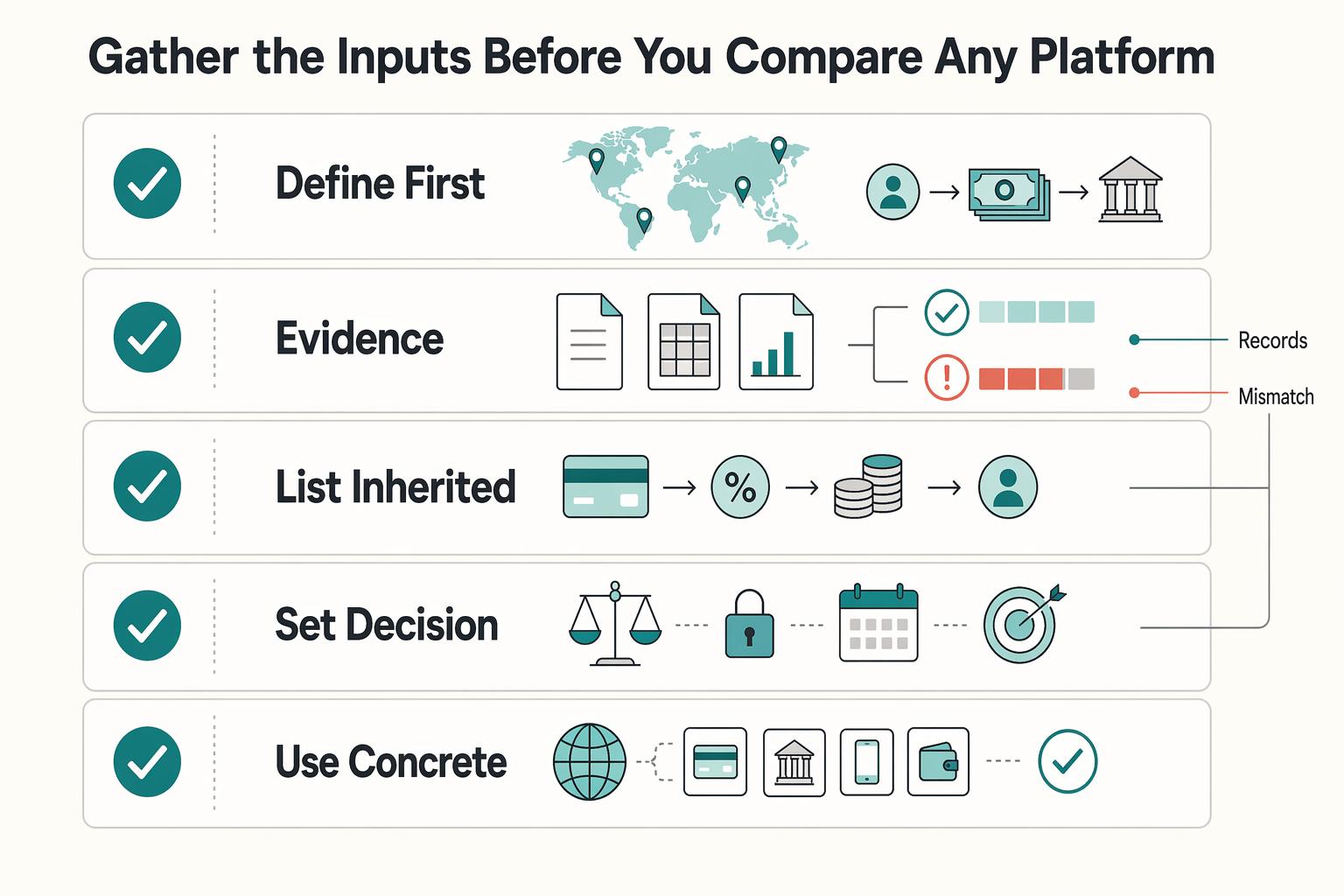
Gather the inputs before you compare any platform#
Start with markets and money movement, not feature grids. That is where country-level pricing differences, fee layers, and payout ownership become visible.
- Define your first launch markets.
Choose the specific countries first, then compare subscriptions, tips, Twitch Bits, and pay-per-view. A model can look strong in product terms but still break your assumptions if country-specific payment-method pricing overrides generic fee listings. Check: for each country, map expected payment methods and confirm pricing from that country's fee page.
- Build a one-page evidence pack for your monetization mix.
Document your target mix, expected payout frequency, payout-failure support model, and known fee components. For example, Stripe lists 2.9% + 30¢ for domestic cards, with +1.5% for international cards and +1% for currency conversion; those inputs can materially change margin. Check: product, finance, and support should all be able to trace one sample transaction from purchase to payout using this same page.
- List inherited dependencies and fee ownership.
If you use Stripe directly or through partners such as Vimeo OTT or Crowdcast, record who controls fees, holds, and escalations. Treat managed payments assumptions carefully: Stripe states a 3.5% Managed Payments fee per successful transaction, and that fee is additive to standard processing fees. Check: each dependency has a clear owner, support path, and failure-handling path for delayed funds or failed payouts.
- Set decision criteria before demos.
Use fixed criteria: margin predictability, payout reliability, reconciliation burden, and speed to launch. If Stripe Connect is in scope, model the pricing path you are choosing, including $2 per monthly active account and 0.25% + 25¢ per payout sent where applicable; "monthly active" includes months when payouts are sent. Check: if fee inputs, payout responsibility, or reconciliation artifacts are unclear, keep the option in pilot status.
Useful operating habits:
- Keep one owner for the evidence pack.
- Use concrete examples instead of blended averages, for example one domestic card case and one international/currency-conversion case.
- Track unknowns explicitly so unresolved items do not get treated as launch-ready.
- Separate creator-facing feature appeal from payout-operability readiness.
Once these inputs are in place, the comparison gets sharper: you are deciding what you can reliably operate, not just what looks attractive.
For the payment infrastructure behind 1-to-many monetization, see How to Build a Platform for the Creator Economy: Payment Architecture for 1-to-Many Monetization.
Build one comparison table that normalizes monetization options#
Use one normalized table. Keep any model in pilot until finance can explain monthly inputs and outputs without assumptions.
| Model | Revenue type | Fee visibility | Payout complexity | Policy risk | Dispute handling owner | Payout status visibility | Webhook dependence | Reconciliation artifacts |
|---|---|---|---|---|---|---|---|---|
| YouTube Channel Memberships | Recurring fan subscriptions | Unconfirmed until you verify with the provider; treat as platform-mediated until documented | Medium: recurring shape is clearer, but reporting and payout flow are platform-dependent | Medium to high: monetization depends on YouTube monetization policies, and market access can change | Platform-mediated unless your contracts/processes define otherwise | Verify from actual platform reports before calling it core | Depends on your internal integration design | Use platform statements plus internal ledger checks |
| YouTube Super Chat | Live tipping during streams | Treat as unconfirmed until you verify with the provider | Medium to high: live spikes raise support and reconciliation load | High: eligibility/policy controls apply; some monetization decisions may take up to 24 hours | Platform-mediated unless separately documented | Validate event-level visibility before scale | Depends on your internal integration design | Require event-level transaction-to-payout trace |
| YouTube Super Stickers | Live purchase tied to stream/chat context | Treat as unconfirmed until you verify with the provider | Medium to high: similar operational pattern to other live purchases | High: same policy and market-access exposure as other YouTube monetization features | Platform-mediated unless separately documented | Validate at the same granularity as live tips | Depends on your internal integration design | Require consistent records across product, finance, and support |
| Twitch Bits | Live tipping-style chat monetization | Treat as unconfirmed until you verify with the provider | Medium to high: platform-mediated reporting plus bursty live behavior can complicate ops | Medium to high: platform rules mediate access/economics; revenue outcomes can be uneven across streamers | Platform-mediated unless separately documented | Confirm what creators see matches finance records | Depends on your internal integration design | Require clear buyer-payment to creator-earnings mapping |
| Pay-per-view (PPV) | One-time event/ticket purchase | Varies by provider and market; not established | High if event support and payout paths are not fully mapped | Medium: policy risk varies by provider setup | Must be contractually explicit before launch | Must be visible at event and payout level | Depends on your internal integration design | Require event-day and post-event settlement trail |
| Uscreen | Treat as unconfirmed until you verify with the provider | Treat as unconfirmed until you verify with the provider | Treat as unconfirmed until you verify with the provider | Treat as unconfirmed until you verify with the provider | Treat as unconfirmed until you verify with the provider | Treat as unconfirmed until you verify with the provider | Treat as unconfirmed until you verify with the provider | Treat as unconfirmed until you verify with the provider |
| Patreon | Treat as unconfirmed until you verify with the provider | Treat as unconfirmed until you verify with the provider | Treat as unconfirmed until you verify with the provider | Treat as unconfirmed until you verify with the provider | Treat as unconfirmed until you verify with the provider | Treat as unconfirmed until you verify with the provider | Treat as unconfirmed until you verify with the provider | Treat as unconfirmed until you verify with the provider |
| Kajabi | Treat as unconfirmed until you verify with the provider | Treat as unconfirmed until you verify with the provider | Treat as unconfirmed until you verify with the provider | Treat as unconfirmed until you verify with the provider | Treat as unconfirmed until you verify with the provider | Treat as unconfirmed until you verify with the provider | Treat as unconfirmed until you verify with the provider | Treat as unconfirmed until you verify with the provider |
| Thinkific | Treat as unconfirmed until you verify with the provider | Treat as unconfirmed until you verify with the provider | Treat as unconfirmed until you verify with the provider | Treat as unconfirmed until you verify with the provider | Treat as unconfirmed until you verify with the provider | Treat as unconfirmed until you verify with the provider | Treat as unconfirmed until you verify with the provider | Treat as unconfirmed until you verify with the provider |
Decision rule: if a model cannot be explained in a monthly finance review with clear inputs, outputs, and reconciliation artifacts, do not treat it as a core revenue pillar yet.
If subscriptions are part of your model, Streaming Platform Churn Analysis: Why Subscribers Leave OTT Services and How to Win Them Back covers the retention side.
Model creator take-home and your margin before feature rollout#
Do not roll out a monetization feature until you can model creator take-home and platform margin from the same transaction path. Use one formula across models:
- creator take-home = gross receipts - platform share - processing fees - payout costs
- your margin = gross receipts - creator take-home - remaining platform costs
Start with one complete transaction view for each model, and keep unknowns explicit.
- Viewer payment amount
- Known processing fees
- Known platform or vendor fees
- Known payout-related costs
- Creator take-home
- Your remaining margin
- Unknown components that still need proof
Stress-test assumptions across model types before rollout, especially high-volume tipping flows versus recurring subscription flows. Headline splits can look strong while reconciliation and payout operations still create friction.
Approve launch only when product, finance, and ops can reproduce the same take-home outcome from transaction records and ledger exports. If any fee component is still unknown for a target market, mark that model as pilot only, not scale ready.
For a broader look at creator monetization models, see Monetization Models for Creator Platforms: Subscriptions Tips Ads and Revenue Share.
Sequence rollout by market constraints and compliance gates#
Roll out in stages, not all at once. Launch the smallest mix of markets and monetization models that can still prove the business case, then expand only after operations are stable.
Start with the lowest-ambiguity path#
Sequence by operational clarity, not feature excitement. In practice, that usually means starting with subscriptions, then adding tips, then adding pay-per-view once refund, chargeback, and event-support workflows are working in production.
For each market, keep the scope in pilot if any core ownership is still unclear:
- expected viewer payment methods
- country-level fee assumptions you are using
- payout timing ownership
- failure and exception ownership
- records used to verify creator earnings
Treat compliance checks as launch gates#
If KYC/AML gating or payout policy checks are not finalized for a market, keep creator cash-out expansion on hold even when monetization features are live. A feature is not production-ready until you can trace one full transaction from purchase to creator payout using the records your teams will actually operate with.
Separate partner terms from your obligations#
Platform program terms can shape how monetization works, but they do not replace your operating responsibilities. Be explicit about where external terms end and where your payout, support, reconciliation, and escalation duties begin.
Use explicit country-by-country go/no-go checks#
Keep each launch wave small by country and vertical, and require a clear go/no-go decision before expansion. At minimum, make that decision on payout timing reliability, exception handling readiness, and support coverage.
Design payout operations that hold up under failure#
Design payout operations so failure is traceable, explainable, and clearly owned. Creator trust is tested most when funds are delayed, records do not match, or a payout does not complete.
The goal is not a perfect system on day one. It is a system your teams can diagnose quickly and operate consistently under pressure.
Start with ownership#
Set a single accountable owner for each step of money movement. If ownership is vague, failure handling will be vague too.
- who owns the buyer-side record
- who owns the creator-earnings record
- who owns payout initiation
- who owns support when funds are delayed
- who owns escalation when a payout fails
Build one transaction trail#
Build one reliable trail that answers a creator's core question: "How did this payment become this payout amount?"
That trail should let your teams verify:
- the viewer payment happened
- the expected fees were applied
- the creator earning amount was calculated as intended
- the payout amount matches the earning record
- any delay or failure has a clear owner and status
If you cannot produce this trail, support and finance will end up reconstructing answers manually.
Prepare support language before launch#
Define plain-language payout explanations before launch so support can answer consistently.
Support should be able to explain:
- what a creator should expect to receive
- when the creator should expect it
- what can change that timing
- what happens if a payout fails
- where the creator can see the records used to verify earnings
If basic payout questions always require escalation, your operating model is still too opaque.
Reconcile around real failure points#
Test the routine failure checks first, not just ideal flows.
- Does product show the same amount finance expects?
- Does finance show the same amount the payout system sends?
- Can support explain a delay without guessing?
- Does escalation change depending on whether a partner is involved or the flow is managed directly?
Run those checks with one subscription, one tip, and one ticketed event example. If any one of them breaks the trail, fix it before broad rollout.
Related reading: How to Build a SaaS Marketplace That Manages Subscriptions and Contractor Payouts.
Choose where to partner and where to own the stack#
Partner for launch speed early, then own payout policy, fee transparency, and reconciliation controls sooner if cross-border growth and margin discipline are strategic.
Partner-heavy is usually better first when#
- you need to launch quickly
- payout ownership is explicit
- fee logic is understandable enough to explain to creators
- records are complete enough for reconciliation and support
This path works when the partner flow is operationally clear, even if the economics are not the most optimized on day one.
Own more of the stack when#
- payout policy and fee transparency are core to your model
- reconciliation quality drives finance and support load
- you need direct control over monetization and payout decision points
- your team is ready to run the operational detail
Use a boundary test before you commit#
If payout policy, fee transparency, or reconciliation is opaque in a partner flow, keep that layer outside your core dependency.
A practical test is to walk one subscription and one tip from buyer charge to creator outcome and ask: can your team clearly explain what happened, who owns each step, and what changes when platform rules apply? On Twitch, monetization access depends on creator category and onboarding, and accounts without qualification have no monetization tools. On YouTube Live, pre-roll ads are auto-enabled when monetization is on, mid-rolls can be inserted, and ad serving is not guaranteed for every viewer. Those constraints are manageable, but only if your ownership boundaries are explicit.
Avoid the mistakes that break monetization at scale#
At scale, monetization usually breaks because of avoidable build-stage mistakes, not one catastrophic event. Keep your core monetization flow reliable first, then expand.
Mistake 1. Choosing a model from top-line split claims only#
A headline split is not the full operating picture. Recovery: re-rank options using creator take-home outcomes and observed payout failure or delay patterns in your own system, not split claims alone.
Mistake 2. Launching tips before support readiness#
Tips can surface exceptions quickly once volume builds. Recovery: define response ownership, support expectations, and clear status messaging before broad rollout.
Mistake 3. Mixing market launches without country checks#
Comparing monetization options without market-by-market checks creates false confidence. Recovery: use country-specific eligibility and payout-policy checklists before launch decisions.
Mistake 4. Treating payout retries as manual ops work#
Manual retry handling does not scale and weakens reliability. Recovery: enforce idempotent retries and consistent exception states so teams can resolve issues without ad hoc workflows.
We covered related operating patterns in How Streaming Gaming Platforms Scale with Monetization and Payout Infrastructure.
Make the decision and run this launch checklist#
Choose the monetization model you can run end to end in your first markets, not the one with the best headline. Before launch, confirm your mix, your payout operations, and your pilot gates in one shared operating view.
Decision checklist#
- Confirm your primary monetization mix and backup mix by launch market, with explicit go/no-go rules.
- Approve one normalized comparison table and one take-home margin model used by product, finance, ops, and support.
- Document fee terms, payout timing terms, failure ownership, and earnings-verification records for each monetization type.
- Treat options as trade-offs in fees, features, and operations, not a universal "best" choice.
- Verify payout qualification and program-access requirements before committing; additional criteria can apply.
- Keep legal and compliance requirements as a launch prerequisite.
- Verify payout operations: idempotent event handling, exception queues, reconciliation exports, and policy-gated releases.
- Test one full transaction flow per monetization type and confirm the same creator take-home appears across product, finance, and payout records.
- Publish plain-language support guidance for payout timing, delays, and failures, with clear ownership and escalation paths.
- Pilot in one market segment, measure payout reliability and support load, then expand only after checkpoint targets are met.
- Keep partner coverage claims qualified as "where supported" and "coverage varies by market/program," then validate before commitment.
Final decision rule#
If two options are close, pick the one with the clearest transaction trail and the most predictable operations in your first markets. Keep rollout expectations realistic: earnings outcomes vary widely, and significant results may take 6-12 months or more.
Frequently Asked Questions
How do I compare subscriptions, tips, and Pay per view fairly?
Compare them with one normalized table and one complete transaction view for each model. Measure margin predictability, payout reliability, reconciliation burden, and speed to launch. Then test one subscription, one tip, and one ticketed sale end to end.
Is the highest creator share always the best starting point?
No. A headline creator-share number does not equal final take-home after platform, processing, and payout costs. Weak fee visibility, payout ownership, or reconciliation can erase the apparent advantage.
Should I launch with tips or subscriptions first?
Start with the monetization type you can support most clearly in your first markets. The article recommends sequencing by operational clarity, which often means subscriptions first, then tips, then pay-per-view after refund, chargeback, and event-support workflows are stable. Do not choose by habit alone.
When should a monetization type stay in pilot?
Keep it in pilot when fee inputs, payout responsibility, payout eligibility rules, or reconciliation artifacts are unclear. It should also stay in pilot if product, finance, and support cannot explain one complete transaction with the same records. Do not treat it as a core revenue pillar yet.
What is the minimum evidence I should require before launch?
At minimum, document fee terms, payout timing terms, dispute or failure ownership, and the records you will use to verify creator earnings. Then confirm the same take-home number appears across product, finance, and payout records. Also separate monetization-tool access from payout qualification in your launch checklist.
What is the biggest finance mistake in these rollouts?
The biggest finance mistake is incomplete fee modeling. Teams include the obvious payment fee but miss additional layers, market-specific differences, or payout-related pricing. That distorts margin assumptions and complicates reconciliation.
What is the biggest support mistake?
The biggest support mistake is launching before support can explain creator earnings, payout timing, and payout failures in plain language. If basic questions always require escalation, the operating model is still too opaque. Creators will experience the system as unreliable even when the root issue is poor operational design.
Try a related tool
Researched and edited by the Gruv editorial team. Gruv builds cross-border billing, payouts, and finance-operations software for global businesses.
Sources
- evpforfa.unm.edu/ff-meetings/february_e-book-2024rev.pdftrusted
- evpforfa.unm.edu/annual-reports/2019-2020-annual-report.pdftrusted
- govinfo.gov/content/pkg/GPO-UA-1999-11-22/html/GPO-UA-19...trusted
- grants-neubauercollegium.uchicago.edu/files/uploaded-files/index.jsp/Creator%20Mon...trusted
- grants-neubauercollegium.uchicago.edu/About/virtual-library/default.aspx/creator_m...trusted
- pmc.ncbi.nlm.nih.gov/articles/PMC10208186trusted
- pmc.ncbi.nlm.nih.gov/articles/PMC10105142trusted
- stripe.com/pricingtrusted
Educational content only. Not legal, tax, or financial advice.
Related Posts
Choosing Creator Platform Monetization Models for Real-World Operations
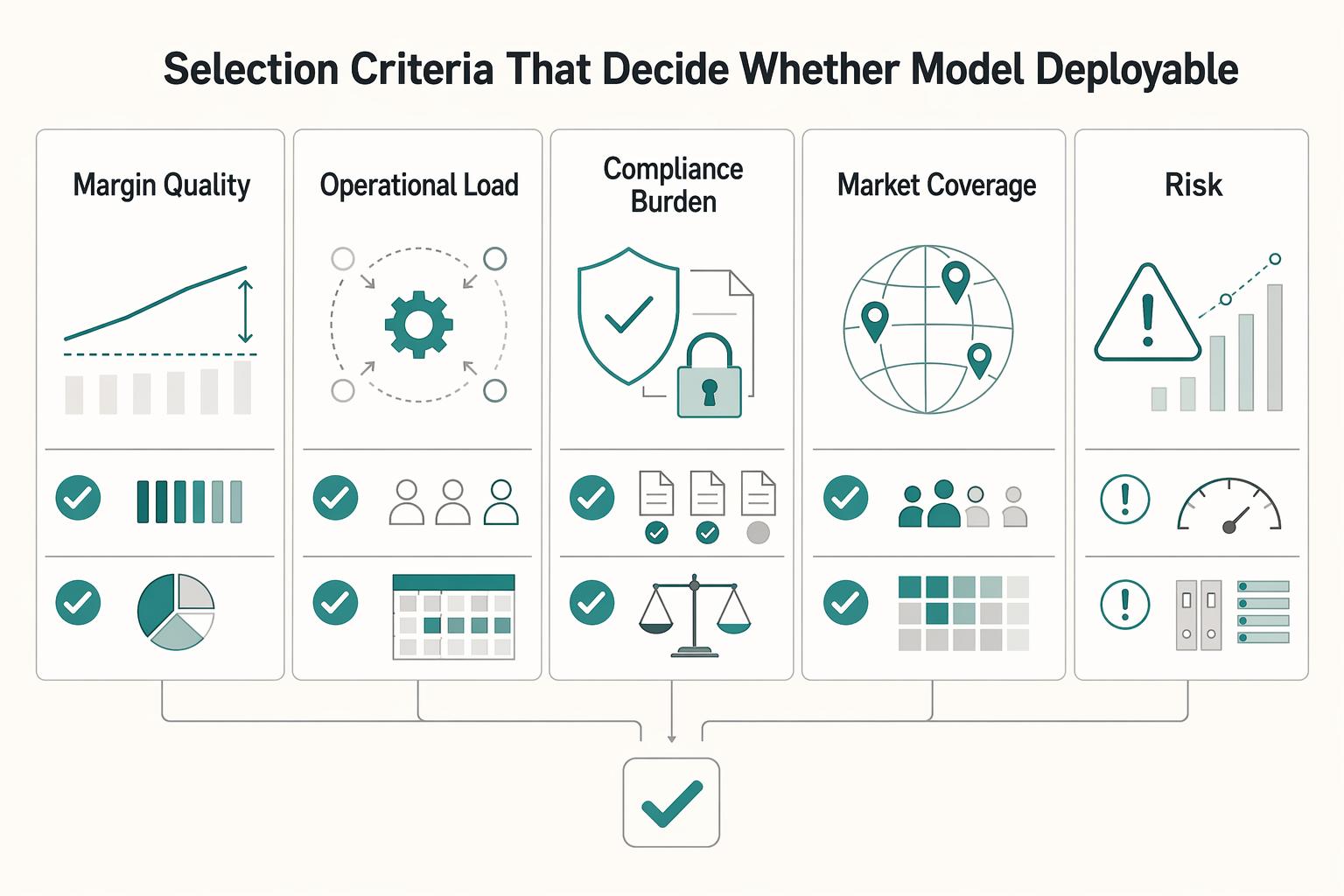
Popularity alone can be a poor way to choose among creator platform monetization models. If a model only looks good during a viral spike, a sponsorship burst, or a one-time product drop, it is a weak base for product and go-to-market bets.
Choosing Visa Direct or Mastercard Send for Debit Card Push Payouts
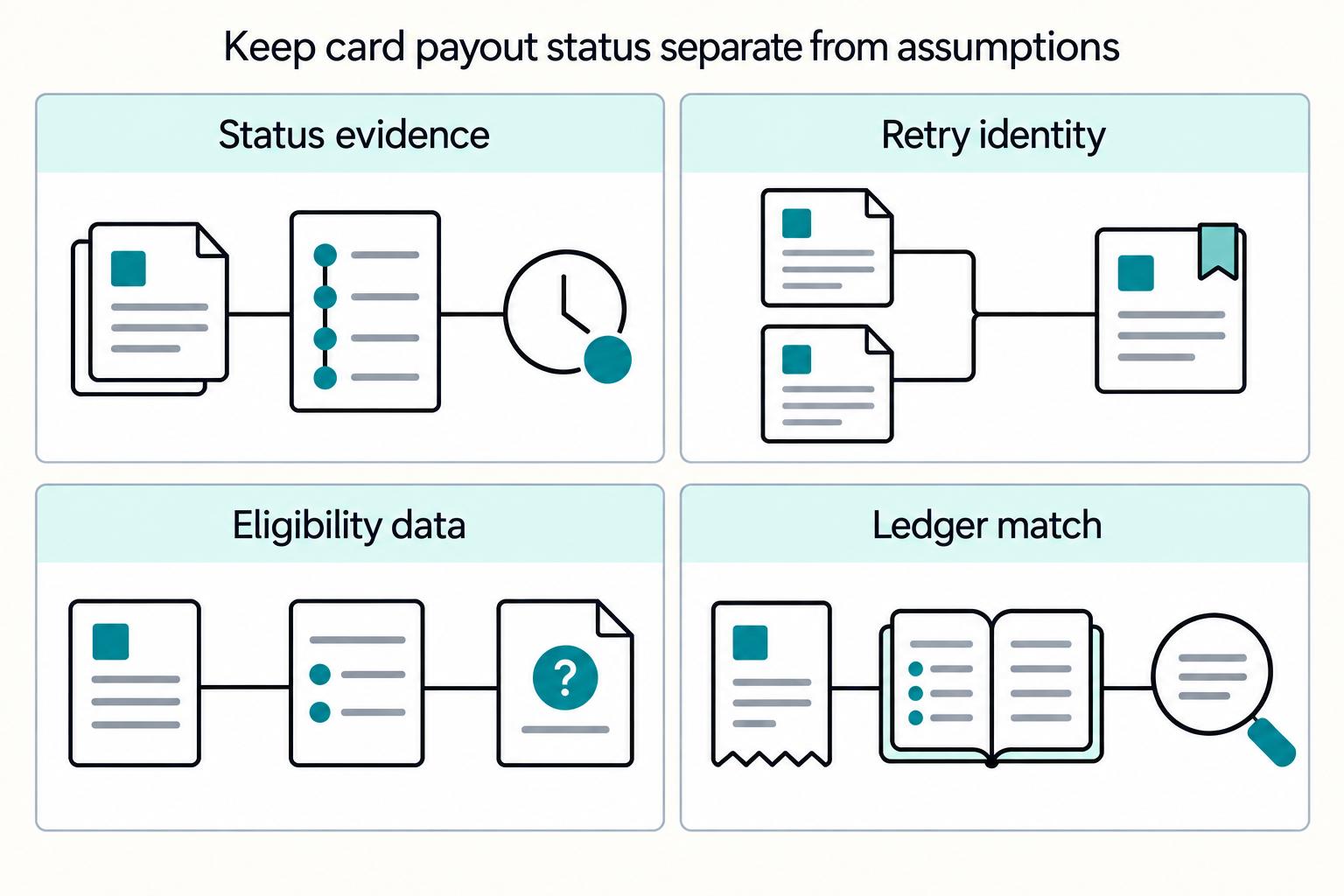
The core decision is usually not "Visa Direct or Mastercard Send?" in isolation. Start with your recipient card mix, your tolerance for payout exceptions, and how much integration and operational complexity your team can absorb right now.
Building a Creator-Economy Platform with 1-to-Many Payment Architecture
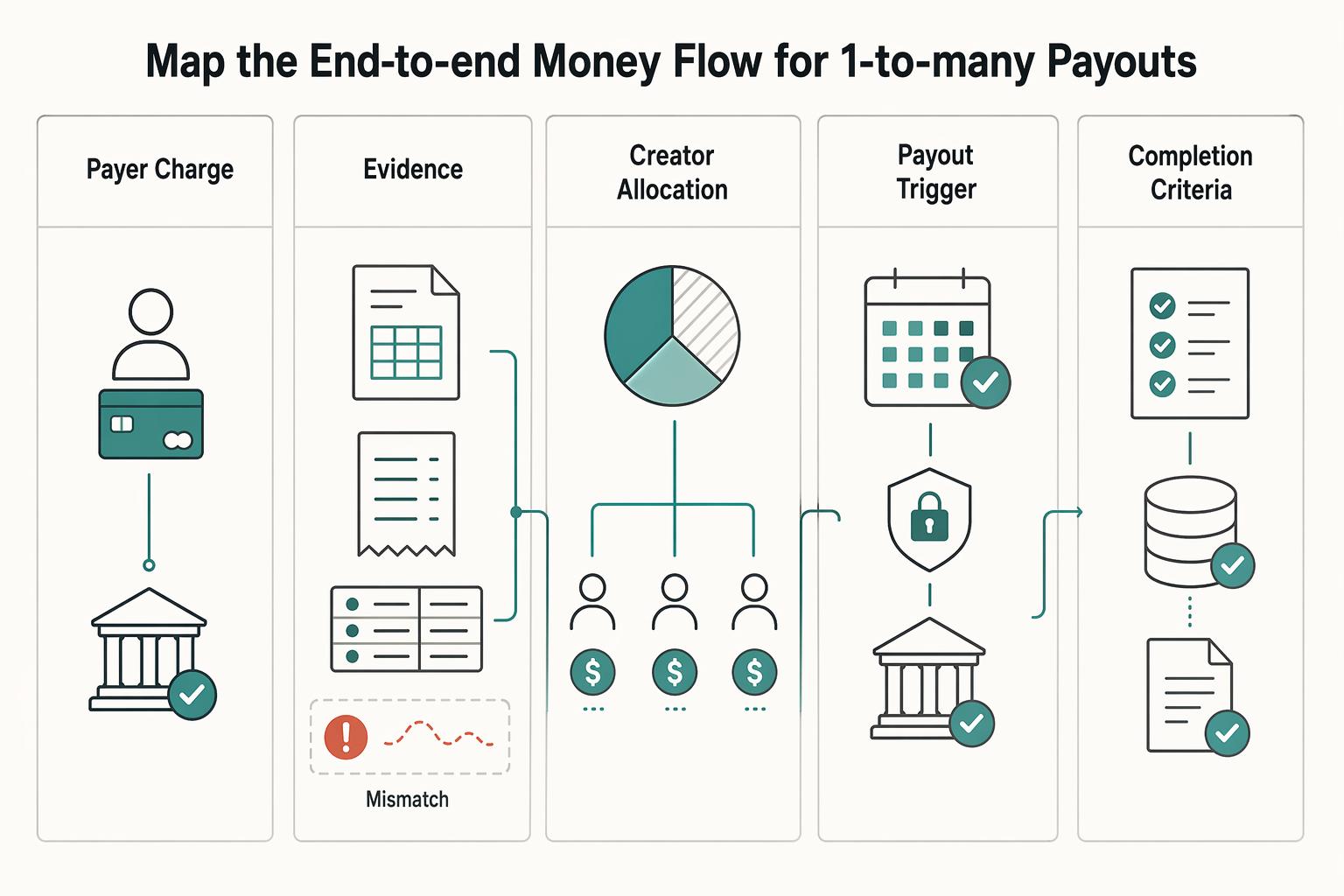
If you want to **build platform creator economy payment architecture 1-to-many monetization**, start with payment resilience, not a feature list. Your first decision is whether the design can hold up under real operating pressure in the markets you plan to enter.