
Quick Answer
Compare the actual sponsor or provider programs on eligible recipients, country pairs, currencies, use cases and status handling. Card brand alone does not determine the route. Confirm endpoint-specific duplicate protection, arrival estimates and recovery rules, then launch with traceable payout intents and provider attempts.
Debit card push payouts for platforms in plain terms#
The core decision is usually not "Visa Direct or Mastercard Send?" in isolation. Start with your recipient card mix, your tolerance for payout exceptions, and how much integration and operational complexity your team can absorb right now.
1. Push to card is a payout rail, not a guarantee#
Push to card is a 24/7 way to send funds to an eligible Visa or Mastercard debit or reloadable prepaid card. It is used for both B2C and B2B disbursements, not just consumer P2P flows.
Posting time depends on the selected program, receiving institution and corridor. Use submitted, pending, posted and exception states, and confirm the contracted timing before presenting an arrival estimate.
2. Visa Direct can be strong when Visa concentration is high#
Evaluate Visa Direct against the recipient cards and corridors your sponsor or provider actually supports. Reach figures for the whole Visa Direct offering do not establish eligibility for every card payout route.
An important operator control is eligibility checking before payout. Visa documents explicit checks for card payouts, which helps you validate transactions before sending funds.
3. Mastercard Send can fit well, but approval and reversals need respect#
This is not just an API integration. Mastercard states that you must become a program participant and meet eligibility requirements, so program approval and market fit need to be part of planning from the start.
Distinguish funding from the recipient payment. Mastercard documents a 30-minute funding-debit reversal window when the associated onward payment cannot complete. That does not establish a right to cancel an already completed recipient payment.
4. A combined approach is often an operations decision, not a product preference#
For a mixed Visa and Mastercard recipient base, supporting both rails can improve coverage, but it also raises engineering and operational complexity. Visa notes that multi-network integration and the related business logic can slow time to market, even when the design aims to reduce integration effort.
Launch the program that covers your verified recipient cards and corridors with manageable exceptions. Add another route when tested eligibility gaps justify its integration and reconciliation cost.
How to choose a payout path without expensive rework#
Choose in this order: country scope first, speed expectations second, exception handling third. Push to card is eligibility-driven, so getting those three decisions right up front is what prevents rework later.
- Start with the payout job you are solving.
Use this path for B2C payouts or P2P payments to eligible debit or prepaid cards, such as contractor or creator disbursements. If your main problem is collecting funds, compare SEPA Direct Debit separately. It is payee-initiated, mandate-based, and euro-only across the SEPA region.
- Set countries and cross-border corridors before integration.
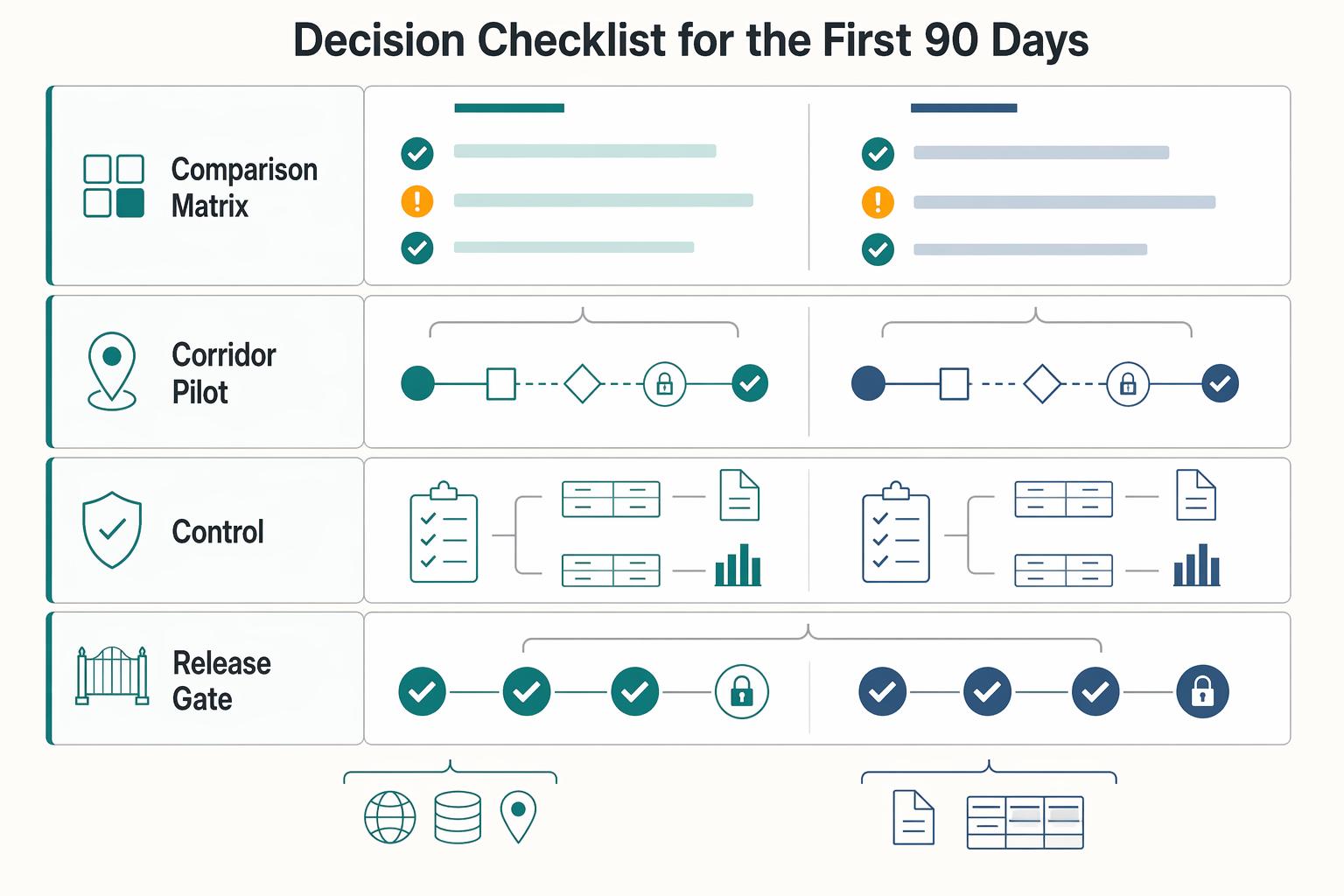
Build a corridor matrix with recipient card types, country pairs, currencies, use cases, approval requirements and confirmed provider availability. Compare the programs on that matrix rather than treating whole-product reach claims as eligible-card coverage.
- Define speed as a range, not a promise.
Set arrival estimates from the selected provider and corridor terms. Describe submitted, pending, posted and exception states, and explain delays without presenting a universal network SLA.
- Treat eligibility and reversal constraints as launch-critical.
Successful eligibility checks do not guarantee issuer approval. Confirm fallback and reversal rules for the selected program. Mastercard’s documented 30-minute reversal concerns a funding debit when the linked onward payment cannot complete; recipient-payment recovery is a separate question.
Quick comparison table for Visa Direct Mastercard Send and dual rail#
Start with one rail if your card-brand mix is clearly concentrated. If your recipients are split across brands or vary by country, evaluate dual rail early so your coverage, UX copy, and support promises reflect what is actually eligible.
| Option | Recipient reach | Known speed expectation | Known operational constraints | Integration effort | Support burden |
|---|---|---|---|---|---|
| Visa Direct | Confirm eligible recipient cards and corridors under your Visa Direct sponsor/provider program; suite-wide reach is not a card-route guarantee. | Posting depends on the receiving institution and program. The April 2025 U.S. announcement is scoped to U.S. accounts linked to eligible debit cards, not a global SLA. | Card payouts include eligibility checks, but checks do not mean every endpoint is eligible. Production access requires licensed acquirer participation or a sponsored-originator structure. Cancellation applies only while a payout is in a cancelable state. | Lower than dual rail, but it still requires program or sponsorship setup, corridor validation, and payout-state handling. | Often lighter for Visa-heavy populations, but it rises quickly if teams overpromise eligibility or coverage. |
| Mastercard Send | Known: positioned as a global funds-transfer platform; payout options are subject to market availability. Unknown: standardized public pricing, settlement timing, and a full market-level eligibility matrix from the cited materials. | Known: actual posting depends on the receiving institution, and Mastercard guidance recommends explaining transfer times carefully in app screens. Unknown: a standardized public SLA number in the cited sources. | Check recipient-payment finality and recovery rules for the selected program. The documented 30-minute funding reversal applies when the associated payment cannot complete. | Moderate for a single-rail rollout; a direct integration or approved-partner path is available. | Reasonable for Mastercard-heavy portfolios, but support and finance still need exception handling, including settlement exceptions such as chargebacks and representments. |
| Dual-rail routing | Known: dual-brand push-to-card can increase reachable recipients by supporting Visa or Mastercard debit or reloadable prepaid endpoints. Unknown: actual incremental reach by country, issuer, and use case until you test your own corridors. | Confirm timing separately for each provider and corridor; do not infer one network-wide delivery guarantee. | Eligibility risk remains, and cancellation or reversal behavior is not identical across rails. Routing must account for brand, country, and fallback logic. | Highest effort: brand detection, routing, state normalization, and reconciliation across two rail behaviors. | Can reduce dead-end payouts for mixed portfolios, but it can also increase exception handling and reconciliation workload. |
| Decision rule | Start with the program that covers your verified recipient and corridor mix. Evaluate additional routes when confirmed eligibility gaps justify them. | Do not choose based on "real-time" wording alone. Choose based on verified corridor and eligibility evidence for your own mix. | Confirmed program coverage lowers rework risk; brand concentration alone does not establish coverage. | A single route is simpler when verified coverage is sufficient. Design additional routes when tested gaps justify their cost. | Fewer rails only reduce tickets if eligibility rates are strong enough to support that simplicity. |
| Shared caveat | Do not assume every Visa or Mastercard debit endpoint is eligible. | Do not promise guaranteed "instant" arrival. Visa notes funds availability depends on the receiving institution and region; Mastercard says posting depends on the receiving institution. | Funding reversals, recipient-payment recovery and cancellation are distinct. Confirm the rules for each route before writing support policy. | Model separate states like submitted, pending, posted, and exception so behavior is explainable end to end. | Product, ops, and support should use the same eligibility and exception language to avoid conflicting user guidance. |
Public evidence supports a directional comparison, not full commercial certainty. Treat pricing, settlement terms, and universal SLA assumptions as unknown until your provider or sponsor confirms them in writing for your corridors.
If you want a deeper dive, read Visa Direct vs. Mastercard Send: Which Card-Based Payout Rails Win on Speed and Cost?.
Option one using Visa Direct as the primary rail#
If your payee base is mostly Visa, using this as the first rail can be a practical way to simplify B2C payout routing. The main tradeoff is simple: the integration can be cleaner, but only if your eligibility checks and support flows are disciplined.
- Best fit: stored-card disbursements on Visa-heavy cohorts
This supports disbursements, and business-to-consumer sends are typically handled as Original Credit Transactions (OCTs) to eligible debit or prepaid cards. This can fit marketplace or creator payout flows where the destination card is already on file.
- Speed can be a UX advantage, but eligibility controls the outcome
Visa announced U.S. funds availability within a minute from April 2025 for accounts linked to eligible debit cards, subject to the receiving institution. Keep that scope explicit. Confirm your program’s eligibility services and geography/use-case restrictions before offering an arrival estimate.
- The main risk is operational readiness and exception handling, not API wiring
Production launch requires a licensed Visa acquirer relationship, either direct or sponsored, plus readiness for submission, settlement, disputes, and reporting. Support friction can appear around failed pushes and cancellation expectations, so define clear payout states such as submitted, posted, and failed return, then align support language to those states.
Option two using Mastercard Send as the primary rail#
If your active payee base skews heavily to Mastercard, this can be a practical first rail for push payouts. The caution here is upfront planning: discovery matters because public implementation detail can be thinner than what Visa Direct publishes publicly.
- Best fit: Mastercard-heavy card-account disbursements
This works best when your recipient mix already favors Mastercard and you are pushing funds to card accounts. Mastercard positions the rail beyond person-to-person transfers, including disbursements and business payments.
- Near real-time is a strength, but not a universal promise
Mastercard Send is positioned for near-real-time transfers, but receiving institutions and program terms affect posting. Verify the actual corridor and issuer behavior before promising an arrival time.
- Pre-checks reduce risk, but they do not guarantee approval
If your integration uses both Account Information and Account Verification, Mastercard recommends Account Information first. Its information response can establish eligibility and card details, but issuer limits, compliance or fraud checks can still decline the payment.
- The primary risk is onboarding and planning ambiguity, not API wiring alone
Confirm program participation, sponsor or approved-partner access, countries and use cases before setting launch dates. Use the current technical requirements for your selected API and program; do not treat one registration summary as a universal contract.
Option three running both rails with brand based routing#
Run both rails when your payout base is genuinely mixed across Visa and Mastercard, or when your country mix changes enough that a single-brand path creates repeated edge cases. The upside can be broader practical coverage. The cost is more routing logic, more exception handling, and more reconciliation work.
If you go this route, keep the logic simple: detect brand, run eligibility checks, choose the rail, and log enough detail to explain the result later. That sequence helps keep dual rail from becoming a support and finance problem.
- Use brand-led routing for mixed recipient portfolios
Route using the provider’s confirmed network and recipient eligibility rules. Card brand is an input, not a complete routing decision; some products or partners support multiple networks. Record the supported country, card type, use case and selected route.
- Dual rail is useful when cross-border card mix varies by market
Visa supports cross-border delivery, and Mastercard supports domestic and cross-border transfers to and from card accounts. That gives you flexibility when one region skews Visa and another skews Mastercard. Keep user messaging precise: timing can vary by receiving institution and region, and near real-time flows may still take longer in some network windows.
- Eligibility checks matter as much as brand detection
Brand recognition does not mean the card is payable. Push-to-card eligibility can be limited to eligible debit or reloadable prepaid Visa or Mastercard cards, so routing should include explicit preflight checks. In operations, log the detected brand, the eligibility or preflight result, the selected rail, and the submission reference so support can separate brand mismatch, ineligible card type, and issuer decline cases.
- This option raises your operating burden
Running both rails typically means handling separate decline-code families, reconciliation mappings, and onboarding/compliance tracks. The Mastercard path also requires program participation and adherence to program standards and rules. For monthly mass payouts with country-by-country brand shifts, this can be worth it, but only if your payout states and exception handling are already clean enough to handle the added branching.
Option four abstracting rails through a payout orchestration layer#
Choose abstraction when you need multiple card payout rails plus bank payouts under one operating model. If you expect to run only one rail for the foreseeable future, the extra layer usually adds more surface area than value.
- One internal payout model
A practical benefit is a single payout object, a single exception model, and a single reporting surface across push-to-card and bank rails. Public reach signals support multi-rail planning, but not universal payoutability.
Treat "single API integration" as a starting point, not proof that every rail behaves the same way. In discovery, verify country coverage, payout types, eligibility rules, and exception states against your actual product requirements.
- Cleaner retries and better auditability
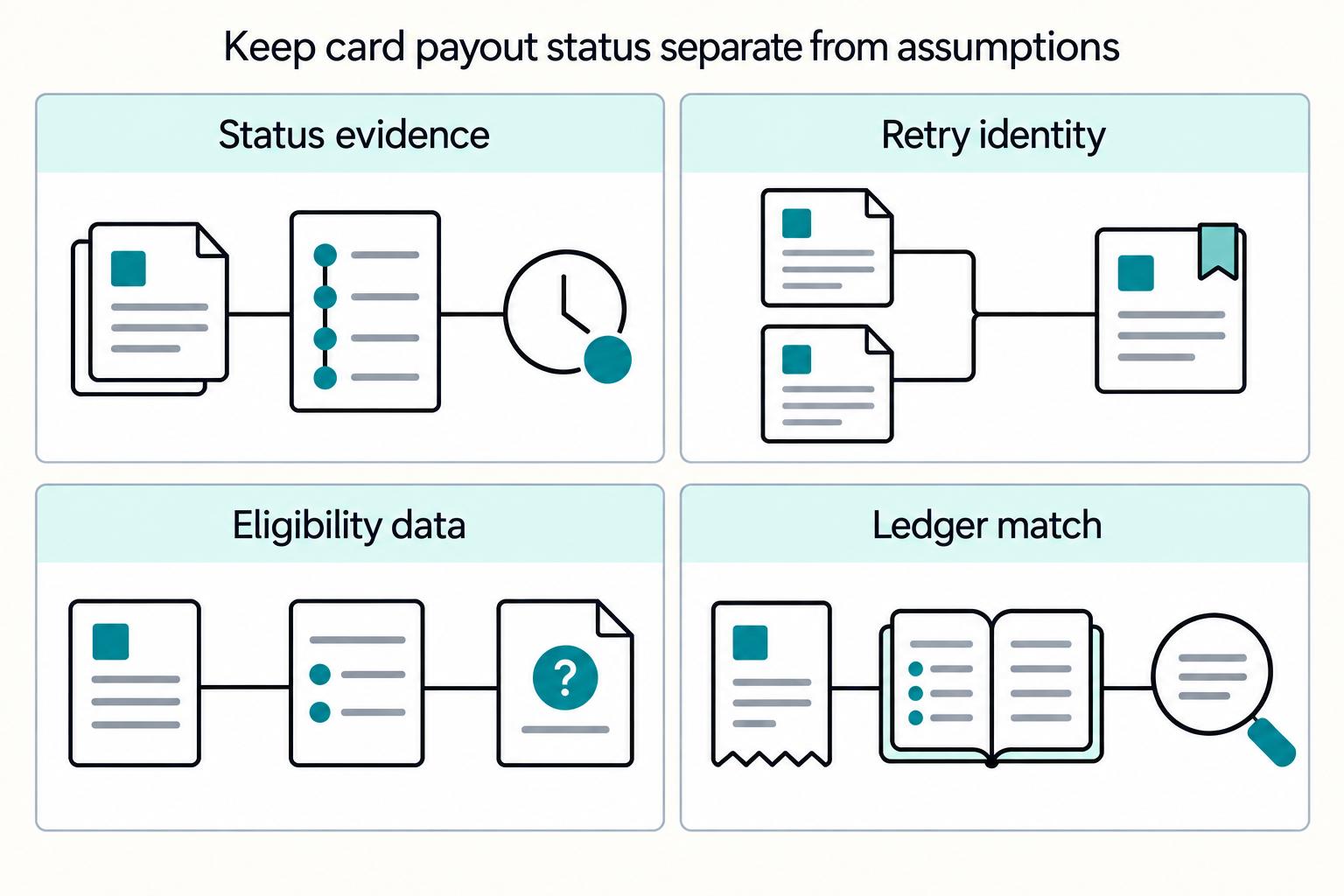
Use a durable internal payout intent and provider-attempt records. A retry must be identifiable as the same supported request; changing providers requires resolving the original outcome first.
Stripe illustrates provider-scoped idempotency, including key pruning after at least 24 hours. Its rules do not establish Visa or Mastercard API behavior. Confirm support, request format and retention for each actual payout endpoint, and retain internal duplicate controls beyond that window.
- Centralized gates for program and compliance requirements
Orchestration also helps because access is program-gated, not just endpoint-enabled. Visa documents Originator sponsorship and acquirer requirements, plus full push-processing validation. Mastercard documents participant suitability assessment during registration.
Keep provider approvals, allowed use cases, and country constraints in one policy layer. Be careful with broad "instant payouts to any card" messaging that does not clearly state eligibility limits.
- Normalized statuses help, but bad mapping can mislead finance
Status normalization is useful only when it maps cleanly to your internal ledger and reconciliation events. A simplified paid status can look tidy operationally and still be wrong for finance if the event mapping is weak.
Reconciliation ownership can still sit with the operator, so keep traceability end to end. Store the internal payout ID, ledger journal ID, provider reference, selected rail, idempotency key, request timestamp, and raw provider status history. If one payout cannot be traced from request through finance export, the abstraction is hiding risk rather than reducing it.
Data and compliance prerequisites before you send the first payout#
Do not send live volume until your data and compliance controls are stricter than your API integration. If support, finance, and engineering cannot all explain why a payout was allowed, what data was exposed, and whether reversal is possible, you are not ready.
| Control | Requirement | Notes |
|---|---|---|
| Eligibility, identity, program approval | Confirm the selected program’s recipient eligibility and verification services; when both Mastercard Account Information and Verification are used, run Information first. | Visa production requires a licensed acquirer relationship, either direct or sponsored, plus validation of full push-processing capability. Mastercard requires participant registration, with MTF and Production access only after approval and implementation. |
| PAN and PII masking | PCI DSS 3.4.1 requires PAN masking when displayed unless there is a specific business need for full PAN visibility. | Use tokenization where supported, and keep raw recipient card details out of app logs, alerts, and support views. |
| Refund and cancellation language | Confirm recipient-payment finality and recovery separately from any funding reversal. | For the Visa rail, keep the documented failed-push edge case explicit. Avoid promises like "cancel anytime after submission" unless your provider path actually supports that for your program and country. |
| Reference storage | Retain internal payout and attempt IDs plus provider references and status history. | Check endpoint-specific reference formats and retrieval windows; retain durable internal records after those windows expire. |
- Gate every payout on eligibility, identity, and program approval.
Card brand alone does not establish payout eligibility. Use the selected program’s receive checks and record the response. When both Mastercard Account Information and Verification services are used, follow the recommended Information-first order; a successful check still does not guarantee issuer approval.
Put rail approval evidence in the same gate. Visa production requires a licensed acquirer relationship, either direct or sponsored, plus validation of full push-processing capability. Mastercard requires participant registration, with MTF and Production access only after approval and implementation.
- Mask PAN and PII by default in logs, dashboards, and webhook tooling.
Treat webhook and operational payloads as potentially identifying data. PCI DSS 3.4.1 requires PAN masking when displayed unless there is a specific business need for full PAN visibility.
Use tokenization where supported, and keep raw recipient card details out of app logs, alerts, and support views to reduce PCI exposure.
- Align refund and cancellation language before launch.
Align terms, product copy and support macros with the selected route’s cancellation and recovery rules. Distinguish a funding reversal from recovery of a recipient payment; do not promise cancel-anytime behavior.
For the Visa rail, keep the documented failed-push edge case explicit. When funds came from a Visa card pull through Funds Transfer API in the specified scenario, funds must be returned. Avoid promises like "cancel anytime after submission" unless your provider path actually supports that for your program and country.
- Store provider references with internal payout and journal IDs from day one.
Persist the internal payout intent, each provider-attempt ID, provider references and original status responses. Keep related funding, payment, reversal and return records linked without treating them as the same transaction.
Confirm the status-retrieval window for the actual endpoint and query uncertain outcomes while it remains available. Preserve the response and identifiers in durable internal records.
You might also find this useful: Push Notification Strategy for Payment Platforms: How to Alert Contractors About Payouts.
Failure modes that break teams after launch#
A lot of post-launch payout pain comes from four preventable failures: unclear states, unsafe retries, weak eligibility checks, and loose reconciliation. If you handle those four well, the rest of the operating model gets much easier.
| Failure mode | What it looks like | Safer practice |
|---|---|---|
| Calling it "instant" | Provider responses can represent submission, processing, rejection, completion or return; those states are not interchangeable. | Use clear states like submitted, pending, posted, and exception. Treat "posted" as completion evidence, not just submission. |
| Duplicate sends during retries | A timeout does not prove failure. Resolve the original request through status lookup or documented safe retry semantics. | Retain one internal payout intent with separate provider attempts. Use endpoint-supported idempotency and query uncertain outcomes before replacement. |
| Incomplete card metadata | A Visa-branded card can still fail because of geography or use-case restrictions, and push payments can also fail after submission if the receiving issuer declines them. | Detect brand, run Payment Account Validation and Payment Attributes Inquiry, and if metadata is missing, route to exception instead of sending. |
| Ledger drift | Mastercard documents that settled outcomes can differ from initially processed or reported transactions, with differences surfaced in reconciliation and MAT reporting. | Reconcile regularly using provider references and your internal journal IDs. For the Visa side, work unresolved statuses through your stored transaction references and the status retrieval path while it is still available. |
- Calling it "instant" when the rail only promises fast, not guaranteed immediate posting.
Map provider states into submitted, pending, posted and exception buckets without discarding the original response. Posted should reflect documented completion evidence, not just API acceptance. Arrival estimates remain provider-, corridor- and institution-dependent.
- Creating duplicate sends during timeout and retry storms.
A timeout is an uncertain outcome. Query the original request or retry only under that endpoint’s documented duplicate protection. Keep the internal payout intent stable and log each attempt; do not replace it through another route while the original may still complete.
- Routing exceptions with incomplete card metadata.
Brand detection alone is not enough for recipient card eligibility. A Visa-branded card can still fail because of geography or use-case restrictions, and Visa guidance points to pre-send validation with Payment Account Validation and Payment Attributes Inquiry. Push payments can also fail after submission if the receiving issuer declines them. The practical rule is simple: detect brand, run eligibility checks, and if metadata is missing, route to exception instead of sending.
- Letting provider events and your ledger drift apart.
Reconciliation gaps can turn payout operations into finance incidents. You are responsible for reconciling created payouts against transaction history, and Mastercard documents that settled outcomes can differ from initially processed or reported transactions, with differences surfaced in reconciliation and MAT reporting. Reconcile regularly using provider references and your internal journal IDs, and review exceptions as part of normal close. For the Visa side, work unresolved statuses through your stored transaction references and the status retrieval path while it is still available. Related reading: Mass Payouts for Gig Platforms That Teams Can Actually Operate.
Launch checklist with week by week decision checkpoints#
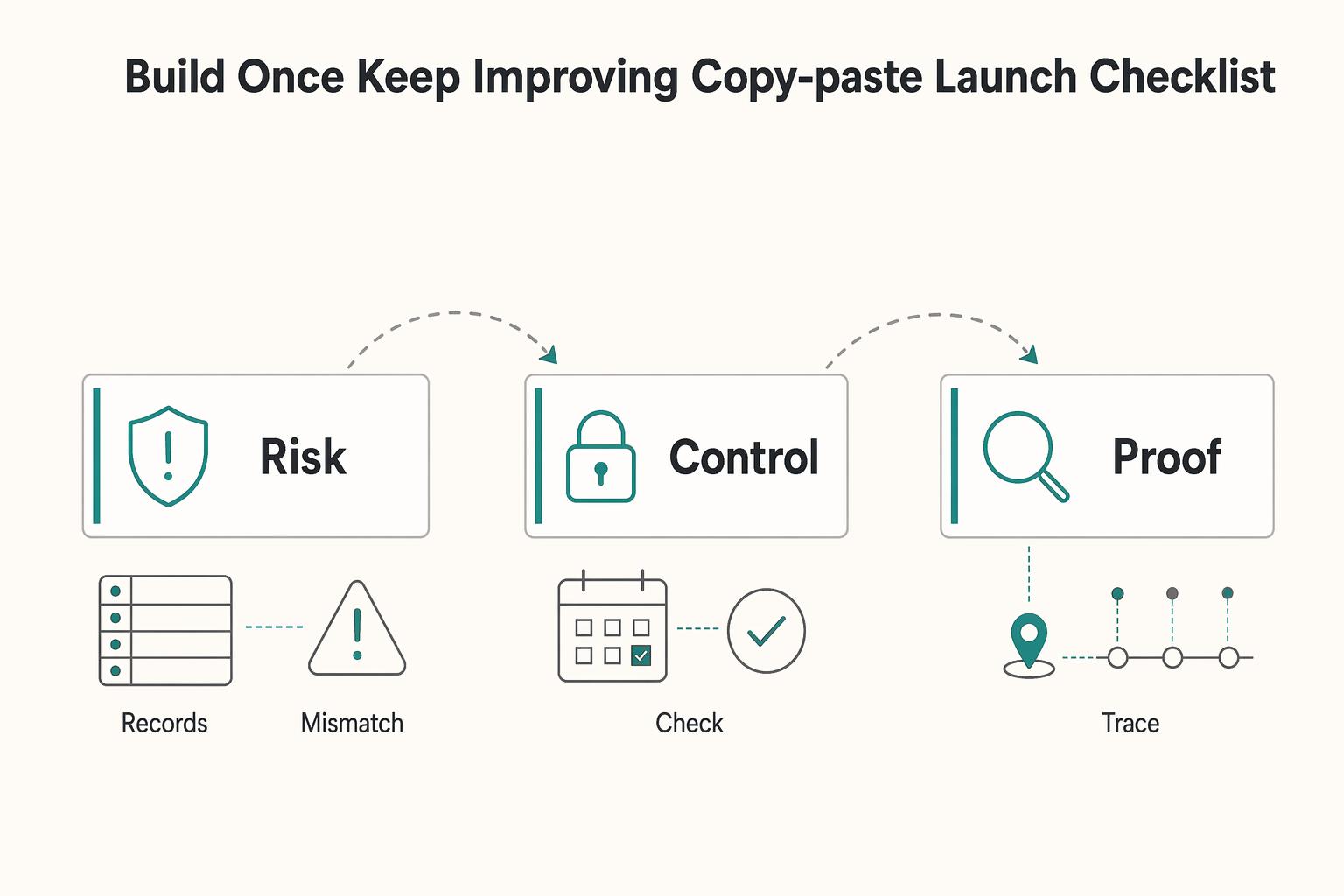
Use this as a real go or no-go sequence. If you skip a checkpoint, issues can show up later as duplicate sends, support confusion, or reconciliation exceptions.
| Checkpoint | Focus | Key details |
|---|---|---|
| Week 1 | Lock scope and document unknowns | Choose one initial rail, either Visa Direct or Mastercard Send, define launch countries, and treat unconfirmed country, brand, or use-case coverage as unknown. For Visa production, confirm the onboarding path early: the originator must be a licensed Visa acquirer or sponsored by one. |
| Week 2 | Retries and status handling | Implement endpoint-specific request identity, webhook deduplication and status mapping. Retain durable internal controls beyond provider key and lookup windows. |
| Week 3 | Test controls and failure paths | Run sandbox first, then controlled live tests. Include issuer declines with preserved response codes, timeout-then-status-check behavior, duplicate webhook delivery, and provider-specific refund/cancellation handling where documented. |
| Week 4 | Cross-functional sign-off | Sign off on eligibility, provider-specific arrival estimates, reconciliation evidence and escalation ownership; do not promise universal instant delivery. |
| Expansion gate | Pause if ineligible-card rates are high | If early cohorts show meaningful ineligible-card or issuer-decline patterns tied to card attributes, pause country or segment expansion and add routing options first, including dual-rail coverage or an alternative payout method. |
- Week 1: lock scope and document unknowns.
Choose one initial rail, either Visa Direct or Mastercard Send, define launch countries, and mark every unconfirmed item as provisional. For Visa production, confirm your onboarding path early: the originator must be a licensed Visa acquirer or sponsored by one.
Also define domestic versus cross-border scope explicitly. Some providers support both rails for both routes, but country and program details can change, so treat unconfirmed country, brand, or use-case coverage as unknown, not committed.
- Week 2: make retries safe and status handling durable.
Your build should include the payout request endpoint, webhook ingestion, idempotency, and stable status mapping. For the Visa rail, include required routing fields such as Acquiring BIN in the core integration, not as a later patch.
Use durable internal intent IDs and endpoint-specific keys across supported retries. Deduplicate webhook events separately. Confirm request-key scope and retention rather than importing Stripe’s limits into a card-network integration.
For webhooks, assume at-least-once delivery and possible out-of-order events. Map state from current truth plus reference IDs, and retain network response codes so ops and support can explain decline outcomes.
- Week 3: test controls and failure paths, not just the happy flow.
Run sandbox first, then controlled live tests once state handling is stable. Include issuer declines with preserved response codes, timeout-then-status-check behavior, duplicate webhook delivery, and provider-specific refund/cancellation handling where documented.
Keep those rules provider-specific in your docs and macros. Do not assume uniform behavior across programs and countries. Check test-environment availability windows before scheduling sessions so outages are not misdiagnosed as integration defects.
- Week 4: approve go-live only with product, ops, and finance sign-off.
Engineering completion is not enough. Launch only when support messaging, reconciliation outputs, and escalation ownership are signed off together.
The sign-off pack should cover customer-facing states, provider-reference-to-journal reconciliation, and escalation for unknown outcomes. Keep recipient eligibility and the selected program’s arrival estimates explicit.
- If ineligible-card rates are high, pause expansion.
Do not scale volume just because some payouts succeed. If early cohorts show meaningful ineligible-card or issuer-decline patterns tied to card attributes, pause country or segment expansion and add routing options first, including dual-rail coverage or an alternative payout method.
Fixing eligibility gaps before scaling helps prevent a routing problem from turning into a trust problem.
Before week-4 go-live, validate idempotency, webhook states, and exception handling against Gruv's payout integration patterns in the developer docs.
Choose the path that matches your card mix and ops maturity#
Choose the path your team can run cleanly today. The best starting rail is the one you can explain, reconcile, and retry with low ticket volume when payouts are delayed, rejected, or returned.
- Start with one primary rail when your payee brand mix is clear.
Start with the program that covers your verified recipient cards and corridors with manageable exceptions. Compare sponsor/provider eligibility rather than selecting solely from the Visa or Mastercard logo.
Explain the selected program’s timing and eligibility limits. The receiving institution can affect availability; use confirmed estimates and observable statuses rather than a universal 30-minute promise.
- Add the second rail only after exception handling is routine.
Go dual rail when your card mix is truly split or when single-rail eligibility leaves too many recipients ineligible. Coverage is for eligible Visa or Mastercard debit or reloadable prepaid cards, not every card entered, so a second rail can improve effective reach.
Add routes after records reliably link the payout intent, provider attempts, eligibility result and final states. Verify duplicate protection and retention for each endpoint instead of borrowing an unspecified 30-day window.
- Use orchestration when cross-rail control is the problem you need to solve.
Orchestration makes sense when multiple rails or countries are creating operational drag, not simply because you want another integration. Visa supports API or ISO messaging integration modes. Mastercard supports direct integration or integration through approved partners.
The value is centralized policy and normalized status handling, but only if your internal payout states preserve provider-level outcomes. Keep a complete audit trail per payout, including internal payout ID, provider reference, submission time, payout state, and rejection or return details. Also plan for direct provider confirmation on commercial scope where public docs are incomplete, including pricing, regional availability, and program details.
Start with the route supported by your verified recipient and corridor mix. Add routes after eligibility, retries and reconciliation are stable. Evaluate an orchestration layer when its confirmed coverage and control model reduce manual operations.
Frequently Asked Questions
What are debit card push payouts for platforms?
Debit card push payouts are disbursements where your platform sends funds to an eligible recipient card or account. On the Visa side, this is commonly an Original Credit Transaction (OCT) to an eligible debit or prepaid card account. On the Mastercard side, Mastercard Send is positioned as a platform for near real-time transfers to card and digital accounts.
How is Visa Direct different from Mastercard Send in practice?
Compare the actual programs’ recipient eligibility, corridor coverage, onboarding and status/recovery rules. Mastercard’s documented 30-minute funding-debit reversal when onward payment cannot complete is distinct from cancellation of a completed recipient payment.
How fast are push-to-card payouts in real operations?
Timing depends on the program and receiving institution. Visa’s April 2025 announcement concerns U.S. accounts linked to eligible debit cards, with receiving-bank caveats. It does not establish a global arrival guarantee for every Visa Direct or Mastercard Send transfer.
Can a platform pay any Visa or Mastercard debit card?
No. Official materials describe eligibility-limited reach, with availability varying by market, region, and receiving institution constraints. Treat broad "any card" marketing claims cautiously, and validate brand, market scope, and destination eligibility before launch.
Can push-to-card payouts be reversed or canceled after submission?
Confirm cancellation and recovery for the selected endpoint, network and program. A funding reversal does not reverse an already completed recipient payment. Treat recovery requests and any separately executed return as distinct records.
What should we validate before going live with push payments?
Validate recipient eligibility first, then status handling, then customer messaging. Mastercard guidance recommends checking that the account is valid and eligible for the transfer, and both networks make clear that receiving-institution behavior affects posting time. Your go-live checks should confirm eligibility logic, transaction-status handling, and user-facing transfer-time wording so expectations match real posting behavior.
Try a related tool
Researched and edited by the Gruv editorial team. Gruv builds cross-border billing, payouts, and finance-operations software for global businesses.
Sources
Includes 7 external sources outside the trusted-domain allowlist.
- docs.stripe.com/api/idempotent_requeststrusted
- corporate.visa.com/en/sites/visa-perspectives/newsroom/visa-dir...external
- developer.mastercard.com/product/mastercard-sendexternal
- developer.mastercard.com/mastercard-send/documentation/reports/transa...external
- developer.payments.jpmorgan.com/docs/treasury/global-payments/capabilities/g...external
- developer.visa.com/capabilities/visa_direct/docsexternal
- developer.visa.com/capabilities/visa_direct/docs-how-toexternal
- mastercard.com/us/en/business/payments/mastercard-move/tran...external
Educational content only. Not legal, tax, or financial advice.
Related Posts
Visa Direct vs Mastercard Send Payouts for Platform Teams
If you need an evidence-first decision on **visa direct vs mastercard send payouts**, this guide keeps the focus on operating reality rather than marketing language. It covers payout mechanics, recipient eligibility, timing, cancellation limits, reconciliation impact, and the unknowns you still need a provider to confirm.
Push Notification Strategy for Payment Platform Payouts
**Payout alerts fail when your message language gets ahead of a verified payout state.** If you want notifications your contractors can trust, optimize for what you can prove in your payout lifecycle. Do not optimize only for send speed or open rate.

The Freelance Payment Penalty: A Modeled Audit of Platform Fees, FX Spreads, and Payout Delays
The money rarely disappears through a single, easy-to-spot fee. The real loss is stacked. A marketplace takes its commission, a processor adds a charge for international cards, a bank or payment company converts the currency at a spread, a platform holds the funds before release, and a wire sheds a little to intermediaries on the way in. Each layer looks defensible on its own, but the worker feels the combined result as a smaller deposit and a later payday.