
Quick Answer
Send payout alerts from verified current state, with wording no stronger than the evidence. Create durable decisions by payout state version and recipient, recheck queued messages before send, and keep the latest state in the authenticated account. Separate transport success from reading and use bounded fallback for unresolved action. Account holds and later returns require scoped messages, not erased payment history.
Why payout alerts fail even when payouts succeed#
Payout alerts fail when your message language gets ahead of a verified payout state. If you want notifications your contractors can trust, optimize for what you can prove in your payout lifecycle. Do not optimize only for send speed or open rate.
A successful API response is a checkpoint, not proof that funds are available. In practice, provider acceptance, internal ledger posting, and contractor-visible funds can happen at different times. Setup steps can still block release.
Separate provider success from contractor reality#
Many alert problems start with wording. Teams send "paid" when all they know is "request accepted" or "processing started." That mismatch creates avoidable payout-status tickets.
Stripe's Connect onboarding guide makes the same point more directly: connected accounts must complete onboarding before payouts can flow, and the payouts documentation separates account setup from payout availability. That is why an accepted payout instruction is still not the same as usable funds in the contractor's account.
Define the contractor-facing claim independently from the provider’s label. “Submitted,” “provider reports paid,” and “funds confirmed received” can have different evidence standards. Record which claim the source supports and allow a later return or correction.
Define success in operational terms#
Success here can mean fewer payout-status tickets, clearer contractor expectations, and traceability from payout request to ledger posting to final notification. Use a simple checkpoint for every alert:
- What exact event triggered it?
- What status did that event prove?
- Had the ledger posted yet?
Use provider records, journals, and receiving-side evidence where available to resolve disagreements. A single event may be late or repeated; compare it with the payout’s current authoritative state before generating a stronger message.
Set scope before writing copy#
Scope this as push plus fallback channels, not push by itself. Tie messages to payout lifecycle events, verification gates, and checkpoints you can measure.
| Decision | Question | Options |
|---|---|---|
| Current status | What do you know now? | initiated; processing; blocked; failed; completed |
| Evidence | What evidence supports that status? | API event; provider reference; ledger posting; onboarding check |
| Next step | What should the contractor do next? | wait; update details; complete verification; contact support |
Design each alert around three decisions:
- What do you know now: initiated, processing, blocked, failed, or completed?
- What evidence supports that status: API event, provider reference, ledger posting, or onboarding check?
- What should the contractor do next: wait, update details, complete verification, or contact support?
That is what makes contractor payout messaging credible. The job is reliable progress signaling, not premature promises.
If you want a deeper dive, read Local Currency Payouts vs USD Payouts: What Contractors Prefer and What Platforms Should Offer.
Set the operating goal before you write a single notification#
Set one phase-one goal first, then make every alert decision support it. Without that constraint, teams drift toward engagement and message volume instead of clear, reliable payout communication.
Choose one primary success metric#
Pick one primary success metric and treat the rest as secondary signals. If the immediate problem is contractor confusion, choose one measurable proxy for your team, for example payout-related support tickets, as the main metric, with secondary checks on follow-up volume and resolution speed.
Then run a weekly verification loop. Sample recent payout tickets, confirm whether a status update was sent, confirm what state it claimed, and check whether that message changed the contractor's next action. If you cannot show that chain, your metric stack is too soft, and we recommend resetting the metric before rollout.
Assign ownership before copy review#
Assign ownership before copy review starts, or status disputes will show up after launch. Define clear owners for status truth, channel behavior and UX wording, and delivery implementation.
Log one approver per decision type. Otherwise, the familiar conflict appears later: pressure for faster sends, triggers tied to upstream acceptance, and arguments that the state was never final.
Remove alerts that do not change action#
Apply one hard noise guardrail. If a message does not change contractor action, downgrade or remove it. These notifications are operational touchpoints, so each one should either reduce uncertainty or prompt a clear next step.
A progress message can be useful without requiring action if it materially reduces uncertainty. Suppress repeated processing notices that add no new information, while retaining meaningful initiation, expected delay, action-required, completion, and correction messages under your policy.
Set rail and corridor boundaries before template writing#
Define rail and corridor boundaries before writing templates so your timing promises stay credible. Do not use one timing promise across different rails and corridors without rail-specific evidence.
Keep the language state-based until verification is clear: initiated, processing, requires action, or completed. Save stronger "funds received" phrasing for states your team can actually prove on that rail and corridor.
Prepare the prerequisite evidence pack and system map#
Build the evidence pack before you draft alerts. If a payout status cannot be traced to source records, contractor messaging drifts into contradictions.
Map each payout path you operate#
Map the actual payout path: local operation and attempt IDs, source account, provider, currency, receiving rail, beneficiary version, amount, fees, and evidence for acceptance and final outcome. Keep customer collection and contractor payout as separate operations even when both use the same provider.
For a disputed alert, retrieve the particular payout attempt, source event, current provider state, linked journals, and notification decision. A tax form or yearly payment total does not prove the status of that payout.
Collect the raw records behind status decisions#
Retain the original provider event and signature-verification result, plus any authoritative retrieval used to make the decision. Link those to the journal and notification records with access and retention controls. Preserve tax documents in their separate secure workflow rather than using them as payout-event evidence.
Do not collapse everything into a normalized view too early. When teams disagree on a payout state, raw records are usually the fastest way to verify what happened.
Document non-payment dependencies and release conditions#
Document the actual account or payout restriction, accountable reviewer, affected operation, permitted customer-facing explanation, and next action. Distinguish a restriction on new submissions from a hold or return affecting an already-submitted payout. A future account hold does not erase a settled payment.
Use a restriction map that separates the affected operation from the secure follow-up:
| Restriction | Scope to record | Permitted notification behavior |
|---|---|---|
| New payout submissions paused | Account and future operations; confirm already-submitted attempts separately | Explain future action without denying a settled payout |
| Specific payout under review | Payout ID, restriction state, authorized next step | Secure hold/action prompt if permitted |
| Required document missing | Applicable program rule and actual release or withholding decision | Request document in account area; avoid tax values in payload |
| Return or correction | Original instruction, current outcome, linked journal adjustment | Correct prior claim and show current next step |
Review the approved program rules before messaging a restriction. Provide only the permitted operational explanation; keep restricted investigation or reporting material out of push, email, and routine support exports.
Create one internal status dictionary#
If you create an internal status dictionary, treat it as an internal operating choice rather than a requirement from this guidance. For each status, define the internal label, contractor-facing phrase, required evidence, dispute owner, and whether the state can be reversed.
Before you use it in notifications, run a simple alignment check on historical payouts. If teams classify the same case differently from the same evidence, the dictionary is not ready.
For a step-by-step walkthrough, see Xero Multi-Currency for Payment Platforms: How to Reconcile Foreign Currency Payouts.
Map payout rails to alert timing windows contractors can trust#
Contractor trust depends on one rule: never treat provider acceptance as the same thing as funds received. Map every rail and corridor to two clocks, then trigger alerts from the one you can prove.
A single "paid" label can hide very different states across rails, and that is where false positives start. Keep the state model explicit so finance, support, and product can defend each message with evidence.
Build a rail table around provable states#
Build one rail table that records what you can verify now and what is still unknown for each corridor. Use your evidence pack, provider documentation, and historical cases, not generic assumptions.
| Rail | Initiation alert (accepted) | In-flight alert | Completion claim and evidence | Evidence required in your row |
|---|---|---|---|---|
| ACH | processing after accepted submission | Keep processing until downstream proof exists | completed only when funds-available evidence exists | Payout ID, provider status evidence, event timestamps, exception path |
| SWIFT | processing after accepted transmission | Use in-flight only if your provider exposes it | completed only on verified funds availability | Provider status evidence, corridor-specific event evidence, exception path |
| PIX | Use your provider's accepted event | Add pending only if your provider exposes a real pending state | completed only on verified completion evidence | Event semantics, exception states, timestamps |
| SEPA Instant | Use your provider's accepted event | Add pending only if your provider exposes an explicit pending state | completed only on verified completion evidence | Acceptance vs completion event split, exception states |
| UPI | Use your provider's accepted event | Add pending only if supported | completed only on verified completion evidence | Provider event semantics, retry or failure states |
| FedNow | Use your provider's accepted event | Add pending only if supported | completed only on verified completion evidence | Confirmation timestamp, provider exception states |
| Network leg plus destination payout | Separate transfer confirmation from destination payout | Keep processing if off-ramp or local payout is still pending | completed only after destination payout is verifiably complete | Transaction ID, timestamp, off-ramp status, local payout reference |
The goal is not a perfect SLA chart but a defensible alert rule for each rail and corridor.
Set rail-specific decision rules before copy#
Set decision rules before you write copy. If a flow is effectively near real time and your provider emits a confirmation event you trust, immediate completion can be correct. Otherwise, use processing until your funds-available state is verifiable.
Keep the local operation, provider instruction, journal, and notification references linked. An accepted submission supports a processing message; a provider-reported outcome supports only the claim defined for that event. Retrieve authoritative state when events conflict.
Separate fast transfer legs from destination payout#
A confirmed network transfer leg does not establish completion of an off-ramp or receiving-bank payout. Treat every leg as its own operation with the evidence and failure handling needed for that provider; do not use a generic “minutes” promise for the end-to-end route.
For those flows, keep evidence for both legs: transfer transaction ID and timestamp, plus destination payout status and reference. If you support this model, see Crypto Payouts for Contractors: How Platforms Can Offer USDC and Stablecoin Payments.
Add timing rules only where evidence exists#
Add weekend, cutoff, and local holiday timing rules only where provider coverage or your own history supports them. If that support is missing, keep contractor messaging broad and route corridor-specific detail through support handling.
As a final check, confirm that for each rail and corridor you can produce the payout ID, event timestamp, and the exact evidence behind the message state. If you cannot, your alert promise is ahead of your operations.
Define the payout event taxonomy and status transitions#
Because payment types have distinct transaction and settlement flows, define one explicit, platform-owned event taxonomy before you wire alerts. Without it, different rail signals can produce contradictory contractor messages.
Start with a minimum state set#
Start with a minimum state set your team can operate consistently across rails, even when some rails skip steps. A practical platform example is: initiated, processing, requires_action, failed, reversed, and completed.
For each state, store four fields: trigger source, contractor message intent, internal owner, and allowed next states.
| State | Internal meaning | Trigger source (example) | Contractor message intent | Internal owner |
|---|---|---|---|---|
initiated | Payout request created | Platform API or payout job | We started your payout | Engineering or payout orchestration |
processing | In progress; completion not yet confirmed | Provider, ledger, or rail update | Your payout is processing | Finance ops |
requires_action | Progress blocked pending action | Validation or destination issue | Action needed | Support or operations |
failed | Attempt ended without completion | Rejection or failed attempt | Payout failed | Finance ops |
reversed | Prior state later corrected or unwound | Return or correction event | Payout reversed or corrected | Finance ops and support |
completed | Meets your completion evidence standard | Verified completion signal | Payout completed | Finance ops |
Separate movement states from hold states#
Separate movement states from hold states so contractors do not get a "processing" alert when the payout is actually paused for review or documentation. Keep these as platform-defined operating labels, not universal legal categories.
Keep tax-document reminders and annual reporting notices separate from payout movement. If missing documentation actually affects release under the approved program, record that scoped decision and send a secure action prompt. A Form 1099-K issue is not generic evidence that a contractor payout has failed.
Normalize inbound events before delivery#
Set normalization rules before connecting inbound events to push delivery. The operating goal is one contractor-visible alert per payout state transition.
Use stable internal identifiers and source metadata to map inbound signals into platform states, then verify alert behavior in testing.
Define core audit fields on every event#
Define a consistent audit field set on every event you expose or act on internally, such as payout ID, provider reference, event timestamp, and reconciliation reference. That keeps your alerts defensible in support, reconciliation, and reporting, and supports internal controls and auditability.
A practical guardrail is simple: if key audit fields are missing, delay the contractor alert until the record is complete.
Define behavior for conflicting and corrective events#
Do not rank status labels only by apparent progress. A late processing event should not regress a confirmed completion, but an authoritative return or failure may correct it. Compare provider timestamps, object state, and allowed transitions, retrieve current state where needed, and retain the superseded decision history.
Only promote to completed when your completion evidence standard is met, and only send a new alert when contractor-facing reality actually changes. If you are implementing event states, use Gruv docs to align webhook handling and payout status mapping.
Write action-first notification templates by lifecycle stage#
A practical pattern for each lifecycle message is to answer the contractor's next question right away: what happened, what changes next, and what they need to do now.
Use a three-part message contract#
Use a platform-defined three-part contract for each state, initiated, processing, requires_action, failed, reversed, and completed, so the message stays consistent and practical.
| Part | Example | Answers |
|---|---|---|
| Initiated | “Payout P42 is queued. No action needed.” | Only local creation is confirmed |
| Processing | “Payout P42 was submitted. Check your account for the latest status.” | Provider acceptance; receipt not claimed |
| Action required | “Review your receiving details for P42 in your account.” | Authorized beneficiary-remediation path |
| Provider-reported completion | “Our payout provider reports P42 paid. View the payout record.” | Use only where the provider event supports this claim |
| Returned | “P42 was returned. Review the next step in your account.” | Authoritative correction; original history retained |
- What happened: state the particular verified event.
- What changes next: use the current payout and restriction state.
- Action now: link to the authenticated task or say no action is required.
For requires_action and failed, put the action first. Push is built for immediate action, so do not bury the required step. Check every template against allowed next states. If copy implies certainty you do not have, rewrite it.
Add only the context needed for recognition#
Add only the context needed for recognition without exposing sensitive data, using masked identifiers where appropriate.
Populate these fields from event data, not free text. If core identifiers are missing, hold the send until the event record is complete.
Branch by payout mode only when action changes#
Branch by payout mode only when contractor-facing action changes. If different payout modes require different recognition details or next steps, use separate templates and keep the language operational.
The tradeoff is maintenance. If two modes have the same contractor action and the same evidence standard, keep one template.
Use hard-stop wording for failures#
Use hard-stop wording for failures: clearly state the required next step and include a searchable payout reference.
Keep fallback email focused on the transaction. If marketing is added, assess its primary purpose under the FTC’s CAN-SPAM guidance and apply the relevant sender, subject, address, and opt-out requirements. A payout message’s urgency does not exempt a commercial email from those rules.
Choose channels and fallback routing that protect deliverability#
Keep the latest payout state and required action in the authenticated account area. Use push as an attention prompt, then an approved alternative such as email or opted-in SMS when the case needs follow-up. Use team chat only for an authorized internal escalation or a contractor channel explicitly configured for this purpose.
Route by event criticality#
Route by event criticality, not by channel preference alone. Treat requires_action and failed as immediate states: start with your primary channel, then fall back when routing rules indicate non-delivery or exception conditions. Treat routine processing updates as lower priority, and handle them using notification preferences and channel tradeoffs.
| State | Priority | Routing behavior |
|---|---|---|
| requires_action | Immediate | Start with your primary channel, then fall back when routing rules indicate non-delivery or exception conditions |
| failed | Immediate | Start with your primary channel, then fall back when routing rules indicate non-delivery or exception conditions |
| processing | Lower priority | Routine updates use notification preferences and channel tradeoffs |
Keep a routing table mapped to your status dictionary with primary channel, fallback channel, timeout behavior, and response threshold per state.
Centralize routing and timeout behavior#
Centralize channel selection, cooldown, and fallback rules. Separate transport acceptance, device receipt where observable, user acknowledgment, and completed account action. A push service’s success response does not prove that the contractor saw the message; lack of acknowledgment is not proof of delivery failure.
Monitor fallback performance by event type, especially for blocking states, so you can detect delivery or routing issues early.
Escalate only when progress is blocked#
Use a bounded reminder flow for genuinely unresolved contractor action. Recheck the payout and action state before each attempt, stop when the action is complete, and escalate to the assigned support owner when your policy deadline is reached. Do not keep reminding someone to update details after their payout has already settled.
Set clear response thresholds so operations and support know when automation continues and when human follow-up starts.
Keep message intent consistent across channels#
Keep the core action message aligned across push, email, and SMS so contractors get one clear next step regardless of channel. When status details may change quickly, prefer neutral wording that points users to the latest payout state.
Add compliance and tax gates without turning alerts into legal risk#
Add a final eligibility check before every send so blocked payouts do not trigger the wrong alert. If a payout is on a live hold, keep the message operational and explain the next action, not legal conclusions.
Gate eligibility on live hold status#
At send time, reread the affected payout and current account restrictions. Suppress a stale claim about future release when that release is now blocked, but preserve the true result of an already-settled payout. If a later return changes that result, send a correction tied to the same payout rather than rewriting history as though settlement never occurred.
Use plain contractor-facing copy, for example: "Your payout is on hold. Please review your account for next steps." Keep reviewer notes, internal risk flags, and detailed hold reasoning out of the message body. For each blocked payout event, log the hold code that suppressed or rewrote the alert, plus payout ID and timestamp.
Keep tax-form alerts narrow#
When your status dictionary indicates missing tax documentation, request the missing tax form and state payout impact in one sentence. Example: "We need an updated tax form before your next payout can be released."
Request documents through the authenticated account area. Do not put submitted tax values, document images, or internal review reasons into notification payloads. Lock-screen exposure and message transport are separate risks; Firebase notes that its transport encryption is not end-to-end encryption.
Move FEIE, FBAR, and Form 1099 reminders out of payout-completion alerts#
Keep completion alerts focused on the particular payout and its evidence. Broader tax education and reporting notices belong in a separate account workflow selected for the taxpayer and income facts; receiving a payout alone does not establish FEIE, FBAR, or Form 1099 applicability.
If a required form is missing, identify the applicable form and deadline in the secure account area and explain the actual operational effect. Avoid obsolete form references and generic tax-eligibility advice in a payout alert.
Implement event delivery with idempotency, traceability, and replay safety#
Make each notification decision reproducible from the payout state version, policy version, and recipient preferences observed at decision time. Retries reuse the durable decision; a genuinely new or corrective state creates a new decision. External push transport does not provide an exactly-once display guarantee.
Webhook handling needs production-grade controls, not best-effort glue. Robust testing matters, and webhook failures in production are common enough to plan for up front. Design the notification layer to decide from persisted state, not only from the most recent incoming event.
Derive one notification decision per payout event#
Verify and persist the inbound event, then atomically apply the allowed payout transition and create a durable notification outbox record. Use separate guards for provider/account/event identity and for the payout state version, recipient, intent, and channel. Event-level deduplication alone can miss two different provider events describing the same transition. Store each transport attempt against the same decision.
Validate incoming webhook security artifacts, for example an HMAC signature, before accepting the event. Then store that validation result with the raw JSON payload, or its hash, so support and ops can trace what was received and trusted.
Persist a decision record for send and suppression paths#
Keep append-only decision records for queued, suppressed, superseded, sent-to-transport, error, and acknowledged outcomes where observable. Store the status and policy versions, recipient/channel, source references, timestamps, and transport ID. “Sent-to-transport” is not proof of display or reading.
If an event is malformed and cannot be parsed, quarantine it and mark the decision for review rather than letting one bad message block later events. That protects queue health and notification continuity.
Add replay rules that correct state without creating alert noise#
Replay incoming events against authoritative payout state and the durable decision history. Choose duplicate ignore, new transition, or correction. Recheck queued decisions immediately before sending. A previously sent notice cannot always be recalled, so use neutral wording and an authenticated link to current state when the status can change quickly.
Late events and corrections can happen in event-driven flows, so test replay behavior with duplicates, out-of-order delivery, and malformed payloads. If failure handling degrades into delayed batch-like behavior, alerts become stale and trust drops quickly.
Join notification history to reconciliation outputs#
Finance should be able to trace request to provider reference to ledger posting to contractor alert from shared identifiers, not from separate logs. Include notification decision and timestamp alongside payout and provider references in reconciliation outputs.
That makes exceptions visible earlier, such as ledger postings without a contractor alert or alerts without matching ledger state. Aligning notifier and reconciliation schemas now helps avoid reverse-mapping later. If you are tightening those handoffs, the same controls show up in account reconciliation for payment platforms.
Pilot on one corridor, then scale with hard verification gates#
Start narrow, then scale only when your verification artifacts are complete and defensible.
Define a narrow pilot scope in writing#
Begin with one clearly bounded scope. Record the purpose and scope in writing before expansion decisions are made.
Require a completed verification checklist before expansion#
Complete the pilot checks that verify state mapping, signature handling, duplicates, out-of-order events, returns, restrictions, outbox recovery, and channel fallback. Assign an owner to each failed check and resolve required-control gaps before expansion. A notification pilot gate is not authority to hold otherwise releasable contractor funds.
Run an After-Action Review when failures persist#
If failures persist, pause expansion and run an After-Action Review with an incident timeline. Use that timeline to isolate the failure pattern, then fix and retest before reopening scale.
Treat scaling gates as internal quality controls#
Review quality issues periodically and adjust your process as results improve. Keep these gates explicit and enforceable, and treat them as internal quality controls rather than external standards or regulations.
Recover from common payout alert failures quickly#
When a payout alert is uncertain, recover by reducing automatic messages until each notice is defensible against your records.
Suppress repeat alerts without a real state change#
Repeated event deliveries can create multiple contractor alerts for the same payout state. Check each incoming event against your alert history, and send only when the payout state has changed.
Aim for one durable notification decision for each eligible recipient and state version. Test repeated transport attempts and app synchronization, while recognizing that external delivery may still duplicate or arrive late. Retain the state in the account area even if an attention prompt is missed.
Keep execution and confirmation separate#
Only mark a payout as completed when your records support payment confirmation, not just payment execution. If your evidence shows execution only, keep the contractor message in a processing state.
Validate this in your status definitions and contractor copy so both reflect the same stage boundaries. If confirmation is not supported in your records, do not imply funds are received.
Make holds explicit, practical, and secure#
If a payout is paused for review, send a clear hold message instead of staying silent. Tell the contractor what is blocked, what action is needed now, and where to complete it.
Send the contractor to an authenticated, authorized account screen for documents or beneficiary changes. Support may explain the permitted next step through approved channels, but must verify identity and avoid collecting sensitive documents in a notification reply.
Send mismatches to ops review before contractor messaging#
If an alert cannot be traced cleanly to both your payment records and payment confirmation records, stop automated completion notices and send the case to ops review. Do not guess when records conflict.
For an illustrative sequence, local payout P42 is submitted at state version 1, accepted at version 2, and reported paid at version 3. A duplicate version-2 event creates no new message. A queued version-2 prompt is superseded before send once version 3 is known. If a later authoritative return creates version 4, keep the earlier paid record and send a correction with the current next step. An unrelated account restriction on future payouts does not change P42’s history.
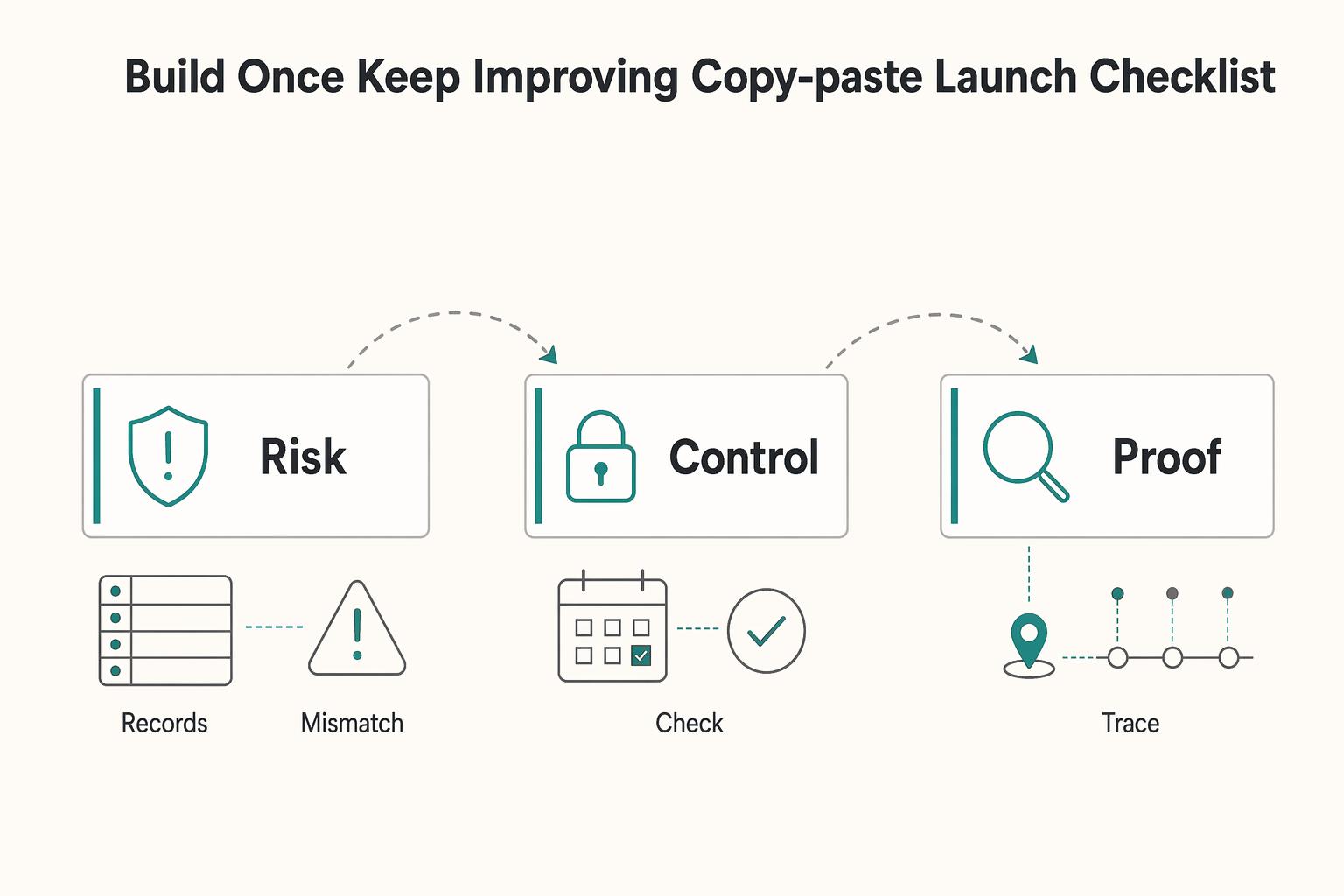
Build once and keep improving with a copy-paste launch checklist#
Step 1. Lock timing language to states you can prove. Before launch, align finance, ops, support, and product on the exact wording for each payout status in your own records. Do not let contractor-facing messages imply completion if your records do not yet show completion.
Step 2. Document how each alert decision is triggered. For every notification, record the source event and why it was allowed to send. Keep this simple and usable so teams can trace any alert decision during review.
Step 3. Write lifecycle messages as action-first templates. Use functional language that tells the contractor what changed, what happens next, and what to do now. Apply the three urgency levels deliberately: low, medium, and high. For high-urgency cases, route users directly to the exact screen needed to complete the action.
Step 4. Design for missed or stale push. Keep a durable in-app record and use approved fallback channels when action remains unresolved. FCM does not guarantee message order, and collapsible messages may be replaced. Treat push as an attention prompt, use appropriate expiry, and have the app retrieve current authenticated state; do not use the push stream as the payment ledger.
Step 5. Pilot narrowly, then gate expansion on evidence. Start with a small cohort and review whether timing, wording, and routing actually help users complete actions without avoidable support load. Use the same operational records you trust for account reconciliation for payment platforms when deciding whether to expand.
Step 6. Keep revising as behavior changes. Notification timing and user response can shift over time, and poor timing can cause missed messages or disabled notifications. Re-check copy, urgency, and routing regularly so your promises stay credible after launch. If you are standardizing rollout across rails, Gruv Payouts gives you one place to confirm coverage, controls, and batch behavior.
Review the payout provider’s coverage, account restrictions, state semantics, and supported recovery paths before applying this design to another corridor. Use those same checks when evaluating Gruv Payouts.
Frequently Asked Questions
What payout status alerts should a payment platform send contractors at minimum?
Send useful progress or action alerts for the states your platform can substantiate, such as initiation, action required, failure, provider-reported completion, and later return. Define the evidence and wording for each. A provider label alone does not establish that money is available to spend.
How often should contractor payout push notifications be sent without creating noise?
Send on meaningful contractor-facing change and use bounded reminders for unresolved action. Deduplicate by payout state version and message intent, not only by provider event ID. Keep the latest state in the account area because push messages can arrive late or be missed.
What should a payout failure notification include so the contractor can resolve it fast?
State what failed, identify the payout with a safe reference, and say the next permitted action. For example: “Payout P42 could not be completed. Review your receiving details in your account.” Avoid implying the contractor must resubmit when operations is still investigating an unknown outcome.
How do real-time rails and batch rails change payout alert timing promises?
Do not make rail-specific timing promises unless your records support them. Base your promise on the payout state you can prove, not on the rail label alone. If confirmation is not yet supported in your records, keep the message in a processing state instead of implying funds are received.
Which push notification KPIs actually matter for finance ops and reconciliation teams?
Measure incorrect-state notices, duplicate decisions, overdue action cases, fallback outcomes, and time from verified state change to notification decision. Separate transport acceptance from user acknowledgment and action completion; open rate alone does not prove payout understanding or receipt.
How should platforms handle compliance-gated payouts in notifications without exposing sensitive data?
Use only the permitted operational explanation and a link to the authenticated next step. Keep internal risk flags and restricted reports out of the payload. iOS Time Sensitive notifications may break through Focus when appropriate and enabled, but users can disable them; they are not guaranteed delivery.
When should a platform use push only, and when should it add email or in-app fallback?
Routine progress can use in-app state and optional push. For unresolved action or failure, add a bounded fallback path through approved email or opted-in SMS, with a current-state check before each attempt. A missing acknowledgment is not proof of nondelivery, and fallback must stop when the required action is complete.
Researched and edited by the Gruv editorial team. Gruv builds cross-border billing, payouts, and finance-operations software for global businesses.
Sources
Includes 3 external sources outside the trusted-domain allowlist.
- docs.stripe.com/api/payouts/objecttrusted
- docs.stripe.com/webhookstrusted
- ftc.gov/business-guidance/resources/can-spam-act-com...trusted
- developer.apple.com/documentation/usernotifications/unnotificati...external
- firebase.google.com/docs/cloud-messaging/customize-messages/set-...external
- firebase.google.com/docs/cloud-messaging/customize-messages/coll...external
Educational content only. Not legal, tax, or financial advice.
Related Posts

The Freelance Payment Penalty: A Modeled Audit of Platform Fees, FX Spreads, and Payout Delays
The money rarely disappears through a single, easy-to-spot fee. The real loss is stacked. A marketplace takes its commission, a processor adds a charge for international cards, a bank or payment company converts the currency at a spread, a platform holds the funds before release, and a wire sheds a little to intermediaries on the way in. Each layer looks defensible on its own, but the worker feels the combined result as a smaller deposit and a later payday.

How to Respond to a Subpoena for Business Records
Move fast, but do not produce records on instinct. If you need to **respond to a subpoena for business records**, your immediate job is to control deadlines, preserve records, and make any later production defensible.
A US Expat's Guide to Investing in UCITS ETFs to Avoid PFIC Issues
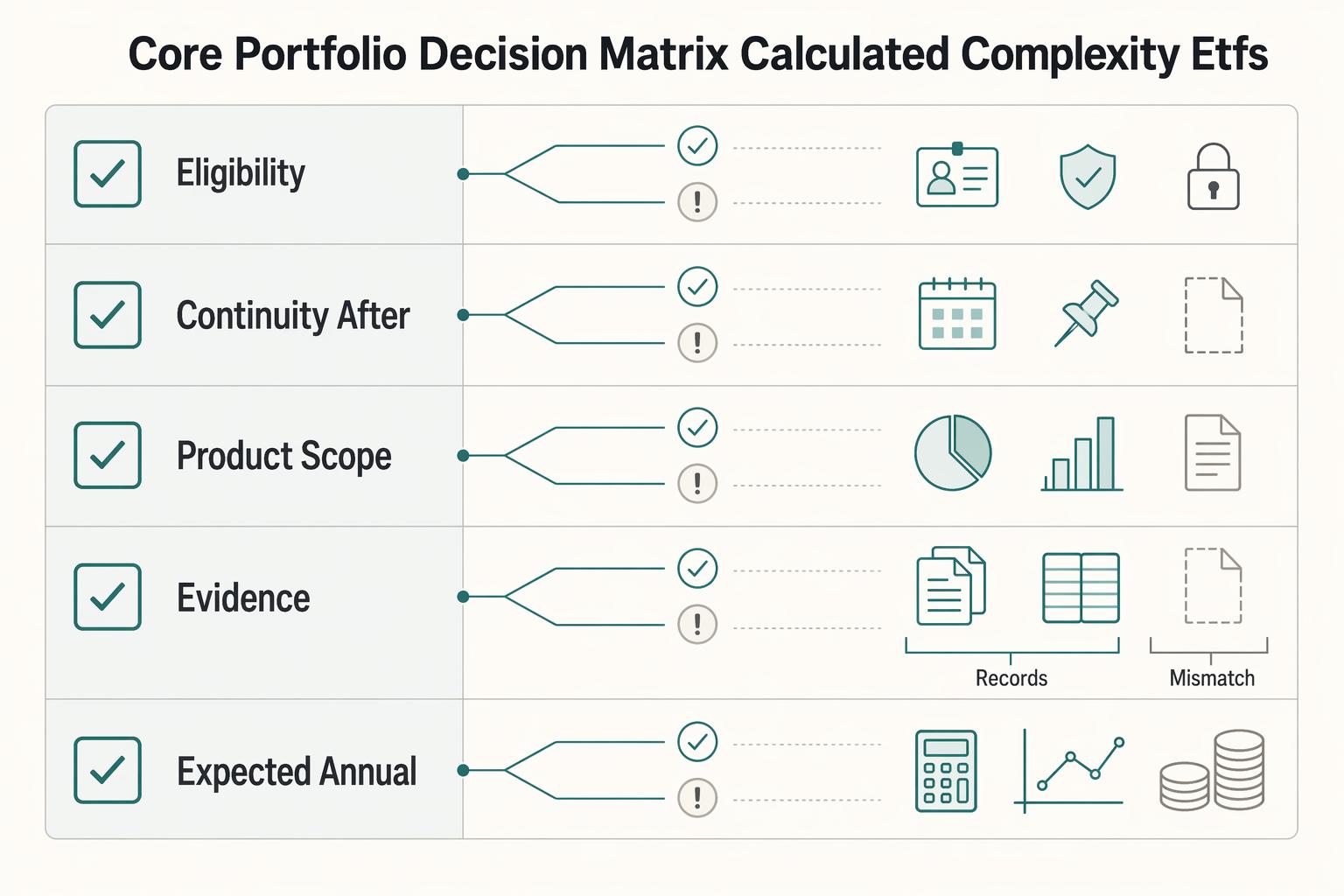
The real problem is a two-system conflict. U.S. tax treatment can punish the wrong fund choice, while local product-access constraints can block the funds you want to buy in the first place. For **us expat ucits etfs**, the practical question is not "Which product is best?" It is "What can I access, report, and keep doing every year without guessing?" Use this four-part filter before any trade: