
Quick Answer
Choose API-first or a controlled hybrid API/file workflow that your team can release, recover and reconcile. Use one payout intent across channels, verify provider-specific recipient and rail support, and hold unknown original outcomes before replacement. Keep approvals, provider attempts and settlement evidence linked for close.
How to run mass payouts on gig platforms by choosing the right model before tuning rails and speed#
- Why mass payouts moved upstream
Mass payouts are no longer just a finance back-office concern. If your platform pays contractors, creators, or marketplace sellers, the payout experience affects recipient trust and your operational workload. In practical terms, mass payments mean paying many recipients in one flow instead of sending transfers one by one. That makes payout design a product and operations decision, not just an accounting task.
- Why the decision gets harder as you grow
A simple setup usually works only at low volume. Once you add more recipients, more exception cases, or cross-border flows, manual uploads, spreadsheet checks, and disconnected tools increase the odds of delays, failed transactions, and reporting gaps. At that point, bulk payments stop being just a speed problem and become an orchestration problem across onboarding, payout release, status tracking, and reconciliation.
- What this guide is built to help you decide
This guide is for founders, product leaders, engineering owners, and finance ops teams that need to choose an operating model without creating avoidable rework. The focus is decision value: how to compare options, what to implement first, and where failure points usually show up when API integration and finance controls are designed in isolation. A good rule of thumb is to choose the model your team can actually operate and reconcile, then optimize speed and coverage after that.
- What to verify before you commit to a provider or rollout plan
Validate coverage, onboarding and controls for the selected provider and program before launch. Confirm the exact countries, currencies, recipient types and payout methods you need; headline reach does not prove eligibility or ownership verification.
That is the lens for the rest of this guide. You will get concrete comparison points, implementation order, and failure-mode checks so your payout stack does not split into separate truths across product, engineering, and finance. Use this early checkpoint: can you trace a payout request from recipient readiness through execution status and into reconciliation evidence without relying on spreadsheet cleanup after the fact? If not, tighten orchestration before you scale volume.
Related: Guide to Bulk Payment Processing: How Platforms Send Thousands of Payouts in a Single Run.
Who this list is for and how to pick your path#
This list is for teams making platform payout decisions, not workers comparing gig apps. If you are paying large recipient groups across regions, treat this as an operating architecture choice, not consumer app selection.
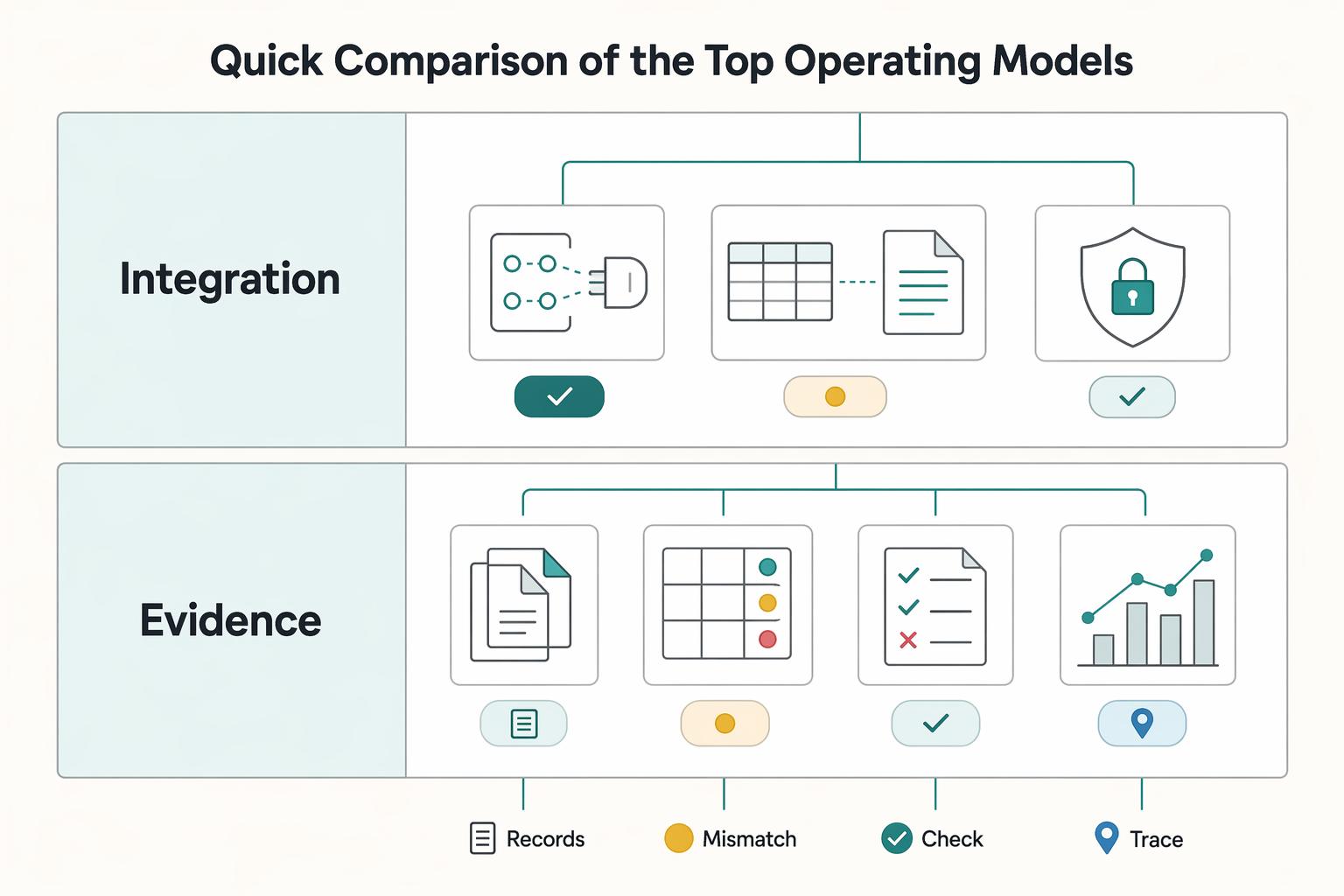
Quick comparison of the top operating models#
Compare API-first orchestration with a controlled hybrid API/file workflow. Both need explicit ownership for recipient readiness, release, exceptions and reconciliation. Outsourcing some tasks does not remove those responsibilities, and Merchant of Record status for customer sales does not by itself establish contractor-payout coverage.
| Model | Team maturity | Best for | Key pros | Key cons | First use-case to launch | KYC/AML checkpoint | Expected ERP steps | Ledger journal reconciliation |
|---|---|---|---|---|---|---|---|---|
| API-first orchestration | Higher maturity across product, engineering, and finance | Recurring high-volume payouts with strict operational controls | Strong automation, clearer status handling, consistent payout IDs | Higher implementation and exception-handling load | One standard domestic batch flow | KYC/AML controls are enforced before release; AML is handled as ongoing monitoring, not a one-time check | Approved payee records, payout status exports, and journal posting rules with clear ownership | One payout ID traces from request to status event to journal entry without spreadsheet repair |
Hybrid API + CSV uploads | Mid-maturity teams modernizing in phases | Teams that need API scale but still rely on file-based finance ops for exceptions | Faster rollout, preserves familiar finance workflows during transition | Dual-system drift risk, duplicate-send risk, uneven audit trails | API for standard payouts; CSV uploads only for defined exceptions (for example, corrections or reversals) | Same KYC/AML gate as API path, with explicit review ownership for file-based exceptions | API-driven records plus controlled file intake mapped into the same finance flow | CSV rows map back to the same payout ID and journal structure used by API payouts |
Option 1 API-first orchestration for control and scale#
API-first orchestration is usually the best fit when you need reliable payout visibility, safer retries, and cleaner reconciliation at recurring volume. It works when your team can own both the engineering workflow and the finance mapping, so payouts run as a product system instead of a manual file process.
Where this model fits#
API-first orchestration programs release, status handling and exceptions in your application. The selected provider may supply onboarding and verification components; record which tasks it performs and which decisions remain yours. Keep internal operation IDs linked to provider evidence.
This model is strongest for recurring high-volume payout operations with strict status visibility requirements, including teams that need event-level tracking across the payout lifecycle.
What you gain and what you must build#
APIs and webhooks can automate submission and status handling. Verify endpoint-specific idempotency support and retention, and deduplicate webhook events separately. Neither API acceptance nor delivery of one webhook proves final settlement.
You also take on heavier implementation work:
- Payout state design and webhook-to-record update rules
- Exception routing for failed, delayed, or duplicate requests
- Reliable mapping from payout outcomes into ERP and Ledger journals
A consistent ledger is a core scaling requirement. If ledger mapping is unclear, API integration alone will not solve month-end risk.
Use this readiness test before expanding scope: can you trace one payout ID from request, through webhook events, into final Ledger journals and ERP records?
Common failure mode#
The usual failure is incomplete exception design, not the send endpoint itself. Teams often launch payout creation first, then discover gaps in duplicate handling, delayed webhook logic, reissue rules, or finance-status mismatches.
Move one manual batch flow into an event-driven run. Record reservation and submission states as well as final financial evidence under your ledger policy. Keep unknown outcomes held for status lookup or reconciliation; do not reissue simply because a response timed out. A CSV exception path must use the same intent and release controls.
If you want a deeper dive, read Payee Verification at Scale: How Platforms Validate Bank Accounts Before Sending Mass Payouts.
Option 2 Hybrid API and CSV operations for mixed team maturity#
Hybrid works when you need phased modernization: run routine payouts through APIs, and keep CSV uploads as a tightly controlled exception path. The operating rule is simple: CSV should support exceptions, not compete with your primary flow.
Where this model fits#
Use this model during phased modernization. Manual handling can review reversals, adjustments and failed-validation records, but correction and revalidation must pass the same release gates before payment. A CSV path cannot bypass a hold or replace an unresolved original attempt.
CSV control matters more than most teams expect. A CSV export is a comma-separated tabular file with fixed headers, so header drift or manual edits can break consistency quickly. If CSV stays in scope, lock and version the header schema.
What you gain and what you must lock down#
The gain is phased delivery without forcing every edge case into automation on day one. The tradeoff is tighter cross-channel controls.
- Keep one shared payout reference across API and CSV paths.
- Use the same approval, status, and reconciliation fields in both channels.
- Make retries and resubmissions traceable in both paths.
- Store a complete record for each manual upload: input file, approver, upload time, and outcome/error output.
Use this checkpoint before scaling volume: can you trace a payout from an API request or a CSV row to the final finance record without ambiguity?
When this model should shrink, not expand#
Hybrid fails when dual operations become the default instead of a transition state. If exceptions grow beyond plan, narrow CSV to reversals and adjustments, and keep standard bulk payouts on APIs.
Pick payout rails by scenario not by hype#
For eligible U.S. domestic recipients, select Same Day ACH for scheduled runs or confirm RTP, FedNow and push-to-card support for urgent scenarios. Other countries need their own supported local or cross-border routes. Verify amount limits, institution coverage, timing and recovery before making a payout promise.
| Rail | Use it first when... | Operational requirement | Coverage and program caveat |
|---|---|---|---|
| Same Day ACH | Routine payouts and predictable earnings runs are the priority. | Keep disciplined release timing and clear exception handling. | Confirm geography, recipient eligibility, and account/program enablement before launch. |
| RTP | Immediate availability is part of the user promise. | Run real-time monitoring and exception handling, not batch-only ops. | Verify recipient-side and provider-side support before promising broad availability. |
| FedNow | You need an instant-availability path for time-sensitive payouts. | Implement active routing plus timeout/error handling. | Validate support and limits for your specific provider program and recipient endpoints. |
| Push-to-card | You need a fast path tied to eligible cards. | Validate recipient card details and program rules up front. | Confirm supported cards, geographies, and account-level limits; do not treat coverage as universal without proof. |
For confirmed U.S. domestic routes, scheduled payouts can use Same Day ACH and urgent cash-outs can use eligible RTP, FedNow or push-to-card programs. Exception routing must not bypass validation or an unresolved original attempt. Cross-border and other domestic markets require separate route verification.
Before locking routing logic, require three artifacts from your provider: a rail-by-rail coverage resource, a written enablement checklist, and a public API/service status page. In practice, this may appear as resources labeled "Global Payouts Coverage" and "Real-time system status." Use these to verify where each rail works, when it is live for your program, and what to monitor on payout day.
Launch controls and failure handling before scaling volume#
Before scaling, test release controls and traceability on a normal payout and an uncertain outcome. Keep tax-document collection and any withholding/reporting duties scoped to the payee and payment; a recipient’s personal foreign-earned-income exclusion is not a universal platform release control.
| Control point | Release or recovery rule | Evidence to retain |
|---|---|---|
| Recipient readiness | Apply the program’s required verification and tax-document workflow; record unresolved requirements. | Payee ID, required information status, decision and owner |
| Approval and channel consistency | Use one intended payout ID and equivalent release gates for API and file paths. | Approved amount/currency, approver, input row or request, submission history |
| Unknown outcomes and retries | Query or reconcile the original before replacement; use only documented safe endpoint retries. | Provider attempt/reference, raw response, current financial state and next action |
| Reconciliation and exceptions | Match provider movements, fees and returns to journals and bank evidence; investigate unexplained differences. | Close export, journal references, settlement evidence and named exception owner |
- Confirm recipient readiness for the actual program.
Record the required verification and tax-document status, policy decision and owner before release. Collection requirements and legal withholding or filing duties are separate questions; do not infer them from a generic form checklist.
- Apply equivalent controls to API and file submissions.
Link each approved amount and recipient to one intended payout ID. Preserve the API request or CSV row, approver and provider submission reference. Repeated uploads must not bypass duplicate checks or create another intended payment.
- Resolve unknown outcomes before replacement.
A timeout is not proof of failure. Query or reconcile the original attempt before reissuing through another channel or provider. Use the endpoint’s supported duplicate protection for documented retries and retain internal attempt history beyond provider key windows.
- Reconcile real financial effects and assign exceptions.
Match provider transactions, fees, returns and settlements to journals and bank evidence. Keep unresolved cases visible with their last known financial state, owner and next review; stopping automation does not prove a payout failed.
Conclusion#
The right choice is the operating model your team can run cleanly under pressure, not the option with the fastest headline. If finance cannot reconcile it, compliance cannot explain it, or ops cannot recover from a timeout without guessing, it is not ready to scale.
- Choose controllability before speed
Choose a model with clear approval, exception and payout-state ownership. Product, engineering, finance and compliance should use the same intended-payout record, with evidence of the selected provider’s actual responsibilities.
- Prove traceability with one model and one reconciliation standard
Do not launch multiple payout paths and sort out the accounting later. The better sequence is narrower: pick one operating model, keep early complexity limited, and define one reconciliation standard that carries from payout request through provider result into your internal finance records. The checkpoint that matters most is easy to test: for any completed or failed payout, you should be able to retrieve the request ID, provider reference, status history, retry behavior, webhook outcome, and final finance posting without rebuilding history from emails or CSV uploads. If your team cannot do that on exception cases as well as happy paths, gaps usually surface faster as volume grows.
- Validate market and compliance assumptions before architecture hardens
When coverage or compliance requirements are unclear, confirm market or program availability early and keep the proof. The difference here is evidence, not optimism: written confirmation of supported markets, required payee data, compliance dependencies, and reporting outputs your finance team will actually use. One risk is designing around assumed availability, then discovering later that your target configuration or compliance path does not hold where you need it. At that point, changing the payout architecture can become more expensive because volume, worker expectations, and downstream mappings are already in motion.
That is the practical takeaway from this guide. Build the version you can audit, explain, and repeat first. Once end-to-end traceability is stable across both normal and broken cases, then expand scope.
Frequently Asked Questions
What are mass payouts for gig platforms, and how are they different from regular bank transfers?
Mass payouts are bulk disbursements sent to many recipients at the same time, rather than one payment handled one by one. For a platform, the difference is operational scale: you need a consistent process that can track and reconcile many payouts reliably.
When should a platform move from manual `CSV uploads` to API-driven payout automation?
Move when rising volume makes manual uploads too time-consuming and error-prone. If you need the same process to work for 100 or 10,000 payees, an API is usually the better fit. Before you switch, align developers, finance, and compliance on the integration plan and control model.
How should we decide between `Same Day ACH`, `RTP`, `FedNow`, and `Push-to-card` for different payout types?
For U.S. domestic routes, choose by confirmed recipient eligibility, limits, timing and recovery: Same Day ACH can suit scheduled runs, while RTP, FedNow and eligible push-to-card programs can support urgency. Other countries require their own supported routes. Use actual status evidence as completion proof.
Are mass payouts a replacement for `Payroll` and `Accounts Payable (AP)`, or a separate system?
Treat mass payouts as a payout capability, not an automatic replacement for payroll or AP. A marketplace payout API can automate and scale disbursement operations, while payroll/AP-related finance and compliance controls still need clear ownership.
What minimum controls should be in place before scaling cross-border `Bulk payouts`?
Define recipient readiness, release approval, safe retry and replacement rules, sanctions/compliance review as applicable, and provider-to-ledger-to-bank reconciliation. Assign owners to unresolved cases and test the same gates in API and file paths before scaling.
How do `Webhooks` and `Idempotency keys` reduce payout failures and duplicate sends?
Webhooks report asynchronous events; deduplicate event IDs and apply state guards so repeats or late delivery do not duplicate journals. Endpoint-supported idempotency protects documented retries within its scope and retention. Keep durable internal intents and attempts, and reconcile unknown outcomes before any replacement submission.
What should we verify before launch if we need `KYC`/`AML` plus tax flows like `W-8`/`W-9`?
Document which verification, collection, withholding and reporting tasks your program requires, who performs each, and what evidence permits release. Test unresolved requirements and changed beneficiary details before scaling; the execution order must reflect actual provider capabilities and applicable rules.
Try a related tool
Where Gruv fits
Researched and edited by the Gruv editorial team. Gruv builds cross-border billing, payouts, and finance-operations software for global businesses.
Sources
Includes 3 external sources outside the trusted-domain allowlist.
Educational content only. Not legal, tax, or financial advice.
Related Posts
How Platforms Validate Bank Accounts Before Mass Payouts
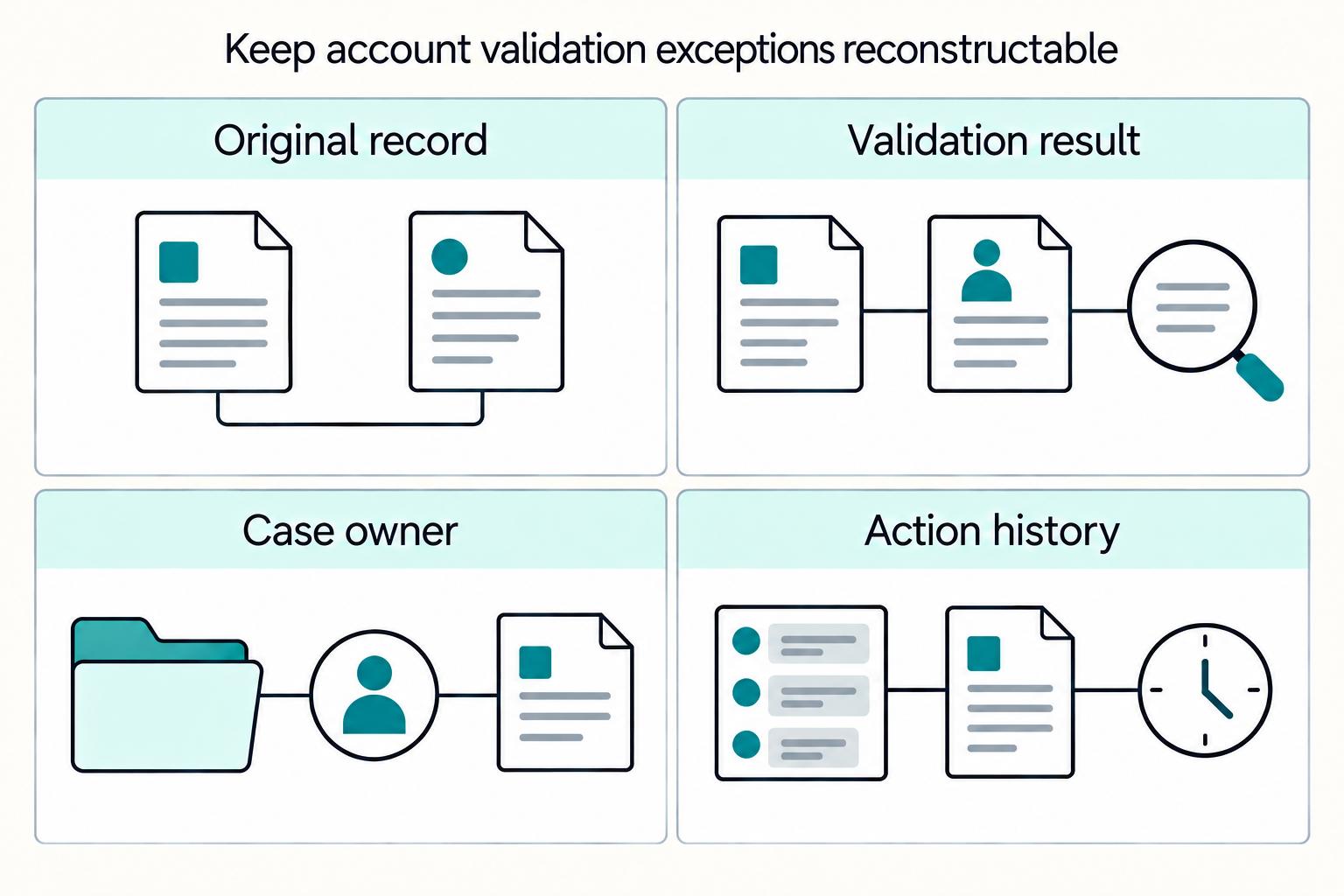
For mass payouts, the real question is not whether to verify payees. It is how much verification you require before release, who can override it, and what evidence you can produce later. If you cannot show that evidence on demand, your release rule is weaker than it looks.

FedNow vs RTP for Gig Platform Contractor Payouts
You are not choosing a payments theory memo. You are choosing the institution-backed rail path your bank and provider can actually run for contractor payouts now: FedNow, RTP, or one first and the other after validation.
Bulk Payment Processing Platforms for Thousands of Payouts
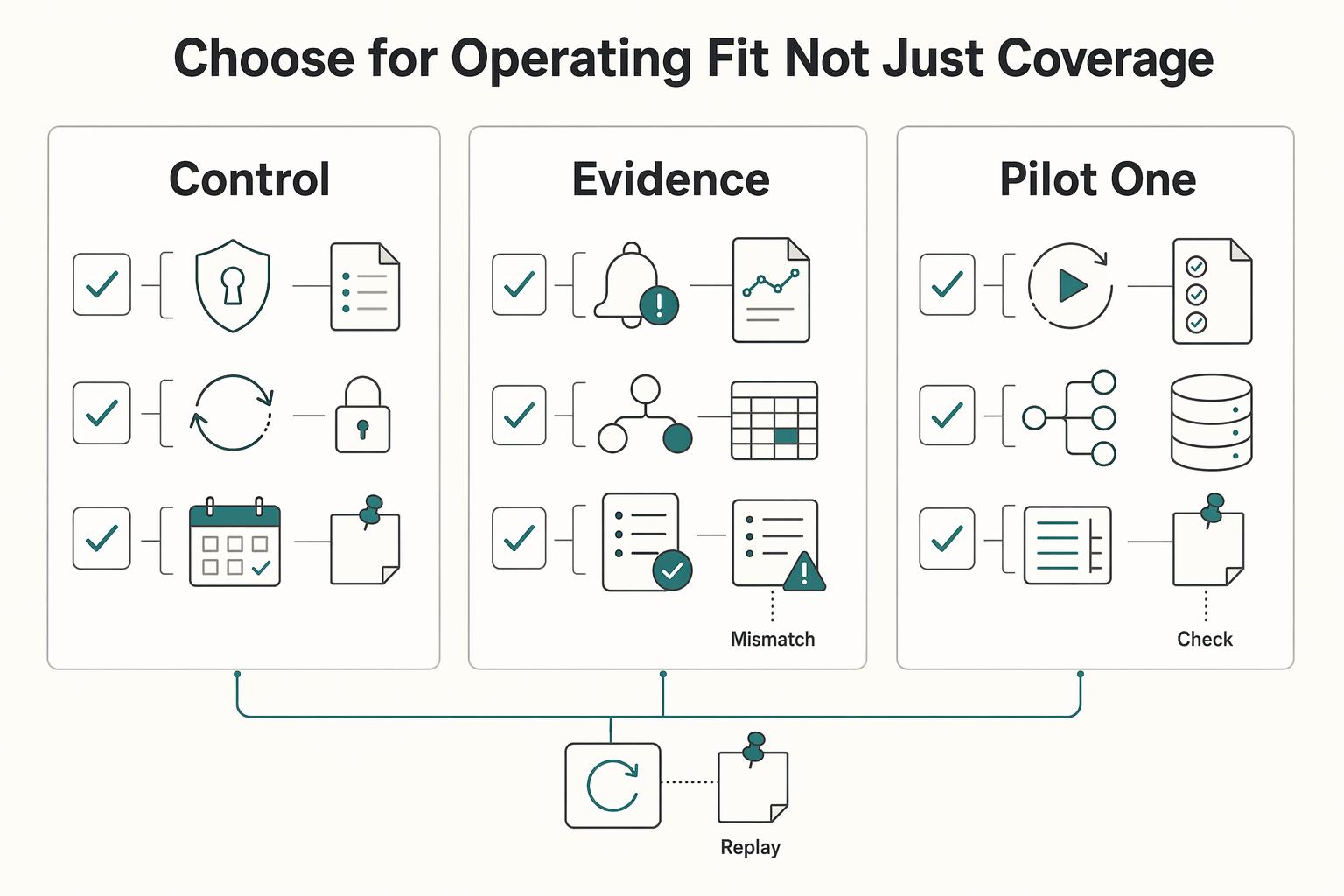
If your team runs recurring payouts at real volume, the real decision is operational. Can you execute a batch and still handle delays, bad recipient data, and month-end close without chaos? This guide is for founders, product leads, finance ops, and engineering owners evaluating **bulk payment processing platforms for high-volume payouts**.