
Quick Answer
Start with one monetization offer that fits proven audience demand and your operating capacity. Revenue sharing is an allocation rule that can apply to subscriptions, tips, ads or sales. Define its gross or net base, refund recovery and payout timing before launch, then track collected revenue and contribution alongside creator earnings.
Choosing Models That Hold Up in an Average Month#
Popularity alone can be a poor way to choose among creator platform monetization models. If a model only looks good during a viral spike, a sponsorship burst, or a one-time product drop, it is a weak base for product and go-to-market bets.
- Sustainability first
A monetization model is the blueprint for how money gets made, and that blueprint matters more than one strong month. The practical checkpoint is simple: ask whether the model still works in an average month with no breakout event. If it does not, treat it as a secondary layer, not your core offer.
- Recurring revenue needs repeat value
Recurring access can make revenue easier to plan when the creator delivers something people want each billing period. It also adds renewal failures, cancellation handling and an ongoing delivery obligation. Test retained paid demand before treating subscriptions as the default.
A paid community suits an audience that values ongoing interaction. Moderation, events and member support cost real time; social bonds alone do not establish lower churn. Compare retained paying members and contribution after those costs with your other models.
- The guide compares models by operational fit
You are rarely choosing between just two or three obvious options. This guide compares multiple models through an operational lens. Some channels can monetize quickly but remain less predictable, while recurring plans are often easier to plan around.
Market-size forecasts do not decide whether a model works for your audience. Compare conversion, repeat purchase or paid retention, net contribution and support effort for the format you actually serve. A broad creator-economy estimate cannot substitute for that cohort evidence.
The goal here is narrower and more useful. By the end, you should be able to defend a deployment choice to finance and product teams, not just explain why a model looks attractive in a trend report. Related reading: Webflow Memberships for Community: Compliance, Stack, and Monetization Guide.
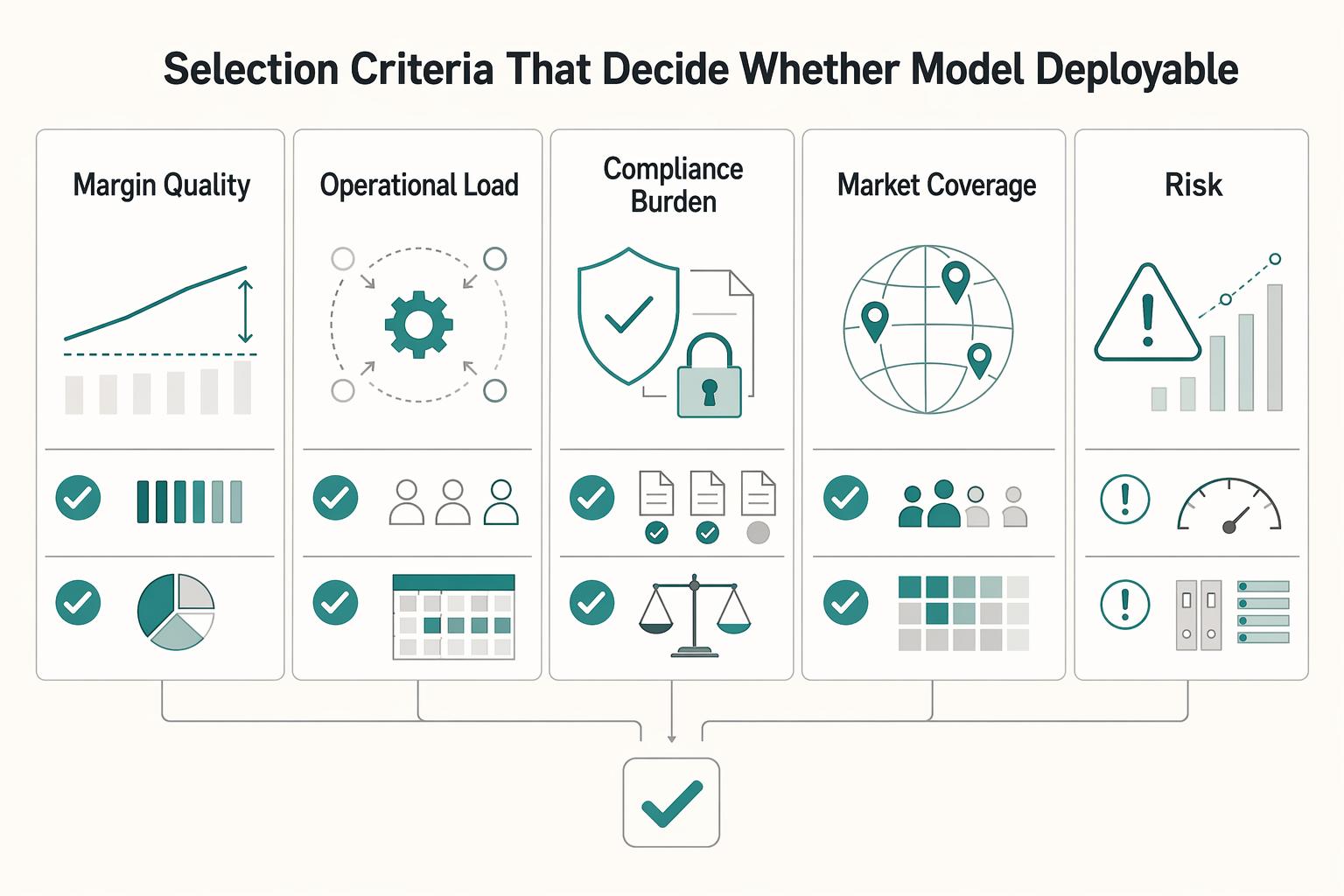
Selection criteria that decide whether a model is deployable#
A model is deployable only when it stays reliable in an average month, not just during spikes. Use five filters before you commit roadmap time.
| Filter | What to evaluate | Risk if weak |
|---|---|---|
| Margin quality | Collected revenue less creator share, processing, refunds, delivery and support costs | Gross growth can conceal negative contribution |
| Operational load | Full path from monetization event to creator outcome and reversals | Support and finance costs can erase early gains when the flow regularly breaks |
| Compliance burden | Ownership, review paths, and required records before launch | If these stay ambiguous, narrow the first release |
| Market coverage | Real fit with audience behavior and current payment setup | Phase rollout where dependencies are already stable |
| Support risk | Likely payout questions, disputes, and edge cases | If outcomes cannot be explained clearly and consistently, the model is not ready to scale |
- Margin quality
Compare contribution after costs for each model. Digital delivery may avoid manufacturing costs, but payment processing, moderation, content production, support and refunds remain. A subscription with high cancellation and heavy member support can contribute less than a well-priced one-off product.
- Operational load
Choose models your team can run consistently without manual rescue work. Track the full path from monetization event to creator outcome and reversals. If that flow regularly breaks, support and finance costs will erase early gains.
- Compliance burden
Set clear ownership and decision points before launch. If responsibilities, review paths, and required records are still ambiguous, treat that as a scope problem and narrow the first release.
- Market coverage
Treat monetization as a balancing act, not a one-method decision. Score each model by real fit with your audience behavior and current payment setup, then phase rollout where dependencies are already stable.
- Support risk
Model the likely payout questions, disputes, and edge cases before launch. If your team cannot explain outcomes clearly and consistently, you are not ready to scale that model.
For the full breakdown, read The European Content Creator Blueprint for Cross-Border Client Work.
Comparison table for subscriptions tips ads and revenue share#
Subscriptions suit repeat paid demand; tips fit voluntary support; ads require eligible inventory and traffic; merchandise needs fulfillment. Revenue share is an allocation rule that can apply to any of those models, not a separate customer payment method. Compare the customer offer and the creator split together.
| Model | Predictability, margin, volatility | Execution cost (payouts, disputes, support, ledger) | Compliance and tax layer |
|---|---|---|---|
| Subscriptions / Paid communities | Recurring fees can help forecasting when paid retention is proven. Churn, failed renewals and creator delivery costs still affect contribution. | Recurring billing and entitlement states must stay clean. Disputes and refunds are usually manageable, but billing and access issues can drive support volume. Ledger reconciliation must handle renewals and reversals clearly. | Creator payout flows still require KYC/KYB/AML handling where applicable. If entities are onboarded, KYB includes legal identity, ownership structure, and UBO checks. Tax-document workflows (for example W-8, W-9, 1099) need clear ownership. |
| Tips / Donations | Voluntary support varies with audience behavior. Forecast from observed supporter frequency and payment amounts, not a fixed rank below other models. | Faster payout expectations increase operational pressure. Disputes and reversals can rise in high-volume or live contexts. Support and reconciliation load increases with many small transactions. | KYC/KYB/AML controls still matter, especially around payout eligibility and review flow. Tax-document collection cannot be left undefined. |
| Advertising-based models | Revenue depends on eligible inventory, advertiser demand, traffic quality and policy decisions. Views alone do not establish payable earnings. | Earnings validation and reporting logic can delay final payable amounts. Support load rises when creators cannot trace earnings changes. Ledger mapping must separate estimates, adjustments, and final payouts. | Payout-side verification still applies. Requirements vary by jurisdiction and service context, so operating rules must be explicit before scale. Tax reporting on creator payouts remains part of the model. |
| Revenue-share allocation | An allocation rule layered on subscriptions, tips, ads or sales. Define the revenue base and share formula before calculating creator earnings. | Version gross-versus-net basis, attribution, split recipients, reserve and reversal rules. Separate estimated earnings, recognized payable and paid amounts. | Verification discipline is critical. KYB can be harder at scale because there is no single global business-verification registry, and obligations vary across regions and financial-service context. Tax-document flows must match who is paid and why. |
| Digital products / Courses | Contribution and repeat demand depend on the offer, pricing and delivery model. Track launch and repeat-sale cohorts separately. | Refund, access, and delivery support can be material. Reconciliation complexity rises with bundles, discounts, and partial reversals. | KYC/KYB/AML and payout tax-document handling still need defined ownership and process. |
| Merchandise | Demand and contribution depend on product fit, repeat buying, manufacturing, shipping and returns. | Fulfillment, returns, and payout timing increase support and reconciliation burden. | Verification and tax-document operations still apply to payout flows; responsibilities must be set before rollout. |
Two pre-launch checks catch important operating gaps:
- Confirm you can trace one creator balance change from source event to payout and reversal without manual stitching.
- Confirm who owns KYC, KYB, AML, and tax-document operations across your target jurisdictions.
Use these decision rules to narrow scope:
- Choose subscriptions when recurring value and paid retention are demonstrated. Confirm cancellation, failed-renewal and access behavior.
- Choose tips or ads when that matches the audience. Test payment reversals or earnings adjustments before creator funds are released.
- Apply revenue sharing only with a defined base. Record attribution and allocation rules for every model that pays creators.
For a deeper dive, read How to Build a Platform for the Creator Economy: Payment Architecture for 1-to-Many Monetization.
Work through one allocation and refund#
Hypothetical example: a customer pays $100 before tax. Processing costs $3, and the creator agreement allocates 80% of the remaining $97 to the creator. Creator payable is $77.60 and platform contribution before support and other costs is $19.40. Record whether the base is gross or net; applying 80% to $100 would instead create an $80 creator payable.
If the $100 is fully refunded and the $3 fee is not returned, reverse the creator’s $77.60 entitlement and the platform’s $19.40 allocation. If the creator has already been paid, record the amount recoverable under the agreement separately from cash currently available. Do not assume a customer refund automatically retrieves creator funds. For example, Stripe separate charges and transfers requires the platform to manage transfer reversals separately from charge refunds. Test insufficient-balance recovery before promising immediate payouts.
Best choices for predictable recurring revenue#
Choose recurring access when creators can deliver ongoing value and users show willingness to renew. A community adds interaction and moderation; a one-off course may fit a defined outcome without a recurring obligation. Forecast each from its actual demand and cost structure rather than ranking one format universally above another.
| Model | Best fit | Operational focus |
|---|---|---|
| Subscriptions | Ongoing access instead of audience spikes | Keep renewal, cancellation, failed-payment, refund, and access-state behavior consistent |
| Memberships | Belonging, shared identity, and values, not only content access | Perks, community rules, and moderation quality affect retention |
| Digital products and Courses | Expert-led creators with a clear, specific outcome | Keep refund, dispute, delivery, and post-purchase access rules unambiguous |
- Subscriptions
Subscriptions trade one-off selling for a recurring delivery promise. Track paid retention, collected renewals and failed-payment recovery, not follower count alone. A small paid audience can support recurring revenue, but it still has to cover creator and platform operating costs.
Focus on operating reliability, not headline growth. Renewal, cancellation, failed-payment, refund, and access-state behavior should be consistent for users and for your internal records before you treat this model as expansion-ready.
- Memberships
Memberships suit audiences buying interaction, shared activities or ongoing support alongside content. Define the promised perks and measure retention in your own paid cohorts; an unsupported industry retention percentage does not establish your expected outcome.
The tradeoff is operational load: moderation, events and access questions can grow with membership. Include that cost when evaluating whether an extra member improves contribution.
- Digital products and Courses
Digital products and courses fit expert-led creators who can deliver a specific outcome. Test buyer demand, pricing and completion or satisfaction before projecting repeat sales. Separate a one-off course’s delivery economics from an ongoing subscription commitment.
Before scaling, keep refund, dispute, delivery, and post-purchase access rules unambiguous. If sale-to-access-to-refund outcomes are still hard to reconcile, treat expansion claims as premature.
We covered this in detail in Mental Models for Freelance Strategists to Make Better Client and Pricing Decisions.
Best choices for fast top-of-funnel monetization#
Tips, ads and revenue-share allocations need different prerequisites. Tips need a supported payment and refund path; ads need eligible inventory, demand and earnings validation; sharing needs an auditable allocation base. Choose the first model from audience behavior and available capabilities rather than assuming all three launch faster than subscriptions.
| Model | Why used | Operational focus |
|---|---|---|
| Tips and Donations | Can test voluntary support where payment methods and reversal handling are already supported | Trace the payment event to creator balance to payout release, including reversals and refunds |
| Advertising-based models | Can monetize reach quickly because users do not need to buy a product or start a subscription | Reconcile view and impression events to records and creator-facing earnings |
| Revenue-share allocation | Use only when the event that created the payable amount and each split can be proved | Event logs, allocation rules, and payout reconciliation should line up without manual reconstruction |
- Tips and Donations
Tips suit voluntary support around content or live engagement. Call them donations only when the relevant charitable or tax treatment actually applies; a creator tip is not automatically a charitable donation. Many small payments can make processing fees and refund support a large share of revenue.
Trace the customer payment to creator allocation, available payout and any later reversal. Fast payout can increase unrecovered-refund exposure. Set payout timing and any permitted reserve from the agreed risk and liability model, and show creators which amounts are pending, available and already paid.
- Advertising-based models
Advertising can monetize reach quickly because users do not need to buy a product or start a subscription. But it monetizes attention more than intent, so results can swing with traffic quality and policy changes.
Before calling it scalable, confirm that view/impression events reconcile to your records and to creator-facing earnings. Also test how invalid traffic decisions, policy enforcement, and adjustments flow through support and payouts. A common failure mode is showing gross earnings early, then clawing back or restating later.
- Revenue share
Revenue share is credible only when you can prove which event created the payable amount and why each split was applied. In this model, attribution integrity matters more than headline split percentages.
Before launch, make dispute review reproducible: event logs, allocation rules, and payout reconciliation should line up without manual reconstruction. If attribution is duplicated, delayed, or missing, payout disputes follow quickly and creator trust drops.
Diagnose payout failures by provider code, account eligibility, funding and status before changing controls. Investigate fraud or compliance signals through their own evidence and review paths. An operational bank rejection is not itself an AML alert; fix the affected cause and verify recovery before adding volume.
Related: Live Streaming Platform Monetization: How to Handle Tips Subscriptions and Creator Payouts.
Best choices for higher basket value and brand depth#
For stronger basket value and brand depth, start with Merchandise when creator identity already drives purchases, then pair it with recurring monetization once repeat behavior is clear.
- Merchandise
Merch works best when the creator brand is part of what people are buying, not just how they discover you. Fourthwall-style setups can reduce launch friction by combining product selling with production and shipping support, but your ops baseline still applies: each paid order should reconcile to one order ID, one creator earnings rule, and one payout entry.
- Merchandise plus Memberships or Subscriptions
Merchandise and memberships can complement each other when users want both physical goods and ongoing access. Fourthwall’s published offering includes shops and memberships, catalog product costs and shipping arrangements. Compare fulfillment costs and recurring-service commitments separately so a strong merchandise launch does not hide weak paid retention.
- Merchant of Record only with traceability checks
If you use a Merchant of Record setup, treat it as an operating model that still requires full reconciliation checks. Confirm customer charges, refunds, and creator payables stay traceable from transaction through payout in your records. If that line of sight is weak, order questions can quickly turn into payout and support disputes.
For a step-by-step walkthrough, see Best Platforms for Creator Brand Deals by Model and Fit.
Market-by-market readiness checks before launch#
Before you launch a country, require three things: a country checklist, clear tax-workflow ownership, and a dated evidence pack. If any one is missing, treat the market as not ready.
- Country checklist
Treat each country as its own go/no-go record, not a generic "international" line item. At minimum, document payout rails, whether Virtual Accounts are available, the KYC/KYB and AML onboarding path, and who handles VAT validation. Then verify the plan against provider references plus test paths for an individual creator and a business creator so your onboarding and account model match real operating conditions.
- Tax workflow ownership
Assign tax ownership from the sales and payout model. Record who sells to the customer, handles indirect tax, collects applicable creator tax documents and files any required information returns. W-8/W-9 and 1099 responsibilities depend on the actual payee, payer and reporting role; they are not universal requirements for every country. Personal FEIE or FBAR eligibility is a separate creator tax matter, not a monetization launch gate.
| Record | Operator decision |
|---|---|
| Customer sale | Seller/MoR identity, price, tax and refund obligation |
| Creator earnings | Gross or net allocation base, share, fees and adjustments |
| Creator payout | Eligible payee, net payable, timing and required tax-document/reporting owner |
A merchant-of-record service may take responsibility for customer sales taxes within its contracted scope. It does not automatically assume the creator’s income tax or every platform payout obligation. Keep those responsibilities explicit.
- Go-live evidence pack
Require a dated pack with policy approvals, provider references, journal mapping, and reconciliation exports. The standard is traceability: one clear path from transaction or earnings event to payable, payout, and any reversal or adjustment. If finance, compliance, and support cannot review the same evidence and explain a payout without manual reconstruction, delay launch and narrow scope.
This pairs well with our guide on Solo Creator Financial Blueprint for Getting Paid on Time.
Failure modes and the rollout sequence that avoids them#
Once a country is ready on paper, the main failure risk is execution, not the monetization idea itself. A staged rollout is usually safer than turning on every model at once because it gives you faster feedback on governance, documentation quality, and risk-matched testing before complexity compounds.
A practical way to run this is to sequence for learning first, then speed. Start where your team can verify records and support handling clearly, then add models that increase calculation and operations complexity.
- Stage 1: Subscriptions and Memberships
Start with the model whose demand and operating prerequisites you can prove. If that is subscriptions, test successful renewal, failed renewal, cancellation and refund before wider access. The gate is whether finance, operations and support can explain the same transaction and entitlement result.
- Stage 2: Tips, Ads, and Revenue share
Add the next model only when its distinct failure paths are tested. Ads need earnings-finalization and invalid-traffic adjustments; tips need refund and payout-recovery handling. A revenue-share rule applies whenever creator earnings are split, including in the first release.
- Stage 3: Courses and Merchandise
For courses or merchandise, test delivery, access or fulfillment, cancellation and returns. These can be a first model when they fit the audience; the staged sequence is an example, not a rule that physical goods must always come last.
Gate every stage with the same four checks: payout success, dispute turnaround, support backlog, and reconciliation completeness. If one stage fails those checks, fix that layer before adding the next one.
You might also find this useful: How Photo and Stock Image Platforms Pay Photographers: Royalty and Licensing Payout Models.
Conclusion#
The practical answer is simpler than the market narrative. Pick the model your team can operate cleanly across billing, creator earnings, payouts, and reversals, then add complexity only after your records keep matching reality. The right choice is usually not the loudest growth story. It is the one you can explain line by line when something fails.
- Start with recurring revenue you can actually verify
Recurring revenue helps only when users renew for value they receive. Before expanding it, trace a normal charge, failed renewal and refund through creator earnings and access state. If the contribution does not cover delivery and support, adjust the offer before adding more recurring commitments.
- Use paid communities when access alone is not the product
Memberships add interaction to content access. State what users receive and what happens to access after cancellation, nonpayment or refund. Budget moderation and creator time alongside payment costs; predictable billing cannot compensate for an unsustainable delivery promise.
- Treat platform dependence and market expansion as operating constraints, not strategy slides
Platform policies, payment support and distribution algorithms can change the results of an otherwise sound offer. Keep exportable customer, entitlement and earnings records where permitted, and test the provider’s adjustment and recovery paths. Launch a new market or model when its dependencies are understood, rather than because a market-size forecast creates pressure to expand.
Frequently Asked Questions
How do creator platforms choose a monetization model without overbuilding?
Start with one audience offer and the creator allocation it requires. Use paid-retention evidence for subscriptions, voluntary support behavior for tips, eligible inventory and traffic for ads, or order demand for products. Add a second model only after the first model’s collection, access or delivery, earnings and reversal paths work consistently.
Which model is most predictable for planning revenue and payouts?
Recurring fees can support forecasting once renewal and retention are demonstrated. They are not guaranteed income: churn, payment failures and delivery cost matter. Product sales or ads can also be predictable with repeat demand or stable inventory. Compare net results in ordinary months, not only gross sales in a launch month.
When do Subscriptions outperform Advertising-based models for smaller creators?
Subscriptions can fit a smaller audience willing to pay for ongoing value; ads depend on eligible inventory and scale. YouTube’s YPP rules distinguish ad-revenue eligibility from expanded fan-funding access. Standard ad eligibility is 1,000 subscribers plus either 4,000 valid public watch hours in 12 months or 10 million valid public Shorts views in 90 days, with review and other requirements. Do not assume a typical time to qualify.
When should a platform add Revenue share instead of improving paid communities?
Revenue sharing does not replace a community offer: it determines how proceeds from that offer or another model are allocated. Set the share base, attribution, fees and refund recovery for the existing model first. Add a new customer offer when demand and operating evidence support it.
What compliance checks are required before enabling creator payouts in a new country?
Treat each market as jurisdiction-specific and confirm payout-provider availability plus required creator identity and tax documentation before launch. If those requirements are still unclear, pause launch rather than assume they will be the same everywhere.
What metrics indicate a model is healthy beyond gross revenue?
Track collected revenue, creator payable, platform contribution, refunds, retained paying users or repeat buyers, and support time by model. Separate estimates from finalized ad earnings and pending from available balances. A rising gross-sales figure with falling contribution is not a healthy result.
How should teams phase rollout across Subscriptions, Tips, and Merchandise?
Start with the audience offer whose prerequisites you can meet, then test its specific failure paths. Subscriptions need renewal and entitlement handling; tips need reversal and payout recovery; merchandise needs fulfillment and returns. Apply creator-sharing rules to every model that uses them, rather than waiting for a later rollout stage.
Try a related tool
Researched and edited by the Gruv editorial team. Gruv builds cross-border billing, payouts, and finance-operations software for global businesses.
Sources
Includes 2 external sources outside the trusted-domain allowlist.
Educational content only. Not legal, tax, or financial advice.
Related Posts
Building a Creator-Economy Platform with 1-to-Many Payment Architecture
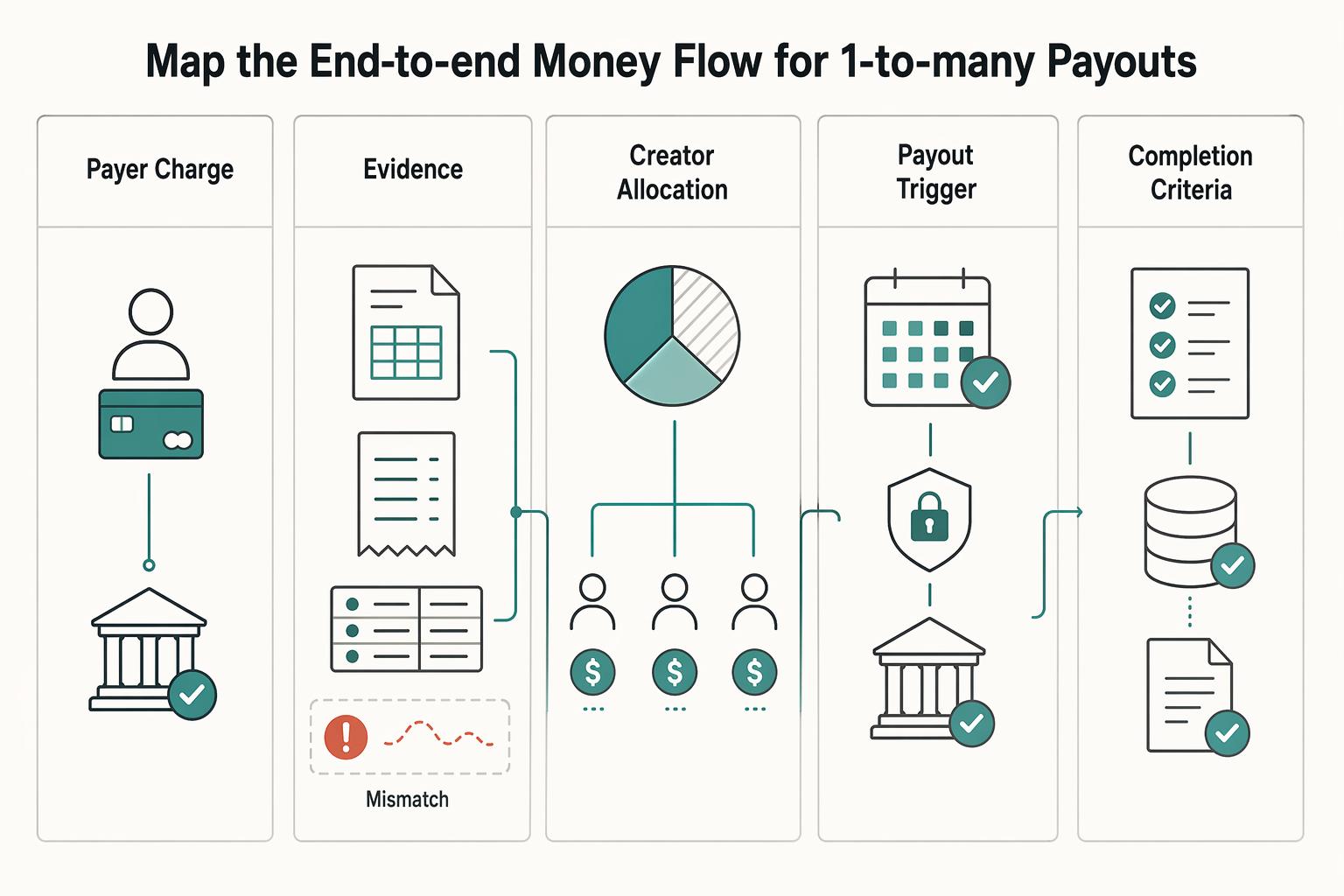
A creator platform can collect one customer payment and owe several creators, an agency and the platform itself. Design the charge, allocation and bank payout as separate stages: a valid split is not proof that recipients received money, and a completed payout does not eliminate later refund or dispute exposure.
Comparing Live Streaming Monetization: Tips, Subscriptions, Pay-Per-View, and Creator Payouts
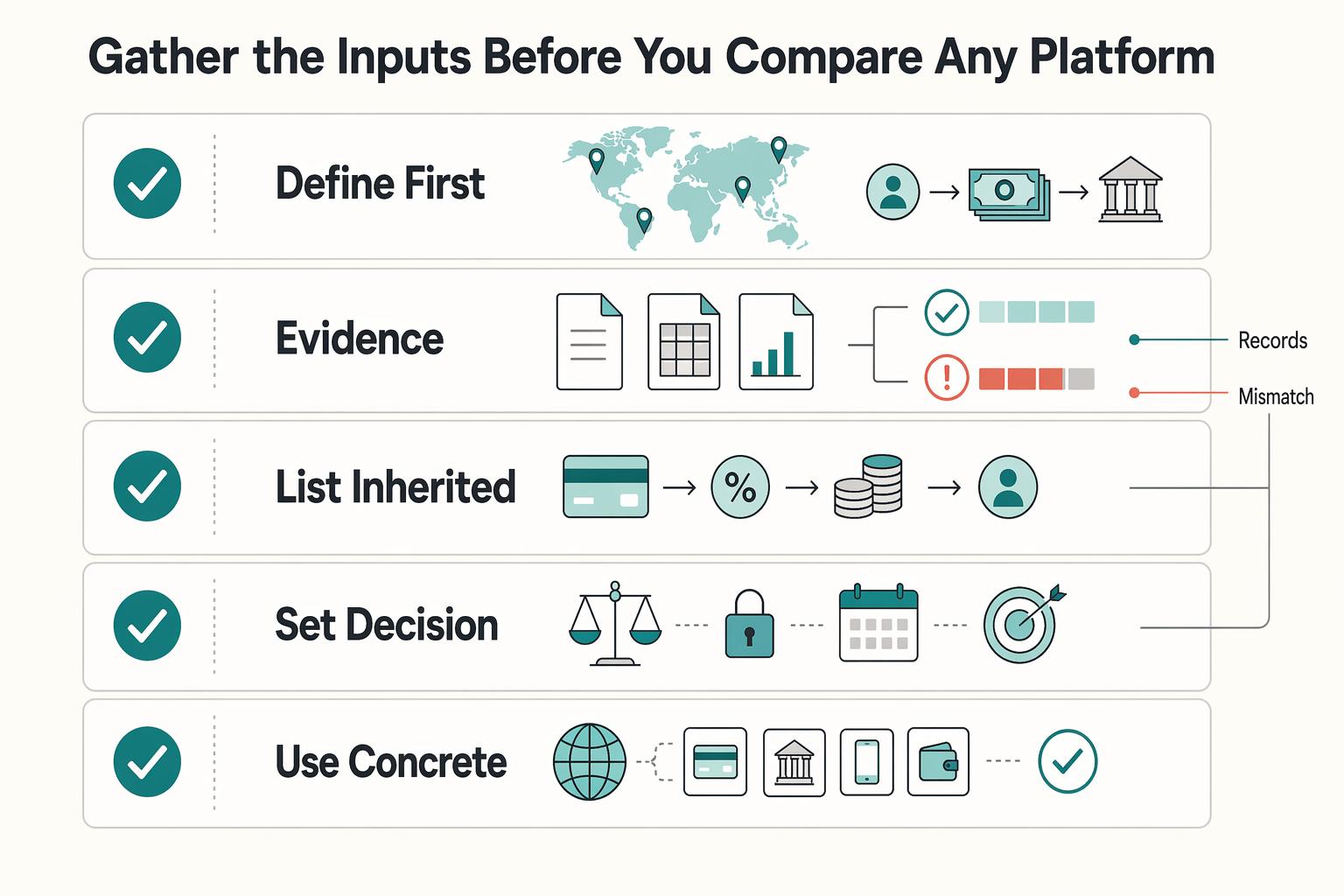
A lot of advice on live stream monetization focuses on creators deciding where to publish. Founders and operators need a different lens: choose revenue features and payout design together. The right model depends not only on audience demand, but also on what you are selling, who you are selling to, and whether you can support the money movement behind it.
How Photo and Stock Image Platforms Pay Photographers with Royalty and Licensing Payout Models
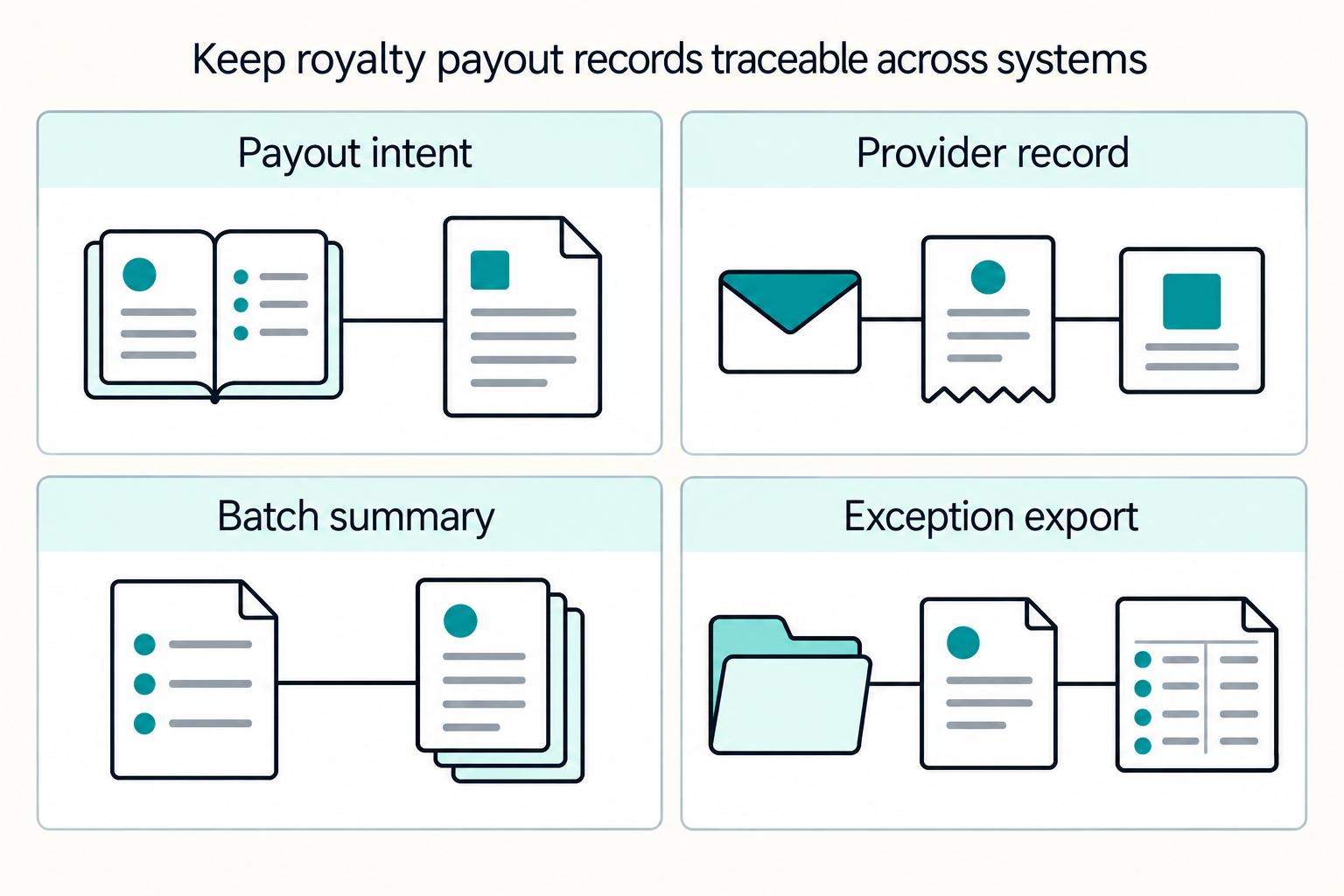
Use platform-owned evidence, not marketplace landing pages, for this decision. Most comparisons of how photo stock image platforms pay photographers under different royalty, licensing, and payout models come down to four details that are often buried or split across pages: the license type, how contributor earnings are calculated, when payments actually go out, and what must be in place before money can move.