
Quick Answer
Use mental models for freelance strategists as decision rules at intake, pricing, delivery, and invoicing. Start with six practical lenses: Margin of Safety, The Map Is Not the Territory, Relativity, Reciprocity, Velocity, and Systems Thinking. Then tie each one to a checkpoint, like written alignment before proposals, change triggers in scope, and a midpoint evidence review so you can adjust before final delivery.
Decision quality matters as much as effort#
If you work independently, decision quality can matter as much as effort. One freelancer-focused source makes the point plainly: hard work alone is not enough. Decision quality and mindset matter too. Early calls can carry outsized consequences: saying yes to the wrong client, pricing fuzzy work as if it were clear, or continuing after key facts have changed.
That is where mental models become useful. They are not abstract theory or a reading list to admire. They are compact thinking tools for messy briefs, uncertain timelines, and clients who sound confident but have not answered the important questions.
For a freelance strategist, those decisions show up everywhere. Client acquisition affects whether you keep getting paid month after month, and weak discipline there can lead to dry spells. Day-to-day operating choices can either reduce surprises or compound avoidable friction.
The promise of this guide is simple: use a small set of models to make fewer unforced errors. You do not need 100 of them. You need a handful that help you test assumptions, compare options, leave room for uncertainty, and notice when a problem is wider than it first appears.
A good starting habit is to document your bigger calls in a simple decision note: what you believe right now, what evidence supports it, what could change your mind, and when you will check again. That checkpoint matters because one failure mode is sticking with an old judgment after new evidence shows up. If a client brief changes, a stakeholder disappears, or success metrics stay vague, your thinking should change too.
The sections that follow connect these models to real freelance moments across client work and operations. The goal is straightforward: clearer rules for when to proceed, when to pause, what to document, and how to adapt with fewer surprises. Related: A freelancer's guide to Thinking.
The core mental models and where each one belongs in your business#
Use these model names as a working decision checklist, not as clever labels. If you sell strategy as a Service (work done on someone else's behalf for a fee), the job is to make clearer calls under uncertainty and protect delivery quality as conditions change.
A useful anchor: one well-known business-model framework describes 12 standard forms of value (attributed there to The Personal MBA (2010)). You do not need all of them here. You need a small set of lenses you can apply consistently in intake, proposals, scope shifts, invoicing, and payout follow-through.
Treat the six models below as prompts for judgment in those moments:
| Model | Best use case | Decision rule | Common mistake |
|---|---|---|---|
| Margin of Safety | Proposal | Add explicit buffer when inputs, timing, or approvals are still unclear | Pricing tightly on assumptions that are not confirmed |
| The Map Is Not the Territory | Intake call | Confirm key claims in writing before you commit | Treating early narratives as settled reality |
| Relativity | Proposal | Frame options so tradeoffs are visible | Presenting one price with no comparison context |
| Reciprocity | Scope change | Offer help with clear boundaries and a decision point | Letting goodwill turn into unscoped delivery |
| Velocity | Invoicing | Move fast after triggers, approvals, and terms are clear | Speeding up admin before dependencies are aligned |
| Systems Thinking | Payout timing | Check the full chain: contract, invoice path, approver, payment route | Isolating one delay when the system is the issue |
Client selection rules that prevent bad-fit projects#
Most bad-fit projects can be filtered out before the proposal stage: verify what is real, set clear limits on unpaid work, and pause when core inputs conflict.
Treat the brief as a draft#
Start discovery by assuming the brief is incomplete until key points are confirmed in writing. Before proposing, confirm who owns the problem, who approves spend, what success looks like, and which inputs you will receive.
| Confirm before proposing | If answers change |
|---|---|
| Who owns the problem | Pause and get written alignment before moving forward |
| Who approves spend | Pause and get written alignment before moving forward |
| What success looks like | Pause and get written alignment before moving forward |
| Which inputs you will receive | Pause and get written alignment before moving forward |
If those answers change across conversations, pause and get written alignment before moving forward. You are still looking at a draft of reality, not a stable working context.
If sensitive information is involved, use official, secure channels for sharing and review.
Give value without doing the job for free#
Use reciprocity with boundaries: offer enough value to support a decision, but do not deliver the full engagement before commitment. A bounded diagnostic or focused risk readout is usually enough at this stage.
Label any pre-signature output clearly as exploratory and limited to current facts. Keep full recommendations, implementation sequencing, and custom research inside paid scope.
Pause on contradictions and pressure#
When client inputs conflict, do not solve around the gaps. Send a short written recap of the conflicts and ask the client to confirm the current version before you estimate or propose.
Treat urgency pressure, unclear ownership, and vague success metrics as caution cues in this framework, not automatic disqualifiers. If several appear together, tighten boundaries: no detailed proposal, no speculative work, and no start date until the buyer, problem, and success measure are named in writing.
Pricing and scope decisions that protect margin and trust#
Price and scope choices work best as risk management, not as a one-size-fits-all formula. Pick the pricing tool to fit the project context, then define scope clearly so both sides can see what the price covers and what triggers a change.
Relativity helps you present meaningful options so the buyer compares outcomes and involvement, not just one number. Margin of Safety keeps you from pricing the ideal version of the work while delivering the real version with delays, extra reviews, and dependency drag.
Use options to make tradeoffs visible#
A single price can force a yes/no reaction. Tiered scopes usually create a better question: which version fits what the client needs now?
Keep options real, not cosmetic. Show clear differences in depth, speed, access, or support, and document what is included, what inputs are required, and what is out of scope. If those boundaries stay fuzzy, people compare price against imagined scope.
Build margin into assumptions you can name#
Margin usually erodes through small frictions: added review cycles, delayed feedback, missing inputs, extra stakeholders, and approval lag. You do not need a fixed percentage rule, but you do need explicit assumptions in writing.
State the review cycle, client dependencies, approval path, and timing assumptions up front. If those conditions are likely to move, either reflect that uncertainty in price or switch to a model that handles change better.
Match the pricing model to project conditions#
There is no universal model that fits every freelance situation, so let the project and client conditions determine the tool.
| Pricing model | Best when | Main risk | Contract clause needed |
|---|---|---|---|
| Fixed fee | Scope is clear and operating conditions look stable | Extra work appears without a clear reset point | Scope boundaries, revision limits, and a change-order trigger |
| Phased pricing | Uncertainty is still material and discovery may reshape the work | Early phases are mistaken for full delivery | Phase deliverables, re-approval between phases, and milestone payments |
| Time-based or retainer style | Work is ongoing and priorities may shift | Demand expands faster than budget | Cadence, response expectations, and scope guardrails |
If uncertainty is high, phased pricing is often a safer starting point. If scope is truly stable, fixed fee can work. In all cases, price the conditions required to deliver the promise, not just the promise itself.
Before you sign, confirm scope boundaries, revision limits, change-order triggers, and payment milestones in your working documents. Also check cash timing against delivery timing: late payment disrupts plans, so pricing and payment structure need to work together.
Delivery execution that turns strategy into reliable outcomes#
Reliable delivery comes from managing constraints, not just moving fast. Use Velocity as pace plus direction: fast output in the wrong direction is still drift.
After pricing and scope are set, delivery is where trust is either confirmed or damaged. Keep direction and pace visible throughout the work so you do not discover misalignment at the final handoff.
Treat handoffs as constraints, not admin#
Most delivery slowdowns happen at handoffs, approvals, inputs, and dependencies. In bottleneck terms, every system has a constraint, and optimizing non-constraints can look like progress without improving outcomes.
Focus on throughput: the slowest step sets the practical pace for everything downstream. If approvals or required inputs are blocked, polishing other parts faster will not move delivery forward.
Map the sequence in plain language before execution starts: what inputs are needed, who owns each approval, and which step must happen next. If ownership or timing is unclear at kickoff, treat it as an active risk.
Use a three-step verification sequence#
Use simple checkpoints to keep strategy and delivery aligned.
| Checkpoint | Review |
|---|---|
| Kickoff assumptions | Objective, audience, available inputs, stakeholders, and what success should look like |
| Midpoint evidence review | Evidence, open gaps, and changed assumptions while there is still time to adjust direction or scope |
| Final outcome audit | Final output against the original assumptions, agreed scope, and the decision the client needed to make |
- Kickoff assumptions
Confirm the starting assumptions in writing: objective, audience, available inputs, stakeholders, and what success should look like.
- Midpoint evidence review
Check evidence, open gaps, and changed assumptions while there is still time to adjust direction or scope.
- Final outcome audit
Compare final output against the original assumptions, agreed scope, and the decision the client needed to make.
The common failure mode is skipping the midpoint check, then finding misalignment only at final delivery. If evidence changes the problem, pause and restate the brief before continuing.
Compliance decisions for cross-border freelance work#
Treat cross-border compliance as separate checks, not one checklist. For EU client work, keep personal-data terms separate from VAT and payout decisions so you do not miss the document that controls the next step.
If personal data handling is unclear, reduce exposure first and confirm processing terms before project start. Ask for only the data needed, and delay broader transfers until terms are explicit.
For VAT, use the exact program rules and thresholds in front of you. In the cited EU e-commerce context, cross-border B2C VAT rules changed on 1 July 2021 and reference a EUR 10 000 EU-wide threshold. The cross-border SME scheme uses a different limit: EUR 100 000 Union turnover for the current and previous calendar year. These figures are not interchangeable.
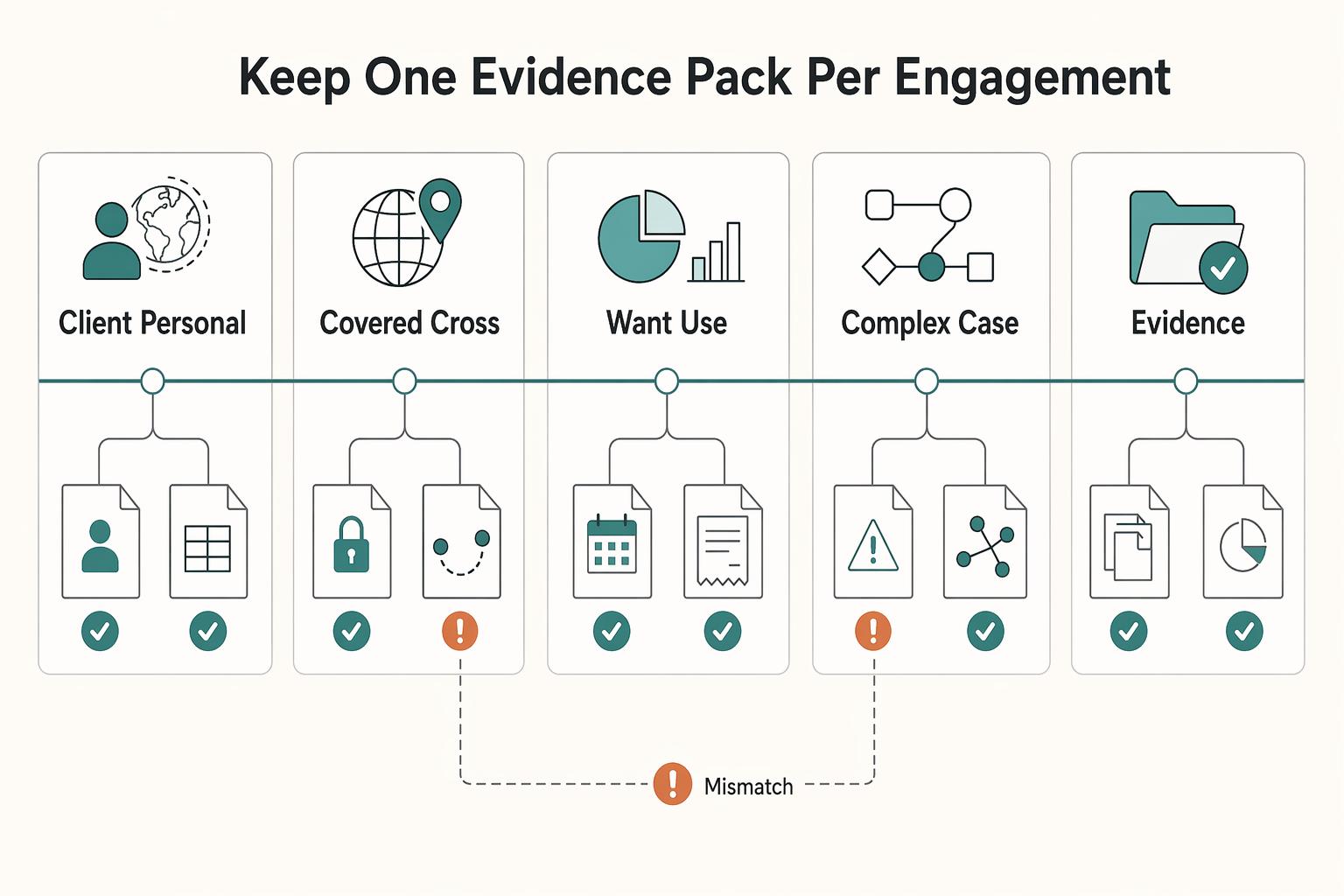
Keep one evidence pack per engagement#
Keep one complete file per project: signed scope, data handling terms, invoice records, and tax profile artifacts. Before kickoff, you should be able to open one folder and find what was agreed, how billing is set up, and what supports your tax treatment.
| Trigger | Required document/check | Who confirms | When to re-check |
|---|---|---|---|
| Client is in the EU and personal data may be shared | Signed data handling terms and written confirmation of what data you will access | You and the client contact responsible for data sharing | Before project start, and again if scope expands to new datasets |
| Covered cross-border B2C sales or services may fall under OSS rules | Check whether One Stop Shop (OSS) applies and which Member State of identification you would use; registration can be done in one single Member State for declaration and payment | You, then your tax adviser or filing owner if you use one | At onboarding, and whenever your sales pattern or service mix changes |
| You want to use the cross-border SME scheme | Prior notification in your Member State of establishment, plus a turnover check against the EUR 100 000 Union turnover cap | You and the competent authority handling the scheme | Before registration, then monitor until registration is confirmed; the cited process should not take longer than 35 working days after receipt of prior notification |
| VAT treatment is unclear because the transaction is complex | Assess whether to request a VAT Cross-border Ruling (CBR) on the transaction you foresee | You, with tax counsel or the relevant authority if needed | Before invoicing, and again if the deal structure changes |
| Audit trail is weak or records are spread across tools | Reconcile invoice records and keep the documents needed for OSS record keeping and possible audits | You or your bookkeeping owner | Monthly, and before filing periods |
Use three intake questions on every cross-border project: where is the client, will personal data move, and which VAT treatment or scheme might apply. If any answer changes mid-project, reopen compliance checks before continuing.
If you need a deeper privacy checklist, use GDPR for Freelancers: A Step-by-Step Compliance Checklist for EU Clients. For this article, keep the rule simple: tie VAT decisions to the exact program and threshold, keep data-handling terms explicit, and do not rely on a generic "international client" label.
For a step-by-step walkthrough, see A Guide to 'Amortization' of Intangible Assets for a Freelance Business.
Money operations that reduce payout surprises#
To reduce payout surprises, treat invoicing, payout method, and receivables tracking as core operations, not admin cleanup. If you bill late, use opaque payment paths, or keep delivering while payment status is unclear, you increase avoidable cash risk.
Use a Margin of Safety mindset for timing: assume delays can happen, and run your cash operations so a delay does not destabilize your month. Without a steady paycheck, active cash flow management is part of the job, and positive cash flow is what keeps the business afloat.
Make invoicing boring and fast#
A consistent invoicing routine reduces delays. Pick a cadence you can sustain, such as every Friday or the last weekday of the month, and stick to it. Every day you wait to invoice is another day you delay payment.
Keep invoices clear and easy to reconcile. A practical default is one invoice per client, even when multiple deliverables are involved, because it reduces confusion and simplifies accounting.
Prefer traceable payment paths#
For cross-border work, prefer payment methods that preserve status visibility and a usable record trail. You should be able to confirm whether an invoice was sent, acknowledged, pending, or completed, and what action is needed if it stalls.
If a client asks for an ad hoc transfer outside your normal billing path, confirm what record will remain after payment. If that is unclear, keep the traceable route and store invoice, status updates, and payout confirmation with the engagement file.
Do not deliver through payment ambiguity#
Payment tracking is solvency protection, not just organization. Knowing what is owed, due, and overdue helps you catch risk early and avoid unexpected cash shortages.
If payment status is unclear, do not guess. Confirm the current transaction state and next action in writing before you continue delivery.
Weekly and monthly checklist for better decisions#
Use one weekly review and one monthly audit. Each pass should end with a decision, a correction, or a documented hold.
| Cadence | Review | Action |
|---|---|---|
| Weekly | Review every live engagement through The Map Is Not the Territory | What assumption changed, what evidence changed it, and did that require a decision reversal? |
| Weekly | Log at least one reversal when evidence changed | Avoid seeing new information and still running the old plan |
| Weekly | Run Margin of Safety on each open project | Review remaining work, revision exposure, dependency risk, and payment status |
| Weekly | If approvals slip or inputs stay external | Reduce scope, issue a change request, or reset the delivery date |
| Monthly | Audit pricing outcomes with Relativity | Review proposals sent, options selected, and losses where pricing felt high or unclear, then adjust anchors |
| Monthly | Keep EU Clients compliance pass in two separate tracks | Data handling (GDPR) and VAT |
| Monthly | Review whether cross-border activity requires an OSS check | Registration, VAT declaration and payment, plus record-keeping and audits |
| Monthly | Keep thresholds distinct | EUR 10,000 applies to cross-border B2C e-commerce rules in force since 1 July 2021; EUR 100,000 is the separate Union turnover cap for the cross-border SME scheme |
| Monthly | If VAT treatment is complex across participating Member States | Check whether a VAT Cross-border Ruling is appropriate before invoicing |
Weekly
- Review every live engagement through The Map Is Not the Territory: what assumption changed, what evidence changed it, and did that require a decision reversal?
- Log at least one reversal when evidence changed. The risk is seeing new information and still running the old plan.
- Run Margin of Safety on each open project: remaining work, revision exposure, dependency risk, and payment status.
- If approvals slip or inputs stay external, update the plan in writing: reduce scope, issue a change request, or reset the delivery date.
Monthly
- Audit pricing outcomes with Relativity: proposals sent, options selected, and losses where pricing felt high or unclear, then adjust anchors.
- Keep your EU client compliance pass in two separate tracks: data handling (GDPR) and VAT.
- For VAT, review whether cross-border activity requires an OSS check (registration, VAT declaration and payment, plus record-keeping and audits).
- Keep thresholds distinct: EUR 10,000 applies to cross-border B2C e-commerce rules in force since 1 July 2021, while the cross-border SME scheme uses a separate EUR 100,000 Union turnover cap and requires one prior notification in your Member State of establishment.
- If VAT treatment is complex across participating Member States, check whether a VAT Cross-border Ruling is appropriate before invoicing.
Conclusion#
Strong freelance strategy comes from better decision quality under real constraints, not from having more ideas or simply working harder. The shift is practical. Stop asking only "what should I do?" and start asking "what rule am I using, what evidence supports it, and what would make me change course?" That is where these models stop being interesting theory and start becoming a working habit.
A small set of models becomes valuable only when each one is tied to something concrete. In practice, that can mean discovery notes that name the actual decision-maker and success metric, a proposal that states scope boundaries and revision limits, a midpoint check that tests whether the original assumptions still hold, and written change approval when the work moves. If those checkpoints are missing, a common failure mode is that you keep solving confidently while the client's definition of the problem quietly changes underneath you.
This is also where better decisions can improve your market position. Clear records of what you accepted, what changed, what paid well, and what caused drag can tell you more about your positioning than vague reflection. When you can see which projects made you the easy, obvious choice and which ones depended on confusion, urgency, or unpaid extras, your service offer gets sharper. The result is not magic income growth from a clever concept. It is a cleaner way to choose work, price it, and deliver it with fewer avoidable surprises. Hard work still matters, but hard work alone is not enough if the underlying calls are weak.
So keep the next step small. Pick one client cycle this month and apply the checklist from intake through invoicing. Log the decision, the evidence behind it, and the document where it was confirmed. If ownership is unclear, pause before proposal. If assumptions change mid-project, update scope or timing in writing instead of absorbing the change and hoping it balances out later.
That is the real point of this guide. You do not need 100 models in your head. You need a few that you actually use, with explicit rules and visible proof. If you want that habit to stick, pair it with a simple decision journal and review it against real outcomes. Over time, your edge comes less from being more strategic in the abstract and more from making fewer loose decisions when the pressure is on.
Frequently Asked Questions
What are mental models for freelance strategists in plain terms?
Mental models for freelance strategists are structured ways to think through decisions instead of reacting on instinct. They matter when a choice needs thought, analysis, and planning, like whether to take a prospect, how to scope the work, or when to push back on changes. Think of them as decision aids, not theory.
Which mental models help freelancers avoid bad clients?
A practical early approach is to treat the brief and first call as a starting story, then verify it by asking open-ended discovery questions about goals, challenges, and budget while listening more than you talk. If key details are still unclear or conflicting, do not rush to proposal. Require written alignment first.
How do mental models improve pricing decisions without overcomplicating sales?
Use a structured approach: present clearly different scope options so the buyer compares outcomes and tradeoffs, not just one fee in isolation. Then spell out revision limits, dependency assumptions, and payment milestones in the proposal. If uncertainty is high or inputs depend on the client, phase the work instead of forcing a fixed fee too early.
What is a realistic margin of safety for freelance projects?
There is no universal percentage that fits every project. A practical buffer should account for likely revision cycles, approval delays, and missing client inputs without turning your fee into unpaid extra work. The checkpoint is to review remaining work, dependency risk, and payment status together. If one of those is slipping, change scope, issue a change request, or move the date in writing.
How do I apply The Map Is Not the Territory during client discovery?
Use it as a reminder that the first explanation is often incomplete, not necessarily wrong. Ask questions that draw out the prospect's goals, challenges, and budget, then confirm what problem they want solved and what success looks like. A common risk is moving too fast from kickoff notes before key assumptions are validated.
How can I turn mental models into a weekly operating habit that actually sticks?
Keep it small and repeatable. Once a week, review each live engagement and answer three prompts: what assumption changed, what evidence changed it, and what decision now needs to change or stay on hold. If you log those answers in the same place every week and pair the review with admin tasks you already do, the habit is more likely to stick than a vague promise to "think more strategically."
Try a related tool
Researched and edited by the Gruv editorial team. Gruv builds cross-border billing, payouts, and finance-operations software for global businesses.
Sources
- catalog.southernct.edu/undergraduate/courses.htmltrusted
- pmc.ncbi.nlm.nih.gov/articles/PMC7080856trusted
- pmc.ncbi.nlm.nih.gov/articles/PMC12855402trusted
- sme-vat-rules.ec.europa.eu/sme-scheme/cross-border-sme-scheme_entrusted
- taxation-customs.ec.europa.eu/archives/taxable-persons/vat-cross-border-ru...trusted
- vat-one-stop-shop.ec.europa.eu/guides_entrusted
- vat-one-stop-shop.ec.europa.eu/index_entrusted
- worldbank.org/content/dam/Worldbank/Publications/WDR/WDR%2...trusted
Educational content only. Not legal, tax, or financial advice.
Related Posts

GDPR Compliance Checklist for Freelancers Working With EU Clients
Start by separating the decisions you are actually making. For a workable **GDPR setup**, run three distinct tracks and record each one in writing before the first invoice goes out: VAT treatment, GDPR scope and role, and daily privacy operations.

Digital Nomad Health Insurance Comparison for Long-Stay Moves
Use focused time now to avoid expensive mistakes later. Start with a practical `digital nomad health insurance comparison`, then map your route in [Gruv's visa planner](/tools/visa-for-digital-nomads) so we anchor policy checks to your real plan before pricing pages pull you off course.
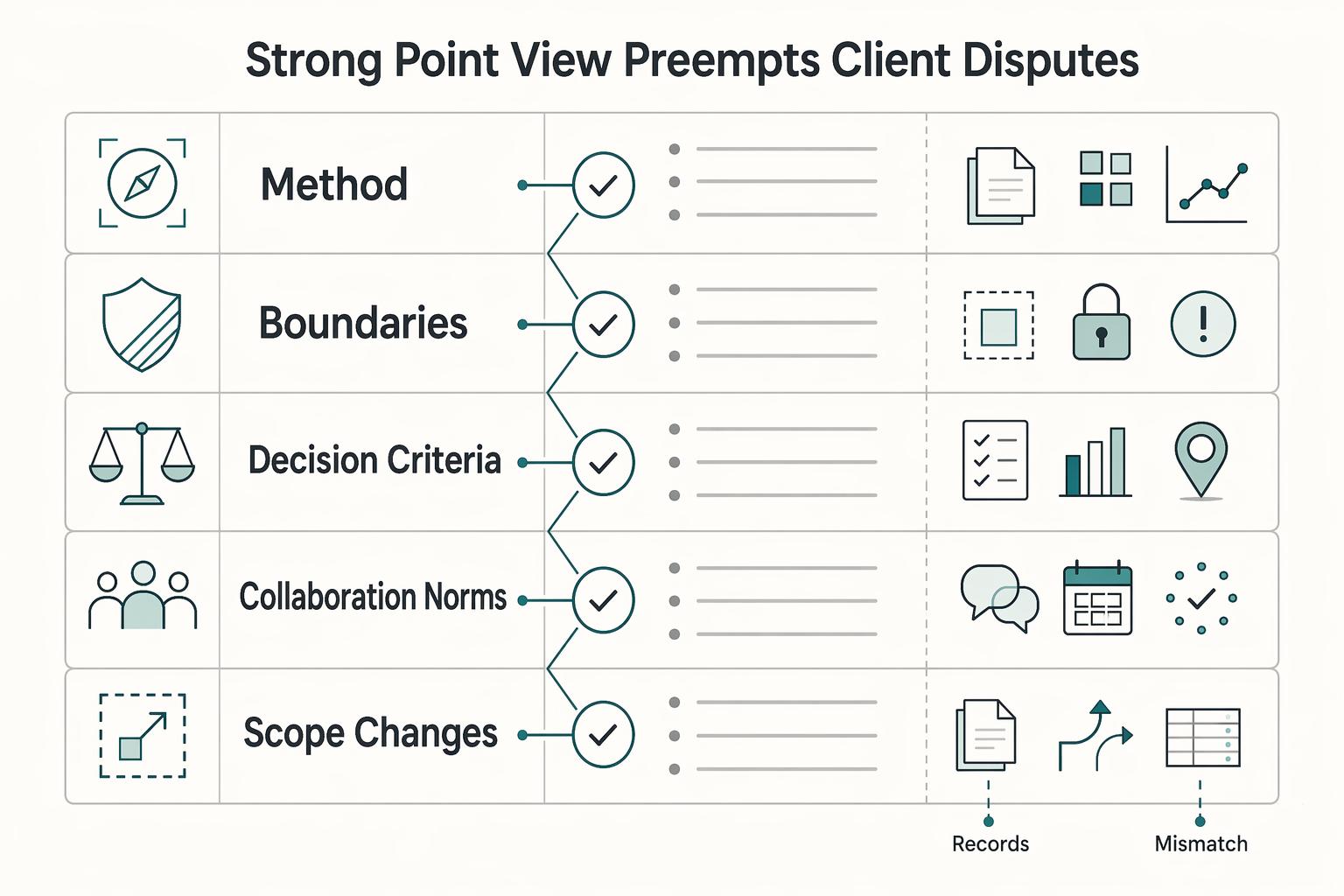
Thinking, Fast and Slow for Freelancers Who Want Better Clients
Treat thought leadership as risk control for your business, not just a visibility tactic. The real shift is from fast, reactive client chasing to slower, deliberate asset building. You publish to reduce risk before the next dry month, pricing call, or bad-fit project shows up.