
Quick Answer
Split payout operations into two lanes first: event-close tournament batches and recurring creator runs. Lock winner snapshots and split logic before submitting tournament payouts, then use scheduled cut-off windows and threshold checks for recurring payouts. Require recipient eligibility before either lane releases funds, including KYC completion, tax profile readiness with W-8 or W-9, and validated payout details. Use idempotency keys and replay-safe webhook handling so retries re-run the same instruction instead of creating duplicate disbursements.
Gaming prize pools are big but payout execution is the real risk#
What public data can tell you#
Prize pools are easy to see. The harder part is getting money to the right people, with the right checks, across borders.
Public sources help with market context. Esports Charts says it ranks the biggest esports games by prize pools with coverage going back to 2016, and third-party stats pages can reference Esports Earnings for earnings tables. Those sources show where money concentrates and which titles dominate the headlines. They do not give you documented approval, verification, routing, or reconciliation procedures after the event ends.
The headline numbers make the gap obvious. The International 2021 is publicly listed at $40,018,195, with event dates of 2021-10-07 to 2021-10-17. Fortnite World Cup Finals publicly advertised $30,000,000 prize pool up for grabs, tied to the top 100 Solo players and top 50 Duos teams.
Those figures matter, but they are only the visible layer. Most of the payout work sits behind the scenes.
Use a simple checkpoint. If your source gives you prize pool size, standings, and maybe participant counts, but says nothing about recipient verification, tax collection, approval logs, or exception handling, you are still looking at context, not payout design.
Where payout work actually starts#
Keep the framing practical. Start with familiar events like The International and Fortnite World Cup Finals, then move to an approach you can actually use for winner and creator payouts.
That shift matters because payout work starts where public leaderboards stop. Even vendor material aimed at esports makes the point clearly: execution includes verifying player information and handling accounting and US tax reporting admin. The job is not just sending money. It includes collecting the right recipient data and handling the administrative work needed before a batch is released.
If your planning document opens with prize-pool size but has no section on identity checks, tax onboarding, payout method validation, or approval ownership, stop and fix that first. A common mistake is designing for the announcement, not the disbursement.
Set the evidence bar before you build#
Use public tournament tables, Liquipedia pages, and community threads for orientation only. Do not treat them as finance-grade operating requirements.
That is especially true for Reddit. Reddit's own policy language makes the platform's role clear: communities are created, run, and populated by users. That makes it useful for seeing community claims and reported friction. It does not make a thread official payout policy, compliance guidance, or proof of what your controls should be.
If you are building cross-border payouts for tournament winners and creators, build your evidence pack from documented provider capabilities, your own approval rules, and the recipient data you need before release. A leaderboard screenshot or comment chain is not enough.
If you want a deeper dive, read Gaming and Esports Platform Payouts: Prize Distribution and Creator Revenue Shares. If you need a quick next step while working on gaming or esports payouts for prize pools and streamers, try the free invoice generator.
Use tournament data as context not as your payout design#
Public tournament datasets help with only one part of the job: sizing the market and spotting title concentration. As a planning rule, if your doc opens with prize-pool totals and stops there, treat it as incomplete.
Size concentration with public rankings#
Start with sources like Esports Charts and Liquipedia to size directional demand. In the cited all-time Esports Charts view, Dota 2 shows $347,401,731, Counter-Strike $172,336,001, VALORANT $39,950,962, and Arena of Valor $20,656,937 in cumulative prize pool. Liquipedia's VALORANT statistics pages also foreground public totals, such as $10,743,447 awarded on its 2025 page.
| Title/page | Public total | Source |
|---|---|---|
| Dota 2 | $347,401,731 | Cited all-time Esports Charts view |
| Counter-Strike | $172,336,001 | Cited all-time Esports Charts view |
| VALORANT | $39,950,962 | Cited all-time Esports Charts view |
| Arena of Valor | $20,656,937 | Cited all-time Esports Charts view |
| VALORANT 2025 page | $10,743,447 awarded | Liquipedia statistics page |
That is useful because it shows you where prize money clusters. Use a quick check: if the page fields are things like Name, Type, Prize Pool, Peak Viewers, and Tournaments, you are looking at market context, not payout requirements.
Separate rankings from payout operations#
Ranking data will not answer the operating questions that decide whether money can actually move. You still need recipient onboarding, tax onboarding, payout routing, and exception handling defined in your own process and tooling.
A common gap is designing around standings and split logic, then finding out too late that nobody defined how a winner is verified or what happens when a payout instruction cannot be completed. Keep the rule simple: if the first page of your plan is prize-pool size, the next page should be recipient verification steps.
Check community claims against official channels#
This matters even more around publisher support. If you see claims in Reddit threads about what Riot Games will support, treat them as directional only. Reddit says its communities are created, run, and populated by users, while Riot has its own official support portal. For anything operational, confirm against the official channel before you build around it.
Related: Solving Esports Prize Payment Distribution: How Tournament Platforms Pay Winners Globally.
Choose the right payout lane before you choose tooling#
Once leaderboard data is just context, the next decision shapes operations. Classify the payout lane first. Tournament winner distributions and streamer payouts may both move money, but they operate differently. The wrong tooling choice can show up later as duplicate payments, manual rework, or unresolved exceptions.
Classify the payout trigger#
Start with the trigger, not the recipient type. If money is released because an event finishes and standings lock, you are in the tournament lane. If money accrues over time and pays on a repeating cycle, you are in the recurring creator lane.
VALORANT is a clear public example of the event lane. Public event pages center on brackets, groups, standings, and match results, and Riot's VCT structure is built across four territories that feed regional and international events culminating at Champions. That tells you the payout pressure point is event completion.
Use a simple checkpoint. Can you point to the exact bracket or standings artifact that freezes the winner list and split logic before a payout batch is approved?
For other tournament titles, use the same rule. If you are paying out a tournament result, treat it like an event-close distribution even if the title has a long competitive season around it. Do not let an ongoing competition structure push you into using a monthly earnings engine for a one-off winner batch.
Match controls to the payout cadence#
One-off, deadline-bound payouts typically need batch controls and approval gates. You want a frozen recipient list, locked percentages or amounts, and a visible signoff before submission. One risk is editing winners or split logic after payout objects are created. That breaks reconciliation and increases duplicate-payment risk on reruns.
Recurring streamer payouts need different mechanics. A useful benchmark is Twitch's Affiliate cadence: payment on or around the 15th of each month, with a $50 minimum payout threshold and $100 for wire transfer. That lane needs threshold checks, scheduled release logic, and a way to handle adjustments without rebuilding the whole batch by hand every month.
Assign ownership before the build starts#
Make ownership explicit before anyone starts building. A workable split is simple: product defines the payout rules and trigger events, engineering owns idempotency and state transitions, and finance owns approvals and reconciliations.
That split matters because retries are not just an engineering detail. If a provider times out or a submission job is replayed, use idempotency keys so you can retry safely without accidentally performing the same operation twice. If nobody owns that boundary, tournament batches and recurring payouts both become fragile, just in different places.
First choose the lane, then define the controls, then pick the tool.
You might also find this useful: How Streaming Helps Gaming Businesses Scale: Monetization and Payout Infrastructure for Game Platforms.
Prepare compliance and tax artifacts before the first disbursement#
If you wait until the winner batch is ready to ask for identity and tax documents, you will create holds that are slow to clear. Build the evidence pack first, then let money move only after each prerequisite is complete and logged.
Build the minimum evidence pack#
Decide up front what you need on file before a recipient is eligible for payout. The base rule is simple. Verification comes before payout enablement in major platform payment stacks. US tax-profile collection usually splits into Form W-9 for US persons and Form W-8 variants, including W-8 BEN, for foreign beneficial owners when requested by the payer or withholding agent.
For most teams, a compact minimum set looks like this:
| Recipient type | Identity and business evidence | Tax artifacts | Extra tracking flags |
|---|---|---|---|
| Individual streamer | Verification status complete | W-9 if US person, W-8 BEN if foreign beneficial owner when applicable | Track possible Form 1099-NEC reporting where relevant; note FEIE or FBAR questions only where relevant |
| Team entity | Entity verification complete where required; beneficial-owner verification where applicable | Appropriate tax profile for the payee, such as a W-9 for a US payee or a relevant W-8 form where applicable | VAT treatment flag if the payout or fee model creates a tax-handling question |
| Agency-managed creator | Verify the paid party and responsible business/entity where needed | Tax form for the paid party on record, not just the underlying creator | Written mapping of who is the payee, who earns the income, and any VAT invoicing responsibility |
Two operator details matter here. First, store the evidence as statuses plus document metadata, not as a note that says "verified." Finance should be able to open the recipient record and see who verified it, when it was completed, and which tax form is active.
Second, do not treat FBAR or FEIE as universal collection items. FBAR is a FinCEN filing obligation that can arise for qualifying US persons when foreign accounts exceed an aggregate $10,000 at any point in the calendar year. FEIE may apply only if someone meets IRS rules for foreign earned income exclusion.
Sequence release gates before payout creation#
Get the release order right before you build it into product logic. One workable sequence is: account creation, verification complete, tax profile complete, payout method validated, approval logged. That order is not a universal legal requirement, but it is a reliable operating rule because it stops you from creating payout objects for recipients who still cannot be paid.
The verification checkpoint should be binary and visible. If verification is still pending, the recipient stays ineligible. If the tax profile is missing or inconsistent with the named payee, stop there instead of letting ops "fix it later" inside the batch.
A tricky case is payee mismatch. For example, a creator may sign up as an individual, upload a personal tax form, then ask you to pay an agency bank account or team entity. When that happens, do not just swap the payout method and continue. Reopen verification for the actual payee, confirm the correct tax form for that payee, and capture approval against the updated recipient record.
Encode market constraints before launch#
Country and currency support is never universal, so check program coverage before you promise payout availability. One public example is PayPal, which lists availability across 200+ countries/regions and 25 currencies. Do not copy that footprint. Confirm your own provider and program coverage by country, currency, and payout method before you onboard users there.
Be just as explicit about VAT. In the EU, VAT is a consumption tax on value added, and the practical rules can differ across member countries. If your payout program includes platform fees, agency invoices, or service payments tied to creator activity, add a VAT-handling flag to the evidence pack. That way tax treatment is reviewed before release, not after reconciliation.
Set an enhanced-review path for anything incomplete or contradictory: unsupported country, unresolved verification review, tax form mismatch, payee name mismatch, or unclear VAT treatment. If you want first disbursement to be boring, make "eligible for payout" a documented state, not an assumption.
We covered this in detail in Contractor Onboarding Optimization: How to Reduce KYC Drop-Off and Get to First Payout Faster.
Design your money movement architecture around traceability#
Once payout eligibility is a real status, the next decision is architectural: use a Merchant of Record (MoR) or run a direct platform payout model yourself. Pick the option that gives you the cleanest trace from money in to money out, because traceability is what keeps payout errors small, fixable, and auditable.
Decide who owns the transaction burden#
If your biggest near-term risk is compliance and operational overhead, start by evaluating a MoR. A MoR is the entity legally responsible for processing customer payments. In practice, that can remove a large chunk of operational weight because the MoR can take on liabilities tied to tax handling, PCI compliance, refunds, and chargebacks. If your team is small, your finance function is still maturing, or you are launching cross-border payouts quickly, that trade can be worth the reduced control.
A direct platform payout model gives you more control over payment relationships, payout logic, and ledger design, but it also means you own more of the stack. At a practical level, you need your own business bank account and a relationship with an acquirer or payment processor. Then you carry the burden of matching collections, balances, payout instructions, and settlement reports.
Use a simple decision rule. If your biggest near-term risk is compliance and operational overhead, MoR may fit better. If your biggest near-term need is custom payout behavior, detailed balance controls, or tighter margin visibility, direct may fit better, but only if finance and engineering can support the extra responsibility.
| Criteria | Merchant of Record (MoR) | Direct platform payout model |
|---|---|---|
| Control | Lower control over payment stack details | Higher control over rules, routing, and ledger behavior |
| Operational burden | May reduce some payment-operational burden | More of the payment stack sits with your team |
| Compliance responsibility | More can shift to the MoR for payment liabilities | More is retained by the platform |
| Reconciliation complexity | Can simplify some transaction-liability handling, but still needs payout tracing | Can involve more matching points across collections, payouts, and settlement |
| Failure scope | More activity may sit inside provider-managed processes | More activity may sit inside your own onboarding, ledger, payout, and reconciliation processes |
Map the money flow before you write code#
Before you write payout code, define the movement order and make every handoff observable. The clean sequence is: collect funds, post to ledger, optionally convert FX, create payout instruction, receive provider confirmation, then reconcile settlement.
For inbound collection, Virtual Bank Accounts (VBAs) are useful when you want bank transfer receipts to arrive with a dedicated account identifier instead of a vague remittance note. A provider may support local collection in 70+ markets, but support is not uniform by country, currency, or program. Verify that before you promise coverage.
If you need to collect locally, convert later, and pay out in another currency, record the FX step as its own ledger event, not as a hidden balance adjustment.
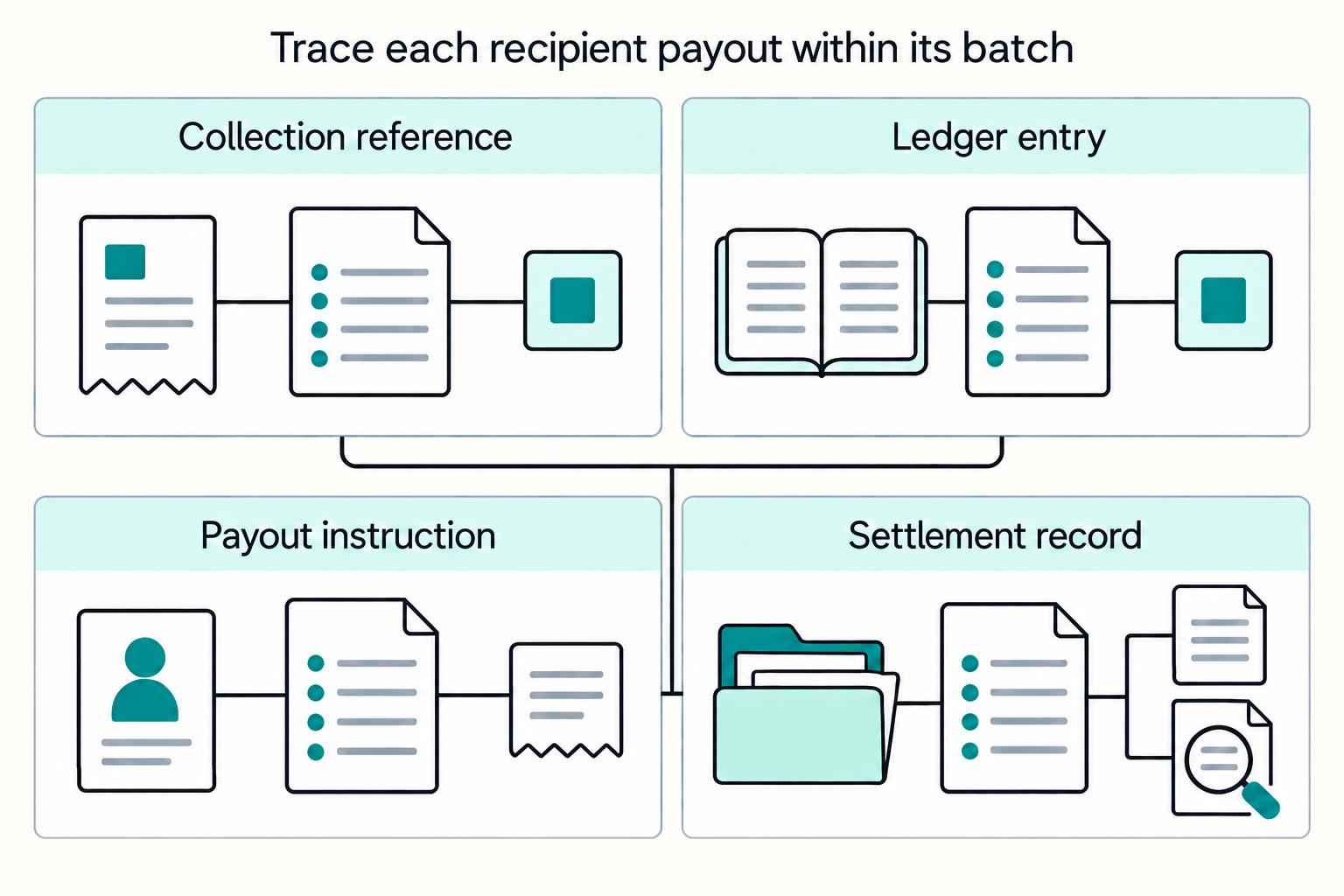
Use one concrete checkpoint here: pick one recipient and prove you can trace a single payment from inbound collection reference to immutable ledger entry to payout instruction to provider reference to settlement record. If you cannot do that for one sample, you will not be able to do it for a batch tied to an event like The International.
Settlement should be reconciled at the batch level as well as the transaction level. Common processor reporting is batch-based, and detailed settlement reports are available, so finance should be able to answer both questions: "Did this payout batch settle?" and "Did this exact recipient payment settle?"
Harden retries, references, and audit evidence#
The controls that save you here are boring, but they matter. Use idempotency keys on every POST request that can create or move money. The control only works if the parameters are identical on retry. If the second request changes the payload, the provider can reject it or treat it differently. One provider example allows safe retries within 24 hours when the same idempotency key is used, which is a useful engineering guardrail.
Keep ledger references immutable and append-only. Do not overwrite a payout record from "submitted" to "paid" without preserving the original event chain. You want one immutable system of record, with new events added as money moves or statuses change.
Webhook handling must be replay-safe. Some providers automatically resend undelivered events for up to 3 days, so the handler should deduplicate by provider event ID, verify the expected object state, and only advance state once. A common failure mode is treating a replayed confirmation as a new success path and creating a duplicate payout or duplicate ledger post.
Retain audit logs long enough to support finance close, investigations, and your own policy requirements. At minimum, the log should show who triggered the action, when it happened, what object changed, and which external reference was attached. If that record is missing, consider pausing re-disbursement until reconciliation is complete.
For a step-by-step walkthrough, see Gaming Platform Payments: How to Pay Game Developers Studios and Tournament Players at Scale.
Implement payout orchestration with clear status and retry rules#
Once your money flow is traceable, orchestration is the next place things break or hold together. The practical rule is simple: payouts should move through a small set of human-readable states, and retries should only ever replay the same instruction, never create a second one.
Lock tournament batches before execution#
For event payouts, treat each tournament batch as a fixed job, not a live query against changing standings. Create a recipient snapshot first. Then freeze the split calculation version tied to that batch. If a roster correction or dispute appears later, handle it as a separate adjustment instead of editing the original batch in place.
Run staged approvals before submission. One workable pattern is that tournament or product ops confirms the winner list and split logic, finance approves release, and only then does engineering submit the payout job. Use a concrete checkpoint: the batch should have a locked recipient file, an approval timestamp, and a hash or version ID for the split calculation. If you cannot reproduce who was in the batch and why they were owed that amount, do not submit it.
Schedule recurring creator runs with threshold gates#
Recurring creator payouts need a different rhythm. Instead of event-triggered batches, use a scheduled runner with a clear cut-off window, apply approved adjustments before release, and only initialize payouts for accounts that have crossed your minimum threshold.
If you need a reference point, use a documented cadence and threshold model, then apply it consistently. Earlier in this article, Twitch's Affiliate schedule served as a public example of that pattern: a monthly release cycle with defined minimum thresholds. The main lesson is to lock the cut-off, threshold, and adjustment rules before each run starts.
This pairs well with our guide on How to Hedge FX Risk on a Global Payout Platform.
Frequently Asked Questions
When should a platform separate tournament payouts from recurring creator payouts?
Separate them as soon as the operating rules differ. Tournament payouts work best as locked event-close batches tied to a fixed winner snapshot and frozen split logic, while recurring creator payouts need scheduled cut-off windows, threshold checks, and pre-release adjustments.
What should be verified before releasing an esports payout batch?
Release should wait until recipient identity checks, tax forms such as W-8 or W-9, payout method validation, and the internal approval record are complete. For tournament payouts, the batch should also carry a locked recipient file and a reproducible version of the split calculation.
How do teams prevent duplicate winner or streamer payouts?
Use idempotency keys on payout-creating requests, keep ledger references immutable, and make webhook handlers replay-safe. If a roster correction or payout dispute appears after submission, handle it as a separate adjustment instead of editing the original batch in place.
Try a related tool
Where Gruv fits
Plan and approve payout batches
See how payee status, approval rules, route review, and exception handling sit in one payout workflow.
See reconciliation and mismatch review
Compare ledger entries, provider payment records, and statement rows to see what matches and what finance needs to review.
Researched and edited by the Gruv editorial team. Gruv builds cross-border billing, payouts, and finance-operations software for global businesses.
Sources
- bsaefiling.fincen.gov/docs/FinCENFBARHelp.pdftrusted
- docs.stripe.com/api/idempotent_requeststrusted
- docs.stripe.com/reports/payout-reconciliationtrusted
- ecfr.gov/current/title-31/subtitle-B/chapter-X/part-1...trusted
- europa.eu/youreurope/business/taxation/vat/vat-rules-r...trusted
- irs.gov/individuals/international-taxpayers/forms-fo...trusted
- irs.gov/individuals/international-taxpayers/foreign-...trusted
- taxation-customs.ec.europa.eu/taxation/vat_entrusted
Educational content only. Not legal, tax, or financial advice.
Related Posts
Gaming and Esports Platform Payouts for Prize and Creator Programs
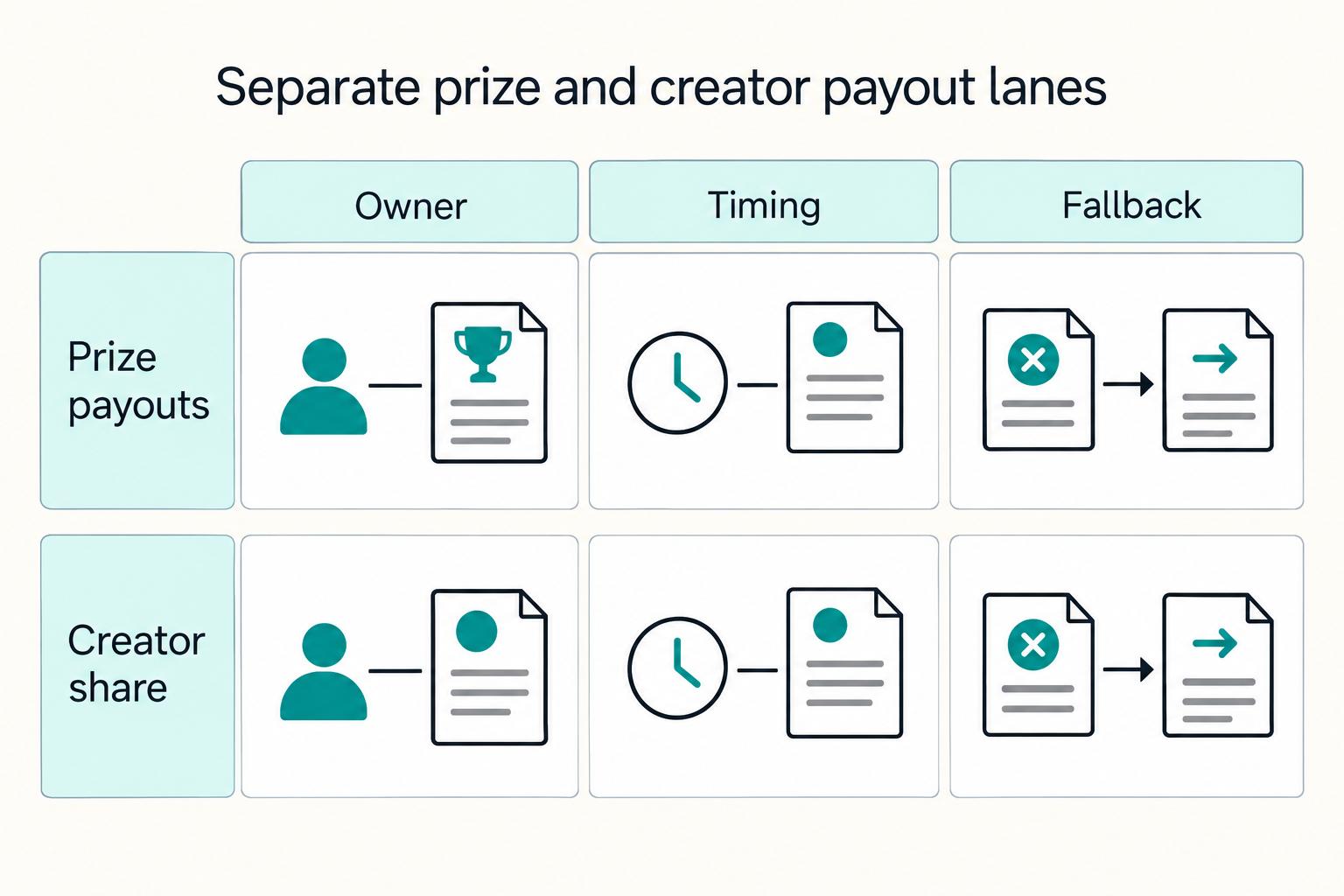
Treat payouts in gaming as two separate operating problems from the start. If you are evaluating **gaming platform payouts**, the useful question is not who advertises the fastest cashout. It is which payout lane you are running, in which market, and what has to be true before money can move without creating support debt or breaking user trust.
Solving Esports Prize Payment Distribution: How Tournament Platforms Pay Winners Globally
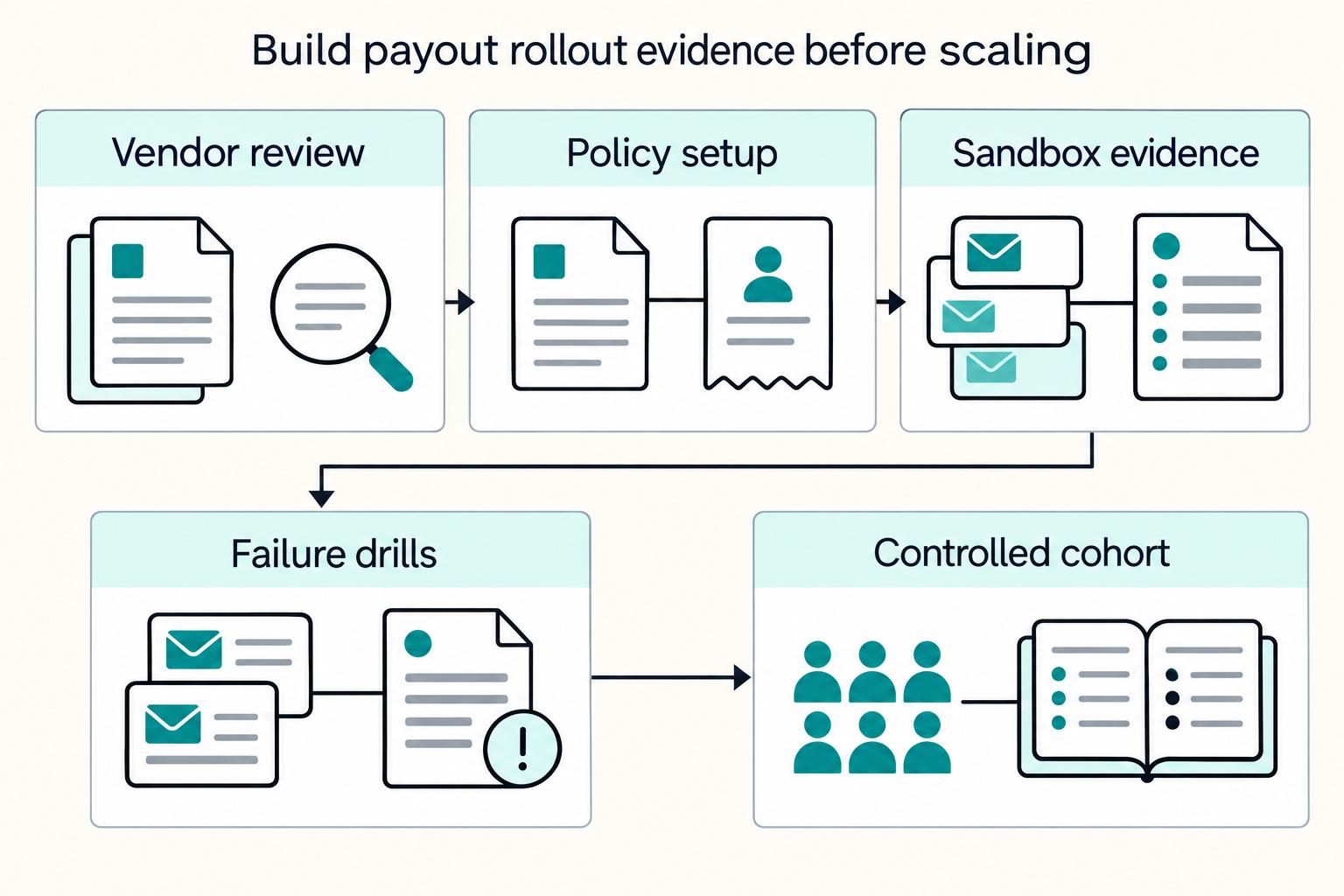
Choose your payout path based on your operating model and control requirements, not on esports messaging alone. Public pages from Payment Labs, Dots, and i-payout are useful for a shortlist, but they are not enough on their own to sign confidently or run payouts without finance and engineering surprises.
How Streaming Gaming Platforms Scale with Monetization and Payout Infrastructure
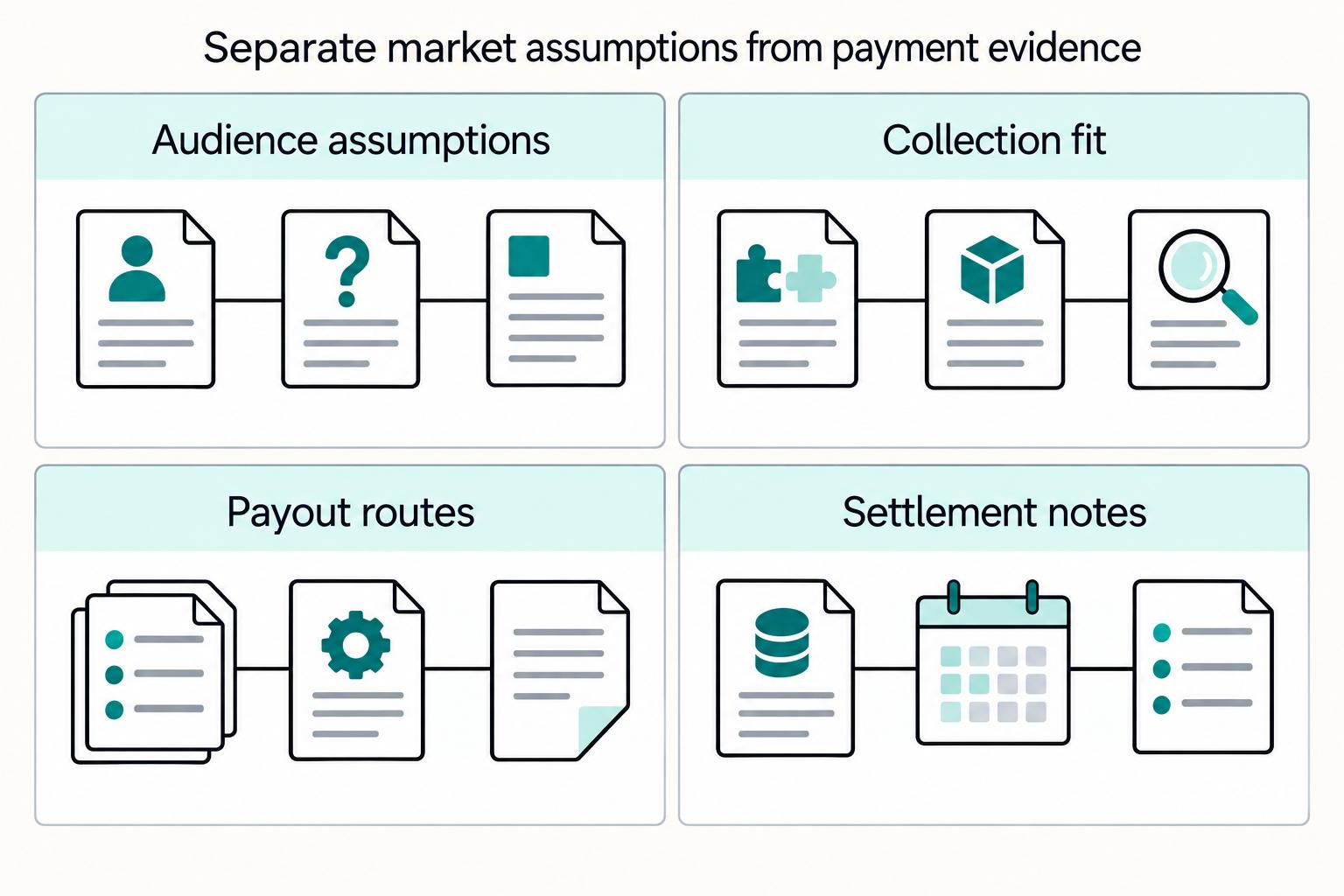
Growth is real, but expansion can break when monetization plans outrun payout operations. If you are building in streaming or esports, do not start with "where is demand highest?" Start with "which markets and revenue streams can we actually collect, disburse, and reconcile without creating avoidable failures?"