
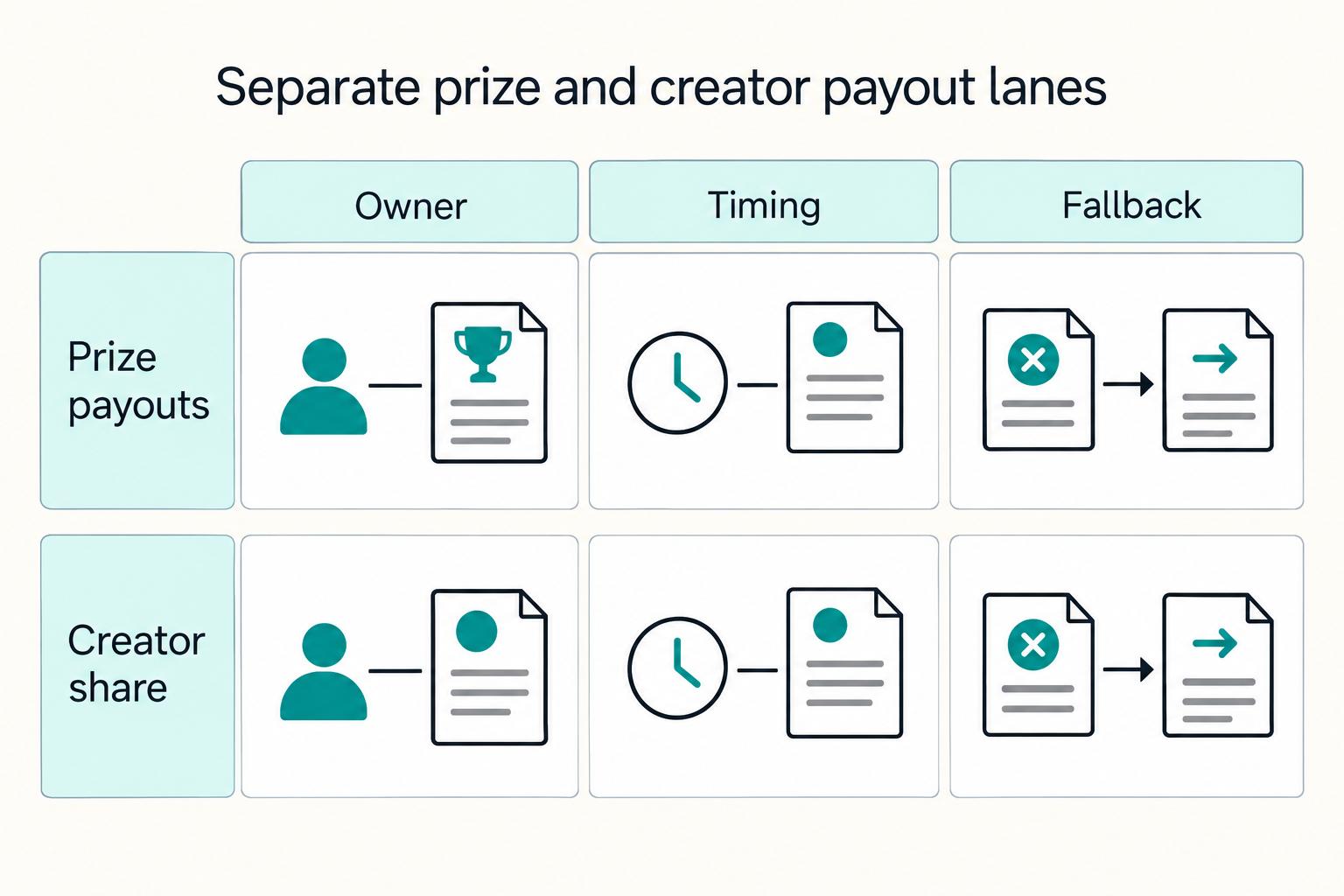
Quick Answer
Separate gaming platform payouts into two tracks first, then choose rails and timing by market. The article’s core recommendation is to define owner, SLA, fallback path, and baseline metrics for each lane before comparing providers. It also stresses legal eligibility checks early, citing Minnesota participant definitions and Missouri online sports wagering platform rules as examples of why lane design must precede payout promises.
Why Prize and Creator Payouts Need Different Workflows#
Treat payouts in gaming as two separate operating problems from the start. If you are evaluating gaming platform payouts, the useful question is not who advertises the fastest cashout. It is which payout lane you are running, in which market, and what has to be true before money can move without creating support debt or breaking user trust.
That distinction matters because prize distribution and creator revenue share do not behave the same way. Prize flows are often judged through the lens of speed and certainty, while creator monetization is closer to an earnings program. Roblox, for example, said it had expanded creator revenue shares across Subscriptions, Creator Store, and Paid Access titles, and posted on July 24, 2025 that Creator Rewards was live. That is a very different promise from a challenge app telling users they can cash out quickly.
Most bad decisions start in the gap between marketing language and lived payout experience. NerdWallet's summary of pay-to-play apps is a useful reality check: payouts can be "small and a long time coming." So when a vendor or competitor leans on words like instant, translate that into operator questions. When do funds become usable, not just approved? What checks happen before release? If a payout is delayed, rejected, or sent to the wrong method, who owns the fix, and what evidence will your team see?
This guide stays focused on rollout choices, not vague product claims. It shows how to separate payout lanes before vendor evaluation, compare rails by country fit and user behavior, set payout speed policy without losing margin, and put compliance gates in front of execution. It also gets into the unglamorous parts that decide whether launch survives first contact with real users: retries, status visibility, reconciliation, auditability, and country-by-country sequencing.
One recommendation up front: if your product pays both winners and creators, do not score providers as if those are one program. Keep separate requirements, separate success metrics, and separate exception paths. The rails may overlap, including digital wallets and mobile payments, but the user promise does not. A tournament winner is likely to focus on whether the money lands when expected. A creator program also needs clear earnings terms and statements that match expectations.
Search results tend to flatten all of this into generic "instant payouts" copy. The point of this article is to replace that with concrete comparison points, verification checkpoints, and a launch order you can actually use when deciding where to expand first and what not to promise yet.
For a step-by-step walkthrough, see Gaming Platform Payments for Market Entry and Developer Payouts.
Define the payout lanes before you compare vendors#
Name the money movement you are actually buying before you shortlist anything. Treat each payout lane as an operator-controlled disbursement with its own eligibility rules, timing promise, and failure path. In many gaming and esports products, that means separating prize distribution from creator revenue share early, because they create different user expectations and different exception handling.
Do not let "instant" decide your shortlist. A provider can market instant access, and user chatter can hint at a very different experience, but neither tells you when funds are actually usable on a given rail. Use marketing copy and forum posts as prompts to verify, not as proof. The metric that matters is your measured time-to-usable-funds after holds, reviews, and release steps, not the label on a sales page.
Before vendor selection, force each lane onto a one-page map with four fields:
- one owner
- one SLA target
- one fallback path if the first payout attempt fails
- three baseline metrics to track: payout completion rate, reversal rate, and time-to-usable-funds by rail
The first real checkpoint is legal definition, not UI polish. Minnesota bill text introduced on 04/04/2024 defines an authorized participant as at least 21 years of age, and it also excludes certain esports competitions from its athletic-event definition. Missouri Chapter 20 separately lists 11 CSR 45-20.270 Online Sports Wagering Platform Requirements and 11 CSR 45-20.330 Online Sports Wagering Account Suspension. The lesson is simple: lane design starts with who is eligible to receive money, under what rules, and what happens when an account is suspended.
If you cannot document the owner, eligibility rule, SLA, and fallback method for each lane, you are comparing vendors too early. The common failure mode is straightforward: teams shop rails first, then discover later that the payout promise, the regulated user type, and the remediation path do not match.
Compare payout rails by country, cost profile, and user behavior#
Pick rails country by country, not from a global matrix. The default should be the rail your users can actually receive and recognize in that market. Add faster or more flexible options only after you can prove settlement behavior, support load, and remediation ownership.
That country lens matters because cross-border payouts still inherit old banking friction. Many international flows still rely on correspondent banking through SWIFT, where intermediary fees, FX spreads, cut-off times, and compliance checks add time and complexity. In weaker data environments, older MT-format messaging can also limit structure and create manual investigations, so coverage alone is not enough. You need to verify whether each launch country supports local-currency payouts, what beneficiary data is required, and how long reconciliation can sit in limbo if a payment is queried.
Use a validation table like this. Treat the entries as questions to confirm in each market, not universal rail rankings:
| Rail | Best first-fit signal to validate | Eligibility and data checks | Settlement questions to answer | Support burden to model | Failure mode to test | Dispute path to define | Ops owner |
|---|---|---|---|---|---|---|---|
| Bank transfer | Local bank penetration and user expectation for bank receipt | Beneficiary name match, bank account format, country-specific routing details, local-currency support | How often do cross-border cases move to investigation or take hours or days? | Medium to high if bank data quality is poor | Returns or pending investigations when account details are wrong or incomplete | Payment trace, reject-code review, reissue after correction | Payments ops with finance or reconciliation support |
| Prepaid debit card | Need for card-based access without relying on the user's own bank setup | Card-program eligibility, identity checks, country issuance rules | What has to happen before funds are actually usable? | Model activation and access questions | Activation, access, or replacement issues | Card-program support plus platform escalation | Customer support with payments ops |
| Virtual card | Spend-now behavior and merchant acceptance in the target market | Card issuance eligibility, wallet or merchant acceptance, user identity status | Where can the balance actually be used? | Model "funded but not usable everywhere" contacts | Acceptance limits or merchant rejection | Card support review, replacement, or alternate payout offer | Payments ops with frontline support |
| Mobile wallet | Strong local wallet adoption and local support in the target market | Supported wallet by country, phone or account match, currency support | Is the wallet truly local to the corridor you are launching? | Model account-mismatch and unsupported-corridor tickets | Wallet account mismatch or corridor issue | Wallet-provider case review, then retry or fallback rail | Payments ops with regional support |
Use behavior as a prioritization rule, not a shortcut#
User behavior should shape rail priority, but it should not override evidence. If bank usage is strong in a launch market, start with bank transfer even if another option demos better in a sales call. It may align better with a simple prize-payout experience. If your audience behaves more like spend-now consumers in a category shaped by frequent digital purchases, then alternative methods may be worth testing for some programs or lower-value disbursements.
The cost side needs the same discipline. In gaming, processing cost pressure is driven heavily by transaction count, not just value, and many user transactions happen in the $0.99 to $9.99 range. That does not tell you which payout rail is cheapest, but it does tell you to model support contacts, retries, and reconciliation touches per successful payout, not just nominal rail fees.
Validate country coverage like an operator#
Treat "global" or "multi-country" marketing copy as a prompt to inspect, not as proof of rollout readiness. For each launch country, ask for three verifiable items: supported payout method, local-currency payout availability, and the exact beneficiary data set required for a successful first attempt. If a provider cannot show that at country level, assume your exception rate will be higher than planned.
One check matters more than most teams expect: ask whether payout messages use richer structured data where available, because ISO 20022-style fields can improve beneficiary and purpose-data quality. That will not eliminate failures, but it can reduce the messy class of cases where ops cannot quickly tell whether the issue is user data, banking data, or a corridor restriction.
A good decision rule is this: if you cannot name the remediation owner for a failed rail in a specific country, that rail is not launch ready. In a market where gaming transactions can already carry reported chargeback rates of 1.8 percent, payout confusion compounds quickly. Favor the rail you can explain, trace, and fix, not just the one that looks fastest in a demo.
Related: Global Payouts and Emerging Markets: 5 Regions Every Platform Should Prioritize.
Set payout speed policy without sacrificing margin#
Speed policy is a product promise with finance consequences, so set it after you know which rail fits each country. If your payout volume is still low and user trust is easy to lose, bias toward faster windows. If volume is high and margins are tight, move to controlled batches with explicit cutoffs and clear messaging.
| Payout window | Best fit | Constraint |
|---|---|---|
| On-demand payouts | Prize distribution, first withdrawals, or early launch phases where a delayed payment can make the platform feel unreliable | Each request can trigger its own approval check, support ticket, and reconciliation event, so per-payout overhead can rise quickly when users cash out in small amounts |
| Scheduled windows | A daily or twice-weekly release cadence that still feels responsive when cutoff time, approval requirements, and expected funding range are published upfront | Needs cutoff time, approval requirements, and expected funding range published upfront |
| Batch payouts | High-volume creator revenue share or other predictable disbursements | Works only if you can explain the delay in plain language and keep exceptions out of the main queue |
On-demand payouts can make the most sense when the emotional moment matters more than processing efficiency. That can matter for prize distribution, first withdrawals, or early launch phases where a delayed payment can make the platform feel unreliable. The tradeoff is cost volatility: each request can trigger its own approval check, support ticket, and reconciliation event, so per-payout overhead can rise quickly when users cash out in small amounts.
Scheduled windows sit in the middle. A daily or twice-weekly release cadence can still feel responsive if you publish the cutoff time, approval requirements, and expected funding range upfront. Batch payouts are the margin choice for high-volume creator revenue share or other predictable disbursements, but only if you can explain the delay in plain language and keep exceptions out of the main queue.
This is where teams often overpromise. Source material from another payout-heavy vertical explicitly treats clear payout rules as a trust signal and warns that delayed payments undermine trust. It also shows why speed claims need qualification. One published program says approved payouts are processed in 1 to 2 business days. Another summary lists 1 to 3 business days for ACH or Wise and up to 10 days for international wires. Do not import those timelines directly into your own payout program, but do copy the operator lesson: your promise should start after approval, and it must be stated by method.
Before launch, test and log three timestamps for each payout method you expose: request submitted, payout approved, and funds usable. If your dashboard only tracks submission time, "fast" can hide approval backlogs or slower cross-border payouts. The common failure mode is not that the payment never left. It is that the user heard "instant" while ops was still waiting on approval, method-specific processing, or an international wire corridor.
| Marketing claim | Operational truth | Exception handling path |
|---|---|---|
| Instant payout | Usually only true after approval, and only if the selected method can fund immediately to the user | Check approval status first, then confirm method eligibility and whether funding actually posted |
| Fast payouts in 1 to 2 business days | This may describe approved payouts, not every request from submission to usable funds | Review approval queue age, then investigate rail-level delay if approval already happened |
| ACH or Wise in 1 to 3 business days | Timing can vary by method and country, even when the payout is otherwise valid | Verify beneficiary details, funding timestamp, and whether the transfer is domestic or cross-border |
| International wire payout | Cross-border timing can stretch much longer, with published examples reaching up to 10 days | Escalate to payment trace or provider review, and offer a fallback rail if the corridor is too slow for the promise |
If you need one default policy, use this: faster windows for trust-sensitive launches, batched windows for scaled programs, and no speed promise unless the approval step, method, and exception owner are all documented.
We covered this in detail in Gaming Platform Payments: How to Pay Game Developers Studios and Tournament Players at Scale.
Put compliance gates in front of payout execution#
If you want fewer payout reversals, fewer manual overrides, and a cleaner audit trail, put compliance before execution every time. Define a fixed gate order for account readiness, KYC status where required, and other market- or program-specific compliance checks before you evaluate payout eligibility.
That order matters because each gate answers a different question. One gate checks whether there is a valid user record to pay against. Another checks whether the user is cleared under your onboarding or program rules. Only after those pass should you evaluate whether the selected payout lane and method are allowed in that market.
Treat regional rules as launch criteria, not cleanup work#
Regional requirements belong in the launch plan, not in post-launch cleanup. For Europe, GDPR is the exact lever that should appear in your checklist. The regulation is broad, and the supporting study here is blunt that it "does not provide sufficient guidance for controllers," which means product, ops, and legal should not assume they are interpreting the same flow the same way unless you write it down. Your launch criteria should specify what personal data you collect for payout review, the legal basis you rely on, who can access it, and how you handle data-subject rights. That includes access, erasure, portability, and objection.
The issue gets sharper if you use automated decisionmaking for holds, approvals, or risk flags. Even if the approach is permissible, document the safeguards, the explanation path, and how exceptions are reviewed. A common failure mode is that a user is "verified" in the product UI, but payout is still blocked because the country-program rule or review path was never defined for that region.
One practical warning belongs here too: do not build launch criteria from unofficial summaries alone. FederalRegister.gov itself says one XML rendition "does not provide legal notice to the public or judicial notice to the courts," so if a country or U.S. state rule affects payouts, verify against the official edition or regulator text before you switch on a new corridor.
Build an evidence pack for each payout lane#
Each payout lane needs its own evidence pack, not a generic compliance folder. At minimum, keep:
- policy rules that govern the lane, including country or jurisdiction-specific exceptions
- reviewer actions, with who approved, blocked, or escalated a case and when
- an audit export that ties user, payout request, decision status, and timestamps together
Use a simple launch check: pull one completed case and one rejected case for each lane and confirm you can reconstruct the full decision path without asking engineering for logs. If you cannot show the rule applied, the reviewer action taken, and the exportable record, your ops team will end up making judgment calls that are hard to defend later.
That also gives you the right expansion rule. Do not enable a new country until compliance exceptions can be resolved within a defined SLA by a named owner. If exceptions sit in a shared inbox or depend on ad hoc legal review, country expansion will outrun your ability to operate it safely.
Design integration for retries, status visibility, and auditability#
Once your compliance gates are fixed, the next decision is how payout execution is wired. The right answer is not "always integrate directly" or "always put everything behind an API Gateway." It depends on how many rails, providers, and payout lanes you expect to operate. It also depends on how much status consistency your ops team needs.
A direct provider connection can be fine when you have one or two simple lanes, such as bank transfer only for prize distribution in a single country. The tradeoff shows up quickly as you add more corridors or methods. Each provider brings its own data model, file format, settlement timing, and failure modes, so fragmented stacks turn reconciliation into a multi-system puzzle and make it harder to answer a basic operator question: where is the money?
Standardize states before you scale routes#
If you expect cross-border payouts, local-currency options, or separate lanes for prize distribution and creator revenue share, standardizing payout states behind an internal gateway or orchestration layer can give you better control as routes multiply. The value is not the layer by itself. The value is that your internal state model stays stable even when provider responses do not.
Keep the internal states simple and durable enough for ops and finance to use. For example: created, compliance-cleared, submitted-to-provider, pending, paid, failed, reversed, and manual-review. The exact labels can vary, but they should map every provider response into one canonical state thread that your ledger, support queue, and reconciliation export all share.
If you need a design anchor, ISO 27001 Annex A.8.27 is useful here. Its secure architecture principle pushes you toward documented design choices and auditable controls, which is exactly what payout operations need on peak event days with heavy concurrent traffic.
Make retries harmless#
Retries are necessary. Duplicate disbursements are optional. Design retries so they do not create duplicate payouts. In practice, that often means idempotent request handling and replay-safe status processing, especially for bank transfer flows where status updates may arrive late, out of order, or more than once.
| Retry scenario | Pre-launch check |
|---|---|
| Submit the same payout request twice | Create only one transaction thread |
| Replay the same webhook event | Do not create a second recorded movement or second provider submission |
| Retry after a timeout | Do not lose the original request ID and provider reference |
Make the pre-launch checkpoint explicit. Confirm that you can:
- submit the same payout request twice and create only one transaction thread
- replay the same webhook event without creating a second recorded movement or second provider submission
- retry after a timeout without losing the original request ID and provider reference
A common failure mode is treating every webhook as a fresh instruction instead of a status update. That is how teams end up with "paid twice, reconciled once" incidents that are painful to unwind.
Give operators the full thread#
Traceability has to survive handoffs between product, ops, and finance. At minimum, tie these items to the same transaction thread: internal request ID, provider reference, state transitions with timestamps, and the reconciliation export row that closes the loop at settlement time.
Your operator UI also needs more than a green or red badge. Show the visible failure reason, the allowed retry action, and the current owner when the payout cannot be auto-resolved. If a payout sits in limbo, someone should be able to see whether it belongs to support, risk, payments ops, or finance without opening engineering logs. That visibility rule will save more time than adding another rail.
If you want a deeper dive, read Integrated Payouts vs. Standalone Payouts: Which Architecture Is Right for Your Platform?.
Roll out country by country with hard go or no-go criteria#
Do not expand payouts from a provider's global coverage slide. Launch country by country, and require each market to clear the same written gate before you turn it on for real users.
The practical move is to keep a live launch sheet where every country gets its own row and every promise gets checked at country level, not inferred from marketing copy. A provider can say it operates "virtually anywhere in the world, but on a local level," and that still does not tell you whether your exact payout lane, currency, and compliance path are ready. That is why the row matters more than the pitch deck.
Build the country launch sheet#
Every country row should answer the same basic question: can you actually operate the payout promise you want to sell there? At minimum, keep four decision columns: supported rails, local-currency payouts availability, compliance readiness, and operational staffing needs. If any one of those is still "unknown," the country is not ready.
| Launch sheet column | What to verify |
|---|---|
| Supported rails | Which payout methods are actually available for that country and lane |
| Local-currency payouts availability | Whether settlement and recipient funding can happen in local currency or only through cross-border conversion |
| Compliance readiness | KYC requirements for the recipient type you are paying and GDPR impact review where personal data handling is in scope |
| Operational staffing needs | Dispute and exception ownership, including who works failed payouts and who answers recipient tickets |
In practice, the evidence pack behind that row should be boring and explicit:
- provider confirmation of which payout methods are actually available for that country and lane
- whether settlement and recipient funding can happen in local currency or only through cross-border conversion
- KYC requirements for the recipient type you are paying
- GDPR impact review where personal data handling is in scope
- dispute and exception ownership, including who works failed payouts and who answers recipient tickets
- a reconciliation test result showing your ledger, provider reference, and settlement export can be matched
That last item is the checkpoint too many teams skip. Before launch, run a small end-to-end test and confirm one payout can be tracked from internal request ID to provider reference to reconciliation output without manual guesswork. If finance still depends on weekly CSV uploads to banking portals, each new country adds real operating weight even if your payout API can automate bulk disbursements later.
A common failure mode is marking a country "supported" when only the country itself is supported, not the payout experience you intend to sell. The usual version is a provider that can send funds cross-border, but not in local currency, so support tickets rise as users ask why they were paid in a different currency or later than expected.
Split the lanes before launch#
Do not approve a country once for "payouts" in general. Approve it by lane. Different lanes can carry different timing expectations, so the same country may be ready for one program before another.
That means lane design should shape rollout. If one lane depends on faster recipient funding, launch only in countries where the rail is reliable enough for that promise. If another lane can tolerate a scheduled cadence, you may accept a slower or more manual path first, but only if dispute handling and reconciliation are already clean.
Use hard gates and a staged path#
Your go or no-go review should be blunt. A country moves only when all four checkpoints are passed:
- legal and compliance readiness, including KYC handling and any GDPR review you need for that program
- payout rail reliability proven in testing, not assumed from where-supported sales language
- dispute workflow readiness, with named owners and user-facing response paths
- reconciliation pass rate meeting your internal target during pilot, with exceptions understood and fixable
Then stage the rollout. Start with a small pilot cohort of countries where method fit, staffing, and compliance are least ambiguous. Move to controlled scale only after post-launch variance stays within your target bounds across payout timing, exception volume, and reconciliation breaks.
One more caveat keeps your claims credible: write "where supported" into internal launch notes and external GTM language until you have country-level proof. That discipline matters more than it sounds. It prevents you from promising universal coverage when what you really have is a mix of local rails, cross-border fallbacks, and varying compliance effort by market.
This pairs well with our guide on Comparing Live Streaming Monetization: Tips, Subscriptions, Pay-Per-View, and Creator Payouts.
Spot the red flags competitors gloss over#
The fastest way to get misled here is to mistake marketing range for operational proof. If a provider leans on "global coverage" language but cannot show country-level payout methods, local-currency availability, and exception ownership by lane, treat that as unverified until you see the operating details.
Another red flag is standards-free compliance language. In one standards-based reference, the FATF Recommendations are described as the global AML/CFT standard and include preventive measures for financial institutions and others such as casinos. If a vendor talks about safety in broad terms but cannot explain what controls or reviews sit behind payout approval, you still have a marketing claim, not an operating model.
Be equally careful with weak evidence. Error pages, missing-content review links, and scraped roundups are not proof of payout performance. One cited page returns "Cette page n'existe pas," and another shows "No Results Found," which is exactly the kind of dead-link evidence that should be excluded from vendor evaluation. Independent reviews or forum threads can still be useful for finding questions to ask, but they are not a substitute for verifiable country, method, and exception data.
Use a short red-flag checklist before you believe any "fast payouts" claim:
- no country-by-country method matrix
- no clear statement of who resolves failed or held payouts
- no reference to recognized compliance standards or preventive controls
- proof that depends on testimonials, forum sentiment, or unavailable pages
- no operational evidence for status visibility, reconciliation, or audit exports
If a competitor cannot move from slogans to verifiable controls, treat the gap as the finding. In payout operations, missing evidence is evidence that more validation work is needed.
Frequently Asked Questions
Why should gaming platforms separate prize payouts from creator revenue share?
Because the article treats them as different payout lanes with different eligibility rules, timing promises, and exception paths. Prize distribution is usually judged on speed and certainty, while creator revenue share behaves more like an earnings program that also needs clear statements and terms.
How should teams choose payout rails for each country?
Pick rails country by country based on what recipients can actually receive and recognize in that market. Verify local-currency support, required beneficiary data, settlement behavior, and who owns remediation when a payout fails.
When is a faster payout window worth the extra cost?
The article recommends faster windows when trust is fragile or the payout moment is highly time-sensitive, such as prize distribution or early launch phases. Scheduled or batched windows make more sense when volume is high and margin depends on controlling per-payout overhead.
What compliance gates should run before payout execution?
Account readiness, required KYC status, and the market- or program-specific compliance checks should clear before payout eligibility is evaluated. Regional requirements such as GDPR handling should be defined as launch criteria rather than treated as cleanup work later.
What should the integration model preserve as routes expand?
It should preserve one canonical status thread across providers so ops, support, and finance can trace the same payout state from creation through pending, paid, failed, reversed, or manual review. Retries also need to be idempotent and auditable instead of creating duplicate disbursements.
What is the go or no-go rule for rolling out a new country?
Do not launch from a global-coverage slide alone. A country should go live only after payout methods, local-currency support, exception ownership, reconciliation flow, and audit evidence all pass the same written gate.
Try a related tool
Researched and edited by the Gruv editorial team. Gruv builds cross-border billing, payouts, and finance-operations software for global businesses.
Sources
- asset.library.wisc.edu/1711.dl/3QLX4OF66ZZTW87/R/file-4f56c.pdftrusted
- codes.ohio.gov/ohio-revised-code/chapter-3775trusted
- digitalcommons.kennesaw.edu/cgi/viewcontent.cgitrusted
- federalregister.gov/documents/2025/01/08/2024-31486/preventing-a...trusted
- gaming.nv.gov/siteassets/content/regs2/AllRegulations.pdftrusted
- hks.harvard.edu/faculty-research/policycast/legalized-gambli...trusted
- home.treasury.gov/system/files/246/vulnerabilities-casinos-gam...trusted
- legis.ga.gov/api/legislation/document/20232024/222362trusted
Educational content only. Not legal, tax, or financial advice.
Related Posts
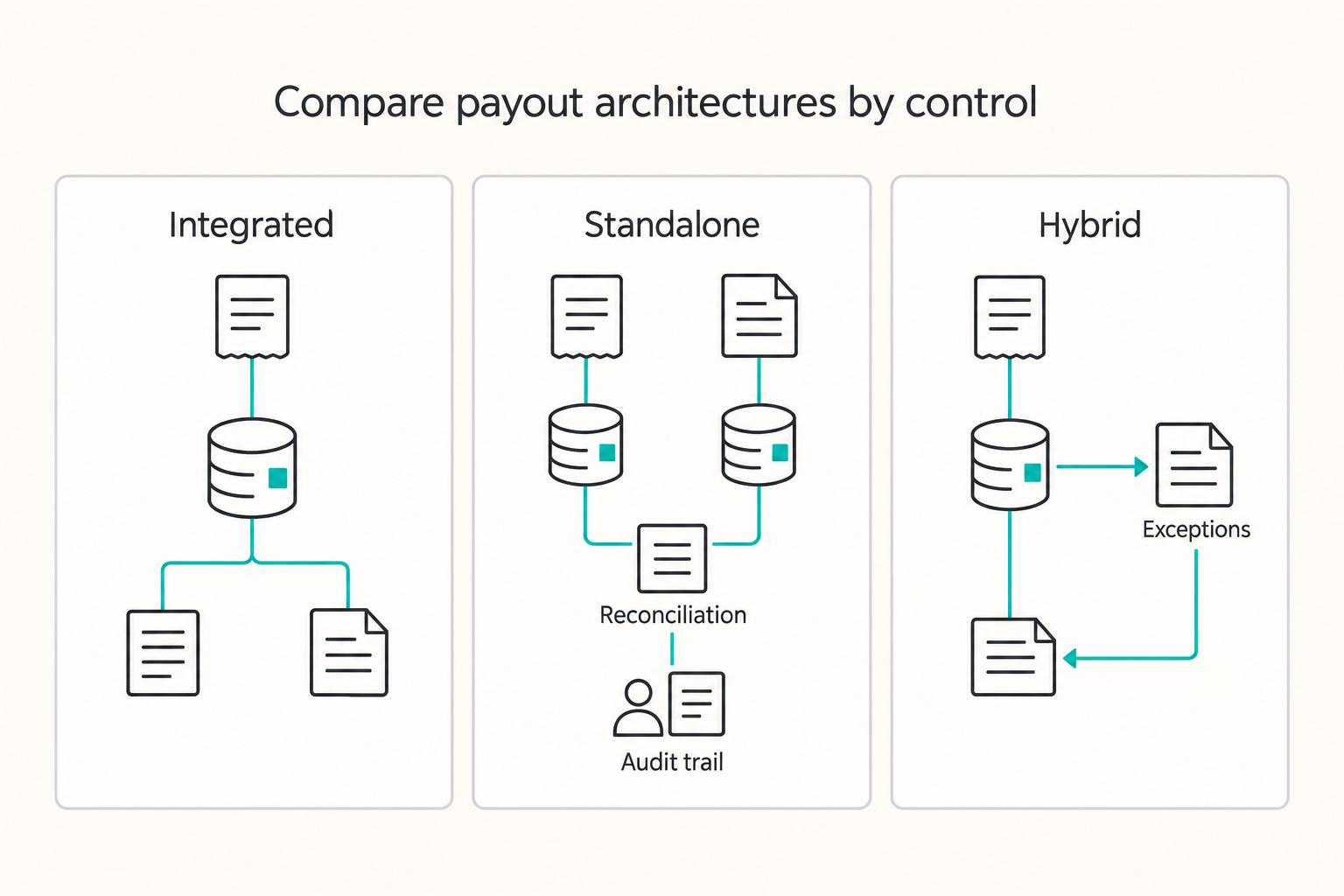
Integrated Payouts vs Standalone Payouts for Platform Architecture Decisions
**Treat integrated and standalone payouts as an architecture decision, not a product toggle.** The real split is the same one you see in payment processing more broadly: either payments are connected to the core platform experience, or they are not. [Lightspeed](https://www.lightspeedhq.com/blog/payment-processing-integrated-vs-non-integrated) puts that plainly in POS terms: your payment terminal either speaks to your point of sale, or it does not. For platform teams, the equivalent question is whether payment flows run through one connected system or sit in separate lanes you manage independently.
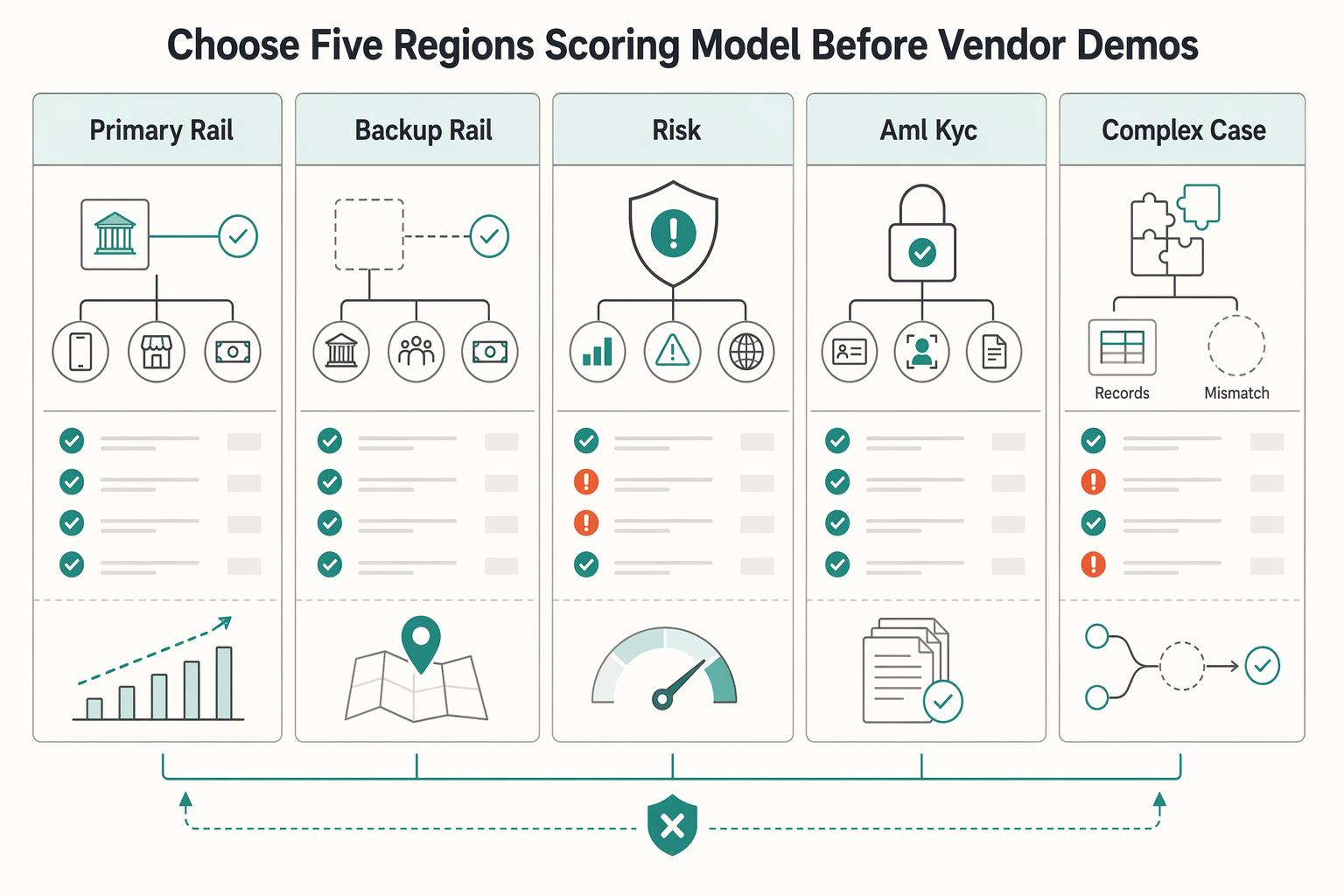
How Platforms Should Prioritize 5 Emerging-Market Payout Regions
If you are choosing where to launch cross-border payouts in 2026, start with what your team can actually run. Too many "top" lists lean on hype or market-cap tables. That may work for headlines, but it does not help with execution.
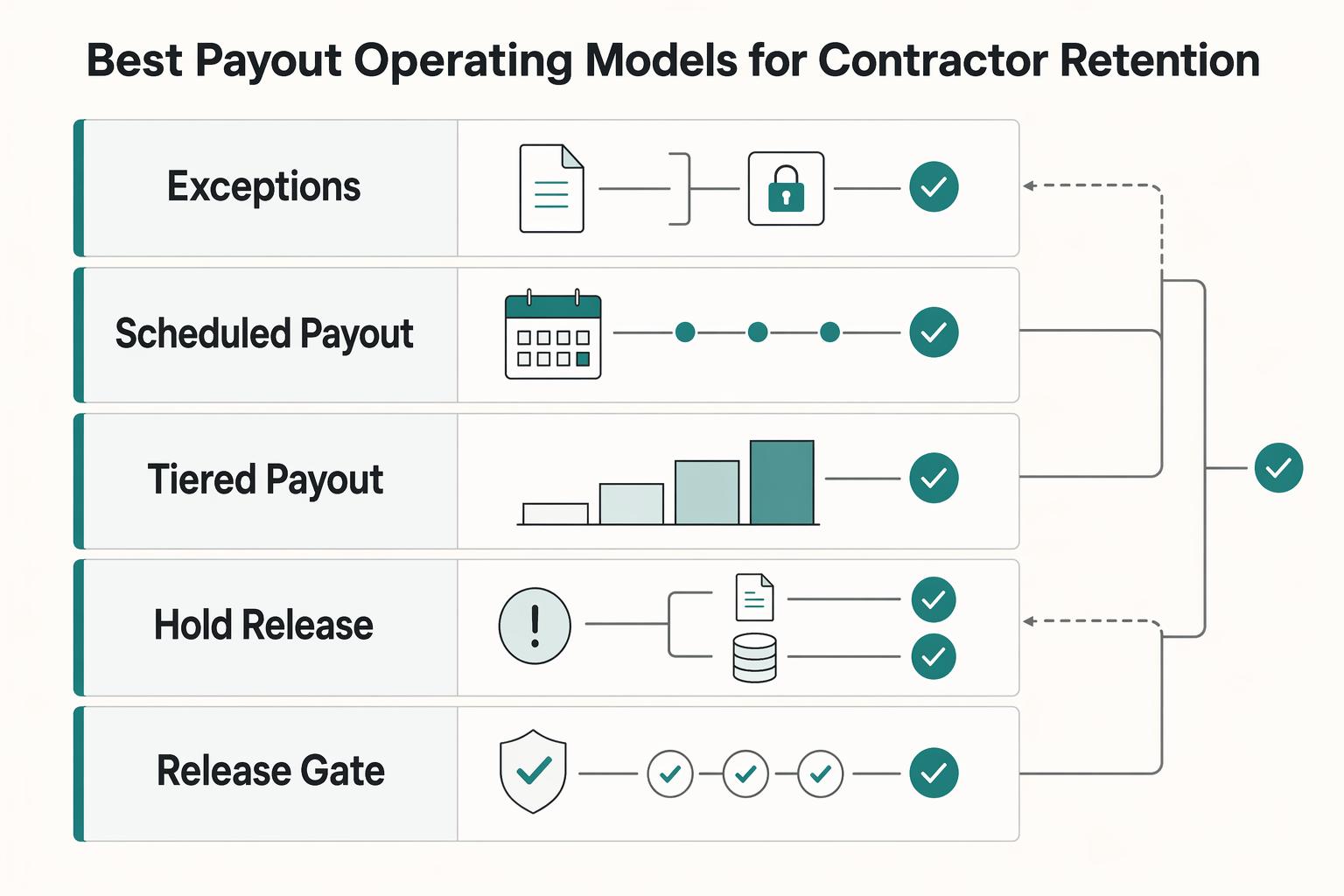
Bad Payouts Are Costing Your Supply in Two-Sided Platforms
Payout issues are not just an accounts payable cleanup task if you run a two-sided marketplace. They shape supply-side trust, repeat participation, and fill reliability. They can also blur the revenue and margin signals teams rely on.