
Quick Answer
Start by hardening operations in stages: lock down compliance and records at properties 1-3, automate repeat workflows at 4-10, then expand capital at 10+ only after underwriting and risk limits are documented. For how to scale an airbnb business, the practical checkpoint is whether each unit can pass a notice, handoff, and monthly close test without owner scrambling.
The work that got your first few properties open often becomes the thing that keeps you stuck. You can know your linens, your welcome message, and your guest experience cold and still hit a ceiling because too much of the business still depends on you.
To scale a short-term rental business, you need to change roles. You move from host and problem-solver to operator and capital allocator. In practice, that shift happens in three stages: fortify the base, build the automation layer, and then grow with discipline. This is a practical roadmap for doing that without trading growth for chaos.
Stage 1: Fortify Your Foundation (Properties 1-3)#
Before you chase property four, tighten the first three until they can survive a tax notice or compliance review without chaos. If you're serious about scaling an Airbnb business, this stage is about reducing ambiguity, documenting how each property is handled, and keeping records easy to produce.
Step 1. Define your operating setup and keep records clean#
In short-term rentals, tax treatment is often clear in general but messy in edge cases. That is where compliance issues usually start. Set one documented operating approach for your first properties and keep it consistent across income, expenses, and record storage.
Your practical checkpoint is simple: can you pull your core ownership and operating records, tax ID documents, and recent matching business transaction records quickly, in one place? If not, clean that up before you add another unit. Keep one folder called "Entity and Tax" and centralize the key documents there.
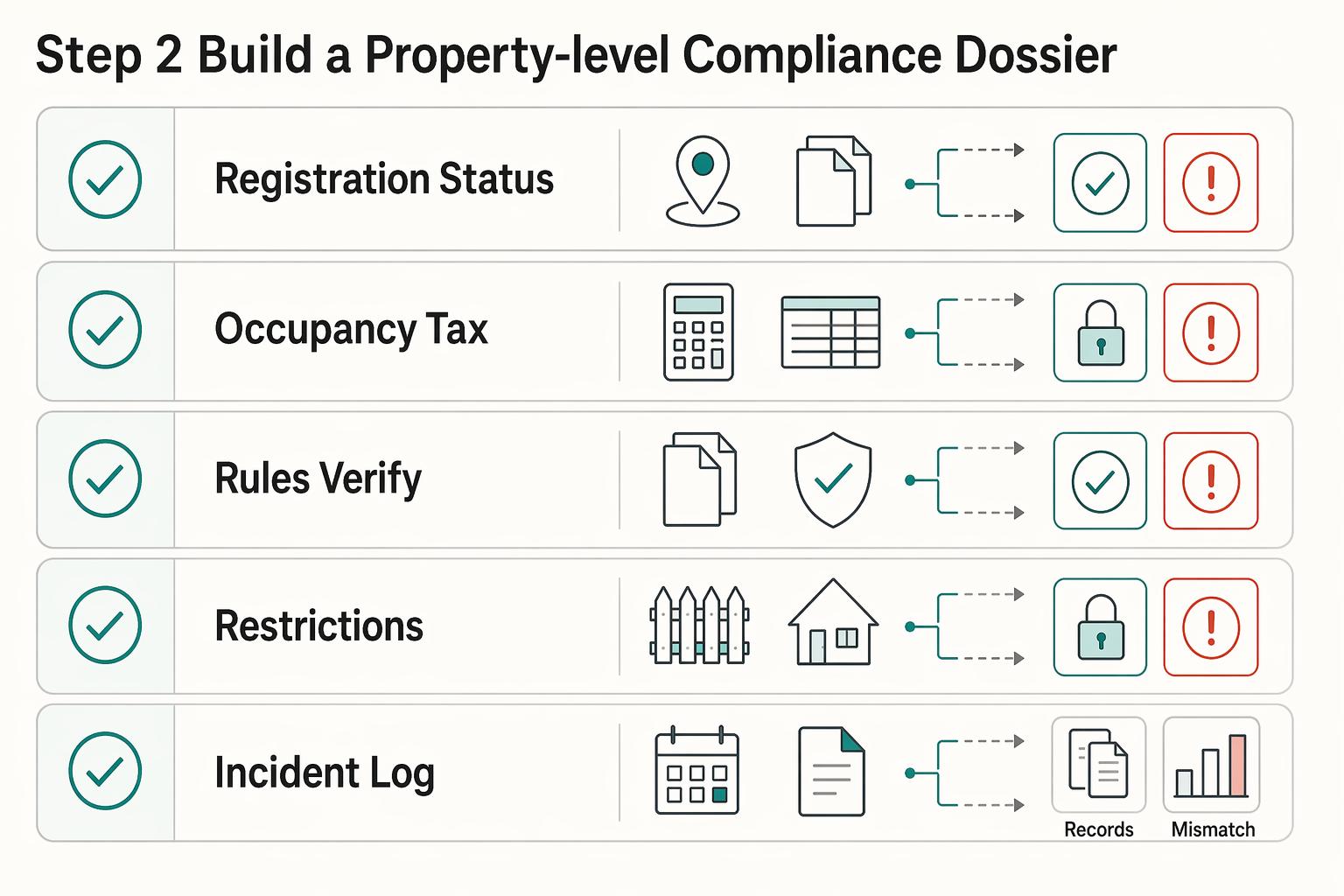
Step 2. Build a property-level compliance dossier#
A major risk in short-term rentals is not just the rule itself, but uneven compliance and enforcement at the property level. Treat local occupancy-tax handling as a distinct workflow for each address, and document what you are doing so you are not guessing later.
| Item | Details |
|---|---|
| Registration/status notes | Current notes for that property's local tax and operating requirements |
| Occupancy-tax workflow | Property-level occupancy-tax collection and remittance workflow you are following |
| Rules to verify | Record of the local rules you still need to verify directly with the relevant authority |
| Restrictions | Governing building/lease/association restrictions saved with exact clause text |
| Incident log | Owner, response time, and resolution status |
The checkpoint here is blunt: if a notice arrived tomorrow, could you show your property-level tax workflow and rule file without scrambling?
Step 3. Run a monthly compliance close before scaling#
Compliance gaps grow when reporting is inconsistent. Close monthly, keep property-level reporting, and make follow-up work obvious. Consistent reporting and targeted follow-up are practical ways to reduce avoidable errors here.
| Close item | Details |
|---|---|
| Reconcile cash | Do it by your close date each month |
| Review uncategorized items | Review them monthly |
| Save a monthly packet | Keep the month's financial records and support |
| Property-level reporting | Keep it monthly and be able to explain net results and tax handling by property |
By your close date each month, reconcile cash, review uncategorized items, and save a packet with the month's financial records and support. If you can see gross revenue but cannot explain net results and tax handling by property, you are not ready to scale.
That is the base. Once it is clean, growth gets less fragile. If you want a deeper dive, read Digital Nomad Health Insurance: A Comparison of Top Providers.
Stage 2: Build Your Automation Engine (Properties 4-10)#
At 4-10 properties, your main job is to remove yourself from repetitive ops while keeping service quality stable. Build one connected system, assign clear ownership, automate predictable communication, and document every property so a trained backup can run it without you.
Step 1. Choose a stack that reduces manual handoffs#
Your stack works when bookings, messages, pricing, access, and turnovers move through one chain without copy-paste. If you still retype reservation details across tools, you are not ready to scale this stage.
| System area | What to select for | Integration requirement to verify | Common failure risk | Best fit when |
|---|---|---|---|---|
| PMS (operations hub) | Channel sync, automated messaging, portfolio visibility, finance workflow support | Reservation, calendar, and message sync across channels and connected tools | Fragmented data, missed messages, double entry | You need one control center for multiple units |
| Dynamic pricing | Rule controls, portfolio overrides, seasonality logic | Rates push correctly into PMS/channel workflow | Bad rates from mapping errors or unmanaged overrides | You still change prices manually or inconsistently |
| Digital guidebook | Easy updates, property-specific instructions, mobile readability | Guidebook links insert cleanly into automated guest messages | Outdated instructions driving repeat guest questions | Guests repeatedly ask the same arrival or house questions |
| Messaging automation | Trigger-based templates, unified visibility, clear ownership | Triggers pull correct reservation and property details | Wrong message to wrong guest, duplicate sends | You want routine communication off your plate |
| Smart access | Remote code control, guest/cleaner access separation, backup entry plan | Access flow matches check-in/check-out workflow | Lockouts, stale codes, no fallback entry path | You manage remotely or want fewer key handoffs |
| Task automation | Turnover tasks, issue tracking, checklist completion | Tasks trigger from bookings and stay tied to one property record | Missed cleans, unresolved issues stuck in chat threads | Your team currently runs work through ad hoc messages |
This week: run one test reservation end to end and confirm the right message, task, and access flow fire automatically.
Step 2. Assign role ownership before you add more people#
You do not need a large team yet. You need explicit ownership, handoffs, escalation, and backup coverage so work does not route back to you by default.
| Operating element | Minimum standard for Stage 2 |
|---|---|
| Role ownership | Name an owner for guest comms, turnovers/quality, and maintenance coordination (one person can hold multiple roles). |
| Handoff rule | Define what must be attached before handoff (unit ID, photos, issue summary, guest context when relevant). |
| Escalation path | Write who decides if a unit stays live and who gets notified at each severity level. |
| Backup coverage | Assign backup owner per role for sick days, outages, and after-hours lock/access failures. |
| Response target | Set a response-time target aligned with current platform expectations. |
| Onboarding checkpoint | Require one walkthrough, one checklist review, and one shadow shift before solo coverage. |
This week: publish a one-page responsibility chart with primary owner, backup, escalation path, and verified response targets.
Step 3. Automate guest communication by trigger, then protect exceptions#
Automate predictable messages, and route risk events to a human immediately. Keep timing rules pending until you verify platform norms and your market workflow.
| Trigger | Automation goal | Human exception path |
|---|---|---|
| Booking confirmed | Send confirmation and next-step expectations | Route unclear reservation details to owner/ops review |
| Pre-arrival | Send entry prep, parking, house rules, and support route | Escalate special-access or policy conflicts |
| Day of check-in | Send access steps and arrival reminders | Immediate human takeover for lock/access failure |
| Mid-stay (when applicable) | Send concise check-in prompt and issue-report path | Escalate cleanliness, utilities, or safety complaints |
| Checkout | Send checkout steps and turnover timing cues | Escalate damage/dispute signals to incident workflow |
Use exception keywords to force human takeover, for example: lockout, no heat, no water, cleanliness complaint, safety issue. Keep your messaging and guidebook clear on the four basics guests notice first: sleep, eating, bathing, and cleaning.
This week: review your last 30 guest conversations and convert the top repeated questions into trigger templates, then verify send timing against current platform norms and your workflow.
Step 4. Package each property so a backup operator can run it#
Your SOPs should live as a reusable property operations package, cloned per unit with unit-specific details. That package is what prevents quality drift when volume increases.
| Area | Details |
|---|---|
| Turnovers | Step-by-step turnover checklist and completion proof |
| Quality control | Photo-based QC requirements and pass/fail handoff rule |
| Incident logging | Issue template, severity labels, and escalation map |
| Maintenance cadence | Recurring task list |
| Inventory controls | Par levels, reorder trigger, and substitute rules |
| Owner reporting | Recurring summary format with open issues, completed fixes, and trend notes |
| Property profile | Access details, appliance notes, vendor contacts, building rules, and local limits that apply |
Keep the same folder structure for every unit so handoffs stay consistent. If you want a deeper hardware workflow, see How to Automate Your Airbnb with Smart Home Tech.
This week: complete one full package for your busiest unit, then clone it for your next three units.
Related: How to Invest in Real Estate as a Digital Nomad.
Stage 3: Achieve Portfolio Velocity (Properties 10+)#
At 10+ properties, the job is selective capital allocation, not faster expansion. Your current bottleneck should set your Stage 3 decisions, not your target size.
Step 1. Screen markets, then underwrite each deal the same way#
Start with a short market screen, then underwrite each target property using one repeatable workflow. Fragmented manual research can cost you weeks, so standardize the process before you review listings.
Use the same inputs each time: ADR, occupancy, RevPAR, fixed costs, variable operating costs, setup/turn costs, and expected monthly cash flow. Then replace broad market assumptions with property-level comps as soon as you have them.
| Underwriting step | What you do | Go/no-go test |
|---|---|---|
| Market screen | Filter markets before you review addresses | Only move forward on markets that fit your strategy and operating model |
| Property assumptions | Build one-sheet assumptions for each address | Assumptions are evidence-based and comparable across deals |
| Sensitivity checks | Run base, upside, and downside cases (lower occupancy, weaker ADR, higher costs) | Deal still works in your downside case |
| Decision memo | Write a one-page investment case before offering | You can clearly explain why this beats your next best use of capital |
Use RevPAR as a fast comparison signal, but do not approve a deal on RevPAR alone. If occupancy is already above 55%, plan your improvement work around revenue per booking, not just filling more nights. Checkpoint: complete one underwriting memo for your next target and have a second operator challenge every assumption.
Step 2. Match financing to the control and flexibility you need#
Financing choice is an operating decision. You are trading off control, paperwork, and exit flexibility, not just rate.
| Option | Best fit when | Control tradeoff | Documentation burden | Refinance flexibility |
|---|---|---|---|---|
| Debt on owned property | You want full control and long-term equity | Highest asset control | High | Usually strongest |
| Seller terms | You need negotiated flexibility | Depends on contract terms | Medium to high | Contract-dependent |
| Equity partnership | You want shared capital or risk | Shared economics and decisions | High | May require partner approvals |
Ownership typically requires 15-25% down payment plus closing costs and furnishings. If you use rental arbitrage, require explicit written lease permission for subletting; upfront cash is often $10,000-$25,000 per property, but you do not build equity. Checkpoint: compare your next two opportunities on one sheet for control, cash required, and early-exit/refinance impact.
Step 3. Set portfolio risk limits before concentration sets them for you#
Diversification only works when you define limits in advance and monitor them consistently.
| Risk area | What to set now |
|---|---|
| Market concentration | Max revenue share from one market |
| Asset-type concentration | Max share by one asset type |
| Regulatory exposure | Map permit/building/lease dependency by city |
| Demand-cycle balance | Mix booking rhythms across clusters |
Also map single points of failure so one local rule change does not take multiple units offline at once. Checkpoint: label every unit by market, asset type, and demand pattern, then flag concentration and shared regulatory risk.
Step 4. Choose your exit track early and build proof now#
Decide your preferred exit path early so your records are built for it as you scale.
| Exit track | What buyers care about most | Records to build now |
|---|---|---|
| Asset-by-asset sale | Property-level performance and clean transferability | Property P&Ls, legal docs, vendor agreements, unit-level operating records |
| Operating-business sale | Durable operations beyond owner involvement | SOP maturity, channel-mix reporting, management continuity, entity/contract records |
The common failure mode is strong revenue with weak documentation. Buyers and lenders discount what they cannot verify. Checkpoint: create a sale-readiness folder now and keep each property file current.
For a step-by-step walkthrough, see How Freelancers Use AI Without Scope, Compliance, or Payment Chaos.
Control Risk First, Delegate Repeat Work, Then Expand#
Your next move is to control risk first, delegate repeat work second, and expand only when your operating data and records stay consistent. You stop being the bottleneck when you change what only you decide.
| Stage | Stop doing | Start doing | Measure |
|---|---|---|---|
| Fortify | Treating trust work as "nice to have" admin | Treating reviews and record consistency as operating controls | Review trend and record consistency |
| Automate | Being the default owner for every repeat decision | Defining clear handoffs, escalation lines, and backup coverage | Handoff error rate and exception volume |
| Accelerate | Adding units because the last one felt manageable | Allocating capital only when operations stay stable in normal and rough weeks | Portfolio performance and concentration risk |
Step 1. Fortify#
Treat trust as a control point, not a branding task. Reviews were shown as a direct booking lever, and early Airbnb teams did manual work that did not scale to secure first reviews. Use that lesson directly: protect trust inputs before you push for more volume.
Step 2. Automate#
Delegate decisions, not just tasks. If your cleaner, VA, or manager still needs you for routine calls, your system is not ready to scale. Tighten handoffs so routine work runs without you and only true exceptions come back.
Step 3. Accelerate#
Expand only after Fortify and Automate hold under stress, not just on smooth weeks. Marketplace growth can be hard to start, so discipline matters more than momentum. You scale with fewer surprises when capital decisions follow stable operating controls.
Next actions#
- Recheck your Fortify controls from Stage 1 and fix one weak trust or record-consistency point this week.
- Audit one repeat workflow from Stage 2 and remove yourself from one routine approval.
- Review your Stage 3 expansion plan and pause any new risk until your current controls hold.
That is how to scale an Airbnb business with sustainable growth and operator confidence.
You might also find this useful: How to Become an Airbnb Superhost.
Frequently Asked Questions
What is the right entity and insurance setup?
There is no universal entity and insurance setup that fits every short-term rental business. Treat this as a local compliance decision, and verify your operating assumptions early because local rules can make financial projections fail. | Item to validate | What to confirm locally | Why it matters | | --- | --- | --- | | Entity setup | Which structure is permitted and practical in your jurisdiction | Requirements vary by location | | Insurance setup | Whether your policy matches short-term rental activity | Coverage terms vary by policy | | Operating records | Lease/deed, permits, bank setup, and insurance paperwork all reflect the same use | Consistency reduces compliance and operational risk |
Which KPIs should you actually use?
Start with verified occupancy and ADR for your market before committing capital. Review KPI trends, not static averages: occupancy can fluctuate weekly, pricing can shift daily, and guest satisfaction can affect search ranking and revenue. If performance weakens, recheck demand assumptions and local constraints. Examples of constraints include 30-day minimum stay rules, annual permit fees (for example, $500), and annual rental-day caps (for example, 90 days).
What makes an SOP usable?
A usable SOP helps each listing run on the same system, so you stop solving the same problems repeatedly. Include a maintenance checklist with specific verification tasks, such as testing smoke alarms, replacing dead bulbs, and tightening loose knobs. Keep handoffs clear and simple enough that someone else can execute the process consistently.
Can you manage remotely?
Yes, when exception handling is documented and easy to follow. A practical automation checkpoint is scheduling guest instructions before and after each stay. As you scale, standardize messaging, cleaning, and pricing workflows so ad hoc operations do not break down.
When should you hire a VA?
There is no single listing count that applies to everyone. A practical trigger is when repeat admin work starts creating bottlenecks and owner-level work is delayed. Hand off repeatable tasks first, then expand responsibilities after the process runs consistently.
Try a related tool
Researched and edited by the Gruv editorial team. Gruv builds cross-border billing, payouts, and finance-operations software for global businesses.
Sources
Includes 4 external sources outside the trusted-domain allowlist.
- pages.stern.nyu.edu/~adamodar/pc/blog/AirbnbProspectus.pdftrusted
- sec.gov/Archives/edgar/data/1559720/0001559720210000...trusted
- baselane.com/resources/best-airbnb-property-management-so...external
- rabbu.com/blog/how-to-build-an-airbnb-portfolio-step-b...external
- thanksforvisiting.com/how-to-scale-your-airbnb-businessexternal
- tim.blog/2018/07/11/how-to-scale-to-100-million-usersexternal
Educational content only. Not legal, tax, or financial advice.
Related Posts

Digital Nomad Health Insurance Comparison for Long-Stay Moves
Use focused time now to avoid expensive mistakes later. Start with a practical `digital nomad health insurance comparison`, then map your route in [Gruv's visa planner](/tools/visa-for-digital-nomads) so we anchor policy checks to your real plan before pricing pages pull you off course.
How to Invest in Real Estate as a Digital Nomad
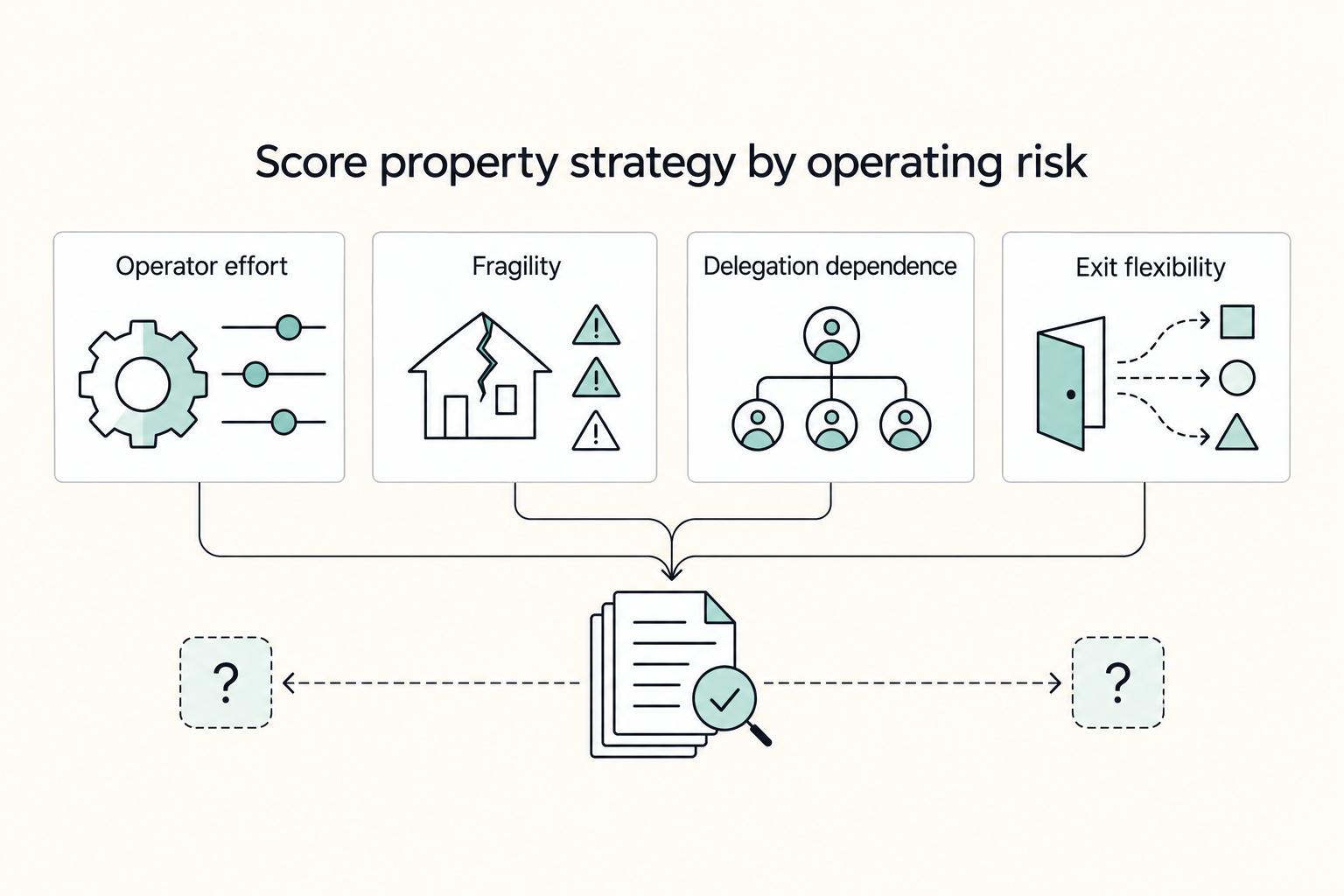
**Run anything with money and moving parts like an operations system (cash, docs, delegation, and controls), not a "passive income" vibe.** Real life stress-tests weak spots. You change time zones, a client pays late, and something breaks at the worst moment. As the CEO of a business-of-one, your job is to build a setup that keeps working when you are not available on demand.
How to Automate Your Airbnb with Smart Home Tech
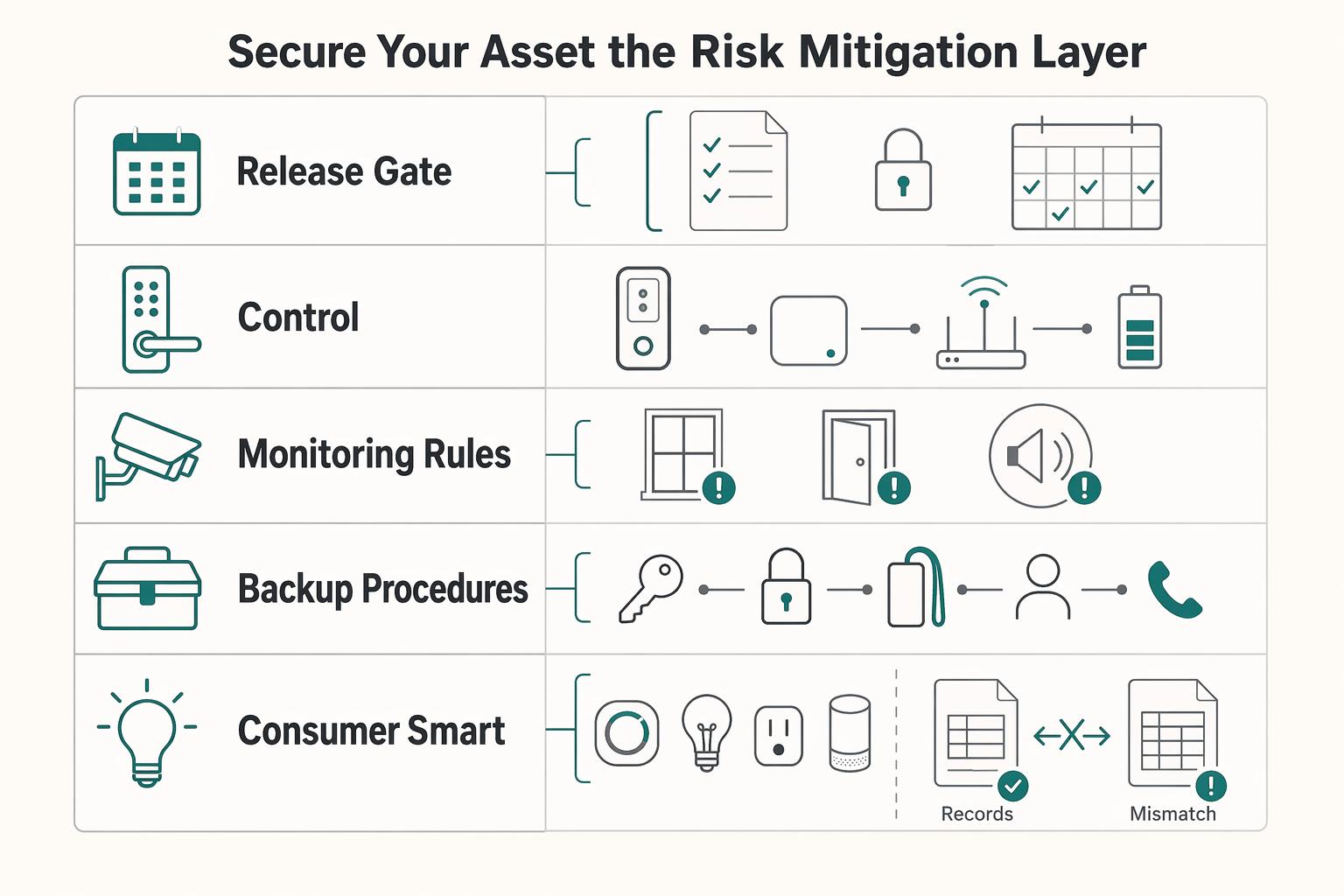
The internet is full of advice on "automating your Airbnb," and most of it starts in the wrong place. It treats automation like a pile of gadgets instead of an operating model. For a serious investor, that is a distraction. You are not trying to build a clever smart home. You are trying to run a resilient, scalable, profitable hospitality business that performs the same way whether you are across town or across the globe.