
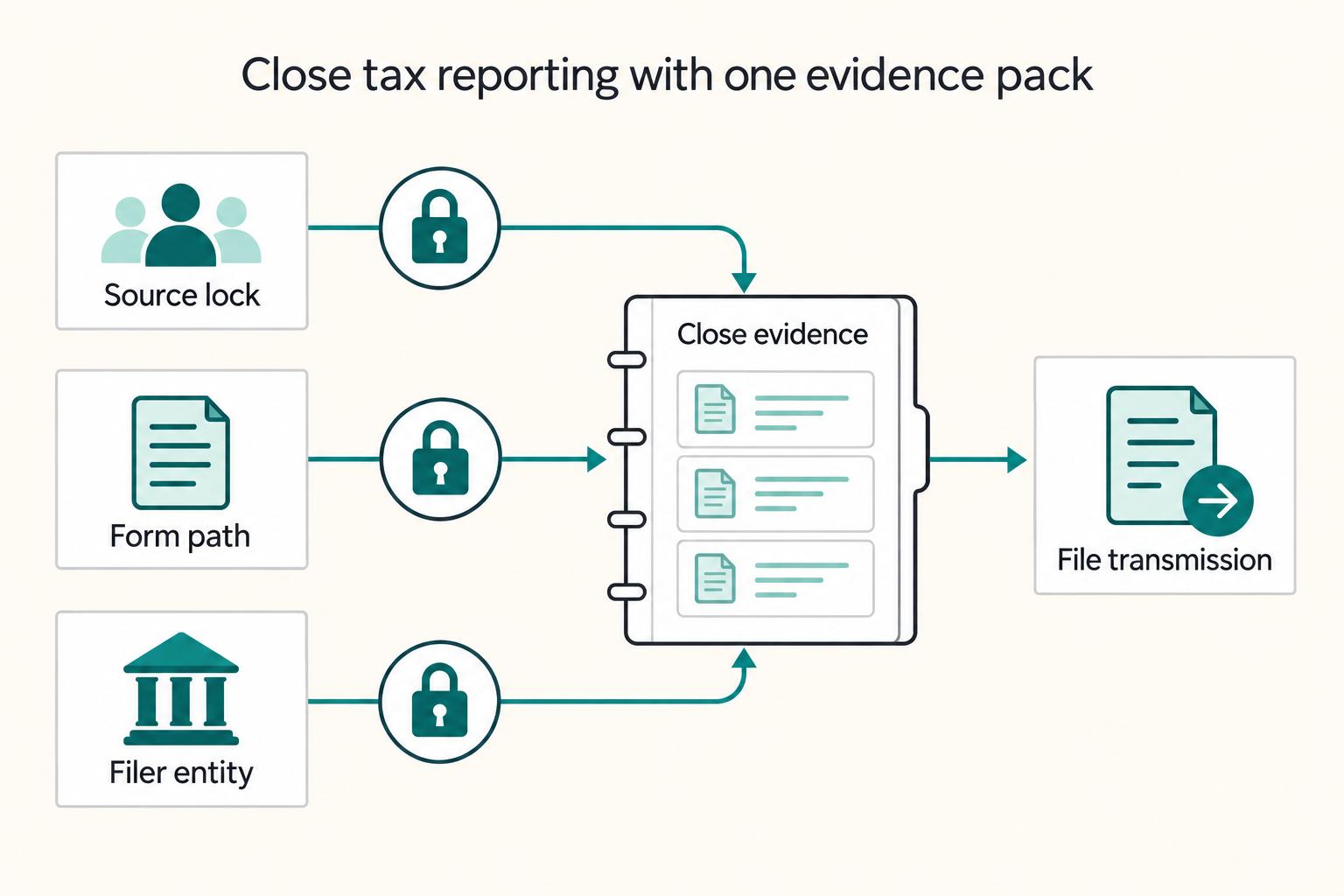
Quick Answer
The settlement entity reports card/network transactions on 1099-K; a business payer generally reports qualifying direct service payments on 1099-NEC. For 2026, NEC generally starts at $2,000. The TPSO K test requires more than $20,000 AND more than 200 transactions; payment-card reporting has no equivalent minimum.
Start With Filing Ownership by Payment Rail#
If you are trying to decide when platforms file Form 1099-K and where other forms may apply, the real job is not memorizing form names. It is assigning filing ownership by payment path, proving that choice before filing season, and catching cases that can create duplicate reporting or missed filings. That is the operator view this piece takes.
A payment settlement entity files Form 1099-K for reportable payment-card or third-party-network transactions. A business payer generally uses Form 1099-NEC for reportable nonemployee service payments outside that settlement path. Decide the legal reporting role before assigning a transmission team or vendor.
The federal TPSO threshold is more than $20,000 in gross reportable payments and more than 200 transactions. Payment-card reporting has no equivalent minimum. State requirements may differ. Separate the legal trigger from your platform’s operational ownership using these three decisions:
- Choose the owner
Identify who files based on the rail and entity setup: a TPSO, a payment card company, your platform, or another payer. If you cannot explain "who files what, based on which payment path" on one page, you already have a control gap.
- Verify the inputs early
Before you assign any filing path, confirm the payee and tax-document inputs your process depends on. Most filing-season problems start earlier, when ops teams route payments before those inputs are complete.
- Escalate the exceptions
Escalate exceptions when the settlement role or income classification is unclear. Routine form rules should be encoded in the payment mapping so operators do not repeatedly research the same question.
The goal is a concrete operating choice, a short verification checklist, and escalation triggers that reduce filing surprises without forcing you to overbuild.
For a platform-control example from a creator commerce model, see Best Merch Platforms for Creators Who Want Control and Compliance.
How to choose the right filing model for your platform#
Choose the filing model that makes ownership clear and defensible, not just operationally convenient. This is for compliance, legal, finance, and risk teams managing contractor, seller, or creator payouts across platform payment paths, including teams supporting Form 1120, Form 1120-S, and Form 1065 filers. It is not personal tax-prep guidance for solo filers.
| Check | What to confirm | Article detail |
|---|---|---|
| Ownership clarity | Contracting entity, expected filer, and transmission channel for each payment path | Prepare IRIS access for tax-year 2026 electronic returns filed in 2027; FIRE is being retired. |
| Upfront data quality | Legal payee details, TIN status, and whether a W-9 or W-8 was collected before payout routing hardens | IRS guidance tells recipients to verify Form 1099-K details, including payee TIN data. |
| Correction speed and audit trail depth | A dated filer determination and linked source records | The model should preserve records so corrections do not turn into ownership disputes. |
| Threshold governance | Which current-law threshold rule is being relied on | Federal TPSO reporting requires both more than $20,000 and more than 200 transactions; payment-card reporting has no equivalent minimum. |
Use these checks:
- Ownership clarity: Maintain a one-page matrix for each payment path showing the contracting entity, expected filer, and transmission channel. For Form 1099-K paths, account for the IRS electronic filing channels (IRIS for tax-year 2026 returns filed in 2027). If you cannot explain who files what by payment path in one page, treat that as a control failure.
- Upfront data quality: Prefer the model that enforces early payee-data checks. IRS guidance tells recipients to verify Form 1099-K details, including payee TIN data, so your intake process should capture legal payee details, TIN status, and the tax form collected (W-9 or W-8) before payout routing hardens.
- Correction speed and audit trail depth: IRS guidance also tells taxpayers to use Form 1099-K with their own records to report correct income. Your model should preserve a dated filer determination and linked source records so corrections do not turn into ownership disputes.
- Threshold governance: distinguish the TPSO dollar-and-transaction test from payment-card reporting and the tax-year-specific NEC threshold; record applicable state requirements separately.
For music and royalty classification edge cases, see Music Royalty Tax Compliance: How Platforms Handle 1099-MISC vs. 1099-NEC for Artist Payments.
Want a quick next step on this issue? Try the W-2 vs 1099 calculator.
Compare what changes between 1099-K and 1099-NEC#
Form 1099-K follows the settlement entity’s payment-card or third-party-network role. Form 1099-NEC generally follows a business payer’s reportable service payments to nonemployees. Payments reportable under section 6050W are excluded from NEC reporting; a missing 1099-K below the TPSO threshold does not turn that transaction into NEC.
A side by side comparison#
| Decision point | Form 1099-K | Form 1099-NEC | Operating check |
|---|---|---|---|
| Payment type | Payment-card and third-party-network settlement transactions | Reportable nonemployee services paid in a trade or business outside the section 6050W settlement path | Classify the transaction, not just the payee |
| Filer | The payment settlement entity, including the applicable TPSO or merchant acquiring entity | The business payer with the reporting obligation | Record the statutory role separately from vendor transmission |
| Federal threshold | TPSO: more than $20,000 AND more than 200 transactions; payment cards: no equivalent minimum | For 2026 payments: generally $2,000 or more; backup withholding can require reporting below that amount | Keep tax year, exceptions and state requirements in separate fields |
| Recipient statement | Generally January 31 | Generally January 31 | Shift to the next business day when required |
| IRS filing | Generally February 28 on paper or March 31 electronically | Generally January 31 for either method | Use IRIS for tax-year 2026 electronic returns filed in 2027 |
| Same payee on both forms | Can cover network/card transactions | Can cover distinct direct service payments | Avoid reporting the same section 6050W transaction again on NEC |
What operators should take from this#
Treat 1099-K as a rail-based decision, not a label-based one. If your policy does not explicitly use PSE, TPSO, and payment card or third party network transaction, teams will fill the gaps with informal judgment and create mismatch risk.
The minimum verification set is payee legal name, payee TIN, and payment-rail classification. If the rail is unclear, the form decision is unclear too.
For mixed-flow payees, do not resolve it by habit. Freeze the record, attach processor or ledger evidence, and require a dated determination memo before filing.
Related: 1099-NEC Automation for Platforms: How to File at Scale Without Manual Errors.
Option 1 with split ownership between TPSO reporting and payer reporting#
Use split ownership only when your payment rails are truly separate and you can prove, before filing season, who files which form. In this model, the TPSO or other payment settlement entity handles Form 1099-K for Payment Card and Third Party Network Transactions, and payer-side reporting stays limited to payments outside that network path.
The legal settlement role defines the 1099-K owner. Keep that role separate from the business payer’s direct service payments and from the vendor that transmits returns. Recipient statements generally fall due January 31, shifted to the next business day when required.
A practical example is a platform with two distinct flows: marketplace or card payouts on one side and separate direct service payments on the other. That can support a split between TPSO-led 1099-K reporting and a separate Form 1099-NEC lane. Treat NEC assignment as a separate determination, not an automatic fallback.
Keep tax-year rules explicit: 2025 NEC service reporting generally used $600; 2026 uses $2,000. Other Form 1099-MISC categories can have different thresholds, so do not assign one value to every box.
Use this model only if you can show all three:
- The rail is unambiguous. Each payout stream is clearly tied to a network path or outside it.
- The filer is designated before filing season. Ownership and correction handling are assigned up front.
- Your evidence is audit-ready. Each stream has a dated filer determination record tied to the payment flow.
The main downside is reconciliation and correction friction. Internal ledgers and external form reporting can diverge, and fixes can stall unless you preassign the correction workflow.
For escalation handling around suspicious payment activity, see What is a Suspicious Activity Report (SAR) and When to File One.
Option 2 with centralized platform tax operations and unified control checks#
Use this model when mixed payment flows make local ownership inconsistent. One accountable team should own intake, routing, filing-status decisions, and correction escalation across entities.
The goal is not to have one team file every form. The goal is to have one team apply the same decision rules, document each filing call, and keep one defensible record.
Why centralized control helps#
Centralized operations are most useful when seller payouts, contractor payments, and marketplace flows sit in the same platform environment. You need one decision point to determine whether a payee is in a Form 1099-K, Form 1099-NEC, or Form 1099-MISC path, and whether the record stays in a 1099 path based on the tax form collected (W-9 vs W-8).
The timing rules also make consistency important:
- Form 1099-NEC service-payment reporting generally uses $600 for 2025 and $2,000 for 2026.
- Inflation adjustments begin after 2026; version the threshold by tax year.
- The federal TPSO rule requires more than $20,000 AND more than 200 transactions.
- Form 1099-MISC categories have separate rules; royalties, for example, do not inherit the NEC service threshold.
Use one annual rule set, then confirm current IRS primary instructions before filing.
What this team should control#
Keep controls narrow and strict:
- Intake and branching: enforce tax-form intake before assigning reporting paths, and branch early when a W-8 is collected.
- Identifier readiness: require legal name and taxpayer identifier data quality before locking filing populations.
- Payment-flow classification: map each payment stream to reporting logic before year-end.
- Evidence pack: store the form on file, paying entity, payment flow, threshold logic used, and approver for each decision.
Where this model fails#
The main tradeoff is governance overhead and sensitive-data handling risk. Centralization without enforceable standards only creates a larger control surface without better outcomes.
Common failure points are late tax-form branching and inconsistent threshold cutovers across entities. If you adopt this model, publish one annual memo that states the tax year rules, threshold assumptions, ownership decisions, and escalation path for ambiguous cases.
For a step-by-step walkthrough, see A Guide to Form 1099-K for Freelancers Using Payment Apps.
Option 3 with outsourced filing and strict internal governance gates#
Outsource execution, not filing judgment. Your team should decide the reporting path and the filer role, and the vendor should run the process you approve. This is the practical middle ground when you need specialist support but still need clear internal accountability.
Outsourcing preparation or transmission does not change the required filer’s legal role. For 1099-K, document which entity settles the reportable transactions; for NEC, document the business payer responsible for the service payment.
Three gates that make this model work#
- Filing role gate
Approve the statutory filer role for each flow before sending a file. For 1099-K, identify the relevant settlement entity; for direct service payments, identify the payer. Product labels such as marketplace or payment app do not replace that role analysis.
- Source-of-truth gate
Keep payee mapping, payment-rail classification, and approval status in your own system, and provide the vendor a controlled extract. That keeps accountability clear when you need to investigate rejects or corrections.
- Evidence output gate
Require submission confirmations, recipient-delivery logs, correction records, and exception reporting in your SLA. For 1099-K recipient copies, make the January 31 deadline visible and trackable in those outputs.
Where this model earns its keep#
This model fits lean teams that want faster operational coverage without handing off core classification decisions. The tradeoff is vendor dependency: hidden assumptions erode institutional knowledge, and January surprises become more likely. If your provider cannot return a clear evidence pack and exception list, this setup is too opaque to trust.
For non-resident payee handling, see How to Handle a US-Sourced 1099 as a Non-Resident Alien.
Apply decision rules for edge cases before they become filing defects#
Once filing ownership is set, most defects come from exceptions, not volume. Use hard escalation stops so ops does not make judgment calls that create duplicate reporting, wrong form paths, or cross-border confusion.
| Issue | Required action | What to document or check |
|---|---|---|
| Possible duplicate reporting or unclear filer | Escalate unclear statutory ownership or overlapping transactions | Distinct correctly classified payment streams may produce both forms for one payee; compare transaction identifiers before escalating. |
| Identity incomplete | Block filing-path assignment until TIN and tax form status are resolved with W-9 forms or W-8 forms | Before any filing queue entry, confirm legal name, entity classification, TIN status, and current tax form. |
| 1099-K gross-to-net mismatch | Require a documented gross-to-net support file before close | Tie gross transaction amounts to adjustments by payee and period, with versioning and approver sign-off. |
| Red flags that should stop the line | Treat these as escalation triggers, not cleanup items | Repeated corrections for the same payee population; unresolved disputes over who the actual filer is; unsupported assumptions that FATCA, FBAR, Form 8938, or FinCEN rules resolve a 1099 routing decision. |
- Dual-form exposure
The same payee can receive both forms for distinct payment streams. Do not report a section 6050W card/network transaction again on NEC, even if the TPSO does not issue a K below its threshold. Escalate when the settlement arrangement is unclear or two entities claim responsibility for the same transaction.
- Identity incomplete means no path assignment
If payee identity or entity classification is incomplete, block filing-path assignment until TIN and tax form status are resolved with W-9 forms or W-8 forms. Before any filing queue entry, confirm legal name, entity classification, TIN status, and current tax form.
- 1099-K gross-to-net mismatch
If Form 1099-K gross amounts do not reconcile to internal records because of fees or refunds, require a documented gross-to-net support file before close. The file should tie gross transaction amounts to adjustments by payee and period, with versioning and approver sign-off.
- Red flags that should stop the line
Treat these as escalation triggers, not cleanup items:
- repeated corrections for the same payee population
- unresolved disputes over who the actual filer is
- unsupported assumptions that FATCA, FBAR, Form 8938, or FinCEN rules resolve a 1099 routing decision
Foreign-asset reporting such as Form 8938 and FBAR does not determine 1099 ownership. For foreign payees, document tax status, income source and any withholding or separate reporting duties before selecting the form.
For ownership choices around merchant-of-record models, see Merchant of Record for Platforms and the Ownership Decisions That Matter.
Execute the January close sequence and evidence pack#
Use a fixed five-step close and require evidence at each gate. That is the most reliable way to turn policy into a defensible January filing record.
| Step | Action | Evidence or note |
|---|---|---|
| Freeze the population | Lock one dated in-scope population, each payee's form path, and the filer entity before file prep starts | Record the federal TPSO test of more than $20,000 AND more than 200 transactions, payment-card treatment and separate NEC threshold for the tax year. |
| Validate identity fields and lock payment-rail mapping | Confirm included payees still have complete identity fields and a current tax form on file, then lock the payment-rail mapping used for form assignment | Keep one final mapping table with approval timestamps. |
| Run a pre-file exception report and triage mismatches | Run one full-file exception report before transmission and push exceptions into a tracked triage queue | Include checks for missing identity or tax-form data, rail-to-form conflicts, duplicate payees across form paths, amount mismatches, and a prior-period sample check. |
| Sign off, file through approved channels, and retain proof | Require compliance and finance sign-off; deliver recipient statements by the applicable date and transmit through the approved channel. | Keep filer determinations, the form-specific deadline checklist, IRS acknowledgments, correction tickets, approvals and recipient-delivery evidence. |
| If deadline risk appears, protect accuracy first | Prioritize accurate core filings plus a documented correction plan over rushed low-quality submissions | Log what files now, what is held, why, who approved, and how correction tickets are tracked; if the pressure point is recipient statements, have tax assess whether Form 15397 applies. |
- Freeze the population
Lock one dated in-scope population, each payee's form path, and the filer entity before file prep starts. If the population or assignments are still moving, you are still classifying, not closing.
Use the current federal TPSO test of more than $20,000 and more than 200 transactions. The earlier $2,500/$600 phase-in was superseded; keep obsolete instructions out of active threshold logic.
- Validate identity fields and lock payment-rail mapping
Confirm included payees still have complete identity fields and a current tax form on file, then lock the payment-rail mapping used for form assignment. Keep one final mapping table with approval timestamps so you can defend path decisions if disputes arise.
- Run a pre-file exception report and triage mismatches
Run one full-file exception report before transmission, and push exceptions into a tracked triage queue. Include checks for missing identity or tax-form data, rail-to-form conflicts, duplicate payees across form paths, and amount mismatches. Add a prior-period sample check so abrupt dropouts, doubles, or form flips are investigated before filing.
- Sign off, file through approved channels, and retain proof
Require compliance and finance sign-off before transmission. Prepare IRIS access for tax-year 2026 electronic returns filed in 2027 as FIRE is retired. Track recipient delivery and IRS submission as separate deadlines.
Keep the filer determination, form-specific deadline checklist, IRS acknowledgment, correction tickets, approval timestamps and recipient-delivery evidence together.
- If deadline risk appears, protect accuracy first
Prioritize accurate core filings plus a documented correction plan over rushed low-quality submissions. Log what files now, what is held, why, who approved, and how correction tickets are tracked.
If the pressure point is recipient statements, have tax assess whether Form 15397 (Application for Extension of Time to Furnish Recipient Statements) applies.
Conclusion#
If you want fewer January surprises, do not optimize for memorizing form labels. Optimize for ownership clarity, early routing, and an evidence trail that can survive a correction request or an internal challenge.
- Choose one filing owner per payment rail.
Assign the filer from the legal payment role and keep a dated determination log. The settlement entity’s K reporting and a payer’s direct service-payment reporting may coexist for different transactions.
- Build the filing call around records, not assumptions.
Your control set should be boring and explicit: freeze the population, confirm the payment-rail classification, and keep one support file that explains gross amounts against internal payout records. That matters because the IRS tells recipients to use Form 1099-K together with their other records to figure and report correct income, and income must still be reported even if no 1099-K arrives. When numbers do not match your internal net view, reconcile back to source records and keep a clear gross-to-net bridge in the evidence pack.
- Write down the unknowns and escalate them early.
Keep the comparison, exception list and close checklist tied to current form instructions. Track recipient statements, IRS filing dates and electronic access separately; no single January milestone completes every filing duty.
That is the real takeaway for platforms deciding between 1099-K and 1099-NEC reporting paths. A credible process is not the one with the most tax vocabulary. It is the one where you can point to the exact rail, the exact form path, the exact checkpoint that was passed, and the exact issue that was escalated instead of guessed at. Where facts are incomplete, say that plainly and get tax specialist confirmation before any production filing goes out.
For creator-platform payout model context, see Best Platforms for Creator Brand Deals by Model and Fit.
Frequently Asked Questions
Who files Form 1099-K and who files Form 1099-NEC in a platform payout model?
The payment settlement entity files 1099-K for reportable card/network transactions. The business payer generally files 1099-NEC for reportable direct nonemployee service payments outside that path. A vendor can transmit either return without becoming the statutory filer.
When do recipient copies and IRS filings need to be completed for each form?
Recipient statements are generally due January 31 for both forms. NEC is also due to the IRS January 31; K is generally due February 28 on paper or March 31 electronically. Weekend and holiday dates move to the next business day. For 2026 returns filed in 2027, prepare IRIS access as FIRE is retired.
Can the same payee receive both Form 1099-K and Form 1099-NEC for the same year?
Yes, for distinct payments: a seller might receive 1099-K for network settlements and NEC for separately paid services. The same section 6050W transaction is not also reported on NEC. Reconcile at transaction level before assuming a shared payee name means duplicate reporting.
What should we do if Form 1099-K amounts do not match our internal payout and fee records?
Do not use ad hoc edits to force a match to a net ledger. Start from the frozen 1099-K population, reconcile transaction totals back to source records, and build one gross-to-net support file that explains fees, timing differences, or mapping issues. If you cannot show that bridge cleanly, stop the filing or correction until the mismatch is understood.
When should we escalate to specialist tax counsel instead of making an internal call?
Escalate disputed filer ownership, uncertain income classification, possible reporting of the same transaction on both forms, or incomplete cross-border facts. Distinct, correctly classified payments to one payee do not require escalation merely because both K and NEC apply. Keep the evidence and written decision with any substantive exception.
How should platforms handle W-8 versus W-9 intake before deciding any 1099 path?
U.S. persons generally provide W-9; foreign persons generally provide the applicable W-8. The form documents status, but reporting also depends on the payment and income source. Keep foreign-person withholding and reporting analysis separate from the routine domestic NEC workflow.
Try a related tool
Researched and edited by the Gruv editorial team. Gruv builds cross-border billing, payouts, and finance-operations software for global businesses.
Sources
Educational content only. Not legal, tax, or financial advice.
Related Posts
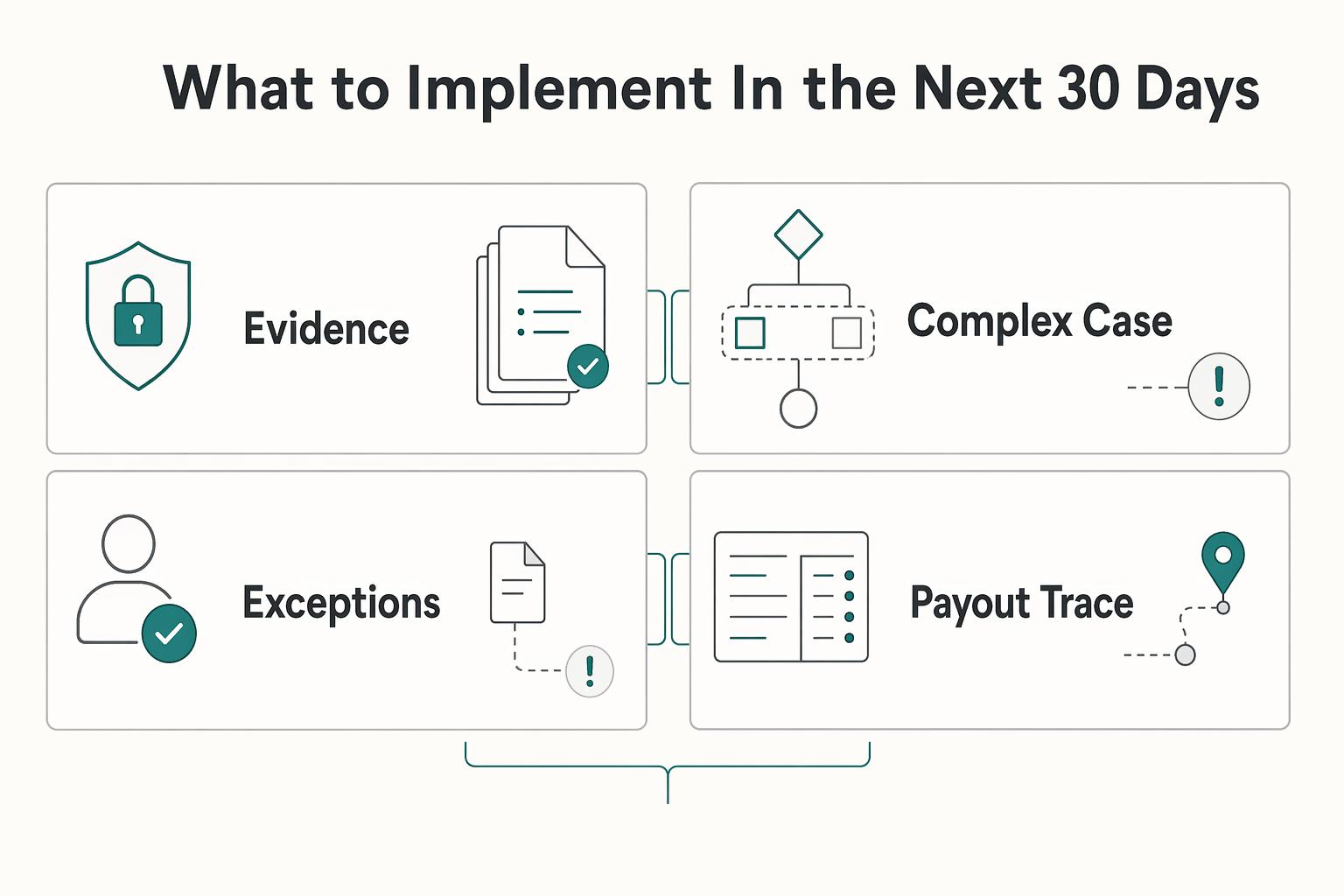
When Platforms File 1099 for Foreign Contractors and When W-8 Applies
If your platform waits until year end to choose between a Form 1099 path and a W-8 path, you are already late. In cross-border payouts, the real question is not just what each IRS form means, but which document controls the payout decision before money moves, who verifies it, and what you do when the facts do not fit the default path.
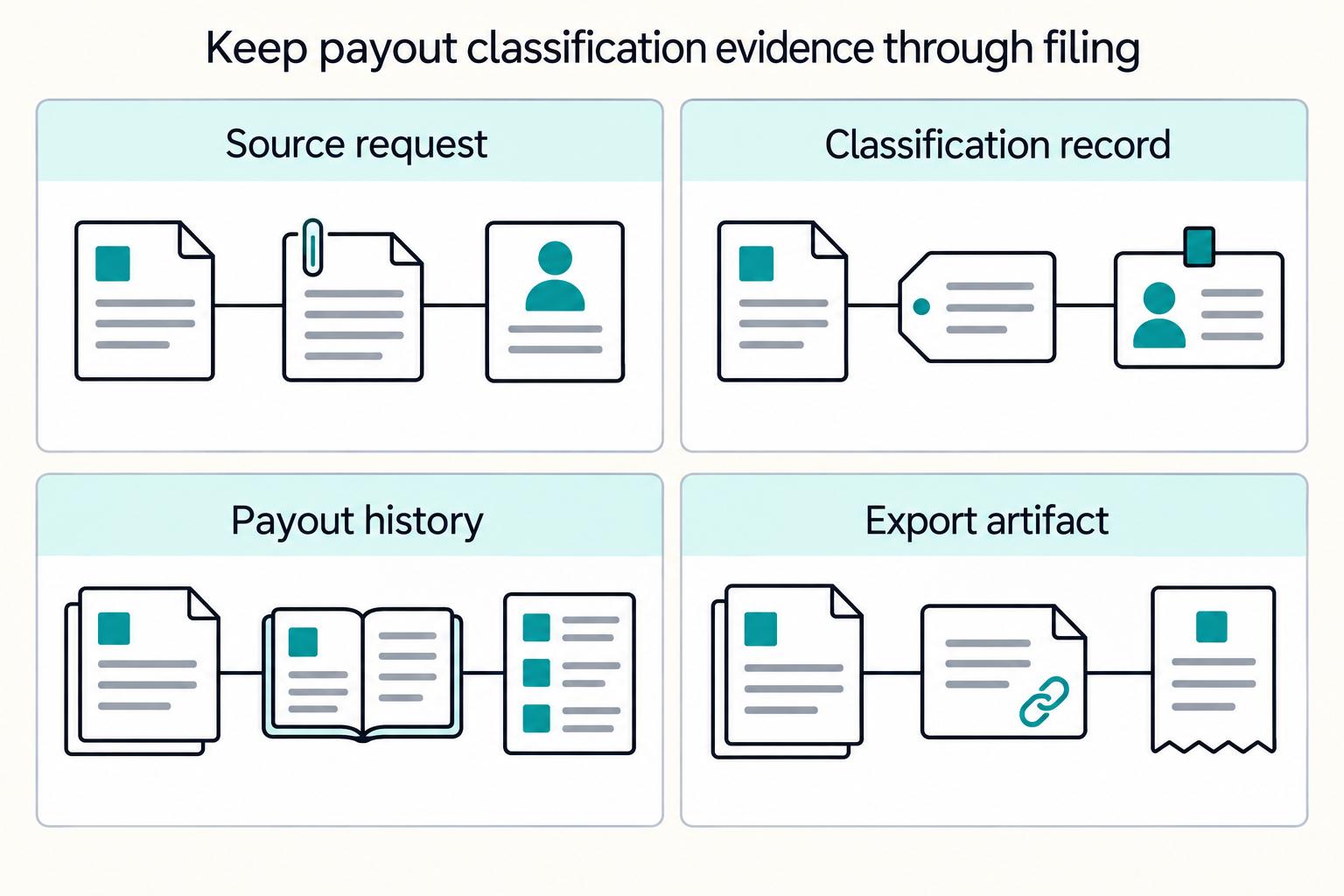
Music Royalty Tax Compliance: How Platforms Handle 1099-MISC vs. 1099-NEC for Artist Payments
This is an operating-model decision, not a year-end form choice. A team can ship quickly and still end up with misclassified payouts, correction cycles, and filing risk if the classification logic is weak. If you run creator payouts, you need the classification rule before your first batch, not after your first correction cycle.
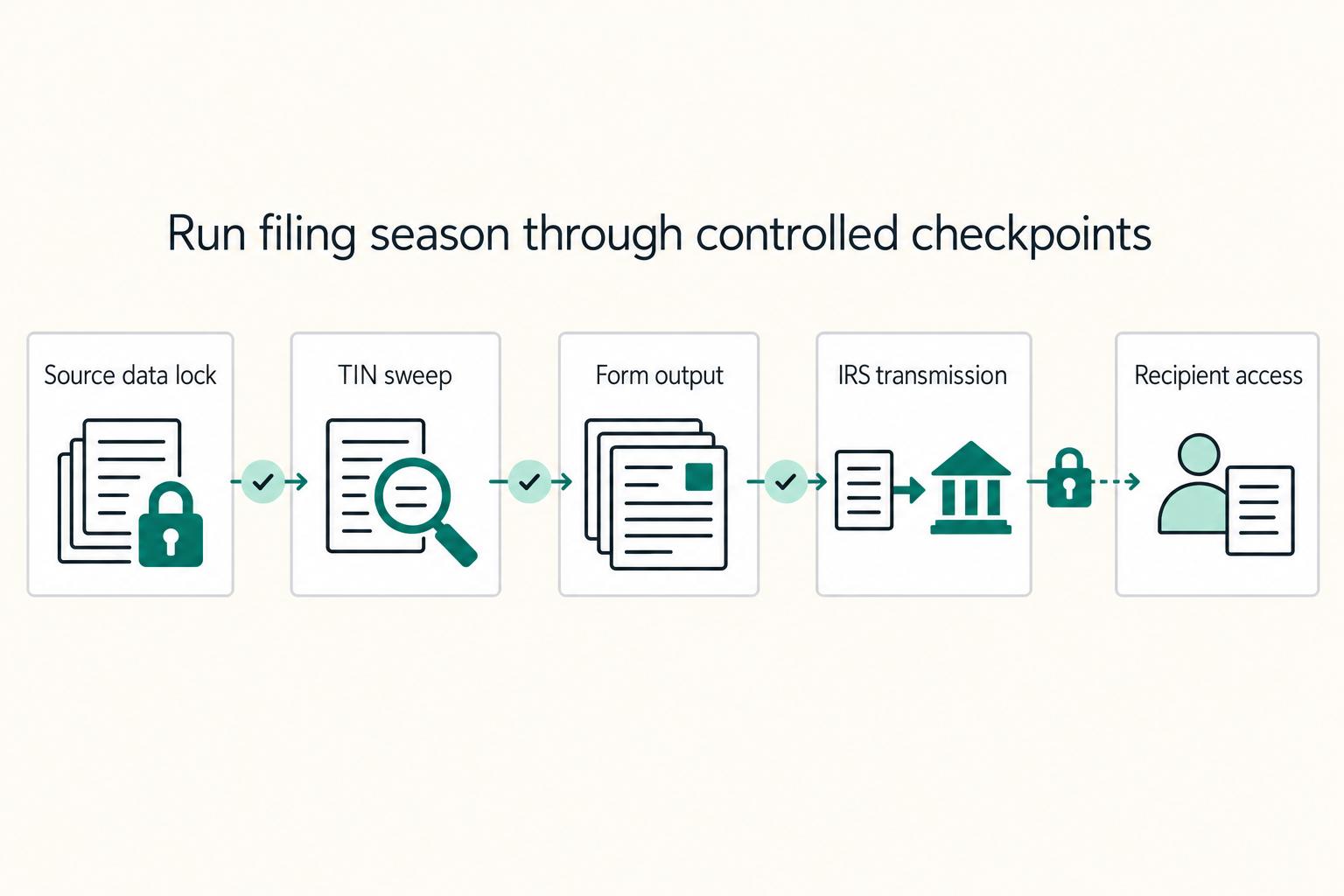
1099-NEC Automation for Platforms to File at Scale Without Manual Errors
1099-NEC automation usually breaks at scale for a simple reason: no one owns the controls that make filing data reliable. A platform can generate forms, but it cannot fix missing Form W-9s, bad Taxpayer Identification Number data, or unclear form mapping unless those issues already have a named owner and an escalation path.