
Quick Answer
Collect the correct W-8 before money moves, then decide reporting based on payee type and payment channel. For foreign individuals, use Form W-8BEN; for foreign entities, use Form W-8BEN-E, and keep those records with the payer or withholding agent rather than filing them with the IRS. If facts point to treaty claims, effectively connected income, or rail-specific treatment like Form 1099-K, pause release and escalate instead of forcing a default Form 1099-NEC path.
Start With Who Is Being Paid and How#
If your platform waits until year end to choose between a Form 1099 path and a W-8 path, you are already late. In cross-border payouts, the real question is not just what each IRS form means, but which document controls the payout decision before money moves, who verifies it, and what you do when the facts do not fit the default path.
- Start with who the payee is
A foreign individual gives Form W-8BEN to the payer or withholding agent to certify foreign beneficial owner status. A foreign business entity uses Form W-8BEN-E to document its status for chapter 3 and chapter 4 purposes. In practice, this is the first routing split that matters. If your onboarding record cannot reliably distinguish a foreign individual from a foreign entity, every later decision gets weaker, including whether a Form 1099-NEC review is even the right question.
- Separate documentation from reporting
Collecting forms and filing information returns are related controls, but they are not the same control. The IRS says, "If you pay independent contractors, you may have to file Form 1099-NEC," but it also says nonemployee compensation paid to nonresident aliens is reported on Form 1042-S, not standard Form 1099-NEC treatment. In practice, "foreign contractor" is not a blanket exemption from U.S. reporting, and "contractor payment" does not make 1099-NEC the default either. Your team needs a rule that checks status and payment facts before assuming the outcome.
- Treat W-8 retention as a live control, not a file dump
Form W-8BEN is provided to the payer or withholding agent and the IRS instructions say: "Do not send to the IRS." That puts the burden on your internal record: what you collected, when you collected it, and whether the form matched the payee profile when payout was approved. The verification checkpoint is internal. You should be able to show the exact form version retained, who reviewed it, and whether payout release depended on that review. One common risk is collecting a W-8 after the first payment, then trying to backfill the reasoning during reporting season.
- Route by payment channel too
Some platforms miss that reporting can change with the settlement model. IRS instructions state that payment card and third party network transactions are reported on Form 1099-K, and those transactions are not subject to reporting on Form 1099-NEC or Form 1099-MISC. Your operating model has to branch on both tax documentation and payment flow. If a payout could fall into 1099-K treatment, do not force it into a contractor reporting queue just because the commercial relationship looks like freelance work.
- Build explicit escalation points for unresolved facts
This guide stays operational on purpose. Where source of income, treaty treatment, or effectively connected income facts are unclear, the right answer is escalation, not guesswork. IRS instructions for forms like 1099-K also warn readers to check for later legal developments, so your process needs an update check and a named owner for exceptions. A usable model tells your payments team when to stop, hold, and hand off, instead of pretending every cross-border payout can be solved with one form at intake.
Selection criteria and who this list is for#
Use this list if you are choosing an operating model for cross-border payouts, not seeking final legal conclusions on every edge case. Start with one control: collect tax documentation before payment, and treat missing or unreliable records as a release blocker.
- Routing accuracy first
Prioritize whether each option can reliably split a foreign individual from a foreign business entity at intake. The form path depends on that split: entities use Form W-8BEN-E, while individuals use Form W-8BEN. If your onboarding model cannot hold this split before payout, later decisions weaken. A practical check is whether, before first payment, the payee record shows one payee type, one matching W-8 form, and one linked reviewer or validation result.
- Auditability where liability sits with the payer or withholding agent
This list is best for platforms acting as the payer or a withholding agent, especially with recurring onboarding and multi-market payouts. Under IRS rules, withholding-agent liability is direct when tax should have been withheld. Choose the model that proves what you knew at payment time. If evidence appears only after release, your position is weak in review; you need a trail showing the form collected, acceptance date, and payout approval status.
- Operational load is real, but payment-time control still wins
Onboarding friction is a real tradeoff, but Publication 515 ties reduced withholding treatment to valid documentation before you make the payment. Year-end collection is not a substitute for payment-time control. If documents are missing or cannot be reliably tied to a payment, presumption rules may apply, and exposure can include tax, interest, and penalties, with a 30 percent backstop in some withholding situations.
- Who should not treat this list as the final answer
Use this list for scalable controls on common cross-border contractor, seller, or creator payouts. Do not use it as a substitute for specialist review when facts depend on detailed U.S.-source income analysis or unresolved NRA withholding questions that may shift reporting to Form 1042-S and Form 1042. If facts are unclear, escalate. Do not release on assumption and attempt to repair the record later.
For a step-by-step walkthrough, see Accounts Payable Outsourcing for Platforms When and How to Hand Off Your Payables to a Third Party.
Quick comparison of the 5 platform control options#
If you can fund only one serious control, use a pre-payment gate or payout hold. Annual cleanup helps, but it does not fix decisions made after funds move.
| Option | Trigger point | Required docs or reporting path | Best for | Key pros and cons | Failure mode and escalation owner | Concrete use case | What this does not solve |
|---|---|---|---|---|---|---|---|
| 1. Pre payment tax document gate at onboarding | Before activation or before payout rails are enabled | Form W-8BEN for a foreign individual; Form W-8BEN-E for a foreign entity | Teams that can accept onboarding friction for cleaner upfront routing | Pro: strongest early control. Con: more signup friction | Common failure: wrong payee type, then wrong W-8 path. Escalation owner: compliance intake or tax ops before activation | Contractor marketplace requires approved W-8 status before first invoice payout | Does not resolve treaty, ECI, or later reporting-branch changes |
| 2. Payout hold with conditional release | At disbursement when documentation is missing or inconsistent | Same W-8 split, with payout blocked until record is complete | Teams that cannot block signup but can block money movement | Pro: control at payment moment. Con: operational queues | Common failure: manual override under pressure. Escalation owner: payments ops with tax review backup | Creator platform allows signup but holds first payout until W-8 record is validated | Does not resolve source-of-income analysis or whether a payment should move to Form 1042-S handling |
| 3. Annual revalidation and exception triage | Scheduled refresh cycle or before year-end reporting | Refresh W-8BEN/W-8BEN-E records; re-check reporting path decisions under current instructions | Mature platforms with recurring payees and profile drift | Pro: catches stale records and exceptions. Con: can become checkbox-only | Common failure: refresh without resolving changed facts. Escalation owner: finance reporting with compliance support | Platform with repeat payouts rechecks profiles before reporting season and routes exception buckets | Does not cure missing pre-payment documentation; should not be the only control |
| 4. Payment rail based reporting branch | When payment method determines reporting regime | Certain payment card and third-party network transactions go to Form 1099-K by the payment settlement entity; those transactions are not also reportable on Form 1099-NEC | Marketplaces where rail logic drives reporting outcomes | Pro: avoids duplicate reporting logic. Con: rail decisions are often discovered late | Common failure: building a 1099-NEC path for transactions that belong on 1099-K. Escalation owner: payments product plus tax reporting | Marketplace using a third-party network routes qualifying seller payments through the 1099-K branch | Does not give one permanent threshold answer; IRS materials note later legislation can change handling, and the Oct. 23, 2025 FAQ references $20,000 and 200 transactions for the condition it discusses |
| 5. Treaty and ECI specialist branch | When facts suggest treaty-based personal-services exemption or effectively connected income | Form 8233 for nonresident alien individuals claiming exemption from withholding on personal services compensation; Form W-8ECI when a foreign beneficial owner claims U.S.-source income is effectively connected with a U.S. trade or business | Higher-risk cases where a standard W-8 file is not enough | Pro: avoids false closure from a basic foreign-status file. Con: slower, specialist-dependent | Common failure: treating W-8 collection as final when withholding/Form 1042-S issues may still exist. Escalation owner: specialist tax team or tax counsel | Foreign individual contractor claims treaty relief on personal services, so case is routed out of the standard lane | Does not remove the need for legal-tax judgment in treaty or ECI edge cases |
The label matters less than the checkpoint behind it. Before payout, your team should be able to see payee type, matching document path, and accepted status in one record.
Most failures come from timing or routing, not form naming: wrong payee classification, documentation accepted after payout, or payment-rail logic handled too late. If treaty, ECI, or U.S.-source questions are unclear, escalate before release.
Option 1 pre-payment tax document gate at onboarding#
Use a pre-payment onboarding gate when you want tax-document mistakes to surface before money moves. IRS instructions for Form W-8BEN say it should be provided to the payer or withholding agent before income is paid or credited, which supports blocking payout activation until documentation is approved.
Routing must be exact. A foreign individual uses Form W-8BEN. A foreign entity uses Form W-8BEN-E. Your onboarding flow should require entity-type selection first, then allow only the matching form path.
This model fits platforms that can accept some signup friction for a cleaner record. In practice, an independent contractor profile should not activate payout rails until approved tax status is visible, with clear ownership between onboarding validation and payments release.
One control point matters here: W-8 forms are not filed with the IRS. They are furnished to the payer or withholding agent and retained there. The test is whether you can prove the correct form was on file before release.
What to verify before activation#
- Payee classified as foreign individual or foreign entity
- Matching form collected: W-8BEN or W-8BEN-E
- Acceptance date recorded before first payment or credit
- Reviewer or validation outcome tied to the release decision
If any of these are missing, the gate is weaker than it looks. Another practical risk is delaying collection: IRS instructions state that not providing a requested Form W-8BEN may lead to 30% withholding.
A valid W-8 is still a starting document, not a full resolution for every case. If onboarding facts point to treaty-based personal services treatment or effectively connected income, route to Form 8233 or Form W-8ECI instead of forcing a standard W-8 path.
Option 2 payout hold with conditional release rules#
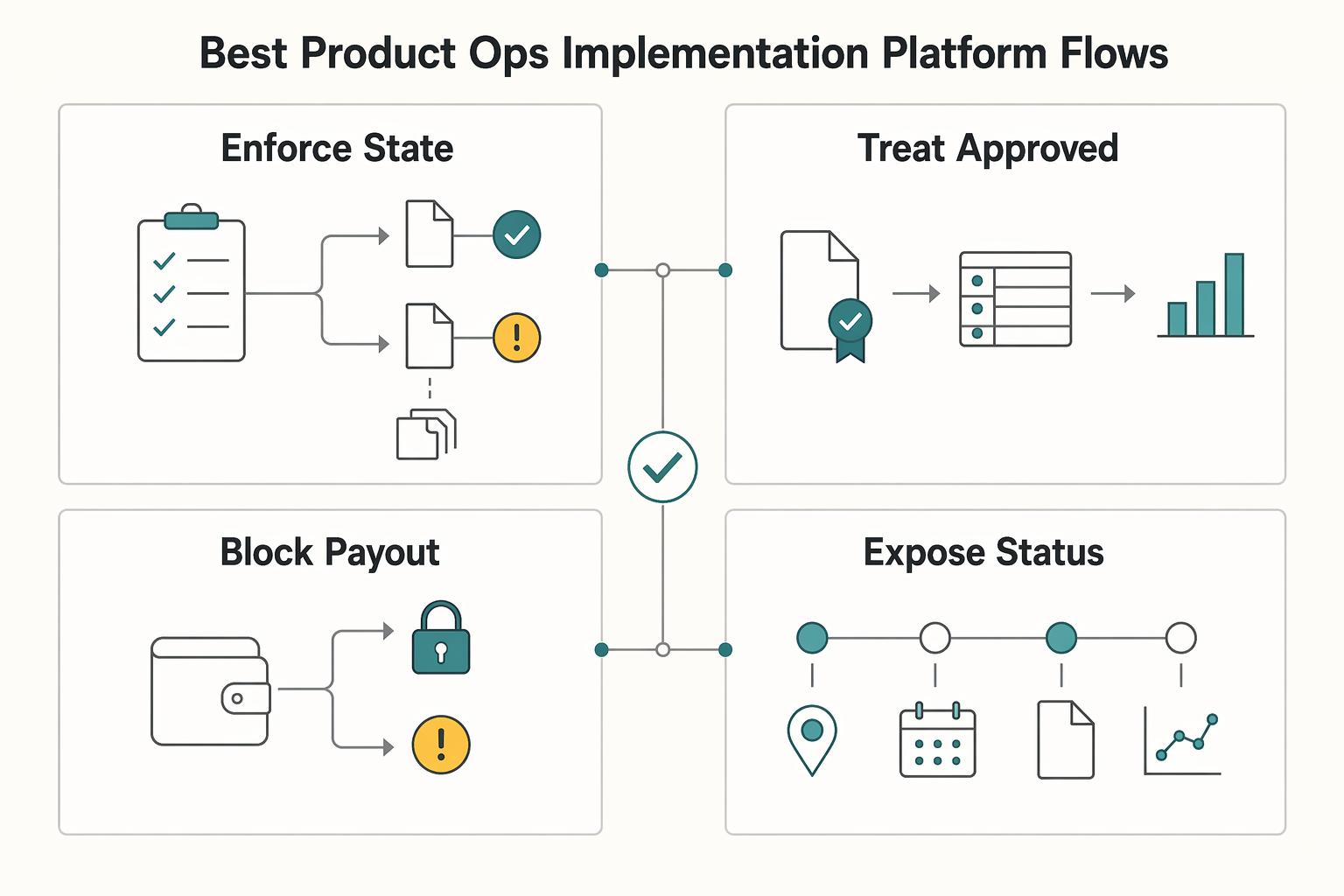
If you cannot block signup, block disbursement until the payee classification and W-8 form are reliable. This keeps onboarding moving, but it puts the control at the point where a payer or withholding agent must decide whether payment can be treated as made to a foreign person.
Option 1 applies review earlier. Option 2 applies a release gate later. The benefit is lower signup friction; the cost is heavier payout-ops queues and more escalation work during payout cycles.
IRS instructions support a form-reliance standard at release: rely on a properly completed Form W-8BEN for a foreign individual and a properly completed Form W-8BEN-E for a foreign entity. IRS guidance also states that, when foreign-status documentation is in place, those payments are exempt from backup withholding and Form 1099 reporting. So the release decision is not just "form received," but "form matches payee classification and is usable."
Release rules that should actually block payout#
- Foreign individual: release only when a properly completed Form W-8BEN is on file for that payee.
- Foreign business entity: release only when a properly completed Form W-8BEN-E is on file for that payee.
- Classification unresolved or inconsistent: hold payout and escalate. Do not release until individual-versus-entity classification is resolved.
What to verify before you release#
Your payout review should show, in one view, payee classification, expected form type, received form type, and validation outcome. A W-8BEN versus W-8BEN-E mismatch should trigger an automatic hold reason.
Keep an audit trail for every hold or release: reviewer, decision time, and document used for release. Without that trail, consistent enforcement is hard to prove.
Keep payment-channel routing separate from this queue. IRS instructions say payment card and third-party network transactions are reported on Form 1099-K under section 6050W, not Form 1099-NEC. Route those early so this hold queue stays focused on W-8 classification controls.
Option 3 annual revalidation and exception triage#
Use this as a maintenance control for long-lived payees, not as your first gate. Form W-8BEN and Form W-8BEN-E are generally valid through the last day of the third succeeding calendar year, unless a change in circumstances makes the form incorrect earlier.
| Issue | How to treat it | Form or path |
|---|---|---|
| Missing, expired, or mismatched W-8 | Require a refreshed form and reviewer sign-off before further release | Form W-8BEN or Form W-8BEN-E |
| Change in circumstances | For W-8BEN, the payee is expected to notify the payer or withholding agent within 30 days | Form W-8BEN |
| Conflicting employee classification | Treat as a status dispute, not a support-note cleanup | Form SS-8 |
| Suspected U.S.-source income exposure | Treat as a sourcing or withholding escalation, not only a W-8 collection issue | Forms 1042-S and 1042 |
Annual review is still useful, but it is not a blanket IRS every-12-month requirement for all W-8s. The point is to catch profile drift before reporting season and confirm you can still rely on the document behind the last payout decision. For W-8BEN, a payee is expected to notify the payer or withholding agent within 30 days of a change in circumstances.
Do not run this as a checkbox exercise. Put the signed form date, current profile facts, and prior release rationale in one reviewer view, with clear exception ownership and timestamps.
- Missing Form W-8BEN or W-8BEN-E: treat as a document-control gap. If the form is missing, expired under the third-succeeding-calendar-year framework, or mismatched to payee type, require a refreshed form and reviewer sign-off before further release.
- Conflicting employee classification: treat as a status dispute, not a support-note cleanup. IRS common-law status depends on control and independence facts, and Form SS-8 is the formal determination path when disputed.
- Suspected U.S.-source income exposure: treat as a sourcing or withholding escalation, not only a W-8 collection issue. If payments are subject to NRA withholding, reporting ties to Forms 1042-S and 1042, not a routine Form 1099 outcome.
Decision checkpoints when 1099 assumptions break#
A W-8 on file is a starting control, not a final reporting decision. If facts point to service reporting, payment-settlement reporting, treaty exemption, or ECI, branch before payout release instead of fixing errors after year-end.
| Scenario | Evidence or form | Route |
|---|---|---|
| Services in the course of your trade or business | Signed tax form, service contract or work order, and finance payout coding | Possible Form 1099-NEC branch |
| Card or third-party network settlement | Classify the payment rail first: card network, third-party payment network, or direct AP-style payout | Form 1099-K analysis |
| Treaty exemption on personal services compensation | Completed Form 8233, treaty basis, service description, and reviewer signoff | Form 8233 review |
| ECI or unclear U.S. nexus | Complete Form W-8ECI with the payee's U.S. TIN before release | Pre-payout legal or tax review |
- Possible Form 1099-NEC branch
Move past W-8-only handling when the payment is for services in the course of your trade or business. Checkpoint: tie the signed tax form, the service contract or work order, and finance payout coding before release. Profile labels like "foreign contractor" do not replace a review of the payment facts for Form 1099-NEC decisions.
- Payment settlement flow that belongs in Form 1099-K analysis
Do not force card or third-party network settlement flows into a 1099-NEC path. Checkpoint: classify the payment rail first - card network, third-party payment network, or direct AP-style payout, then route reporting logic. Form 1099-K applies to settlement of reportable payment transactions, and IRS explainer language still references exceeding $20,000 and 200 transactions. A common failure mode is running both 1099-NEC and 1099-K logic on the same stream and creating conflicting reporting outcomes.
- Treaty exemption claim needing Form 8233 review
Escalate when a nonresident alien individual claims treaty exemption on compensation for personal services. Checkpoint: require the completed Form 8233 submitted to the withholding agent, plus the payee's treaty basis, service description, and reviewer signoff. This is not a routine W-8BEN refresh; the withholding position depends on treaty terms and payee status.
- ECI or U.S. nexus ambiguity needing pre-payout escalation
Route to legal or tax review before payout when facts suggest effectively connected income (ECI), a U.S. trade or business connection, or unclear U.S. nexus. Checkpoint: if ECI is asserted, require a complete Form W-8ECI with the payee's U.S. TIN before release. Missing valid W-8 or W-9 documentation is not clerical noise; IRS W-8 instructions warn of possible 30% chapter 3/4 tax or 24% backup withholding exposure.
If you need a deeper split by reporting lane, see When Platforms File 1099-K and 1099-NEC. For treaty-claim operations detail, see IRS Form 8233: When Foreign Contractors Claim Treaty Exemptions and What Platforms Must Verify.
Audit evidence pack and internal ownership map#
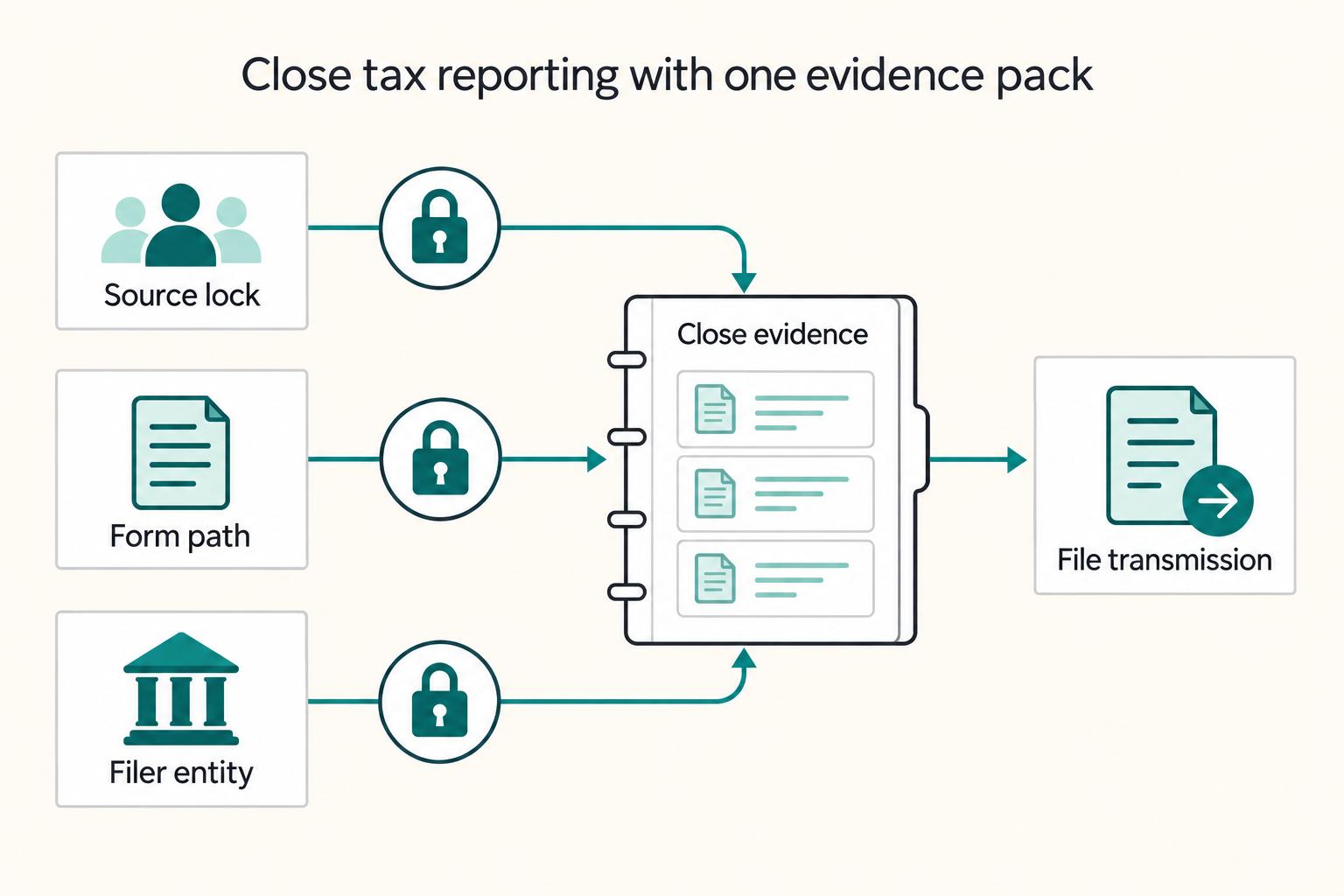
If you cannot show why a payee was released or held at decision time, your control is weak. Keep a single audit trail that ties the collected form, the classification decision, and the payout action.
| Stage | Owner | Responsibility |
|---|---|---|
| Form intake and validation | Compliance intake | Collects and validates form type and routes exceptions |
| Release or hold execution | Payments operations | Executes the release-or-hold outcome from that approved status |
| Reporting and corrections | Finance reporting | Owns Form 1099 output and correction handling if a filed form must be fixed |
- Minimum evidence pack.
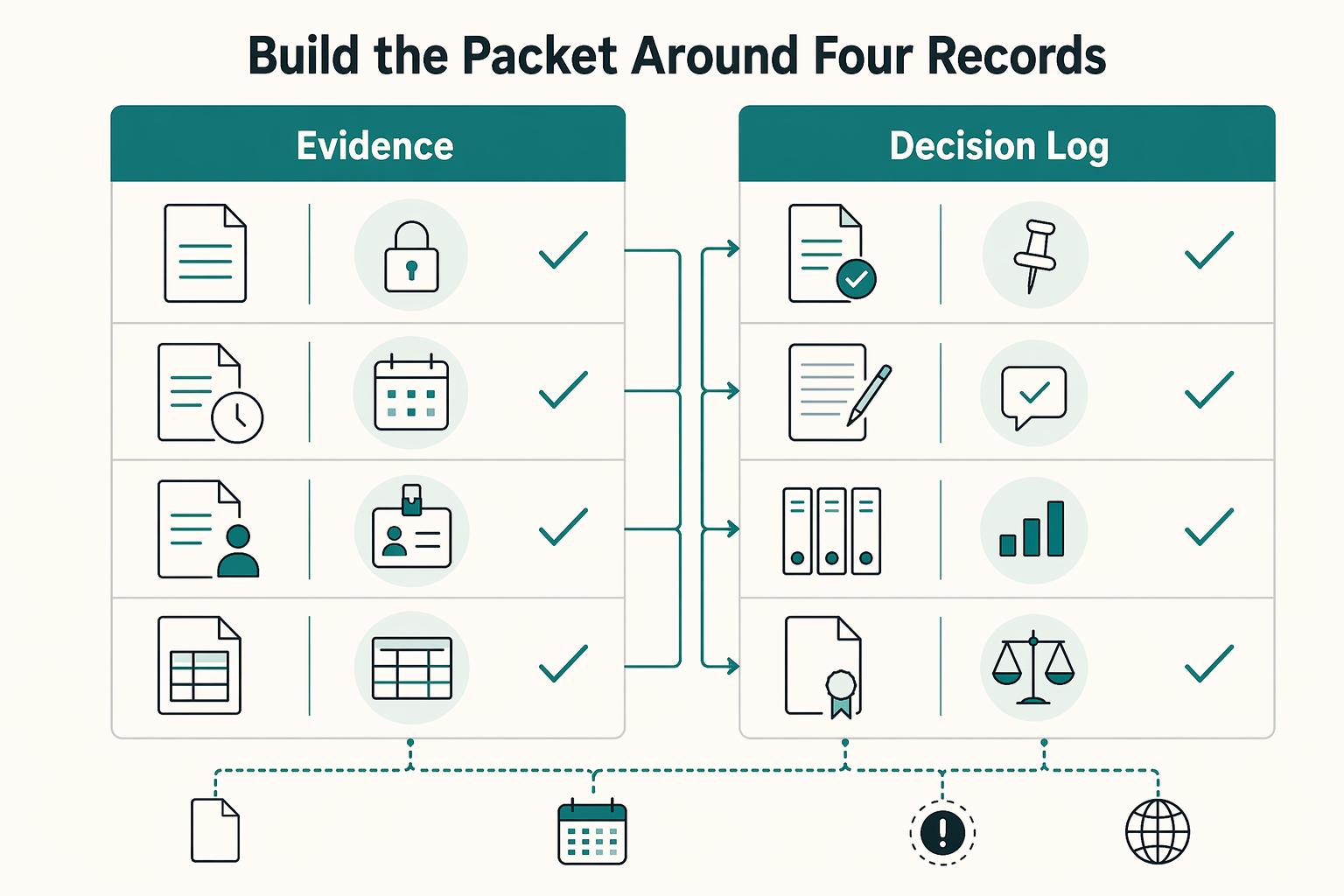
Keep the exact form collected, the form revision when available, the validation result, reviewer identity, decision timestamp, and the release-or-hold decision mapped to the Form 1099 or W-8 path. Store the source document, not only a status flag. For classification, preserve the form-based logic: Form W-8BEN is for a foreign individual, and Form W-8BEN-E is for a foreign entity ("For use by entities. Individuals must use Form W-8BEN").
What matters is what the payer or withholding agent actually received. W-8 instructions say to give the form to the withholding agent or payer, not the IRS, so your internal records are the evidence file. Because the form includes a penalties-of-perjury certification, your validation record should show the form was complete, signed, and matched to the payee profile when approved.
- Ownership by stage.
Use a clear handoff model so tax decisions do not drift between teams. Compliance intake collects and validates form type and routes exceptions. Payments operations executes the release-or-hold outcome from that approved status. Finance reporting owns Form 1099 output and correction handling if a filed form must be fixed.
Set one escalation chain in advance. If your platform has control, custody, or payment authority over income paid to a foreign person, treat unresolved classification or documentation issues as specialist escalations, not queue-level judgments.
- Proof of classification at decision time.
Your file should answer one question immediately: why this payee was treated as a foreign individual or foreign entity when payment was approved. That proof should come from the form type, onboarding profile, and dated approval note that existed at that moment.
Tie tax documentation to payment records with a shared identifier. IRS 1099 instructions require records showing payment date and amount, and they provide correction procedures for already-filed forms, so your audit trail should support both original decisions and later corrections.
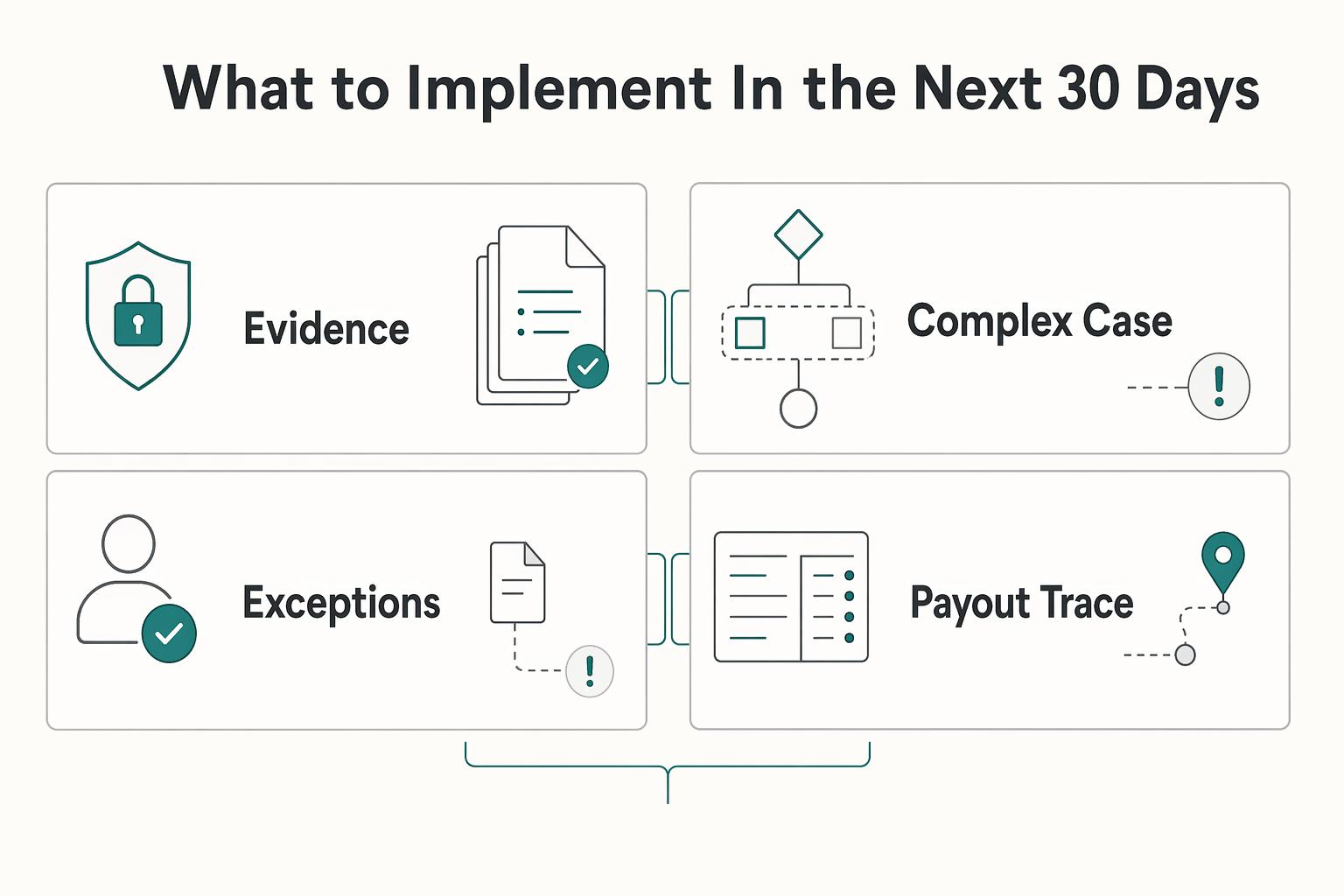
What to implement in the next 30 days#
In the next 30 days, focus on one enforceable payout control, one final decision owner, and one audit-ready evidence export.
-
Pick one primary control and document the backup path. Use either an onboarding gate or a payout hold as your primary model, then define how exceptions are handled when documentation is missing or inconsistent. Make the control auditable: your team should be able to show when Form W-8 was requested by the payer or withholding agent, what was received, and why funds were released or held.
-
Ship one decision table with one final payout owner. Assign a single release owner, for example Payments Ops or Finance, even when compliance or tax specialists review edge cases. Keep the table tied to the three inputs that change treatment in practice: entity type, W-8 status, and payment channel. Include a payment-channel branch because payment card and third-party network transactions route to Form 1099-K (PSE path), not Form 1099-NEC or Form 1099-MISC.
| Condition | Trigger/doc status | Route | Final payout owner |
|---|---|---|---|
| Foreign individual with valid documentation | Form W-8BEN on file | Release if no other risk flags | Payments Ops |
| Foreign entity with valid documentation | Form W-8BEN-E on file | Release if no other risk flags | Payments Ops |
| Missing, incomplete, or mismatched documentation | No valid W-8 on file | Hold and escalate for review | Payments Ops |
| Card or third-party network settlement | 1099-K branch applies | Route to PSE reporting path | Payments Ops |
- Export an evidence pack, not just a tax-status flag. Keep an export that ties documentation and review outcome to the release or hold decision and reporting path. Make it usable by finance during reporting season, including where Form 1099-K recipient copies must be sent by January 31. Retain records as long as they may be material to tax administration, and avoid setting archive periods shorter than the general 3-year assessment window. Related reading: India Equalisation Levy: What Foreign Platforms Must Pay on Digital Advertising Services.
Frequently Asked Questions
Do platforms file Form W-8BEN with the Internal Revenue Service (IRS) or just retain it?
Platforms generally retain it. The IRS form itself says, “Give this form to the withholding agent or payer. Do not send to the IRS.” The practical control is to store the form (or other documentation you relied on), not just a tax-status flag, because your copy is the record you may need if the treatment is later questioned. Keep it as long as it may become material to tax administration.
When should a platform collect Form W-8BEN or Form W-8BEN-E in the payout lifecycle?
Collect it before you rely on it for withholding or reporting treatment, which for many platforms means before payout release. If you wait until year end, you are relying on assumption at the point where payer or withholding-agent duties matter most. A common control is: no approved W-8 documentation path, no payout release. A common failure mode is collecting the form after money has moved and then trying to rebuild why the payee was treated as foreign.
Who should complete Form W-8BEN versus Form W-8BEN-E?
Form W-8BEN is for foreign individuals. Form W-8BEN-E is for foreign entities, and the form instructions are explicit: “For use by entities. Individuals must use Form W-8BEN.” If your onboarding profile says “company” but the uploaded document is a W-8BEN, do not force it through. That mismatch is an escalation trigger because entity-type routing is a core classification decision.
Does paying a foreign contractor always mean no Form 1099 filing?
No. The no-1099 conclusion depends on documented foreign status, not on the label “foreign contractor” by itself. IRS guidance ties the exemption to foreign persons who provide Form W-8BEN, Form W-8BEN-E, Form W-8ECI, Form W-8EXP, or applicable documentary evidence. If the file is missing, incomplete, or inconsistent with the payee profile, you should not assume the exemption applies. This is where many 1099 foreign contractors platforms w-8 forms when to file mistakes start: teams treat geography as proof.
What changes if facts suggest U.S.-source income?
A basic W-8BEN or W-8BEN-E collection step may not be enough on its own. If facts point toward U.S.-source income, treat the file as needing tax review before payout because characterization can change the reporting and withholding path. Start with evidence: where services were performed, what the contract says, and whether transaction records support that answer. If those facts are unclear, hold and escalate rather than assuming the standard path applies.
When should teams escalate to Form 8233 or Form W-8ECI analysis?
Escalate to Form 8233 when a nonresident alien individual is claiming an income tax treaty exemption on compensation for personal services. Escalate to Form W-8ECI when a foreign person claims the U.S.-source income is effectively connected with a U.S. trade or business. Do not treat either form as a routine substitute for W-8BEN or W-8BEN-E. They are fact-specific branches, and if your team sees treaty language, personal-services compensation, or ECI claims, route it to specialist review and use a documented hold decision until resolved.
Try a related tool
Researched and edited by the Gruv editorial team. Gruv builds cross-border billing, payouts, and finance-operations software for global businesses.
Sources
Educational content only. Not legal, tax, or financial advice.
Related Posts
IRS Form 8233: When Foreign Contractors Claim Treaty Exemptions and What Platforms Must Verify
Form 8233 is used by nonresident alien individuals to claim exemption from withholding on compensation for personal services, but for platform operators the key exposure is often operational: scope decisions, review quality, recordkeeping, and escalation. When you pay nonresident individuals for U.S.-source personal services income, the real risk is often not whether a form exists, but whether your team can show why a claim was accepted.
W-8ECI for Platforms Handling Foreign Contractors With Effectively Connected US Income
Start with a simple checkpoint. Verify that the payee is actually claiming foreign status and using the right form for that claim. Then confirm that the record ties the form to U.S.-source income and an ECI position. A common failure mode is accepting the document because it is signed and looks current, while never capturing the business facts that explain why W-8ECI was used instead of W-8BEN. Where source detail is limited, such as exact refresh cadence, this article flags legal-tax escalation points instead of pretending the IRS gives platforms one clean decision matrix. Related reading: [How Platforms Are Reshaping Foreign Exchange in 2026](/blog/platforms-reshaping-foreign-exchange-landscape).
When Platforms File 1099-K and 1099-NEC
If you are trying to decide when platforms file **Form 1099-K** and where other forms may apply, the real job is not memorizing form names. It is assigning filing ownership by payment path, proving that choice before filing season, and catching cases that can create duplicate reporting or missed filings. That is the operator view this piece takes.