
Quick Answer
Yes: platform teams should hand AP work to a third party only when process ownership is already clear and delays are creating operating risk. The article recommends deciding between outsourcing, in-house automation, or hybrid based on where work is repeatable versus judgment-heavy, then validating readiness with a documented handoff package. It also stresses pre-launch controls such as approval boundaries, SLA escalation paths, and traceable records before expanding volume.
When AP Outsourcing Makes Sense for Platforms#
Step 1 Decide whether to hand off, wait, or automate#
Start with the real choice, not the buzzword. Accounts Payable outsourcing means shifting AP work from your in-house team to a specialized external provider. In practice, your decision is usually narrower: hand off execution now, wait until the process is ready, or keep it internal and automate instead.
That distinction matters. Outsourced AP can cover invoice processing, payment scheduling, and vendor management, while policy ownership stays with your team. In a common model, the provider routes spend to the right people in your company for approval based on rules you set in advance. If you want one rule to anchor the rest of this guide, use this one: do not outsource confusion. If approval authority, exception handling, or payment ownership is still unclear, moving work outside can make that ambiguity harder to resolve.
Step 2 Read the choice through an operating-model lens#
Read this through an operating-model lens. This guide is for teams deciding how AP work should be executed and controlled across finance and operations.
That means the question is not just whether a third party can process invoices. It is whether you can shift repetitive AP execution without losing control of your records or internal approvals. For some teams, that points to AP business process outsourcing for delegated AP tasks. For others, AP automation is the better fit because you want software to support an in-house process rather than delegate the work itself. This guide keeps those choices separate so you do not confuse third-party outsourcing with in-house automation.
Step 3 Test readiness before you debate vendors#
Before you debate vendors, test readiness with a simple checkpoint. Can your team clearly state which AP tasks could move out, which approvals must stay internal, and what records you need back to reconcile outcomes? If you cannot answer those three questions in one meeting, you are probably early.
A common failure mode is treating outsourcing like overflow capacity while leaving control boundaries implied. The provider may be able to execute, but your team still owns the policies and outcomes. That means you should be able to verify, at minimum, how approval routing works and who is responsible when something stalls. If that verification step feels fuzzy, delay the handoff and tighten the process first.
By the end of this guide, you should have a concrete way to decide whether AP outsourcing makes sense for your team now, later, or not at all. You should also know how to execute the handoff without giving up the controls that actually matter.
For AP and AR basics, see Accounts Payable vs Accounts Receivable for Freelancers.
Decide if now is the right time to outsource AP#
Outsource AP when delays are affecting money movement or delivery, not just creating extra work for your team. If pressure is mainly repetitive volume, in-house AP automation may be the better first move. If approvals, exception handling, or compliance ownership are still unclear, fix those before handing execution to a third party.
Step 1 Spot the triggers#
Do not wait for a fixed threshold. Look for a repeat pattern where AP delays are becoming an operating bottleneck.
| Signal | What it looks like |
|---|---|
| Invoice Processing backlog | Rising Invoice Processing backlog |
| Payment exceptions | Recurring payment exceptions that keep returning to AP or ops |
| Manual handoffs | Manual handoffs between AP and operations to complete the same payment |
| Vendor Payments or payout batches | Delayed Vendor Payments or payout batches that miss expected timelines |
To verify, review a recent sample of stalled invoices and delayed vendor payments, and mark where each one stopped. If most items stall at the same point, you have a timing problem you can scope. If the team cannot agree on where items stalled, resolve the visibility gap first.
Step 2 Treat blocking delays as operating risk#
If AP delays are pushing out payout timelines or slowing launches, treat that as operating risk, not a staffing inconvenience. On platform teams, delayed Vendor Payments usually spill into ops, support, partner trust, and launch sequencing.
Use a simple rule: if AP friction is limiting how reliably you can move money or roll out payment flows, escalate the decision beyond back-office triage. At that point, outsourcing is an operating choice, not just a resourcing discussion.
Step 3 Separate volume pain from control pain#
High volume alone does not automatically justify outsourcing. Traditional AP outsourcing and modern in-house automation solve different problems. If the bottleneck is repetitive processing, queue growth, or routine payment-run pressure, automation can be a strong internal alternative.
Control pain looks different: unclear approval authority, undocumented exception handling, and unresolved compliance ownership. Those are disqualifiers for an immediate handoff. If you cannot document who approves, who resolves exceptions, and who owns compliance decisions, redesign the process first and revisit Business Process Outsourcing after ownership is clear.
If your platform also pays third-party sellers, see eCommerce Reseller Payouts: How Marketplace Platforms Pay Third-Party Sellers Compliantly.
Choose outsourcing, automation, or hybrid for your platform#
Choose based on what your team needs most right now: external capacity, internal control, or both. If your process is stable and repetitive, outsourcing is usually the clearest fit. If approvals and exceptions are tightly tied to your product decisions, keep automation in-house. If both are true, use a hybrid model with explicit boundaries.
Step 1 Compare the three models against your real workload#
Use your goals, resources, and growth plans as the decision baseline, then map the work by transaction-heavy tasks versus judgment-heavy tasks.
| Model | Best fit | Strongest advantage | Main tradeoff |
|---|---|---|---|
| Accounts Payable Outsourcing | Stable, repeatable AP work with clear rules | Fast outside capacity for transactional work | Higher day-to-day dependency on a third party |
| In-house Accounts Payable Automation | Work that depends on internal decisions and custom logic | Internal control over how work is handled | More build and maintenance load for your team |
| Hybrid BPO | Mixed operations: repetitive tasks plus judgment-heavy decisions | Keeps critical judgment internal while offloading routine work | Requires clear boundaries to avoid handoff confusion |
In hybrid setups, a practical split is to keep critical, judgment-intensive work internal and assign transactional work externally. That can mean external teams handle routine AP/AR-style processing and reconciliations, while your team retains approval authority and exception judgment.
Step 2 Pressure-test the choice before you commit#
Test each option against operating reality, not just staffing pressure.
| Check | Question |
|---|---|
| Control needs | How often do internal teams need judgment calls to move work forward? |
| Process stability | How much of the flow is repeatable versus case-by-case? |
| Dependency tolerance | How comfortable are you relying on a partner for daily execution? |
| Implementation capacity | Do you have the internal bandwidth to build and run automation well? |
| Boundary clarity | Can you clearly state what stays internal and what moves external? |
If these answers are still fuzzy, your process design needs work before your model decision does.
Step 3 Choose for your platform shape, then document boundaries#
If your platform has steady, rules-based AP flow, outsourcing is often enough. If your operations are tightly coupled to product behavior and internal judgment, in-house automation is usually safer. If you have both repetitive volume and frequent judgment calls, hybrid is typically the more durable path.
Use this rule:
- If you need fast capacity and stable process, choose outsourcing.
- If you need custom control logic and product-coupled operations, choose in-house automation.
- If both are true, choose hybrid.
Before finalizing, document ownership for approvals, exceptions, and handoffs in plain language. If you cannot explain those boundaries clearly, you are still defining the process, not choosing the model.
For scaling AP without adding headcount, see Finance Automation and Accounts Payable Growth: How Platforms Scale AP Without Scaling Headcount.
Prepare the handoff package before vendor talks#
Before demos or pricing calls, make your AP process executable without guesswork. If a provider cannot read your handoff package and run the flow end to end, you are not ready to outsource.
Step 1 Build the minimum evidence pack#
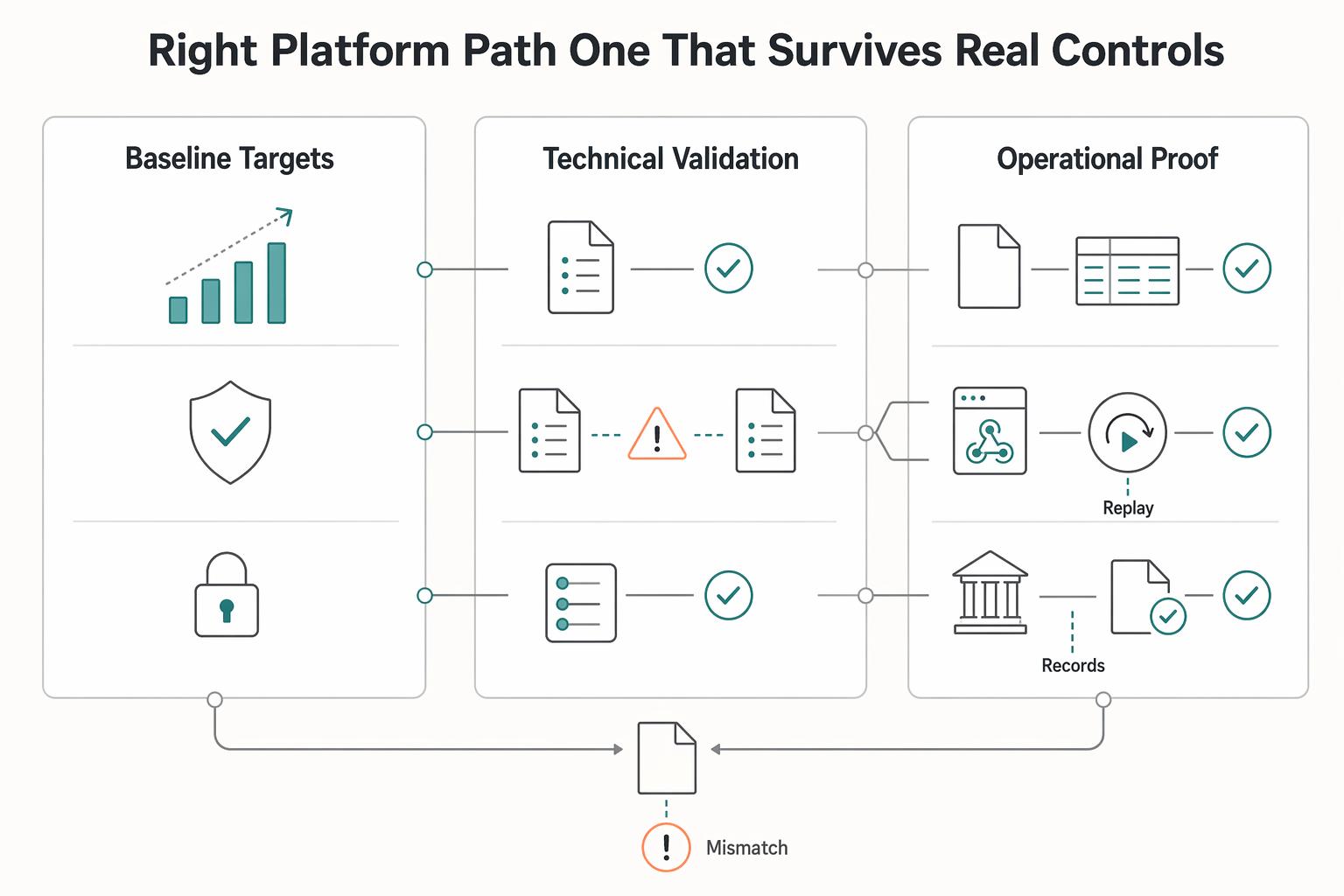
Include the minimum set in plain language: AP process map, Invoice Processing states, exception taxonomy, current SLA targets, and recent reconciliation outputs from your ledger or system of record.
Your pass/fail check is simple: another team should be able to explain the path for a normal invoice, a blocked invoice, and a duplicate or mismatched invoice without asking your team for context.
For technical baseline, document required Webhooks, status changes ops and engineering rely on, retry behavior, and idempotency rules for replayed events.
Step 2 Mark compliance ownership and release gates#
Document which compliance checks your program uses, who owns each check, what evidence is retained, and exactly where release must be blocked when a required check is unresolved.
Treat this as binary: you should be able to point to the step where payment stops. If that gate lives in inboxes or tribal memory, handoff risk stays high.
Step 3 Define tax artifacts before scope discussions#
Define, up front, which tax artifacts your program handles (for example W-8, W-9, and Form 1099 where relevant), plus ownership for intake, review, correction, and year-end output.
If your workflow touches FEIE or FBAR support, keep wording narrow and factual. IRS states FEIE may apply only when conditions are met, including foreign earned income, a foreign tax home, and qualifying status. Under the physical presence test, the threshold is 330 full days in a 12-consecutive-month period, and the 330 days do not need to be consecutive. IRS also states that income is still reported on the U.S. return when FEIE is claimed, and the 2026 maximum exclusion is $132,900 per person. For FBAR, define only whether your process flags potential filing needs or routes questions for review.
Use this package as the first vendor filter: providers that can operate within your documented boundaries are viable; providers that need you to redesign controls around their process are usually not.
Define control boundaries before go-live#
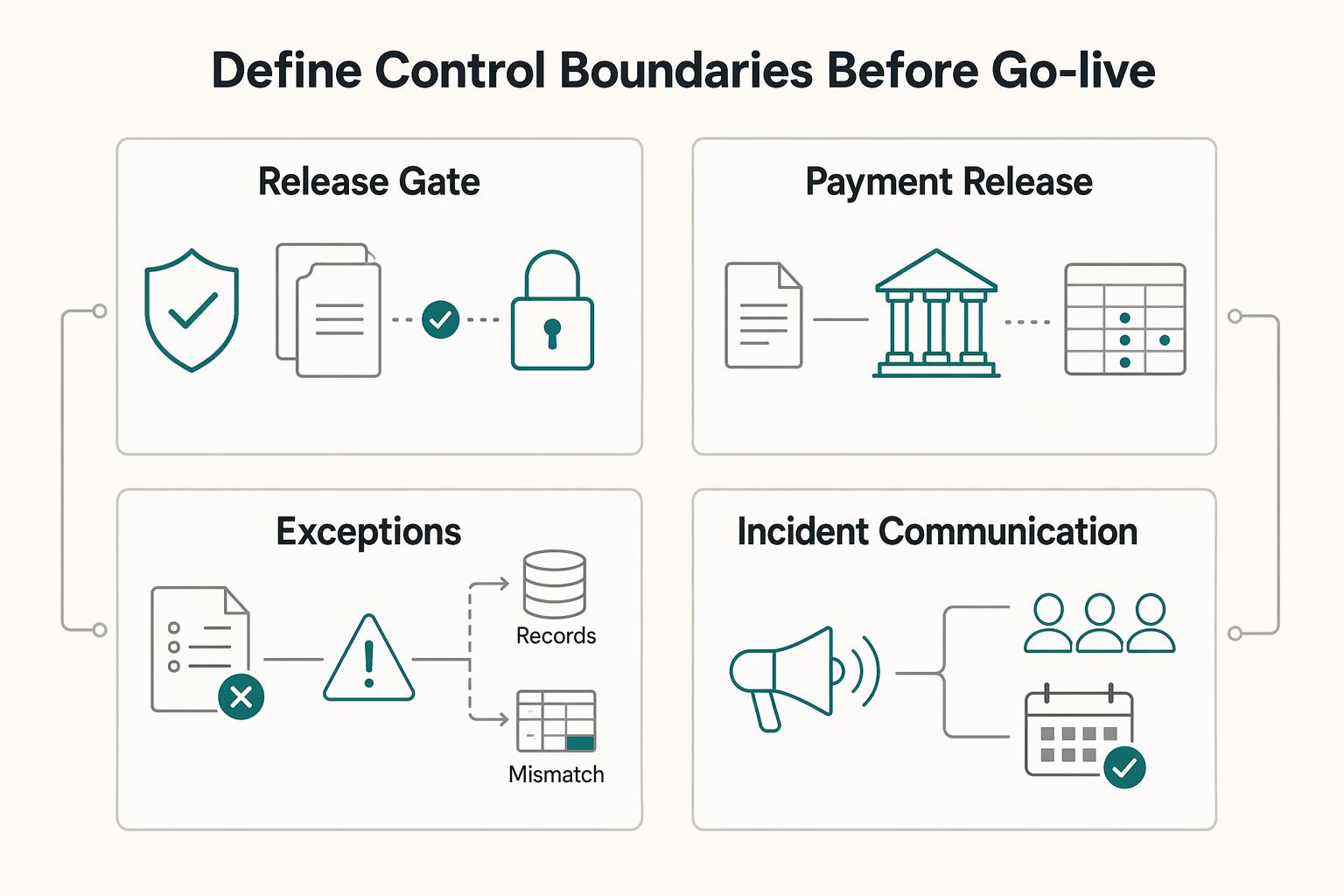
Before go-live, define who approves, who releases, who resolves exceptions, and who communicates during incidents. If ownership of payment errors is unclear, do not launch.
Step 1 Write the RACI before finalizing scope. AP outsourcing scope can vary widely, so do not assume a provider default fits your model. In a common setup, vendors send invoices to the provider for processing, the provider routes approvals using agreed rules, and after internal approval the provider issues payments and updates systems so ledger reporting stays in sync. That only works when ownership is explicit across AP, payments ops, and engineering.
Assign one owner per decision point. Name who approves standard invoices, who authorizes payment release, who resolves exceptions, and who leads incident communication to finance, ops, engineering, and vendors.
| Decision area | Keep internal owner | Provider role | Evidence to require |
|---|---|---|---|
| Invoice approval | AP or budget owner | Route for approval using agreed rules | Approval record with timestamp and approver identity |
| Payment release authority | Payments ops or designated finance owner | Execute only after approved release | Release log tied to payment event and record entry |
| Exception resolution | Internal functional owner by exception type | Triage and escalate, not decide policy | Exception ticket, reason code, and handoff timestamp |
| Incident communication | Named internal incident lead | Supply facts and status updates | Shared incident log and contact tree |
Checkpoint: walk one normal invoice, one blocked invoice, and one duplicate or mismatched invoice end to end. If release authority or incident ownership is ambiguous, boundaries are not ready.
Step 2 Lock non-negotiables in writing. Put idempotency behavior, traceability, PII handling, and audit-log access into the contract and operating model, not meeting notes.
For idempotency, define what happens when an invoice event or payment action is replayed: ignore, merge, or escalate. For traceability, require that each processed invoice, approval, release, and payout status ties to an exportable record for disputes and audits. For PII and audit logs, define access and export rights explicitly.
Step 3 Decide what stays internal. Do not vaguely delegate policy exceptions, high-risk vendor payments, AML holds, or edge-case tax handling. A provider can prepare and route the case, but your team should own the decision.
This is the key tradeoff: outsource throughput, not judgment. Blurred ownership can create poor service, higher cost, and vendor-relationship damage.
Step 4 Put control guardrails in the SLA, then test them. Your SLA should define response windows, escalation paths, data-retention terms, and reconciliation evidence delivery. Use exact timings, named escalation contacts, and clear export formats.
Before launch, run a tabletop for a duplicate payment alert, a missing approval record, and a vendor dispute. If the provider cannot quickly produce audit logs, payment history, and reconciliation evidence, your boundary is not operational yet.
Implement in phases with technical checkpoints#
Do not switch the full AP queue on at once. A phased rollout gives you a methodical way to validate integration quality, operating controls, and record accuracy before broader exposure.
| Phase | Move forward when | Validation focus |
|---|---|---|
| Sandbox | Before live invoice or payment volume is routed | Confirm integration inputs and outputs are consistent, event handling is reliable, duplicate-event behavior is controlled, and records can be traced end to end |
| Narrow production slice | Only after sandbox results are stable | Define onboarding KPIs up front, including status accuracy, exception turnaround, and reconciliation consistency |
| Expansion | Only after pilot checkpoints stay stable and incident review is clean | Review detection speed, evidence availability, ownership of fixes, and remaining training or process gaps before each expansion step |
Step 1 Start in sandbox#
Use sandbox testing to confirm technical fit before you route live invoice or payment volume. Check that your integration inputs and outputs are consistent, event handling is reliable, duplicate-event behavior is controlled, and records can be traced end to end.
Validate at record level, not just in a portal view. For a small sample, compare integration requests, provider responses, event logs, and resulting internal entries side by side. If you cannot follow one transaction cleanly across systems, the setup is not ready.
Step 2 Route a narrow production slice#
Move to limited production only after sandbox results are stable. Start with a narrow slice and define onboarding KPIs up front, including status accuracy, exception turnaround, and reconciliation consistency.
In the pilot, every transaction should be explainable from submission through final outcome. Review completed items and exceptions daily. If provider status and internal records do not stay aligned, pause expansion and correct mapping and process gaps first.
If you use rails like Payout Batches or Virtual Accounts, validate them as separate pilot cases and verify how asynchronous outcomes and returns appear across provider data and your finance records.
Step 3 Expand only after a clean review#
Scale by payout type, region, or business line only after pilot checkpoints stay stable and incident review is clean. Review detection speed, evidence availability, ownership of fixes, and remaining training or process gaps before each expansion step.
The tradeoff is speed versus cleanup risk. If the pilot required repeated manual rescue, treat that as a hold signal and fix scale limits, customization risk, and change-management gaps before widening rollout.
Set SLAs, monitoring, and escalation#
Once the pilot is stable, set SLAs before expanding. In outsourced AP, the SLA should define the contractual baseline for acceptable performance, measurable outcomes you can verify, and clear escalation paths.
Step 1 Define a small scorecard you can verify#
Track a tight scorecard: cycle time, exception aging, failed payout rate, reconciliation lag, and unresolved compliance holds. Keep each metric tied to evidence you can trace end to end, not just a dashboard status.
For any breach, require the provider reference, approval or release record, related posting, and an export-ready audit trail. If an item is marked resolved but your team cannot verify that chain, treat the metric as not governance-ready.
Step 2 Tie every breach to action#
An SLA miss should trigger action immediately, not discussion later. Define automatic escalation paths, named owners across AP, ops, and engineering, and time-bound remediation tasks by breach type.
Do not leave money movement, reconciliation, or compliance-hold issues in a generic queue. Outsourcing to third parties adds operational, reputational, and compliance risk, so unclear ownership is an escalation failure.
Step 3 Run one shared operating cadence#
Use one shared review cadence across AP, ops, and engineering with the same scorecard, exception list, and evidence standard. This keeps issues from stalling between teams and keeps decisions grounded in verifiable records.
Status updates alone are not enough. Consistent reviews anchored to references, postings, and audit exports make outsourced AP easier to control as volume grows.
Common failure modes and recovery steps#
Most post-handoff failures are control failures, not one-off surprises. Treat recovery as a controls exercise: clarify ownership, tighten third-party oversight, and require evidence you can export and verify.
Step 1: Fix unclear control ownership first. Outsourcing still carries risk, so "someone will handle it" is not an operating model. Define who owns each risk-and-control decision, who executes, and who escalates when work stalls.
Step 2: Manage the third party as an active risk domain. The OCC Merchant Processing booklet explicitly calls out both "Risk Management and Controls" and "Managing Third-Party Organizations." Use that posture in your operating model: review provider exceptions with named owners and time-bound remediation, not informal status updates.
Step 3: Require end-to-end evidence, not status-only reporting. Recovery is weak when teams cannot reconstruct what happened from request through posting to final status. Make exportable records the standard for closure so root cause can be verified and repeated incidents are easier to prevent.
Step 4: Reduce process opacity before it becomes lock-in. Keep internal process maps, status definitions, and export schemas current so your team can rebuild the record trail without provider interpretation. If you cannot do that from your own exports, your transition risk is already rising.
Step 5: Re-test your controls as payment flows evolve. The OCC booklet is focused on card payment-related processing and notes its principles may apply to other electronic payments. As your payout or AP workflows change, re-check that your controls and third-party governance still hold under current volume and exception patterns.
Final decision checklist for your team#
Do not approve the handoff until each item has an owner, evidence, and a clear pass/fail result. If a decision still depends on provider promises instead of timely, accurate, relevant, and complete information, pause.
- [ ] Confirm the operating trigger is real.
Define the AP problem you are fixing and show it in your records. If you cannot show a clear operational impact, treat this as a prioritization issue, not a sourcing decision.
- [ ] Confirm the model choice with explicit tradeoffs.
Choose outsourcing, automation, or a hybrid boundary, and state what control, speed, or cost tradeoffs you accept. Outsourcing can increase capacity, but it can also reduce control and add dependency risk between you and suppliers.
- [ ] Confirm the readiness pack exists and is reviewable.
Include your process map, compliance ownership, tax artifacts, integration specs, and escalation paths. Run one trace test from intake to final entry using only handoff documentation. If key definitions are unclear or conflicting, get legal counsel review before signature.
- [ ] Confirm launch gates are written before go-live.
Document SLA terms, checkpoint criteria, incident owners, and rollback conditions in the implementation record. Require issue artifacts up front, including approval history, provider reference, exception status, and reconciliation view.
- [ ] Confirm post-launch governance is repeatable.
Set a recurring review cadence for exceptions, evidence quality, and performance against agreed terms. Keep exportable records, audit exception samples, and include ongoing checks for legal/regulatory compliance and vendor financial stability.
Frequently Asked Questions
What is AP outsourcing for platforms, and how is it different from generic BPO?
Accounts Payable Outsourcing means using a third party to run AP activities. For platforms, a key distinction from generic BPO is whether the provider can support your invoice-to-pay process and integrate with your ERP. Generic BPO may absorb tasks, while AP outsourcing decisions are often tied to process complexity, exceptions, and record accuracy.
When should a fast-growing platform choose Accounts Payable Outsourcing instead of hiring in-house AP staff?
Consider it when the pain is capacity and consistency and AP work is complex and time-consuming. If invoice volume, exception handling, and vendor follow-up are hard to manage, outsourcing is one path to evaluate. If delays are mainly from internal ownership or control design, outsourcing alone may not resolve the root issue.
Can we outsource Invoice Processing but keep payment approvals and release authority internal?
It can be possible, but it depends on provider scope and control design. Define the boundary in writing and in system permissions so invoice processing and approval authority are clearly separated. If the same workflow can both process invoices and release payments, treat that as a control tradeoff to evaluate carefully.
When is Accounts Payable Automation the better choice than outsourcing for Embedded Payments products?
Automation can be the better choice when you need deeper ERP integration and broader invoice-to-pay coverage. Outsourcing and automation are often framed as alternatives, and the better path depends on your workflow and control needs. A simple test is this: if your team keeps asking technical evaluation questions such as "How do you integrate with ERP systems?" you are probably solving more than a staffing problem.
How do SLA terms affect day-to-day control over Vendor Payments and exceptions?
SLA language alone does not guarantee day-to-day control. In practice, evaluate what operating details are defined, how exceptions are handled, and what visibility your team keeps. If those points are vague, your team may still have limited control during incidents.
What should an implementation plan include before we hand AP work to a third party?
Start with a question-based evaluation, not just a sales demo. At minimum, map your invoice-to-pay flow and ERP touchpoints, since both are explicit evaluation criteria. Before expanding scope, verify the process can be followed end to end without unclear handoffs.
How do we preserve audit readiness and Ledger traceability when a provider runs part of the AP process?
Preserve traceability by making record ownership and data outputs explicit during vendor evaluation. Ask what process evidence you can export and how it maps to your internal records. If reporting is only high-level, reconstructing disputed payments may be harder.
Try a related tool
Researched and edited by the Gruv editorial team. Gruv builds cross-border billing, payouts, and finance-operations software for global businesses.
Sources
- dau.edu/sites/default/files/2025-03/DISA-IT-Acquisit...trusted
- dgs.ca.gov/-/media/Divisions/PD/PTCS/PAU/FISCAL-Financi...trusted
- dir.texas.gov/it-solutions-and-services/glossary-termstrusted
- fincen.gov/report-foreign-bank-and-financial-accountstrusted
- irs.gov/individuals/international-taxpayers/figuring...trusted
- irs.gov/individuals/international-taxpayers/foreign-...trusted
- nvlpubs.nist.gov/nistpubs/SpecialPublications/NIST.SP.800-161...trusted
- occ.gov/static/ots/bulletins/regulatory-bulletin/ots...trusted
Educational content only. Not legal, tax, or financial advice.
Related Posts
How Platform Teams Scale AP Volume Without Adding Headcount
Use this as a decision list for operators scaling Accounts Payable, not a generic AP automation explainer. In these case-study examples, invoice volume can grow faster than AP headcount when the platform fit is right, but vendor claims still need hard validation.
Internal Controls for AP Platforms to Prevent Fraudulent Disbursements
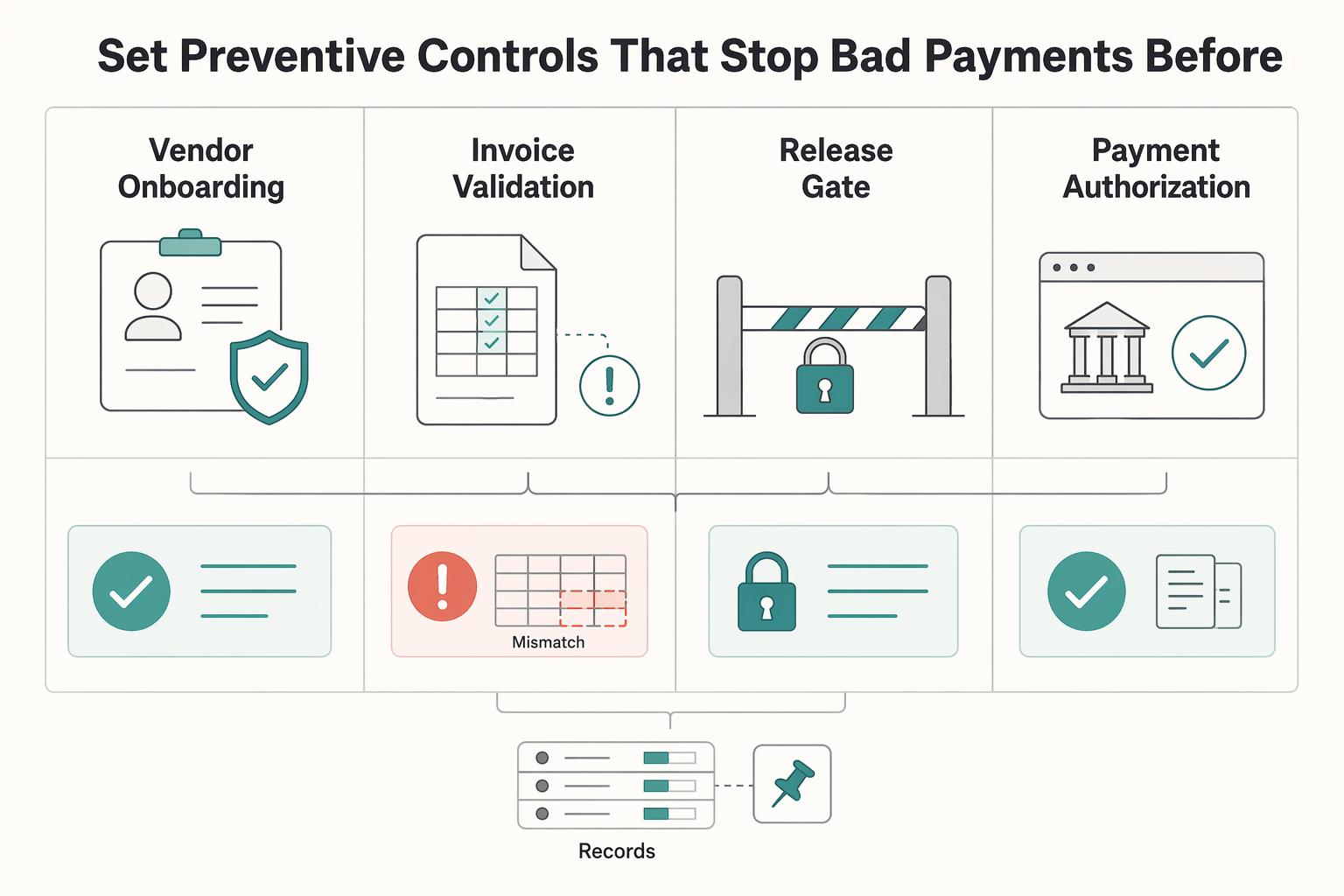
Start here: your AP control design should reduce fraudulent disbursements and payment errors without turning every payout into a bureaucratic exercise. In practice, that means clear escalation points at the moments where money can move incorrectly, not extra approvals added just to look controlled.

How Marketplace Platforms Pay Third-Party Sellers Compliantly
Generic marketplace payout advice usually skips the part that breaks in production. Paying many sellers is not just moving money out. It is deciding who gets paid, when they become eligible, what happens when a buyer disputes a payment, and how finance proves every release later. If you are working on **ecommerce reseller payouts marketplace platforms pay third-party sellers**, this guide is for the marketplace operator, not for solo freelancer banking tips.