

Quick Answer
Choose the seller-payout operating model first, then map the payer, provider and jurisdiction-specific verification and tax duties. Set release timing from settlement and dispute risk, and reconcile each provider payout to the seller ledger before scaling batches.
What compliant seller payouts require#
Generic marketplace payout advice usually skips the part that breaks in production. Paying many sellers is not just moving money out. It is deciding who gets paid, when they become eligible, what happens when a buyer disputes a payment, and how finance proves every release later. If you are working on ecommerce reseller payouts marketplace platforms pay third-party sellers, this guide is for the marketplace operator, not for solo freelancer banking tips.
-
Operator view first. A marketplace is an online intermediary connecting multiple third-party sellers and buyers, so your payment flow is already more complex than a one-party checkout. Modern payout infrastructure is built to onboard, verify, and pay recipients at scale, with some providers supporting payouts in 118+ countries. This guide assumes product, finance, ops, and engineering all have to live with the same payout decisions, support issues, and month-end reconciliation.
-
Payments shape growth, not just settlement. How a marketplace handles transactions can affect its growth trajectory, and the volume moving through these models is only getting larger. Third-party sellers are expected to capture 59% of global ecommerce sales by 2027, up from 56% in 2022. Behind the buyer's checkout sits real payment orchestration: split logic, delayed payouts, compliance checks, refunds, chargebacks, and disputes. The point here is not to help you pay sellers faster in the abstract. It is to make speed, control, and seller experience work together.
-
This article stays practical about what usually goes wrong. You should leave with three working decisions: which payout operating model fits your marketplace, which controls must happen before release, and how to reconcile money movement without creating audit gaps. That means looking at release controls where risk requires them and the reconciliation checks that catch mismatches before they become bigger failures. The standard is not whether one payout succeeds, but whether you can explain every seller payment to support, finance, and an auditor.
One risk is worth naming up front. A dispute starts when an account owner contests a payment with their bank. If your approval trail is thin or your release policy is too loose, the issue can become a cashflow problem and a reconciliation problem at the same time.
That is why the next step is setting selection criteria before provider comparison. Teams can fail not because they missed one feature checkbox, but because they chose rails before they set their control posture, compliance requirements, onboarding depth, and tolerance for engineering ownership.
For a step-by-step walkthrough, see How Platforms Evaluate Third-Party Service Providers Before Signing.
Use these selection criteria before you compare providers#
Set your non-negotiables before demos so you compare providers on launch viability, not just headline pricing.
-
Define operating context first. Decide domestic vs cross-border scope, payout frequency, seller volume profile, and whether card acceptance, split payments, or virtual accounts are in scope. Compare providers on country support, currencies, fees, and integration complexity first, then pricing.
-
Lock compliance and tax constraints up front. Specify what onboarding must capture for KYC/KYB/AML and tax documentation, including Form W-9 and Form W-8 BEN where applicable. If your model falls under TPSO reporting scope, include Form 1099-K handling in selection criteria, including the IRS threshold condition of more than $20,000 and more than 200 transactions. If you operate in EU cross-border contexts, decide whether VAT-number checks (for example via VIES) are part of your flow.
-
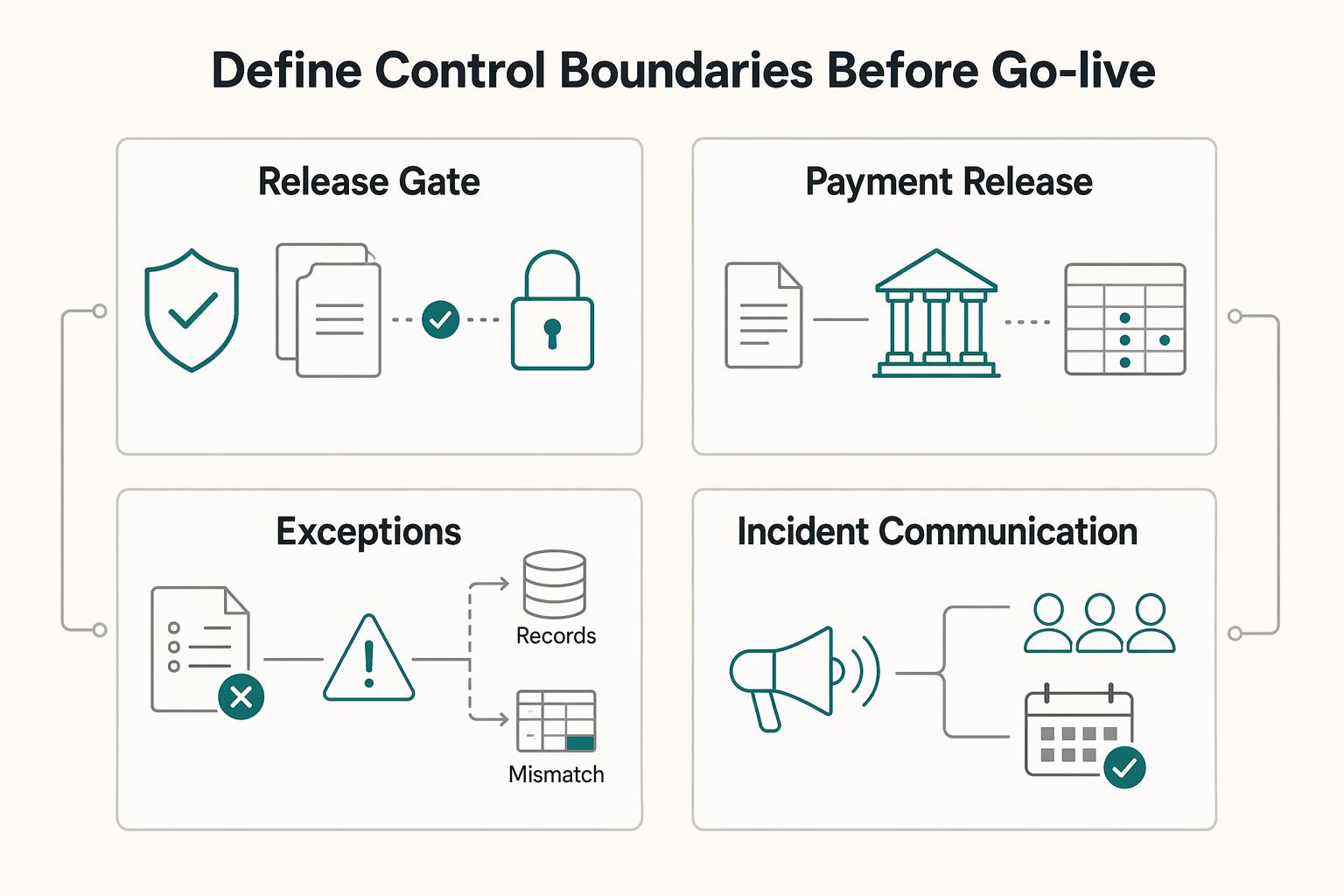
Choose control posture before speed promises. Define whether payouts release automatically or require hold/reserve rules for chargeback exposure and finance approval gates. Prioritize providers that can clearly show release rules, hold status, and approval trail, not just available balance.
-
Be explicit about integration ownership. Decide whether you want admin-led operations or engineering-owned API and webhook workflows. For Connect-style implementations, webhook endpoint handling is baseline, so confirm event models, retries, and failure-state handling before you sign.
If you're tightening controls around third-party payment risk, see Vendor Risk Assessment for Platforms: How to Score and Monitor Third-Party Payment Risk.
Compare the 5 payout operating models marketplaces actually use#
Pick the operating model first, then the provider. If you need a faster launch with lighter engineering, start with managed rails. If you need custom split logic and tighter ledger control, prioritize API-first modular infrastructure.
| Model | Best for | Key pros | Key cons | Concrete use case |
|---|---|---|---|---|
| Direct PSP marketplace setup | Teams that want onboarding, verification, and payouts in one stack | Built for third-party onboarding, verification, and payouts at scale; often includes prebuilt onboarding UIs that can speed launch | You operate inside one provider's account and event model, which can limit custom controls compared with modular builds | Early-stage creator marketplace paying domestic sellers weekly |
| Aggregator tools (for example Checkout.com, PayQuicker, Nautical Commerce, Dokan) | Teams prioritizing speed and packaged marketplace tooling | Packaged tooling can reduce build effort, but onboarding and payout capabilities depend on the products combined | Control can be fragmented across plugin/platform/payout layers; finance-specific approval and evidence workflows may be harder to enforce | WooCommerce multi-vendor store or affiliate network launching quickly |
| Modular infra | Platforms with complex funds flow, reserve rules, or commission logic | API-first control over split configuration, commission/fee deductions, and chargeback booking | Highest engineering and ops burden; webhook reliability and reconciliation discipline become your responsibility | Regulated B2B contractor network with staged releases and reserve offsets |
| Merchant-of-record arrangement | Businesses that have verified which entity is the legal seller for the specific transaction flow | The identified MoR handles the buyer payment and the transaction duties assigned by the arrangement | MoR status varies by charge flow and contract; it does not by itself solve third-party seller payouts | Marketplace assessing a seller-as-MoR, platform-as-MoR, or supported external-MoR flow |
| Hybrid migration | Existing marketplaces changing providers without a big-bang cutover | Phased onboarding, KYC collection, and data migration can reduce cutover shock | Dual-running complexity; payout history portability is not automatic; failed re-verification can block seller activation | Marketplace moving from a plugin or legacy PSP to a direct marketplace stack |
Decision rules and migration costs#
Treat lock-in as a real operating cost before you sign. Migration can include historical payment and customer data, but portability is not guaranteed for every data type, and re-verification failures can block account activation.
- If launch speed is the priority, start with managed rails: direct PSP first, or packaged tools for simpler workflows.
- If split logic and ledger precision are core requirements, choose modular API infrastructure and budget for webhook ownership plus daily reconciliation.
- If migration risk matters now, validate three items up front: payout-history exports with seller IDs and timestamps, compliance-record exports, and a tested re-verification/cutover plan with downtime assumptions.
A practical operator signal: one marketplace VP of Engineering said, "When we switched to Connect, we were able to automate our payout process while rapidly scaling our business." That is the right lens for switching decisions, but only if your team has validated data portability, re-verification paths, and cutover operations in advance.
Set payout timing policy with explicit risk and cashflow tradeoffs#
Payout timing is your risk-and-retention dial: use scheduled or conditional release as the default, and use accelerated release only where onboarding, tax, bank validation, and finance checks are already clear.
- Scheduled release
Use this when you need predictable cash control and review flow. A provider may support daily, weekly, monthly, or manual schedules, but arrival time varies by provider, country, industry, and payout method. If settlement certainty is uneven, or buyer terms delay incoming funds, tighten release policy so seller promises do not outrun available cash. Treat settlement-batch reconciliation as a release checkpoint before larger Payout Batches go out.
- Accelerated release
Use this when seller churn risk is rising and eligible flows can safely move faster. Instant payout availability and arrival time depend on the provider, destination, and account eligibility. Start by shortening cadence (for example, weekly to daily) or limit acceleration to sellers with stable history and clean account status. Practical warning: "instant payout" fails operationally when tax details are missing, onboarding is incomplete, or the payout account has not been verified.
- Conditional release with reserves and compliance gates
Use this when fraud loss, disputes, or seller-quality variance is increasing. Tie release to settlement confirmation, applicable compliance checks, and reserve rules so funds remain available for refunds and Chargeback exposure. Dispute windows vary by payment method, network, and reason, and can outlast payout release. Set reserves against the actual exposure and provider rules rather than applying one hold period to every seller.
If you need one operating rule: if seller churn is the main risk, shorten payout cadence; if fraud loss or disputes are rising, enforce staged release with reserve and compliance checks before funds leave. Keep ownership explicit across finance, operations, and support so exception handling matches your promised payout timing.
Related reading: Recurring Billing for Marketplaces: How to Charge Buyers and Pay Sellers on the Same Cycle.
Gate first payout with compliance and tax evidence, not ad hoc checks#
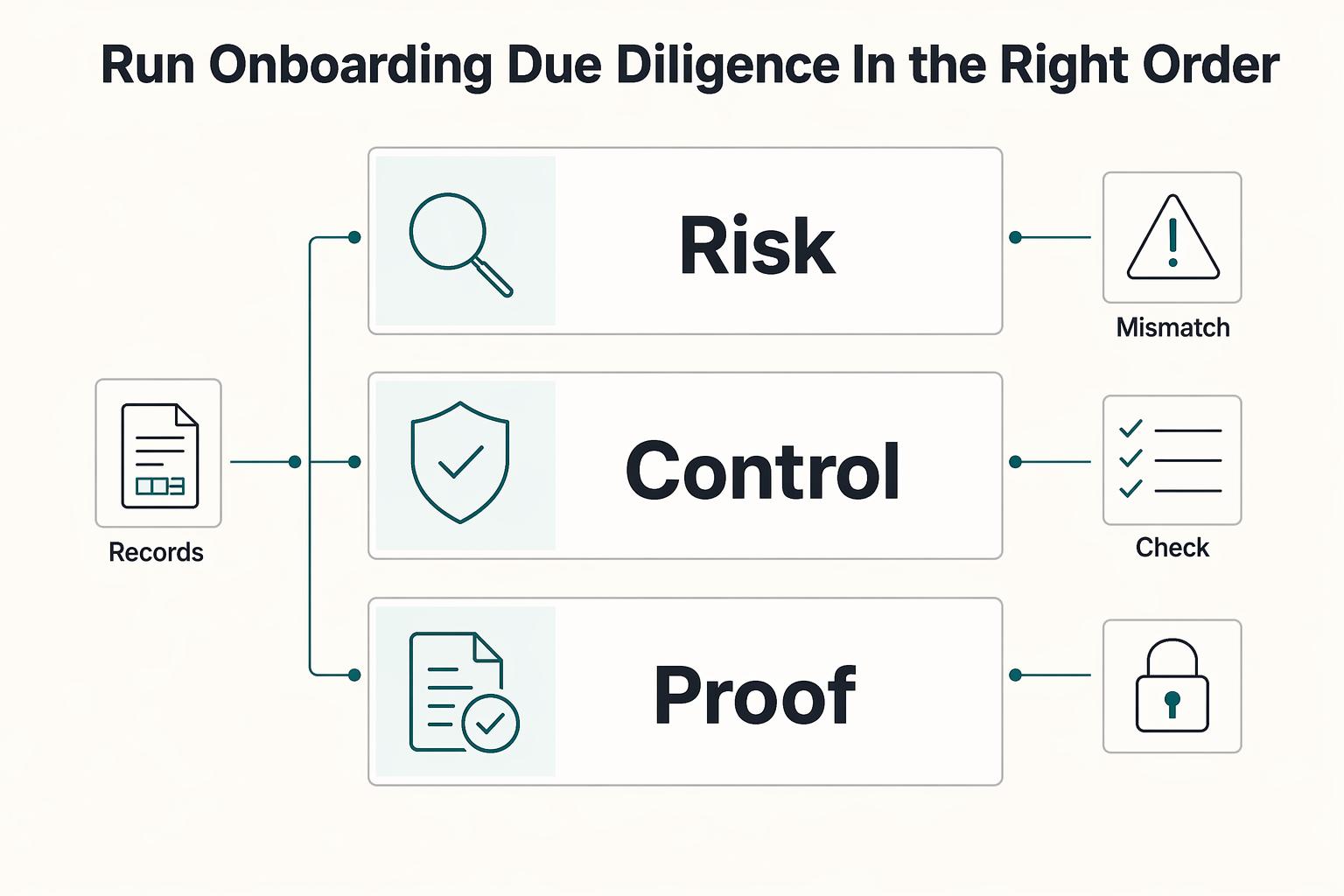
Your first payout gate should be evidence-based: do not release first payout until required verification and tax steps are complete and documented.
| Gate area | What to collect/check | Release note |
|---|---|---|
| Provider readiness | Collect each seller record and review current provider capability requirements | Show the exact incomplete requirement and owner; do not infer payout readiness from wallet balance |
| Platform screening | Record only the identity/screening decisions required for this operator and program | Log result, date, reviewer and exception approval |
| Tax documentation | Tax owner maps seller status and payment stream to appropriate W-9/W-8 or other records | Do not impose one form or reporting rule across all seller jurisdictions |
| Cross-border checks | Verify VAT ID in VIES when relevant and document corridor-specific rules | Route an uncertain tax or compliance obligation to its designated owner |
- Define the gate for your provider and program
Map the first-payout gate to the actual provider and program. For a Stripe Connect implementation, review the connected account’s current requirements and capabilities before enabling charges or payouts. Separately determine the platform’s own identity, screening and tax duties by legal role and jurisdiction; a single universal onboarding sequence does not fit every marketplace.
- Make AML and identity decisions auditable
Treat eligibility as a dated record, not a badge. Record the provider capability state and any screening decision the platform is required to make under its own program. Define who can approve exceptions and log the evidence used.
- Collect tax forms before first release
For a U.S. payer’s applicable information-return duties, collect Form W-9 where appropriate; for foreign beneficial owners, the payer or withholding agent may request a relevant W-8 form. Have the tax owner classify the seller and payment stream before imposing a form as a payout condition. Form 1099-K rules distinguish direct payment-card transactions from TPSO goods-or-services transactions; the IRS states the latter reporting threshold is more than $20,000 and more than 200 transactions.
- Apply cross-border checks before funds move
For an EU business seller where VAT registration matters to this transaction, check the stated VAT ID through VIES and retain the result. Whether VAT registration, seller reporting or a payout hold is required depends on the marketplace’s role, seller jurisdiction and transaction; route uncertain cases to the tax owner rather than importing personal foreign-account filing rules.
Set one policy for each seller and payment program. Where required verification is incomplete, show the specific provider or policy requirement, owner and next action before changing payout eligibility.
If payout timing affects your working capital, see How to Build a Float Management Strategy for Marketplace Platforms.
Build the ledger and integration path so retries do not duplicate money movement#
The control here is straightforward: keep the ledger as the system of truth, and treat retries, webhooks, and balance reads as inputs to that record, not substitutes for it.
| Control | Practice | Key detail |
|---|---|---|
| Ledger record | Treat wallet balances and dashboard amounts as derived views; if balance caching is used, reconcile it back to the ledger | When cached and ledger states briefly differ, show pending or processing in the UI |
| API initiation | Use one idempotency key, one internal payout-intent ID, and one seller/account reference per payout attempt | Follow the chosen provider's key-retention rules; also deduplicate against your durable payout intent |
| Webhook updates | Use webhook events for requested, acknowledged, paid, failed, or returned status changes | Persist the provider reference, post the ledger journal, then broadcast status |
| Batch reconciliation | Reconcile each provider payout to the transaction batch it settles and run the control at day-end | By close of day, ledger-changing transactions should map to institution-reported transactions; pause larger Payout Batches if mappings are not clean |
- Make the ledger canonical
Treat wallet balances and dashboard amounts as derived views. If you use balance caching for speed, keep it as a performance layer and reconcile it back to the ledger. When cached and ledger states briefly differ, show pending or processing in the UI instead of showing a final payout state that may still change.
- Require idempotent payout initiation over the API
Retries after network or connection failures should be safe, which is the point of idempotency. Keep one idempotency key, one internal payout-intent ID, and one seller/account reference per payout attempt so duplicate calls map back to the same intent. Check the chosen provider's key-retention rules: Stripe, for example, can prune keys after they are at least 24 hours old. Keep your own durable payout-intent record so a late retry cannot create a second movement after provider-side retention expires.
- Use webhooks for asynchronous state transitions, not as sole proof
Use webhook events to move payout status through requested, acknowledged, paid, failed, or returned as updates arrive. Keep your own durable trail by persisting the provider reference, posting the ledger journal, and then broadcasting status to ops and seller-facing surfaces. This keeps one retrievable record when payout state is disputed.
- Reconcile settlement batches back to ledger journals before scaling release volume
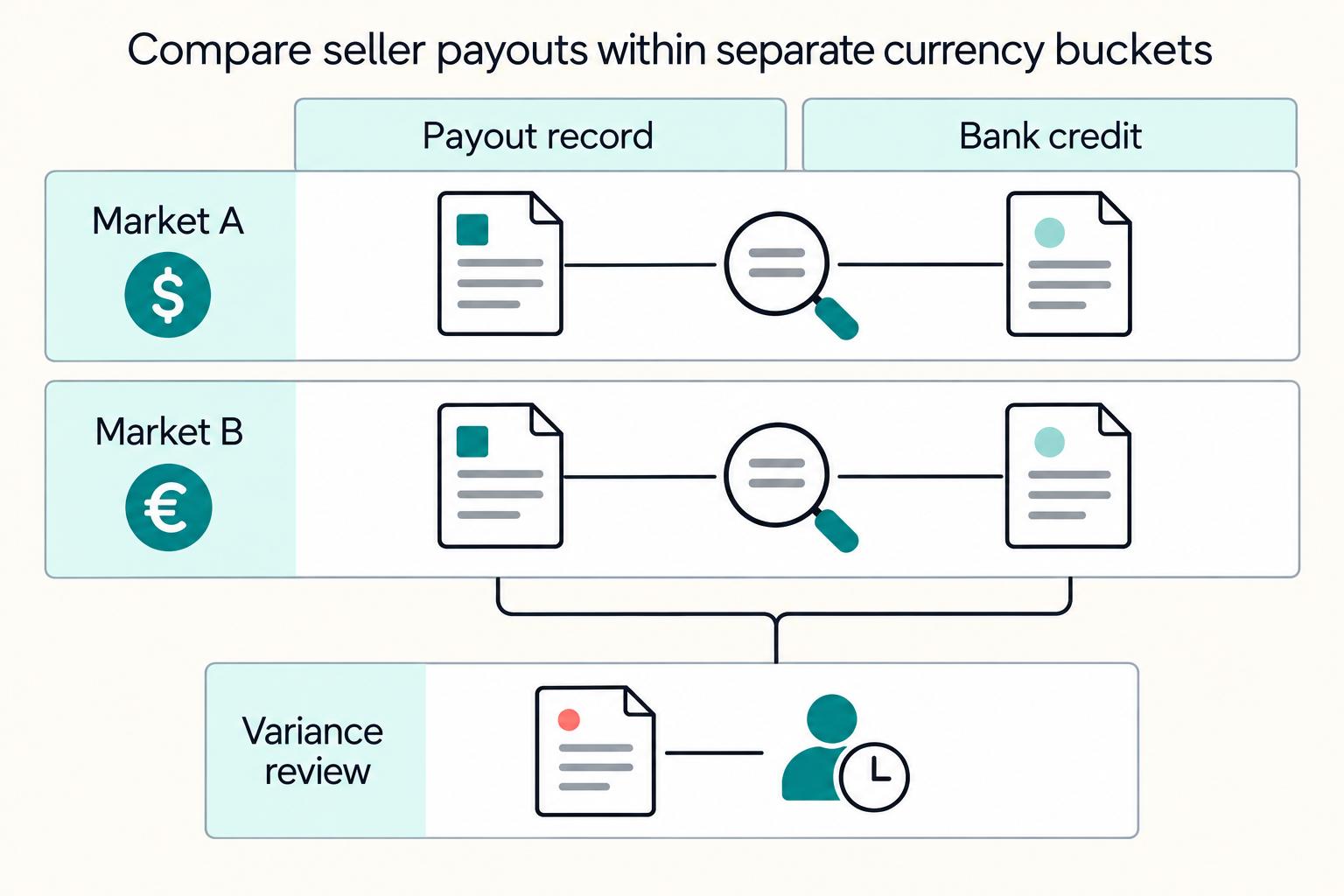
Reconcile each provider payout to the transaction batch it settles, and run that control at day-end so ledger-changing transactions map to institution-reported transactions by close of day. Before larger Payout Batches, confirm those mappings are clean. If they are not, pause and fix the mismatch before releasing more funds.
Design failure handling before scale exposes it#
Set your failure policy before volume does it for you: every payout exception needs a named class, a current owner, a next action, and a clear retry or escalation rule.
- Rejected destination details
Treat bank-detail mismatch as a first-line failure class, not a generic "transfer failed" bucket. Do not auto-retry unchanged bank details; route to manual review, require updated seller banking details, and keep the original payout intent ID attached so the reissue is traceable. Escalate unresolved returns under the provider's stated return window and your incident policy.
- Seller-specific review, Virtual Accounts exceptions, and FX repricing
Not every payout exception is a payment-rail outage. A seller can be pushed back into review, and an inbound funding transfer can remain unmatched until the provider or finance team reconciles it. Classify whether the issue is seller-specific or shared, then scope any freeze accordingly. For stale FX quotes, mark the payout as reprice-required and require a fresh quote or human approval before release.
- Webhook delivery failures and provider outages
Handle transient async failures with bounded retries and queue-based recovery, following the provider's retry guidance and the failure class. Never retry a failed payout blindly when the provider outcome is unknown; reconcile the original intent first. Map incidents to graded severities (for example, degraded performance, partial outage, major outage), and tie each severity to a processing decision, an escalation owner, and a policy-defined seller communication target.
- Post-payout losses and negative balance recovery
A Chargeback or return can hit after payout release, so define recovery order in advance. If supported, apply reserve offsets first, then recover from future earnings or debit seller balances where permitted; otherwise, hold future payouts until balances are cured. For each Third-Party Seller, keep a written negative-balance policy with recovery order and approval ownership.
One control makes this operational: publish a payout incident taxonomy. At minimum, include failure class, seller ID, payout intent ID, provider reference, retry eligibility, current owner, severity, and seller-message status.
Related: Accounts Payable Outsourcing for Platforms: When and How to Hand Off Your Payables to a Third Party.
Execute a 90-day rollout that finance and engineering can both sign off#
Run this as a three-phase rollout: prove one payout lane first, then expand in controlled segments, then add advanced modules only where support is confirmed. Do not launch every seller type, country, and payout path at once.
- Phase 1: one lane, one geography, hard compliance gate
Start with a limited country and entity profile, since verification requirements vary by legal entity type and operating country. Validate account creation, identity verification, and payouts in sandbox before going live (including parallel tracks if needed). Move sellers to live only after the verification, screening and tax prerequisites for that program are met, provider approval is confirmed, and your daily ledger-to-provider reconciliation cadence is producing explainable results. Treat missing approval as a hard blocker, since some partner setups return 401 Unauthorized HTTP status code until approval is in place.
- Phase 2: segmented Payout Batches with explicit exception rules
Expand by seller segment, risk tier, or payout corridor, not by enabling everyone at once. Finance should reconcile each payout as a settlement batch, and engineering should retain provider references so breaks are traceable. Add policy-based exceptions for high-risk sellers and high-value disbursements. Check the selected provider's amount limits and approval controls for each payout method before setting a review threshold.
- Phase 3: advanced modules only where corridor support is proven
Add Virtual Accounts funding paths or a Merchant of Record arrangement only where the provider and transaction model support them. Cross-border support is corridor-specific, not a single global switch. For virtual-account transfers, include identifiers the provider requires to match funds. Confirm who is MoR for each charge flow: a seller, the platform, or a supported external entity can hold that role, with duties set by the actual arrangement. MoR status alone does not establish how third-party sellers are paid.
Exit each phase only when payout success trends are improving, exception backlog is controlled, reconciliation break patterns are understood, and audit artifacts are complete enough for finance to independently recheck seller decisions.
Conclusion#
- Choose one payout model on purpose
The biggest win is not finding a provider with the longest feature list. It is deciding, up front, how your marketplace will onboard sellers, verify them, hold funds, approve release, and recover from exceptions. Provider choice changes your UX, cost structure, revenue options, and scalability, so treat it as an operating decision, not a checkout add-on.
The practical rule is simple: pick the model that matches your current control posture, then stop mixing patterns in production unless you have a clear migration plan. If your team still handles edge cases manually, keep the scope narrow. Also document who can approve overrides, because provider migration and payout cutover are not risk free once seller history and verification data are spread across tools.
- Make the Ledger and reconciliation the release gate
Teams that stay out of trouble treat the Ledger as the central source of truth and everything else as derived status. A wallet balance, seller dashboard, or provider portal can help with visibility, but none of them should outrank your ledger entries when finance is deciding whether a payout batch is ready to go.
The checkpoint that matters most is reconciliation before larger payout batches are released. If you use automatic payouts, pull the payout reconciliation report by settlement batch and tie it back to ledger journals. If you use manual payouts, the responsibility is yours to reconcile each payout against transaction history. A strong implementation also listens for webhook events such as payout.paid or payout.reconciliation_completed and advances internal status from those signals. If that sequence is loose, status mismatches and duplicate money movement risk increase.
- Scale speed only after evidence is consistently clean
Faster seller access to funds can help retention where the provider and destination support it. That speed is useful only after your release controls are reliable. It does not replace onboarding, verification, or reconciliation discipline.
Your release evidence should be complete before first release. It should include the applicable onboarding and verification status, payout records, reconciliation outputs tied to transaction history, and a clear trail for exception approvals. Check pending requirements against their provider deadlines and your release policy; available funds alone do not establish eligibility. Map your current flow against those checkpoints, find the highest-risk gap, and close it before you add payout volume or promise faster access to sellers.
Frequently Asked Questions
How do marketplace platforms pay third-party sellers compliantly?
Choose the payout model, then identify the provider requirements and the platform's own identity, screening and tax duties for each seller and payment stream. Complete the prerequisites that apply before enabling release; the capture order can differ by program. Confirm the destination account and record payout eligibility separately from available balance.
What minimum controls should exist before the first seller payout goes live?
Before the first payout, document the applicable verification and tax prerequisites, destination-account checks, approval owner and ledger-to-provider reconciliation process. Check the provider's current requirements and capability state against your release policy. Some information is due later, so a pending field alone does not establish a payout block; an unmet release prerequisite or disabled payout capability does.
Who should own payout operations across product, engineering, finance, and compliance?
No single team should own it alone. Payout operations are cross-functional, with finance, operations, and support working together, and product, engineering, and compliance supporting policy, integration, and escalation decisions. The useful rule is one accountable owner per decision, with shared operating ownership across functions.
What usually causes payout delays or failures, and which fixes should come first?
Start with the provider's failure code and payout status, then check the destination details, account requirements or available balance indicated by that result. For a bank-detail error, correct the details before retrying. Preserve the provider reference and ledger state, and reconcile an unknown outcome before initiating another payment.
How should a marketplace choose between faster payouts and lower risk exposure?
If seller retention is the bigger risk, shorten payout timing only for sellers with complete verification. If compliance exceptions or payment-risk signals are rising, slow release and add review before money leaves your control. Also expect the first payout to take longer in some countries and higher-risk industries, so do not promise speed you cannot consistently meet.
What key unknowns should we resolve before selecting a payout provider?
Clarify early: your countries and entity types, whether you need marketplace-style seller onboarding, your tax-document obligations, who handles compliance updates, and which payout corridors really matter. Ask how the provider handles changing KYC requirements over time, because those rules do change with regulators, card networks, and financial institutions. If the answer on returns, holds, and re-verification is vague, keep looking.
Try a related tool
Researched and edited by the Gruv editorial team. Gruv builds cross-border billing, payouts, and finance-operations software for global businesses.
Sources
- docs.stripe.com/connect/handle-verification-updatestrusted
- docs.stripe.com/reports/payout-reconciliationtrusted
- ec.europa.eu/taxation_customs/viestrusted
- irs.gov/businesses/understanding-your-form-1099-ktrusted
- irs.gov/forms-pubs/about-form-w-9trusted
- stripe.com/connect/marketplacestrusted
- stripe.com/resources/more/merchant-of-recordtrusted
Educational content only. Not legal, tax, or financial advice.
Related Posts
Vendor Risk Assessment for Platforms: How to Score and Monitor Third-Party Payment Risk
Use this guide to build a practical, defensible approach to scoring and monitoring payment-adjacent vendor risk, with clear escalation points and named ownership. It is for compliance, legal, finance, and risk teams that need decisions and evidence that will hold up under scrutiny.
Accounts Payable Outsourcing for Platforms When and How to Hand Off Your Payables to a Third Party
Start with the real choice, not the buzzword. Accounts Payable outsourcing means shifting AP work from your in-house team to a specialized external provider. In practice, your decision is usually narrower: hand off execution now, wait until the process is ready, or keep it internal and automate instead.
How International Sellers Should Choose Amazon Marketplace Payout Paths
People often treat international Amazon seller payouts like a settings page. That's the wrong starting point. Your payout setup is an operating choice that shapes who controls FX, how quickly you can launch, and where issues show up after you go live.