
Quick Answer
Define the payment and tax workflows, destinations and volumes you need to support. Send each shortlisted vendor the same RFP and evidence requests, apply launch-critical disqualifiers, then score eligible options. Test retry, reconciliation and exception paths before launch, and record contractual responsibilities and monitoring owners.
What to evaluate before signing#
Start with written requirements for the work the provider will perform. Feature lists and demos can help identify options, but they rarely show how held funds, failed payouts or mismatched records are handled. Ask the teams that will operate the service to define those scenarios before comparing vendors.
A payment provider affects daily operations, access to transaction evidence and the response when money movement fails. If the team has not agreed what the provider must do, a ranked shortlist will hide unresolved requirements.
Align the people who will live with the decision. Procurement often owns vendor selection, but the decision is rarely procurement-only. Founders, product, engineering, finance, and ops all see different failure modes, so you need those perspectives before vendor outreach, not after it. A defined process reduces risk because it aligns internal teams on requirements, budget, and evaluation criteria before you engage the market.
A useful checkpoint is whether your team can answer three questions in writing without calling a vendor: what problem are we solving, what constraints matter most, and who decides on tradeoffs? If those answers are still vague, demos will create more confusion than clarity. One common failure mode is a product-led shortlist that later stalls because key reviewers were never part of the initial screen.
Record the requirements, weighted criteria, reasons for rejection and evidence behind the final choice. The decision should explain both why the vendor fits and which unresolved gaps would prevent signing or launch.
Set the scope before you evaluate vendors#
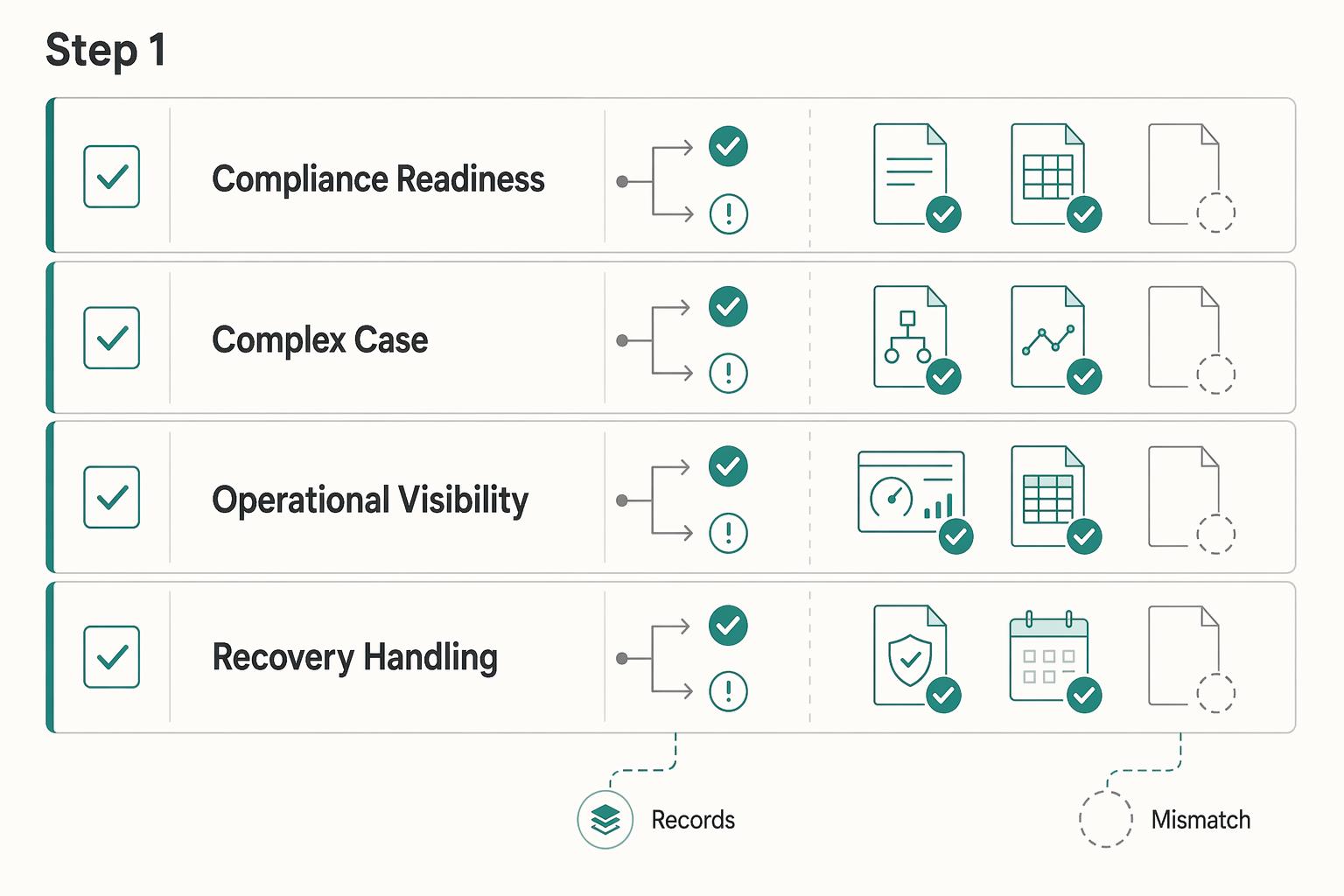
Step 1. Use a one-page scope check before outreach#
Set scope before outreach: tools support the process, but they do not replace due diligence. source-to-pay software and vendor selection software can standardize intake, approvals, and scoring, while risk review still has to cover money movement, compliance exposure, and operational failure paths. If your provider touches merchant processing activity, keep that evaluation separate from card-issuing capabilities that are not part of your buying decision.
Use a one-page scope check: what you are buying, what it must do, and what is out of scope. If a feature is outside that scope, do not score it as a bonus.
Step 2. Define included capabilities and use the same labels#
Define included capabilities up front and use the same labels across RFP, scorecard, and legal review. For many platform decisions, that means explicitly marking Merchant of Record (MoR), Virtual Accounts, Payouts, and tax/compliance workflows as in scope now, later, or excluded.
Keep comparisons objective by scoring every shortlisted vendor against the same included capabilities only. Do not add "nice-to-have" items during demos.
Step 3. Lock the risk boundary in writing#
Document the flows, legal entities and jurisdictions in scope, together with the required identity, business-verification and AML responsibilities. Identify the requirements that apply to each party; a named regulator or certification is useful only when its scope matches the proposed service. Resolve launch-critical uncertainty before treating the vendor as eligible.
End with explicit exclusions: flows, geographies, and features you are not evaluating. That prevents the process from drifting into a feature contest.
Prepare the evaluation packet before outreach#
Freeze one evaluation packet before the first intro call so every vendor is scored against the same assumptions and evidence.
| Packet item | Include or request | Checkpoint |
|---|---|---|
| RFP | Use-case volumes, target geographies, settlement expectations, and key exception paths | Every response should map to the same scenarios |
| Risk evidence | Vendor risk management controls, incident handling, audit trails, and third-party cyber risk posture | Review how incidents are identified, escalated, communicated, and closed |
| Legal, compliance, and tax artifacts | Policy summaries, KYC/KYB approach, AML gating logic, and VAT validation support where relevant | Ask what data the vendor captures, what outputs it can generate or export, and what remains manual |
| Scoring ownership | Engineering owns integration and auditability; finance and ops own settlement, exception handling, and tax-document output; compliance owns risk controls and gating logic | Decision ownership is clear for each scored area |
Step 1. Send one RFP version to every vendor#
Send one Request for Proposal (RFP) version to every vendor. Include your use-case volumes, target geographies, settlement expectations, and key exception paths (like returns, held funds, delayed payouts, manual investigations, and status mismatches between provider and internal records).
Define scenarios clearly enough that vendors must answer your real operating model, not a demo narrative. The checkpoint is consistency: every response should map to the same scenarios, with no custom add-ons changing scope mid-comparison.
Step 2. Ask for artifacts covering controls and incident handling#
Require evidence, not assurances. Ask for artifacts covering vendor risk management controls, incident handling, audit trails, and third-party cyber risk posture.
Focus on how the provider operates when something fails. You should be able to review how incidents are identified, escalated, communicated, and closed, and what audit evidence exists for disputed transaction or payout states.
Step 3. Define legal, compliance, and tax artifacts before demos begin#
Define legal, compliance, and tax artifacts before demos begin. Request policy summaries and a clear description of KYC/KYB approach, AML gating logic, and VAT validation support where relevant.
Bring finance and tax into packet design early. Where the payment model requires W-8 or W-9 documentation and information-return reporting, ask how forms are collected, validated, updated and retained, which reporting outputs are supported, and who remains responsible for withholding and filing. A payee’s personal FEIE or FBAR position is a separate question, rather than a general platform payout requirement.
Test a tax-document exception as part of the evaluation: for example, a payee changes its documented status or supplies an incomplete form. Ask the vendor to show the form history, exception owner and resulting reporting or withholding handoff. Confirm which decisions its product supports and which your tax team must make.
Step 4. Assign scoring owners before demos start#
Assign scoring owners before demos start. Engineering should own integration and auditability, finance and ops should own settlement and exception handling plus tax-document output, and compliance should own risk controls and gating logic.
The checkpoint is clear decision ownership for each scored area. If ownership is unclear, gaps usually surface late during contract review.
Build a weighted scorecard with hard go or no-go rules#
Build the scorecard before demos, and use it to filter out unacceptable risk, not just rank vendors. Weighted scoring gives you a defensible way to tier options, but only after you define what is an automatic no-go.
Step 1. Set weighted dimensions around launch risk#
Set weighted dimensions around launch risk, then score every vendor from the same evidence pack.
| Dimension | What you are scoring | Sample weight | Minimum evidence to score |
|---|---|---|---|
| Compliance readiness | Control clarity, approval/block logic, exception handling | 35% | Written controls, real decision paths, escalation owners |
| Integration complexity | API/event model fit, implementation burden, reliability behavior | 25% | Technical docs, sample payloads, clear state transitions |
| Operational visibility | Status traceability, exports, reconciliation support, auditability | 20% | Ops views, export examples, matchable reference fields |
| Recovery handling | Disputes, returns, held-funds investigations, remediation flow | 20% | Exception-path process docs, ownership, closure evidence |
Use the weights as a starting point and adjust to your launch constraints. If a vendor can only be scored from demo narration, leave the score blank until artifacts are provided.
Step 2. Define hard fail rules before totaling points#
Define hard fail rules before totaling points. A weighted score should help you choose among acceptable vendors, not justify a weak control posture.
Use no-go rules like these:
- Reject a launch-critical provider that cannot supply proportionate evidence for the required due diligence, monitoring, remediation and exit arrangements.
- Fail vendors that cannot provide enough operational transparency for your team to reconstruct transaction and payout states when issues occur.
- Fail vendors that cannot walk through dispute, return, or held-funds recovery with clear ownership and inspectable evidence.
- Fail vendors that rely on one-time review posture when your model requires continuous oversight.
This matters because third-party risk can include cyber threats, data breaches, regulatory violations, and financial instability.
Step 3. Set pass thresholds and write tradeoff rules in advance#
Set pass thresholds for launch-critical capabilities, then write tradeoff rules in advance. If a vendor has broader coverage but weaker controls, require approved compensating controls with named owners or reject the option.
End with a clear decision bucket for each provider: pass, pass with compensating controls, or fail. If evidence is missing, record it as a dated follow-up item instead of scoring by assumption.
Run due diligence in a fixed order that exposes risk early#
Use a fixed stage-gate sequence to surface high-impact risk before your team spends cycles on commercials: risk and compliance first, architecture second, operations third, finance fourth, then negotiation. This is an operating choice, not a regulatory mandate, and it helps you rule out weak options earlier.
| Stage | Focus | Evidence |
|---|---|---|
| Risk and compliance | KYC, KYB, AML, incident handling, and TPRM evidence | Check due diligence/onboarding, risk assessment, remediation, continuous monitoring, and offboarding |
| Architecture | Behavior under failure and retry conditions | Review sample payloads, state-transition documentation, error-handling notes, and one replay walkthrough |
| Operations | Held funds, returns, payout failures, and investigations for unmatched deposits | Confirm who owns each case type, what data your team can access directly, and how closure is documented |
| Finance | Exports and audit evidence for reconciliation; tax-document handling if in scope | Check stable identifiers, status fields, timestamps, traceability into your internal ledger, and handling for W-8, W-9, and Form 1099 data |
| Negotiation | Move forward only after written checkpoint sign-off | If evidence is incomplete, log the gap with an owner and date and stop there |
Start with risk and compliance evidence. Review the identity, business-verification and AML responsibilities relevant to the service, together with incident response and third-party dependencies. Cover planning, due diligence and selection, contract terms, ongoing monitoring and termination. The US agencies’ 2023 third-party guidance uses that lifecycle for banking organizations; it is a useful planning reference, not a blanket regulatory requirement for every software platform.
Ask for written policy summaries, escalation paths, and named exception owners. Then check consistency across the Request for Proposal (RFP), demo, and follow-up documents before moving forward.
Step 2. Validate architecture before commercial terms. Confirm technical behavior under failure and retry conditions before pricing discussions pull focus. For your implementation, verify idempotent behavior across retries, webhooks, provider references, and ledger reconciliation paths. If the same event can create duplicate postings or mismatched states, that is a launch risk.
Ask for sample payloads, state-transition documentation, error-handling notes, and one replay walkthrough. Require evidence that repeated delivery does not create duplicate payout or status outcomes.
Step 3. Test real exception handling with operations. Run awkward scenarios, not just the happy path: held funds, returns, payout failures, and investigations for unmatched deposits. The goal is to confirm ownership, evidence quality, and closure discipline before go-live.
Ask who owns each case type, what data your team can access directly, and how closure is documented. If the vendor can only describe support escalation in general terms, pause progression.
Step 4. Confirm finance evidence, then require sign-off before negotiation. Before contract redlines, confirm exports and audit evidence are usable for reconciliation. For Payouts, check stable identifiers, status fields, timestamps, and traceability into your internal ledger. If tax-document handling is in scope, review how W-8, W-9, and Form 1099 data is collected, updated, exported, and retained.
Require written checkpoint sign-off at each stage before moving to the next. If evidence is incomplete, log the gap with an owner and date and stop there.
Compare integration and operating model fit, not just feature breadth#
Choose the operating model your team can govern under the legal authorities that apply to you, not the vendor with the longest feature list.
Step 1. Map responsibility before comparing bundled and modular designs#
Start by mapping responsibility before comparing bundled and modular designs. If you are evaluating a bundled MoR path versus a setup using Virtual Accounts and Payouts, document who owns each obligation when money moves, exceptions occur, and evidence is requested.
Build a responsibility matrix in the RFP and draft contract. For each payment, tax-document and exception workflow, identify the legal entity responsible, the vendor’s contracted role, the evidence it will provide and your team’s retained work. A bundled integration does not by itself establish Merchant of Record status or transfer every obligation.
Step 2. Compare integration fit using operating evidence#
Compare integration fit using operating evidence, not API marketing. Ask for concrete artifacts your teams can review, then score clarity and traceability across implementation and operations.
Use one practical checkpoint: can your team trace a single event consistently from provider status to internal records and finance outputs without guesswork. If that trace is unclear, treat it as unresolved operating risk regardless of feature breadth.
Step 3. Make the operating-model decision explicit in your memo#
Make the operating-model decision explicit in your memo and tie it to ownership and governing authority. State the burden you are accepting, the evidence reviewed, and which rule set controlled the decision.
Outsourcing a workflow changes who performs the work, but responsibility still follows the applicable law, payment model and contract. Review that allocation before approving the operating model.
Decide what to automate now and what to keep manual#
After you choose the operating model, split work into two lanes: automate repeatable evidence handling, and keep uncertainty-based decisions with human reviewers.
Step 1. Automate repetitive collection and tracking first#
Automate repetitive collection and tracking first. Start with document intake, control attestations, renewal reminders, and a baseline third-party risk management score based on objective fields. Vendor management software and vendor management systems can help by centralizing vendor performance, payments, and compliance tracking, and some tools support automated risk assessment and compliance monitoring.
A practical first pass:
- required document intake with owner assignment and due dates
- attestation collection with clear current or expired status
- contract and control renewal reminders
- baseline scoring from simple fields such as document completeness, policy freshness, and declared service scope
Success is not that reminders were sent. Success is that missing or expired evidence is flagged, routed to an owner, and does not appear complete in review.
Step 2. Keep judgment-heavy reviews manual when facts are messy#
Keep judgment-heavy reviews manual when facts are messy or the compliance path is unclear. Use a simple rule: automate for consistency, escalate for uncertainty.
Automated checks can flag missing policies or renewals. Keep a person accountable for interpreting ambiguous evidence and accepting material residual risk, with a written reason and follow-up action.
For manual review, require a clear evidence pack: raw submission, tool-flagged exceptions, relevant incident context, and a short written disposition.
Step 3. Define re-evaluation triggers before launch#
Define re-evaluation triggers before launch so reviews reopen when risk changes, not only on calendar dates. Typical triggers include incidents, product expansion, service-scope changes, and shifts in third-party cyber risk posture.
Define which incidents, service changes and new jurisdictions trigger reassessment, who owns the review and what evidence needs refreshing. Use a recurring cadence suited to the relationship’s risk so a document reminder does not substitute for an operational review.
Fix common vendor selection mistakes before they become incidents#
These mistakes are predictable, and they usually start before contract signature. Treat selection as evidence review plus ongoing ownership, not a demo contest.
Step 1. Do not treat a polished demo as proof of readiness#
Do not treat a polished demo as proof of readiness. Use your vendor selection matrix to require evidence for normal operations and exception handling before approval.
Your checkpoint is simple: can your team trace how a real exception is handled and resolved in practice? A common failure mode is a tool that looks complete in a walkthrough but breaks when edge-case workflows appear.
Step 2. Do not rely on procurement records as your risk gate#
Do not rely on procurement records as your risk gate. source-to-pay software can organize purchasing data, but it should not replace dedicated due diligence and vendor risk management review.
If a vendor accesses your systems or handles sensitive data, assess those actual access paths and controls. A security rating can supply one signal; request the evidence and remediation process needed for the risks in your service.
Step 3. Do not ignore remediation and exception workflows#
Do not ignore remediation and exception workflows. Ask how risk findings are triaged, assigned, and tracked to closure, not just how they are scored.
The red flag is hand-waving. If the answer stops at "we monitor continuously," ask what internal assessments are automated, what external signals are monitored, and how follow-up actions are documented.
Step 4. Assign post-launch ownership before go-live#
Assign post-launch ownership before go-live. Continuous monitoring is part of vendor selection, not a later add-on.
Name cross-functional owners and set a recurring third-party control review cadence with a defined follow-up path for issues found. If nobody owns post-contract monitoring, problems surface late and escalation starts after the incident.
Record the decision and launch conditions#
Use the final decision record to distinguish signing conditions from launch conditions. Resolve critical gaps before the relevant approval; record any accepted noncritical exception with an owner and date. Tie approval to contract terms, sample outputs or tests rather than the presence of a dashboard.
| Launch check | Confirm | Verification |
|---|---|---|
| Scope and exclusions | Plain-language boundary for MoR, Virtual Accounts, and Payouts from the final proposal and contract | Internal summary, commercial terms, and solution description all match |
| Control ownership | Coverage and ownership for KYC, KYB, AML, VAT validation, and tax-document handling | Do not accept generic supported claims without a policy summary, process detail, sample output, or clear handoff |
| Weighted scorecard | Named owners across engineering, finance/ops, and compliance; record tradeoffs | If you choose a lower-scoring option, require written sign-off and a dated compensating action |
| Implementation path | Webhook tests, idempotent retries, and ledger reconciliation using realistic failure cases | Treat missing event-to-ledger traceability as a no-go |
| Post-launch monitoring | Owners and dates for vendor risk management, incident review, and periodic reassessment | Calendar, escalation path, and evidence repository are all in place |
Frequently Asked Questions
What is the difference between source-to-pay tooling and vendor selection due diligence?
source-to-pay software helps manage purchasing workflows, approvals, and vendor records. Vendor selection due diligence is the broader evaluation work used to decide fit against your requirements, budget, weighted criteria, and risk expectations, then monitor performance after contract.
What should platform teams evaluate first in a third-party provider?
Start by defining requirements, budget, and evaluation criteria before deep vendor engagement. In many teams, this includes risk and compliance expectations early so disqualifiers surface before detailed proposal comparison and commercial negotiation.
When should we automate vendor assessments versus keep them manual?
Automate repeatable intake tasks such as document collection, baseline scoring, and renewal tracking. Keep manual review for ambiguous or high-impact cases and for final judgment calls. Automation should support the process, not replace third-party risk and compliance accountability.
How do we standardize assessments across compliance, security, and operational risk categories?
Use one vendor selection matrix with weighted criteria, named owners, and a shared evidence pack. That gives you objective side-by-side comparison while still leaving room for qualitative factors like communication quality and responsiveness during review. Standardization breaks when each team asks different questions in different formats, so lock the template before outreach.
What are the most useful go or no-go decision rules for payment and payout vendors?
Make your go/no-go rules concrete and tied to your weighted criteria. Typical no-go triggers include failure to meet critical requirements, weak risk/compliance evidence, or unclear service commitments in contract terms. Treat unresolved critical gaps as launch blockers, not post-signature cleanup.
How often should we re-evaluate a vendor after onboarding?
Use a recurring review cadence proportionate to the service’s risk, and reopen the assessment after incidents or meaningful scope changes. Assign owners and a written follow-up path; continuous automated signals can supplement that review where they are useful.
Which documents should finance, engineering, and compliance each require before approval?
Use a shared evidence checklist aligned to your selection criteria. Finance typically confirms commercial terms and reporting expectations, engineering validates integration and service-fit details, and compliance verifies control, risk, and monitoring evidence needed for approval and ongoing oversight.
Researched and edited by the Gruv editorial team. Gruv builds cross-border billing, payouts, and finance-operations software for global businesses.
Sources
Educational content only. Not legal, tax, or financial advice.
Related Posts

The Freelance Payment Penalty: A Modeled Audit of Platform Fees, FX Spreads, and Payout Delays
The money rarely disappears through a single, easy-to-spot fee. The real loss is stacked. A marketplace takes its commission, a processor adds a charge for international cards, a bank or payment company converts the currency at a spread, a platform holds the funds before release, and a wire sheds a little to intermediaries on the way in. Each layer looks defensible on its own, but the worker feels the combined result as a smaller deposit and a later payday.
How to Respond to a Subpoena for Business Records
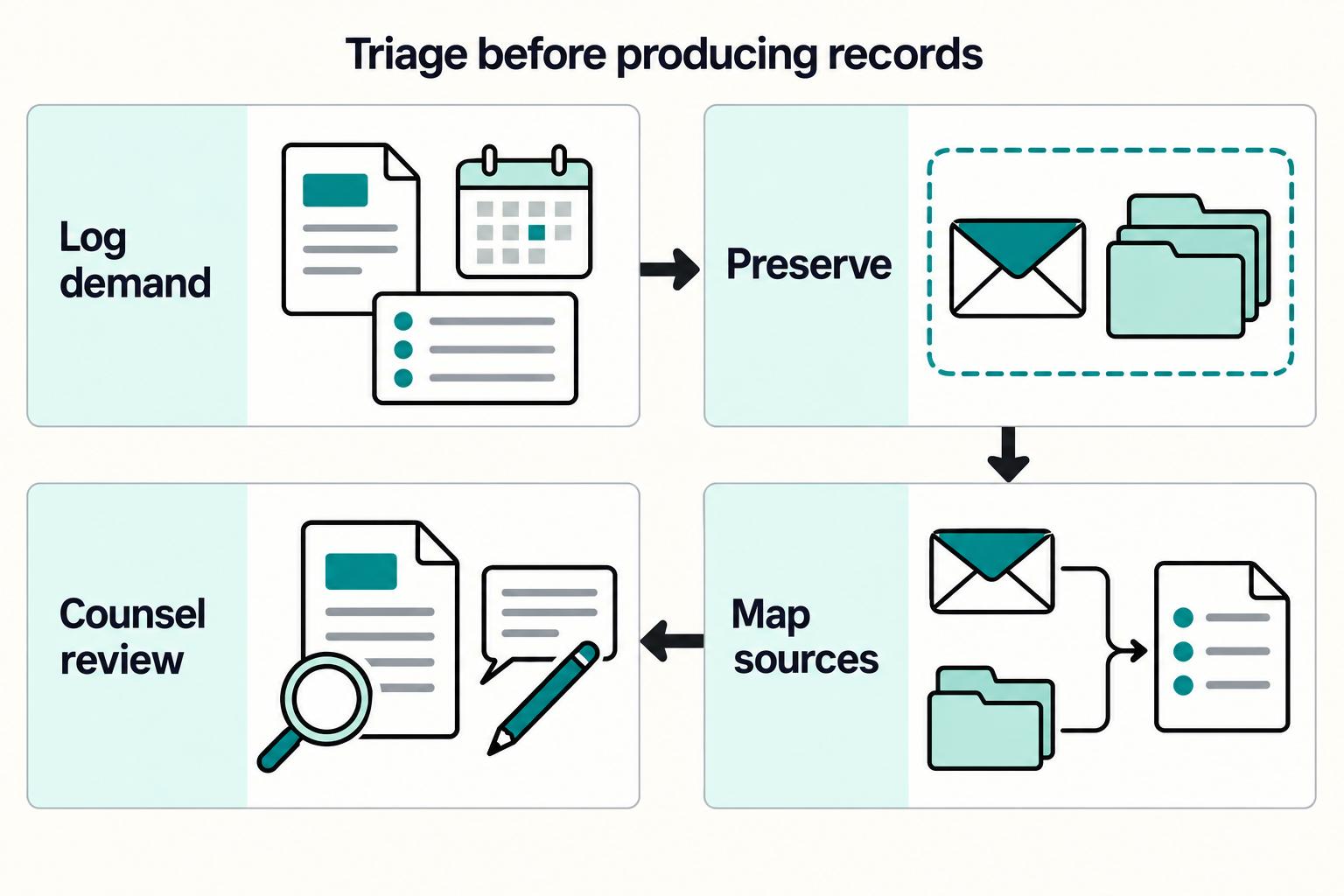
Move fast, but do not produce records on instinct. If you need to **respond to a subpoena for business records**, your immediate job is to control deadlines, preserve records, and make any later production defensible.
A US Expat's Guide to Investing in UCITS ETFs to Avoid PFIC Issues
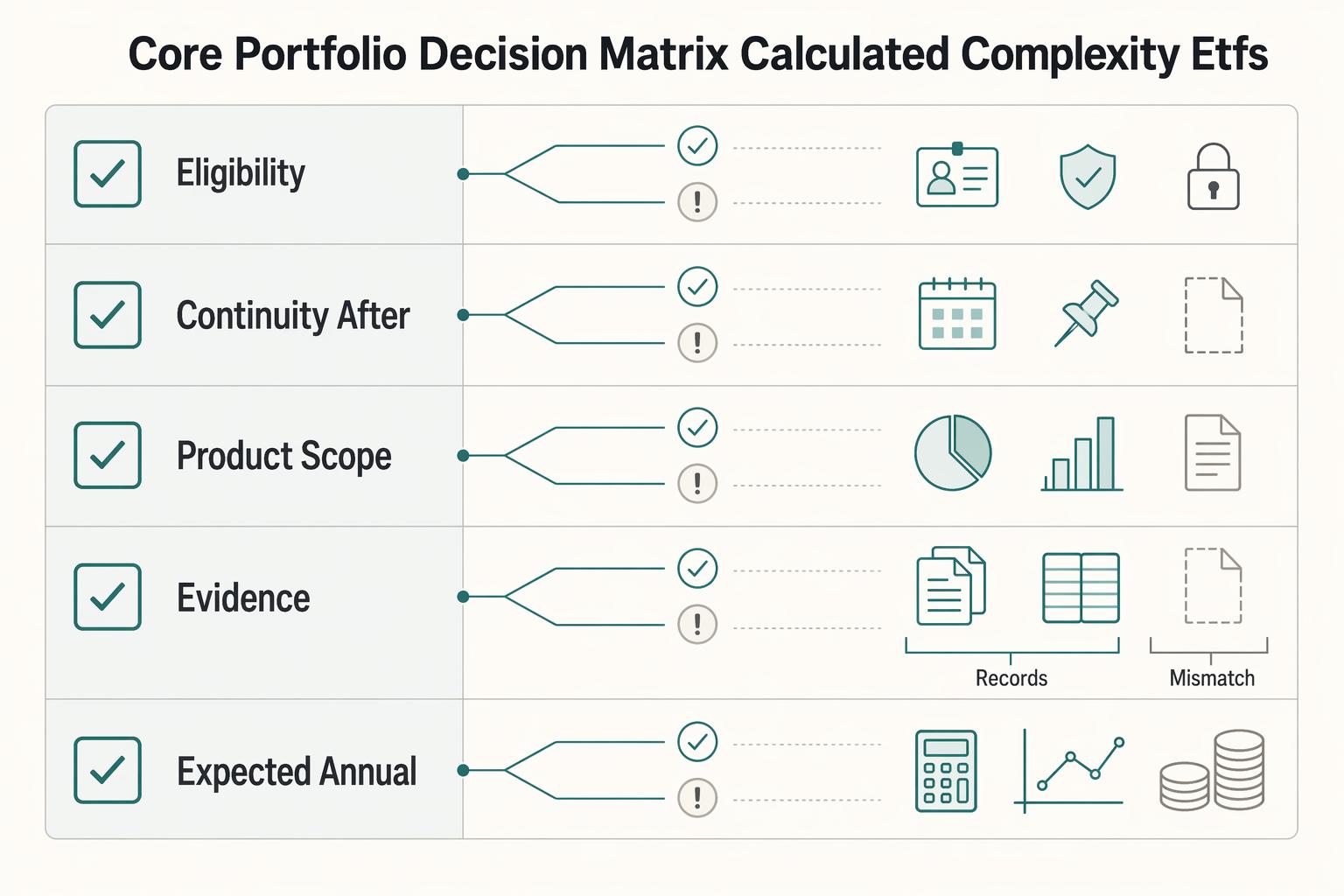
The real problem is a two-system conflict. U.S. tax treatment can punish the wrong fund choice, while local product-access constraints can block the funds you want to buy in the first place. For **us expat ucits etfs**, the practical question is not "Which product is best?" It is "What can I access, report, and keep doing every year without guessing?" Use this four-part filter before any trade: