
Quick Answer
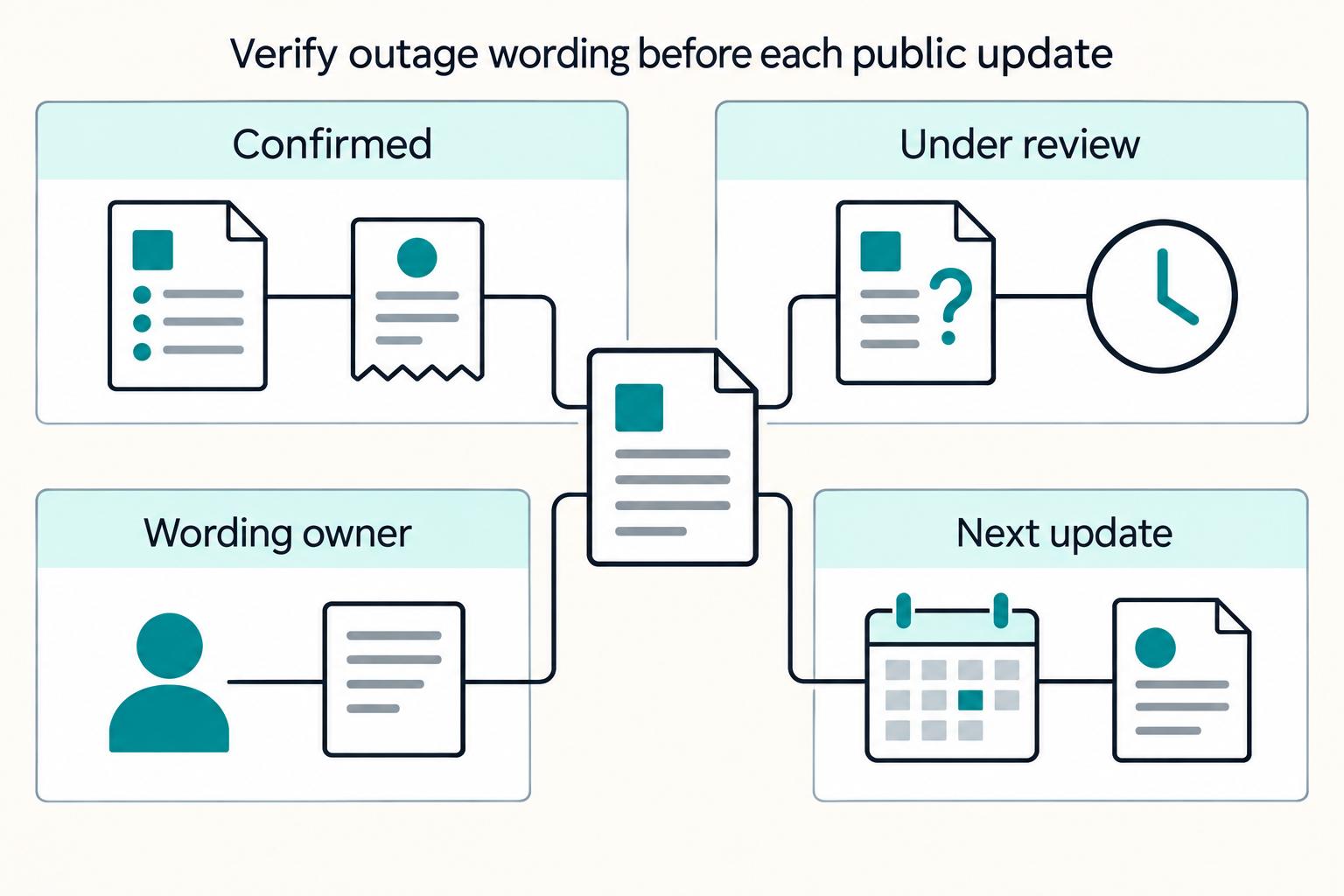
A payout outage status page should start with confirmed contractor impact, then state what is affected, what contractors should do, and when the next update will be posted. Use one status page as the public anchor, verify each update against current signals and internal records, and avoid broad reassurance until contractor-facing impact is actually confirmed.
Why payment outage communication fails and what this guide fixes#
Payment outage communication often fails when teams publish generic downtime updates instead of explaining the actual payment impact. During contractor payout incidents, people need to know what is affected right now and what they should do next. When that is unclear, trust drops fast.
A payment processing outage is not always a full stop. It can show up as delays, higher decline rates, or other partial failures. That is why updates like "we are investigating" are rarely enough during payout incidents. Someone waiting on a payout needs a more specific answer. Even if the answer is still narrow, tell them which parts of the payment flow are delayed, still processing, or still being verified.
Start with the contractor-visible impact#
Lead with impact the affected audience can act on, not just internal system symptoms. Communication works when people can quickly tell whether service is down or degraded and what that means for their payouts.
Set communication thresholds before an incident. Finance ops, support, and product do not all need the same message at the same time, and real-time improvisation can create conflicting updates. Use a simple test: if two teams could look at the same incident and send different summaries, the threshold rules are not specific enough yet.
Use one status page as the public anchor#
Use one status page as the public anchor for current system health and incident updates. It reduces channel sprawl and keeps support, finance, and product from publishing different versions of the same event.
Strong uptime does not remove this need. One cited market sample reported 99% uptime for card payment services in Australia from September 2021 to March 2024, yet still recorded 102 significant outages and 321 hours of downtime. Being usually available is not the same as being ready to communicate clearly during disruption.
Verify before you reassure#
Fast updates only help when you can verify them. Tie each update to confirmed signals such as authorization rate, decline rate, and payment latency. Keep the wording narrow when checks are still in progress.
Do not treat technical recovery as the end state if records still need cleanup. Post-incident reconciliation helps prevent duplicate transactions and inaccurate refunds. This guide focuses on that approach: prepare before incidents, publish clear updates, and verify accuracy before you reassure anyone broadly. If your recovery note gets ahead of your verification work, readers will feel that gap immediately.
You might also find this useful: How to Implement OAuth 2.0 for Your Payment Platform API: Scopes Tokens and Best Practices.
What to prepare before you touch the status page#
Before you touch the status page, decide who speaks, where truth lives, and how updates get coordinated. Without that setup, outage communication becomes manual and inconsistent at exactly the wrong moment.
| Preparation area | What to set | Why |
|---|---|---|
| Assign owners in one communication playbook | Use one documented outage communication plan with clear owners for technical coordination and external messaging; define who publishes updates and who notifies stakeholders | Unclear communication ownership can delay updates when an incident is active |
| Lock your single source of truth | Keep the status page as the external anchor and use one internal incident channel as the working record; define trusted evidence sources | Helps reduce the failure mode where people bounce between four or five tools during an outage |
| Prebuild reusable incident artifacts | Predefine stakeholder lists, prepare short templates, and decide status page audience scope: public, private, or limited | Can reduce hesitation when you need to publish quickly and make later routing easier |
1) Assign owners in one documented communication plan#
Use one documented outage communication plan with clear owners for technical coordination and external messaging. Define who publishes updates and who notifies stakeholders.
Run a quick drill. Ask each owner where the live incident record is, who sends the next external update, and who notifies stakeholders. If any answer is fuzzy, the process is not ready. This check matters because unclear communication ownership can delay updates when an incident is active.
2) Lock your single source of truth#
Set your tools before an outage. Keep the status page as the external anchor, and use one internal incident channel as the working record for collaboration.
Also define which evidence sources you trust for current-state checks. This reduces the failure mode where people bounce between four or five tools during an outage.
Your internal record should also make timestamps easy to scan. The team should be able to tell whether a draft sentence is based on a current check or one that has already gone stale.
3) Prebuild reusable incident artifacts#
Predefine stakeholder lists so the right groups can be notified immediately instead of assembled by hand. Prepare short templates for common incident phases, with placeholders for confirmed impact, unknowns, and next update timing.
Decide the status page audience scope in advance: public, private, or limited. That can reduce hesitation when you need to publish quickly. It also makes later routing easier, because support and product do not have to guess whether a detail belongs in the public post or only in an authenticated channel. For related guidance, see Dunning Management Best Practices for Platform Billing: Maximize Payment Recovery.
Step 1 map the contractor payout outage surface#
Map the outage surface before an incident by translating internal failure points into contractor-visible impact. If you skip this step, updates can drift into technical detail that does not help the reader decide what to do.
Start with a simple resiliency checkpoint: define and identify the critical infrastructure in your payout path. Use architecture-specific journey labels only when they reflect your actual system.
Build one playbook table and keep it current.
| Journey step | Contractor-visible impact | Internal signal | Evidence source | Owner |
|---|
Draft impact language from the contractor's point of view. A multilayered model can help internally, and you can add technical context when it is useful. Consider drafting the contractor-visible impact column before the internal signal column, then confirm the signal supports the wording you plan to publish. Where relevant, capture internal signals tied to segmentation or redundancy weaknesses.
Define internal incident labels before an incident, and publish only labels you can verify.
Set the publishing order in advance and align it to verification speed. If the payout flow is affected, decide whether to publish user impact or technical detail first based on what is confirmed. Keep scope limited to what trusted evidence can confirm quickly. A narrower confirmed update can be more useful than a broader draft that may need correction minutes later.
Need the full breakdown? Read Payout API Design Best Practices for a Reliable Disbursement Platform.
Step 2 assign owners and escalation paths before the first update#
Clear ownership before the first public update keeps response speed high and accountability intact. If no one owns the facts and no one owns the wording, the update cycle slows down immediately.
| Role | Focus | Responsibility |
|---|---|---|
| Technical owner | Incident facts | Maintains the live operational picture from monitoring and the internal status dashboard |
| Communications owner | Status-page language and cadence | Publishes contractor-facing updates that state current impact, what is still being validated, and when the next update will be posted |
| Accountable owner | Notification confirmation | Confirms that the right groups were reached and can say which team was notified and when |
| Designated reviewer | Higher-risk statements | Reviews higher-risk statements before publishing |
Split technical ownership from public messaging#
When possible, use a two-lane model: one owner for incident facts and one owner for status-page language and cadence. The titles can vary, but the responsibilities should be explicit.
The technical owner maintains the live operational picture from monitoring and your internal status dashboard. The communications owner publishes contractor-facing updates that state current impact, what is still being validated, and when the next update will be posted.
This separation matters most during partial failures, where communication gaps can damage trust almost as much as a full outage. It also keeps a useful boundary in place. The person validating facts does not have to draft every external sentence, and the person drafting updates does not have to infer facts from raw signals.
Escalate from observable signals, not ad hoc judgment#
Define escalation triggers from signals your team can actually see in one centralized status view. Keep the trigger set simple, documented, and easy to use under pressure.
If you use automated alerting, route notifications through tooling instead of relying only on manual chat paging. Keep one accountable owner responsible for confirming that the right groups were reached. That owner should be able to say, without hunting through side conversations, which team was notified and when.
Keep approval boundaries narrow and explicit#
Set a clear boundary between routine operational updates and higher-risk statements. Routine updates with confirmed impact and next-update timing should move quickly. Higher-risk statements should go to a designated reviewer before publishing.
Before you rely on this process, run a short drill and verify that you can escalate, approve, and publish within a single update cycle. If the drill stalls on wording review, that is a process problem, not just a practice-session problem.
For a step-by-step walkthrough, see Controller-Grade Accounting Best Practices for Payment Platform Finance Ops.
Step 3 choose who sees what and where#
Decide channel visibility early, then keep updates consistent for each audience. Use one incident working record to keep public and audience-limited updates aligned as facts change.
Route communication across channels with clear thresholds:
| Channel | Use it when | Include | Hold back | Check before publish |
|---|---|---|---|---|
Public Status page | Impact is broad and details are safe to share publicly | What is affected, current status, what users should expect next, next update time | Sensitive details, unverified hypotheses | Match facts and timing to the incident working record |
| Private or limited audience update | Details are relevant only to a specific audience segment | Scoped impact and next actions for that audience | Unverified details and internal-only notes | Confirm audience scope is correct |
| Internal incident log | Every active incident, especially while facts are changing | Evidence, owners, draft language, decisions, open questions | External posting without review context | Ensure every external update maps back to this record |
Set the hierarchy before the first external post#
Treat the internal incident log as the canonical record, not just a chat room. Every external message should come from confirmed facts in that record so teams are not reconciling competing versions in the middle of an incident.
Route updates with an explicit if-then rule#
Choose channels with measurable thresholds, not instinct. If impact is broad and non-sensitive, publish publicly. If useful detail depends on audience scope, keep the public note high level and move specifics to private or limited views. If you use a severity system, tie routing to that threshold so publish decisions stay repeatable.
Package updates by audience need#
Make each audience update action-first: what changed, who is affected, what they should do now, and when the next update will land. Different audiences can get different depth, but the factual core and timing should stay aligned.
Keep channels aligned as facts evolve#
The wording does not need to match line for line across channels, but the status and facts do. When the picture is still developing, publish less detail rather than overstating confidence. A useful sequence is to update the internal record first, publish the canonical external update second, and then point replies in chat, tickets, or email back to that same post.
Related reading: What Is a Supplier Portal? How to Give Contractors Self-Service Access to Payment Status and Documents.
Step 4 design status components around the payout lifecycle#
Design status components around the decisions readers need to make, then add technical detail as supporting context. As a practical check, test each component choice against capability, capacity, and cost.
Group by user-visible outcome#
Start with components tied to user-visible outcomes, then map them to stable operating domains. One workable model is domain-style grouping (not a payout-specific taxonomy), such as Information Security, Enterprise Architecture and Digital Platforms, Networks and Telecommunications, and Infrastructure and Operations, with a separate Systems/Applications category.
For each component, keep one primary user question in scope. If you cannot explain the component in one plain sentence, it is probably too technical for external status communication. Readers should not have to understand your internal architecture to know whether they should wait, take action, or continue normally.
Write house meanings for state labels#
State labels only help if your team uses them the same way every time. Define each label at the component level in your playbook so support, product, and engineering are not each interpreting them differently.
Use two checks for every state update:
- user-visible condition right now
- what verification is still in progress
That keeps status language stable even while facts are still moving. It can also reduce handoff problems where one team sees the immediate fault as contained while another still has downstream confirmation work.
Add dependency notes under the affected component#
Keep dependency details as notes under the component users care about. That lets you report partial recovery without implying the whole issue is over.
Before you publish a dependency note, confirm internally:
- which user-facing component is affected
- whether the impact is primarily capability, capacity, or cost
- who owns the next verification
When that check is done well, you can describe partial recovery clearly without forcing readers to decode subsystem names on their own.
Choose granularity with publish speed and clarity in mind#
Pick the smallest set of components your team can update quickly and consistently during a live incident.
| Component granularity | Example layout | What you gain | What to watch |
|---|---|---|---|
| Broad | One component, such as IT Operations | Fewer moving parts | User impact can stay ambiguous |
| Domain-level | Information Security, Enterprise Architecture and Digital Platforms, Networks and Telecommunications, Infrastructure and Operations, Systems/Applications | Clearer mapping to user questions | Requires strict state definitions |
| Highly granular | Separate components inside each domain | More technical precision | Can slow publishing and add noise |
Once this model is set, your updates are much easier to keep answer-first: what changed, who is affected, what is still unknown, and what comes next. The goal is not perfect component design. It is a component design your team can actually maintain during live operations.
For a related walkthrough, see Key Best Practices for Improving Accounts Payable on a Two-Sided Payment Platform.
Step 5 write phase templates that separate facts from unknowns#
A good phase template forces discipline. It gives every update the same shape, separates confirmed facts from open checks, and makes review easier when work is moving.
If your team already uses labels like Investigating, Identified, Monitoring, and Resolved, keep them consistent. Use a repeatable field set in each phase, such as known facts, current impact, next update time, and required action. Consistent structure reduces terminology drift and keeps the message readable under pressure.
| Phase | Known facts | Current impact | Next update time | Required action |
|---|---|---|---|---|
Investigating | Confirmed symptom and current scope only | What users can and cannot do now | When you will post again | Usually "no action" unless a workaround exists |
Identified | What has been isolated so far | Which service area is affected | Next timestamp, even if full ETA is not known | Pause, retry later, or wait |
Monitoring | What recovered and what is still being verified | Any residual lag or risk | Next verification update time | Continue as normal, with caveat if needed |
Resolved | What is confirmed restored | Whether backlog items are caught up | Optional closeout time/note | Any remaining cleanup step |
Do not present root cause as certain before the evidence supports it. Early on, state the symptom, the scope, and what you are verifying next. "We are investigating delays affecting part of the service" is safer than naming a cause too early.
Treat these as reusable language in your playbook, not rigid rules. The practical standard is simple: every public line should map to a current check your team can verify, not an assumption. If the known-facts field is thin, that is not a reason to stretch it. It is a signal to keep the update short and explicit about what remains unknown.
Step 6 set update cadence and automation triggers#
Cadence should be designed before the alert fires. The goal is to make update timing predictable without letting automation publish unreviewed impact language.
Monitoring should create and refresh incident context. The Communications Lead should approve any external line about confirmed impact, scope, or required action.
Define cadence rules before the alert fires#
Templates only work if updates arrive when you said they would, especially during long Identified periods. Define cadence rules up front, post a next-update timestamp every time, and enforce it with timers so the schedule does not depend on memory.
Use a simple rule set:
- assign a target update interval for each incident state your team uses
- store the next update timestamp in the incident record
- start a reminder timer after each published update
- escalate to the
Incident ManagerandCommunications Leadif the timer is near expiry with no approved draft
The value of this rule set is less about speed than predictability. Even when the underlying issue is not fixed yet, a team that reliably hits its own timestamps looks more in control than a team that disappears between updates.
Automate inputs, not external judgment#
Use monitoring tools as event sources, not as replacement writers. Connect monitoring to your portal or status API for incident creation and component-status updates, and use Webhooks to keep internal incident context current.
Minimum integration artifacts:
- endpoint for creating incidents
- endpoint for updating component status
- webhook ingestion for monitoring events
Keep publication separate from ingestion. The Communications Lead should validate what is safe to publish externally, such as confirmed delays or in-flight processing status, because raw alerts may overstate scope.
To prevent duplicate incidents from network retries, require idempotency keys on incident-create requests. The same principle applies inside the workflow: a repeated event should refresh the existing incident context, not create confusion about whether a second issue has started.
Add a missed-update recovery rule#
If you miss cadence, post a holding update immediately with confirmed facts, current confirmed impact, and the next timestamp. Do not wait for a full root-cause narrative, and do not fill the gap with a guessed ETA.
Before relying on this workflow, test it end to end across incident states and notification channels, and confirm that duplicate webhook events do not create duplicate incidents. Include handoff moments in that test, because missed updates often happen when ownership changes, not only when systems fail.
Step 7 verify every external update against finance truth#
A regular cadence is useful only if every update is still true at publish time. Before each external post, verify the draft against confirmed incident inputs and owner checks, then publish only what those checks support.
Use the Status page as the single external record for current health and incident state, and choose visibility deliberately (public, private, or limited audience). Do not mirror raw monitoring text directly; publish only wording you can stand behind at that moment.
Run a short pre-publish check each time:
- what is confirmed right now
- what is still being validated
- who approved the external wording
- when the next update will be posted
Do not publish a full-closure message until your team can support it with confirmed status. If certainty is limited, narrow the claim. State what is confirmed restored, state what remains under review, and give the next update time. That is how you keep the page trustworthy while the incident is still evolving. In practice, this often means resisting a broad "resolved" message when the safer update is "service recovered, verification still in progress."
If you want a deeper dive, read Supplier Portal Best Practices: How to Give Your Contractors a Self-Service Payment Hub.
If you are turning this verification checkpoint into repeatable ops, use Gruv's API and webhook docs to map ledger, payout batch, and status signals into one incident workflow.
Step 8 communicate compliance and tax impacts without exposing sensitive data#
Specific FBAR filing facts are established here. Detailed rules for account-level incident disclosures or W-8/W-9/1099 outage messaging are not, so keep those statements general unless separately verified.
8.1 State delays in broad operational terms#
If you publish a delay update, keep it high level and avoid unsupported account-specific explanations.
Use a quick pre-publish check:
- does this sentence explain impact and timing only
- does it avoid unsupported person-level or record-level claims
- does it include the next update time
If a sentence depends on account-specific facts you cannot verify, remove it or generalize it.
8.2 Keep tax-document messaging at timeline level#
For tax-document updates, avoid specific W-8, W-9, or 1099 requirements unless you have approved support for those details.
Keep public messaging focused on:
- what is delayed
- who is broadly affected
- when the next update will be posted
8.3 Use FBAR details only when the facts are exact#
If you mention FBAR, keep it to verified facts only:
| FBAR point | Verified fact |
|---|---|
| Form | FBAR is FinCEN Form 114 |
| Filing threshold | Filing is required when one account maximum, or aggregate maximum across accounts, exceeds $10,000 during the calendar year |
| No filing required | FBAR filing is not required if maximum or aggregate maximum value does not exceed $10,000 at any time during the calendar year |
| Due date | The annual due date is April 15th, with an automatic extension to October 15th |
| Maximum value | Maximum account value is a reasonable approximation, and periodic account statements may be used when they fairly reflect the calendar-year maximum |
| Amount unknown | In certain cases where aggregate maximum value cannot be determined, filers may complete account sections and check item 15a (amount unknown) |
| Corrections | If errors are found in a previously filed FBAR, an amended report is required |
If you cannot support wording with these points, keep the message high level and avoid specific tax conclusions.
Common mistakes that break trust during payout incidents#
The same discipline applies here: communication breaks down when the Status page no longer matches what contractors are experiencing, or when they have to piece updates together across multiple channels.
Do not communicate closure before contractor impact is actually verified#
If you signal that an incident is over too early and then reverse it, the page becomes less reliable for readers. Close incident communications only when you can confirm contractor-facing impact is over. If verification is still in progress, say that plainly.
A useful check is simple: could a contractor read this update and reasonably assume the issue is over without being surprised by a follow-up? If not, keep the incident open and state what is confirmed versus what is still being verified. This is especially important when one visible symptom has improved but remaining impact is still being checked.
Separate audience language#
Keep contractor-facing updates focused on impact and scope in plain language. Internal shorthand may help your team, but it can make external updates harder to parse.
Use visibility settings deliberately: public, private, or limited audience. Keep broad operational updates in the public view, and route narrower or account-specific details to authenticated channels. If a phrase makes sense only to someone already working the incident, rewrite it before it goes out externally.
Keep one canonical post and update with scoped facts early#
Pick one canonical incident post on the Status page, and have chat, email, and ticket replies point back to it. That keeps message content and timing aligned in one place instead of drifting across channels.
Publish scoped, confirmed facts early, even when some details are still unknown. State what is confirmed, what is still unknown, and when you expect the next update, if known. You do not need a complete narrative to be useful. You need a current one.
Copy and use this outage communication checklist#
Use this as a go/no-go gate before each external update. Publish only what is confirmed, and narrow the language when checks are still in progress.
- Confirm who is approving each external update before publishing.
- If you publish a status update, include confirmed impact scope and the next planned update time.
- If you use phase labels, keep them consistent across updates.
- Keep external statements tied to current internal records, and log what is still uncertain.
- Separate broad public updates from account-specific follow-up.
- Mention
FBARonly when it is relevant to the issue and the wording is cleared. - If mentioning
FBAR, validate the trigger first: filing is required when a single-account maximum or aggregate maximum exceeds$10,000; it is not required if that threshold is not met. - For
FBARchecks, treat maximum account value as a reasonable approximation of the highest value during the year. - For
FBARchecks, convert foreign-currency values using the Treasury Financial Management Service rate for the last day of the calendar year, or another verifiable exchange rate if needed. - For
FBARdata handling, if a calculated maximum account value is negative, report0in item15. - For
FBARedge cases, filers with fewer than25 accountswho cannot determine aggregate maximum can use item15a(amount unknown), and prior errors require an amended filing with theAmendbox in item1. - If you reference filing timing internally, verify
April 15thdue date and automatic extension toOctober 15th. - After resolution, update templates and escalation paths based on what failed in this incident.
This pairs well with our guide on KYC Best Practices for Reducing Money Laundering Risks: A Payment Platform Compliance Guide.
If you need a tighter payout incident workflow with compliance-gated execution and traceable status history, review Gruv Payouts.
Frequently Asked Questions
What should a payment outage status page include first?
Start with confirmed contractor impact, such as whether payouts are delayed or unavailable. Then add the affected area, if confirmed, and the next update time.
How often should we update contractors during payout incidents?
Use a preplanned cadence and increase frequency when impact is higher. If timing changes, post a short update with confirmed facts and a new timestamp.
Who should own updates during a payout outage?
Assign clear ownership for fact validation and external messaging. Contractors should see one consistent, accountable stream of updates.
What is the difference between incident status and payout settlement status?
Incident status tracks diagnosis and recovery of the service issue. Payout settlement status tracks whether contractors can access and receive payouts again.
Should payout outages always be posted publicly?
No. Visibility should depend on impact scope and sensitivity, and account-specific details should go through private channels when needed.
What if we do not know the ETA yet?
Say the ETA is unknown instead of guessing. Share what is confirmed, what is still being validated, and when the next update will be posted.
When is it safe to mark an incident resolved?
It is safe to mark an incident resolved when contractor-facing impact is no longer present and your checks support that conclusion. If validation is still in progress, keep saying so plainly.
Researched and edited by the Gruv editorial team. Gruv builds cross-border billing, payouts, and finance-operations software for global businesses.
Sources
- bsaefiling.fincen.gov/docs/XMLUserGuide_FinCENFBAR.pdftrusted
- caloes.ca.gov/wp-content/uploads/PSC/Documents/Executed-ST...trusted
- cio.gov/assets/resources/Cloud%20Operations%20Best%2...trusted
- cpars.gov/cparsweb/assets/documents/CPARS-Guidance.pdftrusted
- dau.edu/sites/default/files/Migrated/CopDocuments/Co...trusted
- dhcs.ca.gov/provgovpart/Documents/2024-Managed-Care-Boil...trusted
- documents.dps.ny.gov/public/Common/ViewDoc.aspxtrusted
- dodcio.defense.gov/Portals/0/Documents/CMMC/AssessmentGuideL2.pdftrusted
Educational content only. Not legal, tax, or financial advice.
Related Posts

The Freelance Payment Penalty: A Modeled Audit of Platform Fees, FX Spreads, and Payout Delays
The money rarely disappears through a single, easy-to-spot fee. The real loss is stacked. A marketplace takes its commission, a processor adds a charge for international cards, a bank or payment company converts the currency at a spread, a platform holds the funds before release, and a wire sheds a little to intermediaries on the way in. Each layer looks defensible on its own, but the worker feels the combined result as a smaller deposit and a later payday.

How to Respond to a Subpoena for Business Records
Move fast, but do not produce records on instinct. If you need to **respond to a subpoena for business records**, your immediate job is to control deadlines, preserve records, and make any later production defensible.
A US Expat's Guide to Investing in UCITS ETFs to Avoid PFIC Issues
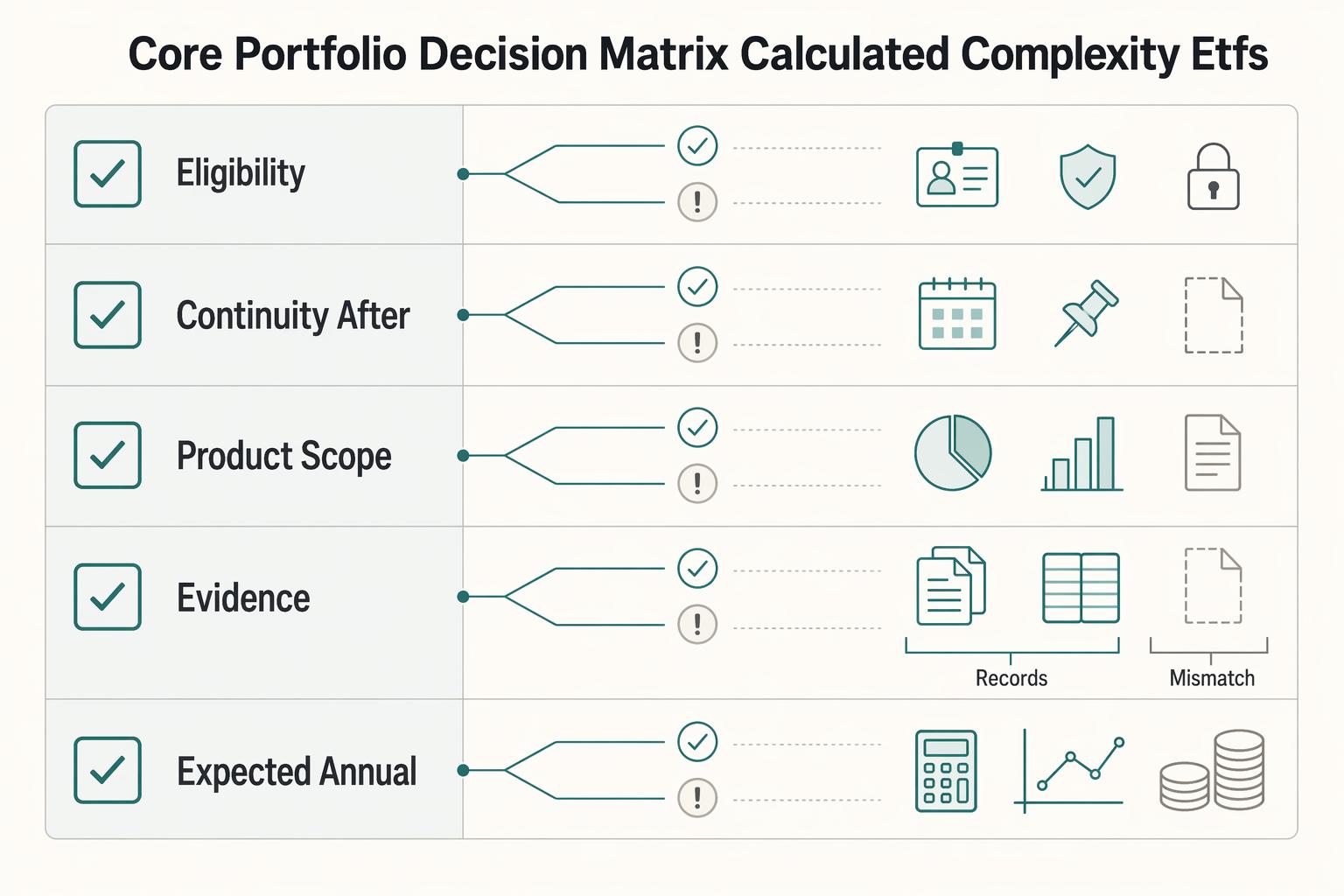
The real problem is a two-system conflict. U.S. tax treatment can punish the wrong fund choice, while local product-access constraints can block the funds you want to buy in the first place. For **us expat ucits etfs**, the practical question is not "Which product is best?" It is "What can I access, report, and keep doing every year without guessing?" Use this four-part filter before any trade: