
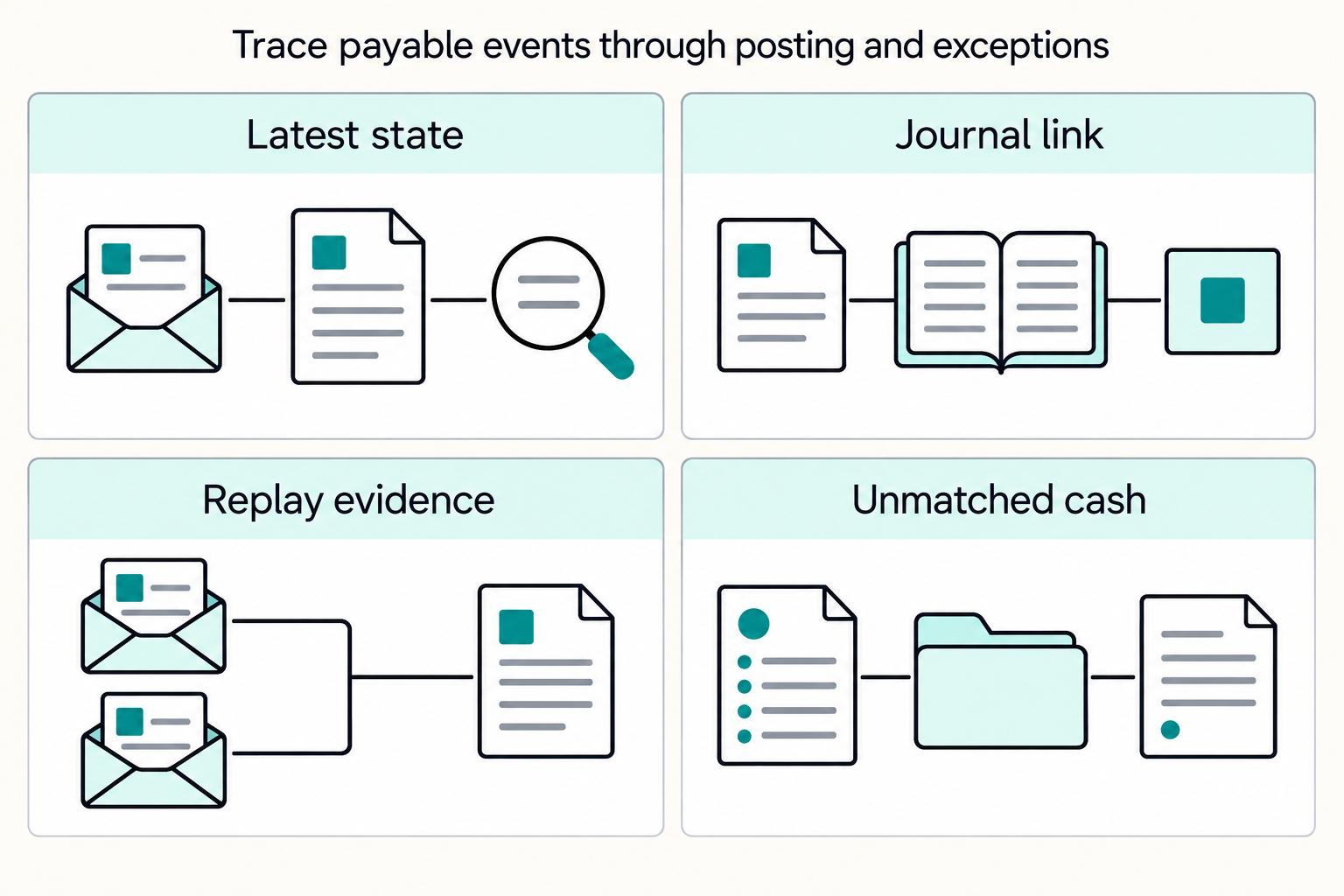
Quick Answer
Prioritize control sequencing over tool sprawl: set a single source of truth, enforce PO and invoice discipline at intake, and choose 2-way or 3-way matching by risk. Then harden approval routing, compliance and tax gates, and duplicate-safe event handling before payout release. The practical checkpoint is traceability from request to journal posting to reconciliation output without manual stitching. A phased 90-day rollout with go/no-go gates helps teams improve speed without weakening controls.
Why Accounts Payable Gets Hard on Two-Sided Platforms#
Accounts payable on a two-sided payment platform is not just about bill processing. It is an internal-control function tied to cash flow, vendor relationships, and financial control. On a platform, it also sits next to payout execution, funds movement, and reconciliation across multiple parties.
AP matters more when money moves in two directions#
Accounts payable is the short-term debt you owe suppliers or vendors for goods or services received before payment. In any business, AP quality affects cash flow and vendor relationships. On a two-sided platform, the scope is wider because the platform may connect buyers and sellers, collect payment, and then pay sellers their share.
The core question goes beyond document approval. You also need clear decisions on how funds move through the platform account, when money is released, and what records reconcile those decisions afterward. Those choices can span product, finance, ops, and engineering.
The control surface is wider than invoice entry#
Duplicate payments are a common AP error, and manual data entry is a common root cause. NetSuite cites duplicated or erroneous disbursements in the 1% to 2.5% range. On a platform, duplicate risk can come from both document handling and payment-event handling.
Webhook delivery is a practical example. Stripe warns that the same event can be delivered more than once. If retries are processed like new instructions, one real event can create two financial actions. Idempotency is the retry-safety control that helps prevent that duplicate execution.
A useful early checkpoint is this: retried events should lead to one financial outcome, with a clean reconciliation trail afterward.
What platform teams actually own#
This guide focuses on the decisions platform teams control directly: control depth, automation boundaries, and payout-release gates. In many teams, finance defines policy intent, ops manages exceptions, and engineering implements event handling and money movement behavior.
The tradeoff is straightforward. Tighter controls improve protection, but if you apply them everywhere, they can slow payouts or increase exceptions. Automation is more dependable when duplicate-event protection, booking logic, and reconciliation are designed up front. For split transactions, correct booking of funds and fees supports smooth pay-in, settlement, and payout flows.
Retry windows also vary by provider. Stripe says idempotency keys can be removed once they are at least 24 hours old, while Adyen states a minimum validity period of 7 days. That difference matters when you design replay protection, incident recovery, and reconciliation evidence.
What follows is a practical way to reduce duplicate-payment risk, tighten controls where they matter, and improve reconciliation confidence without assuming one architecture fits every platform. If you want a quick AP and AR refresher in platform context, this two-sided ledger explainer is a useful companion.
Related: Accounts Payable Document Management: How Platforms Organize Invoices Contracts and Payment Records.
How to choose the right AP best practices for your platform stage#
Use this list when your AP decisions affect how money moves between multiple parties, not just how you pay your own suppliers. It is written for two-sided platform operations where webhook-driven events and payout release are part of the same control surface.
- Start with scope fit
This guidance fits teams where AP connects to payout outcomes, seller experience, and reconciliation at the same time. A simple check: if a webhook retry or an approval decision can change a payout result, the controls below are likely in scope.
- Know when this is more than you need
If you run straightforward single-entity AP, do not pay out third parties on a scheduled or on-demand basis, and do not depend on platform verification before processing payments or releasing funds, much of this guidance may be more than you need right now. In that setup, core AP controls are often enough until platform payout and verification requirements expand.
- Score each practice on four lenses
Evaluate each recommendation by control effectiveness, operational load, implementation complexity, and supplier experience. For example, scheduled payouts can reduce manual effort, on-demand payouts can improve responsiveness, and higher-priority payouts can cost more. Price those tradeoffs early instead of discovering them during rollout.
- Set first priority by your dominant failure mode
Use this as a practical triage heuristic, not a universal rule. If leakage and duplicate outcomes are your main risk, start by tightening control depth. If payout delay is your main risk, start with routing and exception turnaround. Keep webhook handling in view. Event-driven operations should assume retries and enforce idempotent outcomes, or intake-side improvements can still leave payout-side duplicate risk.
You might also find this useful: Accounts Payable Automation for Dummies for Platform Operators.
Best practice 1 set a single source of truth and named owners#
If AP and AR diverge, fix ownership and traceability before you add more automation. In a two-sided payment platform, treat your ledger and subledger records as the financial record for payout-affecting events. Then assign named owners with delegated authority for control policy, exceptions, and release approvals.
This matters most when product, finance, and ops each control part of the path and release decisions are hard to explain end to end. A clear ownership model supports auditability and reconciliation, especially when duties are separated across roles.
Make the ledger the financial record, not the spreadsheet#
Treat operational events as accounting events. Map each request, approval, hold, release, reversal, or adjustment to a journal entry with metadata that ties back to the originating bill, supplier, or platform action. Use one simple control rule: if an event cannot be mapped to a journal entry, or traced from the GL to the underlying transaction, treat it as not fully controlled yet.
A practical split looks like this:
- Control policy owner: defines required checks, approval rules, document requirements, and segregation of duties.
- Exception owner: resolves mismatches and manual reviews, and records override or rejection reasons.
- Release approval owner: uses delegated authority to approve or block release once required checks are complete.
Name owners with real authority#
"Owner" should mean assigned responsibility plus delegated decision authority, not just queue coverage. A common risk is split accountability: policy in one team, routing in another, and no clear release owner when records conflict.
For each decision point, document who decides, what evidence is required, and where the decision is recorded. If those three items are unclear for hold or release decisions, ownership is still too loose.
Verify traceability before calling this done#
Before you call this done, run a trace test on recent payout decisions. For each sampled decision, follow the path from request to journal entry to reconciliation export pack, and flag any manual re-keying. If Stripe is in your rail, its Balance summary report can support this check because it is designed for month-end reconciliation and includes itemized CSV transaction history with metadata.
Use that as a checkpoint, not an assumption. If your team still has to stitch exports together by hand to explain money movement, tighten identifiers, journal mapping, or ownership boundaries first. For a deeper explanation of how AP and AR meet in platform accounting, see Accounts Payable vs. Accounts Receivable for Platforms: The Two-Sided Ledger Explained.
For a step-by-step walkthrough, see How to Build a Global Accounts Payable Strategy for a Multi-Country Platform.
Best practice 2 standardize intake with PO and invoice discipline#
Once ownership is clear, make intake your next control point. If AP accepts almost any supplier bill and fixes issues later, discrepancies and rework move downstream.
This is especially relevant when PO use is inconsistent and documents arrive with missing order references, unclear payment terms, or details that cannot be matched. The goal is to catch exceptions before payment. The tradeoff is more friction up front, because some submissions will be stopped, held, or returned instead of repaired later.
Set a proper-invoice gate before approval starts#
Start with one simple rule: approval routing is not a data-cleanup step. At intake, decide whether a submission is complete enough to enter AP.
A practical gate can check for:
- supplier identity and document number
- PO reference or other order authorization where your policy requires it
- line or service detail that can be matched to PO/receipt records where applicable
- stated payment terms
- any missing field that blocks matching, due-date calculation, or payment release
Keep the standard explicit. Order or authorization details and payment terms should be on the document itself. If a submission does not meet your intake standard, return it early or place it on hold rather than passing the issue to approvers.
A useful benchmark is the FAR 32.905 approach: return non-compliant invoices within 7 days after receipt. Treat that as an operating standard for response speed, not a universal legal rule for every private platform.
Match early, hold early#
Run matching checks at intake, before money moves. Compare the bill, PO, and receipt information where applicable, and evaluate discrepancies against your tolerances.
If validation fails, put the item on hold. Holds prevent payment until exceptions are resolved. Matching and validation controls can help reduce errors and support policy compliance.
For each held item, record the hold reason, the missing or conflicting field, the reviewer or owner, and what document or correction clears the hold.
Make one rule explicit for urgent requests#
Define urgent handling now, so urgency does not bypass intake controls.
Use a hard rule: off-policy items do not skip validation. They either go through a documented exception path, with owner and reason, or they are returned to the submitter.
A practical checkpoint is to sample recent AP records and verify three things. Eligible items should include order or authorization references where your policy requires them. Payment terms should be captured before due-date handling. Exception items should show a hold or return reason before payment is possible. If you cannot prove those from the record, intake discipline is still too loose.
Best practice 3 apply 2-way and 3-way match by risk tier#
After intake is clean, decide how much evidence you need before payment. Use 2-way matching for lower-risk spend, and use 3-way matching where receipt evidence changes the risk decision. Applying 3-way to every bill can add friction, while staying at 2-way everywhere can leave more pre-pay blind spots.
In practice, 2-way matching checks bill details against the Purchase Order (PO) within tolerance. In Oracle Payables PO matching, that is the automatic baseline. That is why teams often start there for lower-risk queues.
Use 2-way where PO-to-invoice validation is enough#
Use 2-way when the core question is whether the bill matches what was ordered on price, quantity, and terms. SAP learning guidance notes that some organizations use 2-way matching for low-value purchases to simplify processing.
The control standard should still be strict. Invoice information must align to the PO within configured tolerances. If it does not, place and keep a matching hold until the discrepancy is resolved and the hold is released.
Use 3-way where receipt evidence changes payment risk#
Use 3-way when payment depends on proof of receipt, not just PO and bill alignment. This adds receipt validation to PO checks, including quantity checks against selected product receipts, and aligns with guidance that compares PO, receiving document, and the supplier bill before payment.
This is usually the stronger pre-pay control for higher-risk categories or spend where receiving errors are costly. If you route specific suppliers, items, or supplier-item combinations to this tier, make it an explicit policy rule rather than an ad hoc exception.
| Risk tier | Match method | Required evidence | Expected cycle-time impact | Escalation trigger |
|---|---|---|---|---|
| Low | 2-way match | Approved PO plus bill within tolerance | Faster, lower review friction | Missing PO, tolerance breach, or unresolved hold |
| Medium | 2-way by default, 3-way for selected vendor or item combinations | PO and bill for routine spend; receiving evidence on flagged categories or item-vendor pairs | Moderate, since only part of the queue requires receipt checks | Tolerance breach, missing receipt on flagged items, or unresolved hold |
| High | 3-way match | PO, bill, and receiving document or product receipt before payment | More review steps, stronger pre-pay control | Receipt mismatch, missing receipt, or unresolved hold |
Configure tiering where AP actually works#
Put risk-tier rules into your AP configuration, not just your policy documents. Oracle supports match-option settings at supplier, supplier site, and PO shipment levels, and Microsoft documents targeting by vendor, item, or vendor-item combination.
Keep the first version simple and governable. Three tiers are usually easier to run than a long list of narrow exceptions. Also treat published tolerance examples, such as 5% or 15% in product documentation, as examples only and not as defaults.
Watch the failure mode that breaks both speed and control#
A common failure mode is missing or stale receipt data. AP then has a valid PO and bill but no usable receipt evidence, so items sit on hold and teams feel pressure to bypass controls.
Run a regular check that confirms:
- 3-way items include linked receiving evidence before payment
- released matching holds show what cleared the discrepancy
- low-risk 2-way items still receive post-pay monitoring for unusual price or quantity changes
If records cannot prove those points, your tiering model is not operational yet. The goal is targeted proof: stronger checks where risk is higher, and faster flow where risk is lower.
This pairs well with our guide on Accounts Payable Automation ROI for Platforms That Need Defensible Results.
Best practice 4 design approval routing that cannot stall payouts#
Once match tiers are in place, approval routing often becomes the next bottleneck. Design routing around your payout cutoff with a primary approver, backup coverage, and escalation timers that fire before payout batches are assembled. That can improve release predictability and reduce emergency overrides, but it does require tighter governance.
Route by real decision value#
Start with one clear rule per lane: who must approve, and by when. In Oracle Payables, routing starts the approval workflow and sends the document to the applicable approvers, so treat it as a payment gate, not a notification step.
Keep the first version simple. Oracle's sample configuration routes invoices at or above USD 5000 to a Finance approval group and auto-approves invoices below USD 5000. Use that as a pattern, not a universal threshold. Where lower-risk items have already passed PO and match controls, extra manual review can add delay without much additional control.
Define primary and backup approvers#
Every approval lane needs named primary and backup ownership. Dynamics 365 supports automatic delegation of new workflow items, which helps cover leave, travel, and time-zone gaps.
Track assignment evidence so delays are diagnosable: original assignee, whether delegation occurred, and reassignment timestamp. Without those fields, teams can struggle to separate valid queue time from a broken route.
Set escalation timers to match payout cadence#
Escalation should trigger before your payout release window closes. Oracle documentation describes escalation as a fallback when an approver does not respond in the specified period, and Dynamics 365 supports assignment and escalation rules plus notifications on delegated or escalated events.
| System/provider | Timing detail | Article note |
|---|---|---|
| Stripe manual mode | Payouts must be explicitly initiated, and arrival is typically 1 to 4 business days after initiation | Slow approvals can therefore delay cash arrival |
| SAP Ariba | Warning at 7 days and escalation at 14 days; supports 0.5 days, or 12 hours | Use timers that match your actual payout cadence |
| Oracle Payables | Escalation is a fallback when an approver does not respond in the specified period | Escalation should trigger before your payout release window closes |
| Dynamics 365 | Supports assignment and escalation rules plus notifications on delegated or escalated events | Track delegation and reassignment evidence so delays are diagnosable |
This gets more sensitive in manual payout operations. In Stripe manual mode, payouts must be explicitly initiated, and arrival is typically 1 to 4 business days after initiation. Slow approvals can therefore delay cash arrival, not just AP processing.
Default settings may be too slow for payout-sensitive queues. SAP Ariba documents warning at 7 days and escalation at 14 days, and it also supports fractional timing such as 0.5 days, or 12 hours. Use timers that match your actual payout cadence.
Watch the failure mode that defeats escalation#
Do not assume every approver path can escalate. In SAP Ariba, escalation does not apply to approvers added through groups, approver lists, or approval queues, so confirm eligibility in the route design.
Also, do not use holds as a substitute for approvals. Oracle Payables is explicit: a held item is delayed, but it still requires approval before payment.
When SLA misses repeat, simplify the lane instead of layering on more exception handling. Narrow approver groups, remove optional reviewers, and shift low-risk spend into pre-approved policy paths. Before payout batch assembly, unresolved approvals should show current owner, elapsed time, delegation status, and escalation state.
Need the full breakdown? Read Accounts Payable Outsourcing for Platforms When and How to Hand Off Your Payables to a Third Party.
Best practice 5 stop duplicates across invoice and payment rails#
Duplicate control should be built in, not cleaned up later. Stop duplicates at intake, API execution, and webhook handling, then verify that everything maps to one ledger trail. If your platform sees retries or asynchronous events across AP, payout services, and the ledger, duplicate control should be a release gate.
| Provider/system | Applies to | Article guidance |
|---|---|---|
| Oracle Payables | Invoice intake | Blocks a document with exactly the same number for the same supplier |
| SAP | Invoice intake | Configurable duplicate checks can evaluate company code, reference, invoice date, and credit memo fields |
| PayPal | REST API POST calls | Use PayPal-Request-Id; omitting it can duplicate the request |
| Stripe | API requests and webhooks | Reusing an idempotency key returns the same result, including 500 errors; deduplicate by tracking processed event IDs |
| Plaid | Webhooks | Design for duplicate and out-of-order delivery; retries when there is no response within 10 seconds, for up to 24 hours, with a 4x backoff |
This matters most on two-sided platforms where the same bill, API request, or webhook can appear more than once for legitimate technical reasons. The benefit is less duplicate-payment leakage. The tradeoff is real engineering work for idempotency keys, replay handling, and reconciliation.
Block duplicate invoices before they enter payment flow#
Start at intake. Oracle Payables blocks a document with exactly the same number for the same supplier, but that is a narrow check and does not catch near-duplicate scenarios.
Use broader matching when risk warrants it. SAP shows configurable duplicate checks that can also evaluate company code, reference, invoice date, and credit memo fields. In practice, do not rely only on supplier plus document number when resubmissions can vary formatting or related fields.
A resend may look edited but still represent the same obligation. Before payout release, reviewers should compare core fields such as supplier, document number, reference, and invoice date.
Make payment requests idempotent on purpose#
API retries need idempotency, or a repeated request can create a second outcome. PayPal documents this directly: use PayPal-Request-Id on REST API POST calls, because omitting it can duplicate the request.
Stripe follows the same pattern with idempotency keys and notes that reusing a key returns the same result, including 500 errors. Operationally, that means you should not switch to a new key after a server error unless you intend a new action.
Tie each key to the business action, not to a single network attempt. Stripe allows keys up to 255 characters.
Treat webhooks as replayable, not unique#
Assume duplicate and out-of-order delivery. Plaid says to design for both, and Stripe recommends deduplicating by tracking processed event IDs.
Handle dedupe before side effects. On receipt, check whether the event is already marked processed. If it is, ignore it and still return success, as Stripe documents for already processed events.
This is normal operating behavior, not an edge case. Stripe can retry undelivered events for up to three days. Plaid retries when there is no response within 10 seconds, for up to 24 hours, with a 4x backoff between attempts.
Reconcile every release event against one ledger trail#
Use one verification test: retry the same document submission, API call, or webhook and confirm one financial outcome with one canonical trail in the two-sided ledger. If you cannot prove that, duplicate control is not reliable yet.
In practice, reconcile each release event to one ledger record across AP, payout, and any reversal or correction state. If your model is still unclear, this explainer on the two-sided ledger is the right companion read.
For broader platform-metrics context, see How to Calculate LTV in a Two-Sided Marketplace for Buyer, Seller, and Platform Decisions.
Best practice 6 gate payouts with compliance and tax readiness#
Before first release, gate payouts on payee verification and tax readiness. This can add onboarding friction and may delay some first payouts, but it reduces the risk of sending funds before verification or tax records are in place.
This is most useful when you pay contractors, sellers, or creators across countries and entity types. The upside is lower compliance and tax-document risk. The tradeoff is more day-one friction, especially when manual review is needed.
Verify the payee before funds move#
Treat KYC, legal-entity verification, and AML controls where applicable as release conditions, not back-office cleanup. A major platform provider states users are verified before payments, payouts, or platform capabilities are enabled, which is a practical model even when provider labels differ.
For legal entities, include beneficial ownership review where your obligations require it. For covered U.S. CDD contexts, beneficial owners are identified at new-account opening, not after a payout problem. In U.S. MSB contexts, AML programs are required and should be commensurate with risk.
Before release, confirm the payee record includes:
- verification outcome, whether approved, rejected, or pending
- decision timestamp
- approval path, whether automated or manual
Do not treat "account created" or "bank account added" as proof that the payee passed payout checks.
Make tax readiness a blocking field too#
Tax profile completeness should be part of the payout gate. For U.S. information-return workflows, Form W-9 provides the correct TIN. Foreign individuals submit Form W-8 BEN when requested by the payer or withholding agent, and foreign entities use Form W-8 BEN-E to document status for U.S. withholding and reporting purposes.
| Form | Applies to | Article notes |
|---|---|---|
| Form W-9 | U.S. information-return workflows | Provides the correct TIN |
| Form W-8 BEN | Foreign individuals | Submitted when requested by the payer or withholding agent |
| Form W-8 BEN-E | Foreign entities | Documents status for U.S. withholding and reporting purposes |
Before releasing funds, make sure payee type, country posture, and tax form on file are aligned. If they conflict, stop and resolve the issue before payout.
Also avoid forcing every U.S. payout into 1099-NEC logic. IRS instructions distinguish payment-card and certain third-party network transactions that are reported on Form 1099-K and not on Form 1099-MISC or Form 1099-NEC.
Keep an evidence pack you can defend#
Once verification and tax checks are in place, keep a consistent record of why each payout was allowed. A practical evidence pack can include:
- policy outcome
- approval actor, whether a named reviewer or automated decision
- timestamped decision tied to the payee and payout event
- audit-ready tax artifacts, including W-9 or W-8 records and Form 1099 support where your reporting model enables it
If you run Form 1099-NEC workflows, the January 31 filing date is a useful operational checkpoint. Plan for first-payout expectations as well. Some providers note initial payouts are typically scheduled 7 to 14 days after the first successful payment, so communicate timing early and keep strict gates focused on unreleasable payouts.
Best practice 7 automate status and reconciliation with event-first plumbing#
When manual matching starts to slow close, move status updates and reconciliation to an event-first design. The goal is a reliable chain from webhook event to ledger or subledger journal to exception queue, so teams can trace what happened without stitching spreadsheets together.
This works best when AP, payouts, and bank activity are too asynchronous for end-of-day exports to keep up. The tradeoff is usually clear: potentially less manual ops work and cleaner reconciliation, but more dependence on resilient event handling and monitoring.
Make events authoritative, not your UI#
Use webhooks as the system trigger for asynchronous outcomes, not dashboard updates for later cleanup. In an event-driven design, services react to events and stay decoupled.
Let webhooks update AP and payout state, but do not post financial meaning from raw payloads alone. Event payloads can be stale by the time you process them, so fetch the latest resource state before writing financially meaningful updates. That check helps prevent outdated-state journaling and avoidable cleanup work.
Post meaningful state changes to subledger and ledger journals#
For two-sided payment flows, treat each meaningful state transition as a journaling event at the source-document or subledger level, then transfer or summarize into the ledger process as designed. Your control point is traceability. From a payout or AP state, you should be able to find the exact triggering event and resulting journal outcome.
| Event type | Expected ledger impact | Owning team | Alert condition | Recovery action |
|---|---|---|---|---|
| Payment or payout status change received by webhook | Create or update the journal or subledger record for the new state | Engineering + finance systems owner | Event marked processed but no journal reference | Fetch latest resource, reprocess idempotently, confirm one canonical journal outcome |
| Duplicate or replayed provider event | No additional economic posting when already applied | Engineering | Replayed delivery attempts another posting | Enforce duplicate-safe handling keyed to provider event ID and internal object ID |
| Bank statement line matched to internal cash record | Mark settlement or cash item matched per reconciliation flow | Treasury or accounting | Statement line remains unmatched after auto-reconciliation | Route to manual reconciliation queue with linked transaction evidence |
| Bank statement exception with no valid match | No automatic posting; open exception for review | Finance ops | Unmatched item or statement error cannot be reconciled automatically | Investigate statement detail, correct records if needed, then reconcile manually |
| Event delivery or consumption failure sent to DLQ | No posting until reviewed and recovered | Platform engineering | Message lands in dead-letter queue | Diagnose, fix, replay, and verify journal was not partially posted |
Build for failure, because retries are normal#
Assume delayed delivery and replay are normal operating conditions. Dead-letter queues are a core control because they keep failed events from disappearing and support diagnosis and replay.
Also make processing duplicate-safe. For example, Stripe can automatically resend undelivered webhook events for up to three days, and recovery listing is limited to events from the last 30 days. If handlers are not idempotent, replay can create duplicate postings.
Keep humans focused on exceptions#
Automatic reconciliation is well suited to high-volume transaction environments, but manual reconciliation still matters for items that do not match automatically. Exception queues give finance ops a bounded workflow for unmatched cash items, failed postings, and statement errors that cannot be auto-reconciled.
If you automate capture, journaling, and exception routing together, you can reduce manual close work while keeping an audit trail that finance and engineering can both defend.
Best practice 8 strengthen supplier communication and exception handling#
Once events drive status, the next control is supplier clarity and exception resolution. On a two-sided payment platform, make every supplier-facing message map to a real payable state, stated payment terms, and a finite set of exception reason codes.
Publish status meanings suppliers can act on#
Give suppliers direct status visibility before they open a ticket. A portal or supplier-facing status page can reduce "where is my payment?" loops when suppliers can check invoice and payment status themselves and subscribe to status-change notifications.
Keep labels specific. Do not collapse distinct states into "processing" when the real state is "received," "on hold," "approved," or "paid."
Use a simple checkpoint: review 10 recent supplier tickets and confirm each could have been answered from the status page alone, including current payable state and agreed payment terms.
Make exception codes visible, not tribal knowledge#
Exception handling breaks down when your AP team knows the blocker but the supplier does not. Use a short, standardized reason-code set for blocked progress, and show those codes in supplier-facing updates.
If an invoice is on hold, state that clearly. Holds matter because invoices generally cannot be paid until the hold is released, and some holds can also block accounting entry creation.
For payout-side exceptions, use provider machine-readable fields like failure_code to drive both the supplier message and your internal recovery queue from the same source.
Set response rules you can actually maintain#
Define response rules by state, owner, and channel so exceptions move predictably. An SLA helps only when it is measurable and tied to named states, with clear evidence required to clear each exception.
If suppliers can contact you from the status portal, route those messages with the record ID and reason code attached instead of into a free-form inbox.
Use external standards as reference points, not promises you cannot sustain. For example, UK public-sector policy targets 100% of undisputed, valid invoices within 30 days, but your commitment should match your operating reality. Fast, specific responses still matter most when payment timing is uncertain.
Related reading: Accounts Payable Software Comparison for Platforms That Need Operational Proof.
Best practice 9 roll out in 90 days with hard checkpoints#
Use a three-phase, 90-day rollout only if day 30, 60, and 90 are real go/no-go gates. Do not advance a phase until required artifacts are complete and exit criteria are met.
This sequencing matters because supplier-facing transparency can expose internal control gaps quickly. A staged rollout helps you avoid scaling weak approval paths or reconciling payments that should have stayed blocked.
| Phase | Owner | Required artifacts | Success criteria | Rollback trigger | Virtual Accounts / MoR dependency |
|---|---|---|---|---|---|
| Days 1 to 30 baseline controls | AP lead with product and engineering support | PO validation rules, approval matrix, duplicate-check rules, hold and reject reasons | Intake validates against the Purchase Order (PO), routes approvals correctly, and blocks known duplicate patterns before payment processing | Items bypass PO or approval routing, or retry scenarios still create a second payable | None required |
| Days 31 to 60 risk and compliance gates | Finance ops with compliance or legal owner | 2-way and 3-way match policy by risk tier, payout release criteria, tax-form checklist such as W-9 or W-8 when required | Higher-risk items stay on hold until match evidence and payee readiness are complete | High-risk spend is paid without required evidence, or valid payees are blocked because rules are unclear | Merchant of Record (MoR) can change responsibility split; document exact ownership |
| Days 61 to 90 event-driven reconciliation and optimization | Engineering and finance ops | Webhook event map, ledger posting logic, exception queue, reconciliation review pack | Payment-stage events map cleanly to AP and payout states, with unmatched items visible for recovery | Missing or duplicated events force manual spreadsheet repair, or payout states cannot be tied back to source records | Virtual Accounts improve attribution and reconciliation when enabled, but are optional |
Phase 1 baseline controls#
Start by preventing bad submissions from entering the payable stream. Prioritize PO-linked validation, approval routing, and layered duplicate prevention before you add advanced matching or reconciliation optimization.
For PO-backed spend, AP should validate the bill against the PO before payment processing. Keep approval routing explicit with amount-based thresholds and response targets your team can enforce. Practical workflows use examples like approvals within 5 business days, extra review at $10,000, and higher finance signoff at $100K, but those are examples, not universal standards.
Treat duplicate prevention as layered controls, not a single rule. Public audit guidance has cited duplicate-payment incidence in the 0.8% to 2% range, and the operational takeaway is to combine checks, retry handling, and hold logic.
Before the day-30 gate, sample recent PO-backed items and confirm each record shows the PO reference, routed approver, and duplicate-check result in one audit trail.
Phase 2 risk and compliance gates#
After intake is stable, tighten release rules by risk tier. In practice, 2-way matching is bill-to-PO, and 3-way matching adds receiving evidence such as goods receipts or service entry sheets. Apply stricter matching first where risk is higher.
Set payee-readiness checks before payout release. If a payee must provide Form W-9 or Form W-8, collect required documentation before release, and record what was collected, what is missing, and who approved any exception.
If you use a MoR, document exactly which transaction-level payment and compliance responsibilities are handled by the MoR and which remain with your platform. Also confirm current beneficial-ownership and due-diligence requirements with your provider or banking partner, because requirements appear to be evolving, including relief noted on February 13, 2026.
Phase 3 event driven reconciliation and optimization#
Make reconciliation event-first only after phases 1 and 2 are reliable. Webhook events can track asynchronous payment stages and connect AP state, payout state, and ledger posting into one traceable chain.
At this gate, validate event completeness. For every event you rely on, define the expected state change, ledger effect, and recovery action if the event is late, duplicated, or missing. Do not rely on webhook-fed reporting without a dependable exception queue.
Virtual Accounts can improve attribution and reconciliation, but they are optional. If you do not use them, you still need a dependable key for matching money movement back to the source bill and payout record.
Across all phases, keep one hard rule: no gate pass without completed deliverables and met exit criteria. Ninety days is an execution cadence, not a universal promise that every platform will complete every control layer in one quarter.
If you want a deeper dive, read Accounts Payable Days (DPO) for Platforms: How to Measure and Optimize Your Payment Cycle.
Before you lock phase gates, verify your webhook, idempotency, and payout-state design against the Gruv docs.
Best practice 10 score results and decide what to tighten next#
Once your rollout is live, score outcomes before you add more controls. Tighten the single metric that still drives unresolved exceptions or payout friction. Keep one core check in view: AP events should tie back to traceable transaction and payout records.
A short monthly scorecard is usually more useful than a long KPI deck. You get clearer prioritization and a tighter roadmap, but only if each metric is defined the same way every month with a named owner, a stable data source, and a consistent review sample.
| Metric | What to review | Verification checkpoint | Tighten next if it slips |
|---|---|---|---|
| Exception volume | Open AP or payout exceptions by age and reason code | Sample aged exceptions and confirm owner, last action date, and documented blocker | If aged items cluster around one reason, fix that control before adding new rules |
| Approval SLA attainment | Share of items approved inside your internal time window | Confirm receipt timestamp, assigned approver, approval timestamp, and scheduled payment date are present | If misses come from one approval step, simplify routing first |
| Duplicate-prevention hit rate | How often controls stop retried or repeated payment attempts before release | Retry the same request with the same idempotency key and confirm one financial outcome; confirm duplicate webhook delivery does not create a second payable | If retries still create cleanup, review idempotency storage, key reuse policy, and webhook deduping |
| Reconciliation latency | Time to match payouts to underlying transaction batches and related journal entries | Confirm each payout matches its underlying batch and expected journal posting | If payouts reconcile but journal links are missing, fix event posting before scaling volume |
Use external benchmark families as context, not as universal targets for your platform. AP metrics such as cycle time from invoice receipt until approval and scheduling for payment, and first-time error-free disbursements, can guide what you measure. But your team should document its own baseline assumptions before scaling: start date, metric definitions, sample method, and what counts as meaningful improvement.
Conclusion#
The right path is not more controls or more speed in isolation. It is control depth by risk tier, explicit ownership, and traceability across the full payment lifecycle.
In platform AP, the job is to put strong preventive checks in place before money moves, then keep one decision record that shows what happened, who acted, and when. That means treating intake, approval routing, duplicate prevention, event handling, and reconciliation as one connected control surface.
Traceability also has to account for asynchronous events. Webhook-driven flows require duplicate-safe handling, and retry behavior can continue for up to three days, so request-path logs alone are not enough to explain outcomes. If you use idempotency keys, stay within the 255-character limit and account for key pruning after at least 24 hours.
Your closing test is concrete. Can each bank payout be mapped back to its underlying transaction detail, with records that explain decisions from bill to payout outcome? Payout reconciliation views help, but only when ledger postings and event records stay aligned.
What to do next#
Use your checkpoint table as an execution tool:
- Pick the first phase your current team can finish.
- Assign one owner each for policy, exceptions, and payment-event integrity.
- Define the evidence pack for every payment decision.
- Test one failure path on purpose, then confirm the trail still holds.
- Expand scope only after one phase runs with a consistent AP-to-ledger-to-payout trail.
If you want a practical fit check for your control model, payout routing, and market-specific compliance gates, talk with Gruv.
Frequently Asked Questions
What are the first five AP best practices for a two-sided payment platform?
There is no universal “first five” list, so prioritize the controls that reduce cash-loss and reconciliation risk first. In practice, start with a clear system of record, disciplined intake with PO rules where relevant, risk-tiered 2-way or 3-way matching, approval routing before payout batches, and duplicate prevention across document entry and payment events. If a payout request cannot be traced to a complete transaction trail, fix that before adding more automation.
When should we use 3-way match instead of 2-way match?
Use 3-way matching when receipt confirmation could change whether payment should happen. Oracle’s distinction is direct: 2-way match checks PO and invoice details within tolerance, while 3-way match adds receipt verification. For lower-risk flows, 2-way matching may be acceptable if your policy and tolerances allow it.
How do we reduce duplicate payments without slowing payout batches?
Prevent duplicates early and make retries safe, instead of relying on manual review at release time. At intake, run duplicate-document checks to stop the same bill from being created and paid twice. On release, use idempotency keys so retries produce one financial outcome, not a second payable. If Stripe is in the flow, keep idempotency keys unique and within the 255-character limit.
Who should own AP automation across finance, ops, and product?
No single person should control every transaction phase. A practical split is finance owning policy and close controls, ops owning exception handling and supplier communications, and product or engineering owning event handling and release logic. If your regulatory scope requires it, designate a named owner for day-to-day compliance.
Which controls should be mandatory before first cross-border payout?
Require tax-form readiness and the screening your program requires before release. For U.S.-connected flows, that commonly means collecting Form W-9 for U.S. payees or Form W-8BEN for foreign individuals. Keep evidence of the decision, actor, and timestamp, and align reporting paths to the forms your model requires.
How do webhooks and ledger journals change month-end reconciliation?
They shift reconciliation toward event-driven records tied to payout batches. Webhooks are asynchronous, duplicate deliveries can occur, and Stripe may retry undelivered events for up to three days, so handlers and journal posting should be duplicate-safe. The core checkpoint is that each bank payout maps back to its transaction group and a complete transaction trail.
What should we implement first if our team is small and resources are tight?
Start with the smallest control set that prevents irreversible errors. For many teams, that means one system of record, basic PO and document discipline, simple approval escalation, duplicate-document detection, and idempotent payout requests. Add broader 3-way matching or deeper cross-border complexity only after those controls run cleanly.
Try a related tool
Where Gruv fits
Plan and approve payout batches
See how payee status, approval rules, route review, and exception handling sit in one payout workflow.
See reconciliation and mismatch review
Compare ledger entries, provider payment records, and statement rows to see what matches and what finance needs to review.
Researched and edited by the Gruv editorial team. Gruv builds cross-border billing, payouts, and finance-operations software for global businesses.
Sources
- acquisition.gov/far/32.905trusted
- acquisition.gov/afars/2-10.-separation-dutiestrusted
- advocacy.sba.gov/2026/02/18/fincen-issues-exceptive-relief-to...trusted
- ecfr.gov/current/title-31/subtitle-B/chapter-X/part-1...trusted
- ecfr.gov/current/title-31/subtitle-B/chapter-X/part-1...trusted
- gao.gov/greenbooktrusted
- gao.gov/products/gao-25-107721trusted
- guides.gaoinnovations.gov/greenbook/2025/principle-3-establish-structu...trusted
Educational content only. Not legal, tax, or financial advice.
Related Posts
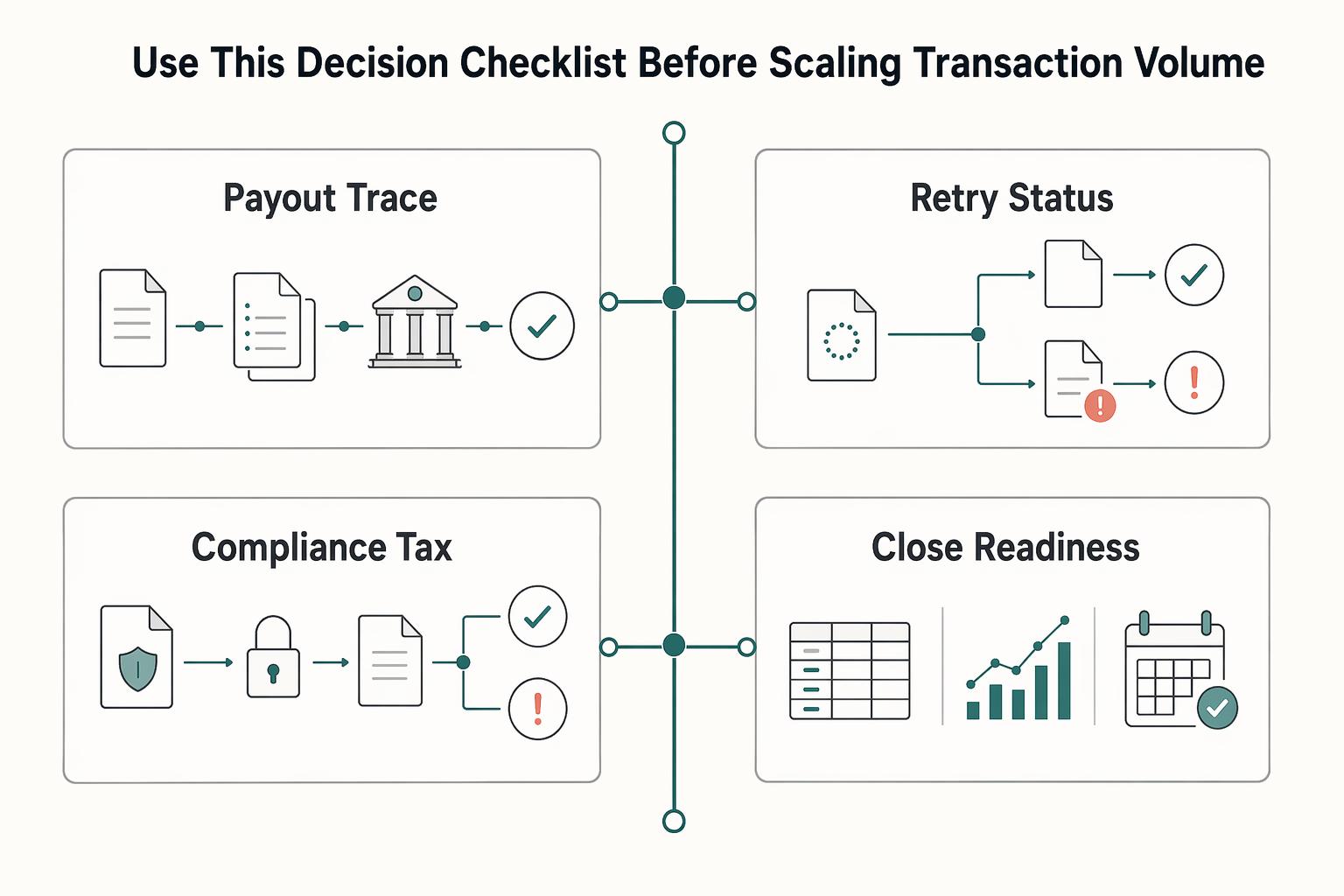
Accounts Payable vs. Accounts Receivable for Platforms and the Two-Sided Ledger
If you run a platform, Accounts Payable and Accounts Receivable are not just accounting labels. They are two connected operating flows, and treating them that way early helps you manage matching breaks, payment finalization, and payout readiness with fewer assumptions.
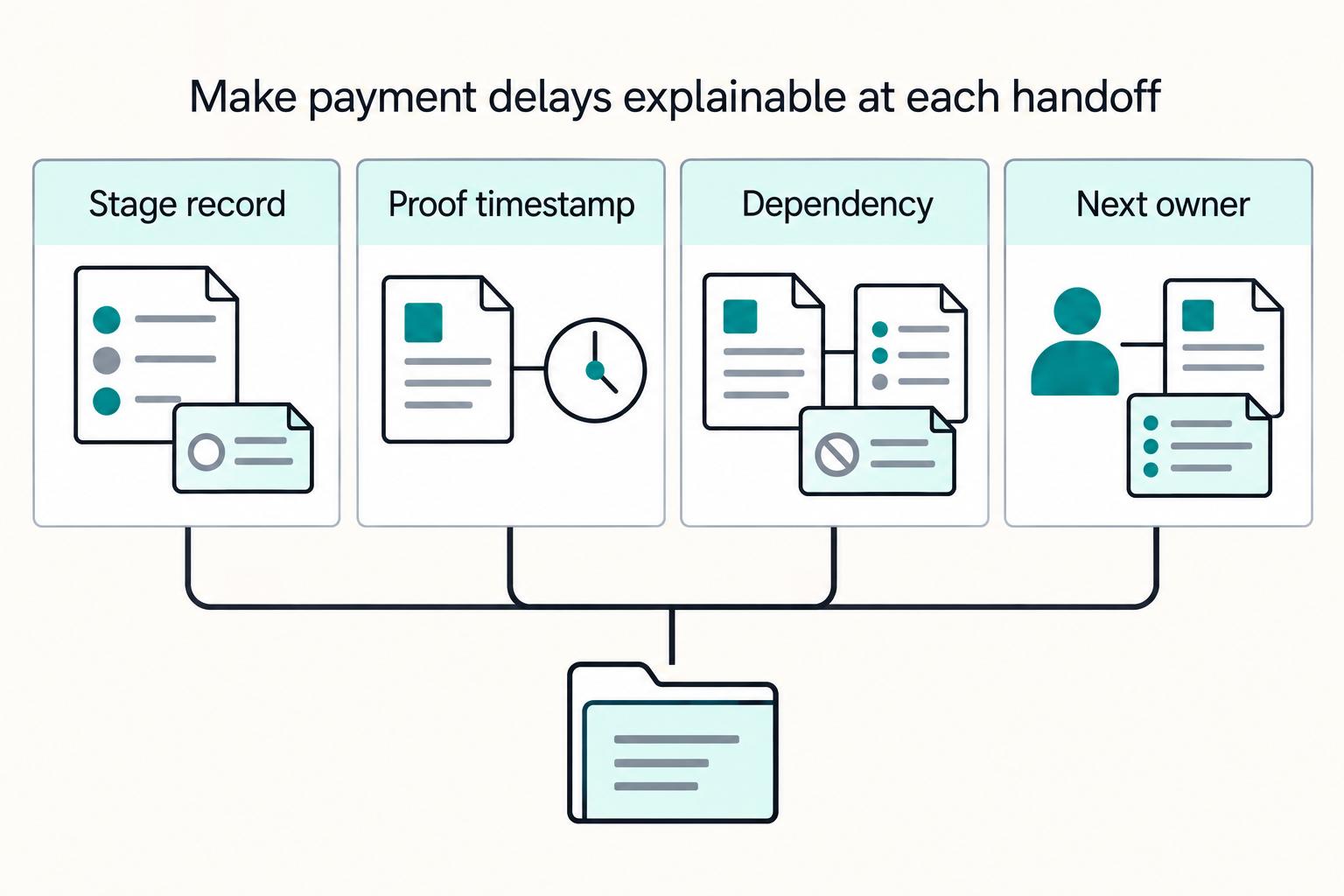
Accounts Payable Days (DPO) for Platforms in the Real Payment Cycle
Treat **Days Payable Outstanding** as an operating control, not a vanity KPI. It measures average supplier payment timing. For platform teams, the real question is whether cash outflows are being delayed on purpose or whether payment problems are being found too late.
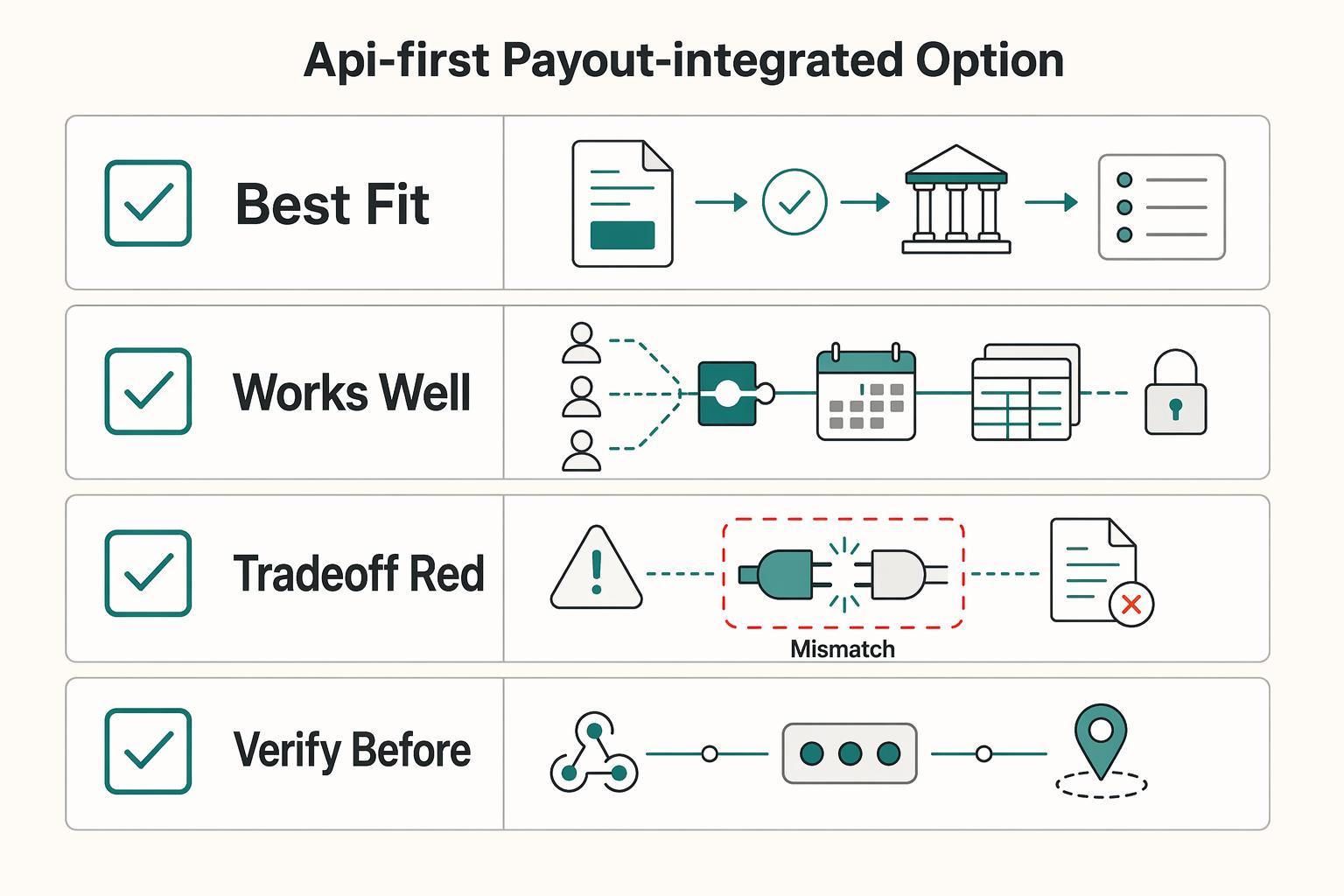
Choosing Accounts Payable Document Management for Invoices, Contracts, and Payment Records
Choose an accounts payable document management platform for control, not storage alone. You need a traceable path from intake to approval, posting, and payout without pushing teams back into manual handoffs.