
Quick Answer
Treat AP as outbound obligations and AR as inbound claims, then run both through the same proof chain: source document, ledger posting, external confirmation, and close. For accounts payable vs accounts receivable platforms two-sided ledger explained, the key is to separate recorded status from settled status and require reconciliation evidence before payout release. In practice, that means matching AP items, applying AR cash correctly, and blocking final release when compliance gating or settlement proof is unresolved.
How AP and AR work on a two-sided platform#
If you run a platform, Accounts Payable and Accounts Receivable are not just accounting labels. They are two connected operating flows, and treating them that way early helps you manage matching breaks, payment finalization, and payout readiness with fewer assumptions.
At the basic level, AP is money your company owes to vendors and suppliers, while AR is money your company expects to receive from customers. That part is simple. In practice, AP sits on the liability side of the balance sheet, and AR sits on the asset side. Both only stay trustworthy when the records behind them match what happened outside your ledger.
| Dimension | Accounts Payable | Accounts Receivable | What operators should check |
|---|---|---|---|
| Core definition | Money owed to vendors and suppliers | Money your company receives from customers | Confirm the transaction belongs on the correct side before posting |
| Balance sheet treatment | Short term liability | Current asset | Review journal entry direction before close |
| Primary execution question | Should this payment go out? | Should this cash be expected or applied? | Match internal records to external statements |
| Failure signal | You owe cash but cannot prove authorization or completion | Cash is expected but not collected or not applied correctly | Investigate unmatched records before a payment is treated as final |
| Critical control | Approval and record matching | Collections and record matching | Use one source of truth for status at each step |
That is the lens for this guide: not just definitions, but AP and AR as operating models that share one ledger reality.
The first checkpoint is reconciliation. In accounting terms, it means comparing your internal financial records to external statements to confirm every transaction is accurate and complete. On a platform, that means you do not mark a payable as cleared or a receivable as collected just because an internal status flipped. You verify against the outside record that confirms it.
The second checkpoint is settlement. A payment is not fully done when it is merely initiated. This is the stage where the transaction is finalized and funds are transferred. It is also the point when sales funds become available to the business. Teams often create false confidence by treating earlier payment steps and finalization as the same event. They are not.
The third checkpoint is compliance gating. KYC and AML checks exist to verify identity and monitor suspicious activity, and regulators require those safeguards. So if cash looks available but a compliance review is still open, you should treat payout readiness as unresolved, not complete.
The practical rule for the rest of this article is simple: if AP, AR, payment status, and compliance status do not agree, do not trust the close. Build your review process around proof, not assumptions.
AP and AR at a glance for platform operators#
Use a proof-first rule: treat AP as an obligation to prove before cash goes out, and AR as a claim to prove before cash is treated as in.
| Comparison point | AP | AR | What to check before you trust it |
|---|---|---|---|
| Owner | Finance usually owns policy and posting; ops may handle bill review, approvals, and payment exceptions | Finance usually owns recognition and cash application; ops may handle collections and customer-side exceptions | Assign clear ownership for posting, matching, and exceptions so items do not stall |
| Trigger event | Bill, supplier document, or approved obligation to pay | Customer bill, charge, or other amount due | Confirm the trigger is real and approved before ledger posting |
| Ledger impact | Short-term liability on the Balance Sheet | Current asset on the Balance Sheet | Confirm the item is on the correct side before close |
| Accounting treatment and Journal Entry quality | Journal entries and posting should reflect valid obligations | Journal entries and posting should reflect valid receivables | Weak journal-entry controls reduce reporting trust even when totals look complete |
| Timing risk | Terms can be 30, 60, or 90 days, while related inflows may not be available yet | Expected cash can still be pending, delayed, or unapplied | Separate "recorded" from "finalized" to avoid false liquidity confidence |
| Failure signals | Amount owed is recorded, but authorization, document validity, or final payment state is unproven | Amount due or collected is recorded, but receipt, application, or final collection state is unproven | Investigate items where internal status and external record disagree |
| Verification artifact | Approved source document plus external record confirming payment/final state | Issued billing record plus external record confirming receipt/final collection state | Keep document evidence tied to each ledger line |
| Operational surfaces | Webhooks can provide real-time updates; retries should use idempotency; closure should wait for settlement finalization | Webhooks can provide real-time updates; retries should use idempotency; closure should wait for settlement finalization when rail-dependent | If a webhook is missing, verify with provider or bank records before closing |
| What this means at scale | Can accumulate approval/document/disbursement exceptions when evidence is incomplete | Can accumulate cash-application/status exceptions when receipts are not cleanly matched | Measure exception counts, aging, and unresolved states by side instead of assuming one side is always larger |
AP is a short-term liability, and AR is a current asset, but those labels only hold up when journal-entry quality and external proof stay aligned. AP/AR quality is also used by lenders and investors to evaluate financial health, and weak management on either side can harm business stability.
Webhooks improve status visibility, but they are still status signals. Idempotency protects retry safety, and settlement closes the loop on finalization and funds transfer. In practice, do not mark AP fully cleared or AR fully collected until internal status and external completion records agree.
Map the two-sided ledger from invoice to settlement#
Use the same rule on both sides: move an item only when the evidence for that phase exists. AP and AR follow different workflows, but each should move from source document to close through provable checkpoints, not screen labels.
| Phase | AP side | AR side | Single source of truth checkpoint |
|---|---|---|---|
| Invoice created or received | Supplier bill is received and logged | Customer bill is issued for a Credit Sale (payment later) | Source document tied to counterparty and amount |
| Approval or match | Match supplier bill to Purchase Order (PO) and Goods Receipt Note (GRN) before payment authorization | Confirm sale terms and open receivable before collections | Matched PO + GRN (AP) or issued billing record + receivable record (AR) |
| Ledger posting | Record a Journal Entry and post to the General Ledger | Record the receivable as a Journal Entry and post to the General Ledger | Posted Journal Entry ID linked to source document |
| Settlement or receipt | Pay after approval, then wait for external confirmation before marking cleared | Collect funds, then complete cash application by matching payment to the correct open item | External payment/bank record plus cash application result (AR) |
| Close | Close only when ledger, source document, and payment evidence agree | Mark collected only when billing record, receipt, and cash application agree | Close pack showing no mismatch across source, ledger, and payment evidence |
On AP, three-way matching is the key control. The bill should not move to payment authorization unless it agrees with the PO and receipt document (often the GRN), which helps catch unauthorized or fake invoice payments. If the PO exists but the GRN does not, keep the item in exception review even when terms are 30, 60, or 90 days.
On AR, the failure point is usually after billing. A Credit Sale creates a receivable because payment is collected later, sometimes under terms like 2/10, net 30. Do not treat AR as closed when money appears in a feed; close it when cash application matches that receipt to the right open item.
Do not run Cash Sale items through delayed receivables logic. If payment is collected at sale and delivery, it bypasses the AR timing path.
Set AP and AR ownership without creating blind spots#
Set ownership by decision type, not by whoever touched the workflow last. A workable split is: finance owns policy and close quality, operations owns day-to-day exception handling and payment execution, and product owns the status surfaces people act on.
| Function | Primary ownership | Evidence to review | Blind spot if missing |
|---|---|---|---|
| Finance | Policy, accounting treatment, close quality | Matching breaks, Journal Entry to General Ledger links, open payment-finalization items that can affect close | Teams optimize for speed, but no one owns control and reporting integrity end to end |
| Operations | AP/AR exception handling, billing processing, payment execution, collections follow-up | AP source document plus PO/receipt evidence where applicable, AR billing record plus cash application result, failed or pending payments | Exceptions stay reactive, root causes persist, and cash-flow issues surface late |
| Product | Status surfaces, escalation paths, internal workflow behavior | Whether displayed statuses match actual payment and Payout Batch state, and whether blocked actions are visible | Teams act on stale labels, causing duplicate work and false "completed" states |
This handoff design matters because AP and AR are both cash-flow-critical and the process is cross-functional. In practice, finance often sees a controls problem, operations sees a speed problem, and product or engineering sees a complexity problem. Without an end-to-end owner view, a matching break is treated like a local issue instead of a ledger risk.
If AP and AR sit in different teams, run one shared weekly review focused only on unresolved matching breaks and unsettled payment states. For each exception, require one owner, one blocker, and the exact document or ledger record needed to close it.
If payout risk is high, avoid inbox-thread exception handling. Use a joint queue keyed to Payout Batch status plus ledger evidence so teams can isolate whether the break is in approval, posting, payment completion, or payout release.
Verdict: keep finance accountable for governance, operations accountable for clearing operational breaks, and product accountable for truthful status behavior. Split ownership can work, but only if matching and payment exceptions are reviewed together before they become cash-flow problems.
Related reading: How to Set Up Chart of Accounts in QuickBooks for a Freelancer.
Fix timing mismatches before they become cash stress#
Timing gaps usually create cash stress before total volume does. AP can come due on fixed terms while AR cash is still in aging, unapplied cash, or pending settlement, so cash may look inbound before it is actually available to use.
AP terms are often set to 30, 60, or 90 days, but pending funds still cannot be withdrawn or spent until they become available. Changing payout cadence does not make those funds settle faster.
If AR aging worsens while AP approvals speed up, pause non-urgent disbursements and route them to review until Reconciliation catches up. This is not a universal freeze rule; it is a targeted control when obligations are moving faster than verified cash availability.
| Checkpoint | What to verify | Red flag |
|---|---|---|
| Invoice aging | Trend in overdue AR items and oldest open balances | Older receivables increase while collection follow-up is flat |
| Unapplied cash | Receipts recorded but not matched to specific transactions | Cash appears received, but no clear link to open items |
| Pending settlement | Funds still pending and not yet available for use | Teams treat funds as ready even though they cannot be spent |
| Unresolved exceptions | Open items missing owner, blocker, or evidence | Exception queue grows while approvals continue |
For hold-or-release decisions, rely on evidence: AR aging, unapplied cash detail, settlement reconciliation output, and the open exception queue tied to source records or Journal Entry references. The common failure pattern is straightforward: AP pays on schedule, AR expects cash soon, but funds have not cleared and ledger support is incomplete.
Prevent the failure modes competitors barely cover#
Once cash looks available, the higher-cost failures usually come from state drift, not volume: duplicate writes, missed or replayed Webhooks, verification holds, or ledger mismatches. Keep one release rule for every Payout Batch: do not release until provider state, matching evidence, and General Ledger impact agree.
Where state drift starts#
Retries are a common source of duplicate operations. Idempotency is the control that prevents a retry from creating a second write by returning the same prior result for the same key, including prior error outcomes. If money-moving retries are not consistently keyed and checked, duplicate payout or status actions become a real process risk.
Webhooks are the next breakpoint because delivery is asynchronous and undelivered events can be retried. If an event is handled manually while retries are still in flight, and your handler does not de-duplicate by event ID (or equivalent), one provider event can produce multiple internal updates. That can lead to duplicate release attempts or duplicate ledger postings that look valid because both came from internal systems.
| Failure mode | Common assumption | What to verify | Release rule |
|---|---|---|---|
| Missing Idempotency on retries | "Retrying is safe because the first request failed" | Request logs, repeated write attempts, shared business reference | Hold until one surviving write is provable |
| Missing or replayed Webhooks | "We already handled this event" | Delivery history, event ID de-duplication, manual handling notes | Keep batch closed until each event maps to one accounted action |
| Stale internal status | "Dashboard says settled, so it's done" | Provider live state vs cached internal status and payment report | Treat internal status as advisory until external state matches |
| Unmatched ledger postings | "Queue is clear, so books are fine" | Journal Entry trail in the General Ledger, linked payout/source reference | Do not reopen until event and ledger posting agree |
| Compliance or tax gating | "Funds exist, so payout is ready" | Verification requirements/status and tax-document completeness | No release while required checks or forms are unresolved |
A fast diagnostic is to compare provider event history with your internal ledger trail for one disputed payout. If provider history shows one payout but your ledger shows two state-changing entries, the issue is write control, not cash availability.
Compliance and tax gates#
Verification holds can block disbursement even when funds exist. Know Your Customer (KYC), Know Your Business (KYB), and Anti-Money Laundering (AML) screening can pause payouts until required information is provided and verified. In practice, payout readiness is not just balance plus bank details; it depends on regulated verification state.
| Item | What to confirm | Effect |
|---|---|---|
| KYC | Required information is provided and verified | Payout readiness is not just balance plus bank details |
| KYB | Required information is provided and verified | Payout readiness is not just balance plus bank details |
| AML screening | Required information is provided and verified | Payout readiness is not just balance plus bank details |
| Form W-9 | Provides the TIN used for information-return reporting | Missing or inconsistent tax documents create downstream risk for 1099-NEC reporting |
| Form W-8BEN | Foreign payees generally use it for treaty/withholding treatment | Missing or inconsistent tax documents create downstream risk for 1099-NEC reporting |
Tax documentation can block readiness with quieter symptoms. Form W-9 provides the TIN used for information-return reporting, and foreign payees generally use Form W-8BEN for treaty/withholding treatment. Missing or inconsistent tax documents create downstream risk for 1099-NEC reporting, so payout readiness should include tax-document validity checks, not only source approval and cash availability.
Triage before you reopen payouts#
When a payout issue appears, keep the sequence fixed and the scope tight:
| Step | Action | Detail |
|---|---|---|
| 1 | Detect and classify | Identify whether the break is a duplicate write, missing/replayed webhook, stale status, verification hold, or tax-document blocker |
| 2 | Isolate scope | Freeze the affected account, payee set, or Payout Batch rather than the full program unless impact is global |
| 3 | Verify GL impact | Confirm whether a Journal Entry posted, whether it posted once, and whether it ties to the underlying payout/source reference |
| 4 | Resolve provider state | Check live provider status for payment completion, verification, and event handling instead of relying on cached internal status |
| 5 | Reopen after controls pass | Require matched ledger, cleared verification blockers, and one-to-one mapping between provider events and internal postings |
Use a complete evidence pack for release decisions: request logs with Idempotency keys, webhook IDs and delivery history, matching output, ledger postings, provider verification status, and W-9/W-8BEN collection status. Skipping any one of these is how a batch can look operationally complete while still be wrong in the ledger.
Choose the operating model that fits your risk and build stage#
Choose Merchant of Record (MoR) when you want faster launch and centralized transaction-level tax handling; choose a modular stack (for example, Virtual Accounts plus direct payout orchestration) when you need more control over allocation, routing, and reporting in supported markets.
| Decision point | Merchant of Record (MoR) | Modular stack with Virtual Accounts + direct orchestration |
|---|---|---|
| Who is recognized as seller | MoR is recognized by the payment processor as the seller | Your platform keeps more direct responsibility for flow design |
| Tax handling | MoR can calculate, collect, report, and remit applicable sales tax or VAT | Tax responsibility is not automatically offloaded in a modular setup |
| Routing control | More abstracted | More flexible, especially when charges and transfers are separated |
| Reconciliation model | Simpler starting point, with reporting shaped by provider abstractions | Virtual accounts can improve routing and matching detail inside a primary account |
| Failure mode to watch | Assuming coverage or policy support without validating exact markets and model | Unsupported cross-border transfers or balances can return an error |
The core tradeoff is control versus abstraction. MoR gives you a cleaner outer layer around the transaction, which can help when launch speed and centralized tax operations matter more than custom routing. A modular model gives you more control over how funds are allocated, including transfer amounts, but it also keeps more operational ownership with your team.
Use caution when evaluating modular designs: Virtual Accounts are unique account numbers inside a primary account and help with routing and reconciliation, but they do not by themselves satisfy licensing, safeguarding, or AML obligations.
Before you select a model, validate these unknowns in writing:
- Market coverage: providers may advertise support in over 200 countries and territories, but availability is still provider- and country-dependent.
- Policy constraints: some countries or payment flows are blocked due to sanctions, platform policies, or AML requirements.
- Program enablement: confirm your exact pattern (such as separate charges and transfers) is enabled for your account and supported in your target corridors.
Use this decision checklist before scaling transaction volume#
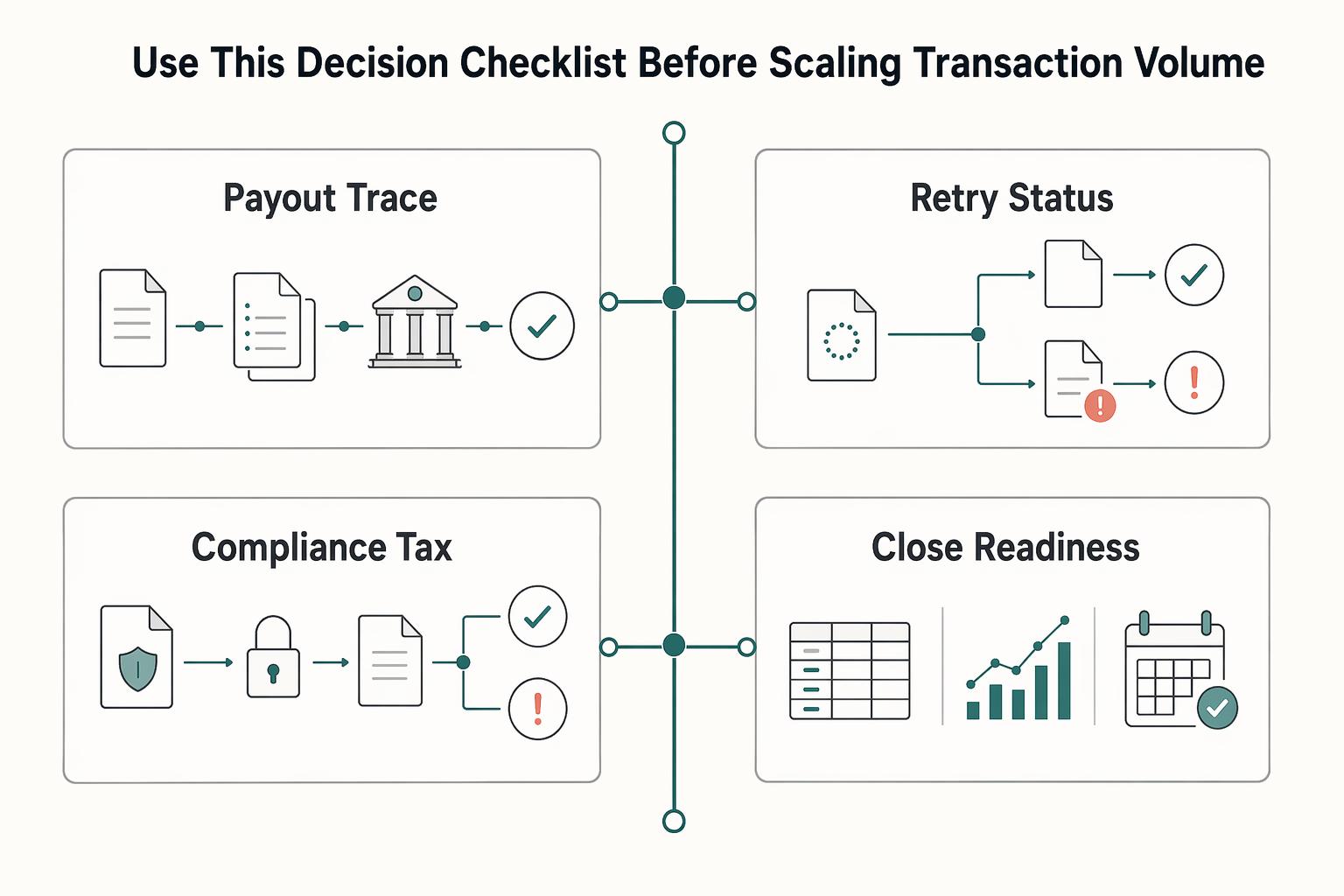
Do not scale transaction volume until four controls are true: ledger traceability, duplicate-safe retries, explicit compliance/tax gates, and close-ready reporting. Volume usually exposes month-end control gaps first.
| Checkpoint | What to confirm | Red flag | Evidence to keep |
|---|---|---|---|
| Ledger traceability | Each source document, approval, payout, reversal, or payment-state change maps to a Journal Entry and is posted to the General Ledger | Ops status says "paid" or "settled," but finance cannot show the posting path | Sample transaction trace from event to journal entry to GL line |
| Retry and status reliability | POST retries use Idempotency keys, and asynchronous changes are captured through Webhooks plus internal status surfaces | Duplicate payouts or stale "success" states after a timeout or delayed provider event | Retry logs, idempotency key policy, webhook delivery and replay history |
| Compliance and tax gating | KYC/KYB/AML and beneficial-owner checks are explicit where required, VAT Validation via VIES is in place for relevant EU flows, and the U.S. tax-form path is clear (W-8/W-9) when applicable | Funds are available, but payouts are paused because required verification or tax-status data is missing | Verification status export, VIES result capture, collected tax forms |
| Close readiness | Transactions included in each payout can be reconciled as one close unit, with drill-down to underlying transactions | Finance closes from screenshots or inbox threads instead of auditable reports | Reconciliation pack, exception log, settlement report, payout audit trail |
Run a simple pre-scale test: trace one AR collection and one AP disbursement from source event to payment completion. If either path breaks before the General Ledger, or a failed payout is missing from webhook-driven alerts and the exception log, you are not ready. Webhooks help with asynchronous visibility, but they do not replace ledger controls.
If you want a deeper dive, read Key Best Practices for Improving Accounts Payable on a Two-Sided Payment Platform.
Conclusion and next step#
The real win is not memorizing AP and AR definitions. It is running the two-sided process as one connected operating discipline, with shared controls, explicit checkpoints, and fast exception handling before small timing gaps become payout or close problems.
| Next step | What to verify |
|---|---|
| Align on the AP vs AR comparison | Teams agree on trigger events, ledger impact, timing risk, and verification artifacts |
| Implement the checklist | Use operational terms, not just policy language |
| Tie state changes to the ledger | Every important state change should tie back to a journal entry in the general ledger |
| Keep payout association intact | Where payouts are involved, tie the state change to the payout batch or payment group it landed in |
| Pause scale if batch proof is missing | Do not increase payout batch size until you can prove transaction-to-payout association and clear batch-level matching |
| Pause scale if tracing fails | If unresolved exceptions are rising, or you cannot trace one receivable collection and one payable disbursement end to end, fix that first |
That is the practical takeaway. Accounts Payable and Accounts Receivable are different functions, but they are still interconnected in day-to-day operations. When they stay in balance, you can plan for growth with more confidence. When they drift apart, the problems usually show up in reconciliation breaks, payment timing, and uncertainty during close.
Your next move should be simple and ordered. Start with the at-a-glance AP versus AR comparison so every team agrees on trigger events, ledger impact, timing risk, and verification artifacts. Then implement the checklist in operational terms, not just policy language. A key checkpoint is simple: every important state change should tie back to a journal entry in the general ledger. Where payouts are involved, it should also tie to the payout batch or payment group it actually landed in.
If you want one rule of thumb before scaling volume, use this one: do not increase payout batch size until you can prove transaction-to-payout association and clear batch-level matching. That is the evidence pack finance needs when something breaks at month-end, not a screenshot from an ops tool.
The main failure mode to keep in view is false readiness. Teams can look operationally ready while reconciliation evidence is still incomplete. Internal controls matter here because they are not just a compliance exercise. They let finance, ops, and product tighten ownership, prove what happened, and move forward only after control checks pass.
So the sequence is: align on the comparison, implement the checklist, then tighten ownership and timing rules. If unresolved exceptions are rising, or you cannot trace one receivable collection and one payable disbursement end to end, pause scale and fix that first. For deeper implementation detail on the AP side, continue with Internal Controls for Accounts Payable on Platforms: How to Prevent Fraud and Ensure Accurate Disbursements.
Related: Finance Automation and Accounts Payable Growth: How Platforms Scale AP Without Scaling Headcount.
Frequently Asked Questions
What is the practical difference between Accounts Payable and Accounts Receivable on a two-sided platform ledger?
AP is money your business owes, so it is tracked as a current liability on the balance sheet. AR is money your business expects to collect, so it is tracked as a current asset. On a platform ledger, the practical difference is not just classification. AP drives disbursement readiness, while AR drives collection, cash application, and whether those disbursements are actually funded.
Why are AP and AR interconnected even when different teams own them?
They are linked through cash timing, payment status, and close quality. If AR collections are delayed or unapplied, AP may still come due, often within a short-term window such as 30 to 90 days, which creates pressure even when both sides look healthy in isolation. If teams are split, keep one shared review for unresolved payment states and matching breaks.
Is Accounts Payable always a liability and Accounts Receivable always an asset in platform reporting?
In balance sheet reporting, AP sits under current liabilities and AR under current assets, both generally within the 12 month current-classification horizon. The catch is that posting quality can make those labels look correct while the numbers underneath are wrong. Verify that each AP or AR state change posts through to the General Ledger, not just an ops status screen.
What usually breaks first when AP and AR fall out of balance?
A common early problem is record matching, not accounting theory. You can see pending payment completion that does not match ledger postings, unapplied cash on the AR side, or a payout batch that ops thinks is ready while finance cannot prove the funding path. That is a red flag to pause non-urgent disbursements until the exception log is clean.
How do webhooks and idempotency reduce reconciliation errors in AP and AR operations?
Webhooks help you capture asynchronous status changes. But webhook endpoints can receive the same event more than once, so you need to log processed event IDs and de-duplicate them. Idempotency makes retries safer because the same key returns the same prior result for that request context, which helps avoid duplicate actions after a timeout. Use both together, then match the resulting status to the ledger.
When should a platform choose Merchant of Record instead of a modular setup with Virtual Accounts and payout orchestration?
Choose a Merchant of Record when you want one entity to be legally responsible for processing customer payments and for the financial, legal, and compliance aspects of the transaction. Choose a modular model when you want direct control over collections and payouts, and you are ready to own the evidence pack for matching, approvals, and payment completion. A useful checkpoint here is whether a virtual bank account number meaningfully improves your bank-transfer matching enough to justify the added ownership.
Which minimum controls should be in place before increasing payout batch volume?
At minimum, put approvals or authorizations, verification, reconciliation, and segregation of duties in place. Then confirm payout-level reconciliation so each payout can be treated as one settlement batch with drill-down to the included transactions. If you cannot trace one AP disbursement and one AR collection from event to General Ledger, do not scale volume yet.
Try a related tool
Researched and edited by the Gruv editorial team. Gruv builds cross-border billing, payouts, and finance-operations software for global businesses.
Sources
- docs.stripe.com/webhookstrusted
- docs.stripe.com/error-low-leveltrusted
- ecfr.gov/current/title-31/subtitle-B/chapter-X/part-1...trusted
- guides.gaoinnovations.gov/greenbook/2025/principle-10-design-control-a...trusted
- irs.gov/forms-pubs/about-form-w-9trusted
- irs.gov/forms-pubs/about-form-1099-nectrusted
- sec.gov/files/balancesheet-building-blocks.pdftrusted
- stripe.com/resources/more/payment-settlement-explained-...trusted
Educational content only. Not legal, tax, or financial advice.
Related Posts
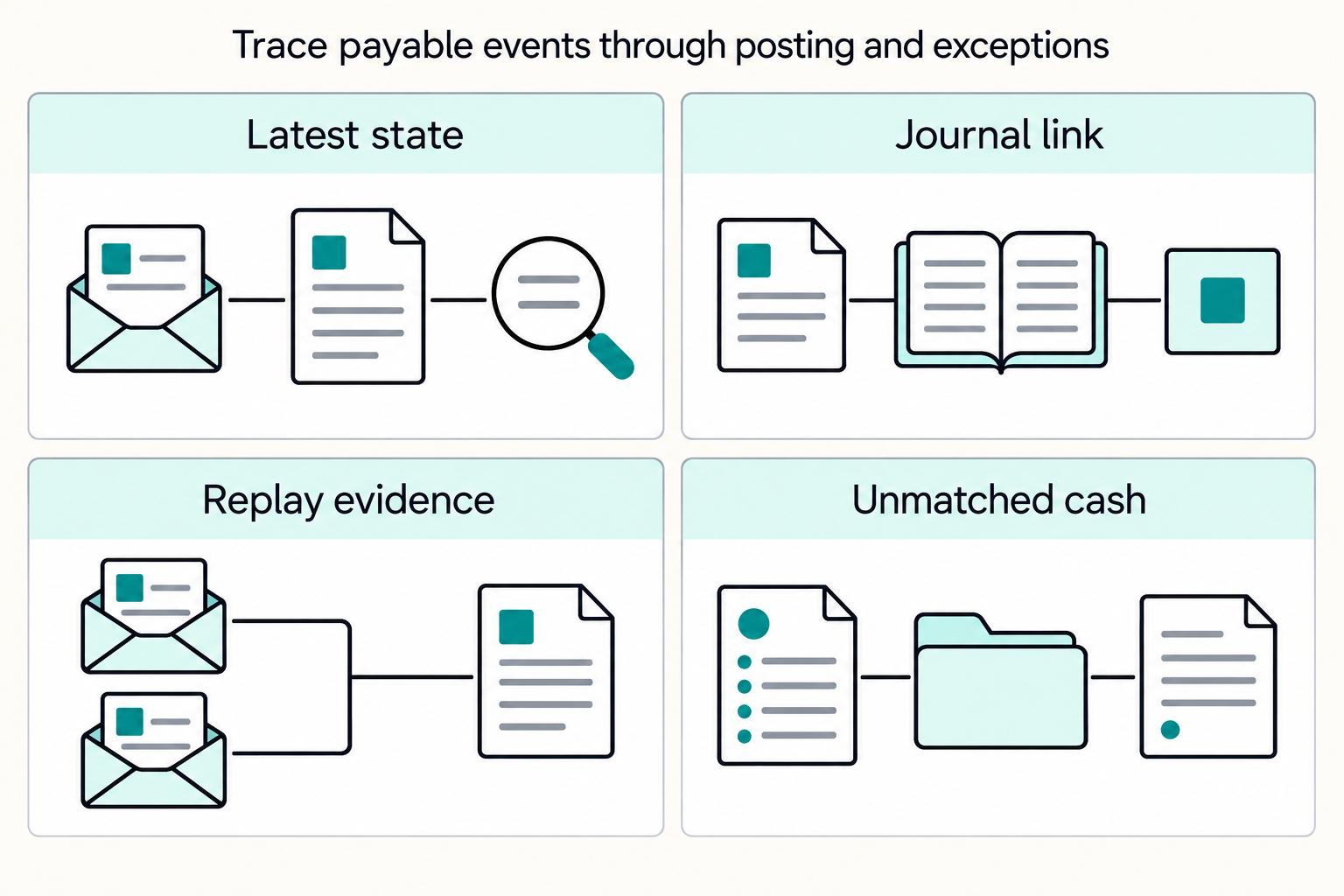
Key Best Practices for Improving Accounts Payable on a Two-Sided Payment Platform
Accounts payable on a two-sided payment platform is not just about bill processing. It is an internal-control function tied to cash flow, vendor relationships, and financial control. On a platform, it also sits next to payout execution, funds movement, and reconciliation across multiple parties.
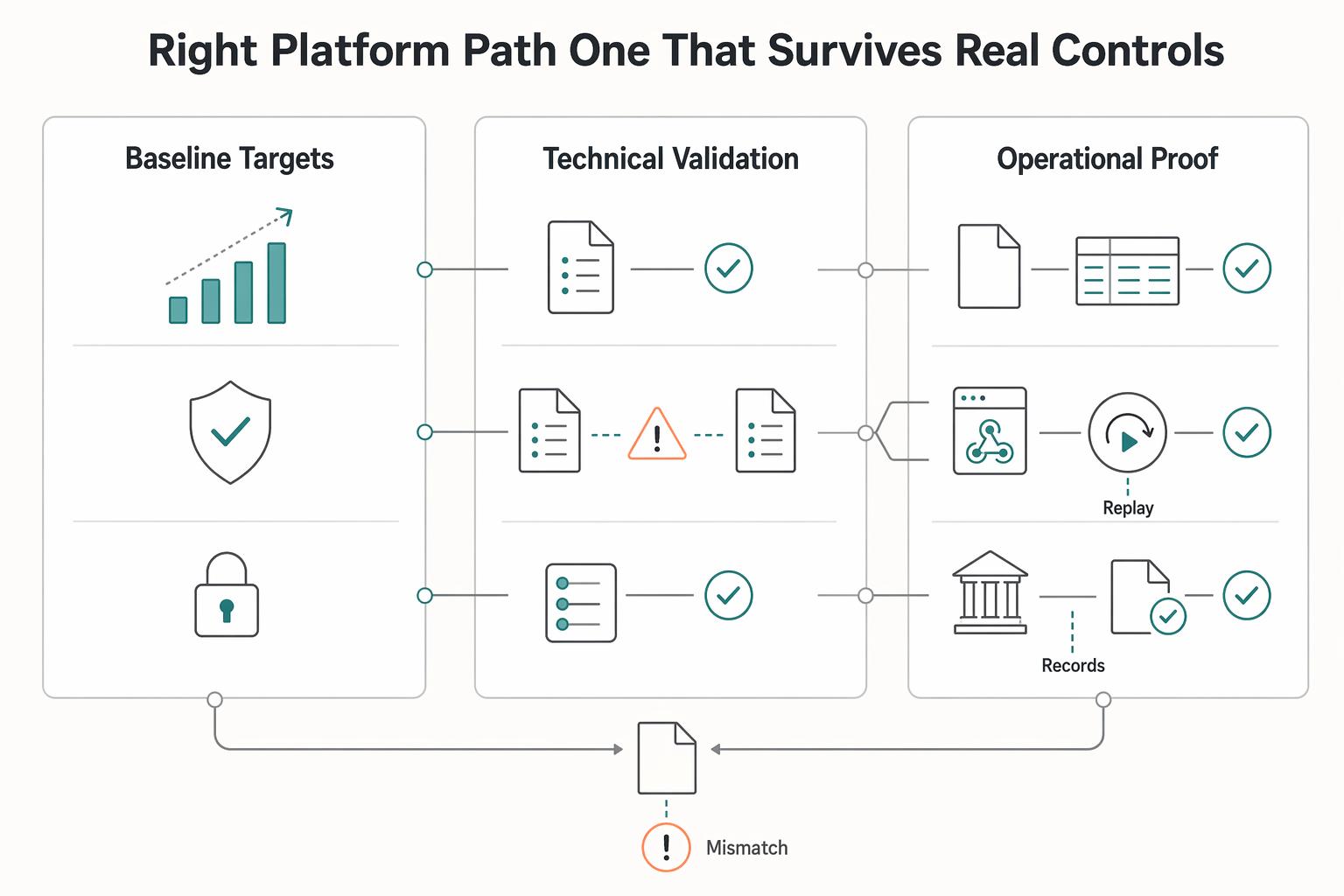
How Platform Teams Scale AP Volume Without Adding Headcount
Use this as a decision list for operators scaling Accounts Payable, not a generic AP automation explainer. In these case-study examples, invoice volume can grow faster than AP headcount when the platform fit is right, but vendor claims still need hard validation.
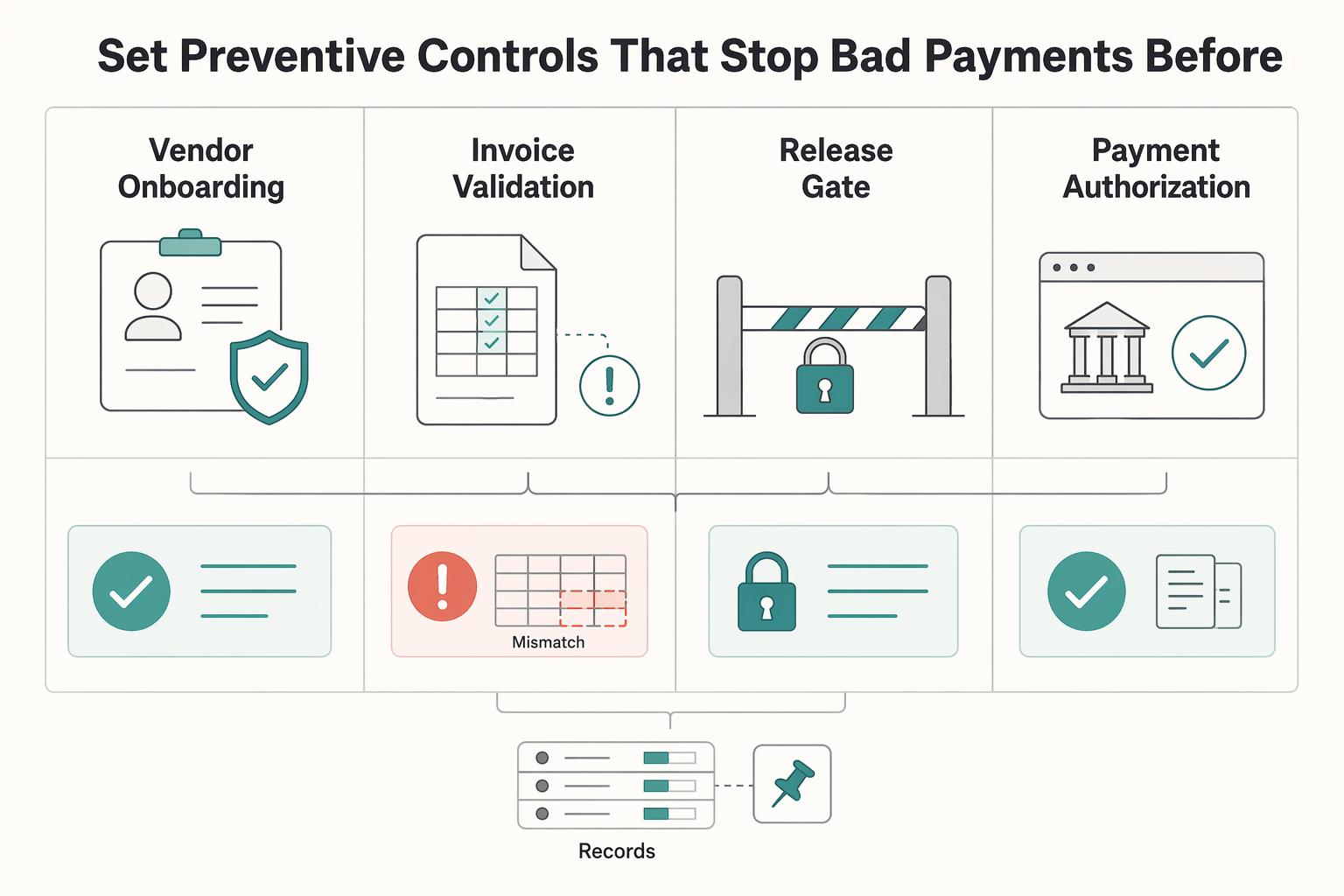
Internal Controls for AP Platforms to Prevent Fraudulent Disbursements
Start here: your AP control design should reduce fraudulent disbursements and payment errors without turning every payout into a bureaucratic exercise. In practice, that means clear escalation points at the moments where money can move incorrectly, not extra approvals added just to look controlled.